
The Weary Christian
  • Depression
    • Depression

      Latest Medical Studies on Depression

      Depression

      James Bryan Smith: Unmet expectations and fear

      Depression

      STUDY: Criticizing older adults make them more vulnerable…

      Depression

      STUDY: Awe can reduce depressive symptoms

      Depression

      STUDY: How music-mindfulness can help depression, anxiety

  • Anxiety
    • Anxiety

      Calling out the brain on catastrophizing

      Anxiety

      James Bryan Smith: Unmet expectations and fear

      Anxiety

      STUDY: Awe can reduce depressive symptoms

      Anxiety

      STUDY: How music-mindfulness can help depression, anxiety

      Anxiety

      STUDY: Chronic pain associated with higher rates of…

  • Book quotes/Video
    • Book quotes/Video

      John Mark Comer: “Wherever Jesus went, the kingdom…

      Book quotes/Video

      Ann Voskamp: “Jesus saves you for Himself”

      Book quotes/Video

      Philippe: “Refusing to suffer means refusing to live”

      Book quotes/Video

      “In darkest night, you were there like no…

      Book quotes/Video

      Thanksgiving for his brokenness

  • Health News
    • Health News

      Latest Medical Studies on Depression

      Health News

      Calling out the brain on catastrophizing

      Health News

      STUDY: Mental health conditions share deep genetic patterns

      Health News

      STUDY: Four Supplements that MIGHT help depression

      Health News

      STUDY: Gut changes raise risk of eating disorders…

  • Interviews
    • Interviews

      INTERVIEW: Dr. Terry Powell’s gripping account of depression

      Interviews

      INTERVIEW: Therapist Michael Schiferl explains religious scrupulosity and…

      Interviews

      INTERVIEW: Rocker Matt Sassano shares battles, urges transparency…

      Interviews

      INTERVIEW: Dr. Brian Briscoe tells Christians that antidepressants…

      Interviews

      INTERVIEW: Pastor Scott Sauls on anxiety, depression, and…

  • Devotionals
    • Devotionals

      Think you’re a “failure?” Jesus sees you unlike…

      Devotionals

      “Grace has got to be drunk straight”

      Devotionals

      Defeated by God

      Devotionals

      Am I a faithless Christian?

      Devotionals

      “I killed Jesus of Nazareth”

  • About
  • Depression
    • Depression

      Latest Medical Studies on Depression

      Depression

      James Bryan Smith: Unmet expectations and fear

      Depression

      STUDY: Criticizing older adults make them more vulnerable…

      Depression

      STUDY: Awe can reduce depressive symptoms

      Depression

      STUDY: How music-mindfulness can help depression, anxiety

  • Anxiety
    • Anxiety

      Calling out the brain on catastrophizing

      Anxiety

      James Bryan Smith: Unmet expectations and fear

      Anxiety

      STUDY: Awe can reduce depressive symptoms

      Anxiety

      STUDY: How music-mindfulness can help depression, anxiety

      Anxiety

      STUDY: Chronic pain associated with higher rates of…

  • Book quotes/Video
    • Book quotes/Video

      John Mark Comer: “Wherever Jesus went, the kingdom…

      Book quotes/Video

      Ann Voskamp: “Jesus saves you for Himself”

      Book quotes/Video

      Philippe: “Refusing to suffer means refusing to live”

      Book quotes/Video

      “In darkest night, you were there like no…

      Book quotes/Video

      Thanksgiving for his brokenness

  • Health News
    • Health News

      Latest Medical Studies on Depression

      Health News

      Calling out the brain on catastrophizing

      Health News

      STUDY: Mental health conditions share deep genetic patterns

      Health News

      STUDY: Four Supplements that MIGHT help depression

      Health News

      STUDY: Gut changes raise risk of eating disorders…

  • Interviews
    • Interviews

      INTERVIEW: Dr. Terry Powell’s gripping account of depression

      Interviews

      INTERVIEW: Therapist Michael Schiferl explains religious scrupulosity and…

      Interviews

      INTERVIEW: Rocker Matt Sassano shares battles, urges transparency…

      Interviews

      INTERVIEW: Dr. Brian Briscoe tells Christians that antidepressants…

      Interviews

      INTERVIEW: Pastor Scott Sauls on anxiety, depression, and…

  • Devotionals
    • Devotionals

      Think you’re a “failure?” Jesus sees you unlike…

      Devotionals

      “Grace has got to be drunk straight”

      Devotionals

      Defeated by God

      Devotionals

      Am I a faithless Christian?

      Devotionals

      “I killed Jesus of Nazareth”

  • About

The Weary Christian

THE WEARY CHRISTIAN

LIVING WITH FAITH AND DEPRESSION

  • Depression
    • Depression

      Latest Medical Studies on Depression

      Depression

      James Bryan Smith: Unmet expectations and fear

      Depression

      STUDY: Criticizing older adults make them more vulnerable…

      Depression

      STUDY: Awe can reduce depressive symptoms

      Depression

      STUDY: How music-mindfulness can help depression, anxiety

  • Anxiety
    • Anxiety

      Calling out the brain on catastrophizing

      Anxiety

      James Bryan Smith: Unmet expectations and fear

      Anxiety

      STUDY: Awe can reduce depressive symptoms

      Anxiety

      STUDY: How music-mindfulness can help depression, anxiety

      Anxiety

      STUDY: Chronic pain associated with higher rates of…

  • Book quotes/Video
    • Book quotes/Video

      John Mark Comer: “Wherever Jesus went, the kingdom…

      Book quotes/Video

      Ann Voskamp: “Jesus saves you for Himself”

      Book quotes/Video

      Philippe: “Refusing to suffer means refusing to live”

      Book quotes/Video

      “In darkest night, you were there like no…

      Book quotes/Video

      Thanksgiving for his brokenness

  • Health News
    • Health News

      Latest Medical Studies on Depression

      Health News

      Calling out the brain on catastrophizing

      Health News

      STUDY: Mental health conditions share deep genetic patterns

      Health News

      STUDY: Four Supplements that MIGHT help depression

      Health News

      STUDY: Gut changes raise risk of eating disorders…

  • Interviews
    • Interviews

      INTERVIEW: Dr. Terry Powell’s gripping account of depression

      Interviews

      INTERVIEW: Therapist Michael Schiferl explains religious scrupulosity and…

      Interviews

      INTERVIEW: Rocker Matt Sassano shares battles, urges transparency…

      Interviews

      INTERVIEW: Dr. Brian Briscoe tells Christians that antidepressants…

      Interviews

      INTERVIEW: Pastor Scott Sauls on anxiety, depression, and…

  • Devotionals
    • Devotionals

      Think you’re a “failure?” Jesus sees you unlike…

      Devotionals

      “Grace has got to be drunk straight”

      Devotionals

      Defeated by God

      Devotionals

      Am I a faithless Christian?

      Devotionals

      “I killed Jesus of Nazareth”

  • About
DepressionHealth News

Latest Medical Studies on Depression

STUDY: Mental health conditions share deep genetic patterns

James Bryan Smith: Unmet expectations and fear

STUDY: Four Supplements that MIGHT help depression

STUDY: Criticizing older adults make them more vulnerable to developing depression

Daily Blog

What “Commitment” means (it’s hard, but Jesus hold this leaf)

What “Commitment” means (it’s hard, but Jesus hold this leaf)

written by Christian Heinze

Tonight I lay – not in bed but in dread.

I hate nights like these. But after about twenty minutes (maybe an hour) of it, I decided to do some good for our house by leaving my wife (not in that way) for an overnight dish clean (so I claim), and thought, “Might as well turn on a Tim Keller podcast while I do it.”

Of course, I would have much rather hung out with my friend, dread, but as Auden wrote of it, “We would rather die in dread/Than climb the cross of the moment/And let our illusions die.”

Tonight, I decided I wouldn’t die in dread, I’d climb the cross of the moment and do overnight dishes (again, so I claim).

Keller’s sermon, called “Your Plans, God’s plans” (you can listen to it, via his podcast on Spotify), turned out to be very good.

Especially for someone like myself, who was a bit stuck in myself. Maybe for you, if you are, as well.

In it, Keller talks about the word, “commit,” and says it “literally means to roll over onto, to put all of your weight on.”

As Christians, we’re to commit, to “trust God for all things that happen in your life.”

He then quotes Elisabeth Eliot, who once wrote: “The more we pay for advice, the more we are likely to listen to it. Advice from a friend, which is free, we may take or leave. It’s free. Advice from a consultant we’ve paid much for, personally, we’re more likely to accept. But it’s still our choice – we can take it or leave it. But the guidance of God is different.

First of all, we do not come to God, asking for advice but for God’s will. And that is not optional.

And God’s fee is the highest one of all – it costs everything. To ask for the guidance of God requires abandonment. We no longer say, ‘If I trust you, you will give me such and such,’ instead we must say ‘I trust from you — give me or withhold from me whatever you choose’.”

Keller goes on to say that committing to God means, “I will accept anything you send me, whether I understand it or not. But I’m not going to bail on you.”

Hard.

Now, hear me out (read me out, sorry).

I’m living proof that it’s hard, because each day I struggle so hard with really committing to the idea of committing.

It’s a lifelong battle, and no matter the brief respites I get, it will remain one until I die.

Now, sure, I’ve committed to Christ for salvation in the next life, but my faith in his salvation in this one is so so small.

We often have a much easier time with commitment and faith when it’s about heaven than earth.

And here’s why. We believe heaven is perfect. But we know God says trials and tribulations are our lot down here.

So when Keller says we need to tell God, “I will accept anything you send me,” we know it’s in the context of unspeakable atrocities that occur to even children.

Commitment is hard. Faith is rare and small.

But remember this — when he lived on earth, Jesus knew how small faith could be, and yet it could still be real.

In fact, read the Gospels and when anyone came to him with even the slightest hint of faith, he marveled. Not because their faith was objectively so large. But because any faith, at all, was unexpected.

We need to remember that, because that’s what Jesus wants us to remember from those interactions.

And when we’re trying hard to commit in the way Keller mentions, don’t beat yourself up if you fall short of perfect commitment.

Jesus committed to God’s plan for his life perfectly, he committed to the cup of suffering perfectly, but did that make it easier? Did it make him dread Gethsemane less?

Maybe, maybe not.

All we know is that Jesus committed perfectly to his Father, and yet was a man of sorrows and well-acquainted with our grief.

In other words, just because you dread something in the future doesn’t mean you haven’t committed to something in the present or the future God has in store for you.

So don’t doubt your saving faith over it.

But inform your living faith with it.

We’ve got faith in Christ, but to what extent do we commit each day to God?

It varies, doesn’t it?

Some days, I’m there. Fully committing. Other days, I’m barely remembering.

So commitment as an expression of our faith is not fixed. And just as our faith can wax and wane, so can our commitment.

Remember, also, that Eliot and Keller’s words are aspirational. We are human and can never be perfect at this. But as disciples of Jesus, his faith in his Father is our aspiration. And he committed fully. But he was the only one who could commit fully and that’s the whole point of why he came.

If we could theoretically commit fully, there’d be no need for Christ.

So when you think of this word “commit,” try to view it as something aspirational that can animate your life right now instead of drag it down — that just because it’s aspirational doesn’t mean it’s a heavy load.

Aspirational things are not, by definition, heavy loads.

For example, I want to read more. I’m excited to read more. I know I’m ignorant about so many things, but I don’t think, “What an ignorant fool I am” and just close the chapter and quit the pages.

No, I’m excited to read more and it’s not a heavy thing, but an animating one.

I acknowledge I’m ignorant, can learn more, and am working on how to get there.

So even though we’re to commit to Christ, it doesn’t mean — by any stretch of theological imagination — he’ll expect us to get there because that’s the purpose of Jesus.

And as with anything aspirational, commitment and surrender to Christ are ongoing things.

I recently wrote about “surrender” because that word, thanks to watching an interview with Bono talking about his faith and life, made such a profound difference for me last year.

“Surrender” is a ubiquitous word and theme in Christian parlance, but one we really don’t grasp as a verb.

Sure, surrendering to Christ is an act of faith in his salvation, but surrendering to him daily is an ongoing, waxing and waning thing.

It’s not easy.

Surrender is the hardest path, but the one to take to get to the most beautiful meadow.

Of course, you can get to some kind of meadow by a path of less trust, but only through darkest test of our truth can we get to the lightest view of God and life. One that’s light from radiance, not substance, but its deep substance becomes so light that it shines instead of crushes.

It’s not the “unbearable lightness of being” that Kundera wrote of, but rather a lightness of being that makes everything bearable. If only for a moment.

When we feel the relief of our momentary stays in Immanuel’s Land, the reality of God With Us transforms us. “God, you really are here, you do love me, and you do have all this figured out.”

But the walk there? The surrender.

Well, we often don’t make it, do we? Especially at night. Nights of dread. We get stuck in the maze of our minds (and for many of us, it’s because of a brain condition called OCD or anxiety etc, so there’s a scientific explanation for why we’re particularly prone to getting lost).

But still, we get stuck.

It feels awful, to be stuck, to feel you’re on the border of surrendering your day and your plan to Christ, but, if you’re being totally honest, unable to really truly get there.

Well, guess who’s there in that doubt to tell you there’s no doubt his work on the cross is enough.

The one named “Jesus,” because he’s the “deliverer.”

When we’re stuck, when we’re struggling to commit, when we’re struggling to surrender, the perfect Jesus who did it all right, so we could get it wrong — the one who loves us as brothers and sisters, comes to deliver us, and he’s here’s because the Father smiled at us and said he has loved us eternally.

So while there’s relief when we actually do commit and make it to the radiance of Immanuel’s Land by surrendering our plan to God on a daily basis, Christ also wants us to find relief when we can’t. just. quite. make. it. to total surrender.

Because, as one desperate dad in the gospel of Mark cried out to Jesus in a kind of commitment, mixed with plenty of fear and doubt, “Lord, I believe; help my unbelief!”

And Jesus immediately healed the man’s son. Despite the dad’s failure to entirely believe. But because that desperate dad still had enough tiny faith to say, “Help my unbelief!”

Jesus doesn’t require much. But the more we give him, the more he shows us himself, and from the source of all beauty is beauty.

So now we can rest in the work of Christ’s, confident he has healed us, and we remember that the one who loves us really does love us and that to commit to him is to recognize that the love that once hung on the cross for us is still, alive, this instant, working for us.

So, on this night of dread (that lingers even as I write), I pray in doubt but in enough faith that I’m willing to say it but not entirely believe it, “God, I’m giving this to you.”

Am I really giving it? Only God knows.

But there’s only one person who’d forgive me for not giving it.

Trust that as best you can (imperfectly), and remember Christ does saving as best he can. Perfectly.

Perfect for us, right?

I finish with this: When you pray tonight, God told us exactly how he wants us to address him: “Daddy.” That should tell you everything about how he feels for you. Even when you wonder whether you’re actually loved or truly surrendering.

After all, as parents, we don’t hold our kids’ doubts against them. Instead, we just hold them.

So, as Rich Mullins sang, “Jesus, hold me, even when I’m shaking like a leaf.”

February 8, 2024
0 Facebook Twitter Google + Pinterest
STUDY: Depression linked to higher body temperature

STUDY: Depression linked to higher body temperature

written by Christian Heinze

A brand new study from researchers at UC San Francisco and published in Scientific Reports finds a link between increased body temperature and depression.

The novel finding raises more questions than it asks, but the questions certainly are potentially fruitful.

Read NeuroScience’s great piece for a broader overview, but here’s the gist:

The researchers analyzed over 20,000 participants, internationally, over a seven month period and found that with each level of increasing depression severity, people had higher body temperatures.

Why?

Totally unclear.

And it’s also unclear whether depression raises body temperature or whether a higher temperature caused depression.

That’s another big question.

But as researchers at UCSF note, it could explain why some studies have suggested hot tubs or saunas can ease depression severity. Perhaps, UCSF notes, by triggering the body to self-cool through sweating.

If that’s the case, then you can certainly see how the case for a sauna could be bolstered, while triggering novel approaches to dealing with the problem.

By the way, I’ve noted on this blog about the extensively observed, well-researched “psychogenic fever,” where stress affects body temperature.

These patients develop high core body temperatures when exposed to emotional, stressful events, and it’s not yet entirely understood why, although chronically-stressed animals show similar spikes in temperature.

I came across the topic a few years ago when I was trying to get to the bottom of my own “fevers of unknown origin” (as doctors commonly call it).

If I wasn’t sick, why did I keep getting fevers?

As anyone with anxiety might (or should or shouldn’t do), I typed “anxiety fevers” and shockingly, a lot of research has been done, and there’s plenty of anecdotal stuff on discussion boards, as well.

Many doctors are unaware of the phenomenon, so it’s definitely worth looking at.

But again, it’s absolutely imperative you rule out with doctors other causes of fever before chalking it up to anxiety (or now, we’re learning, possibly depression).

So back to the new study — it’s an exciting one, because even though both the relationship and mechanisms are unclear at this point — there’s a lot of promise in new, potential therapies and future research.

Finally, if you’re struggling with depression (as I do!).

For readers from the United States….

Find a psychiatrist here.

Find a therapist here.

For readers, internationally, please seek help from a local resource.

If you’re having thoughts of harming yourself or others, please call the National Suicide Lifeline at 1-800-273-8255.

[Painting: Midsummer, Albert Joseph Moore, 1887]
February 7, 2024
0 Facebook Twitter Google + Pinterest

When we hear the praises start

written by Christian Heinze

Keith Green, “When I hear the praises start.” One of the most comforting songs for a weary traveler that I can think of.

February 7, 2024
0 Facebook Twitter Google + Pinterest
STUDY: Anorexia might be genetically linked to… early rising?

STUDY: Anorexia might be genetically linked to… early rising?

written by Christian Heinze

A brand new study, published in JAMA Network Open, and led by the Harvard-affiliated Massachusetts General Hospital shows a surprising, possible genetic link between getting up early in the morning and developing anorexia nervosa.

I say surprising, simply because we’ve seen research suggesting that earlier waking times are often helpful for managing symptoms of depression and anxiety.

More interestingly, as the Harvard Gazette reports, there seems to be a large genetic component to this dynamic.

Some people are more predisposed to anorexia, based on their genes, and that genetic component played a big role in this key takeaway: “The findings suggest that being an early riser could increase the risk of anorexia nervosa, and having anorexia nervosa could lead to an earlier wake time.”

“Our findings implicate anorexia nervosa as a morning disorder, in contrast to most other evening-based psychiatric diseases, and support the association between anorexia nervosa and insomnia as seen in earlier studies,” says senior author Hassan S Dashti, an assistant investigator in the Department of Anesthesia, Critical Care, and Pain Medicine at MGH and an assistant professor of anesthesia at Harvard Medical School.

As for the genetic component, yes, studies have suggested a robust role for genes in the development of anorexia (see here, here, and here), and researchers in this particular study explored the genes associated with anorexia, the circadian clock, and various sleep traits.

Thus, the interesting connection.

Notably, four years ago, researchers discovered eight genes that were directly related to the development of anorexia nervosa.

So, as with any medical condition, genes play a large role.

I reinforce that genetic issue because it suggests, once again, a medical component that precedes anything outside your control.

And I say that because we do all know that the church tends to dismiss these diseases as diseases of the mind and not body.

If you or a loved one struggle, or think you might have an eating disorder….

Here’s a terrific website, which includes crisis helplines.

ANAD can be reached at 1-888-375-7767.

Even more helplines can be found here.

And you can find even more useful information at the National Eating Disorders Association website.

Also, for readers from the United States….

Find a psychiatrist here.

Find a therapist here.

For readers, internationally, please seek help from a local resource.

If you’re having thoughts of harming yourself or others, please call the National Suicide Lifeline at 1-800-273-8255.

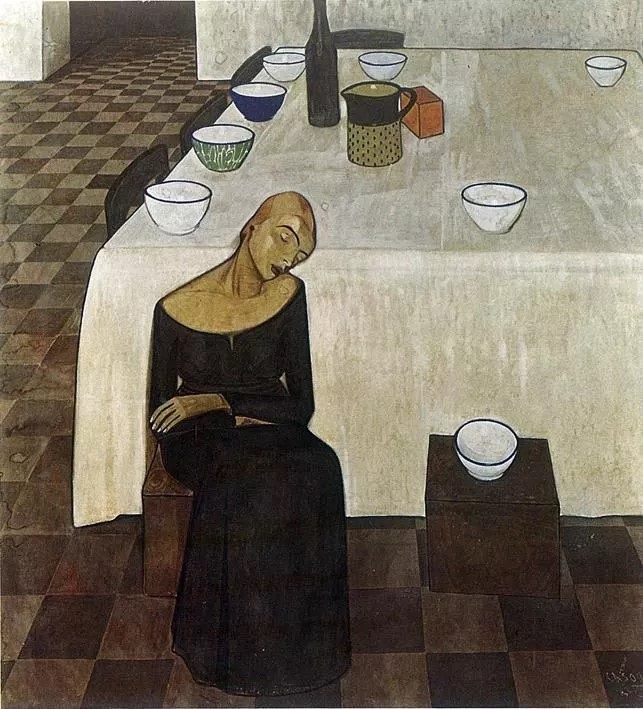
[Painting: L’attesa, Felice Casorati. (h/t: Casey Winter).]

February 7, 2024
0 Facebook Twitter Google + Pinterest
Spurgeon on health anxiety

Spurgeon on health anxiety

written by Christian Heinze

Charles Spurgeon was famously afflicted with both depression and anxiety in his life.

And as a 19th century Baptist preacher, he was far ahead of his time in recognizing that it was a physical disease, not a mental one.

I want to make that clear.

Spurgeon believed it was physical before most doctors even knew. Now we know.

So if you have health anxiety, first head to a doctor or therapist who can point you in the right direction.

But while you’re in the waiting room, read this entry from Charles Spurgeon’s Morning and Evening, because it certainly is comforting, and I can’t help but wonder if he wrote it while battling his own health anxiety.

Its basis is Exodus 3:7, wherein the Lord says: “I know their sorrows.”

Spurgeon:


The child is cheered as he sings, “This my father knows”; and shall not we be comforted as we discern that our dear Friend and tender soul-husband knows all about us?

1. He is the Physician, and if he knows all, there is no need that the patient should know. Hush, thou silly, fluttering heart, prying, peeping, and suspecting! What thou knowest not now, thou shalt know hereafter, and meanwhile Jesus, the beloved Physician, knows thy soul in adversities. Why need the patient analyze all the medicine, or estimate all the symptoms? This is the Physician’s work, not mine; it is my business to trust, and his to prescribe. If he shall write his prescription in uncouth characters which I cannot read, I will not be uneasy on that account, but rely upon his unfailing skill to make all plain in the result, however mysterious in the working.

2. He is the Master, and his knowledge is to serve us instead of our own; we are to obey, not to judge: “The servant knoweth not what his lord doeth.” Shall the architect explain his plans to every hodman on the works? If he knows his own intent, is it not enough? The vessel on the wheel cannot guess to what pattern it shall be conformed, but if the potter understands his art, what matters the ignorance of the clay? My Lord must not be cross-questioned any more by one so ignorant as I am.

3. He is the Head. All understanding centres there. What judgment has the arm? What comprehension has the foot? All the power to know lies in the head. Why should the member have a brain of its own when the head fulfils for it every intellectual office? Here, then, must the believer rest his comfort in sickness, not that he himself can see the end, but that Jesus knows all. Sweet Lord, be thou for ever eye, and soul, and head for us, and let us be content to know only what thou choosest to reveal.


I’ve written extensively before about my own health anxiety, which began seven years ago, when my dad passed away.

The anxiety didn’t hit immediately.

It came a few weeks later, when I was in bed, still too sad to get up for the day, and our 1 year old son came crawling into the room, and his eyes lit up when he saw me as if to say “Play, Dad!” and instantly, a strange happiness mixed with anxiety, terror and urgency hit me.

And I cried, begged: “I don’t ever want my dear boy to look for his dad, and not find him.”

The idea of that smiling little face I loved so much, crawling hopefully from room to room, and it’s just empty room after empty room and no dad to ever be found?

Give that image to someone with OCD, and they’ll make a lot from it.

From that moment on, I’ve been battling this health anxiety thing. Sometimes better, sometimes worse. Always in the background.

For Christians, it’s a particularly stigmatizing problem, and I’m just going to say now what I wrote then.

As Christians, we feel we’re supposed to overlook our physical bodies and shrug off suffering because, as Paul says, we’re buried in brokenness but raised in glory.

“Get some perspective!” Some Christians might yell at us.

Well, tell them this: When Jesus was in Gethsemane, he knew he was just a few days away from heaven!

And he knew its wonders.

And yet, he was in total agony over his upcoming suffering before the physical part had even happened.

So don’t hold yourself to a higher standard than Jesus. He felt all the dread you feel.

Christians who don’t struggle with health anxiety or any other kind often use verses like “strengthen each other” to bludgeon the struggling. The Greek for “strengthen” is actually much better translated “have compassion.” Changes the meaning quite a bit, doesn’t it?

So, once again, if you’re a Christian and deal with health anxiety, don’t tell yourself that you should “know better” and feel guilty that you can’t shrug off the idea of a few years or a few decades of bodily suffering.

Remember that Jesus himself began dreading his upcoming suffering before he was arrested.

So don’t feel ashamed of your own dread. You’re in good company.

Now, besides a therapist and a doctor, I’ve found some good discussion boards.

I’d suggest the UK’s No More Panic, which is a very comforting spot for the like-minded.

And regarding therapists and doctors, you know these links by now, but here they are again.

For readers from the United States….

Find a psychiatrist here.

Find a therapist here.

For readers, internationally, please seek help from a local resource.

If you’re having thoughts of harming yourself or others, please call the National Suicide Lifeline at 1-800-273-8255.

February 5, 2024
1 Facebook Twitter Google + Pinterest
STUDY: Can eyes help diagnose depression?

STUDY: Can eyes help diagnose depression?

written by Christian Heinze

A fascinating new study in Scientific Reports shows just how revealing our eyes can be, and how a simple test might help doctors diagnose depression, in the future.

Read Felicity Nelson’s overview of the study at Science Alert, but here’s the gist.

You know that sense of total lethargy, apathy, lack of joy, lack of pleasure in anything, lack of everything that you feel when you’re depressed?

That’s known as anhedonia, and it’s the kind of depression that makes you lose all interest to do just about anything, because you literally have kind of lost all interest in anything.

It’s the “I can’t work up the energy to brush my teeth, even if they are about to fall out. Who cares if I don’t have teeth? I don’t like smiling in pictures anyway.”

I wrote about my experience with this type of depression awhile ago, and if you’re a regular reader, you probably have experienced it, as well.

To those who haven’t, I’m grateful you haven’t experienced it, but seriously, it’s real.

Anyway, there’s a reason for anhedonia, and studies suggest it could stem from a lack of activity in your brain’s ventral striatum, and that could be caused by any number of things we’re still learning about, including depression, Parkinson’s disease, schizophrenia and other conditions of the brain.

One external, scientific clue about what might be happening (besides our obvious behavioral clues) comes when researchers dangle something normally appealing in front of our eyes.

So says the new study.

If we’re not depressed, the sight of something we love will dilate our pupils.

So, I love Paris. No matter the arrondissement, the time of year, the size of crowds, the anything, I will always love that city. Even if they take out the green chairs.

And when you show me even the most cliched trinket of Paris, my eyes will dilate.

Unless… I’m depressed.

That’s what the new study shows.

Depressed people show their depression in the way their eyes (do or don’t) respond to normally satisfying stimuli. And that’s because the reward circuit in the brain has been affected.

So for example, when presented with the prospect of winning money (universally liked, right), the study showed a remarkable difference in pupil dilation between depressed and non-depressed participants.

You can click on the study to see pictures for yourself, but it’s just remarkable.

Of course, simply confirming anhedonia doesn’t treat that symptom, but any new fragment of information regarding how our brains work in this disease is helpful for further research.

And if someone doubts your depression, just say, “OFFER ME SOME MONEY AND LOOK AT MY PUPILS.”

Except you won’t care if they doubt your depression, at that moment. Because you don’t care.

And if you feel like that right now… believe me, I’ve been there and often return to that dreadful land, and we really don’t know how we arrived there, do we? We just are there. No bags in hand, no clue of how we got there, and no thought that hope could even be found because that concept itself, “hope,” seems as distant in this grey as the joy we once experienced.

So if you feel like that…

For readers from the United States….

Find a psychiatrist here.

Find a therapist here.

For readers, internationally, please seek help from a local resource.

If you’re having thoughts of harming yourself or others, please call the National Suicide Lifeline at 1-800-273-8255.

[Photo: Pexels, free photography].

February 5, 2024
0 Facebook Twitter Google + Pinterest
Staton: “Your will be done” is about releasing control

Staton: “Your will be done” is about releasing control

written by Christian Heinze

In his book, Praying Like Monks, Living Like Fools, Tyler Staton spends a wonderful chapter writing about the famous phrase in the Lord’s Prayer: “Your kingdom come, you will be done, on earth as it is in heaven,” and encourages us towards both an intellectual and physical release during prayer.

He writes:


“This is how Jesus teaches us to intercede. There are to movements to intercession: releasing and asking.

Your will be done. This part of the prayer is about releasing control. Think of something in you life you’re wrestling for control over. Name one thing you’ve never released to God, or perhaps released in the past but are trying to grab back. When you’ve come up with it, name it, and release it.

As for filling from the Spirit in place of releasing, peace in place of anxiety, trust in place of fear, and so on.

Posture can be helpful in this act of prayer. As you open your hands, picture in your hands some part of your life, something you’re clenching tightly to and trying to force your own will on. When you are ready, flip over your hands, releasing control to God, setting those circumstances at the feet of Jesus.

…. Your kingdom come on earth as it is in heaven. Having released control and surrendered our own will, we are now free to see our lives, our relationships, our community, and our world through the eyes of God. It is from this place that we ask with hearts full of faith and hope…. ask for for Jesus to come — anywhere and everywhere you know God’s kingdom of love and peace is lacking.”


End quote.

Now… if you come from a Protestant Christian tradition (as I do), you’re probably aware that we don’t do much embodied stuff.

In fact, a great loss from the Reformation was the stripping away of so much ritual.

These days, embodiment, in most Protestant Christian circles, often only goes so far as raising our hands during worship (a wonderful thing to do, by the way).

But ritual and embodied practice is a Scriptural theme, from beginning to end, and beginning and ending our day with a prayer similar to Staton’s can be powerful.

Try it some time. I’m still getting used to it.

So much about anxiety is about certainty, isn’t it? Fearing it. We crave certainty. We don’t want to let go of the idea that we can know.

It’s often pure anguish to pray: “Not my will, but yours be done,” because we dread what God’s will might mean.

I know. It’s really really wrenching.

It’s also often a sign of an anxiety disorder. Not faulty spirituality. And there are numerous physical explanations for why letting go is so much harder for some of us than others. Never feel ashamed, or that you lack faith based on defective spirituality. And read the rest of this site for more explanation on why your condition is NOT based on a lack of faith.

So, even to this post about an excellent prayer of release, I will apply my universal post-script.

For readers from the United States….

Find a psychiatrist here.

Find a therapist here.

For readers, internationally, please seek help where you can find it.

February 2, 2024
0 Facebook Twitter Google + Pinterest
STUDY: Psychotherapy and/or medication offers huge boost to depressed, heart failure patients

STUDY: Psychotherapy and/or medication offers huge boost to depressed, heart failure patients

written by Christian Heinze

A new study in JAMA offers impressive evidence that two treatment modalities – Behavioral Activation Psychotherapy (BA) and Antidepressant Medication Management (MEDS)– can significantly ease the severity of depression in patients, post-heart failure.

Heart failure can be devastating, physically, and patients often experience awful mental health, as well. A full 50% of patients with heart failure will experience clinical depression.

Explanation unnecessary.

Enter a new study that looked at how effective BA and MEDS can be for such patients.

Read this broader review from Giuliana Grossi, but here’s the gist:

Patients given BA therapy experienced a 50% reduction in depression symptoms at the 3, 6, and 12 month marks.

Meanwhile, they also had improved physical quality of life and fewer emergency department visits and hospitalizations.

In other words, BA can work wonders for those enduring the double-trauma of heart failure and depression.

Meanwhile, the MEDS alone group showed strong efficacy, as well (also around 50%) at reducing depressive symptoms, but offered fewer benefits in quality of life and hospital visits.

In other words, the data seems to suggest what you might expect — that BA is a more comprehensive modality with more comprehensive results.

So what is Behavioral Activation Psychotherapy?

The University of Michigan has a great guide, but to shorten things up: It’s a version of CBT that leans in heavily on how behaviors and feelings influence each other. The goal is to shorten, or downright avoid the negative downward spirals (how we all know about those, huh?) by encouraging activities that promote an “upward spiral of motivation and energy through pleasure and mastery” of an enjoyable and meaningful activity.

In other words, sure, turn around the thinking, but that’s not all there is. Start doing.

In BA alone, “action precedes emotion.”

It doesn’t mean you won’t have a negative spiral, you might just experience fewer spirals, and of course, that’s when cognitive rethinking comes into play.

So sure, it’s good to try to hijack the downward spiral, but it’s even better to take positive action before the spiral begins.

On the days you feel good, reinforce that feeling. And it will reap dividends.

Something like that. I’m not a trained therapist, by any stretch of the imagination, so read the guide (which includes a workbook) and look for a therapist (below) if you’re interested, but it seems pretty helpful.

And certainly, the new study suggests it’s awfully helpful, both physically and mentally, for patients suffering from both heart failure and depression.

Indeed, there’s another brand new study from the UK, published in The Lancet Healthy Longevity, that shows behavioral activation therapy through weekly telephone calls can meaningfully improve depression and quality of life for senior citizens (average age: 76 years old).

Now quick note:

I think a lot of Christian senior citizens might feel particular pressure to bottle up their depression or anxiety etc.

First, the younger generation of Christians was raised on the idea that mental health is a real thing, and indeed, a physical condition.

There’s far less shame if you’re a young Christian in revealing your depression or anxiety etc., because those terms are bandied about so often among young people.

But the older generation faces a couple problems on this score. They didn’t grow up in an environment where you talked about these issues. And there seems to be (I’d guess) a natural inclination to assume the role of the wiser person, who’s finally found the secret to life.

“Seek wisdom from the ancients” is as ancient an axiom, across culture and time, as there is.

And while, yes, senior citizens are full of wisdom, wisdom is quite separate from despair.

In fact, a great kind of wisdom comes from understanding despair.

When young people first face it, they’re often overwhelmed. Life isn’t supposed to be like this. What do I do? In addition to the dread, there’s an existential panic of being confronted with something for the first time.

But an older, wiser person might be able to reassure a younger person that, no, they’re not experiencing anything unusual and that, yes, there’s something called anxiety and that looking for help isn’t weakness (like we assume, as young folk), but instead strength.

So wisdom and depression can, and often, co-exist.

Now, for older Christians, I’d suspect the problem is even more acute.

They have to manage the misunderstanding that, along with wisdom and age, comes serenity.

Additionally, they have to manage the further burden of “Christian serenity.” I don’t put “Christian serenity” in quotes to mock it or say it doesn’t exist. It absolutely does. Absolutely. I only say that you can have a peace with Christ that you feel and intellectually know, along with a war that will continue to wage inside, until we reach heaven.

As a minor prophet put it: “There is no discharge in that war,” and to be a wise, older Christian is to recognize that (see my recent interview with Dr. Terry Powell, who smashes stigmas to shreds by openly speaking of his own depression and anxiety).

American society is always forgetting the older, the lonely.

We often view their lives through the same economic criteria that the American productivity model often manufactures. And that is crass and bottom-lined, and bottom in every sense of the term.

We should learn from eastern societies, where the older generation is not forgotten but instead truly venerated.

And the church needs to remember this, as well.

Older congregants might not bring kids or a huge paycheck to fill the coffers, but their needs are as great (maybe greater) and their worth of infinite value until their final breaths.

There is a wisdom in living, perhaps, a few years or days from your passing.

The closer you are to heaven, the more perspective you bring. Many saints of old urged those of every age to think actively of their final day, for it brings urgency to the current one.

So, when we take care of the elderly, they also take care of us. We see our lives through theirs and what a gift.

And remember — they can struggle too, and not just physically, the way we crassly assume.

Their mental wounds can, in fact, be deeper because they carry more nights of grief with them, and those nights add up.

Solomon, the wisest who ever was, ended on the right note (Ecclesiastes) and it wasn’t a particularly sanguine one.

There was melancholy and sadness, but ultimately, his final and most supreme wisdom.

When my wife and I had our first child, I remember taking him places and older folks saying, “Enjoy every minute,” and we chuckle because we hear it so much.

But we hear it so much because it’s so true. And instead of a chuckle, we should stop and say a blessing. For the one who just reminded us what we so often forget. Time is short. God is near.

Find a psychiatrist here.

Find a therapist here.

If you’re having thoughts of harming yourself or others, please call the National Suicide Lifeline at 1-800-273-8255.

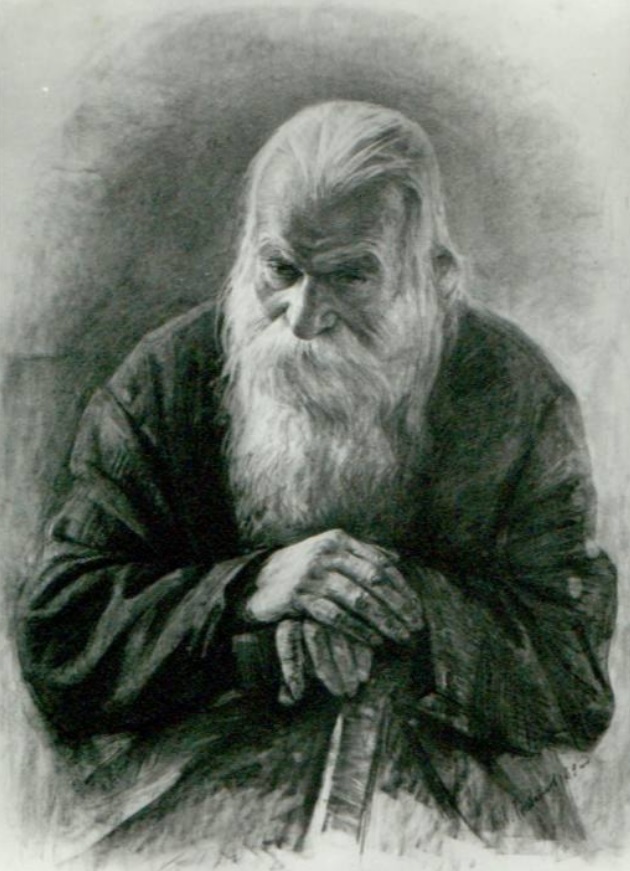
[Painting: Old Man with a Cane, Babailov]

February 2, 2024
0 Facebook Twitter Google + Pinterest
Spurgeon: Remember God’s love. Please, remember, God says.

Spurgeon: Remember God’s love. Please, remember, God says.

written by Christian Heinze

This is a “2:50 AM, can’t sleep, and I’m so happy I just read it” kind of entry from Charles Spurgeon’s matchless Morning and Evening. (We all need those, don’t we? The 2:50 AM ones).

Spurgeon:


“Jesus will not let his people forget his love.

If all the love they have enjoyed, He will visit them with fresh love.

‘Do you not forget my cross?’ says He, ‘I will cause you to remember it; for at my table I will manifest Myself anew to you.’

‘Do you not forget what I did for you in the council-chamber of eternity? I will remind you of it, for you shall need a counselor and shall find Me ready at your call.’

Mothers do not let their children forget them….. So it is with Jesus. He says to us, “Remember Me,” and our response is, ‘We will remember Thy love.’

We will remember Thy love and its matchless history. It is as ancient as the Glory which Thou hadst with the Father before the world was.

We remember, O Jesus, Thine eternal love when Thou didst become our Surety, and espouse us as thy Betrothed.

We remember the love which suggested the sacrifice of Thyself, the love which, until the fulness of time, mused over that that sacrifice, and long for the house whereof in the volume of the book it was written of Thee, ‘Lo, I come.’

We remember Thy love, O Jesus! as it was manifest to us in Thy holy life, from the manger of Bethlehem to the garden of Gethsemane.

We track Thee from the cradle to the grave — for every word and deed of thine was love — and we rejoice in Thy love, which Death did not exhaust; Thy love which shone resplendent in Thy resurrection.

We remember that burning fire of love which will never let Thee hold Thy peace until Thy chosen ones will all be safely housed, until Zion be glorified, and Jerusalem settled on her everlasting foundations of light and love in heaven.”


Amen.

I felt such urgency to post this tonight, because I felt such restlessness from insomnia and its attendant mind trails, but there is both an urgency within the reminder of Christ’s love and yet a restfulness to it, isn’t there?

I’d also like to remind you that Spurgeon himself, the one who wrote that, suffered from deep depression and anxiety.

Who knows when he wrote that entry, or how he felt?

But perhaps it was on a dark night, when he could not quite remember the One who was there for him, and somehow saw just one glimpse of The One, and could not contain himself because Christ’s love for us cannot be contained once we see just a bit of what He sees when he looks at us — his beloved children.

I’d also like to remind you, per usual, that if you’re struggling with depression, anxiety, trauma, OCD, an eating disorder, PTSD, or any other such disease…

Find a psychiatrist here.

Find a therapist here.

If you’re having thoughts of harming yourself or others, please call the National Suicide Lifeline at 1-800-273-8255.

And if any of you dear readers are struggling, whether at 2:50 AM or the middle of a Chaos Workday where everything but God seems present… also seek help! For God sends it through his ministers of mercy on earth — healthcare workers.

Spurgeon thought, as well (and far ahead of his time!) that depression, anxiety and such ailments were physical diseases, not spiritual ones.

And if you’re struggling with forgetting Christ’s love, then look at his love, and remember it through his words and life. And in the lines of Mozart’s immortal requiem: “Remember, merciful Jesus, that I am the cause of your journey.”

And just as he told the thief on the cross who cried to be remembered at the end of his life, so Christ will offer you the end of his life for your eternal life.

He will always remember you, because he never forgot about you, in the first place.

January 23, 2024
0 Facebook Twitter Google + Pinterest
Staton: What “be still” means

Staton: What “be still” means

written by Christian Heinze

In Tyler Staton’s book, Praying Like Monks, Living Like Fools, he explains the Psalm: “Be still and know that I am God.”

Both of those components are critical and also, of course, inseparable.

Staton writes of the phrase “Be still.”


“The Latin term is vacate, from which we get the English word vacation. The invitation of prayer anytime, anywhere is this: Take a vacation.

Stop playing God over your own life for a moment. Release control. Return to the created order.

Be still. Prayer begins there. But that’s only the beginning.

…. Many confuse stillness with waiting for revelation. Sometimes revelation does come, and it’s marvelous.

But that’s not the purpose of stillness.

The purpose is consent.

It is the daily practice of consenting to the work of God’s Spirit… practice silence as a sacrificial offering to God. It’s that simple.

It’s about giving something of yourself to God, not getting something from God.“


January 19, 2024
0 Facebook Twitter Google + Pinterest
Load More Posts

Social Media

Twitter

Get in touch with me

Contact here. 

The Weary Christian mission:

First off:


In the United States, find a psychiatrist here.

In the United States, find a therapist here.

If you’re in the United States and having thoughts of harming yourself or others, please call the National Suicide Lifeline at 1-800-273-8255.

If you’re in the UK, get urgent help here.

Canada, here.

Australia, here.

New Zealand, here.

South Africa, here.

France, here.

Germany, here.

Portugal, here.

Mexico, here.

India, here.

The Philippines, here.

Singapore, here.

South Korea, here.


The Weary Christian goal…


a) reduce the stigma surrounding depression, anxiety, OCD, and other conditions in the Christian community.


b) have uncomfortable but honest conversations.


c) Reduce the stigma surrounding antidepressants, antipsychotics, and other meds God has given us as gifts.


And…


d) Sometimes (tons of times), we all feel really, really depressed in our journey. Hopefully, this site makes you feel less alone.

Categories


@2017 - PenciDesign. All Right Reserved. Designed and Developed by PenciDesign