
The Weary Christian
  • Depression
    • Depression

      James Bryan Smith: Unmet expectations and fear

      Depression

      STUDY: Criticizing older adults make them more vulnerable…

      Depression

      STUDY: Awe can reduce depressive symptoms

      Depression

      STUDY: How music-mindfulness can help depression, anxiety

      Depression

      STUDY: Chronic pain associated with higher rates of…

  • Anxiety
    • Anxiety

      Calling out the brain on catastrophizing

      Anxiety

      James Bryan Smith: Unmet expectations and fear

      Anxiety

      STUDY: Awe can reduce depressive symptoms

      Anxiety

      STUDY: How music-mindfulness can help depression, anxiety

      Anxiety

      STUDY: Chronic pain associated with higher rates of…

  • Book quotes/Video
    • Book quotes/Video

      “In darkest night, you were there like no…

      Book quotes/Video

      Thanksgiving for his brokenness

      Book quotes/Video

      Esther Smith: “All he wants is you”

      Book quotes/Video

      James Bryan Smith: Unmet expectations and fear

      Book quotes/Video

      Staton: On being a witness

  • Health News
    • Health News

      Calling out the brain on catastrophizing

      Health News

      STUDY: Mental health conditions share deep genetic patterns

      Health News

      STUDY: Four Supplements that MIGHT help depression

      Health News

      STUDY: Gut changes raise risk of eating disorders…

      Health News

      STUDY: Criticizing older adults make them more vulnerable…

  • Interviews
    • Interviews

      INTERVIEW: Dr. Terry Powell’s gripping account of depression

      Interviews

      INTERVIEW: Therapist Michael Schiferl explains religious scrupulosity and…

      Interviews

      INTERVIEW: Rocker Matt Sassano shares battles, urges transparency…

      Interviews

      INTERVIEW: Dr. Brian Briscoe tells Christians that antidepressants…

      Interviews

      INTERVIEW: Pastor Scott Sauls on anxiety, depression, and…

  • Devotionals
    • Devotionals

      “Grace has got to be drunk straight”

      Devotionals

      Defeated by God

      Devotionals

      Am I a faithless Christian?

      Devotionals

      Think you’re a “failure?” Jesus sees you unlike…

      Devotionals

      “I killed Jesus of Nazareth”

  • About
  • Depression
    • Depression

      James Bryan Smith: Unmet expectations and fear

      Depression

      STUDY: Criticizing older adults make them more vulnerable…

      Depression

      STUDY: Awe can reduce depressive symptoms

      Depression

      STUDY: How music-mindfulness can help depression, anxiety

      Depression

      STUDY: Chronic pain associated with higher rates of…

  • Anxiety
    • Anxiety

      Calling out the brain on catastrophizing

      Anxiety

      James Bryan Smith: Unmet expectations and fear

      Anxiety

      STUDY: Awe can reduce depressive symptoms

      Anxiety

      STUDY: How music-mindfulness can help depression, anxiety

      Anxiety

      STUDY: Chronic pain associated with higher rates of…

  • Book quotes/Video
    • Book quotes/Video

      “In darkest night, you were there like no…

      Book quotes/Video

      Thanksgiving for his brokenness

      Book quotes/Video

      Esther Smith: “All he wants is you”

      Book quotes/Video

      James Bryan Smith: Unmet expectations and fear

      Book quotes/Video

      Staton: On being a witness

  • Health News
    • Health News

      Calling out the brain on catastrophizing

      Health News

      STUDY: Mental health conditions share deep genetic patterns

      Health News

      STUDY: Four Supplements that MIGHT help depression

      Health News

      STUDY: Gut changes raise risk of eating disorders…

      Health News

      STUDY: Criticizing older adults make them more vulnerable…

  • Interviews
    • Interviews

      INTERVIEW: Dr. Terry Powell’s gripping account of depression

      Interviews

      INTERVIEW: Therapist Michael Schiferl explains religious scrupulosity and…

      Interviews

      INTERVIEW: Rocker Matt Sassano shares battles, urges transparency…

      Interviews

      INTERVIEW: Dr. Brian Briscoe tells Christians that antidepressants…

      Interviews

      INTERVIEW: Pastor Scott Sauls on anxiety, depression, and…

  • Devotionals
    • Devotionals

      “Grace has got to be drunk straight”

      Devotionals

      Defeated by God

      Devotionals

      Am I a faithless Christian?

      Devotionals

      Think you’re a “failure?” Jesus sees you unlike…

      Devotionals

      “I killed Jesus of Nazareth”

  • About

The Weary Christian

THE WEARY CHRISTIAN

LIVING WITH FAITH AND DEPRESSION

  • Depression
    • Depression

      James Bryan Smith: Unmet expectations and fear

      Depression

      STUDY: Criticizing older adults make them more vulnerable…

      Depression

      STUDY: Awe can reduce depressive symptoms

      Depression

      STUDY: How music-mindfulness can help depression, anxiety

      Depression

      STUDY: Chronic pain associated with higher rates of…

  • Anxiety
    • Anxiety

      Calling out the brain on catastrophizing

      Anxiety

      James Bryan Smith: Unmet expectations and fear

      Anxiety

      STUDY: Awe can reduce depressive symptoms

      Anxiety

      STUDY: How music-mindfulness can help depression, anxiety

      Anxiety

      STUDY: Chronic pain associated with higher rates of…

  • Book quotes/Video
    • Book quotes/Video

      “In darkest night, you were there like no…

      Book quotes/Video

      Thanksgiving for his brokenness

      Book quotes/Video

      Esther Smith: “All he wants is you”

      Book quotes/Video

      James Bryan Smith: Unmet expectations and fear

      Book quotes/Video

      Staton: On being a witness

  • Health News
    • Health News

      Calling out the brain on catastrophizing

      Health News

      STUDY: Mental health conditions share deep genetic patterns

      Health News

      STUDY: Four Supplements that MIGHT help depression

      Health News

      STUDY: Gut changes raise risk of eating disorders…

      Health News

      STUDY: Criticizing older adults make them more vulnerable…

  • Interviews
    • Interviews

      INTERVIEW: Dr. Terry Powell’s gripping account of depression

      Interviews

      INTERVIEW: Therapist Michael Schiferl explains religious scrupulosity and…

      Interviews

      INTERVIEW: Rocker Matt Sassano shares battles, urges transparency…

      Interviews

      INTERVIEW: Dr. Brian Briscoe tells Christians that antidepressants…

      Interviews

      INTERVIEW: Pastor Scott Sauls on anxiety, depression, and…

  • Devotionals
    • Devotionals

      “Grace has got to be drunk straight”

      Devotionals

      Defeated by God

      Devotionals

      Am I a faithless Christian?

      Devotionals

      Think you’re a “failure?” Jesus sees you unlike…

      Devotionals

      “I killed Jesus of Nazareth”

  • About
Health News

STUDY: Mental health conditions share deep genetic patterns

James Bryan Smith: Unmet expectations and fear

STUDY: Four Supplements that MIGHT help depression

STUDY: Criticizing older adults make them more vulnerable to developing depression

Study offers great context on kids, screen time, and emotional problems

Daily Blog

“In darkest night, you were there like no other”

“In darkest night, you were there like no other”

written by Christian Heinze

One of the reasons I know our faith is true is that we can go through the valley of the shadow of death for years, to the point where it almost becomes our address and we might as well take our mail there, and yet we can still end up singing this song, called “The goodness of God.”

What?! It seems so counterintuitive to live in that valley, and yet this song feels as home to us as the shadow of our minds, and we will often find ourselves literally singing with tears in our eyes, “I believe in the goodness of God.”

And we do believe in it. With all our heart.

That’s because of our Good Shepherd, that’s the Holy Spirit who won’t let us go, that’s certainly not of us, only him – the fact he never gives up on us because we’ve known the words, “he is close like no other” and that when we look at the course of our lives, we can somehow still say, “all my life you have been faithful.”

Some nights, yes, he seems cold and distant, a God of deism and not friendship, and we feel like David and ask how long, oh how long, oh Lord, will you turn your face from us?

But so many other nights, throughout our lives, he has been with us in moments when others simply can’t, aren’t, or won’t — and it’s then the mysterious stranger who’s no stranger, really, at all, comes to us in love, “as a Father, as a friend.”

The Father you’ve needed all your life is the Father you’ve actually had, and the friend you looked for all your life is holding your hand and if you were to see him now, he would be smiling at you, because that’s what we do when we see the ones we love.

So here are a few beautiful lyrics from the song, and the cover I like best.

“The Goodness of God” by Jenn Johnson

‘Cause all my life You have been faithful
And all my life You have been so, so good
With every breath that I am able
Oh, I will sing of the goodness of God

I love Your voice
You have led me through the fire
In darkest night
You are close like no other
I’ve known You as a Father
I’ve known You as a Friend
And I have lived in the goodness of God

Here’s another poignant cover — from a man who now lives forever, living of that which he sings.

In life, we might sometimes struggle to sing this song. But there, in paradise, we will be able to sing nothing else.

If you live in the United States and struggle with depression, anxiety, or any other such disorders…

Find a psychiatrist here.

Find a therapist here.

For readers, internationally, I pray you can find help from a local resource.

For salvation, Christ and Christ alone.

February 5, 2026
0 Facebook Twitter Google + Pinterest
Calling out the brain on catastrophizing

Calling out the brain on catastrophizing

written by Christian Heinze

Lybi Ma has a brief, accessible read on the phenomenon known as of catastrophizing, which if you haven’t already guessed, is when your brain biases you towards thinking the WORST POSSIBLE OUTCOME on anything uncertain that you’re worried about.

For example, years ago, I told my therapist, “I go from A to Z without thinking of any of the other letters along the way.”

In other words, there’s some uncertainty ahead that could turn out to be good or bad, and my mind just naturally goes to a worse-than-bad place. A catastrophic place. Z.

Maybe you can relate.

I’ve been this way since I was a small kid, and there’s a genetic tendency and a nurture thing to this, as well (it’s estimated that 36-40% of this comes from genetics with environment filling in the gap).

Now, in her article Ma notes that most humans have negative bias. A study from 2019 showed that the brain lights up brighter when showed a negative image than a positive one.

And humans tend to focus on negative events far more than positive ones.

You know the drill.

One million things can go right in a day, but if just one goes wrong, it throws us off.

But catastrophizing is when our anxiety gets so out of control that it doesn’t just brood on the bad, it anticipates the very worst.

Ma suggests we “call out the brain” when we recognize what’s happening to us. You can read her tips in the piece, but essentially, we need to stop and get some distance from what’s going on in our brain, analyze it, do so almost as a neutral observer, and call it out.

Then it becomes a little easier for us to treat our own cognitive processes the way we would someone else’s. Less biased.

For example, if you meet someone who’s catastrophizing about an event, it’s pretty easy to see the mountain of the molehill they’re making and think “oh, if they could just think about it realistically,” and it all seems so simple to us if we’re not going through it.

But then something hits us personally — some potentially negative thing, some uncertainty — and we’re unable to apply the same realism to ourselves.

If you’re reading this website, none of these feelings surprise you and I doubt if, intuitively, any of us really needs a study to confirm this phenomenon (it’s a bit like one of those headlines “Study: Getting more sleep helps your body.”)

But what do we do about catastrophizing beyond the tips she gives (I’d also recommend reading Dr. Maggie Kang’s piece on “3 ways to retrain your catastrophizing brain“)?

Well, I’d suggest getting in touch with a psychiatrist who can address the brain condition component (if there’s one) and a therapist who can teach you techniques like the ones in these articles.

There’s no one-size-fits-all on this.

I’ve found the app Headspace to be helpful, exactly because it helps you learn to look at your irrational thoughts from a more objective space (and teaches pretty helpful breathing techniques).

And, of course, loading your mind with Scripture helps, as well. Prayer. Seeking God’s help with all you’ve got.

The minute I forget to do this, the more troubling the hours ahead.

A few years ago, I was going to have a medical procedure that I was quite nervous about. It was only 7 months after a simple medical test that went wrong and changed the course of my physical life.

Of course, between my natural tendency to catastrophize and the fact that the thing that had a .004% chance or whatever had just happened, I catastrophized pretty hard about the upcoming medical test.

However, a few days before the upcoming appointment, I prayed: “Jesus, I don’t know the outcome. But I do know you will come.”

I don’t know if that prayer is helpful to you, but I’ve prayed it numerous times since then, because yes, even though I trust in Christ, my faith is also very weak – very, very weak – and I will always struggle, I’m afraid, with this tendency to go to the worst possible place. The A to Z, without stopping along the way.

So I need to constantly remind myself: “Jesus, even if I don’t know the outcome, I know you’ll come.”

But like I said, this tendency to catastrophize is genetic and also there’s an environmental thing growing up with it too. So if you struggle, don’t beat yourself up. Most likely, you didn’t even have a chance with coming down with this medical condition of catastrophizing.

A few, final things on all this.

First, have you seen the commercial where Matthew McConaughey says “What if” are the two most powerful words around?

They are, indeed, powerful, and I’ve noticed there are some people who think “what if?” and their eyes light up with optimistic possibility. I envy them. And I’ve had plenty of times where that’s the case for me too.

But “what if” can also take us to a dreadful place, too, can’t it? The what-ifs can dominate our lives so much, the potential catastrophes become so frequent that it almost becomes a self-fulfilling prophecy. Which is exactly why we need to seek medical help for this medical condition.

Soon after we were married, my wife and I noted that she said “What’s the worst that can happen?” with a “Meh, it’ll be ok” about some uncertain thing ahead, and I tended to say “What’s the worst that can happen?” and then call an insurance company and ask about a personal umbrella liability insurance policy for the most unlikely, worst possible thing.

We laughed about it, but there was a lot of truth too (somehow, we’re still married).

There’s nothing wrong with being the latter kind of person (of course I would say that, being the latter kind of person).

It’s how some of us are wired. It’s the way some of us were raised. Again, it’s not our fault.

But remember there are agents of mercy out there, ways to help us as we sort through this difficult medical condition.

Psychiatrists, therapists, exercise, prayer, breathing, Scripture, social interactions, so many things.

I’d be lying if I said “Scripture has helped me more than my medication.” I’m really not sure what has helped more. I wish I could claim the level of spirituality where Christ has so permeated my being that I have perfect confidence in every outcome. But medication has balanced me out in an inexplicable way, and why not? This is a medical condition.

And Jesus has used that medication in much the same way we would say, “Oh thank the Lord, he sent that rescue boat when I was drowning.”

Finally, when we catastrophize, remember — we know how this all ends. Maybe not this event. But our story on earth. It ends in a death that Christ has turned into a wonderful portal to reach paradise where we will be with him forever.

Nothing has helped me more than knowing that if all of it goes terribly wrong, I’ll still end up in the arms of Jesus, and that is the farthest place from a catastrophe you could be.

If you live in the United States and struggle with depression, anxiety, or any other such disorders…

Find a psychiatrist here.

Find a therapist here.

For readers, internationally, I pray you can find help from a local resource.

For salvation, Christ and Christ alone.

[Photo: Pexels, Free stock photography, Nicola Barts].

February 2, 2026
0 Facebook Twitter Google + Pinterest
Thanksgiving for his brokenness

Thanksgiving for his brokenness

written by Christian Heinze

It’s an odd title to a post – it seems very unloving, doesn’t it?

We say we’re thankful Jesus died for us, but to write “thanksgiving for his brokenness” almost seems cruel.

But that is to be among our constant responses to the fact he said, “This is my body, broken for you.”

Thankfulness.

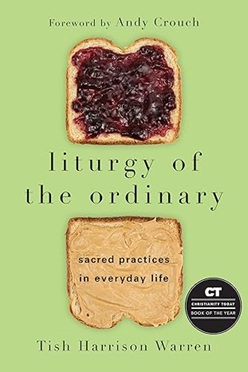
In her book Liturgy of the Ordinary, Tish Harrison Warren puts it this way:


“The word Eucharist literally means ‘thanksgiving’. The Eucharist is the thanksgiving feast of the church, and it is out of that communal practice of thanksgiving that my lunchtime prayer of thanks flows.

The Eucharist — our gathered meal of thanksgiving — for the life, death, and resurrection of Christ — transforms each humble meal into a moment to recall that we receive all life, from soup to salvation, by grace. As such, these daily, small moments are sacramental.”


Later, she continues:


“We recall and reenact Christ’s life poured out for us, and we are transformed into people who pour out our lives for others…. in this alternative economy of the true bread of life, we are turned inside out so we are no longer people marked by scarcity, jockeying for our own good, but are new people, truly nourished, and therefore able to extend nourishment to others.

…. In Christ there will always be enough for us, with so much leftover.”


I read that tonight, while feeling sad and ungrateful, and it provided a temporary “Ah, back on track” moment, but as in so much of our day-to-day spiritual lives, that was quickly replaced by the flat sadness of what I call the “all is vanity depression,” and which clinicians call “anhedonia,” a scientifically validated phenomenon.

But I want to draw attention to something…

That phrase: “In Christ there will always be enough for us, with so much leftover.” How beautiful. But again, it doesn’t always feel enough, let alone offering leftovers.

But the truth remains, and it’s why I wanted to post this — that indeed, “in Christ there will always be enough for us, with so much leftover,” and whether we feel that or not doesn’t change the fact that his body was, in fact, broken for us, and that he will always be enough for our salvation, no matter how we feel.

Christ’s love doesn’t ebb the way ours does.

He’s always enough, whether we feel it or not. Our names are written in heaven, and though you may feel flat tonight, he is with you just as surely as he was when he thought of you as he bled and died to make you an heir to his riches in heaven.

Our feelings – ha – the idea they could change that? What are we thinking?

Now, if you’re still feeling gloomy because you’re still flat and now you wonder how you could be a Christian at all, I’d suggest reading Spurgeon’s Sorrows.

There was never a man (except King David) who wrote so movingly about feeling both moved and unmoved by the fact the tomb was moved. Depending on the day.

Take heart that you’re not alone, if you feel alone in feeling this way.

Finally, this is why it’s so important to tend first to our own spiritual lives, because as Warren says, we serve others life-giving nourishment only after we’ve eaten the body ourselves. If we are flat, our service will be flat.

That’s why it’s so important to our spiritual lives that we get help for our depression — it’s not just some myopic “I want this for me” selfish American mindset.

It’s an “I want this for me, so I can better live it for you and my loved ones and my enemies, as well.”

John Piper once said we pray as if we’re in the solar system, and we pray first for ourselves, our own hearts, then we move outwards towards our family, then community, and so forth.

So we have to guard our hearts, tend to them, and celebrate the Eucharist in every meal.

No matter how small. Because that is how the big things begin. With the mustard seed of a meal.

Thank you, Jesus, that you were broken for us.

And if you feel broken tonight, he feels that for you too. He was broken, after all, too.

Finally, this is an absolutely lovely song for the broken, struggling, and the ones longing for God and turning their hearts to him and begging.

Listen to it a few times, and then a few times more. It’s meant the world to me. Heaven, to me, really.

If you live in the United States and struggle with depression, anxiety, or any other such disorders…

Find a psychiatrist here.

Find a therapist here (preferably, a medically trained Christian, but medically trained non Christians can be fantastic too).

For readers, internationally, I pray you can find help from a local resource.

For salvation, Christ and Christ alone.

January 31, 2026
0 Facebook Twitter Google + Pinterest
Esther Smith: “All he wants is you”

Esther Smith: “All he wants is you”

written by Christian Heinze

In her wonderful book, Chronic Illness: Walking by Faith, Esther Smith offers a strangely hard truth — one we often hear, theoretically, but do we really believe it?

Smith:


“God doesn’t want the things that you could be doing if you were healthy. All he wants is you.

He wants your faith, not your works. He wants your company, not grand feats. He wants to get to know you, and this is something you can do no matter what your daily life with illness looks like.

As I began to write this book, I asked myself a question. What is the number one message that people with chronic illness need to hear? What is the most important lesson that my own experience has taught me? In the end, I realized it was this: Your relationship with God is vital for your survival. People will let you down. Symptoms will come and go. Life will be painful and filled with grief. God is your only certainty.

Seek God, and you will find him (see Deut. 4:29). Draw near to God, and he will draw near to you.”


Amen. Also hard and also a relief – in much the way that so much of the Christian life is.

Think again about that quote: ““God doesn’t want the things that you could be doing if you were healthy. All he wants is you.“

Both our own personalities and culture can form an unholy alliance that whispers to the chronically ill — you don’t matter. You’re not useful. You lie there, doing very little, you are a drain on society and those around you, what’s your use if you feel of no use? If you have nothing to contribute, why are you even here?

These accusations come from us, the devil, and also the world, and sometimes unfortunately, the church. As humans we tend to celebrate the “great” Christians who led many to Christ, the ones who accomplish great things to alleviate human poverty, malnourishment, to build and grow local churches that water the local community with the fountain of life.

If you don’t realize this, just look at the opulent funerals for some of the “giants of the faith.”

Now — all those things they do are good things! They are massive answers to prayer to so many.

But humans are prone to worship, and in our admiration for those works and the ones accomplishing them, it can also crush us with a kind of “So… what have you done lately?”

Maybe it’s just me. Maybe it’s my pride. Maybe others with chronic illness don’t feel this. But as I’ve battled my growing physical inadequacies the past 3 years, I’ve had to contend with a global feeling of spiritual deficiency.

And now comes the “And can it be?” relief that Miller offers in this sentence: “”God doesn’t want the things that you could be doing if you were healthy. All he wants is you.”

And that’s true, praise God.

The world wants what we can do. God simply wants us. He has plenty of people to do the things we can’t. Besides, what if we, the chronically ill, are called to our own thing — and that own thing is to just be content with the fact that we can “do nothing” for God, except praise him, that we can do nothing for others, except pray for them?

Aren’t those nothings something?

They require faith, faith, faith to believe that we matter when American culture (particularly, the Protestant Work Ethic kind) says we don’t. They require faith, faith, faith when we see so little accomplishment to validate that faith, hear so little to spur us on, when those things – the quiet things – just seem so flat and useless.

But we are God’s children. Does our love for our kids hinge on what they do? Their works? No! All we want with them is relationship. I could care less if my kids did much around the house. I don’t want their works, I want relationship.

And here is also God: All I want is you. Your faith, your heart, your friendship.

Now I ask you — you who are struggling with any number of physical or mental diseases? Do you also struggle with mattering in a world that has only one definition of mattering?

If you’re in church world and you only matter if you can lead this group or that group, or be involved in this ministry or that ministry, and instead all you can do is barely show up or not at all.

First, all God wants is a relationship with you, and you can still create your own sanctuary to God at home where heaven meets earth, where heaven meets your home. Those personal sanctuaries, where it’s just you and God, is where relationship forms and grows.

Second, if you’re in the broader world and you can’t work because of your illness, you might hear others say, “So what do you do?” Oh, isn’t there pain to just reply: “I’m sick.” Ugh!! Aren’t we inclined to lie, to somehow gin up something better than “I’m sick.”

We want to feel we matter – to ourselves, to others, to our community. I’m not sure where my own aspiration to genuinely help others and spiritual pride and desire to work my way into God’s good graces meet and interact, but whatever the case for me, for you, we just plain old want to matter.

And sickness can make us feel like we don’t. And maybe, others make it painfully – so painfully – clear we don’t to them.

But listen, the only One Who Matters came exactly to you and and me — the sick and the struggling. And for that brief moment of his ministry, those brief three years in the world, we were the object of the tender hand of the All Powerful God who came to validate, to encourage, to forever alter how Christians are to view poverty of body, bank account, and mind.

Does it matter enough to us that we matter to God?

That’s the question I have to ask myself daily.

If we only matter to God, isn’t that enough?

If it takes our sickness to find God’s friendship, to desire it more than our own wellness, to seek and find him, then it will all be worth it in the end, and in this current moment, if it’s worth it, how wonderful a bonus is that?

So I write this to me, I write this to you.

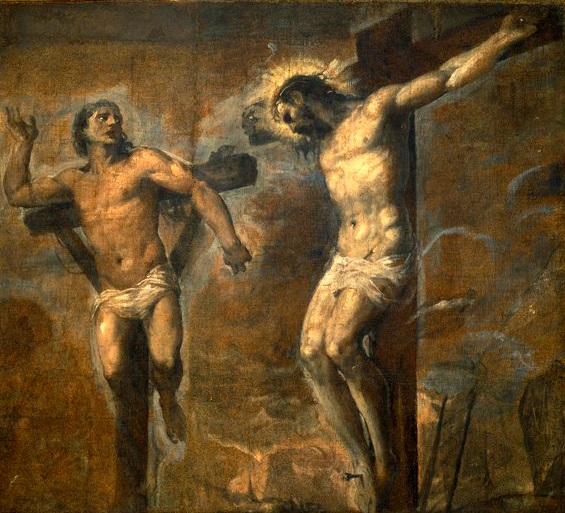
And I remind you – that you matter to God, that you matter so much that he died for you. The thief could do nothing and did nothing on earth except steal and kill. And when he could do nothing else except beg “remember me,” that was enough.

If you struggle with depression, anxiety, or any other such disorders — for readers in the United States… please read Smith’s book.

And…

Find a psychiatrist here.

Find a therapist here.

For readers, internationally, seek help from a local resource.

For salvation, Christ and Christ alone.
January 29, 2026
0 Facebook Twitter Google + Pinterest

Update

written by Christian Heinze

Hi all, I’m sorry it’s been more than awhile since I last posted. My health has worsened to the point that I’ve been unable to sit in a chair for more than 30 minutes due to back issues/degeneration and my ongoing GI stuff.

Thankfully, I just bought a chair that finally feels sort of okay. So I can sit again! For the first time in about 7 months.

Up until now, I’d been going to our car to sit and get outdoor and sitting time that way, because captain chairs in minivans are pretty great.

Right now, my condition is very day-to-day with a lot of doctor visits and hospital trips, and we’ll see what progresses. As I’ve written before, surrender is all I can do, at this point. The doctors are out of ideas, as there’s a convergence of health issues, and how to manage each without affecting the other is tricky. Obviously, it’s been a pretty tough journey for my family. I’ve had to rely on my wife far more than I wish and there’s been a lot of tough stuff to process, missing out on the kids’ important moments, and I’ve had to do a lot of praying and I need God’s grace to figure out how to be the dad he’s called me to be. This has all been so unexpected and there’s no resolution in sight and it’s something I’d never had on my bingo card.

Most of the difficulty has been seeing my kids’ disappointed or worried faces. I don’t want to write long about that, because I’m still processing it, but I have to have faith that somehow the Lord will use this all for their good and his glory and my good, as well.

Many of you have written and offered your prayers and I believe all the prayers from so many have sustained me and my family in ways that I can’t even know this side of the other side.

The good news (and again, I’m being very careful about saying this this because of my uncertain health and a young family that takes precedence) is that, with this chair (hooray!), I’m hoping to start video interviews soon w/folks who know a lot about mental health, as well as the Christian walk. That will be short-term easier on me than my goal of daily posting blog entries, which obviously hasn’t been happening.

I hope the possible interviews will be meaningful to people, and that I can get started soon, but I need to continue tending to my health, and then second, to my family. And I’ve learned that, no matter how hard you try, yes, the spirit is indeed willing but our flesh is very weak.

You and I stand daily with the God who has our lives in his hands, and that can be a terrifying thought at first, but if you linger long enough with it, what better hands to be in? Do I believe that? Do you believe that? Do we really? Those are questions that I wish I could give the “good Christian answer” to and I can, intellectually, but I think it’s much more difficult for Christians (well, at least me) to honestly confront than we realize.

But the Lord has shown up in so many bleak moments, but also felt absent in them (have to be honest about that), but I do know that in all moments, he’s been there. And I will never stop thanking him for that, and there is no greater beauty than Christ. He is the sum of all good, he is love, and he is with you and me – whether we feel it or not.

Thanks so much for your care and for your prayers (and patience!).

October 13, 2025
2 Facebook Twitter Google + Pinterest
Staton: On being a witness

Staton: On being a witness

written by Christian Heinze

So often, we conflate the idea of witness with evangelizing. And while there’s some conceptual overlap, there’s also a key difference that’s important because some are uniquely gifted at sharing the Gospel through words, and praise the Lord for that, while others struggle to articulate. And there’s no shame in that.

This is where “witness” comes into play and why it’s important to say a) it’s separate from our limited conceptualization of evangelism but, interestingly, b) is also its own form of it.

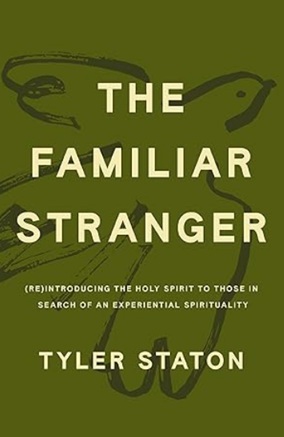
Tyler Staton puts this together in his chapter on witness from his book, The Familiar Stranger:


“Witness literally means ‘someone who sees or experiences something important for others to know about. Somewhere along the way in recent church history, ‘witness’ became a synonym for evangelism.

…. Witness is: to live in this world like Jesus is King.

….. There is just one simply requirement for being a witness: your eyes have to be open. If you were present at a crime scene but you were asleep when it went down, you’re not a witness. Here is where you start in supernatural ministry: Every day, ask God to open your eyes to his invisible but invading Kingdom.

‘Open my eyes today at the office, at school, at book club tonight, at daycare pickup this afternoon, at the dog park with my neighbors this morning.’ Show up to your ordinary life supernaturally, by which I mean living by the laws that govern the Kingdom of heaven.”


Amen.

In this conceptualization, we aren’t simply mouthpieces of a message – we are living representatives of Christ, and that’s not just a word thing.

After all, Jesus didn’t only minister in words, did he?

And we don’t just live in words.

This distinction between witness and evangelizing isn’t just theologically accurate, but it’s also probably liberating if you struggle with words and don’t have a certain type of personality. I know some people who live to preach. Just comes easily, they’re called to do it, and praise the Lord for that.

And I know others who preach equally as powerfully through what they do.

But I think (again, I use the word “I think” because God doesn’t explicitly tell us) the most powerful synthesis of witness and evangelizing might come from the following passage of Staton’s, which I see as a sort of fusion.

Staton:


“To speak about the love of Jesus is not, first and foremost, to try to convince your coworkers of exclusive truth claims at the Friday evening happy hours.

It’s just being completely honest about your relationship to God in an environment where you’re probably used to compartmentalizing your spirituality….. to live not manipulatively but honestly before all people, regardless of the setting. That’s it.”


Amen again.

If we’re following Jesus and sharing our lives, it will just come out, and the best thing we can do is treat our Christianity as just part of our lives. It’s not some separate topic to dance around.

So many times, Christians feel pressure: Oh, when do I bring it up? How do I bring it up? How should I phrase it?

Well, if we’re just ourselves, in every arena, including spiritually, that’s witness.

If you’re having a long talk with someone about something, and just being honest about your life, your faith is probably going to pop up.

Who knows how others will react? Are we worried about telling people what cake we like or dish? Maybe they’ll like it too, maybe they’ll hate it. They won’t hold your taste for chocolate against you (pretty rare, so maybe a a bad example), but they also wouldn’t hold your distaste for it against you.

Of course, spirituality is a trickier thing, but I’ve found that most people just don’t care, and in fact, they appreciate that you’re being honest and vulnerable, because friendship is born and grows from honesty and vulnerability.

So being a witness is actually much more simple than evangelizing and more natural. It’s just about being naturally who are are.

If we can be honest about our lives, we can be honest about that.

Now, being honest about our lives… well, that’s a different and tricky subject, and very difficult for humans to do for all kinds of reasons (including pride), but again, a different topic, and VERY difficult for people afflicted with the disease of social anxiety disorder which can be a devastating and debilitating condition and deserves treatment and care, as with other medical conditions.

If you struggle with social anxiety disorder, depression, anxiety, or any other such medical conditions — for readers in the United States…

Find a psychiatrist here.

Find a therapist here.

For readers, internationally, seek help from a local resource.

For salvation, Christ and Christ alone.

July 21, 2025
0 Facebook Twitter Google + Pinterest
Great grace

Great grace

written by Christian Heinze

In his book, Waking from The American Dream, Donald McCullough puts our remarkable salvation from Christ this way:


“Grace means that in the middle of our struggle the referee blows the whistle and announces the end of the game.

We are declared winners and sent to the showers. It’s over for all huffing, puffing piety to earn God’s favor; it’s finished for all sweat-soaked straining to secure self-worth; it’s the end of all competitive scrambling to get ahead in the game.

Grace means that God is on our side and thus we are victors regardless of how well we’ve played the game.”


If we doubt this, why Jesus’ death?

If we don’t agree with what McCullough says, how can Paul slam the idea of boasting about our salvation? All is mercy, all is grace, and we can do nothing to earn it. Only Christ could and only he did.

Here’s the Presbyterian minister and former Senate chaplain Lloyd Ogilvie who puts our response to redemption in the context of Peter’s denial of Christ and subsequent encounter with Jesus after the Resurrection.


“Peter had built his whole relationship on his assumed capacity to be adequate.

That’s why he took his denial of the Lord so hard. His strength, loyalty, and faithfulness were his self-generated assets of discipleship.

The fallacy in Peter’s mind was this: He believed his relationship was dependent on his consistency in producing the qualities he thought earned him the Lord’s approval.

Many of us face the same problem. We project into the Lord our own measured standard of acceptance. Our whole understanding of him is based on a quid pro quo of bartered love. He will love us if we are good, moral, and diligent.

But we have turned the tables; we try to live so that he will love us, rather than living because he has already loved us.”


We have trouble believing this, don’t we? (I really, really do). Why?

Because it makes no sense, based on the world we see around us — where our worth is tied up in how good we are, how productive we are, whose “political team” we’re on, how successful in any sphere we are. We can’t get away from the human conception of personal worth – no matter how a culture defines it or how a political party defines it or how we define it for ourselves.

But Christ’s work on the cross smashes all that by saying it’s about His worth – not our own. It’s about his accomplishment, not our own.

No other religion, no human mind could have devised a redemption like this because it runs counter to the natural order of things. And thus, it can only come from a supernatural one and supernatural love.

You are loved because you are loved, you are accepted – not based on your worth or efforts – but based on his worth.

As Brennan Manning writes in his book The Ragamuffin Gospel (which contained the quotes I referenced and is the most beautiful tome on God’s redemption you can find), God expects more failure from us than we do.

Think of that. He expects less out of us than we do. What other God? Certainly not the gods of this world or the ones of American society.

And that’s why he sent Jesus.

This salvation calls himself “The Light of the World.” What else could light up the dark heaviness of the world and its value system and our own expectations?

And so he says, “Come to me, all you who are burdened, and I will give you rest. Take my yoke upon you and learn from me, for I am gentle and humble in heart, and you will find rest for your souls.“

This is the answer to the world’s accusations and constant bickering. Not “winning” or “owning the other side.” But living in the light of his love.

When we think of what Jesus did for us, it’s impossible for us to judge another.

If he could look down and forgive us, how can we look down on another?

But if we look up and see what he did for us on the cross, well, as Brandon Lake sings, “All that I have is a hallelujah, and I know it’s not much, but I’ve got nothing else fit for a king. Except for a heart singing hallelujah.”

[Painting: Christ and the Good Thief, Titian]

July 17, 2025
0 Facebook Twitter Google + Pinterest
STUDY: Gut changes raise risk of eating disorders in women

STUDY: Gut changes raise risk of eating disorders in women

written by Christian Heinze

A new study, published in Nutrients, looks at the profound effects of the gut-brain axis in both the formation and effects of eating disorders in women.

First off, the authors noted that, thanks to hormonal fluctuations, women are particularly biologically prone to developing eating disorders.

Second, the study looked at how changes to the microbacteria in the gut contribute to the formation of eating disorders, amplify their harmful consequences, and influence a bidirectional downward cycle of influence and outcome.

As in most other “mental” health issues, the composition of bacteria is absolutely profoundly important, and as I’ve mentioned ad nauseum, oh that more pastors would literally have a picture of the gut in their offices before going out an preaching sermons on mental health.

To the study:

Dr. Sanchari Sinha Dutta has a terrific read on it, so I’d urge you to go there if you want a fuller read on this, but essentially – we know that the human body, for many reasons, experiences alterations to its gut bacteria.

For women, the role of hormones is particularly powerful, which may explain why they’re more likely to develop eating disorders.

But viral illness, bacterial illness, parasitic infections, antibiotics – these all clearly affect our gut bacteria. As can other things – like sleep disturbances, stress (which often is amplified by altered gut bacteria itself!), diet, just life things that happen.

Those gut changes affect our brain. Brain stuff then affects the gut. So the relationship is bidrectional and it’s not always clear what comes first – the bacterial change or what’s going on in the brain. But it’s safe to say that our gut bacteria is always changing.

Now, it can change in such a way that it sets off a deleterious chain of events that lead to the formation of all kinds of sicknesses, including eating disorders.

Dr. Dutta writes more of how this happens:

Emerging evidence highlights a multifactorial crosstalk between immune–inflammatory pathways, disordered eating behaviors, and mood-related psychopathology. In patients with anorexia nervosa, a reduced abundance of short-chain fatty acid (SCFA)- producing bacteria has been observed. This disrupts intestinal permeability and facilitates the blood’s translocation of microbes and microbial metabolites. This cascade subsequently increases pro-inflammatory cytokine levels and impacts neuroimmune signaling and brain functioning.

Gut microbiota-derived SCFAs are crucial in regulating appetite and maintaining metabolic homeostasis by increasing satiety hormones leptin, glucagon-like peptide-1 (GLP-1), and peptide YY. 

SCFAs primarily influence brain activities by altering neuroinflammation, promoting microglial maturation, and regulating the synthesis of neurotransmitters and neurotrophic factors. Inflammatory activity in the brain has been found to increase anorexia nervosa risk by suppressing the appetite-stimulating hormone ghrelin, leading to early satiety and reduced food intake. However, evidence also suggests that SCFAs may have context-dependent effects on appetite and behavior, influenced by dietary composition, microbial taxa, and host physiology.

Now… if you read all that, it’s impossible to cast stones at folks for developing eating disorders — just as it is for any other “mental” illness, which science has shown are clearly physical illnesses.

Again, we don’t blame someone’s spirituality for their cancer, and just as emphatically, we should reject spirituality as cause for “mental” illness. In fact, to do so, is taking something sacred (pain) and desecrating it. Jesus never did that to anyone in any kind of pain and neither should the church.

Back to the study…

The potentially good news arising from this study is that much better help for those with eating disorders may be on the way, thanks to discoveries like these.

Scientists are now working on developing microbiota-targeted interventions for helping restore a normal gut microbiota in victims of the disease.

This includes specific probiotics, prebiotics, targeted dietary shifts (everyone has different deficiencies and needs in their diets), and fecal microbiota transplantation (FMT).

Each of those may be more effective than current treatment by really getting to, well, the gut of the problem.

Finally, I want to say this.

Without minimizing other “mental” illnesses that get a lot of attention (depression, anxiety, PTSD, OCD), eating disorders are empirically the most physically dangerous, and absolutely wreak havoc on an individual’s mind and body. In fact, they’re often associated with developing those other diseases, as well.

The interesting thing is that a common Christian answer to the problem of eating disorders is “clean eating.” In fact, if you look at the culture right now, “clean eating” is all the rage for an answer to everything.

It’s good to eat healthy, but my concern is the way “clean eating” is currently often being linked to our bodies being temples of the Holy Spirit, and an overemphasis on clean eating is proven to be a risk factor for “orthorexia,” which is the gateway condition for a whole multitude of eating disorders.

I wrote an extensive piece on this and why the Christian community might be particularly prone to advancing this.

One of the way is just how tragically the sin of “gluttony” has been reframed as “eating a lot of junk food” when gluttony had absolutely nothing to do with “eating a lot” in the Bible.

You can read that piece here.

Finally, some resources.

To start with — some resources.

The National Institute of Mental Health on eating disorders, including signs, symptoms, risk factors, treatments and help.

A 24/7 hotline for those struggling with eating disorders or any other mental health disorder.

Six Common Types of Eating Disorders.

Signs of an Eating Disorder.

And find an eating disorder therapist near you.

[Photo: Composition and distribution of intestinal microflora by Dr. William Ju, University of Toronto, via Wikipedia]

July 17, 2025
0 Facebook Twitter Google + Pinterest
Hope in Times of Fear: Tim Keller on sowing our tears

Hope in Times of Fear: Tim Keller on sowing our tears

written by Christian Heinze

In his wonderful book on the Resurrection, Hope in Times of Fear, Tim Keller doesn’t glorify our suffering and tears (the Bible makes it clear these are unnatural to his original plan for the world), but also tries to comfort us by telling us our tears are the water of our restoration.

The basis for this is Psalm 126:5-6 which should be underlined and, to me, really, is an astonishing joy that we have to hold onto into suffering:

“Those who sow with tears will reap with songs of joy. Those who go out weeping, carrying seed to sow, will return with songs of joy, carrying sheaves with them.”

Thank you, Lord.

There are similar passages, of course, particularly in Paul’s writings, but I love what Keller says about this particular Psalm.

Keller:


“The imagery is striking. The seed being sewn consists of tears and weeping. They are planting their tears and receiving a harvest of joy.

This suggests that there is a way to weep and there is sorrow that bears fruit, fruit that includes deeper happiness.

It is inevitable in this world that we should weep — but do we sow our tears?

…. If a sower were to simply dump all his seed in one spot, there would be no harvest. So simple venting of grief may not produce fruit in our lives and those around us.”


Now a quick note to this — I believe we need to vent our grief.

We can’t just pretend it away, smile it away, dismiss it, or church it away with songs where we smile but feel absolutely stricken, because grief is a natural response to an unnatural event, and Jesus himself was called a man of sorrows.

And I believe that venting our grief is vital to renewal, and that doing so to God, and also to a loved, safe person or therapist is integral to healing.

But Keller reminds us that grief can either go bad or produce something good – as impossible as the latter might seem while we’re in the middle of it.

Keller again:


“The Psalter gives us numerous examples of people taking their pain and suffering to God, praying through it in his presence, and thereby avoiding anger, self-pity, and despair that can poison hearts and make us bitter and harder rather than wiser and better.”


Now another qualification I want to make, and then what I think Keller is getting at.

We cannot help but feel anger. The Bible itself tells us that. “Be angry and do not sin.”

Again, it’s a natural response. Job was certainly angry, but God never judges or accuses him for it. And we can despair. The Bible is full of of men and women of great faith, including Paul, who despaired to the point of death.

So the feeling isn’t the issue. Feelings never are.

Here’s what is: Do we let those feelings, as Keller asks, “poison” our hearts and “make us bitter and harder?”

That’s where the rubber meets the road for the Christian. For me.

Suffering is inevitable. Anger and despair and self-pity are natural responses.

Don’t be ashamed if you feel those things because God doesn’t rebuke his people as they pour out their anger in prayer, their despair in prayer, or sorrow for their suffering.

But where do all those intense emotions, all that suffering lead us, and who does that make us, and how does it affect those around us?

That’s the key.

And that is the enormously hard part, and as I go through my dark times, oh wow, it’s incredibly easy to descend from doubt to despair to bitter to hardened and poisoned. Like a ladder going down to the pit. Or Sheol, if you’re an Old Testament writer.

I have to watch my heart so closely these days. Suffering has a way of absolutely testing you that I often tritely compare to being a load of laundry that’s being spun around for hours in burning heat and you see the machine rumbling and shaking and it’s as though you’re in there, locked, and being hurled around, and when is the machine of chaos going to stop?

Will those socks make it through?

Again, a trite example 🙂

But if you’re reading this blog, there’s a pretty good sense you know exactly what I’m talking about.

You know exactly the feelings, you know exactly the temptations. Jesus did too.

The only thing we can do — in addition to talking to a therapist and doctors about medication or the mercies of counseling — is just keep praying and remember that, if — by God’s infinite grace — we keep in our mind this thought that he sees and numbers are tears and we are sowing them, that they are not empty, that they are the watering ground for restoration — then we can see something other than pointless suffering.

I don’t do affiliate links, so this is completely from my heart, and one of the cheapest and best and most helpful books I’ve read on this is Jacques Philippe’s Trusting God in the Present. You can read my post on the book here, but the thing I’ve had to remind this hard, easily bitter and brittle heart of mine is that, in suffering, instead of asking why, instead of despairing each day, ask myself this.

In the words of Philippe: “What does God want of me here? What is the right way to live through this? Which part of the Gospel am I called by this situation to put into practice now? What acts of faith and hope, what progress in love, am I being asked to make today.”

SO HARD. (That’s caps-lock, btw).

This week, I’ve been slowly, then suddenly turning from sorrow and grief to, the past few days, straight up bitterness about various things (“letting the sun go down on your anger” is a real bad idea). Bitterness that’s kept me from prayer, that’s kept me from wanting to pray. Bitterness that produces more. Quite the fruitful tree.

And then I did the thing this morning of opening, for some reason through that bitterness, Keller’s book and it landed on that particular passage, and it was as though the sun had broken out even though no clouds have objectively left.

If you’re a Christian you’ll understand that. You’ll know those feelings, that struggle, and that hope.

And if we sow our seeds — with faith that God will use the tears, the grief — for a greater weight of glory and restoration — both in our lives and for those around us and for eternal life, then with God’s grace, we’ll get through whatever we’re going through and, again, by God’s grace and to his glory, find ourselves one day sharing his inheritance and hopefully being an example for those around us. A witness to his Gospel.

May the Lord bless you — one who struggles. Maybe you’ve got this figured out better than I. But if you don’t, may the Lord bless you, and even if you do, may he bless you too. Our cups run dry and run over and who can say how the Lord pours and when he does.

Only that, one day, we will never have to wonder again. We can only wander in wonder in Immanuel’s land. We’ll see his smiling face! And, at last, we’ll know the last of pain.

If you struggle with depression, anxiety, or any other such disorders — for readers in the United States…

Find a psychiatrist here.

Find a therapist here.

For readers, internationally, seek help from a local resource.

For salvation, Christ and Christ alone.

July 12, 2025
0 Facebook Twitter Google + Pinterest
Staton: Listening to God’s whisper

Staton: Listening to God’s whisper

written by Christian Heinze

In his new book The Familiar Stranger, Tyler Staton reminds us to walk through life as the two on Emmaus should have — actively looking for Jesus presence in places and times we’d least expect.

Staton:


“We tend to miss God in our midst, not because he’s too extraordinary but because he’s too ordinary. We tend to look for God in the wind, earthquake, and fire rather than the whisper….. what if you know him not just as the table in the evening but all the way along the road to Emmaus?”


To dovetail off his point on looking for God only in dramatic moments (whether the natural or spiritual fires and winds we endure), think about this: If you look at the most primitive, pagan religions, you see this nearly universal phenomenon of seeing gods in storms, fire, creation, destruction. All these dramatic things.

And in a way, you could say our experiential Christianity is not much more advanced.

Although we might not have a god of the storm, fire, or fertility, we retain this primitive, restrained capacity for only experiencing and finding him in those moments.

That’s not bad, of course, because he’s in all that too.

But that tendency is almost just a monotheistic advance on what the ancient pagans were doing. Instead of making many gods from the dramatic, we now try to make sense of our God in the dramatic.

But there’s also a recurring theme throughout both the Old and New Testament of finding God in ordinary moments, in whispers, and — in fact — not finding him at all, which is the dark breeding ground for Psalms.

Which is much truer to the human experience. A God we notice only in the dramas of our life isn’t a God who’s relational, but one who’s sensational — it’s an IMAX god.

But you and I crave for the God of the everyday, and what’s associated with the every day? Our family. So we want the Father who holds us, the brother who listens to us, the Spirit who prays for us and fills us when we run dry, the lover of our soul who’ll listen to us for hours and hours and loves us because he loves us.

In short, a God we talk to, and who talks to us.

Staton gets at that this way:


“Maybe God whispers because it’s the only way he can get what he wants most, what was lost in Eden: to walk with you and me in familiar intimacy that we might know God as he truly is and discover ourselves as we truly are in his presence.”


At first, it’s hard to look for God everywhere, but over time, you’ll find him anywhere. Usually.

That’s why Jesus told us to keep knocking and looking and we’ll find.

The truth is that most of us familiar with the darkness of our disease have also heard God’s whisper break through it in a way we can’t describe, but the truth is also that many, many times, we won’t hear that whisper.

Those are the toughest times. When we keep knocking and no one seems to be home. So how do we get inside to the home we long for?

But it’s in those times outside, that we have to keep, keep knocking and praying and begging, and whether you can hear God’s answer or not, he has already spoken and if you simply look at a cross for a few minutes, it will say: “This is is how much I love you.”

Of course, I’d be disingenuous to say that will always rouse us. The conditions we have are physical diseases of the brain and part of the “wonderfully made” is also the “fearfully made” and it’s hard to a get a handle on ourselves.

So the best we can do is the best we can do — keep looking for God, and also if we can’t hear or find him, maybe it’s because we’re lost in a disease of our mind, and it’s time to talk to a doctor about whether we need medical help.

But we can never stop the spiritual component, we can never stop knocking, because sometimes, when we least expect, he’ll open the door, whisper back, and you’ll walk into his presence and experience a sacred joy. We lost the easy conversation and full communion in Eden, but we’ll occasionally find something beautiful of it here, and once we’re home, well then, that’s what home is.

If you struggle with depression, anxiety, or any other such disorders — for readers in the United States…

Find a psychiatrist here.

Find a therapist here.

For readers, internationally, seek help from a local resource.

For salvation, Christ and Christ alone.

July 6, 2025
0 Facebook Twitter Google + Pinterest
Load More Posts

Social Media

Twitter

Get in touch with me

Contact here. 

The Weary Christian mission:

First off:


In the United States, find a psychiatrist here.

In the United States, find a therapist here.

If you’re in the United States and having thoughts of harming yourself or others, please call the National Suicide Lifeline at 1-800-273-8255.

If you’re in the UK, get urgent help here.

Canada, here.

Australia, here.

New Zealand, here.

South Africa, here.

France, here.

Germany, here.

Portugal, here.

Mexico, here.

India, here.

The Philippines, here.

Singapore, here.

South Korea, here.


The Weary Christian goal…


a) reduce the stigma surrounding depression, anxiety, OCD, and other conditions in the Christian community.


b) have uncomfortable but honest conversations.


c) Reduce the stigma surrounding antidepressants, antipsychotics, and other meds God has given us as gifts.


And…


d) Sometimes (tons of times), we all feel really, really depressed in our journey. Hopefully, this site makes you feel less alone.

Categories


@2017 - PenciDesign. All Right Reserved. Designed and Developed by PenciDesign