The Weary Christian
  • Depression
    • Depression

      James Bryan Smith: Unmet expectations and fear

      Depression

      STUDY: Criticizing older adults make them more vulnerable…

      Depression

      STUDY: Awe can reduce depressive symptoms

      Depression

      STUDY: How music-mindfulness can help depression, anxiety

      Depression

      STUDY: Chronic pain associated with higher rates of…

  • Anxiety
    • Anxiety

      Calling out the brain on catastrophizing

      Anxiety

      James Bryan Smith: Unmet expectations and fear

      Anxiety

      STUDY: Awe can reduce depressive symptoms

      Anxiety

      STUDY: How music-mindfulness can help depression, anxiety

      Anxiety

      STUDY: Chronic pain associated with higher rates of…

  • Book quotes/Video
    • Book quotes/Video

      “In darkest night, you were there like no…

      Book quotes/Video

      Thanksgiving for his brokenness

      Book quotes/Video

      Esther Smith: “All he wants is you”

      Book quotes/Video

      James Bryan Smith: Unmet expectations and fear

      Book quotes/Video

      Staton: On being a witness

  • Health News
    • Health News

      Calling out the brain on catastrophizing

      Health News

      STUDY: Mental health conditions share deep genetic patterns

      Health News

      STUDY: Four Supplements that MIGHT help depression

      Health News

      STUDY: Gut changes raise risk of eating disorders…

      Health News

      STUDY: Criticizing older adults make them more vulnerable…

  • Interviews
    • Interviews

      INTERVIEW: Dr. Terry Powell’s gripping account of depression

      Interviews

      INTERVIEW: Therapist Michael Schiferl explains religious scrupulosity and…

      Interviews

      INTERVIEW: Rocker Matt Sassano shares battles, urges transparency…

      Interviews

      INTERVIEW: Dr. Brian Briscoe tells Christians that antidepressants…

      Interviews

      INTERVIEW: Pastor Scott Sauls on anxiety, depression, and…

  • Devotionals
    • Devotionals

      “Grace has got to be drunk straight”

      Devotionals

      Defeated by God

      Devotionals

      Am I a faithless Christian?

      Devotionals

      Think you’re a “failure?” Jesus sees you unlike…

      Devotionals

      “I killed Jesus of Nazareth”

  • About
  • Depression
    • Depression

      James Bryan Smith: Unmet expectations and fear

      Depression

      STUDY: Criticizing older adults make them more vulnerable…

      Depression

      STUDY: Awe can reduce depressive symptoms

      Depression

      STUDY: How music-mindfulness can help depression, anxiety

      Depression

      STUDY: Chronic pain associated with higher rates of…

  • Anxiety
    • Anxiety

      Calling out the brain on catastrophizing

      Anxiety

      James Bryan Smith: Unmet expectations and fear

      Anxiety

      STUDY: Awe can reduce depressive symptoms

      Anxiety

      STUDY: How music-mindfulness can help depression, anxiety

      Anxiety

      STUDY: Chronic pain associated with higher rates of…

  • Book quotes/Video
    • Book quotes/Video

      “In darkest night, you were there like no…

      Book quotes/Video

      Thanksgiving for his brokenness

      Book quotes/Video

      Esther Smith: “All he wants is you”

      Book quotes/Video

      James Bryan Smith: Unmet expectations and fear

      Book quotes/Video

      Staton: On being a witness

  • Health News
    • Health News

      Calling out the brain on catastrophizing

      Health News

      STUDY: Mental health conditions share deep genetic patterns

      Health News

      STUDY: Four Supplements that MIGHT help depression

      Health News

      STUDY: Gut changes raise risk of eating disorders…

      Health News

      STUDY: Criticizing older adults make them more vulnerable…

  • Interviews
    • Interviews

      INTERVIEW: Dr. Terry Powell’s gripping account of depression

      Interviews

      INTERVIEW: Therapist Michael Schiferl explains religious scrupulosity and…

      Interviews

      INTERVIEW: Rocker Matt Sassano shares battles, urges transparency…

      Interviews

      INTERVIEW: Dr. Brian Briscoe tells Christians that antidepressants…

      Interviews

      INTERVIEW: Pastor Scott Sauls on anxiety, depression, and…

  • Devotionals
    • Devotionals

      “Grace has got to be drunk straight”

      Devotionals

      Defeated by God

      Devotionals

      Am I a faithless Christian?

      Devotionals

      Think you’re a “failure?” Jesus sees you unlike…

      Devotionals

      “I killed Jesus of Nazareth”

  • About

The Weary Christian

THE WEARY CHRISTIAN

LIVING WITH FAITH AND DEPRESSION

  • Depression
    • Depression

      James Bryan Smith: Unmet expectations and fear

      Depression

      STUDY: Criticizing older adults make them more vulnerable…

      Depression

      STUDY: Awe can reduce depressive symptoms

      Depression

      STUDY: How music-mindfulness can help depression, anxiety

      Depression

      STUDY: Chronic pain associated with higher rates of…

  • Anxiety
    • Anxiety

      Calling out the brain on catastrophizing

      Anxiety

      James Bryan Smith: Unmet expectations and fear

      Anxiety

      STUDY: Awe can reduce depressive symptoms

      Anxiety

      STUDY: How music-mindfulness can help depression, anxiety

      Anxiety

      STUDY: Chronic pain associated with higher rates of…

  • Book quotes/Video
    • Book quotes/Video

      “In darkest night, you were there like no…

      Book quotes/Video

      Thanksgiving for his brokenness

      Book quotes/Video

      Esther Smith: “All he wants is you”

      Book quotes/Video

      James Bryan Smith: Unmet expectations and fear

      Book quotes/Video

      Staton: On being a witness

  • Health News
    • Health News

      Calling out the brain on catastrophizing

      Health News

      STUDY: Mental health conditions share deep genetic patterns

      Health News

      STUDY: Four Supplements that MIGHT help depression

      Health News

      STUDY: Gut changes raise risk of eating disorders…

      Health News

      STUDY: Criticizing older adults make them more vulnerable…

  • Interviews
    • Interviews

      INTERVIEW: Dr. Terry Powell’s gripping account of depression

      Interviews

      INTERVIEW: Therapist Michael Schiferl explains religious scrupulosity and…

      Interviews

      INTERVIEW: Rocker Matt Sassano shares battles, urges transparency…

      Interviews

      INTERVIEW: Dr. Brian Briscoe tells Christians that antidepressants…

      Interviews

      INTERVIEW: Pastor Scott Sauls on anxiety, depression, and…

  • Devotionals
    • Devotionals

      “Grace has got to be drunk straight”

      Devotionals

      Defeated by God

      Devotionals

      Am I a faithless Christian?

      Devotionals

      Think you’re a “failure?” Jesus sees you unlike…

      Devotionals

      “I killed Jesus of Nazareth”

  • About
Health News

STUDY: Mental health conditions share deep genetic patterns

James Bryan Smith: Unmet expectations and fear

STUDY: Four Supplements that MIGHT help depression

STUDY: Criticizing older adults make them more vulnerable to developing depression

Study offers great context on kids, screen time, and emotional problems

Daily Blog

Spurgeon on health anxiety

Spurgeon on health anxiety

written by Christian Heinze

Charles Spurgeon was famously afflicted with both depression and anxiety in his life.

And as a 19th century Baptist preacher, he was far ahead of his time in recognizing that it was a physical disease, not a mental one.

I want to make that clear.

Spurgeon believed it was physical before most doctors even knew. Now we know.

So if you have health anxiety, first head to a doctor or therapist who can point you in the right direction.

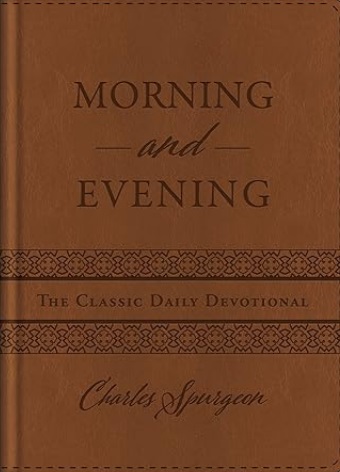
But while you’re in the waiting room, read this entry from Charles Spurgeon’s Morning and Evening, because it certainly is comforting, and I can’t help but wonder if he wrote it while battling his own health anxiety.

Its basis is Exodus 3:7, wherein the Lord says: “I know their sorrows.”

Spurgeon:


The child is cheered as he sings, “This my father knows”; and shall not we be comforted as we discern that our dear Friend and tender soul-husband knows all about us?

1. He is the Physician, and if he knows all, there is no need that the patient should know. Hush, thou silly, fluttering heart, prying, peeping, and suspecting! What thou knowest not now, thou shalt know hereafter, and meanwhile Jesus, the beloved Physician, knows thy soul in adversities. Why need the patient analyze all the medicine, or estimate all the symptoms? This is the Physician’s work, not mine; it is my business to trust, and his to prescribe. If he shall write his prescription in uncouth characters which I cannot read, I will not be uneasy on that account, but rely upon his unfailing skill to make all plain in the result, however mysterious in the working.

2. He is the Master, and his knowledge is to serve us instead of our own; we are to obey, not to judge: “The servant knoweth not what his lord doeth.” Shall the architect explain his plans to every hodman on the works? If he knows his own intent, is it not enough? The vessel on the wheel cannot guess to what pattern it shall be conformed, but if the potter understands his art, what matters the ignorance of the clay? My Lord must not be cross-questioned any more by one so ignorant as I am.

3. He is the Head. All understanding centres there. What judgment has the arm? What comprehension has the foot? All the power to know lies in the head. Why should the member have a brain of its own when the head fulfils for it every intellectual office? Here, then, must the believer rest his comfort in sickness, not that he himself can see the end, but that Jesus knows all. Sweet Lord, be thou for ever eye, and soul, and head for us, and let us be content to know only what thou choosest to reveal.


I’ve written extensively before about my own health anxiety, which began seven years ago, when my dad passed away.

The anxiety didn’t hit immediately.

It came a few weeks later, when I was in bed, still too sad to get up for the day, and our 1 year old son came crawling into the room, and his eyes lit up when he saw me as if to say “Play, Dad!” and instantly, a strange happiness mixed with anxiety, terror and urgency hit me.

And I cried, begged: “I don’t ever want my dear boy to look for his dad, and not find him.”

The idea of that smiling little face I loved so much, crawling hopefully from room to room, and it’s just empty room after empty room and no dad to ever be found?

Give that image to someone with OCD, and they’ll make a lot from it.

From that moment on, I’ve been battling this health anxiety thing. Sometimes better, sometimes worse. Always in the background.

For Christians, it’s a particularly stigmatizing problem, and I’m just going to say now what I wrote then.

As Christians, we feel we’re supposed to overlook our physical bodies and shrug off suffering because, as Paul says, we’re buried in brokenness but raised in glory.

“Get some perspective!” Some Christians might yell at us.

Well, tell them this: When Jesus was in Gethsemane, he knew he was just a few days away from heaven!

And he knew its wonders.

And yet, he was in total agony over his upcoming suffering before the physical part had even happened.

So don’t hold yourself to a higher standard than Jesus. He felt all the dread you feel.

Christians who don’t struggle with health anxiety or any other kind often use verses like “strengthen each other” to bludgeon the struggling. The Greek for “strengthen” is actually much better translated “have compassion.” Changes the meaning quite a bit, doesn’t it?

So, once again, if you’re a Christian and deal with health anxiety, don’t tell yourself that you should “know better” and feel guilty that you can’t shrug off the idea of a few years or a few decades of bodily suffering.

Remember that Jesus himself began dreading his upcoming suffering before he was arrested.

So don’t feel ashamed of your own dread. You’re in good company.

Now, besides a therapist and a doctor, I’ve found some good discussion boards.

I’d suggest the UK’s No More Panic, which is a very comforting spot for the like-minded.

And regarding therapists and doctors, you know these links by now, but here they are again.

For readers from the United States….

Find a psychiatrist here.

Find a therapist here.

For readers, internationally, please seek help from a local resource.

If you’re having thoughts of harming yourself or others, please call the National Suicide Lifeline at 1-800-273-8255.

February 5, 2024
1 Facebook Twitter Google + Pinterest
STUDY: Can eyes help diagnose depression?

STUDY: Can eyes help diagnose depression?

written by Christian Heinze

A fascinating new study in Scientific Reports shows just how revealing our eyes can be, and how a simple test might help doctors diagnose depression, in the future.

Read Felicity Nelson’s overview of the study at Science Alert, but here’s the gist.

You know that sense of total lethargy, apathy, lack of joy, lack of pleasure in anything, lack of everything that you feel when you’re depressed?

That’s known as anhedonia, and it’s the kind of depression that makes you lose all interest to do just about anything, because you literally have kind of lost all interest in anything.

It’s the “I can’t work up the energy to brush my teeth, even if they are about to fall out. Who cares if I don’t have teeth? I don’t like smiling in pictures anyway.”

I wrote about my experience with this type of depression awhile ago, and if you’re a regular reader, you probably have experienced it, as well.

To those who haven’t, I’m grateful you haven’t experienced it, but seriously, it’s real.

Anyway, there’s a reason for anhedonia, and studies suggest it could stem from a lack of activity in your brain’s ventral striatum, and that could be caused by any number of things we’re still learning about, including depression, Parkinson’s disease, schizophrenia and other conditions of the brain.

One external, scientific clue about what might be happening (besides our obvious behavioral clues) comes when researchers dangle something normally appealing in front of our eyes.

So says the new study.

If we’re not depressed, the sight of something we love will dilate our pupils.

So, I love Paris. No matter the arrondissement, the time of year, the size of crowds, the anything, I will always love that city. Even if they take out the green chairs.

And when you show me even the most cliched trinket of Paris, my eyes will dilate.

Unless… I’m depressed.

That’s what the new study shows.

Depressed people show their depression in the way their eyes (do or don’t) respond to normally satisfying stimuli. And that’s because the reward circuit in the brain has been affected.

So for example, when presented with the prospect of winning money (universally liked, right), the study showed a remarkable difference in pupil dilation between depressed and non-depressed participants.

You can click on the study to see pictures for yourself, but it’s just remarkable.

Of course, simply confirming anhedonia doesn’t treat that symptom, but any new fragment of information regarding how our brains work in this disease is helpful for further research.

And if someone doubts your depression, just say, “OFFER ME SOME MONEY AND LOOK AT MY PUPILS.”

Except you won’t care if they doubt your depression, at that moment. Because you don’t care.

And if you feel like that right now… believe me, I’ve been there and often return to that dreadful land, and we really don’t know how we arrived there, do we? We just are there. No bags in hand, no clue of how we got there, and no thought that hope could even be found because that concept itself, “hope,” seems as distant in this grey as the joy we once experienced.

So if you feel like that…

For readers from the United States….

Find a psychiatrist here.

Find a therapist here.

For readers, internationally, please seek help from a local resource.

If you’re having thoughts of harming yourself or others, please call the National Suicide Lifeline at 1-800-273-8255.
[Photo: Pexels, free photography].

February 5, 2024
0 Facebook Twitter Google + Pinterest
Staton: “Your will be done” is about releasing control

Staton: “Your will be done” is about releasing control

written by Christian Heinze

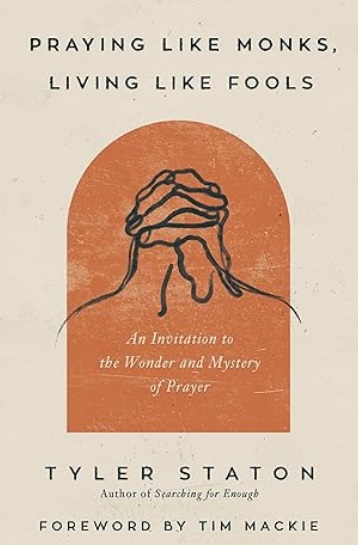
In his book, Praying Like Monks, Living Like Fools, Tyler Staton spends a wonderful chapter writing about the famous phrase in the Lord’s Prayer: “Your kingdom come, you will be done, on earth as it is in heaven,” and encourages us towards both an intellectual and physical release during prayer.

He writes:


“This is how Jesus teaches us to intercede. There are to movements to intercession: releasing and asking.

Your will be done. This part of the prayer is about releasing control. Think of something in you life you’re wrestling for control over. Name one thing you’ve never released to God, or perhaps released in the past but are trying to grab back. When you’ve come up with it, name it, and release it.

As for filling from the Spirit in place of releasing, peace in place of anxiety, trust in place of fear, and so on.

Posture can be helpful in this act of prayer. As you open your hands, picture in your hands some part of your life, something you’re clenching tightly to and trying to force your own will on. When you are ready, flip over your hands, releasing control to God, setting those circumstances at the feet of Jesus.

…. Your kingdom come on earth as it is in heaven. Having released control and surrendered our own will, we are now free to see our lives, our relationships, our community, and our world through the eyes of God. It is from this place that we ask with hearts full of faith and hope…. ask for for Jesus to come — anywhere and everywhere you know God’s kingdom of love and peace is lacking.”


End quote.

Now… if you come from a Protestant Christian tradition (as I do), you’re probably aware that we don’t do much embodied stuff.

In fact, a great loss from the Reformation was the stripping away of so much ritual.

These days, embodiment, in most Protestant Christian circles, often only goes so far as raising our hands during worship (a wonderful thing to do, by the way).

But ritual and embodied practice is a Scriptural theme, from beginning to end, and beginning and ending our day with a prayer similar to Staton’s can be powerful.

Try it some time. I’m still getting used to it.

So much about anxiety is about certainty, isn’t it? Fearing it. We crave certainty. We don’t want to let go of the idea that we can know.

It’s often pure anguish to pray: “Not my will, but yours be done,” because we dread what God’s will might mean.

I know. It’s really really wrenching.

It’s also often a sign of an anxiety disorder. Not faulty spirituality. And there are numerous physical explanations for why letting go is so much harder for some of us than others. Never feel ashamed, or that you lack faith based on defective spirituality. And read the rest of this site for more explanation on why your condition is NOT based on a lack of faith.

So, even to this post about an excellent prayer of release, I will apply my universal post-script.

For readers from the United States….

Find a psychiatrist here.

Find a therapist here.

For readers, internationally, please seek help where you can find it.

February 2, 2024
0 Facebook Twitter Google + Pinterest
STUDY: Psychotherapy and/or medication offers huge boost to depressed, heart failure patients

STUDY: Psychotherapy and/or medication offers huge boost to depressed, heart failure patients

written by Christian Heinze

A new study in JAMA offers impressive evidence that two treatment modalities – Behavioral Activation Psychotherapy (BA) and Antidepressant Medication Management (MEDS)– can significantly ease the severity of depression in patients, post-heart failure.

Heart failure can be devastating, physically, and patients often experience awful mental health, as well. A full 50% of patients with heart failure will experience clinical depression.

Explanation unnecessary.

Enter a new study that looked at how effective BA and MEDS can be for such patients.

Read this broader review from Giuliana Grossi, but here’s the gist:

Patients given BA therapy experienced a 50% reduction in depression symptoms at the 3, 6, and 12 month marks.

Meanwhile, they also had improved physical quality of life and fewer emergency department visits and hospitalizations.

In other words, BA can work wonders for those enduring the double-trauma of heart failure and depression.

Meanwhile, the MEDS alone group showed strong efficacy, as well (also around 50%) at reducing depressive symptoms, but offered fewer benefits in quality of life and hospital visits.

In other words, the data seems to suggest what you might expect — that BA is a more comprehensive modality with more comprehensive results.

So what is Behavioral Activation Psychotherapy?

The University of Michigan has a great guide, but to shorten things up: It’s a version of CBT that leans in heavily on how behaviors and feelings influence each other. The goal is to shorten, or downright avoid the negative downward spirals (how we all know about those, huh?) by encouraging activities that promote an “upward spiral of motivation and energy through pleasure and mastery” of an enjoyable and meaningful activity.

In other words, sure, turn around the thinking, but that’s not all there is. Start doing.

In BA alone, “action precedes emotion.”

It doesn’t mean you won’t have a negative spiral, you might just experience fewer spirals, and of course, that’s when cognitive rethinking comes into play.

So sure, it’s good to try to hijack the downward spiral, but it’s even better to take positive action before the spiral begins.

On the days you feel good, reinforce that feeling. And it will reap dividends.

Something like that. I’m not a trained therapist, by any stretch of the imagination, so read the guide (which includes a workbook) and look for a therapist (below) if you’re interested, but it seems pretty helpful.

And certainly, the new study suggests it’s awfully helpful, both physically and mentally, for patients suffering from both heart failure and depression.

Indeed, there’s another brand new study from the UK, published in The Lancet Healthy Longevity, that shows behavioral activation therapy through weekly telephone calls can meaningfully improve depression and quality of life for senior citizens (average age: 76 years old).

Now quick note:

I think a lot of Christian senior citizens might feel particular pressure to bottle up their depression or anxiety etc.

First, the younger generation of Christians was raised on the idea that mental health is a real thing, and indeed, a physical condition.

There’s far less shame if you’re a young Christian in revealing your depression or anxiety etc., because those terms are bandied about so often among young people.

But the older generation faces a couple problems on this score. They didn’t grow up in an environment where you talked about these issues. And there seems to be (I’d guess) a natural inclination to assume the role of the wiser person, who’s finally found the secret to life.

“Seek wisdom from the ancients” is as ancient an axiom, across culture and time, as there is.

And while, yes, senior citizens are full of wisdom, wisdom is quite separate from despair.

In fact, a great kind of wisdom comes from understanding despair.

When young people first face it, they’re often overwhelmed. Life isn’t supposed to be like this. What do I do? In addition to the dread, there’s an existential panic of being confronted with something for the first time.

But an older, wiser person might be able to reassure a younger person that, no, they’re not experiencing anything unusual and that, yes, there’s something called anxiety and that looking for help isn’t weakness (like we assume, as young folk), but instead strength.

So wisdom and depression can, and often, co-exist.

Now, for older Christians, I’d suspect the problem is even more acute.

They have to manage the misunderstanding that, along with wisdom and age, comes serenity.

Additionally, they have to manage the further burden of “Christian serenity.” I don’t put “Christian serenity” in quotes to mock it or say it doesn’t exist. It absolutely does. Absolutely. I only say that you can have a peace with Christ that you feel and intellectually know, along with a war that will continue to wage inside, until we reach heaven.

As a minor prophet put it: “There is no discharge in that war,” and to be a wise, older Christian is to recognize that (see my recent interview with Dr. Terry Powell, who smashes stigmas to shreds by openly speaking of his own depression and anxiety).

American society is always forgetting the older, the lonely.

We often view their lives through the same economic criteria that the American productivity model often manufactures. And that is crass and bottom-lined, and bottom in every sense of the term.

We should learn from eastern societies, where the older generation is not forgotten but instead truly venerated.

And the church needs to remember this, as well.

Older congregants might not bring kids or a huge paycheck to fill the coffers, but their needs are as great (maybe greater) and their worth of infinite value until their final breaths.

There is a wisdom in living, perhaps, a few years or days from your passing.

The closer you are to heaven, the more perspective you bring. Many saints of old urged those of every age to think actively of their final day, for it brings urgency to the current one.

So, when we take care of the elderly, they also take care of us. We see our lives through theirs and what a gift.

And remember — they can struggle too, and not just physically, the way we crassly assume.

Their mental wounds can, in fact, be deeper because they carry more nights of grief with them, and those nights add up.

Solomon, the wisest who ever was, ended on the right note (Ecclesiastes) and it wasn’t a particularly sanguine one.

There was melancholy and sadness, but ultimately, his final and most supreme wisdom.

When my wife and I had our first child, I remember taking him places and older folks saying, “Enjoy every minute,” and we chuckle because we hear it so much.

But we hear it so much because it’s so true. And instead of a chuckle, we should stop and say a blessing. For the one who just reminded us what we so often forget. Time is short. God is near.

Find a psychiatrist here.

Find a therapist here.

If you’re having thoughts of harming yourself or others, please call the National Suicide Lifeline at 1-800-273-8255.
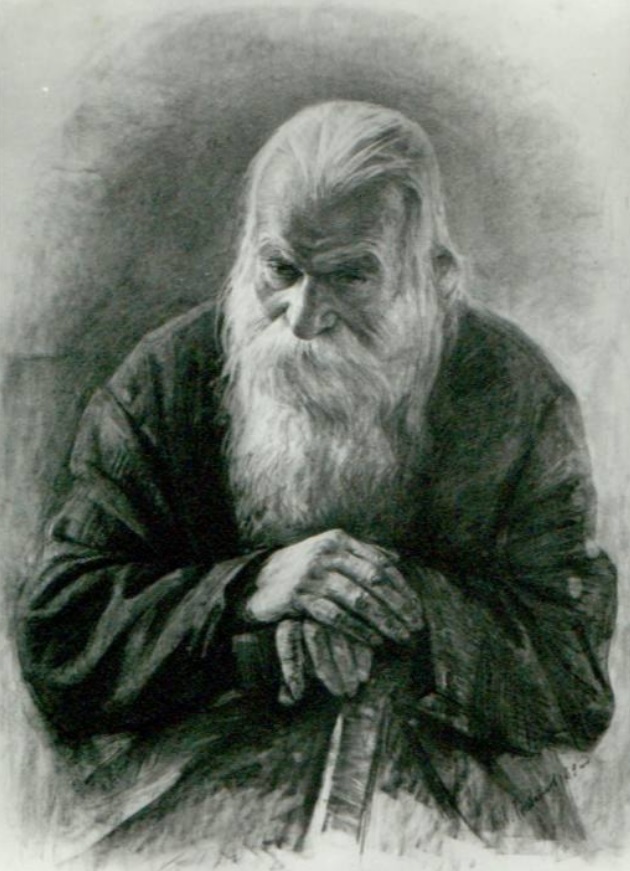
[Painting: Old Man with a Cane, Babailov]

February 2, 2024
0 Facebook Twitter Google + Pinterest
Spurgeon: Remember God’s love. Please, remember, God says.

Spurgeon: Remember God’s love. Please, remember, God says.

written by Christian Heinze

This is a “2:50 AM, can’t sleep, and I’m so happy I just read it” kind of entry from Charles Spurgeon’s matchless Morning and Evening. (We all need those, don’t we? The 2:50 AM ones).

Spurgeon:


“Jesus will not let his people forget his love.

If all the love they have enjoyed, He will visit them with fresh love.

‘Do you not forget my cross?’ says He, ‘I will cause you to remember it; for at my table I will manifest Myself anew to you.’

‘Do you not forget what I did for you in the council-chamber of eternity? I will remind you of it, for you shall need a counselor and shall find Me ready at your call.’

Mothers do not let their children forget them….. So it is with Jesus. He says to us, “Remember Me,” and our response is, ‘We will remember Thy love.’

We will remember Thy love and its matchless history. It is as ancient as the Glory which Thou hadst with the Father before the world was.

We remember, O Jesus, Thine eternal love when Thou didst become our Surety, and espouse us as thy Betrothed.

We remember the love which suggested the sacrifice of Thyself, the love which, until the fulness of time, mused over that that sacrifice, and long for the house whereof in the volume of the book it was written of Thee, ‘Lo, I come.’

We remember Thy love, O Jesus! as it was manifest to us in Thy holy life, from the manger of Bethlehem to the garden of Gethsemane.

We track Thee from the cradle to the grave — for every word and deed of thine was love — and we rejoice in Thy love, which Death did not exhaust; Thy love which shone resplendent in Thy resurrection.

We remember that burning fire of love which will never let Thee hold Thy peace until Thy chosen ones will all be safely housed, until Zion be glorified, and Jerusalem settled on her everlasting foundations of light and love in heaven.”


Amen.

I felt such urgency to post this tonight, because I felt such restlessness from insomnia and its attendant mind trails, but there is both an urgency within the reminder of Christ’s love and yet a restfulness to it, isn’t there?

I’d also like to remind you that Spurgeon himself, the one who wrote that, suffered from deep depression and anxiety.

Who knows when he wrote that entry, or how he felt?

But perhaps it was on a dark night, when he could not quite remember the One who was there for him, and somehow saw just one glimpse of The One, and could not contain himself because Christ’s love for us cannot be contained once we see just a bit of what He sees when he looks at us — his beloved children.

I’d also like to remind you, per usual, that if you’re struggling with depression, anxiety, trauma, OCD, an eating disorder, PTSD, or any other such disease…

Find a psychiatrist here.

Find a therapist here.

If you’re having thoughts of harming yourself or others, please call the National Suicide Lifeline at 1-800-273-8255.

And if any of you dear readers are struggling, whether at 2:50 AM or the middle of a Chaos Workday where everything but God seems present… also seek help! For God sends it through his ministers of mercy on earth — healthcare workers.

Spurgeon thought, as well (and far ahead of his time!) that depression, anxiety and such ailments were physical diseases, not spiritual ones.

And if you’re struggling with forgetting Christ’s love, then look at his love, and remember it through his words and life. And in the lines of Mozart’s immortal requiem: “Remember, merciful Jesus, that I am the cause of your journey.”

And just as he told the thief on the cross who cried to be remembered at the end of his life, so Christ will offer you the end of his life for your eternal life.

He will always remember you, because he never forgot about you, in the first place.

January 23, 2024
0 Facebook Twitter Google + Pinterest
Staton: What “be still” means

Staton: What “be still” means

written by Christian Heinze

In Tyler Staton’s book, Praying Like Monks, Living Like Fools, he explains the Psalm: “Be still and know that I am God.”

Both of those components are critical and also, of course, inseparable.

Staton writes of the phrase “Be still.”


“The Latin term is vacate, from which we get the English word vacation. The invitation of prayer anytime, anywhere is this: Take a vacation.

Stop playing God over your own life for a moment. Release control. Return to the created order.

Be still. Prayer begins there. But that’s only the beginning.

…. Many confuse stillness with waiting for revelation. Sometimes revelation does come, and it’s marvelous.

But that’s not the purpose of stillness.

The purpose is consent.

It is the daily practice of consenting to the work of God’s Spirit… practice silence as a sacrificial offering to God. It’s that simple.

It’s about giving something of yourself to God, not getting something from God.“


January 19, 2024
0 Facebook Twitter Google + Pinterest
Drink from me, says Christ: Happy New Year

Drink from me, says Christ: Happy New Year

written by Christian Heinze

On this final day of 2023, Charles Spurgeon has this message in his Morning and Evening, based on this heartfelt plea from Christ in John.

“In the last day, that great day of the feast, Jesus stood and cried, saying ‘If any man thirst, let him come unto me and drink.” – John 7:37

Spurgeon notes that Jesus is both calling and desperately pleading for us, the thirsty (And God knows people with our conditions are thirsty), to drink from him, and ends on this note:

“Drinking represents a reception for which no fitness is required. A fool, a thief, a harlot can drink; and so sinfulness of character is no bar to the invitation to believe in Jesus.“

Amen – you don’t have to be in any shape, of any moral character, in any condition, to drink – except to thirst.

So if you thirst today, don’t think about who you are or what you’ve done — just listen to the words of Christ.

He’s offering you the drink.

This site is about depression/anxiety and other conditions. It’s not about fixes. Those are medical complications of life, and so must be treated medically, as a doctor and you see fit.

But if you want to come to Christ tonight, don’t listen to any church that says the glass ain’t for you unless you’re XYZ.

God created you. He loves you.

And even if tonight turns dark, as nights often do, he will watch over you, as he has always done.

I have trouble believing it, believe me. It’s been a long journey, Jesus and me, and I know it has for you, as well.

There are times we wonder if he really cares. I do.

But there is no moment he wonders if he really cares.

Isaiah 49:15 gets us as close to Christ’s love, viscerally, as any other.

“Can a mother forget her nursing her child? Can she feel no love for the child she has borne? But even if that were possible, I would not forget you!”

When our sons were born, my wife and I were fixated, supernaturally, on their well-being and nurture. Not from responsibility but love.

And Jesus is as fixated on you. He was before time began, and until our earthly time is over.

Infants don’t understand the kind of love that waits and watches over them night and day, and we often don’t even know Christ’s.

But our ignorance doesn’t change his heart. It can’t, any more than an infant’s ignorance can change the 24/7 we pour into our kids.

Finally, on this New Year’s Eve, since I’m often struck by both melancholy and nostalgia for a time I wasn’t even alive (the 1940s), here’s the best NYE song on earth.

Happy New Year’s, dear readers. As I’ve said, my posting has been sparse due to a number of medical issues, but I hope to be with you more in 2024.

Thank you for praying for me, and I am praying for you. Wherever you are, we are all in this fight together. Oh, and with Christ at our side.

“He is my loving ally.”

If any of you dear readers are struggling this season…

Find a psychiatrist here.

Find a therapist here.

If you’re having thoughts of harming yourself or others, please call the National Suicide Lifeline at 1-800-273-8255.

[Painting: The Lord is My Shepherd, Sallman]

December 31, 2023
0 Facebook Twitter Google + Pinterest

A poetic rewrite of “O Come All Ye Faithful” by Lisa Choudhrie

written by Christian Heinze

Christmas is magical for many, but also the joy that overflowed that night can seem so foreign to many depressed and weary Christians.

Depression in the Christmas season is common — for both Christian and non-Christian, alike, and why wouldn’t it be? Diabetes doesn’t take a break for Christmas. Depression often doesn’t as well.

In fact, research has shown that rates of depression, anxiety and other conditions actually increases around the holiday season.

If you’re a Christian, struggling through this season, I hope this poem helps.

A reader from India — Lisa Choudhrie — sent it in, and I wanted to share it with you.

“Oh Come All Ye Faithful”

by Lisa Choudhrie

O come all ye faithful, joyful and triumphant, 

The timeless hymn goes

What if the faithful are losing it? 

And they’re joyless and defeated,

Are their names struck off? 

Not in ‘when the roll is called up yonder’

When it feels hopeless…

Can we rewrite these cliched Christmas carols? 

Put some bite, some reality in them, 

The world isn’t what it was when the ‘Babe was born in Bethlehem’

Yet, it’s more or less the same…

Let’s sing songs of deliverance

The Saviour brought true freedom

From shackles and prisons visible and unseen

From lifeless living, purposeless pursuits…

His coming meant there was a reason for life

Anything less just a baseless lie

The wicked one is a defeated liar

Stealing, destroying, killing- his lifeless lies

Instead of the ‘baby wrapped in swaddling clothes’

Sing of the Victory in the empty grave

Immanuel, walking with us down our Emmaus roads

Gentle, strong, Jesus saves…

The King who looks into our hearts

Pushes past the decorations and twinkling lights

And sees the need inside our souls

And yet He doesn’t avert His sight…

No! All is not calm, definitely not bright

The minds are too full of senselessness

Yet, the Messiah walks in, pushes past the thick cobwebs

And brings hope again…

Tough roads that He walked, all for us

Tough choices He made, all for us

His arms are open wide, there’s grace aplenty

Scarred hands still bring healing- for those in misery…

‘Peace on earth’, the chorus rang out

Not as we perceive peace and bonhomie

But peace that is there in the invisible

Despite our suffering, there’s hope available…

The manger, the Cross

Mean, rough and rugged

He gave His all, life for life

Willingly at a great price…

So build up your faith, gentle ones

He’s gentle and lowly in spirit

A smouldering wick he will not quench

He brings healing to our hearts and minds and spirits…

The many ‘whys’ will be answered one day

For now, breathe in His Presence

This babe is King of our hearts

He is our Strength- very present…

If any of you dear readers are struggling this season…

Find a psychiatrist here.

Find a therapist here.

If you’re having thoughts of harming yourself or others, please call the National Suicide Lifeline at 1-800-273-8255.
There’s hope. Often, it feels too distant to imagine it could be true. But press on, and reach out for help.

December 24, 2023
0 Facebook Twitter Google + Pinterest
Tish Warren: “Paper lanterns”

Tish Warren: “Paper lanterns”

written by Christian Heinze

In her book, Prayer in the Night: For Those Who Work, Watch, or Weep, Anglican writer Tish Harrison Warren takes on Nietzche’s famous phrase, “What does not kill us… makes me stronger.”

Most Christians shudder at the idea of repeating anything attached to Nietzche’s name, but the Christian church has, by and large, completely imbibed this idea that trauma makes us stronger.

I get it. Sometimes. Other times, most definitely not.

Trauma can shape us in good ways and bad, and life is far more complex than any binary around, and strength needs to be defined differently (so perhaps he was right, but not in the way he intended. More about that later).

Warren writes of Nietzsche’s phrase:


“I face things every day, big and small, that are difficult but have not killed me.

And I’m finding that what doesn’t kill me actually makes me weaker, and maybe that’s the point — that the way of glory is discovered through, and only through, the cross.

…. certainly suffering builds resilience, just as a broken bone heals stronger. We can be, perhaps ironically, more fragile if we never know pain or struggle. And there is a kind of hardy faithfulness and grit to be found on the far side of agony.

But this kind of resilience does not form us into Nietzsche’s vision of impenetrable toughness; it does not harden us.

It makes us more open to our belovedness in God, to our own vulnerability, and to the vulnerability of others.

…. Marva Dawn says that ‘even as Christ accomplished atonement for us by suffering and death, so the Lord accomplishes witness to the world through our weakness.’

…. The people who I most respect are those who have suffered but did not numb their pain — who faced their darkness. In the process, they have become beautifully weak, not tough as nails, not bitter or rigid, but men and women who bear vulnerability with joy and trust.

They are almost luminescent, like a paper lantern, weak enough that light shines through them.“


End quote:

Amen.

As Christians, we often think the “stronger” Christians are there to comfort the “weaker” ones.

And the Bible does tell us to strengthen each other.

But by the way, who’s defining strength?

Is the church guilty of defining strength by the world’s definition or by Christ’s?

I think we confuse strength with power all the time. Status. Togetherness. Because that’s how the world views strength.

The Christians I’ve learned the most from are the openly alcoholic (Brennan Manning, for example) and all of the friends I’ve met along the way who are completely vulnerable and transparent about their weakness.

And yet, they praise Jesus while stumbling in their walk with him and their humility is so great that they share their stumbles.

Deep down, I think those are the Christians who even the “strong Christians” can learn the most from.

God says adults have to become like kids to receive him in faith.

Why?

I think it’s because kids inherently know they’re not strong, that they’re vulnerable (which is why older kids feign strength to try to mask the weakness they so glaringly feel).

Young kids mainly spend their lives listening to others telling them how to act and behave, but as we grow into adults, we chafe further and further at the idea that someone else might know better.

After all, a sign of maturity is capability, and if you’re really capable, that’s a strength, and we idolize strength.

But at the same time, it feeds into our sense of pride and, because we want to maintain our good standing, we have to nurture it and hide our weakness.

In the process, we lose our humility.

And when we lose our humility, we lose our greatest witness.

Because that, perhaps more than anything, is what’s so compelling about Jesus.

He was born humble, lived humble, and died humble, and yet it was through that that he changed the world and brought us salvation.

If Jesus had come as the rich, strong businessman, could he really touch us the way he did? Would the poor of the world have trusted him? Would the rich have even trusted him?

They might have respected him. But would he have changed them so radically?

And so, the “paper lanterns” of which Warren writes, illuminate all around them, and we tend to walk away from our encounters with them far more changed than when we fraternize with the “strong.”

If you feel like a paper lantern, then yes, your light will shine brightest.

“That person only has Jesus, and yet Jesus seems enough!”

That’s a more powerful witness than a man or woman who’s been blessed with what the world values.

However, do seek help for your diseases!

But don’t be embarrassed by them either, or think God doesn’t use you.

And even if you’re too depressed to face the world right now, you can face God and tell him, “Please bless the ones I can’t serve.”

That’s called prayer, and it’s kind of a big deal to God, and I firmly believe that’s what God uses to move the world more than anything.

So if all you can do is pray, pray.

Find a psychiatrist here.

Find a therapist here.

[Photo: Pexels. And guess what, that’s the “strong” Christians looking up at you – whether you realize it or not. Don’t think any less of yourself. You are Christ’s magnificent creation. Like Brennan Manning wrote, take Christ’s evaluation of you over your self-evaluation.]

December 19, 2023
0 Facebook Twitter Google + Pinterest
Surrender

Surrender

written by Christian Heinze

“God, take it. Take this stuff. And then take me.”

It’s the altar call – come lay down everything you thought was enough but realize is nothing.

It’s your white flag of surrender. Not just of your things, but your soul, you essence.

And that is salvation.

We know that. That’s the gist of it all.

Surrender is a common theme in our Christian language about salvation, but what about in our daily Christian life?

I listened to an interview last month that Bono gave to NPR about his new autobiography, called Surrender.

You can listen to the i/view, as well, at the bottom of the post.

It’s extremely powerful. When he talks about surrender briefly, you might just think, “Okay. I hear. Nice. I’ve heard it before, though.”

But please think about it. It may change your life. And I don’t just mean in a salvific way.

Yes, “surrender” is the best word for the moment of salvation that I can think of. We all know that.

But it’s also the best word for how to life after that salvation.

Sure, we know we’re to surrender to our Father’s will, we’re now Christians. So we’ll pursue love, peace, all those gifts.

But how much do we truly surrender, day to day? And what do we surrender?

Because surrendering in every way, and relationship is, to me, closer to living with Christ than anything.

Are we surrendering to our spouse? I don’t mean giving in on every fight. I mean, surrendering to their beauty as an individual made by God whom he loves deeply. If we surrender to that fact, if we surrender our view of them as “stubborn” or “unreasonable” and instead take on God’s view of them, then every interaction will be different.

We won’t have to try to be kind. We will be, because we have surrendered our view of them, and taken God’s view.

Are we surrendering to any injustice we feel at our work? Of course, God cares deeply about justice, but are we willing to surrender our bitterness and trust him with fixing the injustice? I don’t see anywhere in the Bible where we’re to take up the sword to defend ourselves from someone else’s.

Are we surrendering to the soul-destroying mess of politics? I doubt it. Instead, we form groups, causes, committees. Fine enough. But not fine if they’re leading us to become anything other than ones called to live peaceably, gently, and quietly.

And most personally, are we surrendering to the fact that God has allowed a severe trial in our lives, and that if there were any other way to accomplish his way, he would zip it on the trial.

Are we surrendering our belief that we know best about everything to the fact we know nothing, and he’s got it all.

In every circumstance, in every way shape or form.

Sounds demanding, doesn’t it. All this surrendering?

But actually, it’s profoundly liberating.

If I can truly surrender, then I can just live. I can live, knowing that the one who has always lived, lives for me and has got me.

If I can truly surrender my pride, then I’m humiliated, but free from the fear of one day being humiliated.

If I can truly surrender my need to be right, then I’m silenced, but free from the internal angst of producing facts, figures, reasons why the other person is wrong.

If I can truly surrender to Christ’s work on behalf on me, then I don’t have to fixate on how far short I fall on my work for him.

Think of your life through that word surrender, every day and in every moment, and you will see it is not giving up on life. It is giving up our life to God.

So watch the interview with Bono and think about surrender yourself.

He says something else that might stir your mind – Bono freely admits he’s still in the process of figuring out whether he’s surrendered to Christ.

Well, that’s not what a Christian would say! We know we’ve surrendered! After all, we’re Christians!

But to Christ, who sees all the ways we’ve yet to surrender, I can’t think of a better description of our ongoing life than one who’s still trying to surrender to Christ, and finding out that while salvation comes “at the moment of surrender,” the Christian life is a continual surrender of all our calcified selves.

There’s a surrender to be made in every struggle, mentally, physically, spiritually. In every relationship. In every sphere of our lives.

If we think about it hard enough, we’ll find ourselves wondering whether we’ve surrendered anything to Christ, actually, at all.

And like Bono, we can affirm that we’ll still be struggling with surrender, until we die.

Thankfully, while we can never surrender perfectly to Christ, he did to the Father.

He begged that his Father take away the cup, but in the most important sentence he ever uttered in the redemptive story, added, “Nevertheless, not my will, but thy will be done.”

Christ surrendered perfectly, and now we are perfect, because of it.

And we must surrender to that — the most beautiful reality of Christianity.

This has been a year of surrender for me, and a year of fighting that surrender. The surprising medical issues have forced me into new mental realms, physical ones, and spiritual ones.

What if I die, on my young kids and wife? What if I’m permanently disabled? Will I even be able to eat anything beyond a smoothie again? Will I be able to just go somewhere?

And oh God, the pain is sometimes so bad and debilitating, and why are you going to put that line in my body and that medication, and when can I see my kids and wife?

I wish I had the kind of faith that could serenely handle all this, that could quiet these obsessive concerns. Some Christians have that figured out.

But the one thing I’ve had to fall back on — while still taking my anti-anxiety medicine and all that — the ultimate thing is: I need to surrender to this. I need to surrender myself to whatever happens. If the news I find out is the worst, it’s the worst, and yet God’s plan is the best.

How do we surrender to that? Is it possible?

Maybe you can, maybe you have. There are folks with far greater faith than I.

But if anyone else struggles with this as deeply as I do, then this idea of surrender – it might mean something. It has to me.

So we pray: “Oh dear Savior, may I surrender not just my sins and soul but everything I think is best into the hands of the one who really knows best.”

If we can get to that point – I sense freedom around the corner. We’ll never continually grasp that permanent sense of freedom on earth, but that’s what heaven’s for.

And have you ever wondered why humans want freedom so much? At a collective and individual level? Because it feels like heaven and that is heaven. And yet it rarely occurs to us that freedom comes through surrender.

I’m looking forward to the freedom of total surrender one day, and seeing face-to-face the one I’ve waved the white flag to.

We’ll get there, friends. In his timing, in his love. He does it all, in his love for you.

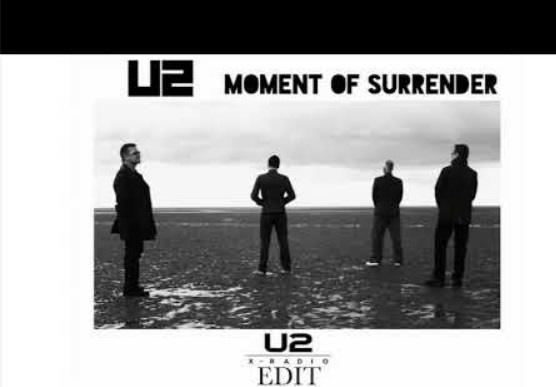
[Photo: U2’s single, “Moment of Surrender.”

December 17, 2023
0 Facebook Twitter Google + Pinterest
Load More Posts

Social Media

Twitter

Get in touch with me

Contact here. 

The Weary Christian mission:

First off:


In the United States, find a psychiatrist here.

In the United States, find a therapist here.

If you’re in the United States and having thoughts of harming yourself or others, please call the National Suicide Lifeline at 1-800-273-8255.

If you’re in the UK, get urgent help here.

Canada, here.

Australia, here.

New Zealand, here.

South Africa, here.

France, here.

Germany, here.

Portugal, here.

Mexico, here.

India, here.

The Philippines, here.

Singapore, here.

South Korea, here.


The Weary Christian goal…


a) reduce the stigma surrounding depression, anxiety, OCD, and other conditions in the Christian community.


b) have uncomfortable but honest conversations.


c) Reduce the stigma surrounding antidepressants, antipsychotics, and other meds God has given us as gifts.


And…


d) Sometimes (tons of times), we all feel really, really depressed in our journey. Hopefully, this site makes you feel less alone.

Categories


@2017 - PenciDesign. All Right Reserved. Designed and Developed by PenciDesign