
The Weary Christian
  • Depression
    • Depression

      James Bryan Smith: Unmet expectations and fear

      Depression

      STUDY: Criticizing older adults make them more vulnerable…

      Depression

      STUDY: Awe can reduce depressive symptoms

      Depression

      STUDY: How music-mindfulness can help depression, anxiety

      Depression

      STUDY: Chronic pain associated with higher rates of…

  • Anxiety
    • Anxiety

      Calling out the brain on catastrophizing

      Anxiety

      James Bryan Smith: Unmet expectations and fear

      Anxiety

      STUDY: Awe can reduce depressive symptoms

      Anxiety

      STUDY: How music-mindfulness can help depression, anxiety

      Anxiety

      STUDY: Chronic pain associated with higher rates of…

  • Book quotes/Video
    • Book quotes/Video

      “In darkest night, you were there like no…

      Book quotes/Video

      Thanksgiving for his brokenness

      Book quotes/Video

      Esther Smith: “All he wants is you”

      Book quotes/Video

      James Bryan Smith: Unmet expectations and fear

      Book quotes/Video

      Staton: On being a witness

  • Health News
    • Health News

      Calling out the brain on catastrophizing

      Health News

      STUDY: Mental health conditions share deep genetic patterns

      Health News

      STUDY: Four Supplements that MIGHT help depression

      Health News

      STUDY: Gut changes raise risk of eating disorders…

      Health News

      STUDY: Criticizing older adults make them more vulnerable…

  • Interviews
    • Interviews

      INTERVIEW: Dr. Terry Powell’s gripping account of depression

      Interviews

      INTERVIEW: Therapist Michael Schiferl explains religious scrupulosity and…

      Interviews

      INTERVIEW: Rocker Matt Sassano shares battles, urges transparency…

      Interviews

      INTERVIEW: Dr. Brian Briscoe tells Christians that antidepressants…

      Interviews

      INTERVIEW: Pastor Scott Sauls on anxiety, depression, and…

  • Devotionals
    • Devotionals

      “Grace has got to be drunk straight”

      Devotionals

      Defeated by God

      Devotionals

      Am I a faithless Christian?

      Devotionals

      Think you’re a “failure?” Jesus sees you unlike…

      Devotionals

      “I killed Jesus of Nazareth”

  • About
  • Depression
    • Depression

      James Bryan Smith: Unmet expectations and fear

      Depression

      STUDY: Criticizing older adults make them more vulnerable…

      Depression

      STUDY: Awe can reduce depressive symptoms

      Depression

      STUDY: How music-mindfulness can help depression, anxiety

      Depression

      STUDY: Chronic pain associated with higher rates of…

  • Anxiety
    • Anxiety

      Calling out the brain on catastrophizing

      Anxiety

      James Bryan Smith: Unmet expectations and fear

      Anxiety

      STUDY: Awe can reduce depressive symptoms

      Anxiety

      STUDY: How music-mindfulness can help depression, anxiety

      Anxiety

      STUDY: Chronic pain associated with higher rates of…

  • Book quotes/Video
    • Book quotes/Video

      “In darkest night, you were there like no…

      Book quotes/Video

      Thanksgiving for his brokenness

      Book quotes/Video

      Esther Smith: “All he wants is you”

      Book quotes/Video

      James Bryan Smith: Unmet expectations and fear

      Book quotes/Video

      Staton: On being a witness

  • Health News
    • Health News

      Calling out the brain on catastrophizing

      Health News

      STUDY: Mental health conditions share deep genetic patterns

      Health News

      STUDY: Four Supplements that MIGHT help depression

      Health News

      STUDY: Gut changes raise risk of eating disorders…

      Health News

      STUDY: Criticizing older adults make them more vulnerable…

  • Interviews
    • Interviews

      INTERVIEW: Dr. Terry Powell’s gripping account of depression

      Interviews

      INTERVIEW: Therapist Michael Schiferl explains religious scrupulosity and…

      Interviews

      INTERVIEW: Rocker Matt Sassano shares battles, urges transparency…

      Interviews

      INTERVIEW: Dr. Brian Briscoe tells Christians that antidepressants…

      Interviews

      INTERVIEW: Pastor Scott Sauls on anxiety, depression, and…

  • Devotionals
    • Devotionals

      “Grace has got to be drunk straight”

      Devotionals

      Defeated by God

      Devotionals

      Am I a faithless Christian?

      Devotionals

      Think you’re a “failure?” Jesus sees you unlike…

      Devotionals

      “I killed Jesus of Nazareth”

  • About

The Weary Christian

THE WEARY CHRISTIAN

LIVING WITH FAITH AND DEPRESSION

  • Depression
    • Depression

      James Bryan Smith: Unmet expectations and fear

      Depression

      STUDY: Criticizing older adults make them more vulnerable…

      Depression

      STUDY: Awe can reduce depressive symptoms

      Depression

      STUDY: How music-mindfulness can help depression, anxiety

      Depression

      STUDY: Chronic pain associated with higher rates of…

  • Anxiety
    • Anxiety

      Calling out the brain on catastrophizing

      Anxiety

      James Bryan Smith: Unmet expectations and fear

      Anxiety

      STUDY: Awe can reduce depressive symptoms

      Anxiety

      STUDY: How music-mindfulness can help depression, anxiety

      Anxiety

      STUDY: Chronic pain associated with higher rates of…

  • Book quotes/Video
    • Book quotes/Video

      “In darkest night, you were there like no…

      Book quotes/Video

      Thanksgiving for his brokenness

      Book quotes/Video

      Esther Smith: “All he wants is you”

      Book quotes/Video

      James Bryan Smith: Unmet expectations and fear

      Book quotes/Video

      Staton: On being a witness

  • Health News
    • Health News

      Calling out the brain on catastrophizing

      Health News

      STUDY: Mental health conditions share deep genetic patterns

      Health News

      STUDY: Four Supplements that MIGHT help depression

      Health News

      STUDY: Gut changes raise risk of eating disorders…

      Health News

      STUDY: Criticizing older adults make them more vulnerable…

  • Interviews
    • Interviews

      INTERVIEW: Dr. Terry Powell’s gripping account of depression

      Interviews

      INTERVIEW: Therapist Michael Schiferl explains religious scrupulosity and…

      Interviews

      INTERVIEW: Rocker Matt Sassano shares battles, urges transparency…

      Interviews

      INTERVIEW: Dr. Brian Briscoe tells Christians that antidepressants…

      Interviews

      INTERVIEW: Pastor Scott Sauls on anxiety, depression, and…

  • Devotionals
    • Devotionals

      “Grace has got to be drunk straight”

      Devotionals

      Defeated by God

      Devotionals

      Am I a faithless Christian?

      Devotionals

      Think you’re a “failure?” Jesus sees you unlike…

      Devotionals

      “I killed Jesus of Nazareth”

  • About
Health News

STUDY: Mental health conditions share deep genetic patterns

James Bryan Smith: Unmet expectations and fear

STUDY: Four Supplements that MIGHT help depression

STUDY: Criticizing older adults make them more vulnerable to developing depression

Study offers great context on kids, screen time, and emotional problems

Daily Blog

Today’s valley of vision

Today’s valley of vision

written by Christian Heinze

From The Valley of Vision (pg 156):

“I have laboured too much for spiritual life, peace of conscience, progressive holiness, in my own strength.

I beg thee, show me the arm of all might.

Give me to believe that thou canst do for me more than I ask or think,

and that, though I backslide, thy love will never let me go,

but will draw me back to thee with everlasting cords;

that thou dost provide grace in the wilderness,

and canst bring me out, leaning on the arm of my Beloved.”

February 24, 2024
0 Facebook Twitter Google + Pinterest
STUDY: Cognitive behavioral therapy affects brain activity in kids (for the better!)

STUDY: Cognitive behavioral therapy affects brain activity in kids (for the better!)

written by Christian Heinze

A new study, published in the American Journal of Psychiatry, offers hopeful results for young children struggling with anxiety by confirming that cognitive behavioral therapy (CBT) positively affects certain regions of the brain, responsible for aspects of anxiety disorders.

First, researchers found a group of children who had symptoms of anxiety, as well as brain scans that confirmed over-activation in a number of brain regions associated with anxiety, including the frontal lobe, parietal lobe, and amygdala.

Next, researchers offered cognitive behavioral therapy (CBT) for 12 weeks to one group of anxious kids, nothing for another group of anxious kids, and also analyzed scans from kids without evidence of an anxiety disorder.

The results? Fantastic, for the most part.

After 12 weeks, the kids who received CBT reported symptom relief, as well as significant corresponding improvements in the frontal and parietal regions of the brain, as measured by an fMRI exam.

In fact, the improvements were so great that their brain scans in those areas looked like those of non-anxious kids.

Plus, they felt better… awesome news!

However, other regions of the brain (particularly those in the right amygdala) remained overactive and resistant to the CBT treatment.

So what to make of it?

The researchers noted that perhaps CBT for kids is only effective in treating particular regions of the brain, or that the kids just needed more than 12 weeks for the CBT to really work on regions in the amygdala.

We don’t know.

Thus, the results can’t make an exhaustive claim re: CBT for kids with anxiety, but they certainly show that CBT can be an effective tool — as measured by both symptoms and brain scans.

Which is great news.

The NIMH puts it this way:


This study provide evidence—in a large group of unmedicated youth with anxiety disorders—of altered brain circuitry underlying treatment effects of CBT. The findings could, in time, be used to enhance treatment outcomes by targeting brain circuits linked to clinical improvement. This is particularly important for the subset of children who did not significantly improve after short-term CBT.

“The next step for this research is to understand which children are most likely to respond. Are there factors we can assess before treatment begins to make the most informed decisions about who should get which treatment and when? Answering these questions would further translate our research findings into clinical practice,” said [Dr. Melissa] Brotman [Chief of the Neuroscience and Novel Therapeutics Unit in the NIMH Intramural Research Program.]’


Now…

The Christian church is coming around (slowly and in fits and starts) to some kind of peace with the concept of adults going to therapy for anxiety.

However, we have a long ways to go when it comes to kids with anxiety.

In fact, many Christian parents who’d go to therapy for themselves might worry about their child in therapy and think the fearful thought, “What if a secular therapist messes up my kid or puts ideas into their heads” etc.,

Fear, rather than a desire for healing, reigns supreme. I get that. I understand – it’s a primal concern. We’re all fiercely protective of our children. Me, too.

But if there were ever a time to treat anxiety, it’s childhood.

In fact, according to research, most adult anxiety disorders can be linked to untreated childhood anxiety.

In other words, most adult anxiety disorders don’t appear out of thin air. Their origins begin in childhood.

And untreated childhood anxiety has been linked to an increase in school dropout, adolescent and adult crime, and suicide, in addition to mental health conditions that are associated with a plethora of diseases, relationship issues etc.,

Additionally, if your child has an anxiety disorder, it’s more likely to become worse than better as they age.

In any area of life, it’s best to treat something at the beginning, right?

We shouldn’t wait to treat until cancer spreads to distant organs. We shouldn’t wait until a marriage’s impending collapse to start dealing with communication issues. The sooner you pay off a credit card, the better.

Whatever the realm, if you see a problem, it’s better to try to address it sooner rather than later.

Think about your own life. When did you start feeling that your anxiety was excessive? You probably didn’t recognize it as excessive as a kid because kids don’t understand proportion. But, thinking back, doesn’t it seem we instinctively know this thing has been dogging us in a different way from others since we were born?

So if your child is showing signs of an anxiety disorder, talk to a medical professional.

They’ll be able to help distinguish between normal childhood anxieties (separation anxieties etc) and actual disorders (which can be a very tricky thing, because kids have lots of normal anxieties that aren’t signs of disorders).

Here are a few resources.

Cleveland Clinic: Causes, symptoms, and treatments of anxiety in children.

WebMD: “Symptoms to look for.”

What does childhood anxiety look like?

How to spot signs of anxiety in children.

Children’s Hospital of Philadelphia: “When your child’s anxiety is worth worrying about — and how to help.”

[Photo: Pexels, free stock photography]

February 24, 2024
0 Facebook Twitter Google + Pinterest
Voskamp: “Thanks makes now a sanctuary”

Voskamp: “Thanks makes now a sanctuary”

written by Christian Heinze

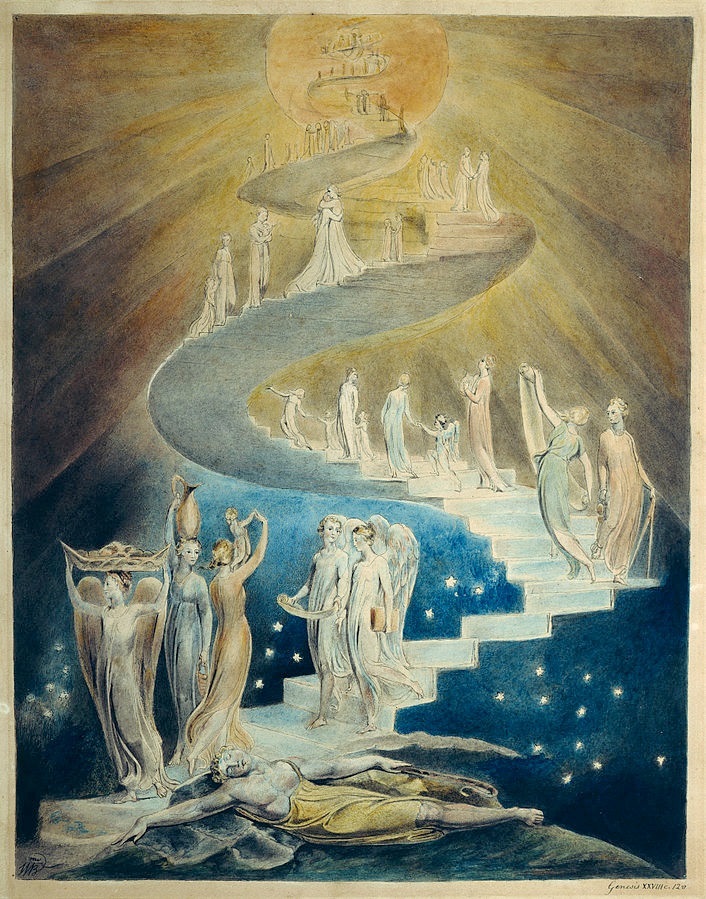
So… remember in Genesis 28:16 when Jacob awoke from his dream in which he saw the stairway to heaven and marveled, “Surely the Lord is in this place and I was not aware of it… How awesome is this place! This is none other than the house of God; this is the gate of heaven.” (NIV).

In her book One Thousand Gifts, Ann Voskamp notes of that story:

“Thanks makes now a sanctuary”

How lovely and true. Jacob was now thankful, so he built a sanctuary in the last place he expected to.

In fact…

Where was Jacob? In the desert. Not where he wanted to be.

What was he doing? Leaving the place he’d called home. Probably not what he wanted to be doing.

So Jacob was doing the thing he didn’t want to do — in the place he didn’t want to be — and he was alone.

Except he wasn’t.

He had a dream that awakened him to the magnificent spiritual reality of what was really happening around him.

And he woke up, and the sucky ground he lay on was now so sacred to him that he made a sanctuary of thanks.

And so, Voskamp notes, we could be in an awful place, doing something awful, feeling something awful, and yet be completely unaware that this is, in fact, holy ground and that the most wonderful things are happening around us.

If we could literally see Christ and hear him promise us the wonder of heaven, we would wake up the next morning and say, “Surely the Lord is in this place and I was not aware of it” and that spot would be the holiest of grounds for us the rest of our lives.

I know that’s hard to grasp — that Christ is here and here for us, but as Raneiro Cantalamessa spoke in a Good Friday sermon.

“Do we really believe that God loves us? No, we don’t really believe it, or at least not strongly enough! If we were to believe it, everything — our lives, ourselves, things, and events — absolutely everything would be transfigured before our eyes.”

Then he adds: “This very day we would be with him in paradise, for paradise is simply rejoicing in God’s love.”

I know it’s hard.

It’s hard to believe that kind of love — just as it must have been hard for Jacob to understand when he went to bed that night.

But it’s true.

So, if you could, stop what you’re doing and just do this.

Close your eyes, and think of the fact that the Lord truly “is in YOUR place” and you and I are not aware of it.

What was happening around Jacob is happening around you.

And maybe, as we think about that with our eyes shut, we can say: “Surely the Lord is in this place and I was not aware of it.”

My place right now – I have Miralax to my left (osmotic stimulant laxative), and a Boost drink to my right, and a toilet close by. That’s my physical ground right now. Could be way way worse, could be better, but what strikes me is how routine and dull it is.

But surely the Lord is in this place. He is! I have no clue what’s even happening around me. But it’s all beautiful.

And if I could see it, I’d build a sanctuary here too. So right now, I’m trying to put stones on top of each other as I write, to thank God for being here.

You’re in a different spot, and it could be much worse. Or, it could be so predictably stale.

But you probably aren’t thinking, “Surely the Lord is in this place.” But he is. Right with you. Making the same promise of blessing to you that he did to Jacob.

[Drawing: Jacob’s Ladder, Blake]

February 22, 2024
0 Facebook Twitter Google + Pinterest
Deep brain stimulation: The “Brain pacemaker” for depression

Deep brain stimulation: The “Brain pacemaker” for depression

written by Christian Heinze

Laura Ungar, from the Associated Press, has a fantastic article on one woman’s account of how an innovative experimental therapy for treating depression (“Deep Brain Stimulation”) saved her life.

Read Ungar’s article, but here’s the gist:

Deep Brain Stimulation involves brain surgery, wherein metal electrodes are put in the subcallosal cingulate cortex — the area of the brain that helps regulate emotional behavior and feelings of sadness.

Once there, it works by correcting the abnormal brain circuitry involved in depression by delivering constant low voltage pulses.

Ungar:

Doctors say the stimulation helps because electricity speaks the brain’s language. Neurons communicate using electrical and chemical signals.

In normal brains, [Dr. Brian] Kopell [of Mount Sinai’s Center for Neuromodulation] said, electrical activity reverberates unimpeded in all areas, in a sort of dance.

In depression, the dancers get stuck within the brain’s emotional circuitry. DBS seems to “unstick the circuit,” he said, allowing the brain to do what it normally would.

Keep reading for more, because there’s important stuff.

Namely, some scientists are still skeptical that DBS actually works for depression (based on some studies).

Others believe it works (Based on some studies. The seminal study of studies, published in Frontiers in Neurology, in 2022 found that results for this particular type of DBS for depression were “promising”).

However, there are barriers.

Every person has a different brain, and for this to work for depression specifically, DBS needs to target (and be placed in) the precise area where Person X has an abnormality, and the precision doesn’t just end in something as simple as “put it in the SCC.”

However, it’s doable. After all, doctors tailor every major, elective surgery precisely to a particular patient.

If you have a stomach condition and need part of your colon out, you need scans of your stomach giving precise information about the diseased location and you go from there, and it’s extremely individual and involved.

Pacemakers are a pretty big deal too.

However, nothing quite approximates the complexity, though, of the human brain, so that’s why some are skeptical this can be scaled.

But researchers are trying to do just that, and those at Abbott Laboratories are looking for FDA approval right now for DBS for treatment-resistant depression.

NOW let’s consider some facts — lest you think we’re headed into a brave new world or that this is some kind of “transhumanism,” nothing could be further from the truth.

DBS has already been approved and used for Parkinson’s disease in select cases since 1997, with a 30-60% improvement in motor score evaluations.

DBS was approved for drug-resistant epilepsy in 2018. That’s a big deal, because nearly 40% of patients with epilepsy don’t respond to drugs.

DBS was approved for select patients for OCD in 2009, thanks to a 60% response rate among those suffering with treatment-resistant OCD.

However, this is still rare procedure even among FDA approval diseases, because this is a major surgery with risks, and it’s only used in a specific subset of a population with specific treatment-resistant conditions.

Nevertheless, it’s important that scientists are paving the way towards potentially more direct, more effective ways of helping treatment-resistant depression.

And if you’ve ever had major depression that seems absolutely resistant to any kind of treatment on any level — if you’ve experienced years and years of utter hopelessness even while knowing you have the hope of Christ, if you’ve experienced the physically-damaging, emotionally-draining, relationship-destroying effects of major depression……… brain surgery might not seem so bad.

I’m worried that Christians will look at this and say, “Transhumanism!” when this is really no different in theory from a pacemaker (indeed, it’s been called a “brain pacemaker”).

Then there’s the inevitable skeptical Christian saying: “C’mon. Taking medication is crazy enough for your supposed condition. But brain surgery?!”

Well, if researchers can figure out how to do this safely and effectively for a proven medical condition like depression that is treatment resistant for particular patients and devastating their lives, why shouldn’t this be a discussion — just like surgery is for any other diseased part of our bodies?

Meanwhile…

if you’re struggling with depression (as I do!).

For readers from the United States….

Find a psychiatrist here.

Find a therapist here.

For readers, internationally, please seek help from a local resource.

If you’re having thoughts of harming yourself or others, please call the National Suicide Lifeline at 1-800-273-8255.

February 22, 2024
0 Facebook Twitter Google + Pinterest
“Tend the sick, Lord”

“Tend the sick, Lord”

written by Christian Heinze

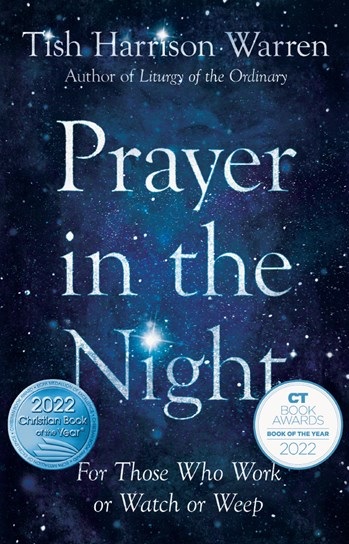
In her excellent book on The Church of England’s Compline (Night Prayer), Tish Harrison Warren writes of the phrase, “Tend the sick”:

“The origin of the verb ‘to tend’ and the adjective ‘tender’ have the same Old French root, which means literally ‘to stretch’.

We are appealing to the tenderness of God — that the Creator of the universe would stretch to reach us even amid our blood.

…. When we’re sick, we feel the waste of life in our aching bodies, the waste of the passing hours, the wasting away of our strength.

Left on our own, that is all it would be: waste.

But God lets nothing go to waste. We smell bad. We look terrible. Our very bodies have given out on us. We need tending. And we have nothing to prove, nothing to measure up to, no performance necessary. We can allow God to tend to us.

…. But when we pray for the sick we also remember the glory for which we are made. We recall that our health is a gift. It will not be constant. Any wellness we have will eventually give way.

But we receive our bodies, day by day, with gratitude.

In them, we taste the fall, that things are broken and not yet made new. The reaper pulls us over for a warning.

But our bodies will be made eternal. They will rise from the dust in fleshy solidity, their glory permanently undiminished.

So we also taste the promise of heaven in the goodness of our bodies.

In this meantime, our flesh and blood is suspended between our defeat and our rescue, between fall and resurrection…. and in this tension and suspense, we learn to groan to God in our fragility, to lift trembling hands to God when we have no words, to meet God in our sinuses and skin.

We learn to pray to the God who tends us.”

February 21, 2024
0 Facebook Twitter Google + Pinterest
STUDY: Anorexia nervosa’s dangerous effects in adolescent men

STUDY: Anorexia nervosa’s dangerous effects in adolescent men

written by Christian Heinze

Of course, the same goes for adolescent females, but there are a few reasons to highlight this particular, new study from the Canadian Medical Association Journal.

First, the danger.

Males with anorexia have a 6x higher mortality rate than the general population over the course of their lives, and their risk of developing an eating disorder is continually underestimated, despite years of research demonstrating just how significant that risk is (as far back as in 2007, males accounted for 25% of anorexia and bulimia cases and that number might be an under-representation).

And anorexia nervosa continues to be the most dangerous condition on the spectrum of mental health diseases (a staggering 10% of victims with anorexia will die from the disease within 10 years of onset, and 20% within 20 years).

Second, a lot of current popular “wellness” trends among men (particularly, the adolescents presenting in the study) are contributing to the development of anorexia in this cohort.

The trend is based on body image, and in particular, the pursuit of male muscularity.

You’ve seen the ads promising ripped ads, lower body fat, the promise of looking like The Rock etc.,

Well, the pursuit of that often leads to dangerous patterns like intermittent fasting (which is often heralded in legitimate magazines), excessive exercise, supplements, and use of anabolic steroids.

Much of this falls under the spectrum of “muscularity-oriented disordered eating behaviours,” and really, an entire lifestyle that’s continually promoted as both healthy and desirable.

It’s important to pay attention to how damaging this is, because whenever we see ultra-thin female super models, our society is primed to wonder, “eating disorder?”

But when exaggerated male physiques are presented in culture, we often think, “Wow. That dude is committed” or “He’s in the gym 24/7” or, at most suspicious, “steroids?”

We rarely think “anorexia” because during the pursuit of these physical ideals, guys often just don’t look anorexic and the idea of men with anorexia just hasn’t entered the cultural zeitgeist yet.

But guys are often employing extreme means to achieve an otherworldly bodily outcome — just like females.

And the results can be similarly devastating.

Thus, it’s important — particularly for parents who might think that their gym bro male teenagers aren’t at risk — to pay attention to just how their sons are going about achieving their ideals.

Because parents are often on the lookout for these types of behaviours in their daughters, but not their sons.

Here are some resources.

The National Institute of Mental Health on eating disorders, including signs, symptoms, risk factors, treatments and help.

A 24/7 hotline for those struggling with eating disorders or any other mental health disorder.

Six Common Types of Eating Disorders.

Signs of an Eating Disorder.

And find an eating disorder therapist near you.

February 20, 2024
0 Facebook Twitter Google + Pinterest
What “Commitment” means (it’s hard, but Jesus hold this leaf)

What “Commitment” means (it’s hard, but Jesus hold this leaf)

written by Christian Heinze

Tonight I lay – not in bed but in dread.

I hate nights like these. But after about twenty minutes (maybe an hour) of it, I decided to do some good for our house by leaving my wife (not in that way) for an overnight dish clean (so I claim), and thought, “Might as well turn on a Tim Keller podcast while I do it.”

Of course, I would have much rather hung out with my friend, dread, but as Auden wrote of it, “We would rather die in dread/Than climb the cross of the moment/And let our illusions die.”

Tonight, I decided I wouldn’t die in dread, I’d climb the cross of the moment and do overnight dishes (again, so I claim).

Keller’s sermon, called “Your Plans, God’s plans” (you can listen to it, via his podcast on Spotify), turned out to be very good.

Especially for someone like myself, who was a bit stuck in myself. Maybe for you, if you are, as well.

In it, Keller talks about the word, “commit,” and says it “literally means to roll over onto, to put all of your weight on.”

As Christians, we’re to commit, to “trust God for all things that happen in your life.”

He then quotes Elisabeth Eliot, who once wrote: “The more we pay for advice, the more we are likely to listen to it. Advice from a friend, which is free, we may take or leave. It’s free. Advice from a consultant we’ve paid much for, personally, we’re more likely to accept. But it’s still our choice – we can take it or leave it. But the guidance of God is different.

First of all, we do not come to God, asking for advice but for God’s will. And that is not optional.

And God’s fee is the highest one of all – it costs everything. To ask for the guidance of God requires abandonment. We no longer say, ‘If I trust you, you will give me such and such,’ instead we must say ‘I trust from you — give me or withhold from me whatever you choose’.”

Keller goes on to say that committing to God means, “I will accept anything you send me, whether I understand it or not. But I’m not going to bail on you.”

Hard.

Now, hear me out (read me out, sorry).

I’m living proof that it’s hard, because each day I struggle so hard with really committing to the idea of committing.

It’s a lifelong battle, and no matter the brief respites I get, it will remain one until I die.

Now, sure, I’ve committed to Christ for salvation in the next life, but my faith in his salvation in this one is so so small.

We often have a much easier time with commitment and faith when it’s about heaven than earth.

And here’s why. We believe heaven is perfect. But we know God says trials and tribulations are our lot down here.

So when Keller says we need to tell God, “I will accept anything you send me,” we know it’s in the context of unspeakable atrocities that occur to even children.

Commitment is hard. Faith is rare and small.

But remember this — when he lived on earth, Jesus knew how small faith could be, and yet it could still be real.

In fact, read the Gospels and when anyone came to him with even the slightest hint of faith, he marveled. Not because their faith was objectively so large. But because any faith, at all, was unexpected.

We need to remember that, because that’s what Jesus wants us to remember from those interactions.

And when we’re trying hard to commit in the way Keller mentions, don’t beat yourself up if you fall short of perfect commitment.

Jesus committed to God’s plan for his life perfectly, he committed to the cup of suffering perfectly, but did that make it easier? Did it make him dread Gethsemane less?

Maybe, maybe not.

All we know is that Jesus committed perfectly to his Father, and yet was a man of sorrows and well-acquainted with our grief.

In other words, just because you dread something in the future doesn’t mean you haven’t committed to something in the present or the future God has in store for you.

So don’t doubt your saving faith over it.

But inform your living faith with it.

We’ve got faith in Christ, but to what extent do we commit each day to God?

It varies, doesn’t it?

Some days, I’m there. Fully committing. Other days, I’m barely remembering.

So commitment as an expression of our faith is not fixed. And just as our faith can wax and wane, so can our commitment.

Remember, also, that Eliot and Keller’s words are aspirational. We are human and can never be perfect at this. But as disciples of Jesus, his faith in his Father is our aspiration. And he committed fully. But he was the only one who could commit fully and that’s the whole point of why he came.

If we could theoretically commit fully, there’d be no need for Christ.

So when you think of this word “commit,” try to view it as something aspirational that can animate your life right now instead of drag it down — that just because it’s aspirational doesn’t mean it’s a heavy load.

Aspirational things are not, by definition, heavy loads.

For example, I want to read more. I’m excited to read more. I know I’m ignorant about so many things, but I don’t think, “What an ignorant fool I am” and just close the chapter and quit the pages.

No, I’m excited to read more and it’s not a heavy thing, but an animating one.

I acknowledge I’m ignorant, can learn more, and am working on how to get there.

So even though we’re to commit to Christ, it doesn’t mean — by any stretch of theological imagination — he’ll expect us to get there because that’s the purpose of Jesus.

And as with anything aspirational, commitment and surrender to Christ are ongoing things.

I recently wrote about “surrender” because that word, thanks to watching an interview with Bono talking about his faith and life, made such a profound difference for me last year.

“Surrender” is a ubiquitous word and theme in Christian parlance, but one we really don’t grasp as a verb.

Sure, surrendering to Christ is an act of faith in his salvation, but surrendering to him daily is an ongoing, waxing and waning thing.

It’s not easy.

Surrender is the hardest path, but the one to take to get to the most beautiful meadow.

Of course, you can get to some kind of meadow by a path of less trust, but only through darkest test of our truth can we get to the lightest view of God and life. One that’s light from radiance, not substance, but its deep substance becomes so light that it shines instead of crushes.

It’s not the “unbearable lightness of being” that Kundera wrote of, but rather a lightness of being that makes everything bearable. If only for a moment.

When we feel the relief of our momentary stays in Immanuel’s Land, the reality of God With Us transforms us. “God, you really are here, you do love me, and you do have all this figured out.”

But the walk there? The surrender.

Well, we often don’t make it, do we? Especially at night. Nights of dread. We get stuck in the maze of our minds (and for many of us, it’s because of a brain condition called OCD or anxiety etc, so there’s a scientific explanation for why we’re particularly prone to getting lost).

But still, we get stuck.

It feels awful, to be stuck, to feel you’re on the border of surrendering your day and your plan to Christ, but, if you’re being totally honest, unable to really truly get there.

Well, guess who’s there in that doubt to tell you there’s no doubt his work on the cross is enough.

The one named “Jesus,” because he’s the “deliverer.”

When we’re stuck, when we’re struggling to commit, when we’re struggling to surrender, the perfect Jesus who did it all right, so we could get it wrong — the one who loves us as brothers and sisters, comes to deliver us, and he’s here’s because the Father smiled at us and said he has loved us eternally.

So while there’s relief when we actually do commit and make it to the radiance of Immanuel’s Land by surrendering our plan to God on a daily basis, Christ also wants us to find relief when we can’t. just. quite. make. it. to total surrender.

Because, as one desperate dad in the gospel of Mark cried out to Jesus in a kind of commitment, mixed with plenty of fear and doubt, “Lord, I believe; help my unbelief!”

And Jesus immediately healed the man’s son. Despite the dad’s failure to entirely believe. But because that desperate dad still had enough tiny faith to say, “Help my unbelief!”

Jesus doesn’t require much. But the more we give him, the more he shows us himself, and from the source of all beauty is beauty.

So now we can rest in the work of Christ’s, confident he has healed us, and we remember that the one who loves us really does love us and that to commit to him is to recognize that the love that once hung on the cross for us is still, alive, this instant, working for us.

So, on this night of dread (that lingers even as I write), I pray in doubt but in enough faith that I’m willing to say it but not entirely believe it, “God, I’m giving this to you.”

Am I really giving it? Only God knows.

But there’s only one person who’d forgive me for not giving it.

Trust that as best you can (imperfectly), and remember Christ does saving as best he can. Perfectly.

Perfect for us, right?

I finish with this: When you pray tonight, God told us exactly how he wants us to address him: “Daddy.” That should tell you everything about how he feels for you. Even when you wonder whether you’re actually loved or truly surrendering.

After all, as parents, we don’t hold our kids’ doubts against them. Instead, we just hold them.

So, as Rich Mullins sang, “Jesus, hold me, even when I’m shaking like a leaf.”

February 8, 2024
0 Facebook Twitter Google + Pinterest
STUDY: Depression linked to higher body temperature

STUDY: Depression linked to higher body temperature

written by Christian Heinze

A brand new study from researchers at UC San Francisco and published in Scientific Reports finds a link between increased body temperature and depression.

The novel finding raises more questions than it asks, but the questions certainly are potentially fruitful.

Read NeuroScience’s great piece for a broader overview, but here’s the gist:

The researchers analyzed over 20,000 participants, internationally, over a seven month period and found that with each level of increasing depression severity, people had higher body temperatures.

Why?

Totally unclear.

And it’s also unclear whether depression raises body temperature or whether a higher temperature caused depression.

That’s another big question.

But as researchers at UCSF note, it could explain why some studies have suggested hot tubs or saunas can ease depression severity. Perhaps, UCSF notes, by triggering the body to self-cool through sweating.

If that’s the case, then you can certainly see how the case for a sauna could be bolstered, while triggering novel approaches to dealing with the problem.

By the way, I’ve noted on this blog about the extensively observed, well-researched “psychogenic fever,” where stress affects body temperature.

These patients develop high core body temperatures when exposed to emotional, stressful events, and it’s not yet entirely understood why, although chronically-stressed animals show similar spikes in temperature.

I came across the topic a few years ago when I was trying to get to the bottom of my own “fevers of unknown origin” (as doctors commonly call it).

If I wasn’t sick, why did I keep getting fevers?

As anyone with anxiety might (or should or shouldn’t do), I typed “anxiety fevers” and shockingly, a lot of research has been done, and there’s plenty of anecdotal stuff on discussion boards, as well.

Many doctors are unaware of the phenomenon, so it’s definitely worth looking at.

But again, it’s absolutely imperative you rule out with doctors other causes of fever before chalking it up to anxiety (or now, we’re learning, possibly depression).

So back to the new study — it’s an exciting one, because even though both the relationship and mechanisms are unclear at this point — there’s a lot of promise in new, potential therapies and future research.

Finally, if you’re struggling with depression (as I do!).

For readers from the United States….

Find a psychiatrist here.

Find a therapist here.

For readers, internationally, please seek help from a local resource.

If you’re having thoughts of harming yourself or others, please call the National Suicide Lifeline at 1-800-273-8255.

[Painting: Midsummer, Albert Joseph Moore, 1887]

February 7, 2024
0 Facebook Twitter Google + Pinterest

When we hear the praises start

written by Christian Heinze

Keith Green, “When I hear the praises start.” One of the most comforting songs for a weary traveler that I can think of.

February 7, 2024
0 Facebook Twitter Google + Pinterest
STUDY: Anorexia might be genetically linked to… early rising?

STUDY: Anorexia might be genetically linked to… early rising?

written by Christian Heinze

A brand new study, published in JAMA Network Open, and led by the Harvard-affiliated Massachusetts General Hospital shows a surprising, possible genetic link between getting up early in the morning and developing anorexia nervosa.

I say surprising, simply because we’ve seen research suggesting that earlier waking times are often helpful for managing symptoms of depression and anxiety.

More interestingly, as the Harvard Gazette reports, there seems to be a large genetic component to this dynamic.

Some people are more predisposed to anorexia, based on their genes, and that genetic component played a big role in this key takeaway: “The findings suggest that being an early riser could increase the risk of anorexia nervosa, and having anorexia nervosa could lead to an earlier wake time.”

“Our findings implicate anorexia nervosa as a morning disorder, in contrast to most other evening-based psychiatric diseases, and support the association between anorexia nervosa and insomnia as seen in earlier studies,” says senior author Hassan S Dashti, an assistant investigator in the Department of Anesthesia, Critical Care, and Pain Medicine at MGH and an assistant professor of anesthesia at Harvard Medical School.

As for the genetic component, yes, studies have suggested a robust role for genes in the development of anorexia (see here, here, and here), and researchers in this particular study explored the genes associated with anorexia, the circadian clock, and various sleep traits.

Thus, the interesting connection.

Notably, four years ago, researchers discovered eight genes that were directly related to the development of anorexia nervosa.

So, as with any medical condition, genes play a large role.

I reinforce that genetic issue because it suggests, once again, a medical component that precedes anything outside your control.

And I say that because we do all know that the church tends to dismiss these diseases as diseases of the mind and not body.

If you or a loved one struggle, or think you might have an eating disorder….

Here’s a terrific website, which includes crisis helplines.

ANAD can be reached at 1-888-375-7767.

Even more helplines can be found here.

And you can find even more useful information at the National Eating Disorders Association website.

Also, for readers from the United States….

Find a psychiatrist here.

Find a therapist here.

For readers, internationally, please seek help from a local resource.

If you’re having thoughts of harming yourself or others, please call the National Suicide Lifeline at 1-800-273-8255.

[Painting: L’attesa, Felice Casorati. (h/t: Casey Winter).]

February 7, 2024
0 Facebook Twitter Google + Pinterest
Load More Posts

Social Media

Twitter

Get in touch with me

Contact here. 

The Weary Christian mission:

First off:


In the United States, find a psychiatrist here.

In the United States, find a therapist here.

If you’re in the United States and having thoughts of harming yourself or others, please call the National Suicide Lifeline at 1-800-273-8255.

If you’re in the UK, get urgent help here.

Canada, here.

Australia, here.

New Zealand, here.

South Africa, here.

France, here.

Germany, here.

Portugal, here.

Mexico, here.

India, here.

The Philippines, here.

Singapore, here.

South Korea, here.


The Weary Christian goal…


a) reduce the stigma surrounding depression, anxiety, OCD, and other conditions in the Christian community.


b) have uncomfortable but honest conversations.


c) Reduce the stigma surrounding antidepressants, antipsychotics, and other meds God has given us as gifts.


And…


d) Sometimes (tons of times), we all feel really, really depressed in our journey. Hopefully, this site makes you feel less alone.

Categories


@2017 - PenciDesign. All Right Reserved. Designed and Developed by PenciDesign