The Weary Christian
  • Depression
    • Depression

      Latest Medical Studies on Depression

      Depression

      James Bryan Smith: Unmet expectations and fear

      Depression

      STUDY: Criticizing older adults make them more vulnerable…

      Depression

      STUDY: Awe can reduce depressive symptoms

      Depression

      STUDY: How music-mindfulness can help depression, anxiety

  • Anxiety
    • Anxiety

      Calling out the brain on catastrophizing

      Anxiety

      James Bryan Smith: Unmet expectations and fear

      Anxiety

      STUDY: Awe can reduce depressive symptoms

      Anxiety

      STUDY: How music-mindfulness can help depression, anxiety

      Anxiety

      STUDY: Chronic pain associated with higher rates of…

  • Book quotes/Video
    • Book quotes/Video

      John Mark Comer: “Wherever Jesus went, the kingdom…

      Book quotes/Video

      Ann Voskamp: “Jesus saves you for Himself”

      Book quotes/Video

      Philippe: “Refusing to suffer means refusing to live”

      Book quotes/Video

      “In darkest night, you were there like no…

      Book quotes/Video

      Thanksgiving for his brokenness

  • Health News
    • Health News

      Latest Medical Studies on Depression

      Health News

      Calling out the brain on catastrophizing

      Health News

      STUDY: Mental health conditions share deep genetic patterns

      Health News

      STUDY: Four Supplements that MIGHT help depression

      Health News

      STUDY: Gut changes raise risk of eating disorders…

  • Interviews
    • Interviews

      INTERVIEW: Dr. Terry Powell’s gripping account of depression

      Interviews

      INTERVIEW: Therapist Michael Schiferl explains religious scrupulosity and…

      Interviews

      INTERVIEW: Rocker Matt Sassano shares battles, urges transparency…

      Interviews

      INTERVIEW: Dr. Brian Briscoe tells Christians that antidepressants…

      Interviews

      INTERVIEW: Pastor Scott Sauls on anxiety, depression, and…

  • Devotionals
    • Devotionals

      Think you’re a “failure?” Jesus sees you unlike…

      Devotionals

      “Grace has got to be drunk straight”

      Devotionals

      Defeated by God

      Devotionals

      Am I a faithless Christian?

      Devotionals

      “I killed Jesus of Nazareth”

  • About
  • Depression
    • Depression

      Latest Medical Studies on Depression

      Depression

      James Bryan Smith: Unmet expectations and fear

      Depression

      STUDY: Criticizing older adults make them more vulnerable…

      Depression

      STUDY: Awe can reduce depressive symptoms

      Depression

      STUDY: How music-mindfulness can help depression, anxiety

  • Anxiety
    • Anxiety

      Calling out the brain on catastrophizing

      Anxiety

      James Bryan Smith: Unmet expectations and fear

      Anxiety

      STUDY: Awe can reduce depressive symptoms

      Anxiety

      STUDY: How music-mindfulness can help depression, anxiety

      Anxiety

      STUDY: Chronic pain associated with higher rates of…

  • Book quotes/Video
    • Book quotes/Video

      John Mark Comer: “Wherever Jesus went, the kingdom…

      Book quotes/Video

      Ann Voskamp: “Jesus saves you for Himself”

      Book quotes/Video

      Philippe: “Refusing to suffer means refusing to live”

      Book quotes/Video

      “In darkest night, you were there like no…

      Book quotes/Video

      Thanksgiving for his brokenness

  • Health News
    • Health News

      Latest Medical Studies on Depression

      Health News

      Calling out the brain on catastrophizing

      Health News

      STUDY: Mental health conditions share deep genetic patterns

      Health News

      STUDY: Four Supplements that MIGHT help depression

      Health News

      STUDY: Gut changes raise risk of eating disorders…

  • Interviews
    • Interviews

      INTERVIEW: Dr. Terry Powell’s gripping account of depression

      Interviews

      INTERVIEW: Therapist Michael Schiferl explains religious scrupulosity and…

      Interviews

      INTERVIEW: Rocker Matt Sassano shares battles, urges transparency…

      Interviews

      INTERVIEW: Dr. Brian Briscoe tells Christians that antidepressants…

      Interviews

      INTERVIEW: Pastor Scott Sauls on anxiety, depression, and…

  • Devotionals
    • Devotionals

      Think you’re a “failure?” Jesus sees you unlike…

      Devotionals

      “Grace has got to be drunk straight”

      Devotionals

      Defeated by God

      Devotionals

      Am I a faithless Christian?

      Devotionals

      “I killed Jesus of Nazareth”

  • About

The Weary Christian

THE WEARY CHRISTIAN

LIVING WITH FAITH AND DEPRESSION

  • Depression
    • Depression

      Latest Medical Studies on Depression

      Depression

      James Bryan Smith: Unmet expectations and fear

      Depression

      STUDY: Criticizing older adults make them more vulnerable…

      Depression

      STUDY: Awe can reduce depressive symptoms

      Depression

      STUDY: How music-mindfulness can help depression, anxiety

  • Anxiety
    • Anxiety

      Calling out the brain on catastrophizing

      Anxiety

      James Bryan Smith: Unmet expectations and fear

      Anxiety

      STUDY: Awe can reduce depressive symptoms

      Anxiety

      STUDY: How music-mindfulness can help depression, anxiety

      Anxiety

      STUDY: Chronic pain associated with higher rates of…

  • Book quotes/Video
    • Book quotes/Video

      John Mark Comer: “Wherever Jesus went, the kingdom…

      Book quotes/Video

      Ann Voskamp: “Jesus saves you for Himself”

      Book quotes/Video

      Philippe: “Refusing to suffer means refusing to live”

      Book quotes/Video

      “In darkest night, you were there like no…

      Book quotes/Video

      Thanksgiving for his brokenness

  • Health News
    • Health News

      Latest Medical Studies on Depression

      Health News

      Calling out the brain on catastrophizing

      Health News

      STUDY: Mental health conditions share deep genetic patterns

      Health News

      STUDY: Four Supplements that MIGHT help depression

      Health News

      STUDY: Gut changes raise risk of eating disorders…

  • Interviews
    • Interviews

      INTERVIEW: Dr. Terry Powell’s gripping account of depression

      Interviews

      INTERVIEW: Therapist Michael Schiferl explains religious scrupulosity and…

      Interviews

      INTERVIEW: Rocker Matt Sassano shares battles, urges transparency…

      Interviews

      INTERVIEW: Dr. Brian Briscoe tells Christians that antidepressants…

      Interviews

      INTERVIEW: Pastor Scott Sauls on anxiety, depression, and…

  • Devotionals
    • Devotionals

      Think you’re a “failure?” Jesus sees you unlike…

      Devotionals

      “Grace has got to be drunk straight”

      Devotionals

      Defeated by God

      Devotionals

      Am I a faithless Christian?

      Devotionals

      “I killed Jesus of Nazareth”

  • About
DepressionHealth News

Latest Medical Studies on Depression

STUDY: Mental health conditions share deep genetic patterns

James Bryan Smith: Unmet expectations and fear

STUDY: Four Supplements that MIGHT help depression

STUDY: Criticizing older adults make them more vulnerable to developing depression

Daily Blog

“I killed Jesus of Nazareth”

“I killed Jesus of Nazareth”

written by Christian Heinze

In his 1982 Good Friday address, Raniero Cantalamessa urged us all to embrace the confession, “I killed Jesus of Nazareth.”

Think about that for awhile, because I’ve been thinking of it a lot for the past few months, and it’s truly transformative.

We tend to put that phrase in collective terms, “we all killed Jesus of Nazareth,” and while that’s true, we can only experience the gravity of it when we say, “I was Judas who betrayed you that night. I was the soldier arresting you. I was Peter denying you. I was the self-righteous council condemning you. I was Pilate sentencing you. I spit on you and watched and laughed as you died for me.”

There’s something different about it when we say, “I” instead of “we” because “we” removes us a bit from the process. “Sure, I shouldn’t have done, but they were doing it, too. We all were doing it.”

Collectivizing it is the first step on the way to thinking that somehow we’re not quite as bad as all that – that somehow this isn’t about us. It’s about the world. It removes our sting a bit from Christ’s sting.

But the more I think about it, the more vital I believe it is to continually remind myself of this — “I killed Jesus of Nazareth,” and it’s not because I should wallow in my sin.

It’s because I need, and all Christians need, humility, humility, and more humility.

When I can honestly tell myself, “I killed Jesus of Nazareth,” it becomes impossible for me to adopt a self-righteous tone towards any other human being — no matter who they are, or what they believe, or what they’ve done.

When I can honestly tell myself, “I killed Jesus of Nazareth,” I can’t, in any way, belittle, demean, or write off someone else without killing Jesus myself again.

Our society is obviously fractured, and it is because the tribes have judged themselves less complicit in Christ’s death.

That is, ultimately, how hate begins.

It begins with pride and what could be a grander object of pride than to say, “I didn’t kill Jesus as much as you did”?

We don’t even think on those terms, consciously, but I think that subconsciously, there is a dialogue within us, within the whole world that says, “I’m less to blame for something than someone else. I’m less at fault.”

Less at fault for what?

We can think of examples, and we do, but unfortunately we think of the wrong ones, because somehow we tend to arrive at a place of moral superiority and self-righteousness.

Moral superiority might be possible in a world where there was a “less at fault” option.

But we don’t live in a “less at fault” world.

Because we were equally at fault for the greatest sin of all, and therefore, any claim to moral superiority is hypocrisy.

That’s why clarifying to ourselves “I killed Jesus of Nazareth” is crucial to our witness. I am not less at fault for anything. I am equally at fault for the worst act ever committed.

That’s a big deal.

“I killed Jesus of Nazareth” isn’t meant to invoke the kind of shame that produces self-loathing.

It’s meant to invoke the kind of humility that produces loving others.

Right now, I think American Christianity is in crisis because we have forgotten, I have forgotten that I killed Jesus of Nazareth.

If we, as a Christian church, taught ourselves this every day, we would reconsider how we engage with every human being.

As a church, our witness will wither if we fail to remember how withered we are.

As a church, we will produce hate if we fail to remember how hateful we were by killing Jesus.

When we complain about how we’re treated, when we complain about persecution, do we remember what we did thousands of years ago to Christ?

And what did Jesus say to us when we persecuted him, what did he say to us when we killed him, how did he respond: “I love you anyway.”

If he could look down at us and forgive us, how can we look down on another?

Thank you, dear God, that even though I killed you this day, you forgave me in a moment, and you forgive me every day, and will never fail or forsake this Judas who put you up there.

God won’t leave you, either.

No matter what you did to him, no matter how you sinned against him now, today, and tomorrow, no matter what should happen, his forgiveness was good for that Friday and for every day that’s lived.

He is continually reaching towards us. That’s why he came. For us. That’s why he died. For us. That’s why he rose. For us.

He’s for us. Now we tell others this wonderful news, while reminding ourselves that we must do so with the humility, care, and love that can only come from understanding that we, too, put Jesus to death.

And as the line goes from Mozart’s Requiem, “Remember, me merciful Jesus, for I am the cause of thy journey.”

March 30, 2024
0 Facebook Twitter Google + Pinterest

Tim Keller: The Hour of Darkness

written by Christian Heinze

On his podcast series, Tim Keller is going through Holy Week and has this to say in his sermon, “The Hour of Darkness.”


“Here’s Jesus and everything is going wrong…. God couldn’t possibly be working in his life, and yet greatness and glory comes out of it.

And Jesus’ life is sort of a mini version of the whole of history.

Because if God can take the senselessness and tragedy of Jesus’ life and turn it into something cosmically wonderful, the same thing is going to happen at the end of history.

Why can’t God do that for all of history — what he did with Jesus? We can see he did it with Jesus.

We can look back and see every single bad thing that happened to Jesus turned into something glorious and great.

Wouldn’t it be possible to actually be able to stand back at the end of history and see the same thing? I think that’s the promise.

In the Brothers Karamazov, there’s this incredible quote.

‘I believe that suffering will be healed and made up for, that all the humiliating absurdity of human contradictions will vanish like a pitiful mirage – the despicable fabrication of the impotent and infinitely small mind of man.

That in the world’s finale, at the moment of eternal harmony, God will bring to pass something so precious that it will suffice for all hearts, for the comforting of all resentments, for the atonement of all the crimes of humanity, of all the blood they’ve shed, and that it will make it not only possible to forgive, but to justify all that has happened with men’.”


March 27, 2024
0 Facebook Twitter Google + Pinterest
STUDY: New app can help predict depression before it hits

STUDY: New app can help predict depression before it hits

written by Christian Heinze

Dartmouth researchers have developed the first smartphone application that uses AI and facial-image processing software to predict depression before users become consciously aware of symptoms.

The researchers found that the app, MoodCapture, could predict depression’s onset with 75% accuracy.

Here’s how it works.

Every single time you open your phone with facial recognition, the app measures your gaze, the position of your head, muscle rigidity, and other specific facial expressions and environmental cues.

It then pairs that with deep-AI learning over time about your normal gaze, rigidity etc., to make the prediction.

Of course, it’s much more complex than that, but you get the gist.

The goal, then, is to alert users that they may have depression lurking at the door and — armed with that knowledge — we can then engage in whatever therapeutic measures we’ve found work best. Reach out to a friend, therapist, go for a run, any of those kinds of things.

I’ll admit, sometimes things like this feel dystopian and creepy – the camera, particularly. The way the app can predict you.

But at the same time, maybe that’s just me getting older and some people (including myself) could probably really benefit from it.

If you notice, there have been quite a few AI-related advances in this field (including that remarkable study showing AI could predict the effectiveness of Zoloft after just a week).

The medicinal benefits of AI are only just beginning.

[Photo: Pexels, free stock photography]

March 27, 2024
0 Facebook Twitter Google + Pinterest

“What will it be like?”

written by Christian Heinze

I’ll get back to writing more once this virus is done doing its number on my family, but I was listening to this song the other night and thought of one particular phrase from it, “What will it be like?” and then another for my readers who’ve struggled so long, “Well done.”

God will say it to you, “Well done.”

Keep pushing, just as Paul said, “the sufferings of this present time are not worth comparing with the glory that is to be revealed to us.”

Personally, I still can’t quite grasp that Christ might say, as he promised in Matthew 25’s parable, “Well done,” because what have I done, really? We often feel that, don’t we?

And even when I do something, I then wonder after, “Was this so I can hear ‘Well done’?”

That’s what pops in my OCD, instinctively self-loathing head sometimes when I think of that phrase in relation to myself, “Well done.”

And there’s so much I haven’t done. That’s what pops in my head too.

But then this is what God wants us to hear: “I did it for you.” Whatever we didn’t do, Christ did do, and God sees us as he saw his son.

Did the thief on the cross do anything? No, and yet he heard, “Well done.” That’s just the mercy of Christ.

It’s much easier for me, though, to look at all those Christians, struggling, yet continuing to believe and serve and often in spite of personal dream and ambition – you’ve instead chosen the path of most resistance because it is the place where the least are found.

Or to those who are depressed, anxious, consumed with an eating disorder, a chronic illness, autism, ADHD, or are even suicidal, and only you know how hard it is to even wake up. Jesus understands and because you’ve chosen to continue and know that he’s still got a reason for you to be here, even if you can’t find one, this song is for you, as well. Jesus’ promise is for you.

Or to those who are too keenly aware of their own failings, and must decide – just as Henri Nouwen wrote of — to make the choice, after each discouraging sin, to be either Judas or Peter. To give up on forgiveness in despair, or to accept Jesus’ tender and complete offer of forgiveness, despite your own skepticism.

Because we often are skeptical of forgiveness – skepticism towards the miraculous makes perfect sense, because the miraculous makes no sense, and it’s probably why there was so much fear when Jesus performed some his miracles. It defied humans’ sense of order, and in the same way we might actually fear a leaf that started talking to us about wonderful things, God’s mercy defies our sense of the order of the world, no matter how grand the message, and why not? It’s the greatest miracle of all.

But thanks be to God that through it all, and because of Christ, he will say, “Well done” and the mystery of that might elude us, but it’s real.

And so I want to say to anyone in the dark tonight, you are much nearer the light than you can ever know, and much sooner than we can grasp, we will be in the light fully, in the place that needs no sun because the Son provides the luminescence, and you will get there.

Keep going. Thank you for what you are doing for Jesus. The cups of cold water. Jesus drinks them. The tears you cry, Jesus cries too and will remember them. The hungry you feed. Jesus eats and, just as after his temptation, is comforted. The flock you serve as a leader. Jesus was a shepherd and knows how the sheep are prone to wander and forget the care they’re offered by the shepherd.

And even in our failures, what did he say, in the most symbolic ritual he established: “Take, eat. This is my body, it was broken for you.” To accept that – it’s the end of the judgment of our sin, and our new life begins today – a life that will be one day be raised to the words, “Well done.”

He knows our frame, and he will tell you – the masterpiece in that frame – well done.

“Well Done” by The Afters.

What will it be like when my pain is gone
And all the worries of this world just fade away?
What will it be like when You call my name
And that moment when I see You face to face?

I’m waiting my whole life to hear You say

Well done, well done
My good and faithful one
Welcome to the place where you belong
Well done, well done
My beloved child
You have run the race and now you’re home
Welcome to the place where you belong

What will it be like when tears are washed away
And every broken thing will finally be made whole?
What will it be like when I come into Your glory
Standing in the presence of a love so beautiful?

I’m waiting my whole life for that day
I will live my life to hear You say

Well done, well done
My good and faithful one
Welcome to the place where you belong
Well done, well done
My beloved child
You have run the race and now you’re home
Welcome to the place where you belong

What will it be like when I hear that sound?
All of heaven’s angels crying out
Singing holy, holy, holy are You, Lord
Waiting my whole life for that day
Until then, I’ll live to hear You say

Well done, well done
My good and faithful one
Welcome to the place where you belong
Well done, well done
My beloved child
You have run the race and now you’re home
Welcome to the place where you belong

Well done. (lyrics via Google and Musixmatch)

If you’re depressed, or struggle with any aspect of mental health…

For readers from the United States….

Find a psychiatrist here.

Find a therapist here.

For readers, internationally, seek help from a local resource.

For salvation, Christ and Christ alone.

March 25, 2024
0 Facebook Twitter Google + Pinterest
“Reaches with love, to welcome his child”

“Reaches with love, to welcome his child”

written by Christian Heinze

For anyone who’s never truly had a dad, or who’s missing their dad…

“My Father’s Chair” by David Meece (whose father was plagued by alcoholism).

“Sometimes at night, I’d lie awake

Longing inside for my father’s embrace

Sometimes at night, I’d wander downstairs

And pray he’d returned, but no one was there.

Oh, how I’d cry – a child all alone

Waiting for him to come home.

My father’s chair sat in an empty room

My father’s chair, covered with sheets of gloom

My father’s chair, through all the years

And all the tears, I cried in vain

No one was there in my father’s chair.”

—

“Sometimes at night, I sit all alone

Drifting asleep in a chair of my own

When sweet, sleepy eyes peer down from the hall

Frightened by dreams they cannot recall

Holding them close, calming their fears

Praying they always will say

‘My father’s chair sits in a loving room

My father’s chair, no matter what I do

My father’s chair, through all the years

And all the tears, I need not fear

Love’s always there in my father’s chair;.”

—

“Sometimes at night, I dream of a throne

of my loving God, calling me home

And as I appear, he rises and smiles

Reaches with love to welcome his child

Never to cry, never to fear

In his arms, safe and secure.

My father’s chair sits in a royal room.

My father’s chair holds glory beyond the tomb

My father’s chair, my God is there

And I am his eternal heir

Someday I’ll share my Father’s chair.”

If you’re depressed, or struggle with any aspect of mental health…

For readers from the United States….

Find a psychiatrist here.

Find a therapist here.

For readers, internationally, seek help from a local resource.

March 18, 2024
0 Facebook Twitter Google + Pinterest
Why clutter can make a mess of your mental health

Why clutter can make a mess of your mental health

written by Christian Heinze

Over at Study Finds, Dr. Faith Coleman helpfully distills significant scientific research linking physical clutter to poor mental health, while supporting the idea of decluttering as a boost for numerous measures of quality of life.

Some of this is based on a fascinating study from The Journal of Environmental Psychology that evaluates what’s deemed as a person’s “sense of psychological home.”

Home, at its core, isn’t a place for us to sleep and live. It’s a place for us to feel safe and secure.

Hence, we’re fond of saying, “I’m at home in the coffee shop.” The smell, the way you’re with your favorite book or friend in a way you can’t be anywhere else, and the stakes aren’t too big and the price is small, and you feel the bustle of the crowd secures you without stifling you.

That kind of thing.

Well, it turns out that’s the way our real home should feel. The one we live in. It should be both the place we sleep and the place we feel we sleep best.

What threatens that? Well, loads of things.

But one is “possession clutter.”

“Possession clutter,” it turns out, is a great enemy of our sense of psychological home and perceived well-being, and loads of research has linked it to feelings of disconnectedness, a sense of powerlessness, and a failure to nurture a productive sense of self.

None of that is too surprising.

We all have our thresholds, of course. What’s cluttered to you might not be cluttered to me, but there’s a way to resolve that ambiguity.

And here it is – what’s the point at which your psychological sense of security within your home is threatened by clutter?

A good question to think about.

Now, I know it almost seems silly to call clutter “threatening” to our sense of security in our home, because so many things that happen at home hurt our psychological sense of security in far more profound ways, but clutter seems a much easier thing (maybe?) to address than, “Can we pay the rent this month?”

Dr. Faith Coleman then lists some of the positive benefits of decluttering for your mental health.

Among these: boosting mood by relaxing your mind, improving your physical health (a cluttered house makes us more likely to eat poorly), focusing our mind so we get stuff done (mood boost!), improving sleep, and improving relationships.

So how do we get to that? (I really want to know, because right now there are things in our house that I’m not sure can be identified. We have have two young kids, and sometimes (daily) you find something in the corner and wonder: “Was that food, at some point in its life (a disintegrating blueberry), or is it just a part of a toy?” You think about it, then decide that if it’s a crucial component of a toy, your kid will randomly — after six months — ask for that toy, and you’ll realize you just threw away, without his consent, the thing that will throw away his day. So you leave it there for your spouse to hopefully decide).

Well, Dr. Coleman has some ideas for how to actually declutter: set aside a time for it, sort items into categories, digitally declutter by getting rid of stuff like spam emails (for some reason, I get daily offers for burial insurance), and here’s a biggie.

I’m going to repeat this: Here’s a biggie. “DO NOT TOUCH EVERY ITEM, CONTEMPLATING ITS FATE.” Because it increases attachment.

I love articles like this because they’re very practical and make sense, but I also want to say that I know depression is much deeper than clutter.

It’s almost laughable, if it weren’t so sad, to reduce it to that.

In fact, when I’m depressed, I’m more likely to live a cluttered life because picking up things is too overwhelming.

So I’m sure there’s research out there showing some kind of two-way relationship, wherein clutter can contribute to worsening mental health, and worsening mental health can contribute to clutter.

And there are also scores of tidy people who are as depressed and prone to neurological mood disorders as someone who keeps plastic bags and receipts for three months because. Just because.

So I don’t want to come close to reducing our mental health to clutter. It’s something a non-depressed person might do that would dehumanize our struggle.

“You might want to clean up a little.”

“Cleanliness is next to godliness.”

“Just tidy up and you’ll feel better in no time!”

But I do appreciate tips that can, perhaps, maybe, for some of us, some of the time, help at the margins.

And here’s where I’m going rogue without scientific backing to say this – I do think that things like decluttering might act as some restraint, however small, from our depression taking hold.

I’d be interested to see some kind of study measuring it as a preventative, of some kind.

Regardless, I’m going to try to pick up a few things today.

And I really do think we should nurture and think more of this “psychological sense of of home.”

Of course, it’s much more expansive than clutter, and far more transcendent than an earthly yearning, but as we know, a “psychological sense of home” brings us back to the idea that Christ’s peace provides a sense of home that nothing else can and when we’re missing it, it feels as though we’re abandoned.

“My God, why are you so far from me?” David wrote. His despair, at some level, came from the sense that God was no longer there. It felt God had left David’s home, therefore, depriving him of his psychological sense of home.

Then, on a more hopeful note, there’s Christ’s promise of the moment when we’ll feel forever at home, because we’ll finally be home.

There’s Jesus’ promise that the Father is creating a place for us, surrounded by an eternally warm love. Like when you take the perfect nap, with the windows open on a perfect day, and a light fan is blowing in your face and you have nowhere to be when you wake up, except possibility.

You’ve got your own idea of what an eternal rest might be like.

So think about your home, on the most practical level today, but more importantly, your “psychological sense of home” and see what you find.

If you’re depressed, or struggle with any aspect of mental health…

For readers from the United States….

Find a psychiatrist here.

Find a therapist here.

For readers, internationally, seek help from a local resource.

For those without Christ, he’s a prayer away.

[Photo: Pexels, free stock photography. As a P.S., I think some clutter (for example, on a city street or in an artist’s studio, or even a forgotten elderly man’s one bedroom apartment) can be both visually arresting, mystical and mysterious. And again, clutter itself is not a bad thing because who can really define what’s “cluttered?” That’s why the conceptualizing of clutter as something that diminishes our sense of psychological home is so important. It graciously accounts for our different thresholds and preferences].

March 18, 2024
0 Facebook Twitter Google + Pinterest
Reminder: Bipolar disorders can go unrecognized for years

Reminder: Bipolar disorders can go unrecognized for years

written by Christian Heinze

I came across a story this week about Bipolar UK Simon Kitchen’s upcoming charity walk to raise awareness for bipolar disease and the astonishingly long time it takes for it to go diagnosed.

Kitchen is taking a 9.5 day walk to raise awareness that the average time for bipolar diagnosis in the UK is 9.5 years from onset.

Those years can wreak havoc in nearly every area of one’s life, and the tragedy is that it doesn’t have to. Good treatment is available.

I looked up U.S. statistics, and it turns out the average time for diagnosis in the states is a similarly depressing 8 years, according to Professor Kay Redfield Jamison at Johns Hopkins.

Jamison notes that the delay is often due to the fact bipolar is associated in the popular imagination with a kind of constant, manic impulsiveness that’s an incredibly crude, simplistic description of the disease.

You know, as if you’re doing this 24/7 when you have an $8/hr job.

That’s….not the way it works.

Also, many have bipolar II, which is difficult to recognize because the highs aren’t as obviously high as those in bipolar I. Thus, the “hypomania” might look very much like great productivity, focus, or intense creativity.

Another reason why the delay is so long is that patients tend to swing from feeling really good to really bad, and it can just feel like a normal rhythm of life.

When they’re feeling good, they resist getting help.

“Oh, it was just a rough patch, but now I’m great,” one might say, and who could blame you?

At the moment, the sun is shining as if it rose for you, birds (robins, in fact) are singing as if it’s your nuptials, and the bees are indicating either a metaphoric or literal new life could be forming.

Everything is great!

Then, the darkness hits and when that happens, patients will often self-diagnose themselves as dealing with depression — not a bipolar disorder.

Or, they can just call it a rough patch and perhaps even have the foresight to know that that brilliant sun will come out again and “isn’t this just the way life is?”

No, not for most people (or to be specific: 97.6% of people, in a cross-sectional study of eleven countries).

And the truth is — the exhausting yo-yo, the swings, the harmful effects on one’s life — none of that has to be one’s destiny, if diagnosed and treated appropriately.

From childhood, I always suspected I had some form of depression, and when I finally tried medicine in my 20s, went through all kinds of SSRI’s that didn’t help.

I never dreamed I could have bipolar II, because I didn’t fit the Youtube above, at all. That popular misconception.

Then a sharp doctor one day said, “Mmm, I think you might have bipolar 2,” and although the words shocked and didn’t ring true to me, I took the medicine and, lo and behold, the Rx worked. And when I read about hypomania and depressive episodes, the clinical picture fit, as well.

But it was quite the wait.

So there are so many really exhausting barriers to clinical diagnosis and treatment.

If you think you might have the disorder…

For readers from the United States….

Find a psychiatrist here.

Find a therapist here.

For readers, internationally, seek help from a local resource.

Also, I put a picture of the great 19th century preacher Charles Spurgeon at the top because, although he was obviously never clinically diagnosed with a form of bipolar, he certainly wrote about his depression as though he might be someone suffering from it.

In his sermon, “Israel’s God and God’s Israel,” he says:

“I suppose that some brethren neither have much elevation or depression. I could almost wish to share their peaceful life. For I am much tossed up and down, and although my joy is greater than the most of men, my depression of spirit is such as few can have an idea of.”

Of course, Spurgeon had far more to write and say about his mental condition and for that, check out one of my favorite books of all time on the subject, Zack Eswine’s Spurgeon’s Sorrows: Realistic Hope for those who suffer from depression.

March 12, 2024
0 Facebook Twitter Google + Pinterest
Warren: “Stay on the lookout for grace”

Warren: “Stay on the lookout for grace”

written by Christian Heinze

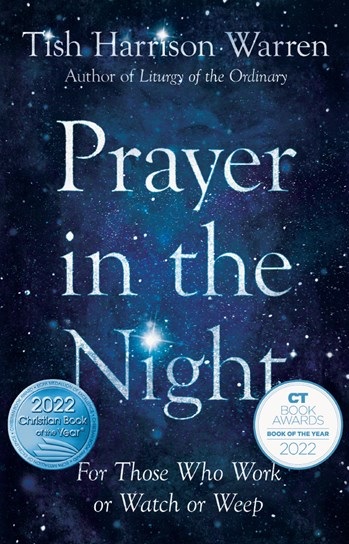
Tish Harrison Warren, in her wonderful book, Prayer in the Night: For Those Who Work or Watch or Weep:


“The losses I’ve sustained make me afraid of what’s ahead. I begin to think, ‘Not one more thing, Lord. Do not take away one more thing.’

But, of course, we can’t make that bargain with God. We can scale the heights of human knowledge and still not know what will happen by breakfast tomorrow.”


Yet, despite that painful reality (yes, it is), she continues…


… As Christians, we take up watching as a practice — a task even. We stay on the lookout for grace.

We proclaim that even in the deepest darkness there is one we can trust, who will not leave us. We believe that even if the worst comes to pass there is a solidity to beauty, to God himself, that will remain.

Our posture of waiting does not deny the horros of the night, but it bets on the morning to come.

Fear also keeps us on the lookout, but instead of the dawn, we imagine only desolation. We assume there will not be grace enough for what lies ahead. Fear tells us there is no one with us who can be trusted on this dark road.

In this prayer of Compline, we pray for those who watch. Sure, I take this literally — we are praying for late-night security guards, the police, firefighters, whoever eyes the military radar.

But when I pray this prayer, I’m also praying for those who wait and watch, not knowing what’s to come. In this sense, all of us are ‘those who watch’.”


Amen. I pray for each of you readers who are up, wherever you are, at night or in the night of your life.

We must watch for the grace God gives, and gives to others, and if we take notice, we will notice that God is everywhere. But especially right here.

Oh, and if I post a lot of quotes from Warren’s book, it’s because it’s been so deeply meaningful to me these past 8 months. I think you’ll like it too. It’s wonderfully sober, because there’s no artificial exuberance, nor is there morbid and pointless reflection – except that which points in the direction of Resurrection. Even if our faith in that is fragile, God’s promise of it is not.

March 12, 2024
0 Facebook Twitter Google + Pinterest
Bessel van der Kolk on how the body stores trauma

Bessel van der Kolk on how the body stores trauma

written by Christian Heinze

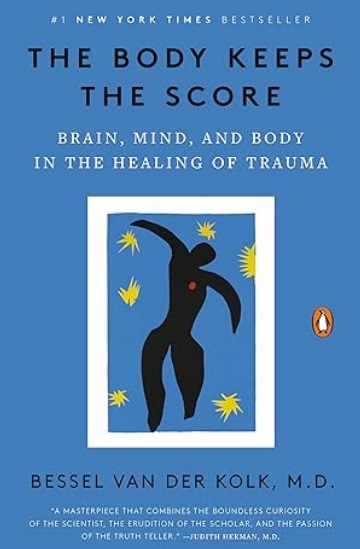
I recently started reading his classic book, The Body Keeps the Score, and will be posting excerpts, but I thought I’d start with this video overview below from van der Kolk, and a key passage from the video overview:

Bessel van der Kolk says in the video:

“The nature of a trauma is that an experience enters into your ears, into your skin, into your eyes, and it goes down into a very primitive part of your brain that automatically interprets what’s going on…. an event becomes traumatic when there is nothing you can do to stave off the inevitable and your body goes into a state of fight/flight or collapse.

The lingering effect of trauma is that you continue to react to mild stressors as if your life is in danger, and so you tend to become hyperreactive.

…Most people are barely aware or not aware at all that their reactions that they’re having right now is actually rooted in experiences that they’ve had before. That event itself is over, but you continue to react to things as if you’re in danger.

…. You need to really develop a deep sense of, ‘This is what’s happened to me. This is what I’m dealing with, and I need to take care of the wounds that I’m caring inside of myself.‘

This issue of self-compassion and really knowing that your reactions are understandable and are rooted in you getting stuck in the past is a terribly important part of beginning to recover from trauma.”

I’ve written this many times before, but the Christian church — well put it this way. It’s remarkable how many have been traumatized by it, and yet remained Christians. It’s a testament to God’s power, but also Satan’s penchant to show up as an angel of light.

To begin with, you have the obvious and tragic abuse of every kind that’s so common in churches.

Read The Roys Report’s outstanding work on exposing abusive church cultures. There are so many who’ve been traumatized in God’s very temple, and when they work up the courage to confront their abusers, the church goes into overdrive to protect the powerful and further victimize the victim.

If Christians want to complain about a “Deep State,” Abusive Church Culture is the real Deep State because it works far more damage than any other, imaginable institution on earth, because it cloaks its abuse in Christ’s name.

That’s the clearest example.

But on another, more quiet level, the entire ethos of Victorious Christian Living runs contradictory to the idea of trauma itself, and thereby, dismisses it.

And here’s perhaps the main reason.

When you come to Christ, you are famously a “new creation,” but the church misses the crucial distinction that this means you’re a new spiritual creation, not a new physical creation. We would never tell a stage II cancer patient who suddenly became a Christian that they’re now a new physical creation and their cancer is therefore gone and stop the chemo.

And in the case of PTSD and trauma, we still have trauma from the past stored in us that will play out in continually damaging ways, because our new bodies don’t come until the Resurrection.

In fact, for many new Christians, trauma can become more confusing because they’re taught that it’s supposed to go away because they’re a “new creation” now (just like they’re supposed to be “joyful” all the time now), and if the trauma lingers, then they’re just not “giving it away to God.”

Our traumas are perhaps some of our most sacred experiences, and I mean that in the sense that you have to go deep to get into a sacred place, and when someone laughs or makes a joke while in a sacred place, there’s a kind of blasphemy to it.

When people have doubted the reality of my depression or anxiety, I’ve sometimes been hurt, but so be it.

But when I’ve actually shared a moment of trauma and been dismissed?

That hurts at a level I didn’t even know I had. It’s a conversational dehumanization unlike any other.

And that is why I say it is sacred, because sacred means “set apart,” and it is very precious in the sense that it represents us at our most fragile.

We are all survivors of something deeply hurtful and as T.S. Eliot wrote, “All suffering is unique and the same.”

If you recognize trauma in your life, please look for help. Trauma won’t go away if you ignore it. I tried that for too long, and I’ve still got a long way to go. Thankfully, there’s help.

For readers from the United States….

Find a psychiatrist here.

Find a therapist here.

For readers, internationally, seek help from a local resource.

For those without Christ, he’s a prayer away.

March 11, 2024
0 Facebook Twitter Google + Pinterest

“I need thee every hour”

written by Christian Heinze

Sometimes it’s all we can really say.

“I need Thee every hour
Most gracious Lord
No tender voice like Thine
Can peace afford

I need Thee, O I need Thee
Every hour I need Thee
O bless me now, my Savior
I come to Thee

I need Thee every hour
Stay Thou nearby
Temptations lose their power
When Thou art nigh

I need Thee, O I need Thee
Every hour I need Thee
O bless me now, my Savior
I come to Thee

I need Thee every hour
In joy or pain
Come quickly and abide
Or life is vain

I need Thee, O I need Thee
Every hour I need Thee
O bless me now, my Savior
I come to Thee
O bless me now, my Savior
I come to Thee

Just as I am
Without one plea
But that thy blood
Was shed for me

And that Thou bids me
Come to Thee
Oh, Lamb of God
I come, I come

Just as I am
And waiting not
To rid my soul
Of one dark blot

To Thee whose blood
Can cleanse each spot
Oh, Lamb of God
I come, I come

Come, ye sinners
Poor and needy
Bruised and broken
By the fall

Jesus ready
Stands to save you
For love pardoning
Love for all

He is able
He is able
He is willing
Doubt no more

He is able
He is able
He is willing
Doubt no more”


And every hour the Lord answers, “I am with you always – even to the ends of the world.”

For readers from the United States….

Find a psychiatrist here.

Find a therapist here.

For readers, internationally, seek help from a local resource.

For those without Christ, he’s a prayer away.

March 9, 2024
0 Facebook Twitter Google + Pinterest
Load More Posts

Social Media

Twitter

Get in touch with me

Contact here. 

The Weary Christian mission:

First off:


In the United States, find a psychiatrist here.

In the United States, find a therapist here.

If you’re in the United States and having thoughts of harming yourself or others, please call the National Suicide Lifeline at 1-800-273-8255.

If you’re in the UK, get urgent help here.

Canada, here.

Australia, here.

New Zealand, here.

South Africa, here.

France, here.

Germany, here.

Portugal, here.

Mexico, here.

India, here.

The Philippines, here.

Singapore, here.

South Korea, here.


The Weary Christian goal…


a) reduce the stigma surrounding depression, anxiety, OCD, and other conditions in the Christian community.


b) have uncomfortable but honest conversations.


c) Reduce the stigma surrounding antidepressants, antipsychotics, and other meds God has given us as gifts.


And…


d) Sometimes (tons of times), we all feel really, really depressed in our journey. Hopefully, this site makes you feel less alone.

Categories


@2017 - PenciDesign. All Right Reserved. Designed and Developed by PenciDesign