
The Weary Christian
  • Depression
    • Depression

      James Bryan Smith: Unmet expectations and fear

      Depression

      STUDY: Criticizing older adults make them more vulnerable…

      Depression

      STUDY: Awe can reduce depressive symptoms

      Depression

      STUDY: How music-mindfulness can help depression, anxiety

      Depression

      STUDY: Chronic pain associated with higher rates of…

  • Anxiety
    • Anxiety

      Calling out the brain on catastrophizing

      Anxiety

      James Bryan Smith: Unmet expectations and fear

      Anxiety

      STUDY: Awe can reduce depressive symptoms

      Anxiety

      STUDY: How music-mindfulness can help depression, anxiety

      Anxiety

      STUDY: Chronic pain associated with higher rates of…

  • Book quotes/Video
    • Book quotes/Video

      “In darkest night, you were there like no…

      Book quotes/Video

      Thanksgiving for his brokenness

      Book quotes/Video

      Esther Smith: “All he wants is you”

      Book quotes/Video

      James Bryan Smith: Unmet expectations and fear

      Book quotes/Video

      Staton: On being a witness

  • Health News
    • Health News

      Calling out the brain on catastrophizing

      Health News

      STUDY: Mental health conditions share deep genetic patterns

      Health News

      STUDY: Four Supplements that MIGHT help depression

      Health News

      STUDY: Gut changes raise risk of eating disorders…

      Health News

      STUDY: Criticizing older adults make them more vulnerable…

  • Interviews
    • Interviews

      INTERVIEW: Dr. Terry Powell’s gripping account of depression

      Interviews

      INTERVIEW: Therapist Michael Schiferl explains religious scrupulosity and…

      Interviews

      INTERVIEW: Rocker Matt Sassano shares battles, urges transparency…

      Interviews

      INTERVIEW: Dr. Brian Briscoe tells Christians that antidepressants…

      Interviews

      INTERVIEW: Pastor Scott Sauls on anxiety, depression, and…

  • Devotionals
    • Devotionals

      “Grace has got to be drunk straight”

      Devotionals

      Defeated by God

      Devotionals

      Am I a faithless Christian?

      Devotionals

      Think you’re a “failure?” Jesus sees you unlike…

      Devotionals

      “I killed Jesus of Nazareth”

  • About
  • Depression
    • Depression

      James Bryan Smith: Unmet expectations and fear

      Depression

      STUDY: Criticizing older adults make them more vulnerable…

      Depression

      STUDY: Awe can reduce depressive symptoms

      Depression

      STUDY: How music-mindfulness can help depression, anxiety

      Depression

      STUDY: Chronic pain associated with higher rates of…

  • Anxiety
    • Anxiety

      Calling out the brain on catastrophizing

      Anxiety

      James Bryan Smith: Unmet expectations and fear

      Anxiety

      STUDY: Awe can reduce depressive symptoms

      Anxiety

      STUDY: How music-mindfulness can help depression, anxiety

      Anxiety

      STUDY: Chronic pain associated with higher rates of…

  • Book quotes/Video
    • Book quotes/Video

      “In darkest night, you were there like no…

      Book quotes/Video

      Thanksgiving for his brokenness

      Book quotes/Video

      Esther Smith: “All he wants is you”

      Book quotes/Video

      James Bryan Smith: Unmet expectations and fear

      Book quotes/Video

      Staton: On being a witness

  • Health News
    • Health News

      Calling out the brain on catastrophizing

      Health News

      STUDY: Mental health conditions share deep genetic patterns

      Health News

      STUDY: Four Supplements that MIGHT help depression

      Health News

      STUDY: Gut changes raise risk of eating disorders…

      Health News

      STUDY: Criticizing older adults make them more vulnerable…

  • Interviews
    • Interviews

      INTERVIEW: Dr. Terry Powell’s gripping account of depression

      Interviews

      INTERVIEW: Therapist Michael Schiferl explains religious scrupulosity and…

      Interviews

      INTERVIEW: Rocker Matt Sassano shares battles, urges transparency…

      Interviews

      INTERVIEW: Dr. Brian Briscoe tells Christians that antidepressants…

      Interviews

      INTERVIEW: Pastor Scott Sauls on anxiety, depression, and…

  • Devotionals
    • Devotionals

      “Grace has got to be drunk straight”

      Devotionals

      Defeated by God

      Devotionals

      Am I a faithless Christian?

      Devotionals

      Think you’re a “failure?” Jesus sees you unlike…

      Devotionals

      “I killed Jesus of Nazareth”

  • About

The Weary Christian

THE WEARY CHRISTIAN

LIVING WITH FAITH AND DEPRESSION

  • Depression
    • Depression

      James Bryan Smith: Unmet expectations and fear

      Depression

      STUDY: Criticizing older adults make them more vulnerable…

      Depression

      STUDY: Awe can reduce depressive symptoms

      Depression

      STUDY: How music-mindfulness can help depression, anxiety

      Depression

      STUDY: Chronic pain associated with higher rates of…

  • Anxiety
    • Anxiety

      Calling out the brain on catastrophizing

      Anxiety

      James Bryan Smith: Unmet expectations and fear

      Anxiety

      STUDY: Awe can reduce depressive symptoms

      Anxiety

      STUDY: How music-mindfulness can help depression, anxiety

      Anxiety

      STUDY: Chronic pain associated with higher rates of…

  • Book quotes/Video
    • Book quotes/Video

      “In darkest night, you were there like no…

      Book quotes/Video

      Thanksgiving for his brokenness

      Book quotes/Video

      Esther Smith: “All he wants is you”

      Book quotes/Video

      James Bryan Smith: Unmet expectations and fear

      Book quotes/Video

      Staton: On being a witness

  • Health News
    • Health News

      Calling out the brain on catastrophizing

      Health News

      STUDY: Mental health conditions share deep genetic patterns

      Health News

      STUDY: Four Supplements that MIGHT help depression

      Health News

      STUDY: Gut changes raise risk of eating disorders…

      Health News

      STUDY: Criticizing older adults make them more vulnerable…

  • Interviews
    • Interviews

      INTERVIEW: Dr. Terry Powell’s gripping account of depression

      Interviews

      INTERVIEW: Therapist Michael Schiferl explains religious scrupulosity and…

      Interviews

      INTERVIEW: Rocker Matt Sassano shares battles, urges transparency…

      Interviews

      INTERVIEW: Dr. Brian Briscoe tells Christians that antidepressants…

      Interviews

      INTERVIEW: Pastor Scott Sauls on anxiety, depression, and…

  • Devotionals
    • Devotionals

      “Grace has got to be drunk straight”

      Devotionals

      Defeated by God

      Devotionals

      Am I a faithless Christian?

      Devotionals

      Think you’re a “failure?” Jesus sees you unlike…

      Devotionals

      “I killed Jesus of Nazareth”

  • About
Health News

STUDY: Mental health conditions share deep genetic patterns

James Bryan Smith: Unmet expectations and fear

STUDY: Four Supplements that MIGHT help depression

STUDY: Criticizing older adults make them more vulnerable to developing depression

Study offers great context on kids, screen time, and emotional problems

Daily Blog

Staton: Tears and prayers

Staton: Tears and prayers

written by Christian Heinze

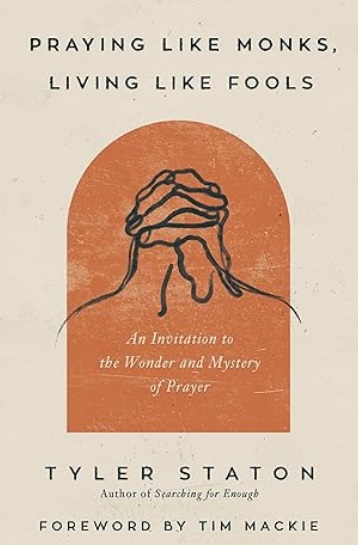
In his wonderful book, Praying Like Monks, Living like Fools, Tyler Staton reminds us of how God will use two precious and painful companions to renew the world.


“Scripture makes it clear that God collects two things — prayers and tears.

This world in its current form is passing away, but our prayers and tears are eternal.

God collects our prayers. In Revelation, we are offered a glimpse at the receiving end of our prayers: ‘The twenty-four elders fell down before the Lamb. Each one had a harp and they were holding golden bowls full of incense, which are the prayers of God’s people’.”

But God doesn’t just hold and treasure those prayers. Instead, at the right time, he pours out those prayers onto the world.

“Redemption comes when he rains down those prayers on the earth once and for all. The renewal of the world, heaven and earth restored as one, begins with God pouring out all the prayers of his children like a purifying fire with one great, resounding yes.

Every prayer in the end is an answered prayer.

Some are still awaiting that yes, but it’s coming.”


Now, it’s not just our prayers that God uses, but also something else – for lack of a better word – aquatic?

In the Psalms, David famously notes that God “bottles our tears,” but a less famous moment comes in Psalm 123 when the Psalmist says: “Those who sow with tears will reap with songs of joy.”

Staton notes:


“God is not merely bottling up our tears. He also promises that when they touch the earth, they will bring renewal… The new creation is seeded by the prayers of God’s people and watered by their tears. Both are key ingredients in remaking the world.”


Amen.

It’s a beautiful thing – that God uses these very private things (prayers and tears) to help bring about creation’s redemption.

So we pray alone and we usually cry alone, and God sees the sacred in loneliness, and will someday publicly use all that to turn the world into a place with no more tears and where our prayers are only continual hallelujahs.

I don’t know about you, but loneliness can either be a place of refuge or dread for me, and it’s not always clear whether it will be one or the other.

But we do know that prayers can arise from refuge or terror, and those are probably the prayers that most catch God’s ear because they’re not uttered from, potentially, obligation (a family table) or, potentially, from pride (a fellowship).

Our silent prayers aren’t obligatory or vain, because who would pray from pure obligation or vanity while alone?

So keep praying in silent, alone. God hears you, and he blesses your prayers and tears and promises they’re of greater use than we could ever imagine.

For readers from the United States….

Find a psychiatrist here.

Find a therapist here.

For readers, internationally, seek help from a local resource.

For salvation, Christ and Christ alone.

July 20, 2024
0 Facebook Twitter Google + Pinterest
STUDY: Depression, loss of memory have bidirectional link

STUDY: Depression, loss of memory have bidirectional link

written by Christian Heinze

A brand new study, published in JAMA Network Psychiatry, establishes a bidirectional relationship between memory decline and depression.

In other words, greater depressive symptoms accelerated memory loss, while significant memory loss accelerated depressive symptoms.

The link between depression and neurological diseases has been increasingly established in recent years, and depression is a risk factor for earlier onset of dementia.

Memory loss and depression involve similar neurological processes, as the study authors explain.

Medical News Today:

[Dr. David] Merrill [director of the Brain Health Center at the Pacific Neuroscience Institute] said the activity in the prefrontal cortex and hippocampus are similar in both conditions. When there’s a decrease in frontal lobe activity — as is seen with depression — there is a reduced ability to hold things in working memory,” Merrill explained.

“The circuitry and the cells and the synapses involved in memory formation have a profound overlap with the circuitry involved in moods, mood regulation, and mood formation,” Merrill said.

I’d suggest reading more about nuts and bolts of the neurological processes in Medical News Today, but of note, the study author reminds us that the high cortisol levels often seen in depression can lead to hippocampal atrophy — not to mention increased levels of pro-inflammatory cytokines that can play a major role in neurotoxicity.

Now… I sometimes hate posting studies like these because if you’re depressed, well, this hasn’t exactly made your night better.

However, I post it for three reasons.

First, it has important practical implications. The more scientists know about the relationship between depression and memory decline, the better treatment available.

Second, studies like this can also sometimes get depressed folks to seek help from a doctor who might be able to prescribe an antidepressant, if he or she determines it’s appropriate (it’s clutch to remember that many antidepressants fight inflammation).

The study authors also note that exercise is a powerful way to help both depression and memory decline and the mechanism for that is well-established.

Finally, I think it’s really important to post anything that reminds Christians that depression is a real medical condition – that scientists can actually see what’s happening in the brain of a depressed person.

That goes a long way to reducing the horrible stigma that so many Christians feel of “I just don’t have the joy of the Lord… what’s wrong with my faith?”

Science is increasingly suggesting (read here) that major depressive disorders are likely neurological disorders with psychiatric symptoms, which represents the natural, evidence-based conclusion of numerous studies and, hopefully, will further reduce stigma surrounding this disease.

You can’t blame someone’s Alzheimer’s on a lack of faith. Nor their Parkinson’s. It’s time for us to get to that point with depression.

So Christians, as a whole, need to be aware of studies like this, and for those like you and me – who struggle with depression – the memory decline thing might offer a bit of motivation to look for treatment.

Although… I am keenly (way too keenly) aware of depression’s ability to sap us of any motivation. That word “motivation” can seem so distant it’s almost fantastical. “Oh, I once was motivated, wasn’t I? Or was I? Could I really have been? Was that just a dream?” And actually, it was just three weeks ago. Such is the intensity of this thing).

Read the whole study here.

If you’re depressed, or struggle with any aspect of mental health…

For readers from the United States….

Find a psychiatrist here.

Find a therapist here.

For readers, internationally, seek help from a local resource.

For salvation, Christ and Christ alone.

[Photo: Pexels, free stock photography].

June 15, 2024
0 Facebook Twitter Google + Pinterest
The Lion Has Conquered

The Lion Has Conquered

written by Christian Heinze

In his book, The Power of the Cross, Raniero Cantalamessa writes of our tears, suffering, and one of the most precious verses to remember – Revelation 5:5: “Stop weeping! Look, the Lion of the tribe of Judah, the heir to Judah’s throne, has won the victory!“

Cantalamessa urges us to repeat the verse to ourselves continually, as if to defy the darkness that overwhelms us (I know, however, that for those of us with depression, anxiety or any other clinical disorder, it’s not that easy and see footnote for medical links).

Still, this is truth, however difficult it is to feel.

Cantalamessa:


“The more a person repeating these words suffers, is weak, and seems defeated, humanly speaking, the louder his cry bellows, shaking the foundations of the powers of darkness.

Through faith, refined like silver in a smelting pot, the person not only resembles but identifies with the Lam who became a victor by accepting to become a victim.

Before the tomb of her dead brother, Jesus said to Martha, ‘Did I not tell you that if you believe you will see the glory of God?’

When humanly speaking, we face a situation that seems to have no good outcome, Jesus repeats those words to us: ‘Did I not tell you that if you believed, you would see the glory of God?’


Later, Cantalamessa returns to our cry, and the One who listens, always, and has overcome, forever.


“When we experience a situation that seems overwhelming, or when God’s plan for our life, or the lives of our loved ones, or for the entire Church, appears to a be a scroll sealed with seven seals, or when we have to endure something without understanding, the whys or wherefores, or when we see people dying surrounded by indifference, that is the time for us to kneel and cry out with all our faith: ‘The Lion of the tribe of Judah has conquered and he will open the scroll and break its seven seals!’

In him, all victims have received the hope of becoming victors.


Amen.

Cantalamessa notes that Revelation was written while the church was facing intense persecution, despair and doubt.

And for people like you and me — for those with depression or anxiety or OCD or an eating disorder or whatever our struggles — well, that can feel like a daily persecution of its own, can’t it — one that produces both despair and doubt.

The persecution of living in a fallen world, with a fallen (and failing) body. Our own minds can persecute us. Accusing, doubting, despairing.

And we certainly don’t have to be reminded that there’s darkness in the world, or pain in our heart. “Man is born to trouble.”

But, as certain as that sadness is, there is another certainty and it’s attached to eternity: “The Lion has won the victory.”

He has. You have to hold onto that tighter than anything, and I have to, as well, or else I would surely fall.

And even though we’ve found our home in Christ, we are not in his home yet. But we will be one day. And for every day.

May the Lord bless you. The Lion did this for you and me.

If you’re depressed, or struggle with any aspect of mental health…

For readers from the United States….

Find a psychiatrist here.

Find a therapist here.

For readers, internationally, seek help from a local resource.

For salvation, Christ and Christ alone.
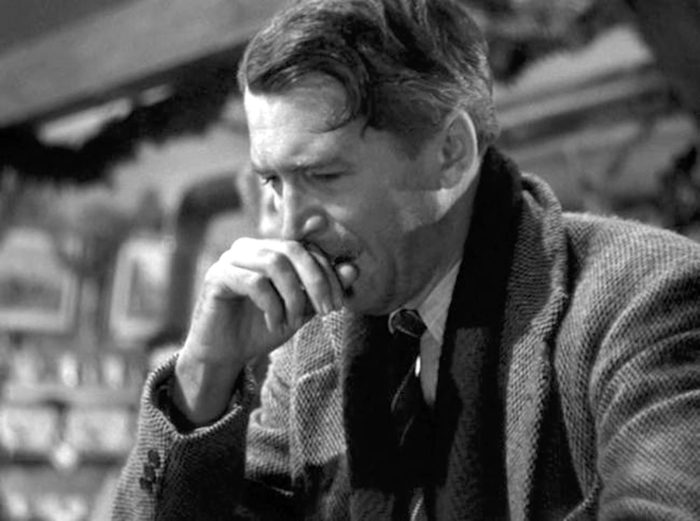
[Screencap: the empty tomb from The Passion of the Christ].

June 9, 2024
0 Facebook Twitter Google + Pinterest
Psalm 71, if you’re feeling weary

Psalm 71, if you’re feeling weary

written by Christian Heinze

There are few better.

Highlights from Psalm 71:


“Oh, Lord, I have come to you for protection;

don’t let me be disgraced.

Save me and rescue me,

for you do what is right.

Turn your ear to listen to me,

and set me free.

Be my rock of safety

where I can always hide.

Give the order to save me,

for you are my rock and fortress.

My God, rescue me from the power of the wicked,

from the clutches of cruel oppressors.

O, Lord, you alone are my hope.

I’ve trusted you, O Lord, from childhood.

Yes, you have been with me from birth;

from my mother’s womb you have cared for me.

No wonder I am always praising you!

…You have been my strength and protection

That is why I can never stop praising you;

I declare your glory all day long.

And now, in my old age, don’t set me aside.

Don’t abandon me when my strength is failing.

For my enemies are whispering against me.

They are plotting to kill me.

They say, ‘God has abandoned him.

Let’s go and get him, for no one will help him now.’

O, God don’t stay away.

My God, please hurry to help me.

…. I will keep on hoping for your help;

I will praise you more and more.

I will tell everyone about your righteousness.

All day long I will proclaim your saving power.

…. You have allowed me to suffer much hardship,

but you will restore me to life again

and lift me up from the depths of the earth.”

If you’re depressed, or struggle with any aspect of mental health…

For readers from the United States….

Find a psychiatrist here.

Find a therapist here.

For readers, internationally, seek help from a local resource.

For salvation, Christ and Christ alone.
April 23, 2024
0 Facebook Twitter Google + Pinterest
Think you’re a “failure?” Jesus sees you unlike anyone else

Think you’re a “failure?” Jesus sees you unlike anyone else

written by Christian Heinze

“Then he said, ‘Jesus, Remember me when you come into your kingdom. And Jesus replied, ‘I assure you, today you will be with me in paradise.” – Luke 23:43-43

“Did you hear about Gedaliah?” Adinah asks as she sweeps the dust off her Jerusalem porch.

“No, we were praying for him last week at Synagogue Group. Is he still a…” She’s not sure if this is gossip or just sharing prayer requests, so she pauses.

Her friend, who’s the self-appointed fulcrum of information at Synagogue, quickly updates her.

“Yup, still a thief, and – listen to this. He was crucified last weekend!”

“Crucified?!” For being a thief?”

“For being a thief.”

“Crucified, for being a thief?”

That’s no ordinary thief.

It took some doing to be crucified in Israel. The church father John Chrysostom speculates that the thief on the cross might have lived in the desert where he robbed and murdered travelers.

So either the thief on the cross was the worst thief in all of Israel (a murdering one), or he was a pickpocket with the worst luck in all of Israel, which is failure, too, in a way.

I doubt his parents were at the cross that day. Either the shame of pride or the hurt of love kept them away.

Maybe old high school acquaintances came to laugh, and the thief thought, “I wish they wouldn’t remember me this way, but I’m getting crucified, naked, and now they can’t remember me any other way.”

We all leave a legacy, and when we fail miserably, we want to erase ourselves. Not just what we did, but actually erase our memory from the minds of others.

If everyone knew the worst of me, I wouldn’t want to try to repair my legacy or somehow make them think better of me.

I’d want them to forget I even existed.

And so the thief left a memory, and he must have known it was a terrible one, and who then would want to be remembered?

Now, of course, Jesus was also on the cross that day and, during their shared agony, the thief said this two word phrase to Jesus.

“Remember me.”

“Remember me” to God.

Strange. The Thief on the Cross was asking God, of all people, to remember him.  

The Greek suggests that, in using “remember me,” the thief was “making an active plea for remembrance.”

So it’s the thief’s desperate desire that Jesus think, “Oh, yes! The thief!” the first thing he gets to paradise, which is odd because if I’d spent my life robbing and killing people, the last thing I’d really want is for a holy God to remember me.

In fact, you and I have lived “better lives” than the thief, but there’s something in us that’s a little iffy over whether we want God to remember us when we die.

Sure, we want heaven, but maybe by sneaking past the Judge. You know, walk in the middle of a pack of saints and hope he doesn’t see us.

But if we’re faced with him, on our own, we fear God saying, “Yes, I remember you. In fact, I remember every single thing you’ve ever done and said.”

Then God pauses, “And I remember everything you’ve ever thought.”

Then The Judge pauses again, “And I remember all the times you sinned when you knew it was sin, and yet you thought this day of reckoning would never really come, and now it’s come (did you think I was a liar?), and I remember it all.”

That terrifies me.

I’d rather God remember nothing about me than anything about me.

But the thief still says, “Remember me.”

Why would the thief, of all people, plead with God to remember him?

There’s only one reason.

Somehow the thief saw a different God than the one we fear, and in that clarity, grasped perhaps more clearly than any other human being in history that being remembered by Jesus after death was actually a good thing, and not just a good thing, but the best possible thing.

In fact, it was the thing he begged for.

Think of that. He wasn’t begging the centurion for some kind of reprieve. That would seem the thing to do, right?

After all, win Hadrias over and you’re off the cross, at physical therapy for a few months, and then your life is back.

But the thief begged Christ for mercy. Why?

There are two reasons.

First, the thief must have believed, “I’ve got a better shot with Christ’s mercy than the centurion’s.” After all, humans tend to show up for mercy at the places they think they’ll find it.

And to the thief, it wasn’t an indifferent and immoral Roman soldier with a sword, it was the righteous God on the cross who knew everything the thief had had ever done.

That’s the way we’re all supposed to see Christ’s mercy, and yet I find myself believing the Roman more possible of mercy than Christ.

Now — not to call my wife a Roman centurion — but to call her a Roman centurion for a second – Katie shows me mercy every day, and it doesn’t surprise me. Sometimes, I think, “Wow, she’s a merciful woman,” but even in that brief marvel, I don’t struggle to believe the veracity of her forgiveness.

But her mercy has nothing on Christ’s.

And yet, if I died, and you asked whose mercy I’d prefer — God’s or my wife’s, I would instinctively choose my wife’s.

Wouldn’t you pick the nice human, too, and not the Burner of Bushes, the Fire Throwing Deity who destroyed Cities?

I’d pick the nice human. But it’s terrible theology, and the thief recognized it as such – not because his mind finally grasped the theological supremacy of Christ’s mercy, but because his heart simply saw it.

He must have seen something in Christ’s eyes, or the way he spoke, so deeply and lovingly, to those cursing and killing him – something that led him to believe that nothing else merciful was possible that day, except what lay in the heart of the God we fear.

And that’s why he asked Jesus, “Remember me.” He knew that Jesus saw his “Me” unlike anyone else in the world.

And Jesus sees our “me” unlike anyone else in the world, too.

We’re not the “me” the rest of the world sees. We’re not the “me” that I see. We’re a “me” that is so beautiful and easily forgiven that the thief longed for Jesus to remember it.

There’s something else behind the thief’s request that gives us a glimpse of Jesus.

Usually, if we’re confronted with someone powerful and big, we squirm. Even if they’re loving and good, we still squirm.

Christians love to compare God to C.S. Lewis’ lion, Aslan (or Aslan to God – I’m not sure who has primacy these days).

And one of Christians’ favorite lines comes from The Lion, The Witch, and the Wardrobe when Mr. Badger tells the children that Aslan isn’t safe, but he’s good.

That’s supposed to be comforting.

I’m not sure why that’s supposed to be comforting because if the thief thought Christ was like Aslan (not safe, but good), I doubt he’d have turned to Jesus instead of the centurion.

“Better to take my chances with the immoral centurion who’s got the power to free me from death than the Good One who might not save my soul from eternal death.”

But there’s no indication the thief turned first to the centurion, or that he squirmed or worried about Jesus’ answer, and there’s absolutely no indication Jesus gave him any reason to.

The thief saw Jesus as good and safe that afternoon.

And that is the way we’re to see our Jesus every afternoon.

In John, Jesus says we’re now his friends. If you were to boil friendship down to one word it would be safety. That a friend might see all of you today, and would still want to see more of you tomorrow, no matter what they saw of you today.

So Christians, let’s stop the Aslan thing! In fact, Jesus himself says we’re supposed to come to Christ as a child, and a child only comes to those they see as good and safe. In fact, children tend to view everyone as good, but very few as safe, but they flocked to Jesus. We can only feel safe with someone who is good, so the two go hand-in-hand. A child cannot come to anyone they do not feel is both good and safe.

There’s one more thing about this story.

I’d like to think the thief’s confession was somehow the lone bright spot in the horror of Christ’s crucifixion, he was the Father’s final mercy to his son before the moment of total excommunication. That the Father put the thief there to remind Jesus of why he came — because when you and I see visible fruit from our suffering, it gives the pain meaning.

“My son, this is why you came. You see that dying, wounded one there on the cross? That thief? He’s why you’re here. Push on a bit longer, my beloved son, and you’ll both come home.”

So the thief’s last gasp plea didn’t put off Jesus; instead, it must have touched him deeply, and so Christ’s proclamation that “today you will be with me in Paradise” might have sounded intimate and wistful — the way suffering soldiers often remind themselves of home, and in that longing, mixed with suffering, a kinship and intimacy is born that’s impossible to produce in our normal lives.

Jesus is your brother, your fellow soldier, too, and he still feels his cross, as you carry yours. He is good, he is safe, he is “your loving ally.”

So don’t look down to the centurion for mercy.

Look to Christ, the good and safe one who sees all of you, and forgives you with relish, as proof that his suffering was all worth it.

Turn to him and say, “Remember Me” and it doesn’t matter how the world remembers you, or even you how you remember you.

The only one who matters will remember you in a way they won’t, in a way that only he can, in a way that sees you as the beautiful masterpiece he loves, and he will say: “You will be with me in Paradise.”

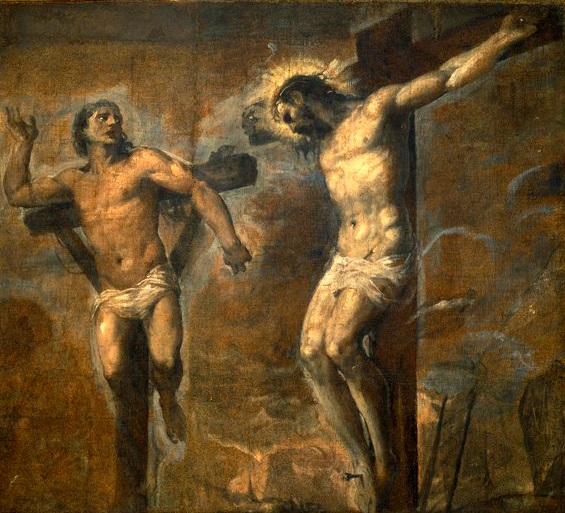
[Painting: Christ and the Good Thief, Titian]

If you’re depressed, or struggle with any aspect of mental health…

For readers from the United States….

Find a psychiatrist here.

Find a therapist here.

For readers, internationally, seek help from a local resource.

For salvation, Christ and Christ alone.

April 1, 2024
0 Facebook Twitter Google + Pinterest

Happy Resurrection Day!

written by Christian Heinze

It is finished, and he has now risen. Happy Resurrection Day, everyone!

A reader from India, Dr. Lisa Choudrie, sends these two poems over to help all Christians celebrate.

“Jesus Is Alive”

by Lisa Choudrie

Who rolled away the stone? 

Who folded the grave clothes? 

Who breathed life into Jesus’ corpse? 

There are no simple answers, 

But we don’t have to guess, 

It was God at work, no less! 

That early morning so long ago

The women walking with their spices

Sorrow in their hearts

Their Master, Teacher was dead

Grief left when they saw the greatest miracle

And witnessed Jesus, now supernatural! 

Peter and John saw the empty tomb

Disbelief filled their hearts

Mary Magdalene thought Him the gardener

Until she heard His voice

Doubting Thomas touched His hands and side

It was as they said -Jesus was alive! 

And we, two thousand years later

We celebrate the greatest gift of all, 

Death is defeated, 

Eternal life is born, 

Jesus is alive for ever more! 

Interceding for us, seated on the Throne.. 

And today He meets us

At our point of need

In our grief, in our pain

In circumstances tough

In times of dark clouds

When uncertainty forms a shroud.. 

Jesus is alive! 

And He gives us His peace

For the times of sorrow

Joy in the midst of laments

Power in His mighty Name

And we are transformed, never again the same! 

Joyful hearts can dance with abandon! 

Jesus is alive! 

Tears are wiped away from our eyes! 

Jesus is alive! 

He is seated on the throne! 

He is alive for ever more! 

Rise up then, weary brother! 

Stand up, sorrowing sister! 

Jesus lives and in Him we shall too! 

He has triumphed over death and the grave!

Jesus has won the victory! 

He is clothed in power and majesty! 

Out of the mouths of babes and infants! 

The rocks and stones cry out in joy! 

The hearts of the fathers are turned to their sons! 

The hungry are fed, the lost are found! 

The Kingdom of God is here! 

Jesus is alive! Jesus is here! 


And then this poem, which any Christian struggling with despair today will understand.

“He bears our pain”

by Lisa Choudrie

This morning wakened rudely
With the dreaded ‘S’ word
You know the one
Deathly cold and predatory
Like the vulture, a cruel bird..

It sat on my mind
Weighed it down, like lead
Attacked and ravaged
Left me gasping
Wondering if it would leave me for dead..

It jeered and teased
Malevolence in its claws,
The monster had awoken
Breathing fiery threats
Death in its open jaws..

Threatened, I cried out for help
Some respite from the war within,
Nothing came to mind
Old speeches haunted me
‘ Failure, no- good’ a constant refrain..

Faithful friends and loved ones
Praying fervently,
All of a sudden,
Could feel the cloud thinning
Gradually, yet suddenly..

Passion week,
Our dear Savior’s suffering,
The cup He drank
The death He underwent
All for me and my saving..

Can’t claim to have faith
Small as a mustard seed,
But my faith was bolstered
Today – this morning
Jesus meeting my need..

His suffering and death
Nothing can compare to,
The nails driven in
The crown of thorns
Borne by the Only One, true..

My pain, immeasurable
Was borne by Him,
The fall out of the fall
He took it all
He Who knew no sin..

He takes up our sorrows
He takes up disease,
He bears the curse on our behalf
Physical, mental, emotional hurts
Hurts, that only in Him can be appeased..

Be strengthened, then weary co-traveller,
Hang in there, don’t give up the fight,
He is invisible, yet ever present
Even our lowest moments, darkest
Will be brought to nought, by His light..

His Name is our Fortress
We can run into it and be safe,
His armor- salvation, truth, faith
Peace and His double edged Word
Keep our spirits and minds sane..

We journey with Jesus,
Meet Him in dark Gethsemane,
Know that His anguish brought us peace
His cup of sorrows, our healing
Let this be our balm of Gilead sweet…

March 31, 2024
0 Facebook Twitter Google + Pinterest
“I killed Jesus of Nazareth”

“I killed Jesus of Nazareth”

written by Christian Heinze

In his 1982 Good Friday address, Raniero Cantalamessa urged us all to embrace the confession, “I killed Jesus of Nazareth.”

Think about that for awhile, because I’ve been thinking of it a lot for the past few months, and it’s truly transformative.

We tend to put that phrase in collective terms, “we all killed Jesus of Nazareth,” and while that’s true, we can only experience the gravity of it when we say, “I was Judas who betrayed you that night. I was the soldier arresting you. I was Peter denying you. I was the self-righteous council condemning you. I was Pilate sentencing you. I spit on you and watched and laughed as you died for me.”

There’s something different about it when we say, “I” instead of “we” because “we” removes us a bit from the process. “Sure, I shouldn’t have done, but they were doing it, too. We all were doing it.”

Collectivizing it is the first step on the way to thinking that somehow we’re not quite as bad as all that – that somehow this isn’t about us. It’s about the world. It removes our sting a bit from Christ’s sting.

But the more I think about it, the more vital I believe it is to continually remind myself of this — “I killed Jesus of Nazareth,” and it’s not because I should wallow in my sin.

It’s because I need, and all Christians need, humility, humility, and more humility.

When I can honestly tell myself, “I killed Jesus of Nazareth,” it becomes impossible for me to adopt a self-righteous tone towards any other human being — no matter who they are, or what they believe, or what they’ve done.

When I can honestly tell myself, “I killed Jesus of Nazareth,” I can’t, in any way, belittle, demean, or write off someone else without killing Jesus myself again.

Our society is obviously fractured, and it is because the tribes have judged themselves less complicit in Christ’s death.

That is, ultimately, how hate begins.

It begins with pride and what could be a grander object of pride than to say, “I didn’t kill Jesus as much as you did”?

We don’t even think on those terms, consciously, but I think that subconsciously, there is a dialogue within us, within the whole world that says, “I’m less to blame for something than someone else. I’m less at fault.”

Less at fault for what?

We can think of examples, and we do, but unfortunately we think of the wrong ones, because somehow we tend to arrive at a place of moral superiority and self-righteousness.

Moral superiority might be possible in a world where there was a “less at fault” option.

But we don’t live in a “less at fault” world.

Because we were equally at fault for the greatest sin of all, and therefore, any claim to moral superiority is hypocrisy.

That’s why clarifying to ourselves “I killed Jesus of Nazareth” is crucial to our witness. I am not less at fault for anything. I am equally at fault for the worst act ever committed.

That’s a big deal.

“I killed Jesus of Nazareth” isn’t meant to invoke the kind of shame that produces self-loathing.

It’s meant to invoke the kind of humility that produces loving others.

Right now, I think American Christianity is in crisis because we have forgotten, I have forgotten that I killed Jesus of Nazareth.

If we, as a Christian church, taught ourselves this every day, we would reconsider how we engage with every human being.

As a church, our witness will wither if we fail to remember how withered we are.

As a church, we will produce hate if we fail to remember how hateful we were by killing Jesus.

When we complain about how we’re treated, when we complain about persecution, do we remember what we did thousands of years ago to Christ?

And what did Jesus say to us when we persecuted him, what did he say to us when we killed him, how did he respond: “I love you anyway.”

If he could look down at us and forgive us, how can we look down on another?

Thank you, dear God, that even though I killed you this day, you forgave me in a moment, and you forgive me every day, and will never fail or forsake this Judas who put you up there.

God won’t leave you, either.

No matter what you did to him, no matter how you sinned against him now, today, and tomorrow, no matter what should happen, his forgiveness was good for that Friday and for every day that’s lived.

He is continually reaching towards us. That’s why he came. For us. That’s why he died. For us. That’s why he rose. For us.

He’s for us. Now we tell others this wonderful news, while reminding ourselves that we must do so with the humility, care, and love that can only come from understanding that we, too, put Jesus to death.

And as the line goes from Mozart’s Requiem, “Remember, me merciful Jesus, for I am the cause of thy journey.”

March 30, 2024
0 Facebook Twitter Google + Pinterest

Tim Keller: The Hour of Darkness

written by Christian Heinze

On his podcast series, Tim Keller is going through Holy Week and has this to say in his sermon, “The Hour of Darkness.”


“Here’s Jesus and everything is going wrong…. God couldn’t possibly be working in his life, and yet greatness and glory comes out of it.

And Jesus’ life is sort of a mini version of the whole of history.

Because if God can take the senselessness and tragedy of Jesus’ life and turn it into something cosmically wonderful, the same thing is going to happen at the end of history.

Why can’t God do that for all of history — what he did with Jesus? We can see he did it with Jesus.

We can look back and see every single bad thing that happened to Jesus turned into something glorious and great.

Wouldn’t it be possible to actually be able to stand back at the end of history and see the same thing? I think that’s the promise.

In the Brothers Karamazov, there’s this incredible quote.

‘I believe that suffering will be healed and made up for, that all the humiliating absurdity of human contradictions will vanish like a pitiful mirage – the despicable fabrication of the impotent and infinitely small mind of man.

That in the world’s finale, at the moment of eternal harmony, God will bring to pass something so precious that it will suffice for all hearts, for the comforting of all resentments, for the atonement of all the crimes of humanity, of all the blood they’ve shed, and that it will make it not only possible to forgive, but to justify all that has happened with men’.”

March 27, 2024
0 Facebook Twitter Google + Pinterest
STUDY: New app can help predict depression before it hits

STUDY: New app can help predict depression before it hits

written by Christian Heinze

Dartmouth researchers have developed the first smartphone application that uses AI and facial-image processing software to predict depression before users become consciously aware of symptoms.

The researchers found that the app, MoodCapture, could predict depression’s onset with 75% accuracy.

Here’s how it works.

Every single time you open your phone with facial recognition, the app measures your gaze, the position of your head, muscle rigidity, and other specific facial expressions and environmental cues.

It then pairs that with deep-AI learning over time about your normal gaze, rigidity etc., to make the prediction.

Of course, it’s much more complex than that, but you get the gist.

The goal, then, is to alert users that they may have depression lurking at the door and — armed with that knowledge — we can then engage in whatever therapeutic measures we’ve found work best. Reach out to a friend, therapist, go for a run, any of those kinds of things.

I’ll admit, sometimes things like this feel dystopian and creepy – the camera, particularly. The way the app can predict you.

But at the same time, maybe that’s just me getting older and some people (including myself) could probably really benefit from it.

If you notice, there have been quite a few AI-related advances in this field (including that remarkable study showing AI could predict the effectiveness of Zoloft after just a week).

The medicinal benefits of AI are only just beginning.

[Photo: Pexels, free stock photography]

March 27, 2024
0 Facebook Twitter Google + Pinterest

“What will it be like?”

written by Christian Heinze

I’ll get back to writing more once this virus is done doing its number on my family, but I was listening to this song the other night and thought of one particular phrase from it, “What will it be like?” and then another for my readers who’ve struggled so long, “Well done.”

God will say it to you, “Well done.”

Keep pushing, just as Paul said, “the sufferings of this present time are not worth comparing with the glory that is to be revealed to us.”

Personally, I still can’t quite grasp that Christ might say, as he promised in Matthew 25’s parable, “Well done,” because what have I done, really? We often feel that, don’t we?

And even when I do something, I then wonder after, “Was this so I can hear ‘Well done’?”

That’s what pops in my OCD, instinctively self-loathing head sometimes when I think of that phrase in relation to myself, “Well done.”

And there’s so much I haven’t done. That’s what pops in my head too.

But then this is what God wants us to hear: “I did it for you.” Whatever we didn’t do, Christ did do, and God sees us as he saw his son.

Did the thief on the cross do anything? No, and yet he heard, “Well done.” That’s just the mercy of Christ.

It’s much easier for me, though, to look at all those Christians, struggling, yet continuing to believe and serve and often in spite of personal dream and ambition – you’ve instead chosen the path of most resistance because it is the place where the least are found.

Or to those who are depressed, anxious, consumed with an eating disorder, a chronic illness, autism, ADHD, or are even suicidal, and only you know how hard it is to even wake up. Jesus understands and because you’ve chosen to continue and know that he’s still got a reason for you to be here, even if you can’t find one, this song is for you, as well. Jesus’ promise is for you.

Or to those who are too keenly aware of their own failings, and must decide – just as Henri Nouwen wrote of — to make the choice, after each discouraging sin, to be either Judas or Peter. To give up on forgiveness in despair, or to accept Jesus’ tender and complete offer of forgiveness, despite your own skepticism.

Because we often are skeptical of forgiveness – skepticism towards the miraculous makes perfect sense, because the miraculous makes no sense, and it’s probably why there was so much fear when Jesus performed some his miracles. It defied humans’ sense of order, and in the same way we might actually fear a leaf that started talking to us about wonderful things, God’s mercy defies our sense of the order of the world, no matter how grand the message, and why not? It’s the greatest miracle of all.

But thanks be to God that through it all, and because of Christ, he will say, “Well done” and the mystery of that might elude us, but it’s real.

And so I want to say to anyone in the dark tonight, you are much nearer the light than you can ever know, and much sooner than we can grasp, we will be in the light fully, in the place that needs no sun because the Son provides the luminescence, and you will get there.

Keep going. Thank you for what you are doing for Jesus. The cups of cold water. Jesus drinks them. The tears you cry, Jesus cries too and will remember them. The hungry you feed. Jesus eats and, just as after his temptation, is comforted. The flock you serve as a leader. Jesus was a shepherd and knows how the sheep are prone to wander and forget the care they’re offered by the shepherd.

And even in our failures, what did he say, in the most symbolic ritual he established: “Take, eat. This is my body, it was broken for you.” To accept that – it’s the end of the judgment of our sin, and our new life begins today – a life that will be one day be raised to the words, “Well done.”

He knows our frame, and he will tell you – the masterpiece in that frame – well done.

“Well Done” by The Afters.

What will it be like when my pain is gone
And all the worries of this world just fade away?
What will it be like when You call my name
And that moment when I see You face to face?

I’m waiting my whole life to hear You say

Well done, well done
My good and faithful one
Welcome to the place where you belong
Well done, well done
My beloved child
You have run the race and now you’re home
Welcome to the place where you belong

What will it be like when tears are washed away
And every broken thing will finally be made whole?
What will it be like when I come into Your glory
Standing in the presence of a love so beautiful?

I’m waiting my whole life for that day
I will live my life to hear You say

Well done, well done
My good and faithful one
Welcome to the place where you belong
Well done, well done
My beloved child
You have run the race and now you’re home
Welcome to the place where you belong

What will it be like when I hear that sound?
All of heaven’s angels crying out
Singing holy, holy, holy are You, Lord
Waiting my whole life for that day
Until then, I’ll live to hear You say

Well done, well done
My good and faithful one
Welcome to the place where you belong
Well done, well done
My beloved child
You have run the race and now you’re home
Welcome to the place where you belong

Well done. (lyrics via Google and Musixmatch)

If you’re depressed, or struggle with any aspect of mental health…

For readers from the United States….

Find a psychiatrist here.

Find a therapist here.

For readers, internationally, seek help from a local resource.

For salvation, Christ and Christ alone.

March 25, 2024
0 Facebook Twitter Google + Pinterest
Load More Posts

Social Media

Twitter

Get in touch with me

Contact here. 

The Weary Christian mission:

First off:


In the United States, find a psychiatrist here.

In the United States, find a therapist here.

If you’re in the United States and having thoughts of harming yourself or others, please call the National Suicide Lifeline at 1-800-273-8255.

If you’re in the UK, get urgent help here.

Canada, here.

Australia, here.

New Zealand, here.

South Africa, here.

France, here.

Germany, here.

Portugal, here.

Mexico, here.

India, here.

The Philippines, here.

Singapore, here.

South Korea, here.


The Weary Christian goal…


a) reduce the stigma surrounding depression, anxiety, OCD, and other conditions in the Christian community.


b) have uncomfortable but honest conversations.


c) Reduce the stigma surrounding antidepressants, antipsychotics, and other meds God has given us as gifts.


And…


d) Sometimes (tons of times), we all feel really, really depressed in our journey. Hopefully, this site makes you feel less alone.

Categories


@2017 - PenciDesign. All Right Reserved. Designed and Developed by PenciDesign