Michael Reeves, in Rejoicing in Christ:
“His death, not our sin, is our past.”
John Piper talks about the “inexplicable depression” that hit him at 40 years old, crying, and clinging to Christ.
Here’s the transcript, which includes this bit:
“Looking back now from age 71, I am overflowing with thankfulness to the mercy and the power of God to hold on to me during those years. There are some depressing parts of John Piper’s journal. I hope the world doesn’t ever get to look at them. When I look at them, I have to say, “Thank you, Father. If you had not been massively true to your promises to complete the good work that you began, I wouldn’t have made it. I sure didn’t have the fingers to grip this cliff.”
My encouragement to men is that you lay hold of Jesus Christ as Paul says in Philippians 3:12. Lay hold of him precisely because he has laid hold of you.”

A brand new study (honestly, feels like we get one of these on sleep stuff every five minutes) links disrupted sleep patterns to a higher risk for depression and bipolar.
The study authors, writing in The Conversation:
“We found that disturbances to circadian rhythms – specifically, increased activity during rest hours and/or inactivity during the day – were associated with a greater risk of mood disorders (such as depression and bipolar disorder), worse subjective feelings of well-being and slower reaction times. These changes couldn’t be explained by age, sex, smoking status, alcohol consumption, average activity levels, education, body mass index and childhood trauma.
Overall, our findings provide strong support for the idea that a disturbed circadian rhythm is associated with poor mental health and well-being.”
Here are 12 tips to improve your sleep (not included, for some reason: don’t have kids).
Painting: The Sleepy Gypsy by Rousseau
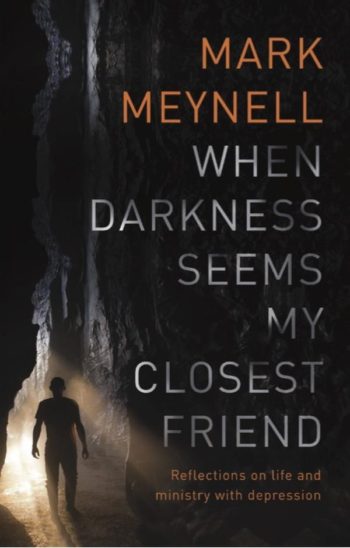
Mark Meynell, the director for Langham Preaching and Partnership in England (founded by John Stott), opens up about his brutal battle with depression in a new book, When Darkness Seems My Closest Friend, and interview:
One part that particular struck me in the interview with Christian Today (emphasis added):
On one edition of the book’s cover, there is the question: ‘How do you preach a ministry of light through the darkness of depression?’ What is his answer?
‘One [way] is realism, so you’re not pretending and pulling wool over eyes. One is actually faithfulness to the Bible because the Bible helps us live with the complexities of life, ironically.
….we’re preaching a person, and we’re saying hey, come and meet this amazing guy I’ve met, and he has been there. And the astonishing thing is it doesn’t matter who it is you introduce him to, or what agonies they have endured; he’s been there, and that means there is hope for everybody. So there is nothing more wonderful and astonishing that being able to introduce people to him.’
And then there’s his perfect sentence on depression from the book’s preview:
“I’m looking for the words, and writing for those who can’t imagine the words.”
From Pastor J. Kevin Butcher’s book, Choose and Choose Again:The Brave Act of Returning to God’s Love, on something that especially plagues Christians with depression.
“Guilt is about what I do. Shame is about who I am. The antidote for guilt is forgiveness. Shame calls me to cease to exist…. knowing that we are forgiven but still feeling dirty is pathological shame.
… Shame keeps us from personalizing and taking into our hearts anything about God that gives us value and allows us to know, to feel, and to be secured in his love.”
People struggling with eating disorders have a helpful new resource.
Video-chatting with their nutrition counselor, while at the grocery store. It’s called “Grocery store therapy.”
Individuals with anorexia, binge eating disorder and bulimia often feel anxious and overwhelmed when surrounded by food. This anxiety can make grocery shopping and cooking a challenge.
A new form of telemedicine in which people can video-chat with a nutritional counselor while at the supermarket aims to help.
….Earlier, dietitians and counselors would accompany their clients on store outings. Telemedicine allows for virtual help. It can be a game-changer for those living in rural areas where access to health-care services may be limited, experts said.
Lois Zsarnay, a therapist and dietitian in Ventura, Calif., said telemedicine has expanded the support services she can offer.
“With technology like FaceTime, I can virtually accompany my clients at the grocery store, which allows me to help them at that moment with their food struggles,” she said.
Zsarnay first meets with clients in person. They discuss food fears, potential anxiety triggers and treatment goals. For some, simply stepping inside the store is a huge success; others are ready to take a more significant risk by purchasing a “forbidden” food, such as ice cream, bagels or potato chips, she said.
Talkspace is a great resource for virtual therapy.
The picture? It’s called Double Mona Lisa by Brazilian artist Vik Muniz. Peanut Butter and Jelly.
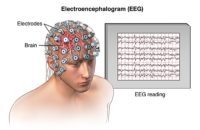
A promising new study on electroencephalograms (EEG), a non-invasive way of measuring electrical activity in your brain.
“[A new study suggests that] measuring electrical activity in the brain can help predict a patient’s response to an antidepressant.
…. The project’s first published study focuses on how electrical activity in the brain can indicate whether a patient is likely to benefit from an SSRI (selective serotonin re-uptake inhibitor), the most common class of antidepressant. Researchers used an electroencephalogram, or EEG, a noninvasive test that measured activity in the brain’s rostral anterior cingulate cortex. Patients with higher activity were more likely to respond to the SSRI within about two months.
Dr. Trivedi said EEGs have the potential to be used in combination with brain imaging and blood tests to help patients who don’t respond to SSRIs find effective treatments more quickly. He also suggested that more studies may yield useful methods to boost neural activity and make the brain more responsive to SSRIs – perhaps either through psychotherapy or magnetic stimulation on the cortex.”
This would be awesome.
One of the hardest things about trying antidepressants is that people often respond to medications differently.
What works for you might be bad for me, and vice versa.
I tried about five, and had nearly given up, before finding one that worked extraordinarily well.
Many times, skeptics use this hit-and-miss nature to hammer the entire notion of medication, but the fact is that research is proving just how unique our specific genes are to depression, and thus, you really can’t one-size-fits-all an antidepressant.
As always, talk to your doctor.
Alyssa Milano writes a gripping account at Time Mag about her post-partum depression and Generalized Anxiety Disorder (GAD) that spiraled and eventually landed her in a psychiatric hospital.
“That first night, after we returned from the hospital [from giving birth], I suffered my first anxiety attack. I felt like I had already disappointed my child. I felt like I failed as a mother, since I was not able to give birth vaginally or nourish him with the breast milk that had not come in yet. My heart raced. My stomach seized up. I felt like I was dying.
I recovered. But a few months later, Milo spiked a very high fever and had a febrile seizure in my arms, and my paralyzing anxiety reared its head again.”
After many nights like this, Milano asked to be committed and checked herself into a public psychiatric ward for three days.
“At last, I began to feel as if my pain was recognized, but it wasn’t easy,” Milano continues. “Here’s the thing about mental illnesses: you don’t always look sick, and the answers are not always clear or black-and-white.”
She concludes her essay with a message for her fans, “And if you see me on the street, please come tell me that I am not alone.”
Here’s actor Ryan Reynolds, in a recent New York Times profile:
“I have anxiety, I’ve always had anxiety. Both in the lighthearted ‘I’m anxious about this’ kind of thing, and I’ve been to the depths of the darker end of the spectrum, which is not fun.”
Later, he said:
“I went to go see a doctor because I felt like I was suffering from a neurological problem or something. And every doctor I saw said, ‘You have anxiety.’ ”
He also said he regularly throws up before interviews.
Actress Kristen Bell, to Today, yesterday.
“It occurred to me that I was showing this very bubbly, bright persona, and that it was inauthentic. ”
It’s a joke if you think everybody’s not hiding some secret shame about being anxiety-riddled or depressed at some point,” Bell said with a laugh. “We’re all there, OK? ‘Everybody’s crazy. It’s not a competition.”
And actress Selma Blair on Instagram:
While “I am now winning that battle,” she wrote, it took work getting there. Her troubles included four years of postpartum depression after the birth of her son, whom she is now a single mom to, as well as “crippling anxiety. I fell apart.
The last moment being very public. I was sorry. I was humbled. I stayed humble.” But, like many, “I still struggle,” she added. Only, “I cry quietly so as not to wake my child. I am a good mother.”
Always good when high-profile people speak up. I wish more high-profile Christians would, but the stigma runs deep in the church.
The English Puritan Thomas Goodwin’s The Heart of Christ in Heaven Towards Sinners on Earth is one of the most lovely pieces of Christian writing you can read out there.
One passage runs counter to the formal, kind of scary idea that when we die, we’re suddenly plopped right at the judgment seat where we nervously await our verdict. Or, that Christ “coming to get us” only means “when he descends from heaven in the clouds.”
Instead, Goodwin — with great Biblical support — suggests that an excited Christ, overwhelmed with love and an almost giddy desire to show us our eternal spot, comes to get us once we die.
“If I go to prepare a place for you, I will come again”, which is a mere expression of love, for if he had pleased, he might have ordered it to have sent for them to him, but he means to come for them himself, and this when he is warm (as we speak) and in the height and midst of his glory in heaven; yet he will for a time leave it to come again unto his spouse.
And what is it for? To see her, ‘I will see you again, and your heart shall rejoice.’ To fetch her, ‘I will come again and receive you to myself.’
He condescends to the very laws of bridegrooms, for notwithstanding all his greatness, no lover shall put him down in any expression of true love.
It is the manner of bridegrooms, when they have made all ready in their father’s house, then to come themselves and fetch their brides, and not to send for them by others, because it is a time of love.
Love descends better than ascends, and so does the love of Christ…. ‘I will come again and receive you unto myself’ (says Christ), ‘that so where I am, you may be also.’ That last part of his speech give the reason of it, and withal proves his entire affection.
‘It is as if he said….’Heaven shall not hold me, nor my Father’s company, if I have not you with me, my heart is so set upon you; and if I have any glory, you shall be a part of it.”
‘Because I live, you shall live also (John 14:19).”