
The Weary Christian
  • Depression
    • Depression

      James Bryan Smith: Unmet expectations and fear

      Depression

      STUDY: Criticizing older adults make them more vulnerable…

      Depression

      STUDY: Awe can reduce depressive symptoms

      Depression

      STUDY: How music-mindfulness can help depression, anxiety

      Depression

      STUDY: Chronic pain associated with higher rates of…

  • Anxiety
    • Anxiety

      Calling out the brain on catastrophizing

      Anxiety

      James Bryan Smith: Unmet expectations and fear

      Anxiety

      STUDY: Awe can reduce depressive symptoms

      Anxiety

      STUDY: How music-mindfulness can help depression, anxiety

      Anxiety

      STUDY: Chronic pain associated with higher rates of…

  • Book quotes/Video
    • Book quotes/Video

      “In darkest night, you were there like no…

      Book quotes/Video

      Thanksgiving for his brokenness

      Book quotes/Video

      Esther Smith: “All he wants is you”

      Book quotes/Video

      James Bryan Smith: Unmet expectations and fear

      Book quotes/Video

      Staton: On being a witness

  • Health News
    • Health News

      Calling out the brain on catastrophizing

      Health News

      STUDY: Mental health conditions share deep genetic patterns

      Health News

      STUDY: Four Supplements that MIGHT help depression

      Health News

      STUDY: Gut changes raise risk of eating disorders…

      Health News

      STUDY: Criticizing older adults make them more vulnerable…

  • Interviews
    • Interviews

      INTERVIEW: Dr. Terry Powell’s gripping account of depression

      Interviews

      INTERVIEW: Therapist Michael Schiferl explains religious scrupulosity and…

      Interviews

      INTERVIEW: Rocker Matt Sassano shares battles, urges transparency…

      Interviews

      INTERVIEW: Dr. Brian Briscoe tells Christians that antidepressants…

      Interviews

      INTERVIEW: Pastor Scott Sauls on anxiety, depression, and…

  • Devotionals
    • Devotionals

      “Grace has got to be drunk straight”

      Devotionals

      Defeated by God

      Devotionals

      Am I a faithless Christian?

      Devotionals

      Think you’re a “failure?” Jesus sees you unlike…

      Devotionals

      “I killed Jesus of Nazareth”

  • About
  • Depression
    • Depression

      James Bryan Smith: Unmet expectations and fear

      Depression

      STUDY: Criticizing older adults make them more vulnerable…

      Depression

      STUDY: Awe can reduce depressive symptoms

      Depression

      STUDY: How music-mindfulness can help depression, anxiety

      Depression

      STUDY: Chronic pain associated with higher rates of…

  • Anxiety
    • Anxiety

      Calling out the brain on catastrophizing

      Anxiety

      James Bryan Smith: Unmet expectations and fear

      Anxiety

      STUDY: Awe can reduce depressive symptoms

      Anxiety

      STUDY: How music-mindfulness can help depression, anxiety

      Anxiety

      STUDY: Chronic pain associated with higher rates of…

  • Book quotes/Video
    • Book quotes/Video

      “In darkest night, you were there like no…

      Book quotes/Video

      Thanksgiving for his brokenness

      Book quotes/Video

      Esther Smith: “All he wants is you”

      Book quotes/Video

      James Bryan Smith: Unmet expectations and fear

      Book quotes/Video

      Staton: On being a witness

  • Health News
    • Health News

      Calling out the brain on catastrophizing

      Health News

      STUDY: Mental health conditions share deep genetic patterns

      Health News

      STUDY: Four Supplements that MIGHT help depression

      Health News

      STUDY: Gut changes raise risk of eating disorders…

      Health News

      STUDY: Criticizing older adults make them more vulnerable…

  • Interviews
    • Interviews

      INTERVIEW: Dr. Terry Powell’s gripping account of depression

      Interviews

      INTERVIEW: Therapist Michael Schiferl explains religious scrupulosity and…

      Interviews

      INTERVIEW: Rocker Matt Sassano shares battles, urges transparency…

      Interviews

      INTERVIEW: Dr. Brian Briscoe tells Christians that antidepressants…

      Interviews

      INTERVIEW: Pastor Scott Sauls on anxiety, depression, and…

  • Devotionals
    • Devotionals

      “Grace has got to be drunk straight”

      Devotionals

      Defeated by God

      Devotionals

      Am I a faithless Christian?

      Devotionals

      Think you’re a “failure?” Jesus sees you unlike…

      Devotionals

      “I killed Jesus of Nazareth”

  • About

The Weary Christian

THE WEARY CHRISTIAN

LIVING WITH FAITH AND DEPRESSION

  • Depression
    • Depression

      James Bryan Smith: Unmet expectations and fear

      Depression

      STUDY: Criticizing older adults make them more vulnerable…

      Depression

      STUDY: Awe can reduce depressive symptoms

      Depression

      STUDY: How music-mindfulness can help depression, anxiety

      Depression

      STUDY: Chronic pain associated with higher rates of…

  • Anxiety
    • Anxiety

      Calling out the brain on catastrophizing

      Anxiety

      James Bryan Smith: Unmet expectations and fear

      Anxiety

      STUDY: Awe can reduce depressive symptoms

      Anxiety

      STUDY: How music-mindfulness can help depression, anxiety

      Anxiety

      STUDY: Chronic pain associated with higher rates of…

  • Book quotes/Video
    • Book quotes/Video

      “In darkest night, you were there like no…

      Book quotes/Video

      Thanksgiving for his brokenness

      Book quotes/Video

      Esther Smith: “All he wants is you”

      Book quotes/Video

      James Bryan Smith: Unmet expectations and fear

      Book quotes/Video

      Staton: On being a witness

  • Health News
    • Health News

      Calling out the brain on catastrophizing

      Health News

      STUDY: Mental health conditions share deep genetic patterns

      Health News

      STUDY: Four Supplements that MIGHT help depression

      Health News

      STUDY: Gut changes raise risk of eating disorders…

      Health News

      STUDY: Criticizing older adults make them more vulnerable…

  • Interviews
    • Interviews

      INTERVIEW: Dr. Terry Powell’s gripping account of depression

      Interviews

      INTERVIEW: Therapist Michael Schiferl explains religious scrupulosity and…

      Interviews

      INTERVIEW: Rocker Matt Sassano shares battles, urges transparency…

      Interviews

      INTERVIEW: Dr. Brian Briscoe tells Christians that antidepressants…

      Interviews

      INTERVIEW: Pastor Scott Sauls on anxiety, depression, and…

  • Devotionals
    • Devotionals

      “Grace has got to be drunk straight”

      Devotionals

      Defeated by God

      Devotionals

      Am I a faithless Christian?

      Devotionals

      Think you’re a “failure?” Jesus sees you unlike…

      Devotionals

      “I killed Jesus of Nazareth”

  • About
Health News

STUDY: Mental health conditions share deep genetic patterns

James Bryan Smith: Unmet expectations and fear

STUDY: Four Supplements that MIGHT help depression

STUDY: Criticizing older adults make them more vulnerable to developing depression

Study offers great context on kids, screen time, and emotional problems

Daily Blog

STUDY: Hypermobility associated with anxiety

STUDY: Hypermobility associated with anxiety

written by Christian Heinze

Over at Psychology Today, Dale Kushner has a fascinating read on some of the research, linking joint hypermobility (a physical condition) with anxiety disorders.

In fact, there’s a rather stunning association.

According to one study, people who suffer from joint laxity have “eight to 16 times the incidence of anxiety not necessary linked to psychological factors.”

In other words, according to the study, it founds the association while controlling for common risk factors like genetics and environment.

So the very fact a person has joint hypermobility appears to predispose them to higher anxiety.

….anxiety was found in 70 percent of patients in comparison with a 20 percent incidence in the age- and gender-matched control group. In the follow-up reverse case-control study, joint hypermobility was found at 17 times the incidence in patients diagnosed with anxiety as compared with age- and gender-matched controls without an anxiety diagnosis.

Remarkable.

Why? Well, Kushner notes that a brand new study from the University of Sussex used fMRI scans to pinpoint an interaction between the neural centers that process threat and the center representing bodily state.

More specifically, according to the study, published in the BMJ.

HMS participants showed attenuated neural reactivity to emotional faces in specific frontal (inferior frontal gyrus, pre-supplementary motor area), midline (anterior mid and posterior cingulate cortices), and parietal (precuneus and supramarginal gyrus) regions. Notably, interaction between HMS and anxiety was expressed in reactivity of left amygdala (a region implicated in threat processing) and mid insula (primary interoceptive cortex) where activity was amplified in HMS patients with generalised anxiety disorder. Severity of hypermobility in anxious, compared to non-anxious, individuals correlated with activity within anterior insula (implicated as the neural substrate linking anxious feelings to physiological state). Amygdala-precuneus functional connectivity was stronger in HMS, compared to non-HMS, participants.

So there’s at least one potential explanation.

This is interesting for a number of reasons.

Joint hypermobility has been linked to so many other physical conditions (fatigue, bowel problems, bladder problems, joint pain, Ehlers-Danlos Syndrome), and nobody would argue that these are physical, medical symptoms.

What would a pastor say if you asked him, quietly, after service, “Hey, I’m having a lot of problems with my bladder. You think my faith is okay?”

You could ask about bowel incontinence, and his answer would probably be the same. Joint pain, too. Fatigue, as well. Then he’d get tired from the conversation and probably need to use the bathroom, too.

I’ve heard a lot of sermons over the years, and the only pastors I can even think of that might link bowel and bladder problems with spirituality would be a few groups of Pentecostals — certainly, not spiritual leaders from any kind of orthodox tradition.

And yet… so often, we’re told from leaders in the orthodox tradition that anxiety simply can’t be associated with our body. That it’s purely a spiritual condition.

Studies like this just add to the mountain of evidence that, sure, our environment and other factors may play a role in our anxiety, but it is primarily a condition of physical etiology — whether it be inflammation, genetics, gut bacteria, hypermobility, you name it — and, as such, no Christian should feel ashamed for being afflicted with this disease.

I’ve written extensively about the tragic misinterpretation of Christ’s passage on worry, and the Scriptures are full of saints who expressed deep anxiety and God treated them with compassion and not condemnation.

The important thing is – do we turn towards God in our anxiety or against him? That’s the battle.

If you’re anxious, depressed, or struggle with any aspect of mental health…

For readers from the United States….

Find a psychiatrist here.

Find a therapist here.

For readers, internationally, seek help from a local resource.

For salvation, Christ and Christ alone.

[Photo: Pexels, free photography].
January 3, 2025
0 Facebook Twitter Google + Pinterest
Another beauty in the prodigal son parable

Another beauty in the prodigal son parable

written by Christian Heinze

You probably know Christ’s parable about the “prodigal son,” and if not, here’s the passage.

Charles Dickens called it “the greatest story every told,” and as Gary Heikkila notes, its influence among poets, musicians, artists etc. is immense.

I can’t think of a more beautiful parable, and neither could Henri Nouwen who devoted a masterful book, Return of the Prodigal Son, to it.

Christ’s use of a familial story, with an ostensibly human father, moves us into the heart of theology in a way that more abstract phrases like “vicarious substitution” just can’t. Even simple words like “mercy” grow stale.

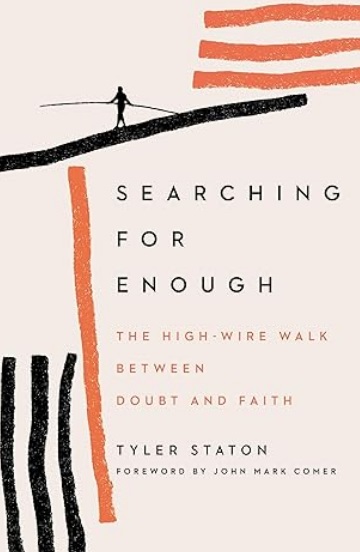
I’ve been reading Tyler Staton’s Searching for Enough, and he offers a contextual framework that makes the story even more moving.

Staton points out that when Jesus told of the looming reunion between the father and his wayward won, “everyone in that original crowd thought they knew where the story was going.”

Staton:


“The meeting between the father and son mirrors a kezazah ceremony. Among first-century Jews, if a son humiliated his father by rejecting him, bringing shame not only on him but on the entire family name and then had the audacity to show his face in the wider community again, he was greeted by a village-wide ceremony.

The entire community gathered on the border of the village, while the rebellious son stood opposite them. Then one representative would step forward, smash a clay pot on the ground and let out a full-throated scream, ‘You are now cut off from your people!’

The clay pot represented the community’s view of the rebellious individual – totally broken, irredeemable, no longer useful for any purpose.

The English word ostracize…. is derived from the ancient Greek term ostrakizo, meaning ‘to banish by the vote of the people written on a potsherd’. The modern concept of being ostracized is derived from the Hebrew kezazah ceremony.

When the father ran out to greet the son – family members, friends, day laborers from the community all gathering around – the original listeners would’ve been thinking, Here it comes. The breaking of the clay pot. Finally the father can distance himself from his son’s embarassing behavior. Finally the father can stop wearing the shame of his offspring. Finally he can get a bit of closure on this parental nightmare.

Then it happens. He [The father] wraps his arm around his son. He slips a signet ring onto his finger, symbolizing rule and authority over the estate. He wraps a robe around his shoulders, the sort of robe worn by the ruler of the house.

He wasn’t interested in undressing himself of his son’s shame. The father was prepared to wear that shame to the grave.”


Wow.

I love Staton’s comment that, in the context of the crowd’s expected exile of the son, “the father was prepared to wear that shame to the grave.”

In other words, the shame that was the son’s now belonged to the father…. and isn’t that the way that Christ bore our shame both on the cross and how he lived?

Pastor Rory Shiner writes for the Gospel Coalition, “As the church fathers never tired of reminding us, that which Jesus did not assume, he could not heal…. Jesus suffered ‘outside the city gate’. That is, his suffering included exclusion from the esteem of the community.”

Finally, Staton finishes his commentary on the father’s “shame” by noting that Tim Keller titled his book The Prodigal God for a very important reason:

Staton:


“The father was the reckless one. The father was the prodigal. Jesus is doing his best to make sure that we are not dealing with an authoritative overseer…. we are dealing with a prodigal God. God does not treat us as we deserve.”


According to that crowd’s standards, The Father’s love was foolish.

And yes, according to the Greeks, the Gospel of the cross was foolish. In much of the world, it remains utterly foolish.

As Christians, it might not seem foolish, but it can feel fantasy.

“Are we simply naive?” we wonder.

But Christ’s love was not a fantastical apparition. He invited Thomas to see his scars. And, like the “foolish father,” he is there, waiting for you and me, ready to clothe us — whatever the rest of the world or even the church thinks of us. They might see us, naked, in shame. We might see us that way. Christ? Nope.

Remember – we are all equal before God. The older brother in the story forgot that.

We often do, too.

We are all sinners, Christ came for us, and each of us is his child – no matter how lost or wayward or distant his grasp seems.

That’s hard to believe. There’s a depressive, doubtful, pessimistic and bleak part of us that sometimes wonders whether we’ll find it in God. Basil Hume said that Christians often find it easier to believe that God exists than that he loves us.

How true.

It takes faith.

In Isaiah 50:10, God says, “If you are walking in darkness, without a ray of light, trust in the Lord and rely on your God.”

In Hebrew, that word “rely” is closer to “lean.”

My faith will always be weak, but as much as we can, we should remember to rely and lean on God’s mercy and love, as shown in the prodigal story.

And thank God for that.

This world is a harsh place.

Sometimes you and I feel that humans are a little more merciful than God (oh, we won’t say that out loud, will we?). When we ask forgiveness of someone, more often than not, we get it.

The truth is that the crowd that heard Christ’s story was human and religious and, in that culture and context, ready for the son’s shaming and calling it his just reward. Most of our friends – both Christian and not – would have been, as well.

We might all imagine ourselves merciful, but isn’t it easy for humans to say, “Well, that’s what you get for XYZ.”

The “you made your bed, now lie in it” ethos really doesn’t lie far from many Christian cultures or communities.

If even Christians can treat us like that (let alone the rest of the world), then it’s no wonder that we have such trouble conceptualizing a God who simply forgives and forgets, who gives us full smiles and glory any time we ask his forgiveness.

It’s too good to be true, we think.

But the Gospel was called the Good News, and btw, God doesn’t mislabel things.

Remember, as Brennan Manning wrote, “take sides with Him, against our own self-evaluation.”

Here’s Keith.

January 2, 2025
0 Facebook Twitter Google + Pinterest
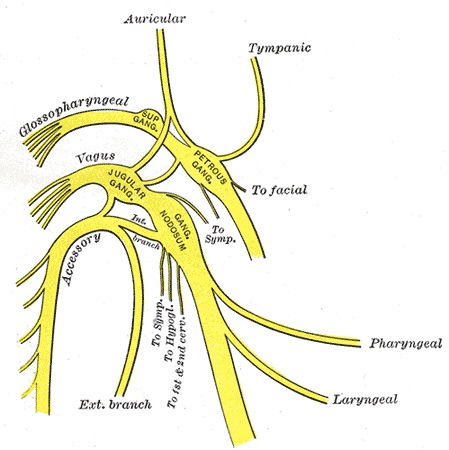
STUDY: Vagus nerve stimulation can help relieve severe depression

STUDY: Vagus nerve stimulation can help relieve severe depression

written by Christian Heinze

The Washington University School of Medicine in St. Louis has released two papers, detailing results on vagus nerve stimulation and depression.

It was a giant study, involving nearly 500 participants at over 80 sites across the United States, and as importantly, it involved patients with severe treatment-resistant depression.

How severe?

The average patient had experienced depression for 29 years, failed different treatments 13 times, 75% had been so sick from it they couldn’t work, and 40% had attempted suicide at least one time in their lives.

In other words, the most depressed of the depressed.

The researchers implanted a device meant to stimulate the left vagus nerve – of course, one group had the device activated, while the control group was set up with an inactivated device.

According to the Cleveland Clinic, vagus nerve stimulation uses electrical impulses to stimulate your left vagus nerve to pass signals to your brain, via a tiny device in your chest.

After a year’s worth of stimulation, 53% of the group receiving the stimulation experienced progress in quality of life measures, as well as “statistically significant, measurable improvements in depressive symptoms and functional outcomes,” according to Dr. Charles Conway, the principal investigator of the trial.

Conway:

“What’s really important here is that patients themselves were reporting that their lives were improving,” Conway said. “You have a population of people that has been failed by a ridiculously high number of treatments, including very aggressive treatments such as electroconvulsive therapy. And they’re not just saying, ‘Yeah, I feel a little better.’ They’re saying they are seeing meaningful improvements in their ability to function and live their lives. And the nice thing about vagus nerve stimulation, we know from other studies, is that when the patient responds, the effects usually stick.”

Praise the Lord.

Having said that, there are a couple caveats.

The study failed to meet its primary endpoint which was a statistically significant difference on the gold-standard MADRAS scale.

But that’s not uncommon in clinical studies, and the fact it was able to demonstrate differences and improvement in other important measures like quality of life, daily function, and symptom improvement – well, that’s pretty important.

Here’s the other caveat.

The treatment is expensive and yet to be covered by insurance in the United States.

However, the Center for Medicare and Medicaid Services did play a part in the study, and was privy to the results. If they end up covering it, perhaps private insurance will follow suit.

Treatment-resistant depression is a beast, and according to Johns Hopkins affects 30% of people diagnosed with major depressive disorder.

And these participants certainly had it.

Imagine failing 13 treatments, attempting suicide at least once, being so paralyzed by the condition* that you’re unable to work, and suffering for nearly 30 years.

That’s not a spiritual condition – that’s a medical condition.

Praise God for researchers and the medical community which continues to try to serve the suffering, in the tradition of the Great Physician and Christianity, which has been known from its beginning by a remarkably counter-cultural care for the sick.

[Photo: Public domain, By Henry Vandyke Carter – Henry Gray (1918) Anatomy of the Human Body]

If you’re depressed, or struggle with any aspect of mental health…

For readers from the United States….

Find a psychiatrist here.

Find a therapist here.

For readers, internationally, seek help from a local resource.

For salvation, Christ and Christ alone.

*One of the most moving accounts of the paralyzing effects of depression comes from my interview with Pastor Kirby Smith, who goes into great detail about losing his position as pastor for awhile and being so sick with despair he wished he would die.

What worked for him? Medication. Doesn’t mean it will work for everyone, but again, as Dr. Brian Briscoe says, medication can be an agent of God’s mercy for people with mental health conditions. Just like it can for any other medical condition.

December 20, 2024
0 Facebook Twitter Google + Pinterest

Episode ‘n’: A poem

written by Christian Heinze

A reader and poet from India, Dr. Lisa Choudhrie, sends in this poem to share. I’m sure you can recognize many of these thoughts in yourself, perhaps, as I do, and I pray that you will see you’re not alone.

Christians all over the world battle the traumas of this world, and we are all in this together. Keep pressing on.

“Episode ‘n’.”

by Lisa Choudhrie

Hey Mama, there’s something you need to know

I’m pasting a smile, trying not to let it show

This thing’s getting bigger, not much of me left anymore

Leaving me broken, like floatsam jetsam on the shore..

Mama, you told me, Jesus loves me

That He’d stay with me till the end

That I could depend on Him

That He’d be my forever friend..

Mama, I know He’s here

He’s staying close by my side

Mama, just pray for me

Pray for this thing to subside…

Love of my life, you won’t believe what I’m saying

The things, four letter words, all the miserable swearing

I want to hurl things at everyone, then burst into tears

This thing is a demon, with its abuses and its fears..

Love, you pray for me every day

Your prayers are short, but you show love in so many ways

I’m sorry for screwing up your life royally

God knows, I don’t do this purposefully..

Love, I know you are still there for me

Storming heaven, bearing with my weirdness and insanity

Love, please please don’t stop praying

I want to be normal, be at peace, not a lunatic raving..

My sons, my cheerleaders, I feel broken inside

Not the Mama you’re used to most of the time..

Can’t explain the way I feel

This thing takes over, makes me spin and reel..

Son one, you wrote a poem for me

The day I turned fifty

How did you know about the demons which haunt me? 

When did you start writing poetry? 

My precious Son two, you say there’s a plan

That God’s in charge, He’s got the best in His hand

‘We’re praying for you,’ these words are your chorus

Pray for your Mama to get o’er this..

Dear God, I’m sick of this stinky sickness

This bone wearing exhaustion, this emotional deadness

I feel flat, don’t want to do anything

Jekyll and Hyde, a sham and its worsening..

You know my thoughts, that’s Psalm 139 for You

You’re the Good Shepherd, You say You’ll take me through

Please please just say the word, and I will be healed

Touch my mind, let the shattered fragments be sealed..

Help my unbelief, make me whole again

The ‘whys’ make me flounder in the sinking sand of pain..

Will I be healed in this life? Or only in the life to come? 

When will all my brokenness be joined to be a total sum..

‘Daughter of mine, I cry with you

As the woman at the well and the others- I know the real you..

This life is so transient, so painful at times

Your fragmented painful mind, brings tears to my eyes..

My child, I carried your pain with the Cross on my back

I sympathise with your weakness, with all that you lack

I promise to wipe those tears away

But for now, they’re in my bottle, kept safely away..’

‘Here’s the man who was cutting himself in the tombs

Here’s the woman who had a heart with empty rooms.. ‘

Here are the broken and wounded minds

Due to a plethora of reasons, grim and unkind

Child, I promise you healing in My Name

My angelic host guard you, they minister to you in your pain

The dawn will come, precious one, I’m here with you

I was born, born to die, and my Resurrection power is true…


Thank you, Lisa. You can read more of her poems at her blog, http://heismindful.blogspot.com/

Also,

If you’re depressed, or struggle with any aspect of mental health…

For readers from the United States….

Find a psychiatrist here.

Find a therapist here.

For readers, internationally, seek help from a local resource.

For salvation, Christ and Christ alone.

December 20, 2024
0 Facebook Twitter Google + Pinterest

“Christ, be with me”

written by Christian Heinze
October 23, 2024
0 Facebook Twitter Google + Pinterest
STUDY: Brain stimulation for depression was safe, effective at home

STUDY: Brain stimulation for depression was safe, effective at home

written by Christian Heinze

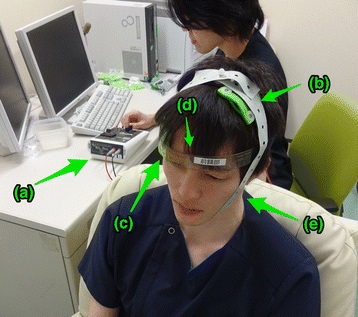
A brand new study, published in Nature Medicine, suggests that transcranial direct current stimulation (tDCS) can be used, safely and effectively, for depression, by patients at-home.

TCDS is a type of noninvasive brain stimulation that uses electrodes to send a weak current which activates key portions of the brain while participants wear a cap or band across the forehead.

Currently, the method is only used experimentally in some countries and, always, at a clinic.

Now, the study.

Researchers at UT Health Houston, the Institute of Psychiatry, King’s College London, and the University of London gave one group of depressed participants a device using active tDCS and the other group, an inactive tDCS device.

In other words, the device providing brain stimulation was real for one group; fake for the other group. Participants had no way of telling whether they were getting active or inactive treatment.

Well, turns out that the real deal turned out to be much more effective.

Patients who received genuine tDCS were 300% more likely to report significant improvement in their symptoms of depression than patients who got the sham tDCS.

Here’s another interesting part about the study.

All participants (in the experimental group and control group) were currently on antidepressants for at least 6 weeks when they began treatment.

At first glance, one might object, “Well, it’s the antidepressants that were helping,” but keep in mind that these patients came into this study, depressed, despite the antidepressants.

In other words, they weren’t feeling the benefits that millions of others (including myself) get from antidepressants.

Thus, this study’s results suggest tCDS might be an effective treatment for those who can’t get relief from antidepressants.

The more options, the better.

And in case you were wondering about side effects, they were remarkably mild.

At week 10, reports of skin redness ((active = 54 (63.5%); sham = 15 (18.5%), P < 0.001), skin irritation ((active = 6 (6.9%); sham = 0 (0%), P = 0.03) and trouble concentrating ((active = 12 (14.1%); sham = 3 (3.7%), P = 0.03) were greater in the active treatment arm relative to the sham treatment arm. There were no differences in headache, neck pain, scalp pain, itching, burning sensation, sleepiness or acute mood changes between treatment arms. Two participants in the active group described developing ‘burns’ at the left anode site.

Read more on the study here.

Now, of course there are a lot of steps to getting this approved and actually available to patients at home. And those steps will look very different, country by country.

But thank the Lord for scientists who continue to look for ways to treat this disease.

If you’re depressed, or struggle with any aspect of mental health…

For readers from the United States….

Find a psychiatrist here.

Find a therapist here.

For readers, internationally, seek help from a local resource.

For salvation, Christ and Christ alone.

[Photo: By Yokoi and Sumiyoshi. 2015 – https://npepjournal.biomedcentral.com/articles/10.1186/s40810-015-0012-x, CC BY 4.0, Link].

October 23, 2024
0 Facebook Twitter Google + Pinterest
One of the most important daily reminders

One of the most important daily reminders

written by Christian Heinze

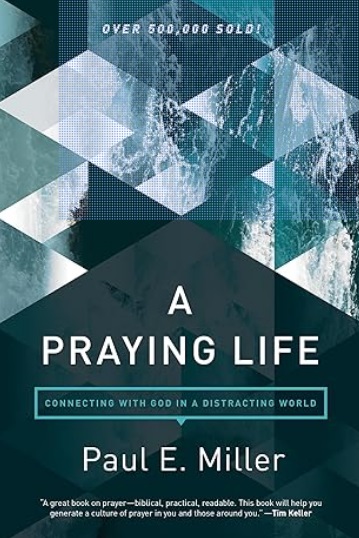
Paul Miller, in his book A Praying Life:


“An interviewer once asked Edith Schaeffer… ‘Who is the greatest Christian woman alive today?’ She replied, ‘We don’t know here name. She is dying of cancer somewhere in a hospital in Indian.”


No matter where you are, no matter what you feel you have or haven’t done for Christ, remember, that Christ doesn’t measure us the way the world or the church measures us.

He measures us through what his eyes see, not the “failures” the world sees, or the worst we want to believe in ourselves.

No matter who you are, where you are, don’t feel forgotten just because someone has forgotten you.

The famous preachers everyone raves over? The ones you must think, “They’re actually accomplishing stuff for Christ.” Sure, they are. And I thank God for them. Deeply. But do you think God is impressed by the crowds they draw? No, he looks at the heart the minister has.

We know this from Christ’s explicit and implicit teachings (“last is first” theme, his numerous parables, the people he honored etc), and we also know this from one of the verses I have to keep in mind a lot, as someone who’s keenly aware of his own failures, smallness, and penchant for guilt at “not doing enough for him.”

Psalm 147:10-11: “He takes no pleasure in the strength of a horse or in human might. No, the Lord’s delight is in those who fear him, those who put their hope in his unfailing love.”

Now, my heart is often far from him, I often lose hope in his unfailing love, and oh Lord, many times I live with indifference to his Lordship.

But… no matter where you are – if you are confined to a hospital bed, if you are confined to a restricted life where you’re unseen, and even if you’re suffering from guilt over your failures or your sins: This moment is this moment. And you and I can turn our hearts towards him, and that’s all God wants. That’s where it all begins and even if it’s in the midst of ending, of dying in that lonely hospital room, you have already become great in God’s kingdom.

Don’t listen to Christians who rebuke you for not “doing enough.” Christ says, “I did enough. Now let’s build our relationship.”

If you’re depressed, or struggle with any aspect of mental health…

For readers from the United States….

Find a psychiatrist here.

Find a therapist here.

For readers, internationally, seek help from a local resource.

For salvation, Christ and Christ alone.

October 18, 2024
0 Facebook Twitter Google + Pinterest
STUDY: First born, only children more likely to face depression, anxiety

STUDY: First born, only children more likely to face depression, anxiety

written by Christian Heinze

A brand new study from Epic Research finds that birth order is correlated with an increased likelihood of experiencing symptoms of anxiety and depression in children at their 8 year old wellness checkup.

The researchers combed through the numbers on 182,477 children over a seven year span, and found that 8 year old firstborns were 48% more likely to have anxiety and 35% more likely to have depression than their younger siblings at their own 8 year old checkups.

Further, 42% of only children were more likely to have anxiety and 38% more likely to have depression compared to children in other houses who were born second or later.

A few notes.

First, on the only child variable. The comparison group is interesting because with whom do you compare the only child group?

One option is first born children from families with multiple children. That way, you’d be capturing the phenomenon of a child being born first. And that’s exactly what researchers did here.

But it’s incomplete because it doesn’t answer the separate question of whether there’s something unique about being born into this world, without siblings, and how that affects development going forward.

Because even those who have siblings later are, in fact, entering the world alone to begin with.

Child development starts in the womb, and this study doesn’t answer a lot of questions about how entering the world without a sibling might affect a child.

But it does note an important correlation, even if it lacks explanatory power.

And that correlation is that, yes, if you’re an only child you’re more likely to have depression or anxiety at 8 years old than 2nd or 3rd etc born kids from other families.

And if you’re the oldest in a family with multiple siblings, you’re also significantly more likely to have depression or anxiety than the rest of your siblings at that age.

So, according to this study, there is something unique about being first, although exactly what that is remains unclear.

And it should also be noted: data from other studies directly contradicts the suggestions in the current study, and actually show first born children having higher levels of self-esteem (ages 7-12) and significantly lower rates of depression than children born later.

In fact, there have been a number of studies on just this question, and a number of different conclusions. Of course, study design is a major factor. Perhaps the most significant factor.

But the current study is impressive in the scope of its data, but it also has significant limitations in design and leaves a lot of questions unsolved.

Practical implications: No study is perfect, and no matter which data you go by, the one thing researchers agree on is that birth order does matter – for each child.

Therefore, it’s important that when members of the church are quick to judge (which we tend to unfortunately do, despite Christ’s warnings), we remember that birth order is one of the many things that can explain so much.

And it’s another variable that we need to take into account when we address anyone.

So, for example, to be very non-scientific – if an adult firstborn seems tense and frustrated, instead of chalking it up to a character flaw, we might say, “You know what, they might be feeling unusual weight and responsibility to be perfect and keep it together because that’s often the role an older child plays in relationships growing up. Maybe I should consider that when I want to judge them for being a certain way.”

Or, if someone who grew up as a youngest child seems particularly prone to questioning norms, instead of the church saying, “Oh dear, that person is a troublemaker,” instead, we might have more understanding and, in fact, gain by saying, “You know what? Perhaps they have unusual insight because they were never taken seriously and could see a lot of the hypocrisies, growing up, then, and now in life. Let’s not write them off as simply a troublemaker.”

The same kind of understanding should go for the struggles of only children and middle children and adopted children and children who grew up living in blended families.

We rarely know the birth order of someone with whom we interact, and yet so often, we’re prone to making judgments that perhaps we wouldn’t make if we understood the context.

The novelist Graham Greene wrote in the marvelous, The Power and The Glory, “Hatred is a failure of the imagination,” and we should probably insert, “Judgment is a failure of the imagination,” as well, because once we use our imagination and we also think in terms of rigorous scientific study (at a medical, sociological, psychological, socioeconomic and everything else-else level), then suddenly, it’s much easier to not only get past our judgments, but actually feel humility and remorse for having arrived at them so quickly.

If there’s one thing I’m convinced that I need more of — and that the church needs more of — it’s humility.

That is a much more difficult virtue, personally and collectively, to cultivate than it sounds. But it can change worlds.

Another thing to remember – so often, we feel alone. “Am I the only one who feels this way?” And it’s always the case that there are millions who struggle with the same thing, and if you feel particular weight or frustration or, really, any feeling, remember how powerful birth order is in the way we’re shaped.

I came into this world last, and yeah, a lot of the stereotypes apply. And sometimes when I’m feeling alone in a certain way, I know that I can call someone else who was born last and they’ll immediately get it.

Maybe we should start asking potential friends (discreetly, of course) the order they popped out, make a mental note, and perhaps they’ll be that friendly ear when it feels that no one else will hear you.

If you’re depressed, or struggle with any aspect of mental health…

For readers from the United States….

Find a psychiatrist here.

Find a therapist here.

For readers, internationally, seek help from a local resource.

For salvation, Christ and Christ alone.

[Photo: Legends of the Fall, which is the first movie off the top of my head that, somewhat stereotypically, nevertheless highlights some of the fundamental birth order things. Also, the score is one of my favorite, and of course the Mountain West of the United States – soaring and haunting.]

October 18, 2024
0 Facebook Twitter Google + Pinterest
Noble: Getting out of bed can be an act of worship

Noble: Getting out of bed can be an act of worship

written by Christian Heinze

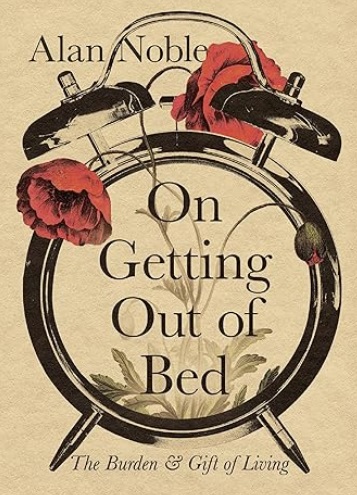
In his new book, On Getting Out of Bed, author Ryan Noble acknowledges the extraordinary difficulty for those with depression on just… getting out of bed.

For those of us who have the condition, the struggle to “get out of bed” is sometimes literal, but very often, metaphoric for a lot of things that we have to do, but can’t imagine how we have the capacity to.

And I don’t mean things the world would call ambitious.

I mean things that your neighbor might say, “Wha?! You can’t even open that stack of envelopes on your table?”

Getting out of bed can mean so many things to someone struggling with depression, and often, it simply means everything, as I wrote at length of my personal experience here.

But Ryan Noble has a heartening way of thinking of getting out of bed, and it’s a truth that, unfortunately, many Christians might sneer at, but, hey, that’s on them.

Noble writes:


Rising out of bed each day is also a decisive act. Living is a wager. It is a severe gamble. You do not know the suffering and sorrow that awaits. You do not know the heartache. But you know it is coming to you… to choose to go on is to proclaim with your life, and at the risk of tremendous suffering, that it is good.

Even when it is hard, it is good. Even when you don’t feel that it is good, even when that goodness is unimaginable, it is good.

When we act on that goodness by rising out of bed, when we take that step to the block in radical defiance of suffering and our own anxiety and depression and hopelessness, with our heads held high, we honor God and His creation, and we testify to our family, to our neighbors, and to our friends of His goodness.

This act is worship.


Couple things here.

First, I think the getting out of bed phenomenon might be one of the truest forms of worship, because no one will recognize your merely getting up as both a monumental achievement and a trust in God’s plan except…. you and God.

That kind of worship is private and because it is so private, I believe that God honors it, uniquely, just as he does our prayers in the closet.

In fact, when we get out of bed in the face of our depression and anxiety and PTSD and OCD and whatever else, it seems so pedestrian to the world-at-large that we’re not even tempted to say, “I got out out of bed for God today.”

So unlike our private prayers, which may sneak out in conversation, we will almost certainly never let it slip in the church community that our getting the mail today or going to work or brushing our teeth was worship.

Context matters. And in the face of severe depression or other conditions, doing all those things because you hear God saying, “Come on, my son and and daughter, I’m here, I’m pulling for you, I’ve got you,” well… that’s private and pure worship.

Second, even if you can’t get out of your literal or metaphoric bed, just remember that God will never judge you for it.

Jesus often escaped from the crowds out of weariness, and if he weren’t Jesus, perhaps Christians would condemn him too for “taking that precious so-called ‘self-care time’ when others need you.”

But Jesus was perfect. He didn’t sin.

So don’t feel pressure to get out of bed when your body and mind say it’s not wise. You’re not, in any way, sinning.

In fact, you may be following Christ’s call to stay in bed.

There are so many in Christian ministry who felt compelled by others and their own sense of guilt and calling to get out of bed when they were literally at their max, and they ended it all by ending it all. And committing suicide.

So even though I love and appreciate and think it’s helpful to see getting out of bed as an act of worship, it’s important to remember that staying in bed shouldn’t be seen as its opposite.

In fact, it can be God’s Spirit demanding you rest, or perhaps his love asking you to show yourself grace because you live with a chronic illness and sometimes people with chronic pain can’t get out of bed, and neither can we.

Would we ever say it’s a sin for someone with horrible knee pain to just rest? God forbid.

So I wanted to add that really important disclaimer, and it’s a balance we all have to find for ourselves, with the help of the Spirit and also the wisdom of a therapist.

If you struggle with knowing that balance, I’m right there with you!

I’ve been through it and still struggle on this. In fact, I haven’t posted on this blog for some time, because I just haven’t had it in me. And I know God isn’t displeased. I needed to rest for the sake of my family, for the sake of Christ, for the sake of others and myself.

The main thing to remember is that Jesus knows us, loves us perfectly, and no other human can know us or love us in the same way, and so listen above all to the Spirit’s voice and a therapist’s wisdom.

If you’re depressed, or struggle with any aspect of mental health…

For readers from the United States….

Find a psychiatrist here.

Find a therapist here.

For readers, internationally, seek help from a local resource.

For salvation, Christ and Christ alone.

One more thing — If you want to read an incredibly gripping interview with a long-time pastor who experienced severe anxiety and depression and an absolute inability to get out of bed, please read my interview with Pastor Kirby Smith. I think you’ll find a friend in him and comfort in his story.

October 13, 2024
0 Facebook Twitter Google + Pinterest
Look for his rising star

Look for his rising star

written by Christian Heinze

I’ve had a difficult summer, physically, with both continued and new complications from my perforation a year ago. Of course, that hasn’t helped things mentally. We’re also going through a big change as a family, and so my posting has been sparse this summer.

Hopefully, I will get back to it in a few weeks once some logistical issues are concluded.

But I’ve been slowly reading two of my favorite chapters in the Bible, Matthew 1 and 2.

And I wanted to share this verse from you that I read this morning. I’m pretty sure you know it.

Matthew 2:1-2: “About that time some wise men from eastern lands arrived in Jerusalem, asking, ‘Where is the newborn king of the Jews. We saw his star as it rose, and we have come to worship him.”

Some translations omit “as it rose” and, instead, say the wise man saw Christ’s “star in the east”; this translation says “as it rose,” and scholars agree that “as it rose” or “when it rose” is best.

And that’s beautiful.

If you’re reading this blog you probably know a thing or two about dark times. Maybe you’re in one right now. Nothing good seems possible now or on the horizon.

Sure, others can talk about heaven, the hope of it and all that, but all that just feels like “all that.”

The night is so dark.

But if you can, look up. Look up when it’s quiet in your room, and it’s dark outside and in your mind.

There are stars.

And to see a star rising is to see life, and to see that a star has risen is to see that its potential has now turned into a fixed object of luminescence – one that will be there all night. One that will look down on you all night.

This star, the star of Christ, didn’t just rise in the dark for the wise men at the beginning.

It also rose from the grave for you and me, at the end of his life, and that star will never fall.

This star, the star of our Protector, rises in the night and watches over us as we’re sleepless. We just have to look up.

If we’re going to get through these nights, we can’t ever stop looking for that star. And if we find it, we may still feel the dark all around us. I can’t pretend otherwise.

But we do often feel comfort, despite the dark. The star is there.

God bless you, dear friends. Look for his rising star.

If you’re depressed, or struggle with any aspect of mental health…

For readers from the United States….

Find a psychiatrist here.

Find a therapist here.

For readers, internationally, seek help from a local resource.

For salvation, Christ and Christ alone.

August 1, 2024
0 Facebook Twitter Google + Pinterest
Load More Posts

Social Media

Twitter

Get in touch with me

Contact here. 

The Weary Christian mission:

First off:


In the United States, find a psychiatrist here.

In the United States, find a therapist here.

If you’re in the United States and having thoughts of harming yourself or others, please call the National Suicide Lifeline at 1-800-273-8255.

If you’re in the UK, get urgent help here.

Canada, here.

Australia, here.

New Zealand, here.

South Africa, here.

France, here.

Germany, here.

Portugal, here.

Mexico, here.

India, here.

The Philippines, here.

Singapore, here.

South Korea, here.


The Weary Christian goal…


a) reduce the stigma surrounding depression, anxiety, OCD, and other conditions in the Christian community.


b) have uncomfortable but honest conversations.


c) Reduce the stigma surrounding antidepressants, antipsychotics, and other meds God has given us as gifts.


And…


d) Sometimes (tons of times), we all feel really, really depressed in our journey. Hopefully, this site makes you feel less alone.

Categories


@2017 - PenciDesign. All Right Reserved. Designed and Developed by PenciDesign