The Weary Christian
  • Depression
    • Depression

      Latest Medical Studies on Depression

      Depression

      James Bryan Smith: Unmet expectations and fear

      Depression

      STUDY: Criticizing older adults make them more vulnerable…

      Depression

      STUDY: Awe can reduce depressive symptoms

      Depression

      STUDY: How music-mindfulness can help depression, anxiety

  • Anxiety
    • Anxiety

      Calling out the brain on catastrophizing

      Anxiety

      James Bryan Smith: Unmet expectations and fear

      Anxiety

      STUDY: Awe can reduce depressive symptoms

      Anxiety

      STUDY: How music-mindfulness can help depression, anxiety

      Anxiety

      STUDY: Chronic pain associated with higher rates of…

  • Book quotes/Video
    • Book quotes/Video

      John Mark Comer: “Wherever Jesus went, the kingdom…

      Book quotes/Video

      Ann Voskamp: “Jesus saves you for Himself”

      Book quotes/Video

      Philippe: “Refusing to suffer means refusing to live”

      Book quotes/Video

      “In darkest night, you were there like no…

      Book quotes/Video

      Thanksgiving for his brokenness

  • Health News
    • Health News

      Latest Medical Studies on Depression

      Health News

      Calling out the brain on catastrophizing

      Health News

      STUDY: Mental health conditions share deep genetic patterns

      Health News

      STUDY: Four Supplements that MIGHT help depression

      Health News

      STUDY: Gut changes raise risk of eating disorders…

  • Interviews
    • Interviews

      INTERVIEW: Dr. Terry Powell’s gripping account of depression

      Interviews

      INTERVIEW: Therapist Michael Schiferl explains religious scrupulosity and…

      Interviews

      INTERVIEW: Rocker Matt Sassano shares battles, urges transparency…

      Interviews

      INTERVIEW: Dr. Brian Briscoe tells Christians that antidepressants…

      Interviews

      INTERVIEW: Pastor Scott Sauls on anxiety, depression, and…

  • Devotionals
    • Devotionals

      Think you’re a “failure?” Jesus sees you unlike…

      Devotionals

      “Grace has got to be drunk straight”

      Devotionals

      Defeated by God

      Devotionals

      Am I a faithless Christian?

      Devotionals

      “I killed Jesus of Nazareth”

  • About
  • Depression
    • Depression

      Latest Medical Studies on Depression

      Depression

      James Bryan Smith: Unmet expectations and fear

      Depression

      STUDY: Criticizing older adults make them more vulnerable…

      Depression

      STUDY: Awe can reduce depressive symptoms

      Depression

      STUDY: How music-mindfulness can help depression, anxiety

  • Anxiety
    • Anxiety

      Calling out the brain on catastrophizing

      Anxiety

      James Bryan Smith: Unmet expectations and fear

      Anxiety

      STUDY: Awe can reduce depressive symptoms

      Anxiety

      STUDY: How music-mindfulness can help depression, anxiety

      Anxiety

      STUDY: Chronic pain associated with higher rates of…

  • Book quotes/Video
    • Book quotes/Video

      John Mark Comer: “Wherever Jesus went, the kingdom…

      Book quotes/Video

      Ann Voskamp: “Jesus saves you for Himself”

      Book quotes/Video

      Philippe: “Refusing to suffer means refusing to live”

      Book quotes/Video

      “In darkest night, you were there like no…

      Book quotes/Video

      Thanksgiving for his brokenness

  • Health News
    • Health News

      Latest Medical Studies on Depression

      Health News

      Calling out the brain on catastrophizing

      Health News

      STUDY: Mental health conditions share deep genetic patterns

      Health News

      STUDY: Four Supplements that MIGHT help depression

      Health News

      STUDY: Gut changes raise risk of eating disorders…

  • Interviews
    • Interviews

      INTERVIEW: Dr. Terry Powell’s gripping account of depression

      Interviews

      INTERVIEW: Therapist Michael Schiferl explains religious scrupulosity and…

      Interviews

      INTERVIEW: Rocker Matt Sassano shares battles, urges transparency…

      Interviews

      INTERVIEW: Dr. Brian Briscoe tells Christians that antidepressants…

      Interviews

      INTERVIEW: Pastor Scott Sauls on anxiety, depression, and…

  • Devotionals
    • Devotionals

      Think you’re a “failure?” Jesus sees you unlike…

      Devotionals

      “Grace has got to be drunk straight”

      Devotionals

      Defeated by God

      Devotionals

      Am I a faithless Christian?

      Devotionals

      “I killed Jesus of Nazareth”

  • About

The Weary Christian

THE WEARY CHRISTIAN

LIVING WITH FAITH AND DEPRESSION

  • Depression
    • Depression

      Latest Medical Studies on Depression

      Depression

      James Bryan Smith: Unmet expectations and fear

      Depression

      STUDY: Criticizing older adults make them more vulnerable…

      Depression

      STUDY: Awe can reduce depressive symptoms

      Depression

      STUDY: How music-mindfulness can help depression, anxiety

  • Anxiety
    • Anxiety

      Calling out the brain on catastrophizing

      Anxiety

      James Bryan Smith: Unmet expectations and fear

      Anxiety

      STUDY: Awe can reduce depressive symptoms

      Anxiety

      STUDY: How music-mindfulness can help depression, anxiety

      Anxiety

      STUDY: Chronic pain associated with higher rates of…

  • Book quotes/Video
    • Book quotes/Video

      John Mark Comer: “Wherever Jesus went, the kingdom…

      Book quotes/Video

      Ann Voskamp: “Jesus saves you for Himself”

      Book quotes/Video

      Philippe: “Refusing to suffer means refusing to live”

      Book quotes/Video

      “In darkest night, you were there like no…

      Book quotes/Video

      Thanksgiving for his brokenness

  • Health News
    • Health News

      Latest Medical Studies on Depression

      Health News

      Calling out the brain on catastrophizing

      Health News

      STUDY: Mental health conditions share deep genetic patterns

      Health News

      STUDY: Four Supplements that MIGHT help depression

      Health News

      STUDY: Gut changes raise risk of eating disorders…

  • Interviews
    • Interviews

      INTERVIEW: Dr. Terry Powell’s gripping account of depression

      Interviews

      INTERVIEW: Therapist Michael Schiferl explains religious scrupulosity and…

      Interviews

      INTERVIEW: Rocker Matt Sassano shares battles, urges transparency…

      Interviews

      INTERVIEW: Dr. Brian Briscoe tells Christians that antidepressants…

      Interviews

      INTERVIEW: Pastor Scott Sauls on anxiety, depression, and…

  • Devotionals
    • Devotionals

      Think you’re a “failure?” Jesus sees you unlike…

      Devotionals

      “Grace has got to be drunk straight”

      Devotionals

      Defeated by God

      Devotionals

      Am I a faithless Christian?

      Devotionals

      “I killed Jesus of Nazareth”

  • About
DepressionHealth News

Latest Medical Studies on Depression

STUDY: Mental health conditions share deep genetic patterns

James Bryan Smith: Unmet expectations and fear

STUDY: Four Supplements that MIGHT help depression

STUDY: Criticizing older adults make them more vulnerable to developing depression

Daily Blog

“Into his gracious and puzzling hands we must commend ourselves”

“Into his gracious and puzzling hands we must commend ourselves”

written by Christian Heinze

Frederick Buechner, in his book, The Hungering Dark:


“Noah looked like a fool in his faith, but he saved the world from drowning, and we must not forget the one whom Noah foreshadows and who also looked like a fool spread-eagled up there, cross-eyed with pain, but who also saved the world from drowning.


We must not forget him because he saves the world still, and wherever the ark is, wherever we meet and touch in something like love, it is because he also is there, brother and father of us all.


So into his gracious and puzzling hands we must commend ourselves through all the days of our voyaging wherever it takes us, and at the end of all our voyages.


We must build our arks with love and ride out the storm with courage and know that the little sprig of green in the dove’s mouth betokens a reality beyond the storm more precious than the likes of us can imagine.”

June 19, 2018
0 Facebook Twitter Google + Pinterest
World Health Organization gets serious about video game addictions

World Health Organization gets serious about video game addictions

written by Christian Heinze

The World Health Organization announces that it has now listed  “Gaming Disorder” as an official mental health condition.

The three criteria for getting diagnosed? “Gaming behavior” that pushes aside other activities to a significant degree, “impaired control over gaming,” and “an increase in gaming despite negative consequences.”

A couple caveats.

The American Psychiatric Association has yet to announce it as an official mental health condition, and there are some health experts who worry about over-diagnosing people who just like to play video games a lot (pretty much every kid, except the super celebrated ones who creatively play in the woods with open-ended toys, as mandated by popular podcasts on parenting).

The New York Post:

Some warned that it may cause unnecessary concern among parents.


“People need to understand this doesn’t mean every child who spends hours in their room playing games is an addict, otherwise medics are going to be flooded with requests for help,” said Dr. Joan Harvey, a spokeswoman for the British Psychological Society.

Dr. Leonard Jason tells the Chicago Tribune that it’s good to highlight the issue, but parents just need to know that only 1-3% of kids who love playing video games will actually develop an addiction.

“Those are the extreme ones, and those are the ones who, they’re basically doing gaming over other things in their life and it escalates. It basically gets them into trouble.


So that’s something that parents probably can pick up. For example, the kid comes home from school or doesn’t even go to school, games from school into the evenings and on weekends. A child is basically spending all their leisure time not socializing with others, not doing their homework, not doing their chores, but gaming.”

So does your kid have a gaming disorder? Do you?

My sense is that this is like Supreme Court Justice Potter Stewart’s famous quip about pornography: “You know it when you see it.”

If a parent is trying to figure out whether their kid has a gaming disorder, the kid probably doesn’t. It would probably be crystal clear. Addictions are often clearest — not to the addict — but to the ones who love them. And remember, only 1-3% of kids who love playing video games are likely to develop a genuine disorder.

Nevertheless, here’s a good guide on helping someone with their video game addiction. With both video game addiction and treatment, there’s significant overlap with substance abuse issues, and just like with substance abuse, it’s important to get to whether there’s underlying depression, anxiety, or trauma at home that might be feeding into it.

In fact, Dr. Andrew Saxon, a professor of psychiatry at the University of Washington’s School of Medicine, tells the LA Times that those with gaming disorders are, indeed, more likely to also suffer from depression, anxiety, or ADHD.

That makes a lot of sense. Video games could be a way of retreating from a dysfunctional family, or it could be about creating a new life through video games because you’re so depressed and anxious about your real one.

There are actually even video game rehab centers now, and here’s a resource for picking out the best one.

Meanwhile, if you are personally struggling with it, limited data suggests CBT and counseling might help.

June 19, 2018
0 Facebook Twitter Google + Pinterest
STUDY: Fixing your gut bacteria might really help your depression

STUDY: Fixing your gut bacteria might really help your depression

written by Christian Heinze

Over the years, we’ve been learning more and more about how harmful bad gut bacteria is for our mental health.

We’re also hearing more and more about the role diet plays in our mental health (I’d bet the most common sentence on the interent is, “Instead, doctors suggest plenty of fresh fruit and veggies”).

And now a new study from the Joslin Diabetes Center makes the link complete — it’s precisely because of how diet affects our gut bacteria.

When researchers gave mice a high-bad-fat diet, the mice showed much more clinically-depressive behavior. However, when they gave them antibiotics to clear the bad gut bacteria, their behavior returned to normal.

Okay.

Now the fascinating part? Researchers then gave mice the antibiotics WHILE they continued to eat terrible food, and the mice’s behavior returned to normal WHILE they were eating the terrible food.

That’s because the bad gut bacteria was getting cleared out. It didn’t matter that their diet was bad, as long as their gut profile was healthy.

So clearly, the depression was related to one specific consequence of the terrible diet — the way it contributed to bad gut bacteria.

And it suggests that if you have a bad diet but somehow maintain a healthy gut bacteria profile (good luck with that), you probably wouldn’t be at a greater risk than average for depression.

So this suggests that gut bacteria, and not diet, is the driving factor (though, as I said, both are linked). The question is what’s the MAIN driver (the X variable, as they say), and it seems to be gut bacteria.

At this stage, the researchers have not specifically targeted which bacteria could be causing the neurochemical changes, or what mechanism may be generating the effects.


But it’s a compelling beginning and yet another piece of strong evidence suggesting the bacteria in our gut has a more profound effect on our well being than we ever previously realized.

The news media is endlessly speculating over why depression is on the rise, and there are lots of sexy potential explanations — more screen time, social isolation, social media, over zealous doctors who define a cry as depression.

All of these could definitely contribute, but the reality might be that our crappy Western diets are as much to blame as anything.

Studies like this really are part of this site’s raison d’etre.

The Christian church historically tends to tell Christians to pray their depression away, when in reality, they should say, “Pray your way to a good probiotic.” Or “pray your way to a better diet.”

How tragic that we’ve been pointing people to spiritual answers for physical, medical problems.

If your depression is related to bad gut bacteria, the way to pray might be, “Lord, give me the self-control to refuse the Oreo.” Or, “Lord, please help me find that Live Strong review of the best probiotics” (here you go).

As Dwight Carlson (hat tip: Amy Simpson) writes in his book, Why Do Christians Shoot Their Wounded:

“Most people consider it appropriate to call a roofer when the roof leaks, a plumber when the sink won’t drain…Though God could miraculously solve each of these problems, in most instances he doesn’t. IT has nothing to do with his ability or his sufficiency for the task. He is able to, but he chooses not to use that means.”

June 18, 2018
0 Facebook Twitter Google + Pinterest
Hope? A new DNA test could make it easier to find the right antidepressant

Hope? A new DNA test could make it easier to find the right antidepressant

written by Christian Heinze

CTV with some exciting news:

A new genetic profile test is bringing personalized medicine into the realm of psychology by determining how individual patients are predisposed to respond to more than 30 different drugs.


Some in the medical community think the test could change the way doctors help patients with depression, who often go through expensive and frustrating periods of “trial and error” with antidepressants before they find a drug that works.


A new genetic profile test is bringing personalized medicine into the realm of psychology by determining how individual patients are predisposed to respond to more than 30 different drugs.


Some in the medical community think the test could change the way doctors help patients with depression, who often go through expensive and frustrating periods of “trial and error” with antidepressants before they find a drug that works.

It is notoriously difficult to immediately pick the right antidepressant for someone with clinical depression, and the trial-and-error process can lead many to a) abandon hope and b) question the legitimacy of the entire idea of antidepressants.

(I’ve said this before — it took about five until I found one that worked. I was one of the cynical ones who was then amazed by what the right one did for me).

So why is it so hard?

Earlier this year, a huge new study in Nature Genetics found identified at least 44 different gene variants that contribute to raising the risk for depression — including thirty that were unknown as recently as last year.

That’s one of the reasons it’s difficult to find the right Rx.

However, the more we know about genes, the more precise we can be.

Each of the newly identified gene variants is essentially a target that could be addressed with a drug therapy, said co-lead study author Dr. Patrick Sullivan, director of the Center for Psychiatric Genomics at the University of North Carolina School of Medicine. (Sullivan, along with several other of the study researchers, has ties to either pharmaceutical or genetics companies.)


…..Sullivan compared the study on depression and genetics to research that was done on cardiovascular disease decades ago, which has led to drug therapies that significantly reduce the risk of heart attacks and stroke. Most of the antidepressant drugs used today were discovered by chance, but now the search for new drugs can be “rationally driven” by biological discovery, he said.

I have had so many friends who genuinely need medicine, but swear it off after their first try at an antidepressant fails them.

“They don’t work,” they say, and continue living in misery.

That’s why it’s so important to get that first Rx right, and scientists seem to be on the path to getting there.

Christians need to pay attention.

If you’re living with depression — the damage to yourself, your family, and your walk with Christ is potentially significant. It’s not just about feeling better. It’s about taking care of your body, mind, and soul, so that you can better minister to other bodies, minds, and souls.

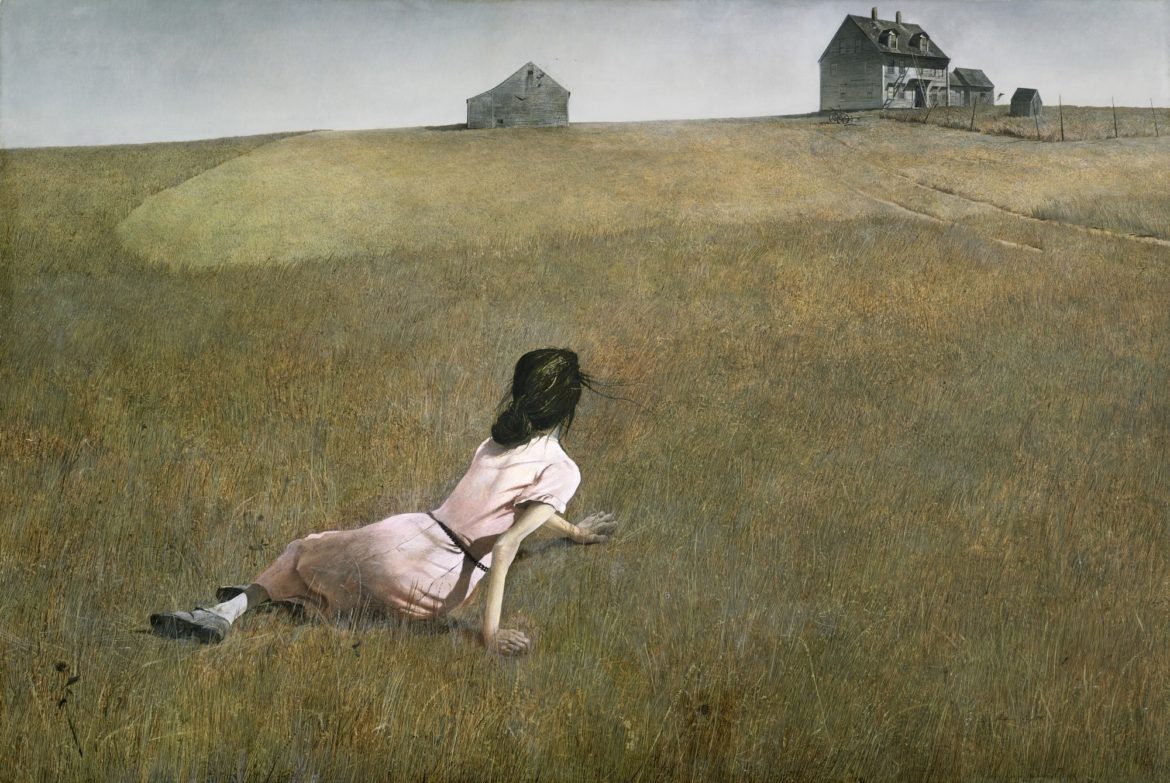
Painting: Wyeth.

June 12, 2018
0 Facebook Twitter Google + Pinterest
PSA

PSA

written by Christian Heinze

Brennan Manning, in The Furious Longing of God.

“The revolutionary thinking that God loves me as I am and not as I should be requires radical rethinking and profound emotional readjustment.

Small wonder that the late spiritual giant, Basil Hume of London England, claimed that Christians find it easier to believe that God exists than that God loves them.”

June 12, 2018
0 Facebook Twitter Google + Pinterest
STUDY: People who use absolutist words are more likely to be depressed

STUDY: People who use absolutist words are more likely to be depressed

written by Christian Heinze

The Wall Street Journal writes today on how computer-assisted language analysis can recognize speech patterns that might hint at whether someone is more or less likely to be depressed.

The most interesting finding: Based on a study in January, people who speak in absolutes are more likely to be depressed.

The WSJ:

The researchers, from the University of Reading in the U.K., used software to calculate the percentage of absolutist words used in messages by approximately 6,400 members of internet forums for depression, anxiety, suicidal ideation and a host of control forums.


They found that approximately 1.5% of words used by people in the depression and anxiety forums were absolutist—which was 50% more than those used by people in the control forums. The percentage was even higher for people in the suicidal ideation forums: about 1.8%.


Why are absolutist words so bad? People often don’t realize they are using them, and they can amp up negative thoughts.”

Does this mean Donald Trump is really depressed?

Of course, context is huge, and internet forums seem like a good place to study (as opposed to talking with marketers or sales people).

This sort of study has the ring of truth, but it would also be interesting to see whether the absolutes are more related to a variable like verbosity than view of the world.

In other words, depressed people might have to use more absolutes to get their point across, because they’re simply less interested in communicating, and absolutism cuts down on density. So the terseness of depression drives the absolutism. It’s not that depressives necessarily think in more absolutes. They just talk in them because they don’t like talking as much. So the results of the study would stay the same, but the driver could be a depressive desire for brevity, rather than an absolutist view of the world.

But like I said, the absolutism, from anecdotal evidence, as well, does have the ring of truth, and as the article suggests, reframing things from a less absolutist framework is CLEARLY the BEST IDEA IN THE WORLD.

June 11, 2018
0 Facebook Twitter Google + Pinterest
Studies: Yoga might help PTSD, Depression

Studies: Yoga might help PTSD, Depression

written by Christian Heinze

A new study finds that practicing yoga can lead to statistically significant improvements in PTSD symptoms, which adds to a growing body of research supporting the idea that it can help with the disorder.

Medical News Bulletin:

“Yoga directly affects a region of the brain called the amygdala, triggering a balance by acting on the parasympathetic branch of the brain. The parasympathetic branch is the one responsible for calming the body, creating the opposite of the flight-or-flight response triggered during a condition like PTSD.


….It is believed that the impact of yoga on people with PTSD is both biological and psychological. It triggers calmness through the practice of relaxation, meditation, and breathing interventions involved in the practice of yoga.


The mindfulness involved in practicing yoga allows individuals to pay attention to and acknowledge unpleasant emotions and memories from a non-judgmental safe stance. This provides psychological betterment for those battling PTSD.”


Btw, last year, researchers found that yoga also seems to provide significant benefits for those suffering from depression, reducing self-reported depressive symptoms by at least 50%.

The lead researcher, Dr. Streeter of the Boston University School of Medicine, says that yoga and deep breathing targets the autonomic nervous system, while antidepressants don’t.

“If your autonomic nervous system is balanced out, then the rest of the brain works better,” she says.

Photo: Pexels.

June 10, 2018
0 Facebook Twitter Google + Pinterest

God’s no-taste salvation

written by Christian Heinze

If ever there were a weary Christian, it was the late Rich Mullins (read his story here).

At one of his concerts, not too long before his death:

“I remember reading a thing that Picasso once said…. “Good taste is the enemy of great art’, which I think is very true. Good taste has all to do with being cultured and being refined and if art has to do with anything, it has to do with being human.

… People used to go around and say to me ‘Cheer up, God loves you,’ and I used to say ‘Big deal, God loves everybody. That don’t mean I’m special. It just proves that God don’t got no taste.’

And I don’t think he does. Thank God…. if he was cultured, if he was as civilized as most Christian people wish he was, he’d be useless to Christianity.”

June 10, 2018
0 Facebook Twitter Google + Pinterest

“The waves and wind still know his name”

written by Christian Heinze

June 9, 2018
0 Facebook Twitter Google + Pinterest
Phase 3 Results: Nasal spray might help treatment-resistant depression

Phase 3 Results: Nasal spray might help treatment-resistant depression

written by Christian Heinze

Current antidepressants don’t seem to do much good for about 30% of patients with major depressive disorder.

But there are encouraging, new clinical trials from Phase 3, suggesting that an Esketamine Nasal Spray, in combination with an oral antidepressant, might offer these patients some hope.

Janssen Pharmaceuticals announced results from 2 phase 3 clinical studies of the investigational compound esketamine nasal spray in patients with treatment-resistant major depressive disorder (MDD.)

The studies, presented at the 2018 American Psychiatric Association’s Annual Meeting, concluded that flexibly dosed esketamine nasal spray plus a newly initiated oral antidepressant, demonstrated a statistically significant rapid reduction of depressive symptoms compared to placebo nasal spray and a newly initiated oral antidepressant.

The study defined treatment-resistant patients as those who hadn’t responded to 2 or more currently available antidepressants of adequate dose and duration in the current depression episode.

“With about 30% of patients with major depressive depression failing to respond to currently available antidepressants, treatment-resistant depression represents a major public health need,” Husseini Manji, MD, global head, neuroscience therapeutic area, Janssen Research and Development, said in a statement. “The positive phase 3 results for esketamine nasal spray in adults with treatment-resistant depressions are exciting, particular as they mark the first time an antidepressant has achieved superiority versus an active comparator in any clinical trial for major depressive disorder.

June 8, 2018
0 Facebook Twitter Google + Pinterest
Load More Posts

Social Media

Twitter

Get in touch with me

Contact here. 

The Weary Christian mission:

First off:


In the United States, find a psychiatrist here.

In the United States, find a therapist here.

If you’re in the United States and having thoughts of harming yourself or others, please call the National Suicide Lifeline at 1-800-273-8255.

If you’re in the UK, get urgent help here.

Canada, here.

Australia, here.

New Zealand, here.

South Africa, here.

France, here.

Germany, here.

Portugal, here.

Mexico, here.

India, here.

The Philippines, here.

Singapore, here.

South Korea, here.


The Weary Christian goal…


a) reduce the stigma surrounding depression, anxiety, OCD, and other conditions in the Christian community.


b) have uncomfortable but honest conversations.


c) Reduce the stigma surrounding antidepressants, antipsychotics, and other meds God has given us as gifts.


And…


d) Sometimes (tons of times), we all feel really, really depressed in our journey. Hopefully, this site makes you feel less alone.

Categories


@2017 - PenciDesign. All Right Reserved. Designed and Developed by PenciDesign