
The Weary Christian
  • Depression
    • Depression

      Latest Medical Studies on Depression

      Depression

      James Bryan Smith: Unmet expectations and fear

      Depression

      STUDY: Criticizing older adults make them more vulnerable…

      Depression

      STUDY: Awe can reduce depressive symptoms

      Depression

      STUDY: How music-mindfulness can help depression, anxiety

  • Anxiety
    • Anxiety

      Calling out the brain on catastrophizing

      Anxiety

      James Bryan Smith: Unmet expectations and fear

      Anxiety

      STUDY: Awe can reduce depressive symptoms

      Anxiety

      STUDY: How music-mindfulness can help depression, anxiety

      Anxiety

      STUDY: Chronic pain associated with higher rates of…

  • Book quotes/Video
    • Book quotes/Video

      John Mark Comer: “Wherever Jesus went, the kingdom…

      Book quotes/Video

      Ann Voskamp: “Jesus saves you for Himself”

      Book quotes/Video

      Philippe: “Refusing to suffer means refusing to live”

      Book quotes/Video

      “In darkest night, you were there like no…

      Book quotes/Video

      Thanksgiving for his brokenness

  • Health News
    • Health News

      Latest Medical Studies on Depression

      Health News

      Calling out the brain on catastrophizing

      Health News

      STUDY: Mental health conditions share deep genetic patterns

      Health News

      STUDY: Four Supplements that MIGHT help depression

      Health News

      STUDY: Gut changes raise risk of eating disorders…

  • Interviews
    • Interviews

      INTERVIEW: Dr. Terry Powell’s gripping account of depression

      Interviews

      INTERVIEW: Therapist Michael Schiferl explains religious scrupulosity and…

      Interviews

      INTERVIEW: Rocker Matt Sassano shares battles, urges transparency…

      Interviews

      INTERVIEW: Dr. Brian Briscoe tells Christians that antidepressants…

      Interviews

      INTERVIEW: Pastor Scott Sauls on anxiety, depression, and…

  • Devotionals
    • Devotionals

      Think you’re a “failure?” Jesus sees you unlike…

      Devotionals

      “Grace has got to be drunk straight”

      Devotionals

      Defeated by God

      Devotionals

      Am I a faithless Christian?

      Devotionals

      “I killed Jesus of Nazareth”

  • About
  • Depression
    • Depression

      Latest Medical Studies on Depression

      Depression

      James Bryan Smith: Unmet expectations and fear

      Depression

      STUDY: Criticizing older adults make them more vulnerable…

      Depression

      STUDY: Awe can reduce depressive symptoms

      Depression

      STUDY: How music-mindfulness can help depression, anxiety

  • Anxiety
    • Anxiety

      Calling out the brain on catastrophizing

      Anxiety

      James Bryan Smith: Unmet expectations and fear

      Anxiety

      STUDY: Awe can reduce depressive symptoms

      Anxiety

      STUDY: How music-mindfulness can help depression, anxiety

      Anxiety

      STUDY: Chronic pain associated with higher rates of…

  • Book quotes/Video
    • Book quotes/Video

      John Mark Comer: “Wherever Jesus went, the kingdom…

      Book quotes/Video

      Ann Voskamp: “Jesus saves you for Himself”

      Book quotes/Video

      Philippe: “Refusing to suffer means refusing to live”

      Book quotes/Video

      “In darkest night, you were there like no…

      Book quotes/Video

      Thanksgiving for his brokenness

  • Health News
    • Health News

      Latest Medical Studies on Depression

      Health News

      Calling out the brain on catastrophizing

      Health News

      STUDY: Mental health conditions share deep genetic patterns

      Health News

      STUDY: Four Supplements that MIGHT help depression

      Health News

      STUDY: Gut changes raise risk of eating disorders…

  • Interviews
    • Interviews

      INTERVIEW: Dr. Terry Powell’s gripping account of depression

      Interviews

      INTERVIEW: Therapist Michael Schiferl explains religious scrupulosity and…

      Interviews

      INTERVIEW: Rocker Matt Sassano shares battles, urges transparency…

      Interviews

      INTERVIEW: Dr. Brian Briscoe tells Christians that antidepressants…

      Interviews

      INTERVIEW: Pastor Scott Sauls on anxiety, depression, and…

  • Devotionals
    • Devotionals

      Think you’re a “failure?” Jesus sees you unlike…

      Devotionals

      “Grace has got to be drunk straight”

      Devotionals

      Defeated by God

      Devotionals

      Am I a faithless Christian?

      Devotionals

      “I killed Jesus of Nazareth”

  • About

The Weary Christian

THE WEARY CHRISTIAN

LIVING WITH FAITH AND DEPRESSION

  • Depression
    • Depression

      Latest Medical Studies on Depression

      Depression

      James Bryan Smith: Unmet expectations and fear

      Depression

      STUDY: Criticizing older adults make them more vulnerable…

      Depression

      STUDY: Awe can reduce depressive symptoms

      Depression

      STUDY: How music-mindfulness can help depression, anxiety

  • Anxiety
    • Anxiety

      Calling out the brain on catastrophizing

      Anxiety

      James Bryan Smith: Unmet expectations and fear

      Anxiety

      STUDY: Awe can reduce depressive symptoms

      Anxiety

      STUDY: How music-mindfulness can help depression, anxiety

      Anxiety

      STUDY: Chronic pain associated with higher rates of…

  • Book quotes/Video
    • Book quotes/Video

      John Mark Comer: “Wherever Jesus went, the kingdom…

      Book quotes/Video

      Ann Voskamp: “Jesus saves you for Himself”

      Book quotes/Video

      Philippe: “Refusing to suffer means refusing to live”

      Book quotes/Video

      “In darkest night, you were there like no…

      Book quotes/Video

      Thanksgiving for his brokenness

  • Health News
    • Health News

      Latest Medical Studies on Depression

      Health News

      Calling out the brain on catastrophizing

      Health News

      STUDY: Mental health conditions share deep genetic patterns

      Health News

      STUDY: Four Supplements that MIGHT help depression

      Health News

      STUDY: Gut changes raise risk of eating disorders…

  • Interviews
    • Interviews

      INTERVIEW: Dr. Terry Powell’s gripping account of depression

      Interviews

      INTERVIEW: Therapist Michael Schiferl explains religious scrupulosity and…

      Interviews

      INTERVIEW: Rocker Matt Sassano shares battles, urges transparency…

      Interviews

      INTERVIEW: Dr. Brian Briscoe tells Christians that antidepressants…

      Interviews

      INTERVIEW: Pastor Scott Sauls on anxiety, depression, and…

  • Devotionals
    • Devotionals

      Think you’re a “failure?” Jesus sees you unlike…

      Devotionals

      “Grace has got to be drunk straight”

      Devotionals

      Defeated by God

      Devotionals

      Am I a faithless Christian?

      Devotionals

      “I killed Jesus of Nazareth”

  • About
DepressionHealth News

Latest Medical Studies on Depression

STUDY: Mental health conditions share deep genetic patterns

James Bryan Smith: Unmet expectations and fear

STUDY: Four Supplements that MIGHT help depression

STUDY: Criticizing older adults make them more vulnerable to developing depression

Daily Blog

Spurgeon: “Since the Lord is ours”

Spurgeon: “Since the Lord is ours”

written by Christian Heinze

From CH Spurgeon’s Cheque Book of the Bank of Faith:

“Because God will never leave nor forsake us, we may be content with such things as we have.

Since the Lord is ours, we cannot be left without a friend, a treasure, and a dwelling-place.

This assurance may make us feel quite independent of men.

Under such high patronage, we do not feel tempted to cringe before our fellow-men, and ask of them permission to call our lives our own; but what we say we boldly say, and defy contradiction.

He who fears God has nothing else to fear.”

July 20, 2018
0 Facebook Twitter Google + Pinterest
Think about this for a second

Think about this for a second

written by Christian Heinze

Over on Quora, coach Antti Vanhanen offers some good advice for our perpetually active minds:


“The mind only works in one direction: more thinking.

Whatever thought, problem or strategy you throw at it, the mind will always think about it more.

As such, trying to think your way out of overthinking (or fear, anxiety or stress) is the psychological equivalent of trying to clear muddy water by stirring or shaking it.

All you can really do is leave the mind alone and it will clear all by itself.”


This, by the way, is a classic approach to handling OCD.

“Don’t play the game,” is what my doctor always told me. “Just refuse. Don’t think about your obsession, because thinking about it, by definition, means you’re losing. Even though you think you’re on the way to winning.”
July 19, 2018
2 Facebook Twitter Google + Pinterest
“The wrong gods will always fail us”

“The wrong gods will always fail us”

written by Christian Heinze

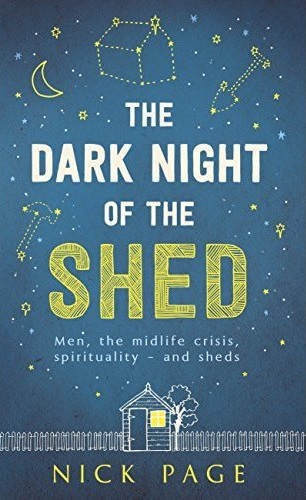
The British author, Nick Page, nails it on the mid-life crisis:

From his book, The Dark Night of the Shed.


“All false gods have two things in common. First, they will all let you down, and second, the gods do not care.”

…..It is a disturbing thing, that dark night moment when you realize that the gods to whom you have given your life have let you down.

And the reason that it occurs in middle age more than at any other time is, I think, because in the first half of life we can still hold out the hope that they will deliver on their promises. There is still plenty of time for our worship to be rewarded.

But by middle age, as we’ve seen, our illusions have gone. We have seen the best that these gods can do, and found it wanting.

…..The wrong gods will always fail us.

For some men this leaders to anger and frustration. For others it is expressed in fear and anxiety. We lie awake at night worrying about money, about where the next job is coming from, about what will happen to use in the future. We feel helpless, isolated, trapped.”


He then offers this challenge:


“The mid-life crisis…. Is a call. That is what the word means, actually.

The word ‘crisis’ derives from the Greek word krinein, ‘to make a decision.’

When we undergo this dark night, we have a choice to make. We can keep our sadness , anger, feelings of frustration and failure and loss….. or we can try something completely different.”


Christian, here.

The answer, of course, is to actually make God our god.

To say “my god is in God.”

For me, God is more like one of those household idols that Rachel kept in the Old Testament. I’ve always read that passage and said, “Oh Rachel, really? Why can’t you get rid of your household gods?”

If someone read a passage about me, would they say the same?

“Oh Christian, really? God is right there, but you’ve just got to have your other things.”

We don’t call those things “idols,” we just call them “things I really like.”

If that’s all it is, if that’s all they are, if they’re just things we “really like,” why are we so shattered and dismal when we don’t get them, or when they don’t bring us the happiness we expect?

In Hosea, after warning us to stay away from idols, God promises, “I am like a tree that is always green. All your fruit comes from me.”

That’s his promise — that every good thing from life comes from God.

And as CH Spurgeon said: “God has given no pledge which he will not redeem, and encouraged no hope which he will not fulfill.”

That’s the kind of god who’s worth being our God.

July 16, 2018
0 Facebook Twitter Google + Pinterest

Mental Health Links

written by Christian Heinze

DEPRESSION:

a. Study: Early-bedders and early-risers have a lower risk of developing depression.

b. About 30% of adults with major depression have “treatment resistance depression.” Here’s how Transcranial Magnetic Stimulation might help.

c. Study: Woah, depression rates among pregnant millennials are 51% higher than for previous generation.

d. 13 Common Words and Phrases that Might Signal Depression.

e. Study: People with anxiety are more likely to have diarrhea, people with depression, constipation.

f. Warning signs that your child might be depressed.

g. We’ve been hearing a lot about the potential promise of ketamine for depression — two new U.S. patents will “help deliver ketamine-like antidepressant effects.”

h. 32% or more of entrepreneurs battle depression. Here are some tips for founders.

i. Queer Eye’s Jonathan talks about “6 months of psychotic depression” after quitting his antidepressants cold turkey.

j. This has been dogging Singulair for awhile — but now even more so. New warnings that the popular asthma/hay fever medicine can provoke psychotic episodes and depression.

ANXIETY:

a. Fast Company: “Four Ways to Make Anxiety Work for You.”

b. Psychology Today: “7 ways to cope with anxiety about your teen.”

c. Ariana Grande talks about having “wild dizzy spells,” breathing difficulties and extreme physical anxiety in the months following the Manchester bombing.

OTHER MENTAL BATTLES:

a. Study: Disrupted stress responses impact the brain and body of people with schizophrenia in a different way than healthy individuals. One mechanism? In healthy folks, both dopamine and cortisol levels rise in response to stress. That simply doesn’t happy to those with schizophrenia.

b. Study: Preventative treatment for schizophrenia?

c. WHO recognizes “compulsive sexual behavior” as a mental disorder.

CHRISTIAN READS:

a. John Piper: “Does God want me to be holy or happy?”

b. Sam Rood at the Gospel Coalition: “Why Westerners Need Rabbi Jesus.”

VERSE:

“The Lord helps the fallen and lifts those bent beneath their loads.” – Psalm 154:14

SONG:

One of my favorite writers, Neil Hannon with a very Noel Coward-ish ditty, “Funny Peculiar.”

July 15, 2018
0 Facebook Twitter Google + Pinterest
Sundar Singh: Our cross is his cross

Sundar Singh: Our cross is his cross

written by Christian Heinze

The early 20th century, Indian Christian missionary, Sadhu Sundar Singh once said:

“From my many years experience, I can unhesitatingly say that the cross bears those who bear the cross.”

He knew what he was talking about.

A former Sikh, Singh converted to Christ as he was nearing suicide, and was both a relentless missionary for him, and relentlessly persecuted and completely rejected by his family and culture.

Through it all, he kept his focus on one thing alone — the person of Jesus.

John Stott writes that Singh once visited a Hindu college and faced a hostile lecturer, who asked him what Christianity could possibly provide that his former Sikhism could not.

“I have Christ,” he replied.


“Yes I know…. But what particular principle or doctrine have you found that you did not have before?”


“The particular thing I have found is Christ.”

Singh was an ascetic, who was repulsed by the Christianity of the West — not for its doctrine, but the lifestyle of its practitioners.

“It is of course true that people who live in India worship idols; but here in England people worship themselves, and that is still worse.


Idol-worshipers seek the truth, but people over here, so far as I can see, seek pleasure and comfort.”

Though a frail 40 year old, Singh took a final missionary trip to Tibet in 1929, and was never seen again, dying somewhere in the Himalayas.

July 14, 2018
0 Facebook Twitter Google + Pinterest
“Tell of his salvation from day to day”

“Tell of his salvation from day to day”

written by Christian Heinze

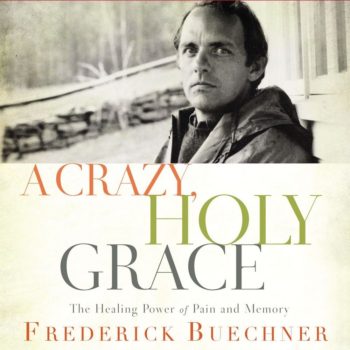
Frederick Buechner, writing in A Crazy, Holy Grace about our other kind of salvation — one, I think, depressed people often relate to very much on a day-to-day, or usually, a sleepless-night to sleepless-night basis.

The text is I Chronicles 16, the man is King David, and he is urging us to “tell of his salvation from day to day.”

Buechner:

“His song continues nonetheless and continued all his life…. every day, as David remembered, he had been somehow saved — saved enough to survive his own darkness and lostness and folly, saved enough to go on through thick and thin to the next day and the next day’s saving and the next.

‘Remember the wonders he wrought, the judgments he uttered,’ David cries out in his song, and the place where he remembers these wonders and judgments is his own past in all its brokenness and the past of his people before him.”


Think about that — “the next day’s saving.”

He will save us tomorrow, and the next, and even when we pass away, that’s when his saving is strongest.

And it will happen — but passing away is really more of a “passing into.”

Passing into what? Passing into Jeremiah 31’s scene:

“Tears of joy will stream down their faces, and I will lead them home with great care. They will walk beside quiet streams and on smooth paths where they will not stumble. For I am Israel’s father, and Ephraim is my oldest child.”

So in reality, we can and should always talk about the “next day’s saving,” because Christ never loses his sheep. It’s our hope, sometimes very weak and fading, yes, but his promise. And thank God his promise always outlasts our hope.

July 12, 2018
0 Facebook Twitter Google + Pinterest
STUDY: Less sunlight might mean more OCD

STUDY: Less sunlight might mean more OCD

written by Christian Heinze

We’ve heard (lots) about the link between low sunlight and depression, (a recent study found that disruptions to the Circadian-Rhythms (bad sleeps) raises your risk for major depression AND bipolar).

Well, now you might be able to blame the clouds for some of your problems with another affective issue — obsessive compulsive disorder.

A new study from Binghamton University found that OCD prevalence was lower in sunnier spots than cloudy spots, and as in depression, the link seems to have something to do with a lack of morning light, the fact people with OCD are bad sleepers, and our Circadian clock.

This misalignment is more prevalent at higher latitudes — areas where there is reduced exposure to sunlight — which places people living in these locations at an increased risk for the development and worsening of OCD symptoms.


These areas subsequently exhibit higher lifetime prevalence rates of the disorder than areas at lower latitudes.

However, remember, we do know that there’s a structural component to OCD within our brains (abnormalities of cortico-striato-thalamic circuits, for one) that disposes us towards the disorder, and I’d wonder how this structural component is affected by lower sunlight.

Maybe it just makes things worse, and awakens the beast, and yes, OCD is a horrid beast.

So that’s OCD.

As for depression.

Here’s one reason it’s worse in the clouds.

“One Australian study that measured levels of brain chemicals flowing directly out of the brain found that people had higher serotonin levels on bright sunny days than on cloudy ones.”

The really interesting part?

In the study, it didn’t matter whether it was a warm, sunny day or a cold one. The key variable was sun; not warmth.

So what can you do, besides move?

Maybe a light therapy box, which you can pick up just about anywhere (here’s the Mayo Clinic on them). And here’s a nice resource reviewing the best boxes.

Or you could just listen to Van Halen, covering Happy Trails: “Who cares about the clouds when we’re together.”

(Van Halen often ended concerts with this cover of Dale Evans’ classic song).


Painting: John Constable.

July 12, 2018
0 Facebook Twitter Google + Pinterest
Jordan Peterson on his depression (and what’s helped)

Jordan Peterson on his depression (and what’s helped)

written by Christian Heinze

University of Toronto professor, best-selling author, cultural phenomenon etc etc,  Jordan Peterson, on Joe Rogan’s show, talking about his life-long depression.

Here’s the transcript: (starts 4:35 in, but the whole 30 minute interview is interesting — particularly because Peterson says the carnivore diet has made a radical difference in his life).


PETERSON: I’ve had depression since I was 13, probably, and very severe, and I’ve treated it a variety of ways, some of them quite successfully. But it’s been a constant battle, and my father had it, and his father had it, it’s just rife in my family……How do you define it?

Well, imagine that you wake up and that you remember that all your family was killed in a horrible accident yesterday. [I would feel that] all the time.

ROGAN: You would feel that even if nothing was wrong?

PETERSON: Yes. It’s actually worse than that. One of the things Michaela (his daughter) told me was she thought,’Well, what’s it like to be depressed’?  Well, imagine you have a dog and you really love the dog and then the dog dies. And then about 2 or 3 years ago, our dog died — it was Michaela’s dog, and she really liked that dog — and she said ‘That was bad, but it’s nowhere near as bad as being depressed.”

And I asked her, too, at one point when she was about 16, ‘Look you’ve got a choice, kid. Here’s the choice. You can either have depression or [her autoimmune] arthritis. Which one?’ [She said], ‘I’ll take the arthritis.’ Well, that was after she’d lost two joints. So it was no joke.

It’s no joke, man. There isn’t any — I wouldn’t say that, I wouldn’t say there’s nothing worse, because “worse” is a very deep hole — but it’s bad.


Then he spends about 30 minutes talking about what’s been a remarkable help for the two months he’s been on it —  a pure carnivore diet. I don’t doubt it’s helped Peterson, at all, but as Rogan asks, from whence come his vitamins? Peterson tries to answer that question, but he acknowledges it’s sort of an experiment.  (And by the way, you can’t really take Vitamin C supplements on this diet because they’ve got corn starch and other things that violate it).

Later on, he talked about going off his diet briefly, and the return of his depression — or as he describes it — the  “overwhelming sense of impending doom. Seriously, I mean overwhelming. Like, there’s no way I could have lived like that…. [lie] in bed frozen in something approximating terror. ”

I don’t think people without this condition have any idea of the sleepless sense of doom and terror. Here’s hoping the diet continues to help him.

There’s overwhelming evidence that diet plays a major role in depression (particularly, through its effect on gut bacteria).

July 11, 2018
5 Facebook Twitter Google + Pinterest
Apps for depression and anxiety?

Apps for depression and anxiety?

written by Christian Heinze

Business Insider has a fascinating read on 6 new (and improved) apps that can possibly help with your depression.

A couple fascinating ones:

a. Woebot, a free AI chatbot that asks you how you feel, and based on your response, provides appropriate cognitive behavioral therapy (CBT).

But does it actually work? Seems to, according to a research study.

Out of 70 college students who used Woebot, the majority said they saw a significant reduction in their depressive symptoms, unlike those in a control group who were instructed to use an e-book full of tutorials on depression.

b. Medibio, enthusiastically backed by Michael Phelps, who sits on its board.

The app uses your phone or smartwatch to monitor vitals and alerts you — before you often know it yourself — if you’re about to start feeling anxious or depressed.

The company is also working on a more advanced version of the app that could detect depression. Medibio presented that new version to the Food and Drug Administration last month.

Keep reading for more.

July 10, 2018
0 Facebook Twitter Google + Pinterest
Kava? The Good and Bad

Kava? The Good and Bad

written by Christian Heinze

You’ve probably heard of one of the hottest supplements around right now — kava, which is an all-natural evergreen shrub whose roots you can ingest in tea, or capsules, or as a liquid supplement.

There are now almost 100 kava bars in the U.S., and people are increasingly turning to it as an all-natural way of relieving anxiety (and more).

So let’s take a quick look at the good and the bad.

THE GOOD:

The key active ingredient in kava is kavalactones, and numerous academic studies suggest this ingredient can help with symptoms of anxiety and insomnia, while protecting neurons from damage.

One of the most impressive research studies showed that 26% of patients with moderate to severe anxiety disorder showed complete remission of symptoms in a 6 week double-blind study, compared to only 6% of those taking a placebo.

Even better?

Research suggests it’s not habit-forming, and scientists haven’t found risk for the kind of bad withdrawal symptoms you can get from anti-anxiety drugs.

Then there’s the fact that, for many, it offers instant relief from anxiety.

One writer found it a “milder, prescription free version of a Xanax”, and another says it made them feel incredibly physically relaxed while maintaining mental sharpness. Something Xanax isn’t exactly known for.

In fact, that combo is what makes it so appealing for some. Since kava doesn’t directly affect the central nervous system, it doesn’t seem to impair your judgment (although it does affect your motor coordination and reflexes, so you should NOT drive on it).

Dr. Axe has a good rundown of some other potential benefits from kava (that still must be studied further). Among them: it might help fight cancer, it could boost the immune system, and promote better sleep.

In the good nutshell, kava is proven to reduce symptoms of anxiety, often does so immediately, doesn’t seem to have habit-forming potential (and the terrible withdrawal), is all-natural, doesn’t affect your immediate judgment, and seems to have other medicinal qualities.

What’s not to love?

Primarily, one very bad, but rare, potential side effect.

THE BAD:

France, Switzerland, the UK, and Canada have all banned kava.

Why?

It all comes down to the liver. There have been a number of reports of liver toxicity (a 57 year old woman died of acute hepatitis after loading up on kava supplements), and there have been a number of other users experiencing toxicity leading to liver transplants.

All of these cases were traced directly to kava consumption; not co-morbid conditions.

WebMD, which is not prone to hyperbole, actually deploys a CAPS LOCK, when discussing kava’s  potential effects on the liver.

There are some BIG safety concerns about kava.

Particularly, kava consumers have to be especially careful if they’re taking other medications that affect the liver.

And a lot of medicines are broken down in the liver.

Healthline explains why this is bad.

“The liver enzymes that break down kava also break down other drugs.


Thus, kava can tie up these enzymes and prevent them from breaking down other drugs, causing them to build up and harm the liver.”

If there’s one consistent and proven warning out there, it’s that you should be extremely careful and talk with your doctor if you’re taking any other medication with kava that’s broken down in the liver.

Healthline goes on to add that, if you still want to proceed, you also need to be really careful choosing the appropriate supplement.

Avoid any Kava supplement (tea or otherwise) that boasts  “proprietary blends.”

That’s because you have no idea how many  kavalactones you’re getting, and very often, these “proprietary blends” skimp on kavalctones and fill the rest of the supplement with ingredients that can even be more harmful to the liver (and who knows what else).

Further, dietary supplements aren’t regulated by the FDA, so you really have to do your homework to find a good one.

The Verge bought 5 random kava supplements off Amazon, sent them to a lab, and found one of the supplements tested positive for a bacteria found in human and animal feces, while another included a much more potent kava, with worse potential side effects.

You also really need to talk to your doctor about how much kava to consume.

There have been reports of toxicity at 250 mg/day, and many supplements contain that much or more.

But beyond kava’s rarely dangerous effect on the liver, there are also other, potential side effects.

A massive review of 20 years of kava studies suggested weight loss, nausea, scaly skin rash, and higher Gamma Glutamyl Transpeptidase liver enzyme levels. And research has suggested that it could make depression worse.

Further, heavy kava consumption has been linked to neurotoxicity, cardiovascular and respiratory abnormalities, and other things you’d rather not get.

Now here’s the big caveat to the side effect caveat.

Nearly every supplement, when taken in large amounts, has potentially dangerous side effects. Vitamins too.

And you can have severe reactions to just about anything you ingest in life. Haven’t we heard of anaphylactic shock and fruits, nuts etc.,?

FOR CHRISTIANS:

A lot of Christians are leery of taking anything that instantly makes them feel good, which I don’t get.

Exercise raises levels of a neurotransmitter called anandamide, as well as seratonin and norepienphrine — all of which are instantly calming, relaxing, and make you feel good. And I haven’t heard many Christians complaining about that.

In trying to figure out the key variable, it seems Christians are leery of losing control of our judgment, but keep in mind, kava doesn’t seem to affect your judgment, so you can throw that one out the window.

So I don’t think there’s a moral case, at all, against kava. But that’s a separate discussion for a different day.

CONCLUSION:

Kava often has positive, all-natural effects on anxiety and doesn’t seem to produce dependence or withdrawal, which is awesome. And it’s an instant stress-buster, which is also nice. It also seems to have other medicinal properties, although more research is necessary.

But its potential effect on the liver is something to be very careful about.

Now you might say, “Well, prescription anti-anxiety medications also have potentially serious side effects.”

You’re right!

The difference is that anti-anxiety drugs are tightly regulated so you know what you’re getting, while the plethora of kava products out there aren’t, and who knows what you could be dumping in your body.

That’s one of the dirty secrets of the supplement industry. They often sell their goods as “all-natural” alternatives to prescription drugs, and in many cases that’s true.

But that’s only if the manufacturer is actually honest and transparent about what’s in the supplement. In reality, the “all-natural” supplement could be loaded with harmful “fillers” that make the “all-natural” label nothing more than a scam.

Still, properly prepared, manufactured, and ingested, kava does seem to be effective at reducing anxiety. However there are significant concerns about side effects.

Absolutely talk to your doctor before starting to use it, and don’t use it if you’re pregnant or breast-feeding.

MORE RESOURCES:

a. The NIH’s page on kava here.

b. WebMD on Kava.

c. Healthline on Kava.

d. The Verge: “Kava, with Caveats: Is this popular psychoactive tea bad for your liver?”

e. Forbes: “What’s behind the intoxicating rise of kava bars in the U.S.?”

f. Women’s Health Mag: “What is Kava and is it good for you?”

g. Dr. Axe: “Kava Root: Do the risks outweigh the benefits?”

h. Live Strong: “What are the health benefits of kava?”

i. Live Strong: “Negative Effects of Kava.”

July 10, 2018
1 Facebook Twitter Google + Pinterest
Load More Posts

Social Media

Twitter

Get in touch with me

Contact here. 

The Weary Christian mission:

First off:


In the United States, find a psychiatrist here.

In the United States, find a therapist here.

If you’re in the United States and having thoughts of harming yourself or others, please call the National Suicide Lifeline at 1-800-273-8255.

If you’re in the UK, get urgent help here.

Canada, here.

Australia, here.

New Zealand, here.

South Africa, here.

France, here.

Germany, here.

Portugal, here.

Mexico, here.

India, here.

The Philippines, here.

Singapore, here.

South Korea, here.


The Weary Christian goal…


a) reduce the stigma surrounding depression, anxiety, OCD, and other conditions in the Christian community.


b) have uncomfortable but honest conversations.


c) Reduce the stigma surrounding antidepressants, antipsychotics, and other meds God has given us as gifts.


And…


d) Sometimes (tons of times), we all feel really, really depressed in our journey. Hopefully, this site makes you feel less alone.

Categories


@2017 - PenciDesign. All Right Reserved. Designed and Developed by PenciDesign