The Weary Christian
  • Depression
    • Depression

      Latest Medical Studies on Depression

      Depression

      James Bryan Smith: Unmet expectations and fear

      Depression

      STUDY: Criticizing older adults make them more vulnerable…

      Depression

      STUDY: Awe can reduce depressive symptoms

      Depression

      STUDY: How music-mindfulness can help depression, anxiety

  • Anxiety
    • Anxiety

      Calling out the brain on catastrophizing

      Anxiety

      James Bryan Smith: Unmet expectations and fear

      Anxiety

      STUDY: Awe can reduce depressive symptoms

      Anxiety

      STUDY: How music-mindfulness can help depression, anxiety

      Anxiety

      STUDY: Chronic pain associated with higher rates of…

  • Book quotes/Video
    • Book quotes/Video

      John Mark Comer: “Wherever Jesus went, the kingdom…

      Book quotes/Video

      Ann Voskamp: “Jesus saves you for Himself”

      Book quotes/Video

      Philippe: “Refusing to suffer means refusing to live”

      Book quotes/Video

      “In darkest night, you were there like no…

      Book quotes/Video

      Thanksgiving for his brokenness

  • Health News
    • Health News

      Latest Medical Studies on Depression

      Health News

      Calling out the brain on catastrophizing

      Health News

      STUDY: Mental health conditions share deep genetic patterns

      Health News

      STUDY: Four Supplements that MIGHT help depression

      Health News

      STUDY: Gut changes raise risk of eating disorders…

  • Interviews
    • Interviews

      INTERVIEW: Dr. Terry Powell’s gripping account of depression

      Interviews

      INTERVIEW: Therapist Michael Schiferl explains religious scrupulosity and…

      Interviews

      INTERVIEW: Rocker Matt Sassano shares battles, urges transparency…

      Interviews

      INTERVIEW: Dr. Brian Briscoe tells Christians that antidepressants…

      Interviews

      INTERVIEW: Pastor Scott Sauls on anxiety, depression, and…

  • Devotionals
    • Devotionals

      Think you’re a “failure?” Jesus sees you unlike…

      Devotionals

      “Grace has got to be drunk straight”

      Devotionals

      Defeated by God

      Devotionals

      Am I a faithless Christian?

      Devotionals

      “I killed Jesus of Nazareth”

  • About
  • Depression
    • Depression

      Latest Medical Studies on Depression

      Depression

      James Bryan Smith: Unmet expectations and fear

      Depression

      STUDY: Criticizing older adults make them more vulnerable…

      Depression

      STUDY: Awe can reduce depressive symptoms

      Depression

      STUDY: How music-mindfulness can help depression, anxiety

  • Anxiety
    • Anxiety

      Calling out the brain on catastrophizing

      Anxiety

      James Bryan Smith: Unmet expectations and fear

      Anxiety

      STUDY: Awe can reduce depressive symptoms

      Anxiety

      STUDY: How music-mindfulness can help depression, anxiety

      Anxiety

      STUDY: Chronic pain associated with higher rates of…

  • Book quotes/Video
    • Book quotes/Video

      John Mark Comer: “Wherever Jesus went, the kingdom…

      Book quotes/Video

      Ann Voskamp: “Jesus saves you for Himself”

      Book quotes/Video

      Philippe: “Refusing to suffer means refusing to live”

      Book quotes/Video

      “In darkest night, you were there like no…

      Book quotes/Video

      Thanksgiving for his brokenness

  • Health News
    • Health News

      Latest Medical Studies on Depression

      Health News

      Calling out the brain on catastrophizing

      Health News

      STUDY: Mental health conditions share deep genetic patterns

      Health News

      STUDY: Four Supplements that MIGHT help depression

      Health News

      STUDY: Gut changes raise risk of eating disorders…

  • Interviews
    • Interviews

      INTERVIEW: Dr. Terry Powell’s gripping account of depression

      Interviews

      INTERVIEW: Therapist Michael Schiferl explains religious scrupulosity and…

      Interviews

      INTERVIEW: Rocker Matt Sassano shares battles, urges transparency…

      Interviews

      INTERVIEW: Dr. Brian Briscoe tells Christians that antidepressants…

      Interviews

      INTERVIEW: Pastor Scott Sauls on anxiety, depression, and…

  • Devotionals
    • Devotionals

      Think you’re a “failure?” Jesus sees you unlike…

      Devotionals

      “Grace has got to be drunk straight”

      Devotionals

      Defeated by God

      Devotionals

      Am I a faithless Christian?

      Devotionals

      “I killed Jesus of Nazareth”

  • About

The Weary Christian

THE WEARY CHRISTIAN

LIVING WITH FAITH AND DEPRESSION

  • Depression
    • Depression

      Latest Medical Studies on Depression

      Depression

      James Bryan Smith: Unmet expectations and fear

      Depression

      STUDY: Criticizing older adults make them more vulnerable…

      Depression

      STUDY: Awe can reduce depressive symptoms

      Depression

      STUDY: How music-mindfulness can help depression, anxiety

  • Anxiety
    • Anxiety

      Calling out the brain on catastrophizing

      Anxiety

      James Bryan Smith: Unmet expectations and fear

      Anxiety

      STUDY: Awe can reduce depressive symptoms

      Anxiety

      STUDY: How music-mindfulness can help depression, anxiety

      Anxiety

      STUDY: Chronic pain associated with higher rates of…

  • Book quotes/Video
    • Book quotes/Video

      John Mark Comer: “Wherever Jesus went, the kingdom…

      Book quotes/Video

      Ann Voskamp: “Jesus saves you for Himself”

      Book quotes/Video

      Philippe: “Refusing to suffer means refusing to live”

      Book quotes/Video

      “In darkest night, you were there like no…

      Book quotes/Video

      Thanksgiving for his brokenness

  • Health News
    • Health News

      Latest Medical Studies on Depression

      Health News

      Calling out the brain on catastrophizing

      Health News

      STUDY: Mental health conditions share deep genetic patterns

      Health News

      STUDY: Four Supplements that MIGHT help depression

      Health News

      STUDY: Gut changes raise risk of eating disorders…

  • Interviews
    • Interviews

      INTERVIEW: Dr. Terry Powell’s gripping account of depression

      Interviews

      INTERVIEW: Therapist Michael Schiferl explains religious scrupulosity and…

      Interviews

      INTERVIEW: Rocker Matt Sassano shares battles, urges transparency…

      Interviews

      INTERVIEW: Dr. Brian Briscoe tells Christians that antidepressants…

      Interviews

      INTERVIEW: Pastor Scott Sauls on anxiety, depression, and…

  • Devotionals
    • Devotionals

      Think you’re a “failure?” Jesus sees you unlike…

      Devotionals

      “Grace has got to be drunk straight”

      Devotionals

      Defeated by God

      Devotionals

      Am I a faithless Christian?

      Devotionals

      “I killed Jesus of Nazareth”

  • About
DepressionHealth News

Latest Medical Studies on Depression

STUDY: Mental health conditions share deep genetic patterns

James Bryan Smith: Unmet expectations and fear

STUDY: Four Supplements that MIGHT help depression

STUDY: Criticizing older adults make them more vulnerable to developing depression

Daily Blog

Frederick Buechner, on his “neurotic anxiety”

Frederick Buechner, on his “neurotic anxiety”

written by Christian Heinze

Author and minister, Frederick Buechner, writing in A Crazy, Holy Grace: The Healing Power of Pain and Memory:


“Neurotic anxiety happens to be my own particular demon, a floating sense of doom that has ruined many of what could have been, should have been, the happiest days of my life, and more than a few times in my life, I have been raised from such ruins, which is another way of saying that more than a few times in my life I have been raised from death – death of the spirit anyway, death of the heart – by the healing power that Jesus calls us both to heal with and to be healed by.”


[Photo: Princeton Alumni Weekly]

October 8, 2019
0 Facebook Twitter Google + Pinterest
Should you think about your anxiety as excitement?

Should you think about your anxiety as excitement?

written by Christian Heinze

Aytekin Tank has an interesting read at Fast Company.

Basically, he urges anxious folks to think of their anxiety as excitement, instead.

Anxiety, after all, and excitement share a lot of things in common: You’re tense, jumpy, your heart goes faster. Physiologically, there are just a lot of similarities.

He notes a 2014 Harvard study that found relabeling one’s anxiety as “excitement” led to better performance.

In the study, anxious participants were asked to sing “Don’t Stop Believing” by Journey.

Before singing, the researchers told some to say “I am anxious,” others to say, “I am excited,” and another group, neither.

The ones who were told to say “I am excited” performed measurably better, with improved self-confidence. Meanwhile, the ones who said they were anxious did worse.

The point is — relabeling your anxiety as excitement seems to lead to better outcomes.

I can see this. I get it. It’s happened to me, as well. Good study.

Now for my caveat, and why I am always reluctant to post these kinds of things, as interesting as they are.

This study has very little, if anything, to do with generalized anxiety disorder, which isn’t limited to an event, a time, or a situation.

If you live with the dread of an anxiety disorder, day after day — trying to relabel it “excitement” probably won’t cut it. For me, it might help for a few hours. But a whole day? A whole month? A life?

“I don’t feel an overwhelming sense of doom. It’s simply a pleasure burst of excitement.”

That’s not going to dry out sales of Lexapro.

To me, many of these sorts of tips (relabeling things, in this case) might help at the margin, they’re interesting, and you might as well try, but they also hold their dangers as well.

People who aren’t depressed or anxious are likely to read studies like this and say, “HEY BUDDY! HAVE YOU TRIED RE-LABELING YOUR FEELINGS! THERE’S A STUDY BY A HARVARD RESEARCHER!”

So in an odd way, these kinds of studies can promote more ignorance about mental health than anything.

But still, as with most of these tips, worth a try, right?
October 4, 2019
0 Facebook Twitter Google + Pinterest

NYT: Why depression, cancer are similar

written by Christian Heinze

Over at The New York Times, Dr. Jill Harper writes about the suicide of her husband.

It’s incredibly powerful, and there are a couple critical things worth remembering.

First, depression is usually chronic. It is rarely “cured,” definitively. You can think it’s gone, and then it ruthlessly comes back, worse than ever. That’s why Dr. Harper compares it to cancer. I often compare it to an autoimmune disease with their remissions and brutal flares.

Second, there’s a book called How I Stayed Alive When My Brain Was Trying to Kill Me. I’ve never read a truer description. In severe depression, your brain is trying to kill you. Sometimes it does.

Depressed people are more likely have heart attacks, strokes, develop early dementia etc., That is one way it can kill you. For others, it’s suicide:

Dr. Harper, writing in the NYT:


“When he died, my husband was still in treatment, as he had been for 20 years. After his first suicide attempt, he successfully went through intensive treatment of his disease — comparable to the radiation and chemotherapy phase of cancer treatment — and his disease went into remission. He did everything a cancer patient would have done to prevent a recurrence: He faithfully checked for the earliest signs of the disease returning, and minimized his risk factors. His psychiatrist adjusted his medications as needed and provided excellent medical care, support and counseling. But in the end, everything my husband was doing somehow couldn’t help anymore. He was still on the medication that had worked for so many years, but now it was failing.

Just as cancer may go into remission but still kill in the end, depression is a chronic disease that may ultimately prove fatal even with state-of-the-art care and resources. Not all cancers can be cured. Nor can all depressions. With the strong foundation of our love and his excellent care, my husband had almost 20 years of remission before succumbing to his disease.

I know that depression is not cancer, but both diseases can be insidious. With cancer we see uncontrolled cellular division and the spread of cancer cells throughout the body, and in depression we see the workings of neurotransmitters and how molecules affect mood. Researchers believe each is the result of genetic and environmental factors, and with my husband’s family background of mental illness and an abusive childhood, it’s not hard to see why he was sick.

Suicide is how my husband died, but depression was what killed him. His suicide was not a rational, intentional act, but a complication and fatal outcome of a very complex and difficult disease. Just as cancer invades the body, depression invades the psyche. And just as the surviving family members of patients with incurable cancers know that they were powerless to stop the progression of the disease, so are the survivors of a person with depression who dies by suicide.”


October 4, 2019
0 Facebook Twitter Google + Pinterest
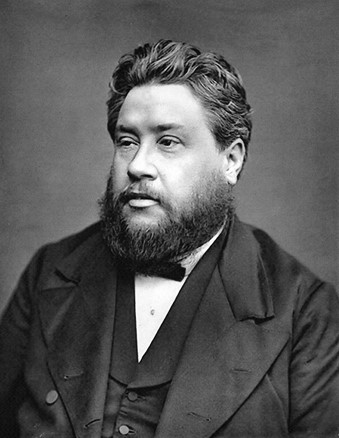
Spurgeon: What makes me laugh with joy

Spurgeon: What makes me laugh with joy

written by Christian Heinze

Charles Spurgeon, from his devotional, Chequebank of the Bank of Faith.


“Our weakness should be prized as making room for divine strength. We might never have known the power of grace if we had not felt the weakness of nature.

Blessed be the Lord for the thorn in the flesh, and the messenger of Satan, when they drive us to the strength of God.

This is a precious word from our Lord’s own lip. It has made the writer laugh for joy. God’s grace enough for me! I should think it is. Is not the sky enough for the bird, and the ocean enough for the fish?

The All-Sufficient is sufficient for my largest want. He who is sufficient for earth and heaven is certainly able to meet the case of one poor worm like me.

Let us, then, fall back upon our God and his grace…. it is better for us to have God’s strength than our own.”


Spurgeon, of course, was famously plagued with mental health struggles, and you can read some his quotes here.

September 26, 2019
0 Facebook Twitter Google + Pinterest
Cool trend: Mental Health apps are use gaming techniques to motivate you

Cool trend: Mental Health apps are use gaming techniques to motivate you

written by Christian Heinze

There are a lot mental health apps out there, but the newest string of them might be the most intriguing — apps that make a game out of fighting your anxiety/depression/ocd etc.

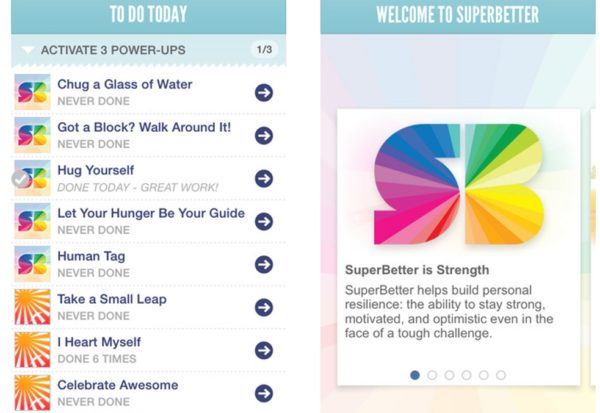
Vox has a great breakdown, and gives the app SuperBetter as an example.

The whole mental health thing is approached like a game. Your opponents are things like black-and-white or catastrophic thinking, and you use classic anxiety-battling techniques to beat them.

Now what makes this different? It’s all set to video game things like “Power-Ups,” “Quests,” and “finding allies.”

I just downloaded it, told the app I wanted to battle depression and the game suggested I “activate” 3 Power-Ups today: It gave me choices like “Chug a glass of water,” “Walk around a Block,” and “Human Tag,” which I guess is reaching out to a friend or something.

I can already imagine some Christians rolling their eyes and saying, “Oh come on. You honestly think this hokey-stuff can beat prayer for busting depression?”

Well, the app lets you create your own “Power-Up.” So you could create “Pray 15 minutes” or better yet “Pray 2 hours”, if you wanted to.

And remember, God uses exercise and tons of other things, including medication, to help our health. Also, I want to clarify that during severe episodes of anxiety/depression, many of us (including myself) tend to be treatment resistant, but there’s scientific proof apps like SuperBetter work (more below).

But anyway, just for kicks — I just chugged a glass of water, a cool sound happened, and I got +2 resilience.

Next, I have to battle one “Bad Guy” today — examples are “the self-critic,” “the sticky chair” etc. Or you can create your own.

It’s a really great idea because it uses clinically-validated anxiety-busting techniques (exercise etc) in a format that’s proven to boost motivation (the creator even wrote a dissertation on how the psychology of games can help us).

But does it work? Seems to.

Vox:

The website also boasts impressive results in two meta-analysis studies, which showed that SuperBetter had the greatest effect for reducing anxiety and depression symptoms, compared to a host of other smartphone apps also evaluated in randomized controlled trials.

Even on SuperBetter itself, McGonigal likes to lead with the science. The app shows you Science Cards, mini-articles that explain exactly why its exercises — from mindfulness meditation to gratitude journaling — are effective at changing your brain to reduce anxiety.

Many of them link out to articles and books written by scientists, including the app inventor’s twin sister, Stanford psychologist Kelly McGonigal. Kelly was the first person Jane McGonigal called when she decided to create her recovery game in 2009, and she later incorporated the research of many other experts.

If you think this is hokey, don’t forget that the game is just a motivating technique to do things that science suggests work.

And a University of Pennsylvania study suggests this isn’t hokey. In their randomized, controlled trial, researchers found the app significantly reduced depressive symptoms, as well.

I should also note that the app isn’t just about mental health — you can also choose quests to help you tackle chronic pain or concussive symptoms in a gaming format.

There seems to be some evidence it helps for that, too.

For example, a 2015 study presented at the American College of Rehabilitation Meeting found that every single patient using SuperBetter had reduced concussive symptoms and depression, while only half in the control group did.

Pretty cool. Now excuse me while I go watch Netflix so I can Power-Up. I’m kidding. I watch Amazon Prime.

[Photo: iMedicalApps]

September 26, 2019
0 Facebook Twitter Google + Pinterest
STUDY: Sertraline helps anxiety, doesn’t do much for depression

STUDY: Sertraline helps anxiety, doesn’t do much for depression

written by Christian Heinze

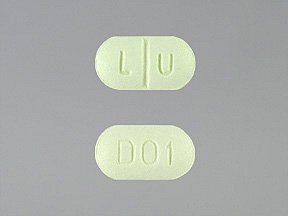
For years, you might have taken Sertraline (brand name: Zoloft) for your depression. After all, it’s an SSRI and one of the most oft-prescribed antidepressants.

But a brand new study suggests Sertraline works on patients’ anxiety, not their depression.

The study is groundbreaking because it is the largest placebo-controlled trial of any antidepressant that was not funded by a pharmaceutical company.

Researchers at University College London gave over 300 patients Sertraline and roughly the same number, a placebo.

Then they followed both groups for 12 weeks.

The Setraline patients had a 21% improvement in anxiety symptoms (e.g. worry, nervous, irritation) compared to those taking the placebo and that effect went up over time.

Meanwhile, there was “little evidence” the drug reduced depressive symptoms (e.g. poor concentration, lack of enjoyment, low mood).

In fact, at 6 weeks, Sertraline patients didn’t show any statistically significant improvement in depression, at all. That went up, slightly, over time, but researchers think it might have more to do with the drug working on anxiety, thereby alleviating some depression.

However, that’s not to say the drug doesn’t work.

The Sertraline patients were twice as likely to say they felt better as those taking the placebo.

So clearly, Sertraline works well for a lot of people. It’s just that it doesn’t quite work the way scientists thought.

From The BBC:

Prof Glyn Lewis, also part of the study, said he was surprised by the results of the trial.

“They [antidepressants] work, just in a different way than we had expected,” he said.

“We definitely need better treatments for depression, and more research, but they are effective drugs.”

September 23, 2019
0 Facebook Twitter Google + Pinterest

Mental Health links

written by Christian Heinze

a. Denmark is battling depression with Kulturvitaminer, or “culture vitamins.”

b. Study: Some antidepressants reduce the risk of stroke by 12%. But another meta study shows long-term antidepressant use is linked to higher rate of stroke and heart disease.

c. Antidepressants and other psychiatric drugs can alter your gut bacteria — could be for the better or the worse.

d. “Depression, Alzheimer’s may be similar process in aging brains.”

e. Buttigieg rolls out a mental health care plan that, among other things, penalizes insurance companies who don’t offer mental health coverage. Meanwhile, Trump orders “a lot” of ketamine for vets battling depression.

f. How to support a loved one with body dysmorphia.

g. Another exercise for depression study.

“I will not abandon you as orphans — I will come to you…. since I live, you will also live.” Jesus, in John 14.

September 10, 2019
0 Facebook Twitter Google + Pinterest
“Slowly, Rob came back to us”

“Slowly, Rob came back to us”

written by Christian Heinze

So Brianna Randle writes in the Washington Post about her husband Rob’s year-long battle with severe postpartum depression.

Just three days after his son was born, she found her husband on the floor, whispering, “Just tell Tyler… tell him it wasn’t my fault.”

He was suicidal, and for the first time in his life started experiencing panic attacks, severe depression and anxiety.

Over the next year he tried 24 different prescription drugs, he tried therapy, hypnosis. Nothing worked.

Until one day, the cloud started to lift, for no apparent reason.

It’s a riveting read, and yet a common tale — one that unfortunately very few tell.

Postpartum mood disorders affect 25% of men, according to Randle. 25%!

Yet say “postpartum” and “father” in the same sentence and you’ll get laughed out of the summer, backyard party.

After all, women have the hormonal shifts. They’ve got the legit reasons. They’ve got a monopoly on all the partum problems, right?

Well, guess what, guys have significant hormonal shifts too.

Studies show new dads get a bump in estrogen, oxytocin, prolactin and glucocorticoids, and also experience a decrease in testosterone.

But if someone is mocking a dad for being depressed during this time, he’s probably not going to mic-drop them by saying, “Well, dudes, my hormones are changing.”

So he just stays quiet, except not really.

A guy’s anxiety comes out different ways.

As the Wall Street Journal recently noted, anxious men tend to grow irritable, they get all sorts of pains from tense muscles, they can’t sleep, they’re more likely to start abusing drugs.

So that’s what 25% of new dads become, and yet, in public, we’ll probably just continue to complain, chuckling, that there aren’t more diaper changing stations in men’s restrooms to show just how truly chill and how truly much we’ve got this.

[Painting: First Steps, Jean-Francois Millet, 1858]

September 9, 2019
0 Facebook Twitter Google + Pinterest
Study: PTSD symptoms linked to increased risk of ovarian cancer

Study: PTSD symptoms linked to increased risk of ovarian cancer

written by Christian Heinze

A new study in Cancer Research shows that women who experienced six or more symptoms of PTSD had a 200% greater likelihood of developing ovarian cancer, compared with women who didn’t experience PTSD symptoms.

Up until now, researchers haven’t been able to pinpoint too many risk factors for ovarian cancer, but it could be that PTSD is a significant one.

So why the link?

Well, you might have guessed it — probably stress.

Previous research in animals has shown that “stress and stress hormones can accelerate ovarian tumor growth, and that chronic stress can result in larger and more invasive tumors.“

So what does this mean? Well, treating PTSD could help lower your risk of ovarian cancer, which is yet another reason why we need to take mental health so seriously. It is your physical health.

The ASCO Post:

“Ovarian cancer has relatively few known risk factors—PTSD and other forms of distress, like depression, may represent a novel direction in ovarian cancer prevention research,” said study coauthor Shelley Tworoger, PhD, Associate Center Director of Population Science at Moffitt Cancer Center.

“If confirmed in other populations, this could be one factor that doctors could consider when determining if a woman is at high risk of ovarian cancer in the future.”

The mainstays of PTSD therapy are medication, exposure therapy, and/or the latest EMDR.

Talk to your doctor.

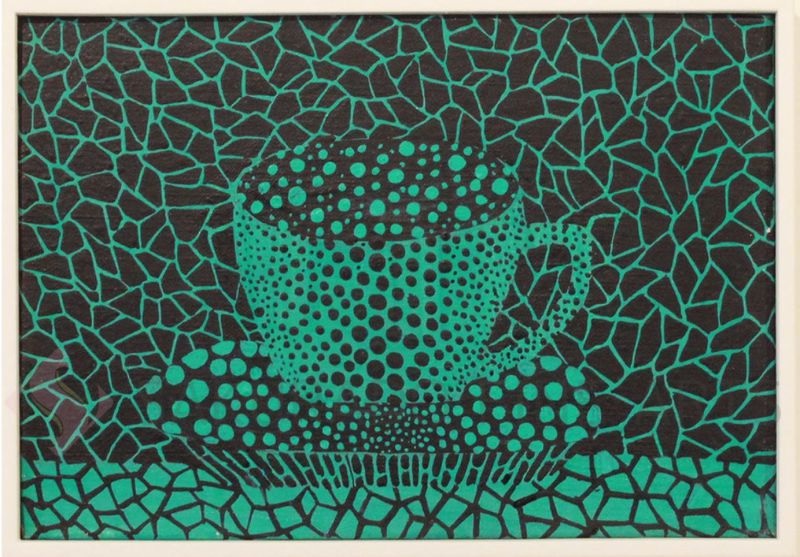
Painting is Coffee Cup (1981) by Yayoi Kusama, who battled severe trauma her entire life.

She used repetitive polka dots to represent her lifelong hallucinations, and has said that “by continuously producing the forms of things that terrify me, I am able to suppress my fear…. I’m able to revel in my illness in the dazzling light of day.”

In 1977, she voluntarily checked in a mental health facility and lives there, to this day.

September 6, 2019
0 Facebook Twitter Google + Pinterest
Don’t believe the hype (yet) about genetic tests for antidepressants

Don’t believe the hype (yet) about genetic tests for antidepressants

written by Christian Heinze

LiveScience throws a compelling dose of cold water on one of the hottest trends in the mental health biz — genetic testing for antidepressants.

In case you’re not familiar, some companies claim that they can analyze your genes and tell you which antidepressants are more likely to work for your particular body.

The great news is that, if successful, it takes the burdensome guesswork out of figuring out which antidepressant will help you. After all, most patients don’t respond to the first antidepressant they’re prescribed (it took me a long time and lots of side effects).

Theoretically, there’s some merit. Scientists recently found 44 specific gene variants that contribute to raising the risk for depression. The dream is that researchers can then pump out new drug therapies to work on those specific variants.

That’s happened with cardiovascular disease, so why not depression?

Well, depression is such an incredibly complex beast, and there could be hundreds, or thousands, more gene variants researchers haven’t discovered. In other words, those 44 variants could be just the tip of the iceberg.

And there’s no clinically-compelling evidence that these gene tests actually match you up with an appropriate antidepressant.

The genetic test stans will tell you about some clinical studies, but as Live Science notes, most of those studies were small, all were industry-funded, and they suffered from poor study design.

Further, the genetic testing companies might try to sell you on the idea that these tests are “FDA-approved,” but that just indicates they’re safe. It doesn’t say anything about whether they’re effective.

So what’s the upshot?

Getting your genes tested won’t hurt you, but there’s no real evidence it’ll help. And the tests usually aren’t covered by insurance and will cost you hundreds or thousands of dollars. Which is pretty depressing in and of itself.

[Photo: Linkin Park… a couple decades ago, they were obviously the rock band equivalent of genetic tests for antidepressants].

August 27, 2019
0 Facebook Twitter Google + Pinterest
Load More Posts

Social Media

Twitter

Get in touch with me

Contact here. 

The Weary Christian mission:

First off:


In the United States, find a psychiatrist here.

In the United States, find a therapist here.

If you’re in the United States and having thoughts of harming yourself or others, please call the National Suicide Lifeline at 1-800-273-8255.

If you’re in the UK, get urgent help here.

Canada, here.

Australia, here.

New Zealand, here.

South Africa, here.

France, here.

Germany, here.

Portugal, here.

Mexico, here.

India, here.

The Philippines, here.

Singapore, here.

South Korea, here.


The Weary Christian goal…


a) reduce the stigma surrounding depression, anxiety, OCD, and other conditions in the Christian community.


b) have uncomfortable but honest conversations.


c) Reduce the stigma surrounding antidepressants, antipsychotics, and other meds God has given us as gifts.


And…


d) Sometimes (tons of times), we all feel really, really depressed in our journey. Hopefully, this site makes you feel less alone.

Categories


@2017 - PenciDesign. All Right Reserved. Designed and Developed by PenciDesign