
The Weary Christian
  • Depression
    • Depression

      Latest Medical Studies on Depression

      Depression

      James Bryan Smith: Unmet expectations and fear

      Depression

      STUDY: Criticizing older adults make them more vulnerable…

      Depression

      STUDY: Awe can reduce depressive symptoms

      Depression

      STUDY: How music-mindfulness can help depression, anxiety

  • Anxiety
    • Anxiety

      Calling out the brain on catastrophizing

      Anxiety

      James Bryan Smith: Unmet expectations and fear

      Anxiety

      STUDY: Awe can reduce depressive symptoms

      Anxiety

      STUDY: How music-mindfulness can help depression, anxiety

      Anxiety

      STUDY: Chronic pain associated with higher rates of…

  • Book quotes/Video
    • Book quotes/Video

      John Mark Comer: “Wherever Jesus went, the kingdom…

      Book quotes/Video

      Ann Voskamp: “Jesus saves you for Himself”

      Book quotes/Video

      Philippe: “Refusing to suffer means refusing to live”

      Book quotes/Video

      “In darkest night, you were there like no…

      Book quotes/Video

      Thanksgiving for his brokenness

  • Health News
    • Health News

      Latest Medical Studies on Depression

      Health News

      Calling out the brain on catastrophizing

      Health News

      STUDY: Mental health conditions share deep genetic patterns

      Health News

      STUDY: Four Supplements that MIGHT help depression

      Health News

      STUDY: Gut changes raise risk of eating disorders…

  • Interviews
    • Interviews

      INTERVIEW: Dr. Terry Powell’s gripping account of depression

      Interviews

      INTERVIEW: Therapist Michael Schiferl explains religious scrupulosity and…

      Interviews

      INTERVIEW: Rocker Matt Sassano shares battles, urges transparency…

      Interviews

      INTERVIEW: Dr. Brian Briscoe tells Christians that antidepressants…

      Interviews

      INTERVIEW: Pastor Scott Sauls on anxiety, depression, and…

  • Devotionals
    • Devotionals

      Think you’re a “failure?” Jesus sees you unlike…

      Devotionals

      “Grace has got to be drunk straight”

      Devotionals

      Defeated by God

      Devotionals

      Am I a faithless Christian?

      Devotionals

      “I killed Jesus of Nazareth”

  • About
  • Depression
    • Depression

      Latest Medical Studies on Depression

      Depression

      James Bryan Smith: Unmet expectations and fear

      Depression

      STUDY: Criticizing older adults make them more vulnerable…

      Depression

      STUDY: Awe can reduce depressive symptoms

      Depression

      STUDY: How music-mindfulness can help depression, anxiety

  • Anxiety
    • Anxiety

      Calling out the brain on catastrophizing

      Anxiety

      James Bryan Smith: Unmet expectations and fear

      Anxiety

      STUDY: Awe can reduce depressive symptoms

      Anxiety

      STUDY: How music-mindfulness can help depression, anxiety

      Anxiety

      STUDY: Chronic pain associated with higher rates of…

  • Book quotes/Video
    • Book quotes/Video

      John Mark Comer: “Wherever Jesus went, the kingdom…

      Book quotes/Video

      Ann Voskamp: “Jesus saves you for Himself”

      Book quotes/Video

      Philippe: “Refusing to suffer means refusing to live”

      Book quotes/Video

      “In darkest night, you were there like no…

      Book quotes/Video

      Thanksgiving for his brokenness

  • Health News
    • Health News

      Latest Medical Studies on Depression

      Health News

      Calling out the brain on catastrophizing

      Health News

      STUDY: Mental health conditions share deep genetic patterns

      Health News

      STUDY: Four Supplements that MIGHT help depression

      Health News

      STUDY: Gut changes raise risk of eating disorders…

  • Interviews
    • Interviews

      INTERVIEW: Dr. Terry Powell’s gripping account of depression

      Interviews

      INTERVIEW: Therapist Michael Schiferl explains religious scrupulosity and…

      Interviews

      INTERVIEW: Rocker Matt Sassano shares battles, urges transparency…

      Interviews

      INTERVIEW: Dr. Brian Briscoe tells Christians that antidepressants…

      Interviews

      INTERVIEW: Pastor Scott Sauls on anxiety, depression, and…

  • Devotionals
    • Devotionals

      Think you’re a “failure?” Jesus sees you unlike…

      Devotionals

      “Grace has got to be drunk straight”

      Devotionals

      Defeated by God

      Devotionals

      Am I a faithless Christian?

      Devotionals

      “I killed Jesus of Nazareth”

  • About

The Weary Christian

THE WEARY CHRISTIAN

LIVING WITH FAITH AND DEPRESSION

  • Depression
    • Depression

      Latest Medical Studies on Depression

      Depression

      James Bryan Smith: Unmet expectations and fear

      Depression

      STUDY: Criticizing older adults make them more vulnerable…

      Depression

      STUDY: Awe can reduce depressive symptoms

      Depression

      STUDY: How music-mindfulness can help depression, anxiety

  • Anxiety
    • Anxiety

      Calling out the brain on catastrophizing

      Anxiety

      James Bryan Smith: Unmet expectations and fear

      Anxiety

      STUDY: Awe can reduce depressive symptoms

      Anxiety

      STUDY: How music-mindfulness can help depression, anxiety

      Anxiety

      STUDY: Chronic pain associated with higher rates of…

  • Book quotes/Video
    • Book quotes/Video

      John Mark Comer: “Wherever Jesus went, the kingdom…

      Book quotes/Video

      Ann Voskamp: “Jesus saves you for Himself”

      Book quotes/Video

      Philippe: “Refusing to suffer means refusing to live”

      Book quotes/Video

      “In darkest night, you were there like no…

      Book quotes/Video

      Thanksgiving for his brokenness

  • Health News
    • Health News

      Latest Medical Studies on Depression

      Health News

      Calling out the brain on catastrophizing

      Health News

      STUDY: Mental health conditions share deep genetic patterns

      Health News

      STUDY: Four Supplements that MIGHT help depression

      Health News

      STUDY: Gut changes raise risk of eating disorders…

  • Interviews
    • Interviews

      INTERVIEW: Dr. Terry Powell’s gripping account of depression

      Interviews

      INTERVIEW: Therapist Michael Schiferl explains religious scrupulosity and…

      Interviews

      INTERVIEW: Rocker Matt Sassano shares battles, urges transparency…

      Interviews

      INTERVIEW: Dr. Brian Briscoe tells Christians that antidepressants…

      Interviews

      INTERVIEW: Pastor Scott Sauls on anxiety, depression, and…

  • Devotionals
    • Devotionals

      Think you’re a “failure?” Jesus sees you unlike…

      Devotionals

      “Grace has got to be drunk straight”

      Devotionals

      Defeated by God

      Devotionals

      Am I a faithless Christian?

      Devotionals

      “I killed Jesus of Nazareth”

  • About
DepressionHealth News

Latest Medical Studies on Depression

STUDY: Mental health conditions share deep genetic patterns

James Bryan Smith: Unmet expectations and fear

STUDY: Four Supplements that MIGHT help depression

STUDY: Criticizing older adults make them more vulnerable to developing depression

Daily Blog

Keller: On Peter and identity

Keller: On Peter and identity

written by Christian Heinze

In his book, Hope in Times of Fear: The Resurrection and the Meaning of Easter, Tim Keller makes this really interesting observation re: Peter’s violence at Jesus’ arrest and subsequently equally violent denial of his Lord, shortly thereafter.

It has an important implication for us, and not the one I’d immediately reach to.

Keller:


“Peter’s identity was based on the assumption of his superiority to his fellow disciples.

Peter told Jesus that he was the most passionate and faithful of all. He was not basing his identity on Jesus’s great love for him but on his great love for Jesus.

That meant that while Jesus was Peter’s teacher, Peter was being his own savior.”


Next, Keller links what Self-Righteous, Own Savior mode can do to us, drawing on Yale theologian Miroslav Volf’s theory of what led Cain to murder his own brother.


“Any identity based on our superior performance over other will produce at least two results — fragility and hostility.

First, there will be a deep insecurity and an inability to see yourself. Peter, despite Jesus’s direct warning to him about his coming failure, had no sense of danger. Why not?

Because if you base your very self-worth on being brave, and if you look into your heart and see cowardice, you will have to screen it out and deny it, or you won’t have a self left.

And that is true of any identity not rooted in Jesus’s unmerited love.

…. The second result is hostility toward those who are different.

If you get your identity from being the most passionate follower of Jesus, then you have to be angry or even violent toward someone who opposes your Lord. When Jesus was arrested, Peter was the only disciple who did violence…. when a false identity is endangered, the result is always hostility.”


That, of course, has implications for our lives – whether personal or interpersonal.

I struggle so much with the first aspect of identity – trying to be my own Savior – and absolutely find it so viscerally counterintuitive that God could love me, regardless of who I am or what I do.

That’s not how the world is structured.

That isn’t the way I see life or have experienced it since I was born. It was always a performance-based world, where you were applauded and worth something if you were “good” (however that’s defined) and treated as less valuable if you weren’t.

That’s just the way the sinful world operates.

The clear theological reality is that God doesn’t see us the way others do. We’re all equally sinners and Jesus taught, over and over, that the least is greatest and the point is there is no greatest, at all.

Human evaluation of what success is and isn’t, of who’s greatest or who’s not – it ain’t God’s.

Yet that rubric’s pushed on us from the moment we step into the world, and we never stop getting that message reinforced through every avenue, including ourselves.

So…. when it comes to the idea that God could actually love us because… he loves me? In spite of me? Despite me?

That’s what’s hard. And what I unconsciously try to rid myself of through performance to please and somehow be worthy of him.

I think (know) a ton of Christians struggle with this.

But that’s the self-saving identity Peter had, and it’s a religion of burden and absolute heresy by turning ourselves into our savior.

But it’s so easy to fall into that religion.

As to Keller’s second point — that a false identity will produce hostility — we see that all the time, today, at a macro level, too.

At a group level, Christians increasingly seem to be adopting an identity that’s kin to self-righteousness, and you can see the verbal violence that’s increasingly deployed in the political arena. I used to report and write on politics, and it’s no secret that things have now gotten so ugly and toxic. And Christians far too easily find themselves (whether on the right or left) reveling in the mire.

Instead of seeing the world as a mission field, we often see the world as a battleground between ourselves (“the saints”) and the evil ones who are trying to destroy it.

And we can dehumanize the exact ones Jesus worked so hard to humanize and say, “They’re just as valuable and I love them just as much”).

Keller:


“When we ‘other’ a group or people, we treat them as alien and strange, and we stress what we see as their weakness and evils in an effort to prove to ourselves and others how superior we are by contrast.”


In a wonderful Good Friday address from 1982, Raniero Cantalamessa reminds us that we must all continually embrace the confession “I killed Jesus of Nazareth.”

Not to beat ourselves up.

But to remind us, individually, that we can’t be our own savior, and, collectively, that we dare not judge the others who put the Lord on the cross.

We are all equally responsible, we all spit on and rejected him, and for any of us to put ourselves in judgment of another is to put ourselves on God’s throne. Which is blasphemy.

And, again, at a micro level, to sit in a place of working ourselves to salvation, we are also putting ourselves in the place of Christ.

I will struggle on fighting these unconscious identities and their manifestations for as long as I live.

The only answer is Christ, and even if you and I fail in our fights, we always have to remember that Christ’s salvation is enough.

If our salvation depended on the merit of our own faith, then God help us. None of us would be saved!

But Jesus’ mercy and grace is stronger than anything our sin could throw at him. Thanks be to God.

May 6, 2025
0 Facebook Twitter Google + Pinterest
Voskamp: It’s all about where you look

Voskamp: It’s all about where you look

written by Christian Heinze

Ann Voskamp, in her new book, Loved to Life, points to John the Baptist’s famous, “Look! The Lamb of God who takes away the sin of the world!”

Voskamp (emphasis added).


“The lifting of eyes to look to the Lamb of God — this lifting that even the weariest among us can do.

And yet, in the paradox of all things true, the way we turn our eyes may actually be the hardest of all.

Because focusing the eyes is always a matter of how we focus the heart.

Where the eyes are fixed, so the heart is…. Where you look is where you love.

Looking on what your hands can do, looking to what your work is working on, looking to what all your striving is reaching for does little to no good at all. You don’t have to know what to do, but just decide: Lord, Lamb of God, ‘our eyes are on you.’ (2 Chronicles 20:12).

Where you look will save — or smother — your life.”


Think about that phrase: “Where you look will save – or smother – your life.”

Yeah, absolutely.

A famous moment from Scripture comes when Peter looks to Christ and walks on water; then suddenly looks away, below, at the dread of the sea’s depth, and “was terrified and began to sink.”

Instead of the supernatural, he saw the natural and the natural is bleak and will destroy even the strongest of us (physical death being its ultimate conclusion).

Peter’s example is useful, but obviously dramatic, and we often don’t think of our everyday in terms of that drama.

But we’re engaged in the same struggle, trying to walk on water, with the same perverse, deep water ready, wanting to sink us, and how many of us feel we’re drowning? Not just in a moment, as Peter. But for long stretches. I do. Even now as I write. Last night, as I went to bed. More nights than I can count.

And we often drown silently, to ourselves, and indeed, the physical act of drowning isn’t about screaming as often portrayed – it’s famously deadly because it silently takes the swimmer.

And so, you and I often drown in silence because that’s the way most humans do. Alone. To ourselves.

Why is it often alone? Many reasons.

For one, I think it’s particularly difficult to share with other Christians, because we feel extra guilt from confiding to the faith community: “I’m drowning,” because Christians are supposed to be “more than conquerors,” we’re supposed to walk on water because we’ve given ourselves to the one who did, we’re supposed to have the Spirit inside us and therefore, “I’m no longer a slave to fear.”

And yet, we fail more than we conquer. We sink more than we walk on water. At least I do. Maybe you don’t. But I sure do.

And that’s part of the deal.

In his famous parable of the sower, Jesus said that when hard times comes, the faithless will be exposed and disappear from Christianity entirely. Not just for a moment, but forever.

The hard times will come – that’s a promise (“in this world you will have tribulation”) – but what we need to focus on is that, yes, maybe we failed and maybe we sank, but at some point, we looked up and no matter when we look up — whether it’s when we’re partially submerged or even in the belly of Jonah’s whale (“When my life was ebbing away, I remembered you, Lord”) — God will never turn his face from us. He will always make a way for us to make it to land again, dry, under the sun.

No matter how many times we drown– as long as we end the matter by looking up, well, looking up is where the thief was and Jesus said, “Today you’ll be with me in paradise.”

I’m middle-aged, but realistically, I’m on the back-end of my life and we never really know, do we, and I wish I could say that I’ve gotten better at this faith thing than twenty or thirty years ago.

But I haven’t.

But the Lord has kept me in his arms, even though I’m still just as needy and dependent and prone to wander as I ever was.

Brennan Manning’s memoir All is Grace says it all in the title.

And remember this song about grace:

“Tis grace hath brought me safe thus far

And grace will lead me home.”

If you struggle with depression, anxiety, or any other such disorders — for readers in the United States…

Find a psychiatrist here.

Find a therapist here.

For readers, internationally, seek help from a local resource.

For salvation, Christ and Christ alone.

[PS This blog is a politics-free zone (personally, I don’t think Jesus would identify with sides and notably refused to be drawn into the political issues of the day], and so I’m reluctant to put any political figure on here, but this performance of “Amazing Grace” by former president Obama has always moved me – the way that, at first, the audience isn’t entirely sure whether he’s being serious, but the former POTUS shows, no sings, that it’s an Amazing Grace moment. Such a powerful song.

CBS has a good read on why “Amazing Grace” remains one of the most universally-known and loved songs, regardless of faith, actually. It’s about humanity, in our truest form. We are all entirely reliant on grace. Every human knows that. And so we all feel the song when we hear it. I read or saw somewhere [perhaps a review of this book] that Christians — in trying to “sweetify” our hymns — made a brief effort to change the word “wretch” to something less “sordid.” But…. that didn’t fly. And not because of stiff, conservative theological resistance, but because — even among non-believers — the song loses its power without the truth of “wretch.” Grace doesn’t resonate as deeply unless contrasted with wretch, and every human has felt a wretch, and by the grace of God, when we feel that way, may we all look up because it’s the only place where the wretch can find someone who sees us as we don’t – created, loved, and longed for.]
April 29, 2025
0 Facebook Twitter Google + Pinterest

“Remember Me”

written by Christian Heinze

“Remember me” – a beautiful song, by Nick Chambers, Page CXVI, and Isaac Wardell from The Porter’s Gate:


“When I forget, who will I be?

God of the depths, remember me

When all is lost, who will I be?

God of the cross, remember me

Remember me, remember me, remember me, my Lord

When all is dark, where will I be?

Here in your arms, remember me

Remember me, remember me, remember me, my Lord”


It’s a lovely song, for long nights or lonely days, and also, remember the most beautiful example of “remember me” from the Scripture? It got a tender “I assure you, today you will be with me in paradise.”

Yours will, too.

If you struggle with depression, anxiety, or any other such disorders — for readers in the United States…

Find a psychiatrist here.

Find a therapist here.

For readers, internationally, seek help from a local resource.

For salvation, Christ and Christ alone.

April 4, 2025
0 Facebook Twitter Google + Pinterest
STUDY: Eating citrus fruits can reduce risk of developing depression

STUDY: Eating citrus fruits can reduce risk of developing depression

written by Christian Heinze

A brand new study from Harvard researchers, published in the journal Microbiome, arrives at some pretty compelling evidence that eating citrus fruits, such as just one orange or grapefruit per day, can lower your risk of developing depression by 20%.

The researchers believe that other citrus foods get in on the act, too, because citrus promotes a healthy gut microbiome by loading it with the bacteria F. prausnitzzi, which can profoundly influence dopamine and serotonin in the brain (in a good way), and we know all about how important dopamine and serotonin are for depression.

Now I know what you’re thinking (maybe).

How can we tell it was the F. prausnitzzi that was actually behind the lower risk of depression?

We can’t with total certainty.

But…. the researchers created a tremendous model designed to “control” for all the other possible explanations. For example, you might ask whether BMI was a key factor in the relationship and to what extent? The researchers asked that too, and there’s a way to measure that with statistical models.

And so when I say the researchers “control” for “variables” like BMI, it means the researchers get rid of a potential “confounding effect” when it comes to finding a relationship to try to arrive at what seems to be playing a major role in the relationship.

However, just because you can control for tons of things in your model, doesn’t mean you can control for every possible thing so that’s why it’s difficult to prove causation.

But you sure can suggest strong correlation that can point you in the right direction.

Hence, the researchers isolated the important role this lovely F. prausnitzzi bacteria plays in lowering the risk of depression.

Now how does it do it?

The researchers offer a few theories, based on prior research studies.

Recent experimental data support that F. prausnitzii administration in mice ameliorates anxiety and depression symptoms. Furthermore, treatment with either F. prausnitzii or its supernatant raises intestinal serotonin levels in mice [76]. Thus, the SAM cycle I pathway offers a plausible mechanism by which F. prausnitzii may influence depression. SAM is a key methyl donor involved in the synthesis of mood- and behavior-regulating neurotransmitters, including serotonin and dopamine [77]. In support of this, SAM, when used as monotherapy or in conjunction with other antidepressants, has demonstrated encouraging and generally positive results in numerous clinical trials for major depressive disorder [60, 61, 63].

Okay, so there’s a very brief look at the study (And note that the researchers think that other citrus fruits like lemon would provide the same benefit. They just didn’t look at them for the study).

So what does this mean?

A number of things.

First, depending on your ability to tolerate citrus and health conditions determining that, the bacteria alone that you get from eating citrus seems pretty helpful.

And not just for your risk of getting depression. But for all kinds of other things.

Studies have shown that F. prausnitzzi can reduce secretion of some of the worst inflammatory offenders in your body, including TNF-alpha, IL-6, and IL-12.

Elevated levels of each of those is associated with systemic development and worsening of so many diseases.

Second, this study elevates the Himalayan mountain (you pick your peak) of evidence that there’s a profound gut-brain relationship which interferes with our mental health.

Of course there are other factors involved (genetics are massive). If it was were just microbiome, then I’d have beaten this thing long ago, because I’ve tried practically every diet out there, and no serious researchers say it all has to do with gut-brain and diet.

But that relationship does play, along with many other things, a key role in mental health, as well as all manner of other diseases and again — mental health is a disease just like any other. It’s a medical condition just like any other.

I know I’m a broken record on this, but it’s impossible to dispute the decades of research showing this and vitally important for the church to universally recognize.

Third, the great tragedy is that so many Christian leaders continue to (unwittingly and with best intentions) treat mental health as if it’s a spiritual condition. I can understand that indulging in Adultery Wednesday could provoke depression, anxiety, all of that — but for the vast majority of us, this is a medical condition.

And there are so, so many in the church struggling with this disease silently, and that includes many pastors themselves.

Thus, here’s an idea for any spiritual leader that I think would really help get the sheep they so desperately want to help – well, help.

  1. Study up on this disease.
  2. Hang a picture of something like the Digestive System in your office as a reminder. (Not just that diet plays a role, but that this disease is a medical condition). You could try a pic of the Bristol Stool Chart but just maybe beta that. Or not.
  3. Have a list with local psychiatrists and therapists in your desk and hand out copies freely.

We simply have to address this in the church, or else this silent disease will continue to fester. Getting medical treatment saves lives, transforms marriages, enriches lives (including spiritually).

Final note: If diet doesn’t help, believe me, I get it. It’s hard to know everything that comes into play in our disease because researchers have shown it’s not just one thing. Far from it. So we have to be realistic about our disease. Some people hype diet as the cure-all for depression and, unfortunately, research has shown it’s not a panacea. But diet does play a role in affecting the gut-brain axis, which is one of the many things that can influence this physical disease of ours.

Lord bless you in this battle.

For readers in the United States…

Find a psychiatrist here.

Find a therapist here.

For readers, internationally, seek help from a local resource.

For salvation, Christ and Christ alone.

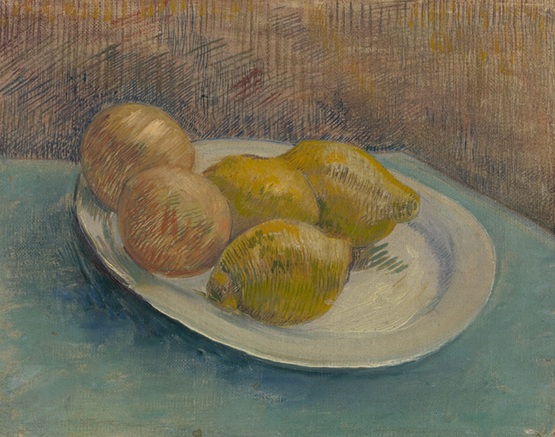
[Painting: Dish with Citrus Fruit, Van Gogh]

March 19, 2025
0 Facebook Twitter Google + Pinterest
Jacques Philippe: “How should I live my life today?”

Jacques Philippe: “How should I live my life today?”

written by Christian Heinze

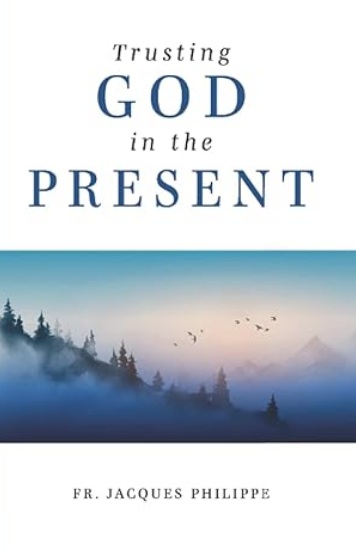
In his wonderful little book, Trusting God in the Present, Jacques Filippe writes about our tendency to overthink tomorrow and underdo today during trials.

Philippe:


“In this life it is sometimes absolutely necessary that we consent to go forward without understanding.

…. when preoccupied with a question to which you can’t find the answer, ask yourself: ‘Do I absolutely need an answer to that in order to know how I should live my life today?’

You’ll realize that you usually don’t.

….We accept the situation as it is, without aiming to understand it entirely and ask, ‘What does God want of me here? What is the right way to live through this? Which part of the Gospel am I called by this situation to put into practice now? What acts of faith and hope, what progress in love, am I being asked to make today.”


Accepting something totally befuddling and awful is tough for any Christian to do, regardless of medical condition, and it can send anyone into despair.

It might be particularly tough for people with OCD whose brains are wired with a unique capacity to thrive at finding despair in these moments.

We find one question, it cockroaches into 100 more, those critters have colonies of their own, and pretty soon, it’s three hours later and you’re infested with 3,000 troubling questions when all you wanted was the answer to one.

And it all began with a single question: “Why?”

And here’s the problem: We want to understand the Why so we can find a Fix. Makes sense, right? My car is broken, there’s got to be a why, so I take it in, and a new transmission does the trick.

That’s trying to figure out an automobile’s why.

But Scripture and reason itself tell us that we can’t chase the mind of God’s reasons.

History, going back to Job, is a wasteland of saints going to the heavens for an answer and ending up with nothing except this one question that should have been our only one to begin with: “Who am I to question you, oh God?”

And here’s the thing, and it’s what Philippe is getting at. God has already given us the clear answer we need.

To practice, as best we can, faith, hope, and love, in the absence of knowing.

I can say, “God, you’re my Good Shepherd, but you seem to have fallen asleep. What gives?” and then I can answer, “But I know you haven’t. I have faith that Jesus is here.”

Or take hope.

I can say, “God, I put my hope — not in nature’s cruel hand to turn things around — but in your mercy to turn my face around, and towards your son.”

Far too often, we pin our hopes on mercy from other humans, forgetting they’re human, and attach our desperation to a world that’s already fallen to raise us from the ground.

Where is my hope in the Why?

And finally, the greatest of these virtues we can practice (hopefully) during any Why – love.

“God, just as you used your pain on the cross for me, I can use my pain for the world. Help me be a ‘wounded healer’.”

It might be that, in your pain right now, you can “only” close your eyes in prayer for someone, but that opens the heavens in ways we wouldn’t believe.

I often (usually) suck at all these things – faith, hope, and love. Especially during hard times.

It’s easy to have faith, hope, and love when things feel lovely in our lives. During one of the greatest stretches of my life, I thought I was practicing those things when in reality I was just in new love with my girlfriend/now wife.

In fact, in the good times, it’s so easy to “practice faith, hope, and love” that it’s easy to ask whether those are faith, hope, or love.

Each of those virtues implies a resistance to them. Faith can only arise in uncertainty, hope can only be hope during absence, and the deepest Christian love involves bearing the cost and canceling the debt of another’s sin against us.

Each of those things we can do (or try), regardless of circumstance.

We will never get the answer that we want to the Why.

But God has already told us what our answer must be — faith, hope, and love. We can try those things, Gold help us.

May God give us the strength, me the strength.

In the meantime, if you’re struggling with depression, anxiety, or any other mood disorder (all medical conditions)….

For readers in the United States…

Find a psychiatrist here.

Find a therapist here.

For readers, internationally, seek help from a local resource.

For salvation, Christ and Christ alone.

February 27, 2025
0 Facebook Twitter Google + Pinterest
What a relief

What a relief

written by Christian Heinze

Brennan Manning, in A Glimpse of Jesus: The Stranger to Self-Hatred:

“No antecedent beauty enamors me in his eyes. I am lovable because he loves me. Period.”

February 10, 2025
0 Facebook Twitter Google + Pinterest
STUDY: Lycopene can help ease depressive symptoms in mice

STUDY: Lycopene can help ease depressive symptoms in mice

written by Christian Heinze

A brand new study in Food Science and Nutrition suggests that the natural plant extract, lycopene (eat tomatoes and you’ll get it, eat sun-dried tomates and you’ll get even more) reduces depressive symptoms of depression in mice by enhancing a key protein involved in brain health and associated with depression.

Here’s the upshot.

Scientists took 60 mice and induced depression in them by stressing them out (interestingly).

Then they divided the critters into two groups, and gave one group a bunch of lycopene and the other a corn oil placebo.

The mice that got the lycopene started mixing socially with other mice and showed greater mouse joie de vivre.

The mice that got the corn oil placebo remained the ending of Jules and Jim – awful depression.

So the lycopene appeared to help, but how?

SciTech Daily notes that it enhanced brain-derived neurotrophic factor (BDFN)* which is an essential protein for brain function, memory, and learning. Further, in the depressed mice, BDFN expression was reduced.

Lycopene treatment helped restore this pathway, potentially improving neural communication and brain health.

That’s great news, particularly considering that you can get lots of lycopene from eating tomatoes, watermelon, papaya, guava, and cooked sweet red peppers (plus, as Healthline notes, there are loads of potential benefits you can get from lycopene for other physical conditions).

However, as Tracy Swartz at the NY Post notes, the study does point out some limitations.

First, the mice were given an incredibly high dose of lycopene to reach the mouse joie de vivre.

In fact, it was double the amount per day that’s currently considered safe for a human to consume, on a pound-for-pound basis!

The researchers acknowledged the limitation in the paper, as well as a few more — limiting their study to male mice and only looking at lycopene’s effect on the hippocampus.

In other words, chronic depression in humans is much more complex than a short scientific experiment involving male mice.

However, the study does advance research on the role of BDNF and depression (potentially leading to more significant therapies for the disease) and further suggests that eating lycopene (if it’s safe for you) can theoretically provide benefit, in some way.

So it’s a worthwhile and interesting study.

From a personal point of view, as someone who’s suffered from chronic depression, I’ve tried lots of diets and this is a very individual disease and we each have unique bodies, and it’s been hard to say that diet has helped me. But it would be impossible to prove it hasn’t, because we never know what helps us at the margin.

Before taking antidepressants, it seemed nothing helped me, but again, everyone’s disease is different. Maybe diet works for some, maybe it doesn’t work for others.

But at the very least, we do know that eating a healthy diet is good for your body in other ways.

*BDNF’s role in brain diseases other than depression has been studied, including its links with neurodegenerative diseases like Alzheimers, Parkinsons, and Huntingtons. It’s remarkable how many ways depression and neurodegenerative diseases overlap in key brain processes.

In the meantime, if you’re struggling with depression, anxiety, or any other mood disorder (all medical conditions)….

For readers in the United States…

Find a psychiatrist here.

Find a therapist here.

For readers, internationally, seek help from a local resource.

For salvation, Christ and Christ alone.

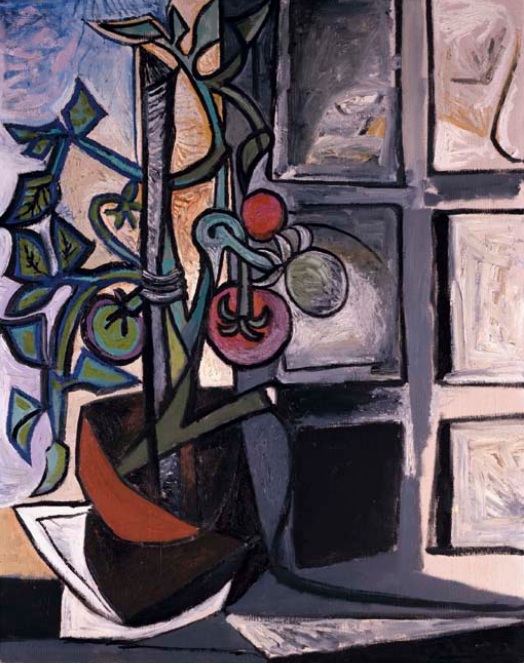
[Painting: Plant de Tomates, Picasso]

February 10, 2025
0 Facebook Twitter Google + Pinterest
Staton: What’s your “because?”

Staton: What’s your “because?”

written by Christian Heinze

In general, I think the word “story” is a bit overused in Christian lexicon these days, but in his book Searching for Enough, Tyler Staton invokes “story” in a way that I hope makes you feel important and recognized, because often, in our illness, we feel so useless (excessive self-criticism is a symptom of many disorders).

Staton uses the word “because” in his exposition on story, and often the word “because” can throw us because there’s so much “because” that’s befuddling, but if we understand Christianity properly, “because” can inject us with some life-giving energy, and give us the sense again that who we are matters to God.

Not just for this earth, but for all of eternity.

Staton:


“The English novelist E.M. Forster draws a distinction between a story and a plot with the single word because. A story is merely events arranged chronologically — ‘the king died and then the queen died’.

A plot occurs when the focus zeroes in on the causality, the because of those events — ‘the king died and then the queen died of grief’.”


Staton then applies Forster’s remarkably simple but magical word “because” for great writing to your Christian life, and the Because of you revolves around the Because of Christ.


“The question Jesus’ life leaves us with is this: Is it merely a story, or is it a plot?

Is his life only a series of events, or is it something more coherent, the first and greatest because?

To answer this question, we are forced to engage a similar, but much more personal question: Is my life merely a story, or is it a plot? Am I the sum total of chronological events, or is there a coherent plot?”


The greatest because? I love that. Christ’s life was the greatest because there ever was.

And if we really believe that Jesus came to die for us, because he wanted to defeat death, sin, and raise us to share in his inheritance, then we can go forward in life knowing that we matter to his plan because he created us for a reason.

And just as Christ’s entire life, from virgin birth to resurrection, was linked by a series of redemptive because’s, so, indeed, your life and my life is linked by a series of redemptive because’s, as well.

We may be facing unbelievably difficult circumstances, disorders, and diseases, but Jesus did as well — because that was the cup he had to drink from on earth to drink the one when he was reunited with his Father.

When we look at how perfectly transparent and redemptive the because’s were in Christ’s life, we can know it’s the same for us, even if we can’t see it.

And that’s because we don’t live life in perfect retrospection. Instead, we get caught in relentless introspection, and it can drag us down and take our eyes off the fact that we know how it all ends.

The drama of life will never stop, just as the drama in a story or movie continues, but there will be a discharge in that war. An It’s A Wonderful Life Ending moment for you and me, and methinks Jesus can cook up something better than Frank Capra, no?

So think about your because in the light of your final redemption. That’s super hard to do. Our disease makes it even harder.

But just think of how clear each because was in Christ’s life, and even though he was a man of sorrows, he did end up rising up from the grave.

You and I will rise up from our physical graves too (and the graves we often mentally feel stuck in).

Because Christ did, you and I will.

In the meantime, if you’re struggling with depression, anxiety, or any other mood disorder (all medical conditions)….

For readers in the United States…

Find a psychiatrist here.

Find a therapist here.

For readers, internationally, seek help from a local resource.

For salvation, Christ and Christ alone.

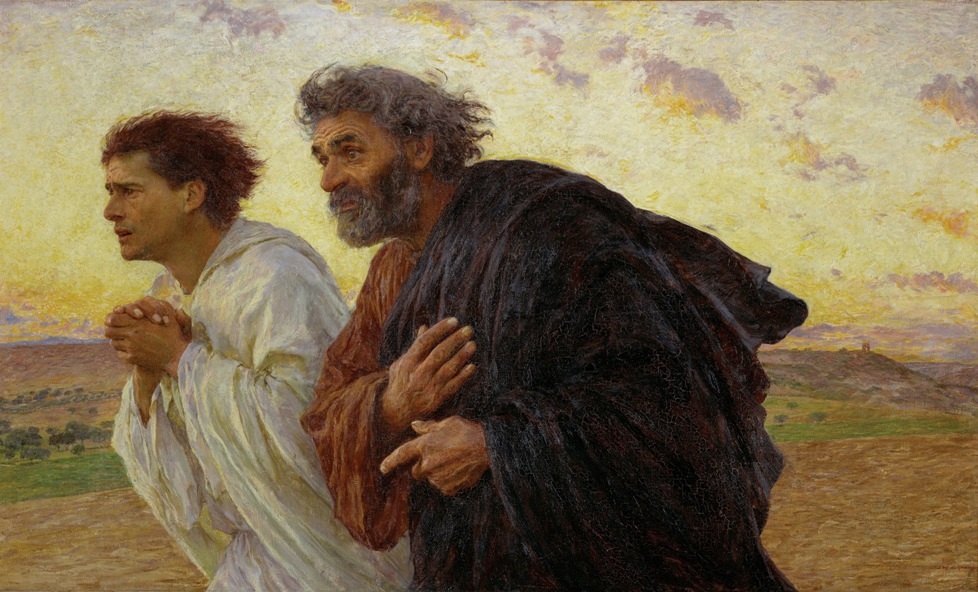
[Painting: Les Disciples Pierre et Jean courant au Sépulcre le matin de la Résurrection, Eugene Burnand]

February 6, 2025
0 Facebook Twitter Google + Pinterest
Dr. Babbel: Community is important after trauma

Dr. Babbel: Community is important after trauma

written by Christian Heinze

Dr. Susanne Babbel has a good piece at Psychology Today on some of the important distinctions between trauma and PTSD (post traumatic stress disorder), and how treating trauma effectively can help prevent it from turning into its more insidious progeny – PTSD.

Her key point: “Trauma is less about the event itself and more about how the body and mind respond to it.“

We experience trauma after going through an event that puts us in fight-or-flight survival mode, which Peter Levine defined as “the experience of being overwhelmed by life-threatening events which exceed one’s capacity to process the experience at the time.”

Of course, whether it’s an objectively life-threatening event or not is beside the point.

One person might say, “Hey the bomb went off 100 yards from me! I wasn’t even close to getting hurt!” Another person might think, “But it was only 100 yards away.”

So don’t get hung up on whether your experience meets the criteria of “life-threatening,” because sure, watching your house burn down on TV while you’re in a different city might not threaten your life, but it changes it dramatically and traumatically, doesn’t it?

I think the key point in Levine’s definition is that a traumatic experience occurs when it “exceed[s] one’s capacity to process the experience at the time.”

That’s when we get into flight-or-fight survival mode, and if that persists for over a month, then PTSD starts to become the issue, and PTSD is a far more difficult beast to address than the triggering trauma.

So what to do if you face trauma?

Well, first get in touch with a doctor (psychiatrist or therapist – links below).

That’s always the “first” for any medical condition – whether you break a bone or experience a trauma (of course, we can pray on the way to the doctor, but we can’t overly spiritualize bodily disease).

Also, Babbel notes just how important community support is in healing. For example, her own research shows that survivors of 9/11 experienced far less trauma than survivors of Hurricane Katrina, thanks to a disparity in community support, socioeconomics, displacement and media portrayal.

There are many things we can’t address (to society’s discredit, the poor will will never have the resources of the rich for health).

But finding community and connecting with existing community is utterly vital to help keep trauma from becoming PTSD.

Babbel also recommends bodily things like vagus nerve exercises, breathing exercises, and practicing the emotional freedom technique (if someone thinks EFT tapping is mumbo-jumbo, then they’re arguing against compelling research, showing it can make a huge difference in relieving symptoms of PTSD – not just in veterans but nurses and other cohorts).

I want to finish on this concept of community.

Recently, I wrote about how difficult it is to connect with community (or even find it, or have the courage to find it) when you have PTSD.

Both the process and the connection can trigger another wave of trauma if you encounter the wrong community, and it’s absolutely vital to sort through this with a doctor.

I’ve found the Christian church a real hit-or-miss on trauma.

Sometimes community has brought me great relief; other times, it’s only brought additional trauma that’s worsened by the fact that it’s at the hands of the community that’s supposed to be the hands of Christ.

You might have experienced the same.

There are thousands of testimonials of Christians who found anything but support in the church when going through trauma and it’s a black mark of shame on the church, because Jesus came to those living with traumatic wounds, PTSD, every kind of malady, and he feels so heartbroken by the heartbroken that he spent his life, healing our wounds, and used up his death, to heal our transgressions.

Jesus treated the sick in body and sick in sin with distinctly different approaches, and the church should show a similar approach.

Too often, the church has used an inherent distrust of psychology to abuse victims of those suffering from trauma and PTSD, and if you’ve been a victim of those diseases and an indifferent church’s response to it, my heart and prayers go out to you (if you want a poignant account of this, read my interview with author Sarah Robinson, who went to a church that treated her depression as though it were a failure of faith, and thus, sent her into a further spiral).

That is not the heart of Jesus. The heart of Jesus was a bleeding one, and he is the only one on earth or heaven who can look at your pain, and say I know, I care so deeply for you and mean it to the point of the cross.

So again, look first in the direction of a therapist or psychiatrist, and then see if you can find a community that won’t abuse your pain. Hopefully, your church looks something like the community that can help in you healing! But if it’s not, I understand and, in the absence of the church’s support, have often found help from the kindhearted, regardless of spiritual belief.

If you suspect you have PTSD, are anxious, depressed, or struggle with any aspect of mental health…

For readers from the United States….

Find a psychiatrist here.

Find a therapist here.

For readers, internationally, seek help from a local resource.

For salvation, Christ and Christ alone.

[Photo: Pexels, RDNE stock project, free public domain]

January 22, 2025
0 Facebook Twitter Google + Pinterest

“The sun will rise”

written by Christian Heinze

Because the Son rose, we will rise.

“Won’t you dry all your tears, lay your burden down” – The Brilliance.

If you’re struggling with depression, anxiety, or any other mood disorder (all medical conditions)….

For readers in the United States…

Find a psychiatrist here.

Find a therapist here.

For readers, internationally, seek help from a local resource.

For salvation, Christ and Christ alone.

May the Lord bless you, dear friends.

January 21, 2025
0 Facebook Twitter Google + Pinterest
Load More Posts

Social Media

Twitter

Get in touch with me

Contact here. 

The Weary Christian mission:

First off:


In the United States, find a psychiatrist here.

In the United States, find a therapist here.

If you’re in the United States and having thoughts of harming yourself or others, please call the National Suicide Lifeline at 1-800-273-8255.

If you’re in the UK, get urgent help here.

Canada, here.

Australia, here.

New Zealand, here.

South Africa, here.

France, here.

Germany, here.

Portugal, here.

Mexico, here.

India, here.

The Philippines, here.

Singapore, here.

South Korea, here.


The Weary Christian goal…


a) reduce the stigma surrounding depression, anxiety, OCD, and other conditions in the Christian community.


b) have uncomfortable but honest conversations.


c) Reduce the stigma surrounding antidepressants, antipsychotics, and other meds God has given us as gifts.


And…


d) Sometimes (tons of times), we all feel really, really depressed in our journey. Hopefully, this site makes you feel less alone.

Categories


@2017 - PenciDesign. All Right Reserved. Designed and Developed by PenciDesign