The Weary Christian
  • Depression
    • Depression

      James Bryan Smith: Unmet expectations and fear

      Depression

      STUDY: Criticizing older adults make them more vulnerable…

      Depression

      STUDY: Awe can reduce depressive symptoms

      Depression

      STUDY: How music-mindfulness can help depression, anxiety

      Depression

      STUDY: Chronic pain associated with higher rates of…

  • Anxiety
    • Anxiety

      Calling out the brain on catastrophizing

      Anxiety

      James Bryan Smith: Unmet expectations and fear

      Anxiety

      STUDY: Awe can reduce depressive symptoms

      Anxiety

      STUDY: How music-mindfulness can help depression, anxiety

      Anxiety

      STUDY: Chronic pain associated with higher rates of…

  • Book quotes/Video
    • Book quotes/Video

      “In darkest night, you were there like no…

      Book quotes/Video

      Thanksgiving for his brokenness

      Book quotes/Video

      Esther Smith: “All he wants is you”

      Book quotes/Video

      James Bryan Smith: Unmet expectations and fear

      Book quotes/Video

      Staton: On being a witness

  • Health News
    • Health News

      Calling out the brain on catastrophizing

      Health News

      STUDY: Mental health conditions share deep genetic patterns

      Health News

      STUDY: Four Supplements that MIGHT help depression

      Health News

      STUDY: Gut changes raise risk of eating disorders…

      Health News

      STUDY: Criticizing older adults make them more vulnerable…

  • Interviews
    • Interviews

      INTERVIEW: Dr. Terry Powell’s gripping account of depression

      Interviews

      INTERVIEW: Therapist Michael Schiferl explains religious scrupulosity and…

      Interviews

      INTERVIEW: Rocker Matt Sassano shares battles, urges transparency…

      Interviews

      INTERVIEW: Dr. Brian Briscoe tells Christians that antidepressants…

      Interviews

      INTERVIEW: Pastor Scott Sauls on anxiety, depression, and…

  • Devotionals
    • Devotionals

      “Grace has got to be drunk straight”

      Devotionals

      Defeated by God

      Devotionals

      Am I a faithless Christian?

      Devotionals

      Think you’re a “failure?” Jesus sees you unlike…

      Devotionals

      “I killed Jesus of Nazareth”

  • About
  • Depression
    • Depression

      James Bryan Smith: Unmet expectations and fear

      Depression

      STUDY: Criticizing older adults make them more vulnerable…

      Depression

      STUDY: Awe can reduce depressive symptoms

      Depression

      STUDY: How music-mindfulness can help depression, anxiety

      Depression

      STUDY: Chronic pain associated with higher rates of…

  • Anxiety
    • Anxiety

      Calling out the brain on catastrophizing

      Anxiety

      James Bryan Smith: Unmet expectations and fear

      Anxiety

      STUDY: Awe can reduce depressive symptoms

      Anxiety

      STUDY: How music-mindfulness can help depression, anxiety

      Anxiety

      STUDY: Chronic pain associated with higher rates of…

  • Book quotes/Video
    • Book quotes/Video

      “In darkest night, you were there like no…

      Book quotes/Video

      Thanksgiving for his brokenness

      Book quotes/Video

      Esther Smith: “All he wants is you”

      Book quotes/Video

      James Bryan Smith: Unmet expectations and fear

      Book quotes/Video

      Staton: On being a witness

  • Health News
    • Health News

      Calling out the brain on catastrophizing

      Health News

      STUDY: Mental health conditions share deep genetic patterns

      Health News

      STUDY: Four Supplements that MIGHT help depression

      Health News

      STUDY: Gut changes raise risk of eating disorders…

      Health News

      STUDY: Criticizing older adults make them more vulnerable…

  • Interviews
    • Interviews

      INTERVIEW: Dr. Terry Powell’s gripping account of depression

      Interviews

      INTERVIEW: Therapist Michael Schiferl explains religious scrupulosity and…

      Interviews

      INTERVIEW: Rocker Matt Sassano shares battles, urges transparency…

      Interviews

      INTERVIEW: Dr. Brian Briscoe tells Christians that antidepressants…

      Interviews

      INTERVIEW: Pastor Scott Sauls on anxiety, depression, and…

  • Devotionals
    • Devotionals

      “Grace has got to be drunk straight”

      Devotionals

      Defeated by God

      Devotionals

      Am I a faithless Christian?

      Devotionals

      Think you’re a “failure?” Jesus sees you unlike…

      Devotionals

      “I killed Jesus of Nazareth”

  • About

The Weary Christian

THE WEARY CHRISTIAN

LIVING WITH FAITH AND DEPRESSION

  • Depression
    • Depression

      James Bryan Smith: Unmet expectations and fear

      Depression

      STUDY: Criticizing older adults make them more vulnerable…

      Depression

      STUDY: Awe can reduce depressive symptoms

      Depression

      STUDY: How music-mindfulness can help depression, anxiety

      Depression

      STUDY: Chronic pain associated with higher rates of…

  • Anxiety
    • Anxiety

      Calling out the brain on catastrophizing

      Anxiety

      James Bryan Smith: Unmet expectations and fear

      Anxiety

      STUDY: Awe can reduce depressive symptoms

      Anxiety

      STUDY: How music-mindfulness can help depression, anxiety

      Anxiety

      STUDY: Chronic pain associated with higher rates of…

  • Book quotes/Video
    • Book quotes/Video

      “In darkest night, you were there like no…

      Book quotes/Video

      Thanksgiving for his brokenness

      Book quotes/Video

      Esther Smith: “All he wants is you”

      Book quotes/Video

      James Bryan Smith: Unmet expectations and fear

      Book quotes/Video

      Staton: On being a witness

  • Health News
    • Health News

      Calling out the brain on catastrophizing

      Health News

      STUDY: Mental health conditions share deep genetic patterns

      Health News

      STUDY: Four Supplements that MIGHT help depression

      Health News

      STUDY: Gut changes raise risk of eating disorders…

      Health News

      STUDY: Criticizing older adults make them more vulnerable…

  • Interviews
    • Interviews

      INTERVIEW: Dr. Terry Powell’s gripping account of depression

      Interviews

      INTERVIEW: Therapist Michael Schiferl explains religious scrupulosity and…

      Interviews

      INTERVIEW: Rocker Matt Sassano shares battles, urges transparency…

      Interviews

      INTERVIEW: Dr. Brian Briscoe tells Christians that antidepressants…

      Interviews

      INTERVIEW: Pastor Scott Sauls on anxiety, depression, and…

  • Devotionals
    • Devotionals

      “Grace has got to be drunk straight”

      Devotionals

      Defeated by God

      Devotionals

      Am I a faithless Christian?

      Devotionals

      Think you’re a “failure?” Jesus sees you unlike…

      Devotionals

      “I killed Jesus of Nazareth”

  • About
Health News

STUDY: Mental health conditions share deep genetic patterns

James Bryan Smith: Unmet expectations and fear

STUDY: Four Supplements that MIGHT help depression

STUDY: Criticizing older adults make them more vulnerable to developing depression

Study offers great context on kids, screen time, and emotional problems

Daily Blog

“A chuckle in the darkness”

“A chuckle in the darkness”

written by Christian Heinze

C.S. Lewis in A Grief Observed:


“Heaven will solve our problems, but not, I think, by showing us subtle reconciliations between all our apparently contradictory notions. The notions will all be knocked from under our feet.

We shall see that there never was any problem.

And more than once, that impression which I can’t describe except by saying that it’s like the sound of a chuckle in the darkness.

The sense that some shattering and disarming simplicity is the real answer.”

November 10, 2020
0 Facebook Twitter Google + Pinterest
Nouwen on Ifs

Nouwen on Ifs

written by Christian Heinze

Henri Nouwen, in Return of the Prodigal Son:


“There are endless ‘ifs’ hidden in the world’s love. These ifs enslave me, since it is impossible to respond adequately all of them.

The world’s love is and always will be conditional.

As long as I keep looking for my true self in the world of conditional love, I will remain ‘hooked’ to the world.”

October 30, 2020
0 Facebook Twitter Google + Pinterest
STUDY: Air pollution is a huge risk factor for depression

STUDY: Air pollution is a huge risk factor for depression

written by Christian Heinze

I know what you’re going to say, because I wondered it too.

Is air pollution linked to worse mental health because of all the other risk factors in cities with high pollution?

Or is air pollution itself — on its own — a risk factor in developing depression?

The answer is the latter.

Air pollution itself is linked to higher rates of depression, even when controlling for every other risk factor, and researchers are starting to figure out why.

One study found that air pollution particles lodge into the brain and seem to produce molecular damage.

And a new study found that even an “incremental increase in nitrogen dioxide” raised the risk of developing common mental disorders by 39%. Tiny particle pollution raised the risk by 18%.

It’s not just about mental health.

The Guardian:

Recent research has linked dirty air to increased suicides and indicated that growing up in polluted places increases the risk of mental disorders. Other research found that air pollution causes a “huge” reduction in intelligence and is linked to dementia. A global review in 2019 concluded that air pollution may be damaging every organ in the human body.

Some Christians, particularly Christians in the United States, scoff at taking environmental issues seriously.

But God commands us to take care of his precious creation, and in doing so, we are also taking care of humans created in his image.

October 30, 2020
0 Facebook Twitter Google + Pinterest
Amen

Amen

written by Christian Heinze

Brennan Manning, in Ragamuffin Gospel.


“God wants us back even more than we could possibly want to be back.”

October 10, 2020
0 Facebook Twitter Google + Pinterest
The next frontier: Psychobiotics

The next frontier: Psychobiotics

written by Christian Heinze

There’s already loads of research suggesting that your gut bacteria has a big influence on your mental health.

And Discover Magazine has a terrific write-up on how that might help inform future mental health treatments.

The crux is this: Research has shown an undeniable gut-brain connection, and many of the bacteria in our gut are related to our dopamine and serotonin levels, which play a big role in our moods.

Scientists are trying to figure out which gut bacteria are most influential, and then they can create strains of probiotics that can, theoretically, boost production of the bacteria that boosts your mood.

Some of the most interesting studies, so far, involve mice (of course).

Just five weeks after giving depressed, stressed mice a particular gut microbe, the mice started behaving like happy, well-adjusted, vigorous and vital mice.

They ran around more, explored more, interacted, basically lived their best mouse-life.

Meanwhile, researchers gave happy mice some stressed-mice bacteria, and suddenly the happy mice stopped running around and exploring.

There have been a number of promising studies on humans, as well, and researchers are now putting together rigorous trials that will hopefully help us figure out, definitively, what strains of bacteria work best for mood disorders.

Read the article here.

October 8, 2020
0 Facebook Twitter Google + Pinterest
Buechner: The problem with sentimentality

Buechner: The problem with sentimentality

written by Christian Heinze

Often, the depressed struggle with a deep sense of melancholy, which goes hand-in-hand with sentimentality.

By nature, that’s me, and maybe you — and writer Frederick Buechner.

But there’s a danger.

From his book, The Longing for Home.


“When we sentimentalize about things, we see not so much the things themselves as we see the flood of feeling, of sentiment, that the things occasion in us, with the result that sentimentality becomes a form of blocking out the world.”


How true.

And I would add that it’s not just the blocking out of the world, but the nature of a thing changes, as well, and for the sadder.

For example, when I was a small kid, my dad played Tchaikovsky’s Piano Concerto No. 1, non-stop.

I thought it was the most purely beautiful thing I’d ever heard.

Now I also think it’s beautiful but the memory of my childhood and dad and youth adds a new dimension to the beauty, and I can’t appreciate it for its purity as much, because where before it didn’t provoke nostalgia, it does now.

And that can lead to some depression, and therein, lies the danger of nostalgia, as I’ve written.

September 28, 2020
0 Facebook Twitter Google + Pinterest
We do get sucked back into the courtroom, don’t we?

We do get sucked back into the courtroom, don’t we?

written by Christian Heinze

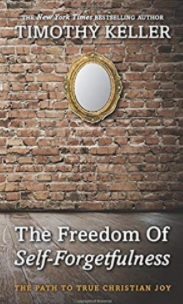
Tim Keller, writing in The Freedom of Self-Forgetfulness.


“You believe the gospel; maybe you have done so for years. But….and it is a big ‘but’…every day you find yourself being sucked back into the courtroom.

You do not feel you are living like Paul says.

You are getting sucked back in.

All I can tell you is that we have to relive the gospel every time we pray…..we have to relive the gospel on the spot and ask ourselves what we are doing in the courtroom. We should not be there. The court is adjourned.           

“Like Paul, we can say, ‘I don’t care what you think. I don’t even care what I think. I only care about what the Lord thinks.’

And he has said, ‘Therefore, there is now no condemnation for those who are in Christ Jesus,’ and ‘you are my beloved child in whom I am well pleased.’ Live out of that.”

August 20, 2020
0 Facebook Twitter Google + Pinterest
Interview: Pastor Kirby Smith on his battle with depression (and what’s helped)

Interview: Pastor Kirby Smith on his battle with depression (and what’s helped)

written by Christian Heinze

Kirby Smith has been a pastor for 36 years, and knows a thing or two about life and Christianity. Also, about anxiety and depression.

Pastor Smith and I recently talked about his gripping battle with anxiety and depression, what helped (ECT and medication), and the theologically erroneous view that anxiety and depression are spiritual problems.

As Pastor Smith says of his battle, “This has never been a spiritual issue. It has been an absolute, 100% physical problem I’ve needed to address.”

If you think your depression or anxiety is a spiritual defect, I hope you’ll read this interview, and find comfort in the fact that a) this is something pastors go through, too, and b) it’s a treatable physical illness.

Our discussion has been edited for clarity and brevity.

HEINZE: Can you talk about your experience with depression?

SMITH: It started in my mid-30s.

I began to feel something of a malaise. I would sit in my office and wasn’t motivated to do anything. I talked about it with our director of missions, and he said, “Well, it sounds like you’re depressed.” I had no idea what that was.

On top of that, I was incredibly anxious. Tense. I could feel my insides knotting up. There were no real stressors that I could point to that would cause this.

I’d spend a ton of time in prayer in my office. I would walk through the church, praying for this to be lifted. I’d walk through the sanctuary around and around and around. I’d walk up the stairs, walk down the hall, through Sunday school classrooms, and I would do that for hours.

I got absolutely zero relief.

We have a camp in the mountains, and I went up there for a conference one time and wandered into the chapel, by myself.

I spent three hours in that chapel praying for God to lift whatever this was, and came out feeling just as miserable as when I walked in.

I thought it was a spiritual issue.

And then that Scripture, “Perfect love casts out fear” came to mind, and I kept thinking, “I need to love God more perfectly to have my fear cast out.”

Which was a complete misunderstanding of the verse.

I thought it was up to me.

But it just didn’t get any better.

HEINZE: How did it affect your faith?

SMITH: It didn’t really affect it. I still had the same amount of faith. I still believed, I was still preaching my sermons. I don’t know how effective they were. I don’t know how good they were because I was such a wreck.

I was just lucky to get through the week and come up with something to preach and still do my visitation.

But it never really affected my faith.

That went on for three or four years, and then we were called to another church, and without any sort of medication or counseling, it went away. It just lifted. And I thought, “Well, maybe the new start is just what I needed.”

I just felt so much better. That went on for a couple of years. And then things started to creep back in. We had a physician in our church. I went to him, and he put me on medication. It worked. It lifted that malaise.

I was on it for a couple years. Then I went back to him and said I was doing well, and asked about going off it. He said I could, so I did.

I came to realize later, in reading, it’s almost like alcoholism. Once a depressive, always a depressive. If you go off your meds, it tends to come back worse the second time. I went off them, and I was fine for probably a year.

Then I had a nervous breakdown.

I went to my office one morning. It was May, spring, warm, and sunny. I got there around 8:00 and all of a sudden, I felt this heat, this flush come over my body. Almost like my body was on fire. I had no idea what was going on. I called my wife and told her to come over. I thought it might be a stroke or heart attack.

She came over to the church. We went to the ER, talked to a doctor, and he basically said there was nothing wrong with me and that I should breathe into a paper bag. He kicked me out, basically!

So we went home, and two hours later, I was back in the ER. Same doctor. I felt like I was dying. My body was just rebelling. The doctor said the same thing. He said, “There’s no doctor that’s going to see you with these symptoms.”

I became a very uncooperative patient. I was furious. I knew something was seriously wrong. I didn’t know if I was going to live.

Twenty-four hours later, I was in a psychiatrist’s office, in a fetal position, at the end of the sofa. The doctor’s words are emblazoned in my memory: “This is eminently treatable.”

Just hearing that was such a blessing. He put me on an antidepressant and an anti-anxiety medication and within a couple weeks, I did feel better.

I felt better for a couple years, and stayed on the meds. But the meds started to lose their effectiveness. He tried me on a few different ones, but none worked.

And then in 2003, I was scheduled to deliver the baccalaureate address at my daughter’s graduation, and it hit again — just like several years earlier.

I had to back out of that, and found myself fetalized again. At that point, the doctor said that we’d done all we could do with pills and suggested ECT [Electroconvulsive Therapy].

At that point, I didn’t care.

Meanwhile, the chairman of our deacons came to me one night, and he said, “Kirby, we need to talk. You’re not doing your job.”

He was blunt but also very gracious. And I knew I wasn’t doing my job. For a couple years, I would sit in my office with the door closed, just staring into space until 5:00 when I could leave. My secretary left at 3:00, and I couldn’t wait for her to leave.

Because when she left, that was my time to crash.

HEINZE: That crashing you talk about. Was that more of a malaise or sense of impending doom and dread?

SMITH: Impending doom and dread.

I was thinking of ways to commit suicide without my wife finding me in a pool of blood.

It was so bad, I just felt like I couldn’t keep living like that. My depression was so bleak, I couldn’t move. I couldn’t wait to go to bed at night, and didn’t want to get up in the morning.

My salvation was sleep. The problem was that when I woke up, my anxiety was so bad I felt like I was coming out of my skin. The anxiety was worse than the depression. My body was wound so tight.

One Saturday night, my anxiety was so bad, I sat up in our living room all night long, praying that God would get rid of whatever it was I had before I had to go to preach the next morning.

I didn’t know how I was going to preach. I remember seeing the sun come up, seeing the dawn and thinking, “What am I going to do? It’s still here.” I didn’t get one second of sleep.

HEINZE: The popular conception is that depression is the leading cause of suicide.

But studies actually show that anxiety is more likely to lead to suicide than depression. It’s because of the desire to escape. The terror of living in a body riddled with anxiety.

I’ve had anxiety and depression. Depression is terrible, but it doesn’t take me to the extremes like anxiety.

SMITH: Depression is darkness, but anxiety makes you think, “I’m going to die.”

Every time I would try to take a nap, I would dread falling asleep, because I would almost jump out of bed when I’d wake up.

I’d feel like I was clinging to the ceiling. It was unbearable.

I knew I hadn’t been doing my job. So when the chairman of deacons came to me and said, “I want to help you apply for disability.” I was grateful for that. I was thrilled. I thought, “I don’t have to do this after tonight?”

We began to work with my doctor towards ECT. I got disability within two weeks. Talk about a blessing.

I went to Lynchburg General Hospital, and had nine ECT treatments in eighteen days. Then I went home and began to feel better very quickly.

One potential side effect is short-term memory loss, and I’ve had a little bit of that, but it gives me a good excuse at church if I screw something up in my ministry to say, “Hey, my ECT.”

The worst thing about it was that I was hypomanic for six months to a year. During the first few weeks, I couldn’t sleep for more than five minutes at a time. But that got better, and it’s completely gone now.

One year later, I was called to our current church outside of Richmond. We’ve been here about 14 years. My wife was able to fulfill a lifelong dream here. She was called as the minister of music, and I was called as the pastor. I’ve had an opportunity to be an adjunct seminary professor for seven years and have had the opportunity to write several articles.

I can’t tell you how many people I’ve been able to counsel who have been going through anxiety and depression many times.

I can finish their sentence for them. When they’re struggling with the name of a medicine, I can usually tell them what it is.

I’m well, I’m happy. My kids see such a difference in me.

When I was in 4th grade, my best friend called me a “worry wart.” So I think I’ve had some of this in my system, my entire life. I used to worry a lot.

But I’m very much at peace now. More at peace in the past 15 years than in my entire life.

HEINZE: So do you see ECT as a real turning point?

SMITH: Yes, it saved my life. I honestly don’t think I’d be here today without that.

HEINZE: The evangelical community acknowledges depression and anxiety now, but there’s such pressure to point to Scripture, prayer etc as the cure.

But medicine and ECT are gifts from God.

In fact, it’s just as spiritual to say, “God gave me a great prescription drug” as it is, “He gave me a great Bible verse.”

SMITH: I have read so many articles and books by Christians about depression, and they’re basically worthless.

They’ll talk about the reality of depression, and then they’ll say you need to throw yourself into church. You need to pray. You need to do a Bible study, and then maybe they’ll touch on medication, but it’s almost like an afterthought.

It’s a very namby-pamby, uneducated, ignorant response that most Christians have.

I still take medicine. I don’t know if I need it, but the worst thing to do is go off it, thinking you don’t need it anymore.

I’m going to stay on it forever, because I don’t want it to come back.

HEINZE: In an article for Baptist News Global, you write that most evangelical material on mental illness is “shallow, trite, uninformed, and even harmful.”

How can it be harmful?

SMITH: I think it keeps Christians from pursuing medical treatment.

It keeps us in the spiritual realm, and this is not a spiritual illness.

If we have heart trouble, we have coronary disease. If we have lung trouble, we have pulmonary disease. Yet if you have a brain problem, you are told you have a spiritual problem.

I didn’t have a spiritual problem. I had a brain that was malfunctioning, and I needed to get it fixed. And it’s harmful when Christians are led to believe it’s not.

They forgo therapy that might be the very thing that can heal them.

That’s why I said it was harmful.

I was asked by a local pastor to address his church, and in preparation, he kept wanting me to talk about what Scriptures had been helpful. I kept emailing him back and saying, “There aren’t any!”

I know the Scriptures. I’ve been a pastor for almost 40 years. There were no helpful Scriptures. It frustrated him, because he wanted me to talk about Biblical help that I’d gotten. And I didn’t get any Biblical help.

Just like if I had a heart attack, Scripture wasn’t going to help the doctor fix my heart.

I have always been a person of faith – I think I was born in the church nursery — and my faith has never wavered.

This has never been a spiritual issue. It has been an absolute, 100% physical problem I’ve needed to address.

HEINZE: Has anyone ever told you that anxiety isn’t trusting the Lord?

SMITH:  No.

The first article I wrote on this was for the Religious Herald, a Virginia Baptist newspaper, which was the forerunner of Baptist News Global.

That first article went out nationwide, and I got hundreds of emails, personally written cards, from people who basically said, “You nailed it.”

Then I wrote an article for the Richmond Times Dispatch, and I got a phone call from the Chairman of the Department of Psychiatry at Virginia Commonwealth University, and he said to me, “What you said was accurate and well-stated.”

Having that affirmation from him enabled me to say, “You know, Kirb, you nailed this.” So if I ever did get somebody mad at me or questioning, I could say, “Look I have medical credibility.”

Most of the feedback from the article was overwhelmingly positive. Only a few took issue with it.

Before I came here to Oak Forest, we had a Q &A time one night in the sanctuary, and I put all this out and they still called me to be pastor. We’ve had a lot of people join since we came. Not everyone is aware of the details, but a lot of people know, “Our pastor went through some stuff in the past.”

So when I joke about taking a pill, they all think it’s funny.

Negative feedback doesn’t threaten me. It only makes me want to redouble my efforts at education.

HEINZE: Can a depressed person experience the peace of God, and if so, what is the peace of God?

SMITH: First, I don’t think suicide is an unforgivable sin. Had I taken my life, I believe that I could have died at peace, knowing where I was going, knowing that I was saved, knowing that as horrible as it would be for my family, that we would see one another again.

So yes, I believe you can have the ultimate peace of God, but I will tell you that living daily in the depths of my depression, I had no peace.

I did not experience the peace of God. I just didn’t. I was crying out to God to hear me, and I felt like he wasn’t. Or if he was, he wasn’t answering. So that’s a tough question.

Ultimate peace, yes. Daily lived peace, no.

I have always been more of a thinker Christian than a feeler Christian.

On the Myers Briggs [Personality Test], I came out as huge brain, very little feeling.

So for me, my faith has never been a feeling. It has been an assurance. Or, much less a feeling. There are times where I get a feeling of, “All is well.”

Father Anthony de Millo said, “All is well, all is well, though we’re in a mess, all is well.”

There are times I get that feeling where all is well. But what lasts with me is the assurance in my mind that God is in charge.

All is well, his promises are true, his Word is true, and all of this is truth.

HEINZE: What would you say right now to a Christian who’s battling depression or anxiety?

SMITH: Same thing I say to people who come in to talk to me.

First thing you need to do is find a qualified psychiatrist. Not a general practitioner, not an internist, not a nurse practitioner, not a physician’s assistant.

You need to find a qualified psychiatrist, because they’re really the ones who can most effectively prescribe a medication and know what each medication does for the various diseases of the brain.

Then, the second thing – seek out a qualified counselor. Not necessarily Christian. Way too many Christian counselors are of the evangelical bent who will focus solely on the spiritual. I should add that, at least as of several years ago, there are two Christian Counseling Accrediting agencies. The American Association of Pastoral Counselors is, by far, the best.

I believe with mental illness that the best approach is not either/or, but both/and.

I, myself, never sought counseling; I didn’t need it. I didn’t need to talk through anything. I needed medicine.

Other people just need to talk to a counselor and work through issues and come to a healthier place. Some people need both.

But my first plan of action would be to see a psychiatrist. The best thing you can do — if you need meds — is to get them working as quickly as possible.

The Lord has brought me so many people who have dealt with depression, anxiety, and OCD. I never would have suspected that there were this many.

There are so many people out there like us, and they’re going untreated, unfortunately.

HEINZE: Finally, can you tell us some of the books that have been helpful?

“Darkness Visible, A Memoir of Madness”, 1990, William Styron.

“An Unquiet Mind, A Memoir of Moods and Madness”, Kay Redfield Jamison, 1995, Professor of Psychiatry at the Johns Hopkins School of Medicine.

“Unholy Ghost, Writers on Depression”, 2001, edited by Nell Casey, Carter Center Mental Health Journalism Fellow, 2000-2001. Includes writings by Professor Jameson, William Styron, Larry McMurtry, and others.

“Undercurrents”, Martha Manning, 1994, Clinical Psychologist, Professor of Psychology, George Mason University.

“A Mood Apart, The Thinker’s Guide to Emotion and It’s Disorders”, Peter C. Whybrow, 1997, Director of the Neuropsychiatric Institute at UCLA. 

“Against Depression”, Peter D. Kramer, 2005, Clinical Professor of Psychiatry, Brown University.

“The Noonday Demon, An Atlas of Depression”, Andrew Solomon, 2001. [To my mind, the most powerful and probably offensive (to many Christians) book in my collection. Brutally blunt. But for those interested in the truth of depression, as good as I have found.]

HEINZE: Thank you!

ABOUT: Kirby Smith was raised in Northern Virginia and holds a BA from George Mason University and an MDiv from Southeastern Baptist Theological Seminary. 

He has been a Virginia Baptist pastor for 36 years, serving four churches during that time. 

For the past 14 years he has been pastor of Oak Forest Baptist Church in Chesterfield, VA.  He and his wife Laura have two grown children.

August 19, 2020
0 Facebook Twitter Google + Pinterest

Mental Health links

written by Christian Heinze

a. FDA approves TMS therapy for obsessive-compulsive disorder.

b. Mitochondria might play “a surprisingly pivotal role in mediating anxiety and depression.“

c. New study: Teens’ social media use DOESN’T raise risk for depression.

d. Study: Supplement (SAMe) + the probiotic bacteria Lactobacillus plantarum might help depression and anxiety.

e. UCLA and Apple are teaming up to better understand the relationship among sleep patterns, exercise, heart rate, depression and anxiety.

“So don’t be afraid, little flock. For it gives your Father great happiness to give you the Kingdom.” — Luke 12:32

August 14, 2020
0 Facebook Twitter Google + Pinterest
STUDY: Depression with anxiety makes you more emotional

STUDY: Depression with anxiety makes you more emotional

written by Christian Heinze

The Journal of Psychiatry and Neuroscience has a new study, explaining some brain differences between depression alone VS. depression with anxiety.

If you’re just depressed, you probably become less emotional. Why’s that? Because depression is linked to brain shrinkage, including in areas related to apathy and anhedonia.

However, if you’re depressed and anxious, then you’re probably more emotional. Why?

Because depression w/anxiety is linked to a larger amygdala — the part of the brain tied to emotions.

Of course, this makes total sense.

If you’ve ever been depressed, you know how all-is-vanity it makes you feel. And, if anything, you are far less emotional than a normal person.

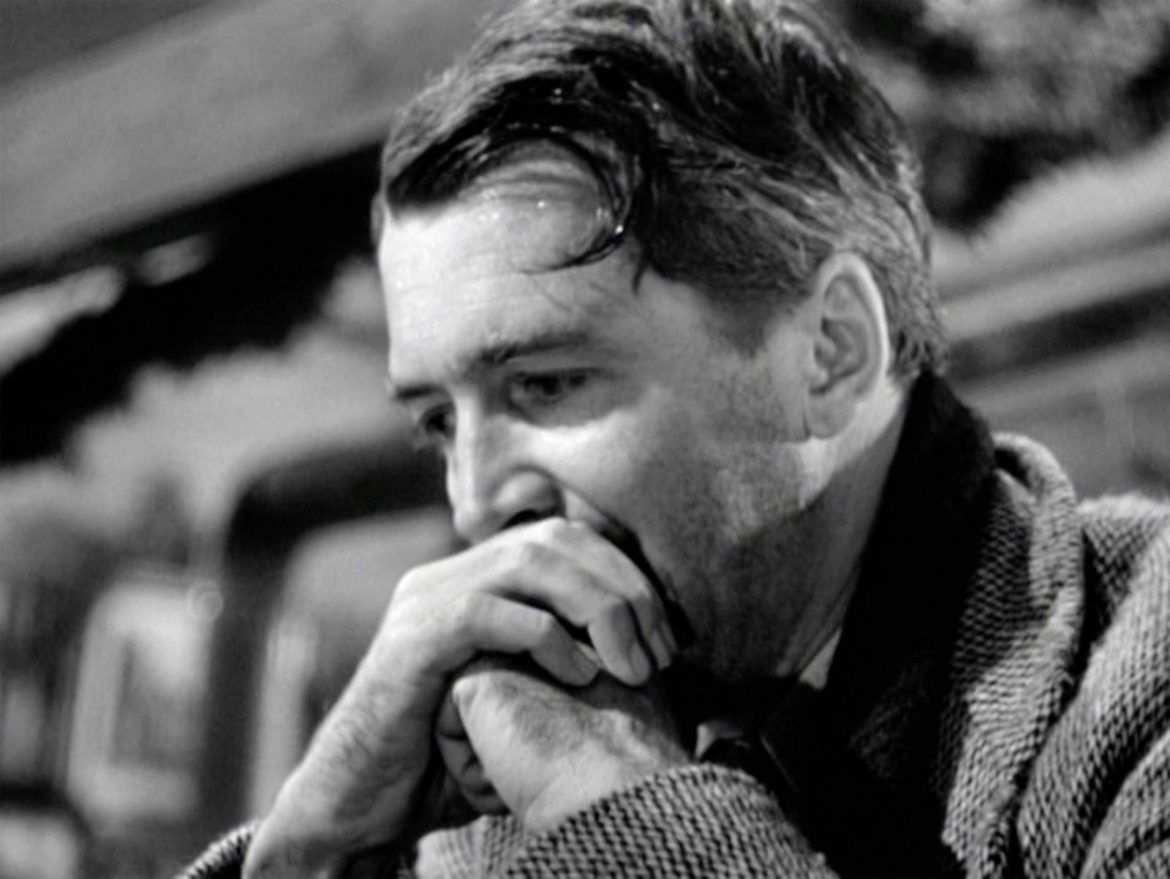
If you’ve ever been depressed with anxiety, you know how overwhelmingly emotional it can make you feel. Jimmy Stewart, in the greatest film ever made, clearly was depressed with anxiety. So seemed King David in many of his Psalms.

And so on.

The researchers looked at 112 studies, measuring brain activity in people with depression vs. depression w/anxiety to spot the differences.

And here they are:

Participants with depression and no comorbidity showed significantly lower volumes in the putamen, pallidum and thalamus, as well as significantly lower gray matter volume and intracranial volume; the largest effects were in the hippocampus (6.8%).

Participants with depression and associated anxiety showed significantly higher volumes in the amygdala (3.6%).

August 11, 2020
0 Facebook Twitter Google + Pinterest
Load More Posts

Social Media

Twitter

Get in touch with me

Contact here. 

The Weary Christian mission:

First off:


In the United States, find a psychiatrist here.

In the United States, find a therapist here.

If you’re in the United States and having thoughts of harming yourself or others, please call the National Suicide Lifeline at 1-800-273-8255.

If you’re in the UK, get urgent help here.

Canada, here.

Australia, here.

New Zealand, here.

South Africa, here.

France, here.

Germany, here.

Portugal, here.

Mexico, here.

India, here.

The Philippines, here.

Singapore, here.

South Korea, here.


The Weary Christian goal…


a) reduce the stigma surrounding depression, anxiety, OCD, and other conditions in the Christian community.


b) have uncomfortable but honest conversations.


c) Reduce the stigma surrounding antidepressants, antipsychotics, and other meds God has given us as gifts.


And…


d) Sometimes (tons of times), we all feel really, really depressed in our journey. Hopefully, this site makes you feel less alone.

Categories


@2017 - PenciDesign. All Right Reserved. Designed and Developed by PenciDesign