
The Weary Christian
  • Depression
    • Depression

      Latest Medical Studies on Depression

      Depression

      James Bryan Smith: Unmet expectations and fear

      Depression

      STUDY: Criticizing older adults make them more vulnerable…

      Depression

      STUDY: Awe can reduce depressive symptoms

      Depression

      STUDY: How music-mindfulness can help depression, anxiety

  • Anxiety
    • Anxiety

      Calling out the brain on catastrophizing

      Anxiety

      James Bryan Smith: Unmet expectations and fear

      Anxiety

      STUDY: Awe can reduce depressive symptoms

      Anxiety

      STUDY: How music-mindfulness can help depression, anxiety

      Anxiety

      STUDY: Chronic pain associated with higher rates of…

  • Book quotes/Video
    • Book quotes/Video

      John Mark Comer: “Wherever Jesus went, the kingdom…

      Book quotes/Video

      Ann Voskamp: “Jesus saves you for Himself”

      Book quotes/Video

      Philippe: “Refusing to suffer means refusing to live”

      Book quotes/Video

      “In darkest night, you were there like no…

      Book quotes/Video

      Thanksgiving for his brokenness

  • Health News
    • Health News

      Latest Medical Studies on Depression

      Health News

      Calling out the brain on catastrophizing

      Health News

      STUDY: Mental health conditions share deep genetic patterns

      Health News

      STUDY: Four Supplements that MIGHT help depression

      Health News

      STUDY: Gut changes raise risk of eating disorders…

  • Interviews
    • Interviews

      INTERVIEW: Dr. Terry Powell’s gripping account of depression

      Interviews

      INTERVIEW: Therapist Michael Schiferl explains religious scrupulosity and…

      Interviews

      INTERVIEW: Rocker Matt Sassano shares battles, urges transparency…

      Interviews

      INTERVIEW: Dr. Brian Briscoe tells Christians that antidepressants…

      Interviews

      INTERVIEW: Pastor Scott Sauls on anxiety, depression, and…

  • Devotionals
    • Devotionals

      Think you’re a “failure?” Jesus sees you unlike…

      Devotionals

      “Grace has got to be drunk straight”

      Devotionals

      Defeated by God

      Devotionals

      Am I a faithless Christian?

      Devotionals

      “I killed Jesus of Nazareth”

  • About
  • Depression
    • Depression

      Latest Medical Studies on Depression

      Depression

      James Bryan Smith: Unmet expectations and fear

      Depression

      STUDY: Criticizing older adults make them more vulnerable…

      Depression

      STUDY: Awe can reduce depressive symptoms

      Depression

      STUDY: How music-mindfulness can help depression, anxiety

  • Anxiety
    • Anxiety

      Calling out the brain on catastrophizing

      Anxiety

      James Bryan Smith: Unmet expectations and fear

      Anxiety

      STUDY: Awe can reduce depressive symptoms

      Anxiety

      STUDY: How music-mindfulness can help depression, anxiety

      Anxiety

      STUDY: Chronic pain associated with higher rates of…

  • Book quotes/Video
    • Book quotes/Video

      John Mark Comer: “Wherever Jesus went, the kingdom…

      Book quotes/Video

      Ann Voskamp: “Jesus saves you for Himself”

      Book quotes/Video

      Philippe: “Refusing to suffer means refusing to live”

      Book quotes/Video

      “In darkest night, you were there like no…

      Book quotes/Video

      Thanksgiving for his brokenness

  • Health News
    • Health News

      Latest Medical Studies on Depression

      Health News

      Calling out the brain on catastrophizing

      Health News

      STUDY: Mental health conditions share deep genetic patterns

      Health News

      STUDY: Four Supplements that MIGHT help depression

      Health News

      STUDY: Gut changes raise risk of eating disorders…

  • Interviews
    • Interviews

      INTERVIEW: Dr. Terry Powell’s gripping account of depression

      Interviews

      INTERVIEW: Therapist Michael Schiferl explains religious scrupulosity and…

      Interviews

      INTERVIEW: Rocker Matt Sassano shares battles, urges transparency…

      Interviews

      INTERVIEW: Dr. Brian Briscoe tells Christians that antidepressants…

      Interviews

      INTERVIEW: Pastor Scott Sauls on anxiety, depression, and…

  • Devotionals
    • Devotionals

      Think you’re a “failure?” Jesus sees you unlike…

      Devotionals

      “Grace has got to be drunk straight”

      Devotionals

      Defeated by God

      Devotionals

      Am I a faithless Christian?

      Devotionals

      “I killed Jesus of Nazareth”

  • About

The Weary Christian

THE WEARY CHRISTIAN

LIVING WITH FAITH AND DEPRESSION

  • Depression
    • Depression

      Latest Medical Studies on Depression

      Depression

      James Bryan Smith: Unmet expectations and fear

      Depression

      STUDY: Criticizing older adults make them more vulnerable…

      Depression

      STUDY: Awe can reduce depressive symptoms

      Depression

      STUDY: How music-mindfulness can help depression, anxiety

  • Anxiety
    • Anxiety

      Calling out the brain on catastrophizing

      Anxiety

      James Bryan Smith: Unmet expectations and fear

      Anxiety

      STUDY: Awe can reduce depressive symptoms

      Anxiety

      STUDY: How music-mindfulness can help depression, anxiety

      Anxiety

      STUDY: Chronic pain associated with higher rates of…

  • Book quotes/Video
    • Book quotes/Video

      John Mark Comer: “Wherever Jesus went, the kingdom…

      Book quotes/Video

      Ann Voskamp: “Jesus saves you for Himself”

      Book quotes/Video

      Philippe: “Refusing to suffer means refusing to live”

      Book quotes/Video

      “In darkest night, you were there like no…

      Book quotes/Video

      Thanksgiving for his brokenness

  • Health News
    • Health News

      Latest Medical Studies on Depression

      Health News

      Calling out the brain on catastrophizing

      Health News

      STUDY: Mental health conditions share deep genetic patterns

      Health News

      STUDY: Four Supplements that MIGHT help depression

      Health News

      STUDY: Gut changes raise risk of eating disorders…

  • Interviews
    • Interviews

      INTERVIEW: Dr. Terry Powell’s gripping account of depression

      Interviews

      INTERVIEW: Therapist Michael Schiferl explains religious scrupulosity and…

      Interviews

      INTERVIEW: Rocker Matt Sassano shares battles, urges transparency…

      Interviews

      INTERVIEW: Dr. Brian Briscoe tells Christians that antidepressants…

      Interviews

      INTERVIEW: Pastor Scott Sauls on anxiety, depression, and…

  • Devotionals
    • Devotionals

      Think you’re a “failure?” Jesus sees you unlike…

      Devotionals

      “Grace has got to be drunk straight”

      Devotionals

      Defeated by God

      Devotionals

      Am I a faithless Christian?

      Devotionals

      “I killed Jesus of Nazareth”

  • About
DepressionHealth News

Latest Medical Studies on Depression

STUDY: Mental health conditions share deep genetic patterns

James Bryan Smith: Unmet expectations and fear

STUDY: Four Supplements that MIGHT help depression

STUDY: Criticizing older adults make them more vulnerable to developing depression

Daily Blog

Are you disappointed with God? Tell him

Are you disappointed with God? Tell him

written by Christian Heinze

In his book Finding Quiet, philosopher J.P. Moreland touches on something Christians dare not touch on at group Bible study except to condemn it — complaining. Specifically, complaining to God.

He writes, “Because we do not often talk with each other about our disappointment with God — that seems to be an evangelical taboo — we don’t know what to do with it.

And since this is such a common issue when one is suffering with anxiety, the double whammy can be enough to overwhelm any hope a person has for getting better.”

Then Moreland goes on to note that some 43% of the Psalms are “complaints and expressions of sadness and disappointment in God.”

He asks: “Why is this true? The Jewish worshippers wanted to approach God with sincere hearts……expressing to God our honest feelings and beliefs is a good way to get things off our chest, stop stuffing our feelings, release anxiety, and begin a path toward a more intimate relationship with God.”

He finishes with this: “Laments are the shadow side of faith. It is precisely because we take God seriously and desire to grow in faith and in our relationship with him that we engage in honest lament. If we were indifferent to God, we wouldn’t waste our time with lament.”

Amen.

Our relationship with God is, of course, a relationship. As such, we need to be just as transparent and honest with God as we would any relationship, and if you’re already complaining to him in your heart, he hears that anyway. Don’t try to squelch it when you pray.

Before my wife and I had kids (and had the time to do this thing), we would find a coffee shop when something was bothering us, and I would order a black coffee and she would get one of those $8 muffins that aren’t as good as a Twinkie and then we’d unload on all the things that were bothering us about each other.

Sometimes, it was hard, and we’d have a gentle fight because really, a coffee shop with Bon Iver has to be a place for a gentle fight.

It wasn’t fun, but every single time we left, our relationship was better. Some might have said we were moaning or complaining or whining, and yes, we were. But that’s part of a relationship. If you go to marriage therapy and you don’t complain, there’s no point. Complaining is a vital part of any relationship.

And it’s part of our relationship with God. Again, I go back to what Moreland says of the Bible — God wants us to approach him with a “sincere heart.” He doesn’t want us to pretend.

So if you’re frustrated, tell him. Believe me, he can take it. If my wife and my snowflake self can take it, he certainly can.

(Btw, if you’d like to read my interview with Moreland, you can here).

April 15, 2021
0 Facebook Twitter Google + Pinterest
Ortlund: The beauty of “in no wise”

Ortlund: The beauty of “in no wise”

written by Christian Heinze

Dane Ortlund, writing in his wonderful new book Gentle And Lowly, of Jesus’ words that resonate perhaps most deeply with depressed, anxious Christians.

Of Christ’s promise in John, “Whoever comes to me, I will in no wise cast out.”

Ortlund:


“We no longer use the expression ‘in no wise’, but it was a 17th century English way of capturing the emphatic negative of the Greek of John 6:37.

The text literally reads, ‘the one coming to me I will not — not — cast out.’

Sometimes, as here, Greek uses two negatives piled on top of each other for literary forcefulness. ‘I will most certainly never, ever cast out.’

It is this emphatic negation that Christ will ever cast us out that [John] Bunyan calls ‘this great and strange expression.”

….Fallen, anxious sinners are limitless in their capacity to perceive reasons for Jesus to cast them out. We are factories of fresh resistances to Christ’s love.

Even when we run out of tangible reasons to be cast our, such as specific sins or failures, we tend to retain a vague sense that, given enough time, Jesus will finally grow tried of us and hold us at arm’s length.

“No, wait” — we say, cautiously approaching Jesus — “you don’t understand. I’ve really messed up, in all kinds of ways.”

I know, he responds.

“You know most of it, sure. Certainly more than what others see. But there’s perversity down inside me that is hidden from everyone.”

I know it all.

“Well — the thing is, it isn’t just my past. It’s my present too.”

I understand.

“But I don’t know if I can break free of this any time soon.”

That’s the only kind of person I’m here to help.

“The burden is heavy — and heavier all the time.”

Then let me carry it.

“It’s too much to bear.”

Not for me.

“You don’t get it. My offenses aren’t directed towards others. They’re against you.”

Then I am the one most suited to forgive them.

“But the more ugliness in me you discover, the sooner you’ll get fed up with me.”

Whoever comes to me I will never cast out.


End of passage from Ortlund’s book.

Of course remember we must come to Christ first.

As intolerant, as exclusivist as it might sound to our modern ears, he is and has always been, “the way, the truth, and the life,” and as Peter says in Acts, “Salvation comes no other way; no other name has been or will be given to us by which we can be saved, only this one.”

And when we come to that name, he will never —ever — cast us out.

As Ortlund notes later in his book, Jesus saves us “to the uttermost,” which means as far, as wide, as fully as possible. That is “to the uttermost.”

And it is the most beautiful “no matter what” love you and I can ever know.
April 2, 2021
0 Facebook Twitter Google + Pinterest
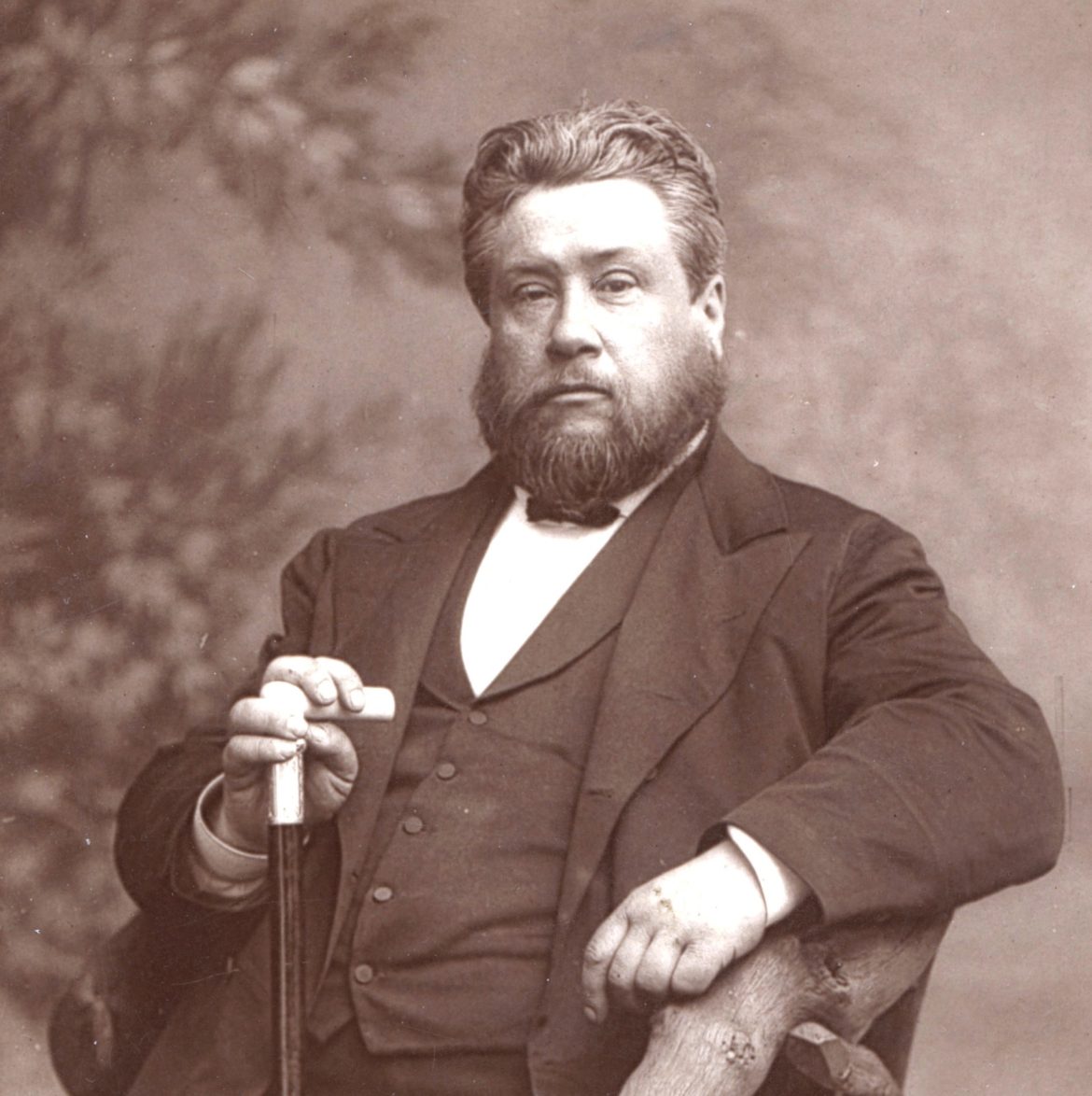
Spurgeon: My “fearful” depression makes me more empathetic

Spurgeon: My “fearful” depression makes me more empathetic

written by Christian Heinze

Perhaps the most famous Christian depressive, Charles Spurgeon, in one of his writings:


“I often feel very grateful to God that I have undergone fearful depression.

I know the borders of despair and the horrible brink of that gulf of darkness into which my feet have almost gone.

But hundreds of times I have been able to give a helpful grip to brethren and sisters who have come into that same condition, which grip I could never have given if I had not known their despondency.

So I believe that the darkest and most dreadful experience of a child of God will help him to be a fisher of men if he will but follow Christ.”


Of course, that doesn’t mean we should swear off treatment, whether it’s medicine or therapy or both. But Spurgeon’s point remains — You can’t talk someone off a bridge unless you’ve stared over it yourself.

And maybe you don’t thank God for the depression, but you thank him for whatever new compassion it’s formed and however that has blessed another.

As a character in one of Thornton Wilder’s plays once said:


“Without your wounds where would your power be?

It is your melancholy that makes your low voice tremble into the hearts of men and women.

The very angels themselves cannot persuade the wretched and blundering children on earth as can one human being broken on the wheels of living.

In Love’s service, only wounded soldiers can serve.”

March 15, 2021
0 Facebook Twitter Google + Pinterest
The prodigal

The prodigal

written by Christian Heinze

In his book, On The Road With St. Augustine, James Smith retells the Prodigal Son story with this wonderful quote at the end.


“That Father of yours comes running and gathers you up in his arms while your head is down, and your mother later tells you, ‘He walked to the end of the road every single day waiting for you‘.”


Beautiful and true.

As a parent you would, as well. As a parable about The Father, that is certainly the case.

In his book, Return of the Prodigal Son, Henri Nouwen says this of our journey from home.


“Leaving home is, then, much more than an historical event bound to time and place.

It is a denial of the spiritual reality that I belong to God with every part of my being, that God holds me safe in an eternal embrace, that I am indeed carved in the palms of God’s hands and hidden in their shadows…. Leaving home is living as though I do not yet have a home and must look far and wide to find one.”


So for us, as Prodigals, what is returning home?


“One of life’s hardest spiritual choices: to trust or not to trust in God’s all-forgiving love.”’


Strange, isn’t it, how difficult it is for us to believe we’re as deeply loved as Christ himself.

And yet, as Nouwen writes elsewhere, “The spiritual life is a long and often arduous search for what you have already found.”

Ultimately, of the story, Nouwen writes:


“[It is] about a love that existed before any rejection was possible and that will still be there after all the rejections have taken place.”


Amen.

[Painting: Return of the Prodigal Son, Murillo]

March 12, 2021
0 Facebook Twitter Google + Pinterest
STUDY: Your fluvoxamine might help your (theoretical) COVID

STUDY: Your fluvoxamine might help your (theoretical) COVID

written by Christian Heinze

Just wanted to mention this POTENTIAL bonus for those of you who are already on Fluvoxamine (brand name: Luvox).

A study indicates that the common antidepressant might be useful against developing severe Covid.

Basically, through various reasons you could read here, fluvoxamine might be able to stop the infamous cytokine storm from getting out of control.

Of the 152 people who initially participated in this double-blinded, randomized clinical trial, 80 received 100 mg of fluvoxamine and 72 received a placebo three times a day for 15 days. Eventually 115 of the people completed the trial. None of the patients who had received fluvoxamine ended up developing more severe respiratory problems such as hospitalization for shortness of breath or pneumonia or oxygen saturations dipping below 92%. By contrast, six of 72 patients who had received placebo experienced such worsening of their Covid-19.

I’m not posting this as a pitch for fluvoxamine. It’s too small a study to draw any conclusions. And DON’T go to your doctor begging for it.

I’m posting it for two reasons.

First, if you’re already on fluvoxamine, this is another reason to possibly stay on it (per your doctor’s discretion)!

Second, antidepressants get such a bad rap for “unintended consequences.”

Just remember that, of course, all medicines have side effects. But some of those unintended consequences can actually be helpful.

Wellbutrin, for example, is a potentially promising new therapy for IBD (see another study here), and seems to possess some pretty good anti-inflammatory properties.

Nortriptyline (a tricyclic antidepressant) has, for years, been used for IBD, thanks to its effect on tnf-alpha.

In fact, quite a few antidepressants lower interleukin-6 and tnf-alpha levels, and that might be one of the ways they actually help depression, since one school of thought (suggested by a number of studies) is that depression is an inflammatory condition.

I have an autoimmune condition that got much worse once I jumped off nortriptyline, and I suspect the nortriptyline was great help.

In no way, shape, or form am I associated with the pharmaceutical industry. In fact, I think there are a lot of problems with the way the industry operates.

Nevertheless, Christians tend to be particularly leery of big pharma and antidepressants. I’ve had bad side effects on antidepressants. Definitely. But there are also some bonuses (like feeling tons better — for some of us), and who knows — it might even help your body in ways you don’t know.

So talk to your doc.

P.S. Tried Luvox. Didn’t agree with me.

March 10, 2021
0 Facebook Twitter Google + Pinterest
Be you when you pray

Be you when you pray

written by Christian Heinze

I love this, in English theologian J.I. Packer’s, Praying the Lord’s Prayer.


“We should certainly not content ourselves with parroting other people’s prayers, nor would God be content if we did (for what parent could be happy if his child only ever spoke to him in quotations, thus limiting his conversation to the reciting of other people’s sentiments?)”


Yes! Imagine a child, formally and haltingly addressing his parent — with no familiarity, no free spirit, no heart. And yet that is the way we are often taught to pray to God.

Brennan Manning puts it this way: “A little child cannot do a bad coloring; nor can a child of God do bad prayer.”

Just talk to the Father as if he were your dad (because he is), and Jesus as if he were your brother (because he is).

March 6, 2021
0 Facebook Twitter Google + Pinterest

Mental health links

written by Christian Heinze

a. STUDY: Social distancing has led to a dramatic rise in anxiety, depression among new moms.

b. COVID-19 PTSD is real, here, and here to stay.

c. STUDY: Placenta’s role in schizophrenia “bigger than we imagined.”

d. Another study showing the link between depression and irregular sleep patterns.

e. Depression, anxiety, and loneliness are exploding among college students.

f. STUDY: Brain ion channel is a brand new, exciting approach to treating depression.

March 6, 2021
0 Facebook Twitter Google + Pinterest
Guilt vs. Shame

Guilt vs. Shame

written by Christian Heinze

In Choose and Choose Again, J. Kevin Butcher makes a very good distinction re: something a lot of depressive Christians particularly struggle with.


“Guilt is about what I do. Shame is about who I am. The antidote for guilt is forgiveness. Shame calls me to cease to exist…. knowing that we are forgiven but still feeling dirty is pathological shame.

….Shame doesn’t force us to do anything, but the psychic pain of feeling worthless can be so intense that we’ll do anything to make it stop.

 …..Shame keeps us from personalizing and taking into our hearts anything about God that gives us value and allows us to know, to feel, and to be secured in his love.

Don’t forget: Our enemy isn’t playing. He’s trying to kill us, and shame is his poison – a slow, lethal drip that gets into our emotional and spiritual cells and vacuums our God-given humanity and love of life right out of us.”


Of course the antidote to all this is to accept ourselves as accepted by God, and more than accepted — beloved.

In The Freedom of Self-Forgetfulness, Tim Keller writes:


“You believe the gospel; maybe you have done so for years.

But….and it is a big ‘but’…every day you find yourself being sucked back into the courtroom.

You do not feel you are living like Paul says. You are getting sucked back in.

All I can tell you is that we have to relive the gospel every time we pray…..we have to relive the gospel on the spot and ask ourselves what we are doing in the courtroom. We should not be there. The court is adjourned.           

….Like Paul, we can say, ‘I don’t care what you think. I don’t even care what I think. I only care about what the Lord thinks.’

And he has said, ‘Therefore, there is now no condemnation for those who are in Christ Jesus,’ and ‘You are my beloved child in whom I am well pleased.’

Live out of that.”

March 1, 2021
0 Facebook Twitter Google + Pinterest
All the ways exercise can help depression/anxiety

All the ways exercise can help depression/anxiety

written by Christian Heinze

Arash Javanbakht, a psychiatrist and neuroscientist, comes prepared, with tremendous research studies, easily digestible, in The Conversation:

“Working out regularly really does change the brain biology, and it is not just “go walk and you will just feel better.” Regular exercise, especially cardio, does change the brain. 

….. A molecule called brain-derived neurotrophic factor helps the brain produce neurons, or brain cells.

A variety of aerobic and high-intensity interval training exercises significantly increase BDNF levels.

There is evidence from animal research that these changes are at epigenetic level, which means these behaviors affect how genes are expressed, leading to changes in the neuronal connections and function.

Moderate exercise also seems to have anti-inflammatory effects, regulating the immune system and excessive inflammation.

This is important, given the new insight neuroscience is gaining into the potential role of inflammation in anxiety and depression.

Finally, there is evidence for the positive effects of exercise on the neurotransmitters – brain chemicals that send signals between neurons – dopamine and endorphins. Both of these are involved in positive mood and motivation.

Finally, he mentions something I’ve never thought of, and it’s a great point.

“Exercise could even potentially desensitize people to physical symptoms of anxiety.

That is because of the similarity between bodily effects of exercise, specifically high-intensity exercise, and those of anxiety, including shortness of breath, heart palpitation and chest tightness.”

I recently wrote about another cool study — Harvard researchers found that exercise lowers your risk of developing depression, even if you have a severe genetic predisposition to it.

The researchers found that 35 minutes/day was protective against developing depression. If you double that amount, your risk drops another 17%.

So what type of exercise, you ask?

Well, both high-intensity (think Peloton, gladiators, dancing, Trainspotting opening scene running etc) and lower intensity exercise (think yoga and stretching) worked.

Now the trick for us depressives? Actually, caring enough to exercise.

Here’s a question, though? Have you ever exercised and come back, feeling more depressed? So it’s worth a shot.

That being said, if it doesn’t help, don’t feel hopeless. Talk to a doctor. It may be that you — like me — need medication, too.

March 1, 2021
0 Facebook Twitter Google + Pinterest

“Voyage”

written by Christian Heinze

A beautiful passage from The Valley of Vision:


“Help me to live circumspectly,

with skill to convert every care into prayer,

Halo my path with gentleness and love,

smooth every asperity of temper;

let me not forget how easy it is to occasion grief;

may I strive to bind up every wound,

and pour oil on all troubled waters.

May the world this day be happier and better because I live.

Let my mast before me be the Savior’s cross,

and every incoming wave the fountain in his side.

Help me, protect me in the moving sea

until I reach the shore of unceasing praise.”


Good, huh.

Having said that, I’ve found many of the Puritan prayers in The Valley of Vision terribly depressing and exercises in self-loathing, so I’d tread carefully with that book.

Nevertheless, “Voyage” is a gem.

February 21, 2021
0 Facebook Twitter Google + Pinterest
Load More Posts

Social Media

Twitter

Get in touch with me

Contact here. 

The Weary Christian mission:

First off:


In the United States, find a psychiatrist here.

In the United States, find a therapist here.

If you’re in the United States and having thoughts of harming yourself or others, please call the National Suicide Lifeline at 1-800-273-8255.

If you’re in the UK, get urgent help here.

Canada, here.

Australia, here.

New Zealand, here.

South Africa, here.

France, here.

Germany, here.

Portugal, here.

Mexico, here.

India, here.

The Philippines, here.

Singapore, here.

South Korea, here.


The Weary Christian goal…


a) reduce the stigma surrounding depression, anxiety, OCD, and other conditions in the Christian community.


b) have uncomfortable but honest conversations.


c) Reduce the stigma surrounding antidepressants, antipsychotics, and other meds God has given us as gifts.


And…


d) Sometimes (tons of times), we all feel really, really depressed in our journey. Hopefully, this site makes you feel less alone.

Categories


@2017 - PenciDesign. All Right Reserved. Designed and Developed by PenciDesign