The Weary Christian
  • Depression
    • Depression

      Latest Medical Studies on Depression

      Depression

      James Bryan Smith: Unmet expectations and fear

      Depression

      STUDY: Criticizing older adults make them more vulnerable…

      Depression

      STUDY: Awe can reduce depressive symptoms

      Depression

      STUDY: How music-mindfulness can help depression, anxiety

  • Anxiety
    • Anxiety

      Calling out the brain on catastrophizing

      Anxiety

      James Bryan Smith: Unmet expectations and fear

      Anxiety

      STUDY: Awe can reduce depressive symptoms

      Anxiety

      STUDY: How music-mindfulness can help depression, anxiety

      Anxiety

      STUDY: Chronic pain associated with higher rates of…

  • Book quotes/Video
    • Book quotes/Video

      John Mark Comer: “Wherever Jesus went, the kingdom…

      Book quotes/Video

      Ann Voskamp: “Jesus saves you for Himself”

      Book quotes/Video

      Philippe: “Refusing to suffer means refusing to live”

      Book quotes/Video

      “In darkest night, you were there like no…

      Book quotes/Video

      Thanksgiving for his brokenness

  • Health News
    • Health News

      Latest Medical Studies on Depression

      Health News

      Calling out the brain on catastrophizing

      Health News

      STUDY: Mental health conditions share deep genetic patterns

      Health News

      STUDY: Four Supplements that MIGHT help depression

      Health News

      STUDY: Gut changes raise risk of eating disorders…

  • Interviews
    • Interviews

      INTERVIEW: Dr. Terry Powell’s gripping account of depression

      Interviews

      INTERVIEW: Therapist Michael Schiferl explains religious scrupulosity and…

      Interviews

      INTERVIEW: Rocker Matt Sassano shares battles, urges transparency…

      Interviews

      INTERVIEW: Dr. Brian Briscoe tells Christians that antidepressants…

      Interviews

      INTERVIEW: Pastor Scott Sauls on anxiety, depression, and…

  • Devotionals
    • Devotionals

      Think you’re a “failure?” Jesus sees you unlike…

      Devotionals

      “Grace has got to be drunk straight”

      Devotionals

      Defeated by God

      Devotionals

      Am I a faithless Christian?

      Devotionals

      “I killed Jesus of Nazareth”

  • About
  • Depression
    • Depression

      Latest Medical Studies on Depression

      Depression

      James Bryan Smith: Unmet expectations and fear

      Depression

      STUDY: Criticizing older adults make them more vulnerable…

      Depression

      STUDY: Awe can reduce depressive symptoms

      Depression

      STUDY: How music-mindfulness can help depression, anxiety

  • Anxiety
    • Anxiety

      Calling out the brain on catastrophizing

      Anxiety

      James Bryan Smith: Unmet expectations and fear

      Anxiety

      STUDY: Awe can reduce depressive symptoms

      Anxiety

      STUDY: How music-mindfulness can help depression, anxiety

      Anxiety

      STUDY: Chronic pain associated with higher rates of…

  • Book quotes/Video
    • Book quotes/Video

      John Mark Comer: “Wherever Jesus went, the kingdom…

      Book quotes/Video

      Ann Voskamp: “Jesus saves you for Himself”

      Book quotes/Video

      Philippe: “Refusing to suffer means refusing to live”

      Book quotes/Video

      “In darkest night, you were there like no…

      Book quotes/Video

      Thanksgiving for his brokenness

  • Health News
    • Health News

      Latest Medical Studies on Depression

      Health News

      Calling out the brain on catastrophizing

      Health News

      STUDY: Mental health conditions share deep genetic patterns

      Health News

      STUDY: Four Supplements that MIGHT help depression

      Health News

      STUDY: Gut changes raise risk of eating disorders…

  • Interviews
    • Interviews

      INTERVIEW: Dr. Terry Powell’s gripping account of depression

      Interviews

      INTERVIEW: Therapist Michael Schiferl explains religious scrupulosity and…

      Interviews

      INTERVIEW: Rocker Matt Sassano shares battles, urges transparency…

      Interviews

      INTERVIEW: Dr. Brian Briscoe tells Christians that antidepressants…

      Interviews

      INTERVIEW: Pastor Scott Sauls on anxiety, depression, and…

  • Devotionals
    • Devotionals

      Think you’re a “failure?” Jesus sees you unlike…

      Devotionals

      “Grace has got to be drunk straight”

      Devotionals

      Defeated by God

      Devotionals

      Am I a faithless Christian?

      Devotionals

      “I killed Jesus of Nazareth”

  • About

The Weary Christian

THE WEARY CHRISTIAN

LIVING WITH FAITH AND DEPRESSION

  • Depression
    • Depression

      Latest Medical Studies on Depression

      Depression

      James Bryan Smith: Unmet expectations and fear

      Depression

      STUDY: Criticizing older adults make them more vulnerable…

      Depression

      STUDY: Awe can reduce depressive symptoms

      Depression

      STUDY: How music-mindfulness can help depression, anxiety

  • Anxiety
    • Anxiety

      Calling out the brain on catastrophizing

      Anxiety

      James Bryan Smith: Unmet expectations and fear

      Anxiety

      STUDY: Awe can reduce depressive symptoms

      Anxiety

      STUDY: How music-mindfulness can help depression, anxiety

      Anxiety

      STUDY: Chronic pain associated with higher rates of…

  • Book quotes/Video
    • Book quotes/Video

      John Mark Comer: “Wherever Jesus went, the kingdom…

      Book quotes/Video

      Ann Voskamp: “Jesus saves you for Himself”

      Book quotes/Video

      Philippe: “Refusing to suffer means refusing to live”

      Book quotes/Video

      “In darkest night, you were there like no…

      Book quotes/Video

      Thanksgiving for his brokenness

  • Health News
    • Health News

      Latest Medical Studies on Depression

      Health News

      Calling out the brain on catastrophizing

      Health News

      STUDY: Mental health conditions share deep genetic patterns

      Health News

      STUDY: Four Supplements that MIGHT help depression

      Health News

      STUDY: Gut changes raise risk of eating disorders…

  • Interviews
    • Interviews

      INTERVIEW: Dr. Terry Powell’s gripping account of depression

      Interviews

      INTERVIEW: Therapist Michael Schiferl explains religious scrupulosity and…

      Interviews

      INTERVIEW: Rocker Matt Sassano shares battles, urges transparency…

      Interviews

      INTERVIEW: Dr. Brian Briscoe tells Christians that antidepressants…

      Interviews

      INTERVIEW: Pastor Scott Sauls on anxiety, depression, and…

  • Devotionals
    • Devotionals

      Think you’re a “failure?” Jesus sees you unlike…

      Devotionals

      “Grace has got to be drunk straight”

      Devotionals

      Defeated by God

      Devotionals

      Am I a faithless Christian?

      Devotionals

      “I killed Jesus of Nazareth”

  • About
DepressionHealth News

Latest Medical Studies on Depression

STUDY: Mental health conditions share deep genetic patterns

James Bryan Smith: Unmet expectations and fear

STUDY: Four Supplements that MIGHT help depression

STUDY: Criticizing older adults make them more vulnerable to developing depression

Daily Blog

STUDY: Laughing gas shows promise as depression treatment

STUDY: Laughing gas shows promise as depression treatment

written by Christian Heinze

NBC News has a good report on a small, new phase 2 clinical study that suggests laughing gas (nitrous oxide) might provide antidepressive benefits for folks who have treatment-resistant depression.

As you might know, ketamine has proven a ground-breaking new treatment for depression by blocking N-methyl-D-asparate receptors in the brain, as opposed to the more traditional serotonin receptors.

Well, researchers suggest laughing gas works via a similar mechanism, and perhaps that’s behind the benefits for treatment-resistant sufferers.

You can read more here, and remember it’s a small study, it’s phase 2 and there’s a lot of work to be done.

Also, this doesn’t, by any means, suggest that traditional SSRIs don’t work.

For some, they work spectacularly well. For others, not. And that’s because we all have different brains and brains are complicated.

June 21, 2021
0 Facebook Twitter Google + Pinterest
Study suggests surprising relationship between serotonin transporters and depression

Study suggests surprising relationship between serotonin transporters and depression

written by Christian Heinze

The two simple background facts for this interesting, new study.

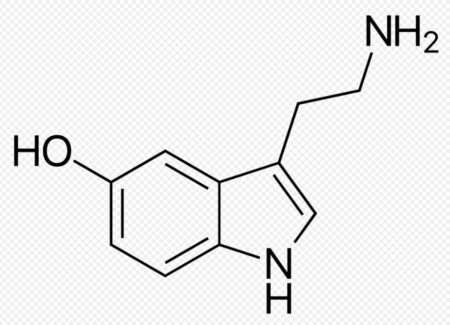
First, there’s a neurotransmitter in the brain called serotonin. It’s often called the “happy chemical” because it helps stabilize our mood and feelings of well-being and it impacts the whole body.

You’ve heard it before — not enough serotonin (or serotonin imbalance) and you’re set up for depression and anxiety. Thus, we get SSRI antidepressants that seek to increase or rebalance serotonin levels in the brain.

Second, serotonin has a transporter protein, 5-HTT, and it “pumps serotonin away from the cerebral neuron synapases.”

So theoretically, the higher your levels of 5-HTT, the lower your levels of serotonin, because more serotonin is getting pumped away, right?

Now here’s where it gets strange.

Studies have shown that people with depression actually have lower levels of 5-HTT (the transporter) which doesn’t make immediate sense, at all, because that would suggest depressed people have more serotonin in the brain. Or at least, not as much serotonin getting pumped away by 5-HTT.

Well, a brand new study published in Translational Psychiatry suggests, yes, we need to think about rethinking how the serotonin system works in depression.

Researchers treated 17 patients with depression and found that 13 had significant improvement. Great.

Now here’s the interesting thing — after treatment, their levels of 5-HTT averaged about 10% higher than the healthy control group.

In other words, depression treatment raised the levels of the transporter (5-HTT) that pumps serotonin away from the brain!

What does it mean, though?

Researcher Dr. Johan Lundberg explained in the news release:

“One possible interpretation is that the serotonin system doesn’t cause depression but is part of the brain’s defence mechanism for protecting itself against depression.

One might hypothesize, for example, that the level of 5-HTT drops when an individual is subjected to stress, such as during a depressive state, and that the level rises or normalises when this stress goes away.

It’s important to point out, however, that even if these ideas are raised by our study, its design doesn’t allow us to draw any conclusions about why levels of 5-HTT change.”

https://eurekalert.org/pub_releases/2021-05/ki-sti050621.php

This is just another important piece of the depression puzzle, and shows how inscrutable a medical condition it really is. Any brain condition is.

And that’s why it’s so hard to find an antidepressant that brings immediate relief, because everyone is different.

I recently wrote about a wonderful new study, though, that suggests we’re getting closer to finding the right Rx on the very first try.

Researchers at the Indiana University School of Medicine developed a blood test, “composed of RNA biomarkers, that can distinguish how severe a patient’s depression is, their risk of severe depression in the future and their risk of future bipolar disorder, or manic-depressive illness.”

Oh and, crucially, the test then gives doctors the tools to pick the Rx that would work best for you. Without theoretically having to try every singe one on the shelf.

I do think that we’re getting closer to the point where we can go to Quest or LabCorp, get our blood drawn, and then get a great Rx recommendation within a week.

That, of course, would be wonderful and would save so, so many lives.

May 11, 2021
0 Facebook Twitter Google + Pinterest
God is great, yes. Remember, he is good

God is great, yes. Remember, he is good

written by Christian Heinze

From The Valley of Vision:


“May I always combine thy majesty

with thy mercy,

and connect thy goodness

with thy greatness.

Then shall my heart always rejoice

in praises to thee.”

May 7, 2021
0 Facebook Twitter Google + Pinterest
Is your kindergartner depressed?

Is your kindergartner depressed?

written by Christian Heinze

“This new generation whines, whines, whines,” I can just hear Christians complain.

Well, we dismiss the warning signals at our own peril.

Far worse, at our precious children’s peril.

The New York Times has a terrific read on a rare but real phenomenon — depression among children, ages 3-7.

It’s often a precursor to serious depression later on in life, and I remember my first bout of nihilistic thought around the age of 4-5. And by that I mean, I couldn’t imagine living the rest of my life and just wanted to get it over with. This, despite two loving parents.

Of course, I didn’t share those persistent, nihilistic thoughts with anyone, and of course most children who have them don’t. They barely understand them. But that doesn’t mean they’re not feeling them.

We can already hear the skeptics, right? “You just want to line the pockets of big pharma by giving these kids antidepressants.”

No, child psychiatrists certainly don’t want that for children as young as these.

Instead, there are two things they suggest we do.

First, look out for signs that your child is seriously depressed.

The NY Times:


“When young children are depressed, Dr. Kovacs said, it’s not unusual for “the primary mood to be irritability, not sadness — it comes across as being very cranky.” 

The best way for parents to recognize depression in young children is not so much by what a child says as by what the child does — or stops doing. Look for “significant changes in functioning,” Dr. Kovacs said, “if a child stops playing with favorite things, stops responding to what he used to respond to.”

This might mean a child loses interest in the toys or games or jokes or rituals that used to be reliably fun or entertaining, or doesn’t seem interested in the usual back and forth of family life.

The best way for parents to recognize depression in young children is not so much by what a child says as by what the child does — or stops doing. Look for “significant changes in functioning,” Dr. Kovacs said, “if a child stops playing with favorite things, stops responding to what he used to respond to.”

This might mean a child loses interest in the toys or games or jokes or rituals that used to be reliably fun or entertaining, or doesn’t seem interested in the usual back and forth of family life.”


So what’s a concerned parent to do?

First, talk to your pediatrician. They should know about local resources for helping this kind of thing.

Second, get treatment.

It’s often called PCIT (“Parent-Child Interaction Therapy“) and helps parents learn how to praise their child in ways that bolster their feelings of self-worth, because remember self-loathing is a warning sign of depression in a child.

Third, Christians, we really need to to understand that children are children.

If we tell them they’re accepted by Christ and beloved, what does that really mean to a child who believes they’re not even accepted and loved by anyone?

It’s up to us to model Christ’s love while we tell them about his love. Otherwise, it’s counterproductive.

And remember that a five year old is a five year old!

Their brains aren’t really great yet at even processing Christianity or 99% of the Bible stories most Christian parents tell them. Of if they do, they get the wrong thing from them because these are still kids who think monsters live under the bed. On no evidence, and against our assurances.

I can tell you, without a doubt, that those Bible stories were probably the most disturbing thing swirling around in my four year old brain, and it’s remarkable that in a Christian culture where movies must be “nice, sweet, and gentle” (vomit) even for sixteen year olds, we nevertheless regale kindergartners in Sunday school with stories about God drowning everyone in the world in the flood.

The disconnect is astonishing.

Think about it this way.

When Jesus told the kids to come chat with him, do you think he told them the story of the Flood? Or about Jacob tricking Esau out of his birthright? Or about Adam and Eve? Or about Samson.

I’d guess he told them something very simple and deeply meaningful, reassuring and loving for a five year old — something that proved that he brought nothing but good news to even the smallest among us.

However, remember, that just as in adult depression, childhood depression can be impervious to a message, and if we notice these depressive behaviors in our very young kids, we should talk to our pediatrician, and we should get help and we should also be the help, and run and play with them, and talk with them, and encourage them to name their emotions, and fill their hearts with the fact — the utterly Biblical fact — that they are beyond special, loved without condition, by both us and Jesus.

[Free Photo: Pexels]

May 7, 2021
0 Facebook Twitter Google + Pinterest
Here are some physical signs of anxiety (part 1)

Here are some physical signs of anxiety (part 1)

written by Christian Heinze

It’s fairly easy to identify the mental signs of anxiety, but what’s trickier for some of us is figuring out when our body is sick or actually just a reflection of our mind feeling sick.

In other words, anxiety can produce physical symptoms that make us think we have some other disease or condition.

You’re familiar, of course, with the typical “racing heart,” “turning stomach” clichés, and those are, indeed, physical symptoms of anxiety.

But Healthline draws attention to some other signs of anxiety that you might not associate with it (in another post, I’ll go through additional symptoms).

Here’s Healthline’s list, and I dug up some references for you to explore further.

-frequent urination (stress affects via nervous system and muscles)

-muscle tension and pain (panic disorder or anxiety can cause us to tighten our muscles)

-chest pain (one of the most common symptoms of an anxiety or panic attack).

-shortness of breath (fight or flight leads to quicker, shorter breathing, That, in turn, leads to all kinds of other symptoms beyond merely being short of breath).

-teeth grinding that results in facial or jaw pain (there is a significant connection between anxiety and TMJ).

-no appetite (Anxiety affects your sense of hunger, via fight-or-flight).

-fatigue and weakness (hyperventilation, muscle tension, fatigue, “perceived weakness” can all be the culprits).

-numbness or tingling in feet, hands, or fingers (hyperventilation — your blood vessels constrict which shuts off blood flows to your extremities).

-insomnia (anxiety can obviously lead to “mental hyper-arousal.” Good luck trying to sleep in that state).

-headaches (muscle tension, lack of sleep, low serotonin levels‘).

-muscle tension and pain (anxiety can make us tighten our muscles, which over time, leads to pain).

-dizziness (vasovagal syncope — our blood pressure drops which can lead to fainting or dizziness. And the aforementioned hyperventilation).

All of these could be signs of something other than anxiety, so get it checked out, but if you’re someone prone to anxiety and you’ve been cleared by the doctor and still have these kinds of symptoms, it really is often from anxiety and not some lurking disease.

However, we do know that, over time, anxiety is associated with both the development of and worsening of other chronic disease.

Anxiety raises your risk of heart disease, gastrointestinal diseases, worsening asthma and COPD, Alzheimer’s and many other conditions.

Now to a tangent….

Regarding that last symptom — dizziness — I recently came across a term I’d never heard, “Chronic Subjective Dizziness,” that’s a great example of the interplay between our anxiety and physical bodies.

Often, someone with CSD will suffer an injury to a key part of the body that affects balance — the vestibular system. They get dizzy, their balance suffers, they need treatment etc.,

But soon enough, the person heals, but not really.

Dr. Peter Pressman writes, “Even after this initial injury has healed, people with CSD usually describe a vague sense of unsteadiness worsened by triggers in their environment. These triggers may include high places, standing on moving objects, or standing in motion-rich environments, like busy streets or crowds.”


Now why do thy experience dizziness even though they’re now better?

Essentially, even though the vestibular system has healed, the brain hasn’t moved on from the accident. Your anxiety hasn’t.

So when you’re confronted with something related to balance (an escalator, for example), your brain remembers the time you genuinely couldn’t handle the escalator, and suddenly, you’re dizzy again.

The dizziness is absolutely real, even though the original injury has healed. Now, instead, there’s something going on in your brain — not the injury to your vestibular system — that’s the source of your vestibular problem.

Pressman explains: “The exact cause of chronic subjective dizziness is still being worked out. The general theory, however, is that the disorder results from the brain’s inability to readjust after the vestibular system has been damaged.

…..In CSD, the brain fails to adjust to a new normal. Even though the original insult may have healed, the brain remains hyper-vigilant to anything that has to do with motion or balance, like a soldier who, home from war, still jumps or ducks for cover every time a car backfires.

In addition, underlying personality traits or psychiatric disorders may contribute to this inability to correctly estimate movement.”


In fact, in a scientific study at a dizziness clinic, practitioners found that nearly 11% of all patients had “chronic subjective dizziness” and, within that group, nearly 79.3% had some psychiatric disorder, primarily anxiety,

Now keep in mind — these were patients who genuinely scored poorly on balance testing. Their dizziness was real. It’s just that the source of that dizziness seemed to be coming from the brain feeding into the vestibular system, and not vice versa.

Soon after a head injury, I went through a period of dizziness, prompted by damage to my vestibular system, and yet it took me much longer to get discharged from the balance clinic than it should have because my brain wouldn’t just let me move on.

My anxiety started producing the same symptoms that my damaged vestibular system produced.

I still remember my physical therapist finally saying, “Dude, it’s your anxiety.” And you know what, even though everything in me objected, I knew he was right.

I recently posted one of my favorite boards for those of us who struggle with anxiety and strange physical symptoms. Please go there, and you will find comfort, knowing that there are millions of others who experience all kinds of weird physical stuff related to anxiety.

And I’m going to write a “part 2” to this post soon — because really, this has just scratched the surface of all the weird symptoms anxiety can cause.

April 29, 2021
0 Facebook Twitter Google + Pinterest
Worship is broader than we think

Worship is broader than we think

written by Christian Heinze

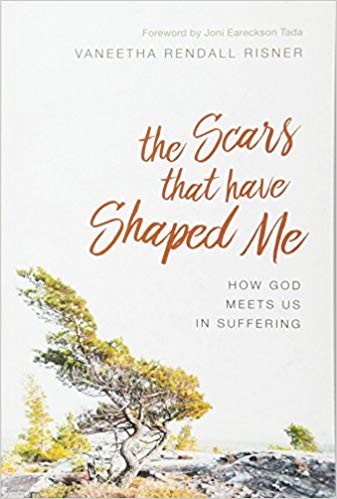
Vaneetha Risner, in her book, The Scars That Have Shaped Me.


“These little choices, these seemingly insignificant ways that I have to relinquish what I want, when no one sees and no one else knows, they all count.

Because Someone does see, and Someone does know. None of these sacrifices will be forgotten.

…..Giving up my right to have something exactly as I want can be an act of worship.”


If you’re interested, you can read our interview here.

April 25, 2021
0 Facebook Twitter Google + Pinterest
Do we need another “get more sleep” post? Of course we do!

Do we need another “get more sleep” post? Of course we do!

written by Christian Heinze

At this point, chronic sleep deprivation has been linked to chronic depression, other chronic disease, and pretty much every bad thing in life.

And yet, in our arrogant workaholic culture, we still treat a lack of sleep as some badge of honor. Well, United States of America, enjoy our proinflammatory cytokines, then. Have fun with our increased expression of tnf-alpha.

Well, there’s a great new presentation, delivered at the 2021 Interdisciplinary Autoimmune Summit, showing sleep is “intimately tied” to the proinflammatory markers that make autoimmune disease worse.

Autoimmune dysfunction is tied to unhealthy neuropsychiatric symptoms, and not just because it’s awful living with an autoimmune disease, and “of course you’d feel blue”. The disease itself can attack normal neuronal cell signaling.

Further, a compelling study showed that depression was a massive risk factor in women developing lupus. Even greater than smoking, for example.

Why? Once again, a lack of sleep promotes inflammatory markers that can turn into autoimmune disease.

And then, not surprisingly, those with lupus who didn’t even have depression, pre-lupus, were more likely to develop it once they were diagnosed with lupus.

Healio has a good review on autoimmune disease and sleep, with a presentation of studies and evidence by Aric Prather, an associate professor of psychiatry and behavior sciences.

Basically, sleep disruptions are “rampant” in patients with autoimmune diseases, and the relationship is bidirectional.

Get less sleep, your disease gets worse. Your disease gets worse, you get less sleep.

And the same goes for depression, of course — whether it’s associated with an autoimmune disease or not.

Get less sleep, your depression gets worse. Your depression gets worse, you get less sleep.

You can read about all this in a tremendous review at Harvard Medical School’s readable Health Publishing.

But the money quote is this: ” sleep disruption — which affects levels of neurotransmitters and stress hormones, among other things — wreaks havoc in the brain, impairing thinking and emotional regulation. In this way, insomnia may amplify the effects of psychiatric disorders, and vice versa.”

This is a really tough thing.

How many times have you read something like, “If you struggle with sleep…..” and then an article lists things that are practically impossible for many of us.

“Plan for 8 hours.” Have you ever been a new parent?

“Be less stressed.” Have you ever lived with an anxiety disorder?

“Eat a healthy diet with tons of things that cost a ton and take 10 hours to prepare.”

But the fact is that we’ll probably make precious little improvement in our mental health until we take care of our sleep.

It’s incredibly important for psychiatrists (I’m of course not one) to start talking about sleep. So says a recent article in the American Journal of Psychiatry.

Researchers gave one group of patients with suicidal thoughts and severe insomnia a sleep aid (zolpidem, i.e. Ambien) and the other, a placebo. Both were given antidepressants, as well.

After two months, the patients on Ambien got better sleeps, had fewer suicidal thoughts, better thinking patterns, and more hopeful thoughts about the future.

In other words, in designing a treatment plan for suicidal patients, it’s incredibly important to address insomnia.

Now here comes the concern you were probably already thinking of — what about dependence on sleep aids?

After all, people can get hooked on Ambien and it can lose its efficacy over time.

Well, researchers only gave the patients Ambien for 8 weeks, then stopped, and followed up, two weeks later.

The patients who had taken the Ambien were, after two weeks, still less suicidal and more hopeful about the future.

So if you’re struggling with sleep and severe depression, it might be time to talk with your doctor about this acronym the researchers came up with: REST-IT. “Reducing Suicidal Ideation Through Insomnia Treatment.”

And GET MORE SLEEP! (caps-locking never helps), but still, GET MORE SLEEP!

[Free photo: Pexels]

April 23, 2021
0 Facebook Twitter Google + Pinterest
HALT

HALT

written by Christian Heinze

Brennan Manning, who struggled with alcohol his whole life, has an evergreen reminder for ALL of us.


“There’s a buzzword within the AA fellowship: HALT.

It’s a reminder not to let yourself get too hungry, angry, lonely, or tired, or you’ll be especially vulnerable to that first drink.”


I think that goes for depression and anxiety, as well. If you get angry, guess what follows? If you get lonely, guess. Tired, guess.

And the especially hard thing? Baseline depression and anxiety makes you more angry, lonely, and sleep-deprived. Which makes the cycle worse.

Speaking of blessed sleep, I once heard John Piper say something to the effect of: you won’t go far down the path of sanctification without getting enough sleep.

Another way of saying that: If you stay up all night praying, you’ll probably be miserable company the next day.

April 21, 2021
0 Facebook Twitter Google + Pinterest
Getting ever closer to the right (Rx) match

Getting ever closer to the right (Rx) match

written by Christian Heinze

Some exciting news from the Indiana University School of Medicine.

But first, depressing news.

You know as well as I do how hard it can be to find the right antidepressant. How many Rx’s have you tried before finding the one (it’s almost romantic when it finally works, right?). Maybe you haven’t found the one, and are still playing the SSRI, SNRI, tricyclic, MAOI field. (Okay, enough of that analogy).

Point is — it sucks to have to try tons of different medicines, with side effects, before finding the right one.

Well, Indiana University School of Medicine researchers have developed a blood test, “composed of RNA biomarkers, that can distinguish how severe a patient’s depression is, their risk of severe depression in the future and their risk of future bipolar disorder, or manic-depressive illness.”

And crucially, “the test also informs tailored medication choices for patients.”

If you want to read more about the study, have at it here, but the point is that sometime soon, you might be able to take a simple blood test and find the antidepressant that works best for you.

In the field of psychiatry, that would be a game-changer. In the field of our 24/7, a life-saver.

I’ll leave you with this exciting passage from IU.

According to Niculescu, the work done by his team has opened the door for their findings to be translated into clinical practice, as well as help with new drug development. Focusing on collaboration with pharmaceutical companies and other doctors in a push to start applying some of their tools and discoveries in real-world scenarios, Niculescu said he believes the work being done by his team is vital in improving the quality of life for countless patients.

“Blood biomarkers offer real-world clinical practice advantages. The brain cannot be easily biopsied in live individuals, so we’ve worked hard over the years to identify blood biomarkers for neuropsychiatric disorders,” Niculescu said. “Given the fact that 1 in 4 people will have a clinical mood disorder episode in their lifetime, the need for and importance of efforts such as ours cannot be overstated.”

[Painting: The Birthday, Chagall]

April 20, 2021
0 Facebook Twitter Google + Pinterest
Health anxiety exploding in Covid-era

Health anxiety exploding in Covid-era

written by Christian Heinze

Over the years, health anxiety has been growing, but as the BBC notes, it’s absolutely soared during the Covid era.

If you’re unfamiliar with health anxiety, I’d recommend reading their report, because it really gets at the heart of a growing problem we need to empathize with.

And if you experience health anxiety yourself, read the BBC’s piece, because there’s always comfort in knowing you’re not alone.

I never had health anxiety until four years ago. Never even crossed my mind. But in one year, we had our first child and I lost my own dad, and suddenly, the thought hit me, “What happens if I die on my son?” Of course, I’d hope my wife would remarry someone better than myself and there are plenty out there. But a child losing their biological dad?

I still remember the moment it hit, and I’ll soon repost a piece I wrote about it, but believe me, it is extraordinarily intense when it hits. Especially if you have OCD. You don’t know until you know, and then you’ll wish you never knew. Ignorance is bliss. And you don’t even know what “ignorance is bliss” means until you experience the horrible thing.

The BBC accurately notes that one of the vexing things about the condition is that anxiety can mimic so many other diseases or illnesses.

Stroke. Heart attack. Anxiety attack. There’s overlap among all three (click here for some ways to distinguish between a heart attack and anxiety attack).

In fact, more people visit the ER every year for anxiety attacks that they think are heart attacks, but aren’t. (Still, always go in if you feel the symptoms).

I would recommend — not only therapy and talking to your doctor about medication — but also some really good discussion boards from people who get it.

No More Panic is a particularly good, supportive spot. Beyond Blue has some good stuff, as well. And you will never know the power of meeting people who share this disease.

Finally, I’d like to add a note about Christianity and health anxiety.

This is particularly stigmatizing to Christians because we’re supposed to overlook our physical bodies and shrug off suffering because as Paul says, we’re buried in brokenness but raised in glory.

True, but when Jesus was in Gethsemane, he knew he was just a few days away from heaven. He knew its wonders far more than we do. And yet, he was in total agony over his upcoming suffering.

Don’t hold yourself to a higher standard than Jesus.

Christians who don’t struggle with health anxiety or any other kind often use verses like “strengthen each other” to bludgeon the struggling. The Greek for “strengthen” is actually much better translated “have compassion.” Changes the meaning quite a bit, doesn’t it?

So, once again, if you’re a Christian and deal with health anxiety, don’t tell yourself that you should “know better” and feel guilty that you can’t shrug off the idea of a few years or a few decades of bodily suffering. Jesus himself agonized over his suffering.

And again I say: Don’t hold yourself to a higher standard than Jesus.

[Painting: Munch, Self-Portrait after Spanish Influenza]

April 16, 2021
0 Facebook Twitter Google + Pinterest
Load More Posts

Social Media

Twitter

Get in touch with me

Contact here. 

The Weary Christian mission:

First off:


In the United States, find a psychiatrist here.

In the United States, find a therapist here.

If you’re in the United States and having thoughts of harming yourself or others, please call the National Suicide Lifeline at 1-800-273-8255.

If you’re in the UK, get urgent help here.

Canada, here.

Australia, here.

New Zealand, here.

South Africa, here.

France, here.

Germany, here.

Portugal, here.

Mexico, here.

India, here.

The Philippines, here.

Singapore, here.

South Korea, here.


The Weary Christian goal…


a) reduce the stigma surrounding depression, anxiety, OCD, and other conditions in the Christian community.


b) have uncomfortable but honest conversations.


c) Reduce the stigma surrounding antidepressants, antipsychotics, and other meds God has given us as gifts.


And…


d) Sometimes (tons of times), we all feel really, really depressed in our journey. Hopefully, this site makes you feel less alone.

Categories


@2017 - PenciDesign. All Right Reserved. Designed and Developed by PenciDesign