
The Weary Christian
  • Depression
    • Depression

      James Bryan Smith: Unmet expectations and fear

      Depression

      STUDY: Criticizing older adults make them more vulnerable…

      Depression

      STUDY: Awe can reduce depressive symptoms

      Depression

      STUDY: How music-mindfulness can help depression, anxiety

      Depression

      STUDY: Chronic pain associated with higher rates of…

  • Anxiety
    • Anxiety

      Calling out the brain on catastrophizing

      Anxiety

      James Bryan Smith: Unmet expectations and fear

      Anxiety

      STUDY: Awe can reduce depressive symptoms

      Anxiety

      STUDY: How music-mindfulness can help depression, anxiety

      Anxiety

      STUDY: Chronic pain associated with higher rates of…

  • Book quotes/Video
    • Book quotes/Video

      “In darkest night, you were there like no…

      Book quotes/Video

      Thanksgiving for his brokenness

      Book quotes/Video

      Esther Smith: “All he wants is you”

      Book quotes/Video

      James Bryan Smith: Unmet expectations and fear

      Book quotes/Video

      Staton: On being a witness

  • Health News
    • Health News

      Calling out the brain on catastrophizing

      Health News

      STUDY: Mental health conditions share deep genetic patterns

      Health News

      STUDY: Four Supplements that MIGHT help depression

      Health News

      STUDY: Gut changes raise risk of eating disorders…

      Health News

      STUDY: Criticizing older adults make them more vulnerable…

  • Interviews
    • Interviews

      INTERVIEW: Dr. Terry Powell’s gripping account of depression

      Interviews

      INTERVIEW: Therapist Michael Schiferl explains religious scrupulosity and…

      Interviews

      INTERVIEW: Rocker Matt Sassano shares battles, urges transparency…

      Interviews

      INTERVIEW: Dr. Brian Briscoe tells Christians that antidepressants…

      Interviews

      INTERVIEW: Pastor Scott Sauls on anxiety, depression, and…

  • Devotionals
    • Devotionals

      “Grace has got to be drunk straight”

      Devotionals

      Defeated by God

      Devotionals

      Am I a faithless Christian?

      Devotionals

      Think you’re a “failure?” Jesus sees you unlike…

      Devotionals

      “I killed Jesus of Nazareth”

  • About
  • Depression
    • Depression

      James Bryan Smith: Unmet expectations and fear

      Depression

      STUDY: Criticizing older adults make them more vulnerable…

      Depression

      STUDY: Awe can reduce depressive symptoms

      Depression

      STUDY: How music-mindfulness can help depression, anxiety

      Depression

      STUDY: Chronic pain associated with higher rates of…

  • Anxiety
    • Anxiety

      Calling out the brain on catastrophizing

      Anxiety

      James Bryan Smith: Unmet expectations and fear

      Anxiety

      STUDY: Awe can reduce depressive symptoms

      Anxiety

      STUDY: How music-mindfulness can help depression, anxiety

      Anxiety

      STUDY: Chronic pain associated with higher rates of…

  • Book quotes/Video
    • Book quotes/Video

      “In darkest night, you were there like no…

      Book quotes/Video

      Thanksgiving for his brokenness

      Book quotes/Video

      Esther Smith: “All he wants is you”

      Book quotes/Video

      James Bryan Smith: Unmet expectations and fear

      Book quotes/Video

      Staton: On being a witness

  • Health News
    • Health News

      Calling out the brain on catastrophizing

      Health News

      STUDY: Mental health conditions share deep genetic patterns

      Health News

      STUDY: Four Supplements that MIGHT help depression

      Health News

      STUDY: Gut changes raise risk of eating disorders…

      Health News

      STUDY: Criticizing older adults make them more vulnerable…

  • Interviews
    • Interviews

      INTERVIEW: Dr. Terry Powell’s gripping account of depression

      Interviews

      INTERVIEW: Therapist Michael Schiferl explains religious scrupulosity and…

      Interviews

      INTERVIEW: Rocker Matt Sassano shares battles, urges transparency…

      Interviews

      INTERVIEW: Dr. Brian Briscoe tells Christians that antidepressants…

      Interviews

      INTERVIEW: Pastor Scott Sauls on anxiety, depression, and…

  • Devotionals
    • Devotionals

      “Grace has got to be drunk straight”

      Devotionals

      Defeated by God

      Devotionals

      Am I a faithless Christian?

      Devotionals

      Think you’re a “failure?” Jesus sees you unlike…

      Devotionals

      “I killed Jesus of Nazareth”

  • About

The Weary Christian

THE WEARY CHRISTIAN

LIVING WITH FAITH AND DEPRESSION

  • Depression
    • Depression

      James Bryan Smith: Unmet expectations and fear

      Depression

      STUDY: Criticizing older adults make them more vulnerable…

      Depression

      STUDY: Awe can reduce depressive symptoms

      Depression

      STUDY: How music-mindfulness can help depression, anxiety

      Depression

      STUDY: Chronic pain associated with higher rates of…

  • Anxiety
    • Anxiety

      Calling out the brain on catastrophizing

      Anxiety

      James Bryan Smith: Unmet expectations and fear

      Anxiety

      STUDY: Awe can reduce depressive symptoms

      Anxiety

      STUDY: How music-mindfulness can help depression, anxiety

      Anxiety

      STUDY: Chronic pain associated with higher rates of…

  • Book quotes/Video
    • Book quotes/Video

      “In darkest night, you were there like no…

      Book quotes/Video

      Thanksgiving for his brokenness

      Book quotes/Video

      Esther Smith: “All he wants is you”

      Book quotes/Video

      James Bryan Smith: Unmet expectations and fear

      Book quotes/Video

      Staton: On being a witness

  • Health News
    • Health News

      Calling out the brain on catastrophizing

      Health News

      STUDY: Mental health conditions share deep genetic patterns

      Health News

      STUDY: Four Supplements that MIGHT help depression

      Health News

      STUDY: Gut changes raise risk of eating disorders…

      Health News

      STUDY: Criticizing older adults make them more vulnerable…

  • Interviews
    • Interviews

      INTERVIEW: Dr. Terry Powell’s gripping account of depression

      Interviews

      INTERVIEW: Therapist Michael Schiferl explains religious scrupulosity and…

      Interviews

      INTERVIEW: Rocker Matt Sassano shares battles, urges transparency…

      Interviews

      INTERVIEW: Dr. Brian Briscoe tells Christians that antidepressants…

      Interviews

      INTERVIEW: Pastor Scott Sauls on anxiety, depression, and…

  • Devotionals
    • Devotionals

      “Grace has got to be drunk straight”

      Devotionals

      Defeated by God

      Devotionals

      Am I a faithless Christian?

      Devotionals

      Think you’re a “failure?” Jesus sees you unlike…

      Devotionals

      “I killed Jesus of Nazareth”

  • About
Health News

STUDY: Mental health conditions share deep genetic patterns

James Bryan Smith: Unmet expectations and fear

STUDY: Four Supplements that MIGHT help depression

STUDY: Criticizing older adults make them more vulnerable to developing depression

Study offers great context on kids, screen time, and emotional problems

Daily Blog

Here are some physical signs of anxiety (part 1)

Here are some physical signs of anxiety (part 1)

written by Christian Heinze

It’s fairly easy to identify the mental signs of anxiety, but what’s trickier for some of us is figuring out when our body is sick or actually just a reflection of our mind feeling sick.

In other words, anxiety can produce physical symptoms that make us think we have some other disease or condition.

You’re familiar, of course, with the typical “racing heart,” “turning stomach” clichés, and those are, indeed, physical symptoms of anxiety.

But Healthline draws attention to some other signs of anxiety that you might not associate with it (in another post, I’ll go through additional symptoms).

Here’s Healthline’s list, and I dug up some references for you to explore further.

-frequent urination (stress affects via nervous system and muscles)

-muscle tension and pain (panic disorder or anxiety can cause us to tighten our muscles)

-chest pain (one of the most common symptoms of an anxiety or panic attack).

-shortness of breath (fight or flight leads to quicker, shorter breathing, That, in turn, leads to all kinds of other symptoms beyond merely being short of breath).

-teeth grinding that results in facial or jaw pain (there is a significant connection between anxiety and TMJ).

-no appetite (Anxiety affects your sense of hunger, via fight-or-flight).

-fatigue and weakness (hyperventilation, muscle tension, fatigue, “perceived weakness” can all be the culprits).

-numbness or tingling in feet, hands, or fingers (hyperventilation — your blood vessels constrict which shuts off blood flows to your extremities).

-insomnia (anxiety can obviously lead to “mental hyper-arousal.” Good luck trying to sleep in that state).

-headaches (muscle tension, lack of sleep, low serotonin levels‘).

-muscle tension and pain (anxiety can make us tighten our muscles, which over time, leads to pain).

-dizziness (vasovagal syncope — our blood pressure drops which can lead to fainting or dizziness. And the aforementioned hyperventilation).

All of these could be signs of something other than anxiety, so get it checked out, but if you’re someone prone to anxiety and you’ve been cleared by the doctor and still have these kinds of symptoms, it really is often from anxiety and not some lurking disease.

However, we do know that, over time, anxiety is associated with both the development of and worsening of other chronic disease.

Anxiety raises your risk of heart disease, gastrointestinal diseases, worsening asthma and COPD, Alzheimer’s and many other conditions.

Now to a tangent….

Regarding that last symptom — dizziness — I recently came across a term I’d never heard, “Chronic Subjective Dizziness,” that’s a great example of the interplay between our anxiety and physical bodies.

Often, someone with CSD will suffer an injury to a key part of the body that affects balance — the vestibular system. They get dizzy, their balance suffers, they need treatment etc.,

But soon enough, the person heals, but not really.

Dr. Peter Pressman writes, “Even after this initial injury has healed, people with CSD usually describe a vague sense of unsteadiness worsened by triggers in their environment. These triggers may include high places, standing on moving objects, or standing in motion-rich environments, like busy streets or crowds.”


Now why do thy experience dizziness even though they’re now better?

Essentially, even though the vestibular system has healed, the brain hasn’t moved on from the accident. Your anxiety hasn’t.

So when you’re confronted with something related to balance (an escalator, for example), your brain remembers the time you genuinely couldn’t handle the escalator, and suddenly, you’re dizzy again.

The dizziness is absolutely real, even though the original injury has healed. Now, instead, there’s something going on in your brain — not the injury to your vestibular system — that’s the source of your vestibular problem.

Pressman explains: “The exact cause of chronic subjective dizziness is still being worked out. The general theory, however, is that the disorder results from the brain’s inability to readjust after the vestibular system has been damaged.

…..In CSD, the brain fails to adjust to a new normal. Even though the original insult may have healed, the brain remains hyper-vigilant to anything that has to do with motion or balance, like a soldier who, home from war, still jumps or ducks for cover every time a car backfires.

In addition, underlying personality traits or psychiatric disorders may contribute to this inability to correctly estimate movement.”


In fact, in a scientific study at a dizziness clinic, practitioners found that nearly 11% of all patients had “chronic subjective dizziness” and, within that group, nearly 79.3% had some psychiatric disorder, primarily anxiety,

Now keep in mind — these were patients who genuinely scored poorly on balance testing. Their dizziness was real. It’s just that the source of that dizziness seemed to be coming from the brain feeding into the vestibular system, and not vice versa.

Soon after a head injury, I went through a period of dizziness, prompted by damage to my vestibular system, and yet it took me much longer to get discharged from the balance clinic than it should have because my brain wouldn’t just let me move on.

My anxiety started producing the same symptoms that my damaged vestibular system produced.

I still remember my physical therapist finally saying, “Dude, it’s your anxiety.” And you know what, even though everything in me objected, I knew he was right.

I recently posted one of my favorite boards for those of us who struggle with anxiety and strange physical symptoms. Please go there, and you will find comfort, knowing that there are millions of others who experience all kinds of weird physical stuff related to anxiety.

And I’m going to write a “part 2” to this post soon — because really, this has just scratched the surface of all the weird symptoms anxiety can cause.

April 29, 2021
0 Facebook Twitter Google + Pinterest
Worship is broader than we think

Worship is broader than we think

written by Christian Heinze

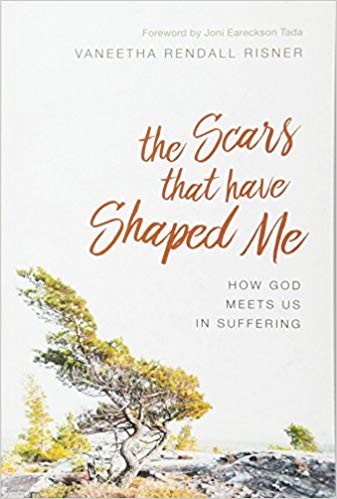
Vaneetha Risner, in her book, The Scars That Have Shaped Me.


“These little choices, these seemingly insignificant ways that I have to relinquish what I want, when no one sees and no one else knows, they all count.

Because Someone does see, and Someone does know. None of these sacrifices will be forgotten.

…..Giving up my right to have something exactly as I want can be an act of worship.”


If you’re interested, you can read our interview here.

April 25, 2021
0 Facebook Twitter Google + Pinterest
Do we need another “get more sleep” post? Of course we do!

Do we need another “get more sleep” post? Of course we do!

written by Christian Heinze

At this point, chronic sleep deprivation has been linked to chronic depression, other chronic disease, and pretty much every bad thing in life.

And yet, in our arrogant workaholic culture, we still treat a lack of sleep as some badge of honor. Well, United States of America, enjoy our proinflammatory cytokines, then. Have fun with our increased expression of tnf-alpha.

Well, there’s a great new presentation, delivered at the 2021 Interdisciplinary Autoimmune Summit, showing sleep is “intimately tied” to the proinflammatory markers that make autoimmune disease worse.

Autoimmune dysfunction is tied to unhealthy neuropsychiatric symptoms, and not just because it’s awful living with an autoimmune disease, and “of course you’d feel blue”. The disease itself can attack normal neuronal cell signaling.

Further, a compelling study showed that depression was a massive risk factor in women developing lupus. Even greater than smoking, for example.

Why? Once again, a lack of sleep promotes inflammatory markers that can turn into autoimmune disease.

And then, not surprisingly, those with lupus who didn’t even have depression, pre-lupus, were more likely to develop it once they were diagnosed with lupus.

Healio has a good review on autoimmune disease and sleep, with a presentation of studies and evidence by Aric Prather, an associate professor of psychiatry and behavior sciences.

Basically, sleep disruptions are “rampant” in patients with autoimmune diseases, and the relationship is bidirectional.

Get less sleep, your disease gets worse. Your disease gets worse, you get less sleep.

And the same goes for depression, of course — whether it’s associated with an autoimmune disease or not.

Get less sleep, your depression gets worse. Your depression gets worse, you get less sleep.

You can read about all this in a tremendous review at Harvard Medical School’s readable Health Publishing.

But the money quote is this: ” sleep disruption — which affects levels of neurotransmitters and stress hormones, among other things — wreaks havoc in the brain, impairing thinking and emotional regulation. In this way, insomnia may amplify the effects of psychiatric disorders, and vice versa.”

This is a really tough thing.

How many times have you read something like, “If you struggle with sleep…..” and then an article lists things that are practically impossible for many of us.

“Plan for 8 hours.” Have you ever been a new parent?

“Be less stressed.” Have you ever lived with an anxiety disorder?

“Eat a healthy diet with tons of things that cost a ton and take 10 hours to prepare.”

But the fact is that we’ll probably make precious little improvement in our mental health until we take care of our sleep.

It’s incredibly important for psychiatrists (I’m of course not one) to start talking about sleep. So says a recent article in the American Journal of Psychiatry.

Researchers gave one group of patients with suicidal thoughts and severe insomnia a sleep aid (zolpidem, i.e. Ambien) and the other, a placebo. Both were given antidepressants, as well.

After two months, the patients on Ambien got better sleeps, had fewer suicidal thoughts, better thinking patterns, and more hopeful thoughts about the future.

In other words, in designing a treatment plan for suicidal patients, it’s incredibly important to address insomnia.

Now here comes the concern you were probably already thinking of — what about dependence on sleep aids?

After all, people can get hooked on Ambien and it can lose its efficacy over time.

Well, researchers only gave the patients Ambien for 8 weeks, then stopped, and followed up, two weeks later.

The patients who had taken the Ambien were, after two weeks, still less suicidal and more hopeful about the future.

So if you’re struggling with sleep and severe depression, it might be time to talk with your doctor about this acronym the researchers came up with: REST-IT. “Reducing Suicidal Ideation Through Insomnia Treatment.”

And GET MORE SLEEP! (caps-locking never helps), but still, GET MORE SLEEP!

[Free photo: Pexels]

April 23, 2021
0 Facebook Twitter Google + Pinterest
HALT

HALT

written by Christian Heinze

Brennan Manning, who struggled with alcohol his whole life, has an evergreen reminder for ALL of us.


“There’s a buzzword within the AA fellowship: HALT.

It’s a reminder not to let yourself get too hungry, angry, lonely, or tired, or you’ll be especially vulnerable to that first drink.”


I think that goes for depression and anxiety, as well. If you get angry, guess what follows? If you get lonely, guess. Tired, guess.

And the especially hard thing? Baseline depression and anxiety makes you more angry, lonely, and sleep-deprived. Which makes the cycle worse.

Speaking of blessed sleep, I once heard John Piper say something to the effect of: you won’t go far down the path of sanctification without getting enough sleep.

Another way of saying that: If you stay up all night praying, you’ll probably be miserable company the next day.

April 21, 2021
0 Facebook Twitter Google + Pinterest
Getting ever closer to the right (Rx) match

Getting ever closer to the right (Rx) match

written by Christian Heinze

Some exciting news from the Indiana University School of Medicine.

But first, depressing news.

You know as well as I do how hard it can be to find the right antidepressant. How many Rx’s have you tried before finding the one (it’s almost romantic when it finally works, right?). Maybe you haven’t found the one, and are still playing the SSRI, SNRI, tricyclic, MAOI field. (Okay, enough of that analogy).

Point is — it sucks to have to try tons of different medicines, with side effects, before finding the right one.

Well, Indiana University School of Medicine researchers have developed a blood test, “composed of RNA biomarkers, that can distinguish how severe a patient’s depression is, their risk of severe depression in the future and their risk of future bipolar disorder, or manic-depressive illness.”

And crucially, “the test also informs tailored medication choices for patients.”

If you want to read more about the study, have at it here, but the point is that sometime soon, you might be able to take a simple blood test and find the antidepressant that works best for you.

In the field of psychiatry, that would be a game-changer. In the field of our 24/7, a life-saver.

I’ll leave you with this exciting passage from IU.

According to Niculescu, the work done by his team has opened the door for their findings to be translated into clinical practice, as well as help with new drug development. Focusing on collaboration with pharmaceutical companies and other doctors in a push to start applying some of their tools and discoveries in real-world scenarios, Niculescu said he believes the work being done by his team is vital in improving the quality of life for countless patients.

“Blood biomarkers offer real-world clinical practice advantages. The brain cannot be easily biopsied in live individuals, so we’ve worked hard over the years to identify blood biomarkers for neuropsychiatric disorders,” Niculescu said. “Given the fact that 1 in 4 people will have a clinical mood disorder episode in their lifetime, the need for and importance of efforts such as ours cannot be overstated.”

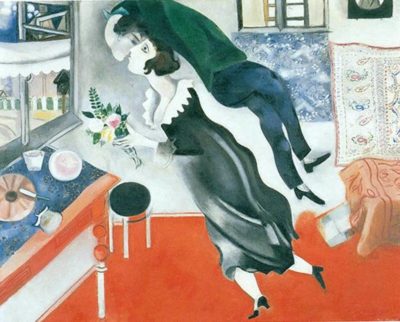
[Painting: The Birthday, Chagall]

April 20, 2021
0 Facebook Twitter Google + Pinterest
Health anxiety exploding in Covid-era

Health anxiety exploding in Covid-era

written by Christian Heinze

Over the years, health anxiety has been growing, but as the BBC notes, it’s absolutely soared during the Covid era.

If you’re unfamiliar with health anxiety, I’d recommend reading their report, because it really gets at the heart of a growing problem we need to empathize with.

And if you experience health anxiety yourself, read the BBC’s piece, because there’s always comfort in knowing you’re not alone.

I never had health anxiety until four years ago. Never even crossed my mind. But in one year, we had our first child and I lost my own dad, and suddenly, the thought hit me, “What happens if I die on my son?” Of course, I’d hope my wife would remarry someone better than myself and there are plenty out there. But a child losing their biological dad?

I still remember the moment it hit, and I’ll soon repost a piece I wrote about it, but believe me, it is extraordinarily intense when it hits. Especially if you have OCD. You don’t know until you know, and then you’ll wish you never knew. Ignorance is bliss. And you don’t even know what “ignorance is bliss” means until you experience the horrible thing.

The BBC accurately notes that one of the vexing things about the condition is that anxiety can mimic so many other diseases or illnesses.

Stroke. Heart attack. Anxiety attack. There’s overlap among all three (click here for some ways to distinguish between a heart attack and anxiety attack).

In fact, more people visit the ER every year for anxiety attacks that they think are heart attacks, but aren’t. (Still, always go in if you feel the symptoms).

I would recommend — not only therapy and talking to your doctor about medication — but also some really good discussion boards from people who get it.

No More Panic is a particularly good, supportive spot. Beyond Blue has some good stuff, as well. And you will never know the power of meeting people who share this disease.

Finally, I’d like to add a note about Christianity and health anxiety.

This is particularly stigmatizing to Christians because we’re supposed to overlook our physical bodies and shrug off suffering because as Paul says, we’re buried in brokenness but raised in glory.

True, but when Jesus was in Gethsemane, he knew he was just a few days away from heaven. He knew its wonders far more than we do. And yet, he was in total agony over his upcoming suffering.

Don’t hold yourself to a higher standard than Jesus.

Christians who don’t struggle with health anxiety or any other kind often use verses like “strengthen each other” to bludgeon the struggling. The Greek for “strengthen” is actually much better translated “have compassion.” Changes the meaning quite a bit, doesn’t it?

So, once again, if you’re a Christian and deal with health anxiety, don’t tell yourself that you should “know better” and feel guilty that you can’t shrug off the idea of a few years or a few decades of bodily suffering. Jesus himself agonized over his suffering.

And again I say: Don’t hold yourself to a higher standard than Jesus.

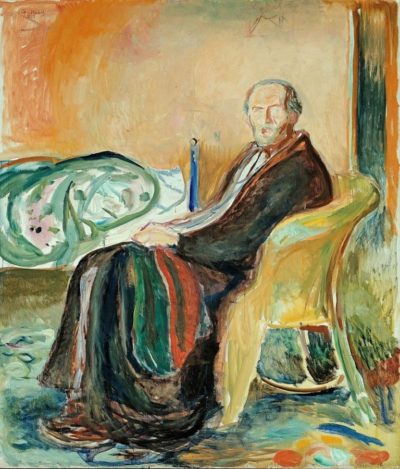
[Painting: Munch, Self-Portrait after Spanish Influenza]

April 16, 2021
0 Facebook Twitter Google + Pinterest
Are you disappointed with God? Tell him

Are you disappointed with God? Tell him

written by Christian Heinze

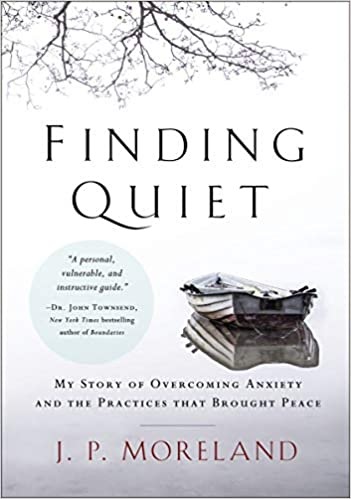
In his book Finding Quiet, philosopher J.P. Moreland touches on something Christians dare not touch on at group Bible study except to condemn it — complaining. Specifically, complaining to God.

He writes, “Because we do not often talk with each other about our disappointment with God — that seems to be an evangelical taboo — we don’t know what to do with it.

And since this is such a common issue when one is suffering with anxiety, the double whammy can be enough to overwhelm any hope a person has for getting better.”

Then Moreland goes on to note that some 43% of the Psalms are “complaints and expressions of sadness and disappointment in God.”

He asks: “Why is this true? The Jewish worshippers wanted to approach God with sincere hearts……expressing to God our honest feelings and beliefs is a good way to get things off our chest, stop stuffing our feelings, release anxiety, and begin a path toward a more intimate relationship with God.”

He finishes with this: “Laments are the shadow side of faith. It is precisely because we take God seriously and desire to grow in faith and in our relationship with him that we engage in honest lament. If we were indifferent to God, we wouldn’t waste our time with lament.”

Amen.

Our relationship with God is, of course, a relationship. As such, we need to be just as transparent and honest with God as we would any relationship, and if you’re already complaining to him in your heart, he hears that anyway. Don’t try to squelch it when you pray.

Before my wife and I had kids (and had the time to do this thing), we would find a coffee shop when something was bothering us, and I would order a black coffee and she would get one of those $8 muffins that aren’t as good as a Twinkie and then we’d unload on all the things that were bothering us about each other.

Sometimes, it was hard, and we’d have a gentle fight because really, a coffee shop with Bon Iver has to be a place for a gentle fight.

It wasn’t fun, but every single time we left, our relationship was better. Some might have said we were moaning or complaining or whining, and yes, we were. But that’s part of a relationship. If you go to marriage therapy and you don’t complain, there’s no point. Complaining is a vital part of any relationship.

And it’s part of our relationship with God. Again, I go back to what Moreland says of the Bible — God wants us to approach him with a “sincere heart.” He doesn’t want us to pretend.

So if you’re frustrated, tell him. Believe me, he can take it. If my wife and my snowflake self can take it, he certainly can.

(Btw, if you’d like to read my interview with Moreland, you can here).

April 15, 2021
0 Facebook Twitter Google + Pinterest
Ortlund: The beauty of “in no wise”

Ortlund: The beauty of “in no wise”

written by Christian Heinze

Dane Ortlund, writing in his wonderful new book Gentle And Lowly, of Jesus’ words that resonate perhaps most deeply with depressed, anxious Christians.

Of Christ’s promise in John, “Whoever comes to me, I will in no wise cast out.”

Ortlund:


“We no longer use the expression ‘in no wise’, but it was a 17th century English way of capturing the emphatic negative of the Greek of John 6:37.

The text literally reads, ‘the one coming to me I will not — not — cast out.’

Sometimes, as here, Greek uses two negatives piled on top of each other for literary forcefulness. ‘I will most certainly never, ever cast out.’

It is this emphatic negation that Christ will ever cast us out that [John] Bunyan calls ‘this great and strange expression.”

….Fallen, anxious sinners are limitless in their capacity to perceive reasons for Jesus to cast them out. We are factories of fresh resistances to Christ’s love.

Even when we run out of tangible reasons to be cast our, such as specific sins or failures, we tend to retain a vague sense that, given enough time, Jesus will finally grow tried of us and hold us at arm’s length.

“No, wait” — we say, cautiously approaching Jesus — “you don’t understand. I’ve really messed up, in all kinds of ways.”

I know, he responds.

“You know most of it, sure. Certainly more than what others see. But there’s perversity down inside me that is hidden from everyone.”

I know it all.

“Well — the thing is, it isn’t just my past. It’s my present too.”

I understand.

“But I don’t know if I can break free of this any time soon.”

That’s the only kind of person I’m here to help.

“The burden is heavy — and heavier all the time.”

Then let me carry it.

“It’s too much to bear.”

Not for me.

“You don’t get it. My offenses aren’t directed towards others. They’re against you.”

Then I am the one most suited to forgive them.

“But the more ugliness in me you discover, the sooner you’ll get fed up with me.”

Whoever comes to me I will never cast out.


End of passage from Ortlund’s book.

Of course remember we must come to Christ first.

As intolerant, as exclusivist as it might sound to our modern ears, he is and has always been, “the way, the truth, and the life,” and as Peter says in Acts, “Salvation comes no other way; no other name has been or will be given to us by which we can be saved, only this one.”

And when we come to that name, he will never —ever — cast us out.

As Ortlund notes later in his book, Jesus saves us “to the uttermost,” which means as far, as wide, as fully as possible. That is “to the uttermost.”

And it is the most beautiful “no matter what” love you and I can ever know.

April 2, 2021
0 Facebook Twitter Google + Pinterest
Spurgeon: My “fearful” depression makes me more empathetic

Spurgeon: My “fearful” depression makes me more empathetic

written by Christian Heinze

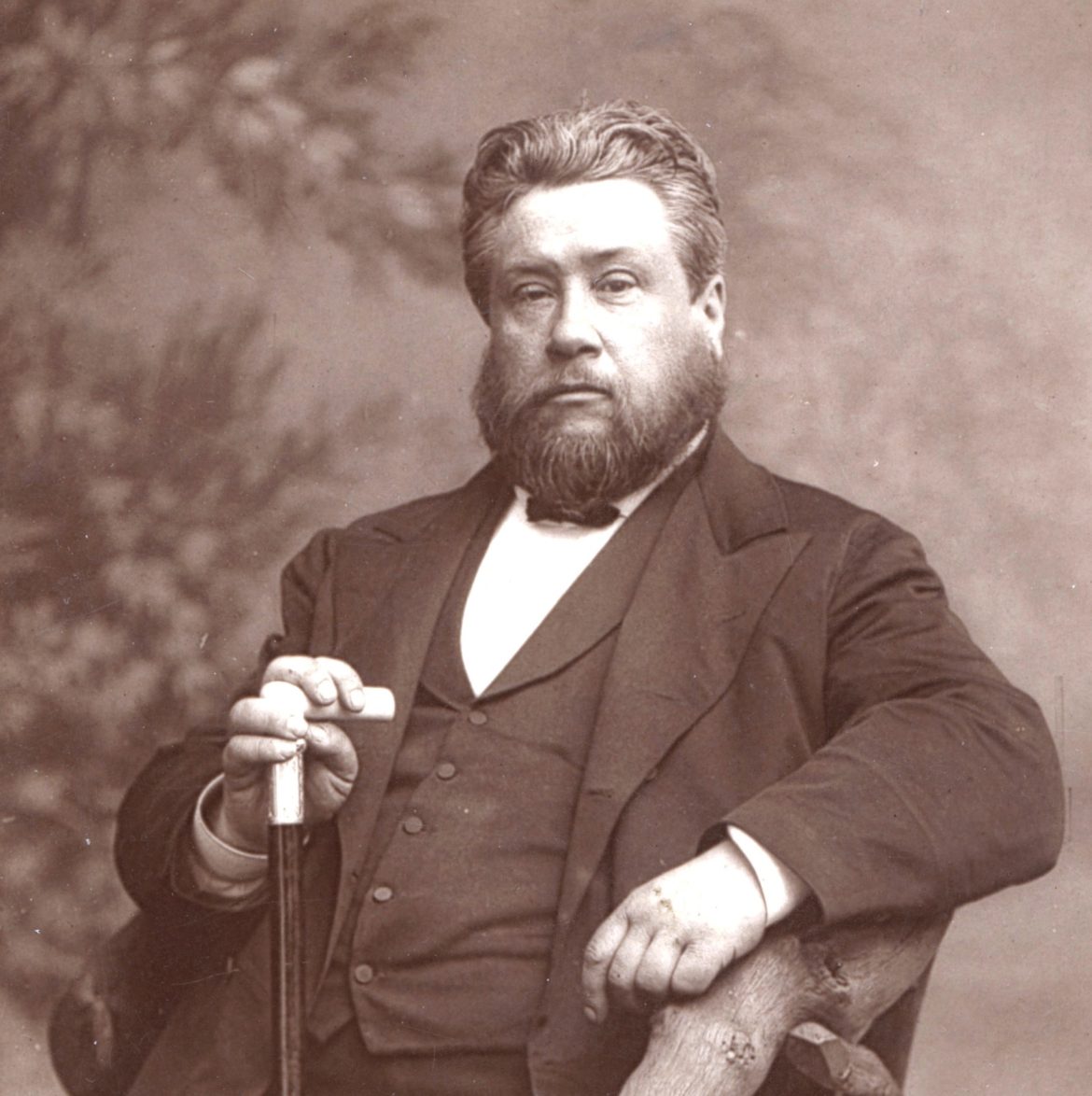
Perhaps the most famous Christian depressive, Charles Spurgeon, in one of his writings:


“I often feel very grateful to God that I have undergone fearful depression.

I know the borders of despair and the horrible brink of that gulf of darkness into which my feet have almost gone.

But hundreds of times I have been able to give a helpful grip to brethren and sisters who have come into that same condition, which grip I could never have given if I had not known their despondency.

So I believe that the darkest and most dreadful experience of a child of God will help him to be a fisher of men if he will but follow Christ.”


Of course, that doesn’t mean we should swear off treatment, whether it’s medicine or therapy or both. But Spurgeon’s point remains — You can’t talk someone off a bridge unless you’ve stared over it yourself.

And maybe you don’t thank God for the depression, but you thank him for whatever new compassion it’s formed and however that has blessed another.

As a character in one of Thornton Wilder’s plays once said:


“Without your wounds where would your power be?

It is your melancholy that makes your low voice tremble into the hearts of men and women.

The very angels themselves cannot persuade the wretched and blundering children on earth as can one human being broken on the wheels of living.

In Love’s service, only wounded soldiers can serve.”

March 15, 2021
0 Facebook Twitter Google + Pinterest
The prodigal

The prodigal

written by Christian Heinze

In his book, On The Road With St. Augustine, James Smith retells the Prodigal Son story with this wonderful quote at the end.


“That Father of yours comes running and gathers you up in his arms while your head is down, and your mother later tells you, ‘He walked to the end of the road every single day waiting for you‘.”


Beautiful and true.

As a parent you would, as well. As a parable about The Father, that is certainly the case.

In his book, Return of the Prodigal Son, Henri Nouwen says this of our journey from home.


“Leaving home is, then, much more than an historical event bound to time and place.

It is a denial of the spiritual reality that I belong to God with every part of my being, that God holds me safe in an eternal embrace, that I am indeed carved in the palms of God’s hands and hidden in their shadows…. Leaving home is living as though I do not yet have a home and must look far and wide to find one.”


So for us, as Prodigals, what is returning home?


“One of life’s hardest spiritual choices: to trust or not to trust in God’s all-forgiving love.”’


Strange, isn’t it, how difficult it is for us to believe we’re as deeply loved as Christ himself.

And yet, as Nouwen writes elsewhere, “The spiritual life is a long and often arduous search for what you have already found.”

Ultimately, of the story, Nouwen writes:


“[It is] about a love that existed before any rejection was possible and that will still be there after all the rejections have taken place.”


Amen.

[Painting: Return of the Prodigal Son, Murillo]

March 12, 2021
0 Facebook Twitter Google + Pinterest
Load More Posts

Social Media

Twitter

Get in touch with me

Contact here. 

The Weary Christian mission:

First off:


In the United States, find a psychiatrist here.

In the United States, find a therapist here.

If you’re in the United States and having thoughts of harming yourself or others, please call the National Suicide Lifeline at 1-800-273-8255.

If you’re in the UK, get urgent help here.

Canada, here.

Australia, here.

New Zealand, here.

South Africa, here.

France, here.

Germany, here.

Portugal, here.

Mexico, here.

India, here.

The Philippines, here.

Singapore, here.

South Korea, here.


The Weary Christian goal…


a) reduce the stigma surrounding depression, anxiety, OCD, and other conditions in the Christian community.


b) have uncomfortable but honest conversations.


c) Reduce the stigma surrounding antidepressants, antipsychotics, and other meds God has given us as gifts.


And…


d) Sometimes (tons of times), we all feel really, really depressed in our journey. Hopefully, this site makes you feel less alone.

Categories


@2017 - PenciDesign. All Right Reserved. Designed and Developed by PenciDesign