
The Weary Christian
  • Depression
    • Depression

      James Bryan Smith: Unmet expectations and fear

      Depression

      STUDY: Criticizing older adults make them more vulnerable…

      Depression

      STUDY: Awe can reduce depressive symptoms

      Depression

      STUDY: How music-mindfulness can help depression, anxiety

      Depression

      STUDY: Chronic pain associated with higher rates of…

  • Anxiety
    • Anxiety

      Calling out the brain on catastrophizing

      Anxiety

      James Bryan Smith: Unmet expectations and fear

      Anxiety

      STUDY: Awe can reduce depressive symptoms

      Anxiety

      STUDY: How music-mindfulness can help depression, anxiety

      Anxiety

      STUDY: Chronic pain associated with higher rates of…

  • Book quotes/Video
    • Book quotes/Video

      “In darkest night, you were there like no…

      Book quotes/Video

      Thanksgiving for his brokenness

      Book quotes/Video

      Esther Smith: “All he wants is you”

      Book quotes/Video

      James Bryan Smith: Unmet expectations and fear

      Book quotes/Video

      Staton: On being a witness

  • Health News
    • Health News

      Calling out the brain on catastrophizing

      Health News

      STUDY: Mental health conditions share deep genetic patterns

      Health News

      STUDY: Four Supplements that MIGHT help depression

      Health News

      STUDY: Gut changes raise risk of eating disorders…

      Health News

      STUDY: Criticizing older adults make them more vulnerable…

  • Interviews
    • Interviews

      INTERVIEW: Dr. Terry Powell’s gripping account of depression

      Interviews

      INTERVIEW: Therapist Michael Schiferl explains religious scrupulosity and…

      Interviews

      INTERVIEW: Rocker Matt Sassano shares battles, urges transparency…

      Interviews

      INTERVIEW: Dr. Brian Briscoe tells Christians that antidepressants…

      Interviews

      INTERVIEW: Pastor Scott Sauls on anxiety, depression, and…

  • Devotionals
    • Devotionals

      “Grace has got to be drunk straight”

      Devotionals

      Defeated by God

      Devotionals

      Am I a faithless Christian?

      Devotionals

      Think you’re a “failure?” Jesus sees you unlike…

      Devotionals

      “I killed Jesus of Nazareth”

  • About
  • Depression
    • Depression

      James Bryan Smith: Unmet expectations and fear

      Depression

      STUDY: Criticizing older adults make them more vulnerable…

      Depression

      STUDY: Awe can reduce depressive symptoms

      Depression

      STUDY: How music-mindfulness can help depression, anxiety

      Depression

      STUDY: Chronic pain associated with higher rates of…

  • Anxiety
    • Anxiety

      Calling out the brain on catastrophizing

      Anxiety

      James Bryan Smith: Unmet expectations and fear

      Anxiety

      STUDY: Awe can reduce depressive symptoms

      Anxiety

      STUDY: How music-mindfulness can help depression, anxiety

      Anxiety

      STUDY: Chronic pain associated with higher rates of…

  • Book quotes/Video
    • Book quotes/Video

      “In darkest night, you were there like no…

      Book quotes/Video

      Thanksgiving for his brokenness

      Book quotes/Video

      Esther Smith: “All he wants is you”

      Book quotes/Video

      James Bryan Smith: Unmet expectations and fear

      Book quotes/Video

      Staton: On being a witness

  • Health News
    • Health News

      Calling out the brain on catastrophizing

      Health News

      STUDY: Mental health conditions share deep genetic patterns

      Health News

      STUDY: Four Supplements that MIGHT help depression

      Health News

      STUDY: Gut changes raise risk of eating disorders…

      Health News

      STUDY: Criticizing older adults make them more vulnerable…

  • Interviews
    • Interviews

      INTERVIEW: Dr. Terry Powell’s gripping account of depression

      Interviews

      INTERVIEW: Therapist Michael Schiferl explains religious scrupulosity and…

      Interviews

      INTERVIEW: Rocker Matt Sassano shares battles, urges transparency…

      Interviews

      INTERVIEW: Dr. Brian Briscoe tells Christians that antidepressants…

      Interviews

      INTERVIEW: Pastor Scott Sauls on anxiety, depression, and…

  • Devotionals
    • Devotionals

      “Grace has got to be drunk straight”

      Devotionals

      Defeated by God

      Devotionals

      Am I a faithless Christian?

      Devotionals

      Think you’re a “failure?” Jesus sees you unlike…

      Devotionals

      “I killed Jesus of Nazareth”

  • About

The Weary Christian

THE WEARY CHRISTIAN

LIVING WITH FAITH AND DEPRESSION

  • Depression
    • Depression

      James Bryan Smith: Unmet expectations and fear

      Depression

      STUDY: Criticizing older adults make them more vulnerable…

      Depression

      STUDY: Awe can reduce depressive symptoms

      Depression

      STUDY: How music-mindfulness can help depression, anxiety

      Depression

      STUDY: Chronic pain associated with higher rates of…

  • Anxiety
    • Anxiety

      Calling out the brain on catastrophizing

      Anxiety

      James Bryan Smith: Unmet expectations and fear

      Anxiety

      STUDY: Awe can reduce depressive symptoms

      Anxiety

      STUDY: How music-mindfulness can help depression, anxiety

      Anxiety

      STUDY: Chronic pain associated with higher rates of…

  • Book quotes/Video
    • Book quotes/Video

      “In darkest night, you were there like no…

      Book quotes/Video

      Thanksgiving for his brokenness

      Book quotes/Video

      Esther Smith: “All he wants is you”

      Book quotes/Video

      James Bryan Smith: Unmet expectations and fear

      Book quotes/Video

      Staton: On being a witness

  • Health News
    • Health News

      Calling out the brain on catastrophizing

      Health News

      STUDY: Mental health conditions share deep genetic patterns

      Health News

      STUDY: Four Supplements that MIGHT help depression

      Health News

      STUDY: Gut changes raise risk of eating disorders…

      Health News

      STUDY: Criticizing older adults make them more vulnerable…

  • Interviews
    • Interviews

      INTERVIEW: Dr. Terry Powell’s gripping account of depression

      Interviews

      INTERVIEW: Therapist Michael Schiferl explains religious scrupulosity and…

      Interviews

      INTERVIEW: Rocker Matt Sassano shares battles, urges transparency…

      Interviews

      INTERVIEW: Dr. Brian Briscoe tells Christians that antidepressants…

      Interviews

      INTERVIEW: Pastor Scott Sauls on anxiety, depression, and…

  • Devotionals
    • Devotionals

      “Grace has got to be drunk straight”

      Devotionals

      Defeated by God

      Devotionals

      Am I a faithless Christian?

      Devotionals

      Think you’re a “failure?” Jesus sees you unlike…

      Devotionals

      “I killed Jesus of Nazareth”

  • About
Health News

STUDY: Mental health conditions share deep genetic patterns

James Bryan Smith: Unmet expectations and fear

STUDY: Four Supplements that MIGHT help depression

STUDY: Criticizing older adults make them more vulnerable to developing depression

Study offers great context on kids, screen time, and emotional problems

Daily Blog

A quick pitch for deep breathing

A quick pitch for deep breathing

written by Christian Heinze

Discover Magazine’s Timothy Meinch has a fantastic deep-dive into the world of deep breathing and its manifold health benefits.

Basically, you and I probably breathe much too quickly for our well-being.

Chronic stress can lead to shallow, quick breathing, and shallow breathing can lead to chronic stress.

And of course, we all know chronic stress can contribute to or even provoke just about every malady under the sun.

Here’s the money extract:

“If you pushed through to achieve that full exhale a moment ago, you might have noticed a prolonged, satisfying inhale immediately followed. Do it on repeat for a simple practice of deeper, slower breathing. In your body, this biologically signals “all is well” to the brain and a full cast of players. The heart rate slows; the vagus nerve engages, which is a vital component in the rest-and-restore parasympathetic nervous system; and the brain releases your feel-good serotonin and dopamine hormones.”

Meinch adds that “Various research has connected conscious breath work to treating symptoms of anxiety, sleep apnea, PTSD, chronic pain and depression.”

Read the whole thing. It’s excellent.

Now….

Healthline has a tremendous overview of “belly breathing” or “abdominal breathing.”

They point to research showing it can help with IBS, depression, anxiety, insomnia, blood pressure, heart rate, PTSD, and even your core muscle stability.

Interestingly, it can also help you avoid injuring certain muscles.

Here’s why — when you don’t use your diaphragm properly, you can develop conditions that cause the lungs to lose their elasticity.

Consequently, you unwittingly start using your chest, back, and neck muscles to help you breathe, and that puts unnecessary pressure on them.

Improper breathing can therefore lead to musculoskeletal problems, as well.

So what’s a shallow breather to do?

Healthline has steps for Diaphragm Breathing.

Basically.

-Lie in a comfortable position

-Relax

-Put your hand on your stomach and chest

-Breathe in through your nose for two seconds, and try to keep your chest still. Your stomach should be the doing the moving.

-Finally, “Purse your lips, press gently on your stomach, and exhale slowly for about two seconds.”

Then do it again. Try 10 minutes to start.

There are other breathing exercises you can try. Click here for them.

Now…….

A few things to mention.

You might struggle with some anxiety when you start.

When I try deep breathing, I tend to get anxious. I’m too self-aware, I wonder if I’m doing it right, I think I actually might breathe faster.

You might feel the same.

That’s why it’s important to give it more than just one or two tries. The longer you do it, the more relaxed you’ll be, doing it. And that’s the point.

Second, Brennan Manning once suggested deep breathing with the phrase, “Father, I belong to you.” Breathe in on “Father,” and exhale on, “I belong to you.” I’ve found profound comfort in deep breathing with that phrase.

It’s a surprise, then, that I don’t do it more often.

And that’s because it’s hard work. It’s hard work to take 10-20 minutes to lie on your bed, in the quiet, and just breathe.

But your body and mind will thank you.

[Photo: Cadaques, Spain, a coastal town in Spain that inspired Dali and numerous artists. If you want to try deep breathing, it would be nice to do it from a boat, just off the coast of Cadaques. But if that’s not possible, I suppose your bed will do].

September 2, 2021
0 Facebook Twitter Google + Pinterest
Kay Warren: “Mental illness is part of our body”

Kay Warren: “Mental illness is part of our body”

written by Christian Heinze

Saddleback Church’s Kay Warren lost her son to suicide eight years ago, and since then, has devoted much of her time to raising awareness of mental health in the church through the Saddleback’s Hope for Mental Health Initiative.

Last week, she spoke about mental health at the Evangelical Press Association Christians Media Convention, and delivered this vital message.

Warren, according to the Christian Post:

“Nobody wants to be thought of as having a mental health challenge…..Mental illness is part of our body; it’s part of the physical part of our body. And when you can let people know that it’s not a sin to be sick and your church is a … safe place to bring your brokenness, then we’re beginning to remove the stigma.”

Now…. as we know, Jesus broke health stigmas left and right, and yet the Christian church (particularly the evangelical Christian church) seems to be one of the final institutions in the United States, still stigmatizing mental health.

There are plenty of reasons for this, but a particularly pernicious one is that we’ve preached a Victorious Christianity where our spiritual salvation isn’t just about spiritual salvation, but some kind of “physical-life-salvation,” about the American Dream and living “your best life now.” It’s heresy.

And it’s very difficult for Christians, struggling with depression, anxiety, OCD etc., to feel welcome in these kinds of environments and why should we?

If Christianity is defined by Victory in Life, then I’ve shown up at the wrong building.

And that’s exactly how a lot of us feel.

The Christian Post notes that a 2014 poll found 25% of Christians had either stopped attending churches or switched based on that church’s attitude towards mental health.

In his book chronicling his own battle with depression and anxiety (read our interview here), Christian philosopher J.P. Moreland wrote about delivering a guest sermon at a large California church.

During first service, he explicitly mentioned he took antidepressants and then frankly discussed the reality of depression.

Before second service, an elder pulled him aside, and strictly warned him not to speak about it again.

Moreland, of course, was never invited back.

But I’m sure that his courage changed the life of some poor travelers that morning, who might have called their doctor the next morning.

(Speaking of which, here’s a psychiatrist and therapist near you).

One final note: Warren also pushed Christian churches in another really important direction — we need to provide referrals to qualified mental health professionals in the area.

That’s absolutely critical.

Pastors have degrees of divinity, not psychiatry. They’re very different fields. We wouldn’t expect a pastor treat a knee injury.

The greatest thing a pastor can do is talk publicly about their own struggles with mental health (see some courageous examples here, here, here, and here), and refer patients to professionals.

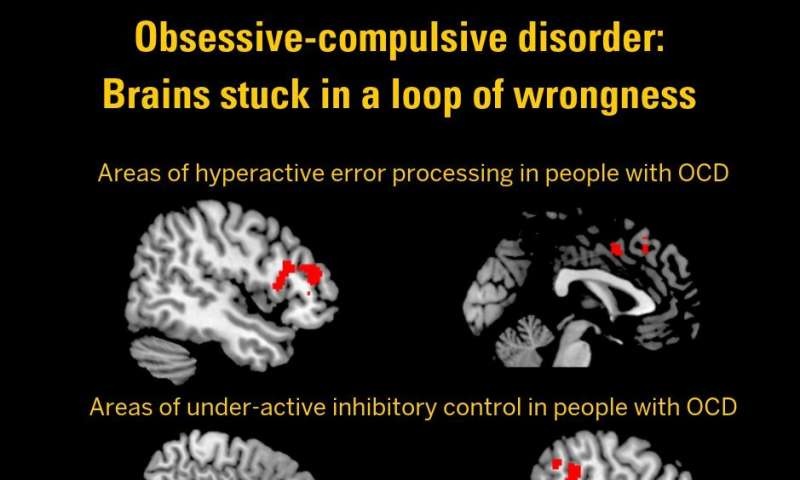
Oh, and as a bonus, a pastor could hang up the picture below in their office.

It’s an MRI showing a key difference in the cingulo-opercular network of the brain between folks who have OCD and those who don’t (based on this study).

Imagine a Christian struggling with OCD, visiting her pastor, scanning the wall, and finding this, framed. Woohoo!

That might sound weird and completely inappropriate to alpha happy Christians.

But to me, to us, to the weary, to the “weird,” it sounds like home.

August 31, 2021
0 Facebook Twitter Google + Pinterest
Eswine: One of the most challenging things for Christians with depression

Eswine: One of the most challenging things for Christians with depression

written by Christian Heinze

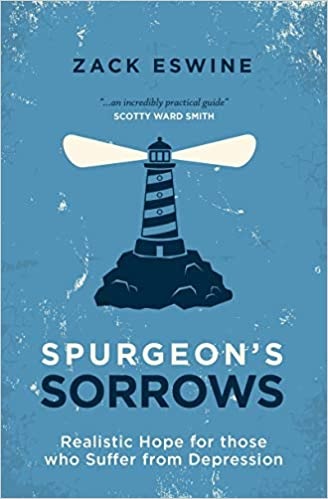
Zack Eswine, in his seminal book Spurgeon’s Sorrows, nails it when he explains why Christians often deal with an added layer of depression: “It is hard enough to get through the day without adding the displeasure of God to the trauma that already trounces us.”

And of course, since depression steers us on the course to pessimism in every aspect of our life, guess how we’re probably going to think of our relationship with God?

Eswine:

*****************************************************************************************************************************

“Religion offers both a challenge and a help to those who suffer mental disorders. This challenge surfaces when preachers assume that depression is always and only a sin. They pour gasoline on the fire and wonder why it rages rather than calms those they try to help.

….At its core, spiritual depression concerns real or imagined desertions by God. We feel in our senses that he is angry with us, or we have done something to forfeit his love, or he has toyed with us and left us on a whim. Either way, he exists for others but not for us.”

….Suffering one form of depression makes the addition of others harder to bear….if someone struggles already with biological or circumstantial depression, they are more vulnerable to spiritual sorrows. It is hard enough to get thru the day without adding the displeasure of God to the trauma that already trounces us.”

*****************************************************************************************************************************

Exactly.

And that’s why it’s absolutely vital to discuss the medical components of depression, which is why this site devotes so much time to it.

If, for example, your gut bacteria leads to chronic inflammation that extends to the brain and contributes to depression — that’s not God abandoning you! That’s not sin. That’s gut bacteria.

Here’s a big picture of gut bacteria.

That’s not a picture of God, turning his face from you.

And here’s an excellent study on the gut-brain axis that’s associated with anxiety and depression.

The church needs to understand this, I need to internalize it, perhaps you already believe it and need to internalize it, as well.

It can save physical lives, mental lives, it can revive our spiritual lives.

Of course, it’s vital we keep tabs on our relationship with God, but for mental health issues, the first thing to do is follow our medicinal therapy, exercise, form social support, go to therapy.

All those things that have been proven to help reduce depressive symptoms.

Our spirituality will always be a component of our mental health, but as Eswine notes, for Christians, it can go both ways.

Christianity can be of particular help because, well, you know because. It’s our great hope. It’s the thing that lives and moves in us more than anything.

But if we have a medical condition and impute its symptoms onto God’s character, well that’s a really tough challenge to handle.

I’ll end with one of my favorite quotes from Brennan Manning: “God doesn’t just love you. He likes you.”

Do you believe that? Jesus calls us his friends. People like their friends. Even better, God calls us his children.

So if you feel some kind of oppressive, inexplicable depression, remember this picture of gut bacteria.

If you consider the implications, then you might look at it as something beautiful as a Cezanne. Or maybe not.

August 30, 2021
0 Facebook Twitter Google + Pinterest

Mental health links

written by Christian Heinze

a. The BBC: One woman’s battle with anorexia before her wedding day. It’s really moving. I don’t talk enough about anorexia on this blog. That’s going to change.

b. Post-covid, depression and anxiety are exploding in young people. A lack of social support and disruption of routines are huge components. That’s why we need to get control of this pandemic, and everyone should do his or her part in this war. Christians should be known for our love, our self-sacrifice, and if that means taking a vaccine we don’t think we need for our neighbor, then well, that’s the loving thing to do. (I probably just lost some readers with that).

c. Ryan Reynolds talks about his anxiety: “There’s a lot of insomnia, there’s a lot of sleepless nights where you’re laying awake over-analyzing everything.”

d. For many Asians, talking about mental health is dangerous. Here’s a brave story, along with an explanation of why Asian cultures tend to be reluctant to address the illness.

e. Kit Harrington (aka Jon Snow) talks about his battle with alcoholism and depression:  “You get to a place where you feel like you are a bad person, you feel like you are a shameful person. And you feel that there’s no way out, that’s just who you are.”

f. NY Times: Living with OCD in a Pandemic.

g. How to help someone living with schizophrenia.

h. All 17 Sonic Youth albums ranked, from worst to best. (Wait, how did that get in here).

And… finally, one of my favorite (not a Sonic Youth song. Obviously).

The late hymnist George Matheson:

Oh love that will not let me go
I rest my weary soul in thee
I give thee back the life I owe
That in thine ocean depths its flow
May richer, fuller be

Oh light that followest all my way
I yield my flickering torch to thee
My heart restores its borrowed ray
That in thy sunshine’s blaze its day
May brighter, fairer be

Oh joy that seekest me through pain
I cannot close my heart to thee
I trace the rainbow through the rain
And feel the promise is not vain
That morn shall tearless be

Oh cross that liftest up my head
I dare not ask to fly from thee
I lay in dust’s life’s glory dead
And from the ground there blossoms red
Life that shall endless be

August 28, 2021
0 Facebook Twitter Google + Pinterest
STUDY: Fluvoxamine and Covid

STUDY: Fluvoxamine and Covid

written by Christian Heinze

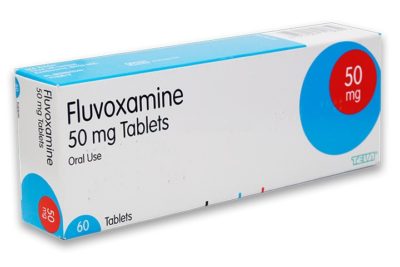
Scientists have been musing about the possibility of the SSRI fluvoxamine (Luvox) to treat Covid-19 since last year, and if you want the full skinny on why, I wrote about it earlier this year.

Basically, fluvoxamine (and many other SSRI’s) seem good at reducing important inflammatory markers that go nuts when Covid goes nuts and produces the infamous ctyokine storm.

One of the most important, offending markers is interleukin-6, and fluvoxamine seems particularly good at suppressing IL-6.

That’s only part of the mechanism, but a crucial part, and for the past year, I’ve googled IL-6 for just about every medicine, supplement, and food I imbibe.

And yeah, turns out Luvox is the standout among SSRI’s (although other antidepressants also do a good job at reducing inflammation).

The Science Times:

*****************************************************************************************************************************

In a massive, randomized clinical trial performed with thousands of patients over the last six months, McMaster University tested eight different treatments for COVID-19 against a control group to explore what’s effective.

Out of tall eight treatments, one medication stood out-fluvoxamine. This is an antidepressant that the Food and Drug Administration has already to be “safe to use and cheap to produce as a generic drug.”

These new findings follow some promising results in small-scale trials published in the Journal of the American Medical Association in 2020. In those smaller studies, scientists discovered that fluvoxamine was strikingly good at decreasing hospitalization for COVID-19 patients, although small-scale trials can at times turn up spurious positive results. Therefore, those findings were evidently tempered by many caveats.

The study, titled “TOGETHER study” is quite larger, involving over 3,000 patients across the entire research, with 800 participants belonging to the fluvoxamine group, and backs the promising outcomes from those past studies.

Patients who received fluvoxamine within a few days from getting tested positive for COVID-19 were found to be 31 percent less likely to end up on a ventilator.

*****************************************************************************************************************************

End quote.

Now I’ve written a lot about how reluctant American Christians are these days to trust pharmaceutical companies.

The distrust is a sad, but real phenomenon, considering that these companies are populated by wonderful people, trying to cure diseases and make our lives better.

But, if you’re still distrustful, to hopefully put your mind at ease, this isn’t a “money-making” pharma opportunity, because fluvoxamine is a generic drug now.

And generics aren’t big money-makers.

That being said, always talk to your doctor before starting anything.

Luvox is a first-line medicinal treatment for OCD, so naturally I’ve tried it, and I had a poor reaction to it.

But it’s considered a very good, tolerable drug, and wouldn’t it be remarkable if it really were this effective against Covid?

Here’s a really good, thorough read on how fluvoxamine emerged as such a potentially potent treatment for Covid.

P.S. Elevated Il-6 has been implicated in numerous autoimmune and inflammatory conditions, due to its signal of chronic inflammation. It’s also been implicated in the development of Alzheimer’s and other bete-noires of the body.

Drugs can help treat elevated Il-6, and lifestyle choices affect it, as well.

Here’s a particularly good explainer of IL-6, including some good ways to reduce levels, based on great studies.

Key things: Get a good sleep, nutrient dense diet, get enough Vitamin D, take care of your teeth, exercise moderately, maintain normal body weight (no obesity or anorexia), reduce stress, and get enough Omega3’s.

August 28, 2021
0 Facebook Twitter Google + Pinterest
Keller: Jesus was shocked by the pain he felt in the Garden

Keller: Jesus was shocked by the pain he felt in the Garden

written by Christian Heinze

And it’s all in the Greek, and the only reason we rarely hear this is because our translations do such a woeful job of the Greek word ekthambeisthai.

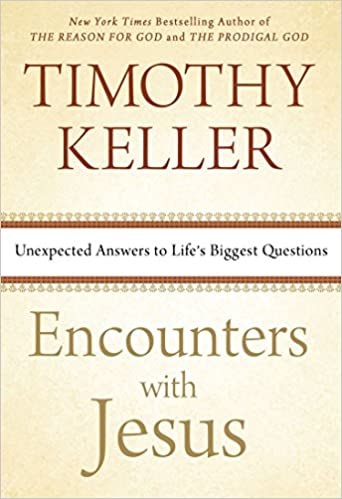
Tim Keller, writing in Encounters with Jesus, of Christ’s time in Gethsemane:

*****************************************************************************************************************************

“Matthew indicates that as Jesus was walking away from the larger group of disciples with Peter, James, and John toward the garden for prayer, ‘he began [emphasis mine] to be sorrowful and troubled’ (Matthew 26:37).

This change happens as he is in en route — it almost seems to descend on him in real time. Not only was this mental agony so enormous that he thought he was going to die, but according to Mark he was astounded by it.

Mark uses the Greek word ekthambeisthai, which means to be moved to an ‘intense emotional state because of something causing great surprise or perplexity’.

Some English translations mute the meaning of this term and just translate it as ‘deeply distressed’ (as in the NIV).

I wonder if that is because we have a feeling that if Jesus really is who he says he is — the infinitely preexisting Son of God come to earth — he couldn’t be thunderstruck by anything.

How could the Second Person of the Trinity, who even in human form seems to anticipate every eventuality, be shocked?

But he is.

He’s reeling, dumbfounded, astonished.

As he is on his way to pray, a darkness and horror comes down on him beyond anything he could have anticipated, and the pain of it makes him feel he is disintegrating on the spot.”

*****************************************************************************************************************************

Wow, yes, as Keller says, I’m surprised by that and I think most Christians would be, too.

But if Jesus empathizes with all our suffering, then wouldn’t he also know about the surprise of suffering?

When you’ve been through something terrible and you know that you’re going to suffer it again tomorrow, you don’t necessarily feel better, but it does help to know what’s in store.

But when you think it’s going to be a blue-sky day, and you’re hit with a shocking phone call that your child has cancer, what do you do with that?

It’s both a new and surprising suffering, and that’s the worst kind of all.

Keller points out that the Greek seems to indicate that, although Christ knew he would suffer, he was just starting to truly understand how terrible it would be.

And if you’re going through some new suffering that shocks you, Jesus knows exactly how that feels.

We often use the word “surprise” in a positive way, but surprising suffering is as deep and disorienting as it gets, and the one who loves you to the end knows just what it’s like.

So just pray, “Jesus, you know what this is like.”

And he will nod, and he will stay with you — the parent who never leaves his child’s bedside because that’s where his heart is.

August 27, 2021
0 Facebook Twitter Google + Pinterest

This song will probably cheer you up for 3 minutes

written by Christian Heinze

And if you play it twice, 6 minutes.

And if you play it three times, 9 minutes.

And so on.

Point is…

Sometimes, when I’m depressed, I need the prelude to Wagner’s Parsifal.

Sometimes, I need “In Christ Alone.”

Sometimes, I need Elliot Smith (actually, not anymore — his stuff was borderline too depressing, and then he committed suicide, which made it even harder to hear).

Sometimes, I need Neil Hannon.

Sometimes, I need “Lonesome Town.”

Nearly always, I need a nap — if only anxiety and our two kids would permit it.

But sometimes I need a song exactly like this. Hope it gives you a moment of cheer, too.

Like everything else, it sounds better with earphones and a brisk walk.

August 25, 2021
0 Facebook Twitter Google + Pinterest
STUDY: PTSD can double your risk for lupus

STUDY: PTSD can double your risk for lupus

written by Christian Heinze

I kind of hate posting studies like this, because if you’re reading this site, you might have PTSD, and I don’t want to raise your stress level.

But…. so many try to treat PTSD themselves, and usually, they do it either denying they have it, or by insisting on a go-it-alone approach, which doesn’t make anything better.

So if there’s any way to coax someone into looking for help at dealing with PTSD, then I’ll probably post it.

A new study suggests that PTSD doubles your risk for developing the autoimmune disorder, systemic lupus erythematosus — in other words, lupus.

The researchers controlled for every factor they could think of.

For example, smoking can provoke various autoimmune conditions, including lupus.

So the researchers used their statistical models and found that, even taking smoking and other covariates like obesity into account, PTSD victims were still twice as likely to develop lupus.

In other words, if you have PTSD, you’re at higher risk for lupus, and I’ve known people with lupus, and while every patient’s experience is different, you’d rather not have lupus.

Researchers haven’t definitively established a reason for the link, but they think it might have something to do with the extreme stress that PTSD can provoke and its effect on our immune system.

Sounds about right, right?

Stress doesn’t just weaken your immune system, it can make it go haywire, so it either under or overreacts to things.

Healthline has a tremendous read on the effect of stress on the immune system, and its link to many other autoimmune diseases.

So there are two reasons to post the study.

1) If not for your mind, then for your body, please seek help for your PTSD.

2) Practically, every week, researchers find some new mental basis for our physical health, and physical basis for our mental health, and Christians need to acknowledge that.

It might have felt very religious, spiritual, and pious to slam the door on Galileo, but in the end, Galileo won because God won, because Galileo figured out how God set things up.

That’s what our scientists are doing, and denying the science of mental health in the name of God might sound pious, but my hunch is that it’s what Paul warned Timothy about in 2 Timothy 3 — a form of godliness that denies its power.

In other words, it looks and sounds spiritual, but has nothing to do with what it claims to do — which is following the gospel.

And here’s my biweekly reminder you’ve probably become sick of on pharmaceuticals and the companies that make them.

There are Christians, all over the United States, selling “natural alternatives” to what the pharma companies produce.

I’m not necessarily opposed to natural alternatives, because I think there are some great ones.

But this is the line the “natural-only” camp (pervasive in the American evangelical church) often uses:

Seller: Big pharma wants to make money off you, so please buy this natural alternative. It’s from the first plant/tree/seed/bark that God ever created. And guess what — you can’t go wrong with any medicine from the first plant/tree/seed/bark God ever created.

Me: Great! How much?

Seller: Only…………………..$129/month.

The profit margin on these natural alternatives, I would guess, is astronomical!

The “problem” of big pharma making profit off health is being solved by the problem. If profiting off medicine is the issue, the culprit lies just as much in the alternative natural market as it does big pharma.

Further, there is very little regulation, very little testing on natural alternatives.

You often have no idea where these pills come from, how potent they are, and whether they do what they’re supposed to.

That’s not to say they’re all bad, but it is to say that they’re not all good, and government protocols on pharmaceutical companies are far stricter than supplements.

Now I do take quite a few supplements because there are some great ones!

And big pharma has done some shady things, along with a lot of wonderful things — kind of like every human institution, and you and me.

But before going the all-natural alternative route, at least check out a couple sites and everyone should talk to their doctor, because supplements can cause liver damage, they can interact with other things. Just because it’s bark doesn’t mean it’s right.

Labdoor is particularly good at running tests on supplements to determine their potency, safety etc.,

ConsumerLab is my favorite, and they’re quite good, as well.

I don’t do the affiliate thing, or make money off anything. Those are just two great sites.

So there’s my biweekly pitch, which you can take or leave, because really, we’re all just fumbling about and being wrong and right about things over the course of our lives.

But to close — yes, PTSD is real, and it can have really tough physical consequences, so please get help as soon as possible.

I particularly hope that men sit up and notice, because we often have trouble talking about PTSD because it doesn’t feel manly.

I’ve written about that, and again, the strongest thing anyone can do is acknowledge pain.

And post-Covid (if we ever get there), PTSD is going to be more prevalent than ever.

WebMD has a nice quick look at treatments for PTSD, which include a variety of therapies and possibly medication.

Whatever your doctor and you think is the best fit.

And, as always, here’s a psychiatrist and therapist near you.

[Photo: American Sniper, a great look at PTSD]

August 25, 2021
0 Facebook Twitter Google + Pinterest
J.C. Ryle on assurance

J.C. Ryle on assurance

written by Christian Heinze

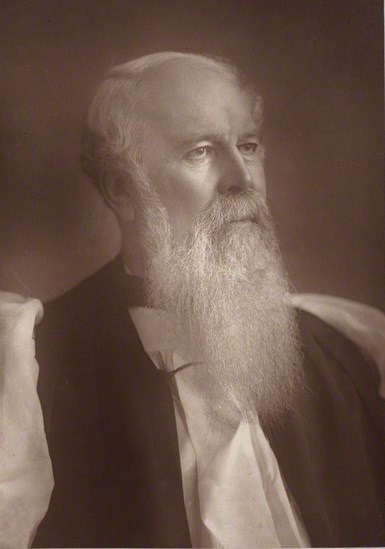
In his book, Encounters with Jesus, Tim Keller flags this sermon from J.C. Ryle, and here’s a $$ quote from the Anglican bishop.

Ryle’s whole sermon here, and a choice bit below. (but after you do, please read my disclaimer below it).


“Now assurance goes far to set a child of God free from this painful kind of bondage, and thus ministers mightily to his comfort.

It enables him to feel that the great business of life is a settled business, the great debt a paid debt, the great disease a healed disease, and the great work a finished work; and all other business, diseases, debts, and works, are then by comparison small.

…..Assurance will help a man to bear poverty and loss. It will teach him to say, “I know that I have in heaven a better and more enduring substance. Silver and gold have I none, but grace and glory are mine, and these can never make themselves wings and flee away. Though the fig tree shall not blossom, yet I will rejoice in the Lord.” (Habak. iii. 17, 18.)

Assurance will support a child of God under the heaviest bereavements, and assist him to feel “It is well.” An assured soul will say, “Though beloved ones are taken from me, yet Jesus is the same, and is alive for evermore. Though my house be not as flesh and blood could wish, yet I have an everlasting covenant, ordered in all things and sure.” (2 Kings iv. 26; Heb. xiii. 8; 2 Sam. xxiii. 5.)

Assurance will enable a man to praise God, and be thankful, even in a prison, like Paul and Silas at Philippi. It can give a believer songs even in the darkest night, and joy when all things seem going against him. (Job ii. 10; Psalm xlii. 8.)

Assurance will enable a man to sleep with the full prospect of death on the morrow, like Peter in Herod’s dungeon. It will teach him to say, “I will both lay me down in peace and sleep, for thou, Lord, only makest me to dwell in safety.” (Psalm iv. 8.)

Assurance can make a man rejoice to suffer shame for Christ’s sake, as the Apostles did. It will remind him that he may “rejoice and be exceeding glad “ (Matt. v. 12), and that there is in heaven an exceeding weight of glory that shall make amends for all. (2 Cor. iv. 17.)

Assurance will enable a believer to meet a violent and painful death without fear, as Stephen did in the beginning of Christ’s Church, and as Cranmer, Ridley, Latimer, and Taylor did in our own land. It will bring to his heart the texts, “Be not afraid of them which kill the body, and after that have no more that they can do.” (Luke xii. 4.) “Lord Jesus receive my spirit.” (Acts vii. 59.)10

Assurance will support a man in pain and sickness, make all his bed, smooth down his dying pillow. It will enable him to say, “If my earthly house fail, I have a building of God.” (2 Cor. v. 1.) “I desire to depart and be with Christ.” (Phil. i. 23.) “My flesh and my heart may fail, but God is the strength of my heart, and my portion for ever.”11 (Psalm lxxiii. 26.)

Reader, the comfort assurance can give in the hour of death is a point of great importance. Believe me, you will never think assurance so precious as when your turn comes to die.

In that awful hour, there are few believers who do not find out the value and privilege of an “assured hope,” whatever they may have thought about it during their lives. General “hopes” and “trusts” are all very well to live upon, while the sun shines, and the body is strong: but when you come to die, you will want to be able to say, “I know” and “I feel.”

Believe me, Jordan is a cold stream, and we have to cross it alone. No earthly friend can help us. The last enemy, even death, is a strong foe. When our souls are departing there is no cordial like the strong wine of assurance.


Amen.

And I’d be remiss if I didn’t add this. Medication also helps.

I like that bit by on assurance by Ryle, and perhaps you did, as well.

But I also want to remind you that if reading that passage does nothing for your depression or anxiety, for your spirituality, then it is not that assurance does nothing for you — it is that your depression and anxiety work against your assurance.

Of course, you’re still God’s child, but if you have a mental health disorder, it’s far harder to feel assured of anything.

Which is why I always urge people to take care of their mental health for their spiritual health.

When your mind is working as intended, then it’s much easier to really believe that God’s promise is for YOU, and not just someone else.

I recently spoke with Diana Gruver who’s written about famous Christians with depression, and one such was the poet and hymn-writer William Cowper, who believed Christ’s redemption applied to everyone but him.

And when you’re depressed, that’s the kind of self-loathing that can make it impossible for us to feel anyone could love us — much less the perfect, sinless Christ.

Once you manage your depression, assurance becomes a much more beautiful thing because it doesn’t feel foreign. When you feel, “Ah, this actually is for me, too,” then well, everything gets better.

August 17, 2021
0 Facebook Twitter Google + Pinterest
Animals get PTSD, too

Animals get PTSD, too

written by Christian Heinze

Smithsonian has a fascinating article explaining that, yes, animals appear to get PTSD, and it has chronic effects on animals and their offspring’s health.

Inside the article is a really good, simple explanation of PTSD in humans:

Sharon Levy, Smithsonian:


“Intrusive memories of trauma, the constant state of alarm that can wear down the body’s defenses and lead to physical illness — these arise from the same ancient brain circuits that keep the snowshoe hare on the lookout for hungry lynx, or the giraffe alert for lions.

The amygdala creates emotional memories, and has an important connection to the hippocampus, which forms conscious memories of everyday events and stores them in different areas of the brain. People or other animals with damaged amygdalae can’t remember the feeling of fear, and so fail to avoid danger.

Brain imaging studies have shown that people with PTSD have less volume in their hippocampus, a sign that neurogenesis — the growth of new neurons — is impaired. Neurogenesis is essential to the process of forgetting, or putting memories into perspective. When this process is inhibited, the memory of trauma becomes engraved in the mind. This is why people with PTSD are haunted by vivid memories of an ordeal long after they’ve reached safety.”


This isn’t a “snowflake” thing. This is a brain thing. It’s real.

If you struggle with PTSD, here’s a psychiatrist and therapist near you. Talk about whether meds are right for you.

Also, Reddit has a good discussion board. I recommend discussion boards, big-time. You’d be surprised at how much you can learn and how helpful it can be, to see you’re not alone.

Finally, here’s a good site for helping someone with PTSD.

August 17, 2021
0 Facebook Twitter Google + Pinterest
Load More Posts

Social Media

Twitter

Get in touch with me

Contact here. 

The Weary Christian mission:

First off:


In the United States, find a psychiatrist here.

In the United States, find a therapist here.

If you’re in the United States and having thoughts of harming yourself or others, please call the National Suicide Lifeline at 1-800-273-8255.

If you’re in the UK, get urgent help here.

Canada, here.

Australia, here.

New Zealand, here.

South Africa, here.

France, here.

Germany, here.

Portugal, here.

Mexico, here.

India, here.

The Philippines, here.

Singapore, here.

South Korea, here.


The Weary Christian goal…


a) reduce the stigma surrounding depression, anxiety, OCD, and other conditions in the Christian community.


b) have uncomfortable but honest conversations.


c) Reduce the stigma surrounding antidepressants, antipsychotics, and other meds God has given us as gifts.


And…


d) Sometimes (tons of times), we all feel really, really depressed in our journey. Hopefully, this site makes you feel less alone.

Categories


@2017 - PenciDesign. All Right Reserved. Designed and Developed by PenciDesign