The Weary Christian
  • Depression
    • Depression

      Latest Medical Studies on Depression

      Depression

      James Bryan Smith: Unmet expectations and fear

      Depression

      STUDY: Criticizing older adults make them more vulnerable…

      Depression

      STUDY: Awe can reduce depressive symptoms

      Depression

      STUDY: How music-mindfulness can help depression, anxiety

  • Anxiety
    • Anxiety

      Calling out the brain on catastrophizing

      Anxiety

      James Bryan Smith: Unmet expectations and fear

      Anxiety

      STUDY: Awe can reduce depressive symptoms

      Anxiety

      STUDY: How music-mindfulness can help depression, anxiety

      Anxiety

      STUDY: Chronic pain associated with higher rates of…

  • Book quotes/Video
    • Book quotes/Video

      John Mark Comer: “Wherever Jesus went, the kingdom…

      Book quotes/Video

      Ann Voskamp: “Jesus saves you for Himself”

      Book quotes/Video

      Philippe: “Refusing to suffer means refusing to live”

      Book quotes/Video

      “In darkest night, you were there like no…

      Book quotes/Video

      Thanksgiving for his brokenness

  • Health News
    • Health News

      Latest Medical Studies on Depression

      Health News

      Calling out the brain on catastrophizing

      Health News

      STUDY: Mental health conditions share deep genetic patterns

      Health News

      STUDY: Four Supplements that MIGHT help depression

      Health News

      STUDY: Gut changes raise risk of eating disorders…

  • Interviews
    • Interviews

      INTERVIEW: Dr. Terry Powell’s gripping account of depression

      Interviews

      INTERVIEW: Therapist Michael Schiferl explains religious scrupulosity and…

      Interviews

      INTERVIEW: Rocker Matt Sassano shares battles, urges transparency…

      Interviews

      INTERVIEW: Dr. Brian Briscoe tells Christians that antidepressants…

      Interviews

      INTERVIEW: Pastor Scott Sauls on anxiety, depression, and…

  • Devotionals
    • Devotionals

      Think you’re a “failure?” Jesus sees you unlike…

      Devotionals

      “Grace has got to be drunk straight”

      Devotionals

      Defeated by God

      Devotionals

      Am I a faithless Christian?

      Devotionals

      “I killed Jesus of Nazareth”

  • About
  • Depression
    • Depression

      Latest Medical Studies on Depression

      Depression

      James Bryan Smith: Unmet expectations and fear

      Depression

      STUDY: Criticizing older adults make them more vulnerable…

      Depression

      STUDY: Awe can reduce depressive symptoms

      Depression

      STUDY: How music-mindfulness can help depression, anxiety

  • Anxiety
    • Anxiety

      Calling out the brain on catastrophizing

      Anxiety

      James Bryan Smith: Unmet expectations and fear

      Anxiety

      STUDY: Awe can reduce depressive symptoms

      Anxiety

      STUDY: How music-mindfulness can help depression, anxiety

      Anxiety

      STUDY: Chronic pain associated with higher rates of…

  • Book quotes/Video
    • Book quotes/Video

      John Mark Comer: “Wherever Jesus went, the kingdom…

      Book quotes/Video

      Ann Voskamp: “Jesus saves you for Himself”

      Book quotes/Video

      Philippe: “Refusing to suffer means refusing to live”

      Book quotes/Video

      “In darkest night, you were there like no…

      Book quotes/Video

      Thanksgiving for his brokenness

  • Health News
    • Health News

      Latest Medical Studies on Depression

      Health News

      Calling out the brain on catastrophizing

      Health News

      STUDY: Mental health conditions share deep genetic patterns

      Health News

      STUDY: Four Supplements that MIGHT help depression

      Health News

      STUDY: Gut changes raise risk of eating disorders…

  • Interviews
    • Interviews

      INTERVIEW: Dr. Terry Powell’s gripping account of depression

      Interviews

      INTERVIEW: Therapist Michael Schiferl explains religious scrupulosity and…

      Interviews

      INTERVIEW: Rocker Matt Sassano shares battles, urges transparency…

      Interviews

      INTERVIEW: Dr. Brian Briscoe tells Christians that antidepressants…

      Interviews

      INTERVIEW: Pastor Scott Sauls on anxiety, depression, and…

  • Devotionals
    • Devotionals

      Think you’re a “failure?” Jesus sees you unlike…

      Devotionals

      “Grace has got to be drunk straight”

      Devotionals

      Defeated by God

      Devotionals

      Am I a faithless Christian?

      Devotionals

      “I killed Jesus of Nazareth”

  • About

The Weary Christian

THE WEARY CHRISTIAN

LIVING WITH FAITH AND DEPRESSION

  • Depression
    • Depression

      Latest Medical Studies on Depression

      Depression

      James Bryan Smith: Unmet expectations and fear

      Depression

      STUDY: Criticizing older adults make them more vulnerable…

      Depression

      STUDY: Awe can reduce depressive symptoms

      Depression

      STUDY: How music-mindfulness can help depression, anxiety

  • Anxiety
    • Anxiety

      Calling out the brain on catastrophizing

      Anxiety

      James Bryan Smith: Unmet expectations and fear

      Anxiety

      STUDY: Awe can reduce depressive symptoms

      Anxiety

      STUDY: How music-mindfulness can help depression, anxiety

      Anxiety

      STUDY: Chronic pain associated with higher rates of…

  • Book quotes/Video
    • Book quotes/Video

      John Mark Comer: “Wherever Jesus went, the kingdom…

      Book quotes/Video

      Ann Voskamp: “Jesus saves you for Himself”

      Book quotes/Video

      Philippe: “Refusing to suffer means refusing to live”

      Book quotes/Video

      “In darkest night, you were there like no…

      Book quotes/Video

      Thanksgiving for his brokenness

  • Health News
    • Health News

      Latest Medical Studies on Depression

      Health News

      Calling out the brain on catastrophizing

      Health News

      STUDY: Mental health conditions share deep genetic patterns

      Health News

      STUDY: Four Supplements that MIGHT help depression

      Health News

      STUDY: Gut changes raise risk of eating disorders…

  • Interviews
    • Interviews

      INTERVIEW: Dr. Terry Powell’s gripping account of depression

      Interviews

      INTERVIEW: Therapist Michael Schiferl explains religious scrupulosity and…

      Interviews

      INTERVIEW: Rocker Matt Sassano shares battles, urges transparency…

      Interviews

      INTERVIEW: Dr. Brian Briscoe tells Christians that antidepressants…

      Interviews

      INTERVIEW: Pastor Scott Sauls on anxiety, depression, and…

  • Devotionals
    • Devotionals

      Think you’re a “failure?” Jesus sees you unlike…

      Devotionals

      “Grace has got to be drunk straight”

      Devotionals

      Defeated by God

      Devotionals

      Am I a faithless Christian?

      Devotionals

      “I killed Jesus of Nazareth”

  • About
DepressionHealth News

Latest Medical Studies on Depression

STUDY: Mental health conditions share deep genetic patterns

James Bryan Smith: Unmet expectations and fear

STUDY: Four Supplements that MIGHT help depression

STUDY: Criticizing older adults make them more vulnerable to developing depression

Daily Blog

J.S. Park: Self-talk in the third person

J.S. Park: Self-talk in the third person

written by Christian Heinze

In his book, The Voices We Carry, hospital chaplain and teaching pastor, J.S. Park, offers this valuable, evidence-based, little nugget for those of us who are prone to self-condemnation.

And for the self-condemnation sort of goes with the territory.

Park writes in his book:

*****************************************************************************************************************************

“We say the worst things to ourselves that we’d never say to anyone else, and we root for others while forgetting to root for ourselves.

….I had read that when we see ourselves in the third person, we have more compassion for ourselves and get a boost of bravery.

In other words, instead of asking, What do I need? it’s better to say, What does Jane need? Instead of saying, You can do this, it’s better to say John can do this. It’s like rooting for somebody in a movie, except that somebody is you. Seeing yourself in a story, it seems, gives you enough empathy to advocate for yourself the same way you’d stick your neck out for a friend.

I have often wondered how I could do such a thing. How I could find the courage to say what was true even when it was hardest.

And if I saw myself rom the point of view of God, the real advocate, in the same way He sees me, then I could step up for a guy like me.

If you could see yourself from His side of things, you might root for yourself a bit more. You might believe you have a voice worth hearing.”

*****************************************************************************************************************************

The idea that God sees us more lovingly than we see ourselves is, of course, entirely biblical.

I John 3:1: “See how very much our Father loves us, for he calls us his children, and that is what we are!”

And because of that, Thomas Merton wrote, “Who am I? I am one loved by Christ,” and concluded:

“Quit keeping score altogether and surrender ourselves with all our sinfulness to God who sees neither the score nor the scorekeeper but only his child redeemed by Christ.”

I know we know this, but it’s a constant battle to believe it, and it’s what inspired Henri Nouwen to write, “The spiritual life is a long and often arduous search for what you have already found.”

A-MEN.

There are a lot of churches who, while acknowledging our salvation in Christ, want to keep us in a perpetual state of wondering, asking, worrying whether or not we measure up.

But that’s the message, the religion Christ came to destroy.

A child shouldn’t have to worry every day about whether she’s loved, or wonder whether she’s good enough on Monday to be loved by her parents, but too bad on Tuesday.

If we’re good parents, our kids shouldn’t even have to ask in the loneliness of night, “Am I loved?”

And yet that’s the kind of Father that’s preached in many pulpits. He’s like a dad who manipulates his children into obedience by loving us if we do right, or turning his face from us if we do wrong.

No wonder so many Christians, including myself, have been scarred by this image of the Father and can’t grasp that being his child isn’t just a good thing, but the best possible thing.

P.S. By the way, the study Park refers to about talking to ourselves in third person is this one, and it’s pretty fascinating and proves just how effective it can be for us.

The researchers concluded, in The Journal of Personality and Social Psychology:

….. non-first-person language use (compared with first-person language use) leads people to appraise future stressors in more challenging and less threatening terms. Finally, a meta-analysis (Study 6) indicated that none of these findings were moderated by trait social anxiety, highlighting their translational potential. Together, these findings demonstrate that small shifts in the language people use to refer to the self during introspection consequentially influence their ability to regulate their thoughts, feelings, and behavior under social stress, even for vulnerable individuals.

This is another example of how psychology and Christianity are not at odds, as so many Christians claim.

When we talk to ourselves as someone, beloved, we’re the better for it, and when we see ourselves as God sees us, then that is so overpowering we will be more likely to extend that to others.

November 13, 2021
0 Facebook Twitter Google + Pinterest

“I want to thank you, now, for being patient with me”

written by Christian Heinze

The late singer-songwriter Keith Green, who’s basically a sermon in a song, and particularly here, in “Make my Life a Prayer to You.”

*****************************************************************************************************************************

“I want to thank you now for being patient with me

O, it’s so hard to see when my eyes are on me”

*****************************************************************************************************************************

I rarely thank God for his patience.

I ask for forgiveness a lot, and that’s a prayer for mercy.

But I should follow that with a prayer of gratitude. For his patience.

He is merciful to forgive that first sin, and patience to forgive that same sin, over and over, and there’s a mercy to that patience, as well. The more patient, the more merciful.

And yet, it’s almost impossible to understand or believe God’s patience until we believe we’re his children.

Our children can do the same things, over and over, and it never changes the way we feel about them.

Is there anyone else in the world we afford the same loving patience?

We get mad at so many people, for so little, and yet nothing our children can do, no matter how much they do it, can shake our love for them.

In fact, the idea that our children could “sin their way out of our patience and love” is so grotesque that it’s hard to write or even think that thought.

And that’s why our faith and gratitude towards God’s patience is warranted — we are his children.

I never really came to understand the overwhelmingly implications of that until my dad passed away, soon after my first son was born.

Suddenly, this picture — the cover to Abba’s Child by Brennan Manning — was my life.
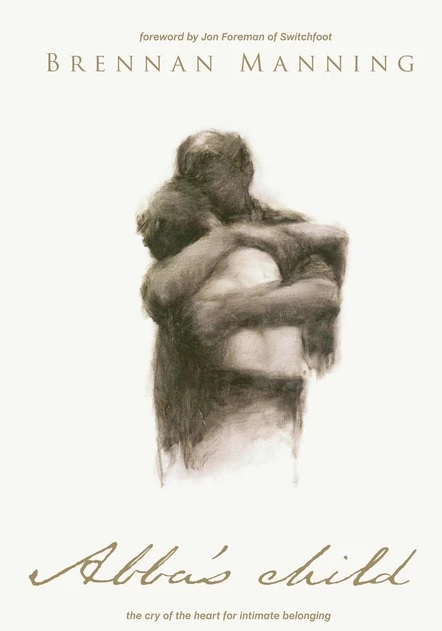
I was both the father, holding my helpless son through everything, and the son, being held by my Father, eternally, through everything. And I wasn’t really holding onto Jesus, was I? He was holding me.

And that’s the way it is for all of us.

Do you realize that — as a parent, you are both the strong in the picture and the weak and isn’t that wonderful?

And if you’re not a parent, well, you don’t even have to be strong. You’re just held. That’s wonderful, too.

In the same book, Manning writes of our sonship, “Jesus, the beloved Son, does not hoard this experience for himself.”

In other words, he’s not like a firstborn who wants to keep all the toys, all the parents’ affection, all the all of everything.

He can’t wait for us to share in his glory — Us. The ones who live our lives only because he forgives our lives, patiently, and only because he loves us, always.

And now Jesus is actually itching to share everything he, the firstborn, has with us. What a brother. And what a Father, to give us that brother, and to be that Father.

When we’re depressed, it’s easy to to forget that’s the reality of it all. It’s easy to doubt it. But this is all one bit of good news that isn’t too good to be true.

Here’s the song.

November 9, 2021
0 Facebook Twitter Google + Pinterest
STUDY: DNA reveals IBS-Anxiety link

STUDY: DNA reveals IBS-Anxiety link

written by Christian Heinze

A new study in Nature Genetics puts an exclamation mark on the oft-noted, studied, Gut-Brain axis.

But this time, in a slightly different way.

The researchers compared 50,000 people with Irritable Bowel Syndrome (IBS) to a population group with no symptoms of IBS.

What was their fascinating find?

There were six genetic differences that were much more common in the IBS group than the non-IBS group.

Most of those differences centered on roles in the brain and “possibly the nerves which supply the gut, rather than the gut itself.”

Now here’s where it gets even more interesting — those UnMagnificent Six Genes also put people at higher risk for other mood disorders like depression, neuroticism, and anxiety.

The BBC:

That doesn’t mean anxiety causes IBS symptoms or vice versa, says Prof Parkes.

“Our study shows these conditions have shared genetic origins, with the affected genes possibly leading to physical changes in brain or nerve cells that in turn cause symptoms in the brain and symptoms in the gut.”

This is yet another reminder to Christians of the huge medical component of mood and anxiety disorders.

What some Christians often call “superior faith” (a loaded term itself) might just be “different DNA.”

So if someone comes to a pastor and says, “I have anxiety,” it’s probably more helpful to respond, “Have you talked to a gastroenterologist?” than “be anxious for nothing.”

[Photo and video: I didn’t want to just do a stock photo of a stomach, so why not pay a visit, via Atlas Obscura, to what is called “the world’s most beautiful public toilet” in Gildeskal, Norway?

Also, I’m not making light of the pain of IBS w/the pic, as I have IBS and Crohn’s myself. If you’ve got them, too, you know that you have to laugh to get by. And, know where the closest restroom is.].

November 8, 2021
0 Facebook Twitter Google + Pinterest
In God’s hands, entirely

In God’s hands, entirely

written by Christian Heinze

In her book, Help Thanks Wow, Anne Lamott tells the story of the priest, Pedro Arrupe, who lived a remarkable life (Among other things, he was in Hiroshima when the bomb fell, was one of eight priests who survived, and immediately went to work, serving the wounded).

Near the end of his life, he suffered a stroke that eventually took away his ability to speak.

And he wrote this:

*****************************************************************************************************************************

“More than ever I find myself in the hands of God.

This is what I have wanted all my life, from my youth.

But now there is a difference.

The initiative is entirely with God.

It is indeed a profound spiritual experience to know and feel myself so totally in God’s hands.”

*****************************************************************************************************************************

We’ve all said or prayed something like, “God, I want to be in your hands.”

But sometimes that looks so different from what we think, and we ask ourselves, “Do I really want to be?”

Well, the truth is — we already are entirely in God’s hands. At this moment.

But what made Arrupe’s experience different from yours or mine is that he finally felt he was entirely in God’s hands, and you and I might say, “God, I want to feel entirely in your hands,” but do we know what we ask?

It’s a scary mental place to go — the idea that we now feel completely, physically and mentally dependent on God’s mercy.

Emotionally, I don’t like that thought, and yet intellectually, there are no other hands that would give their life for you, while you cut those hands off and spit on him.

No one could love you that much.

And yet, it still scares us to be entirely in those hands.

We worry that he won’t really be Jesus to us.

But where has he always gone?

To the suffering.

The preacher Charles Spurgeon once said: “Jesus is touched, not with a feeling of your strength but of your infirmity….as the mother feels with the weakness of her babe, so does Jesus feel with the poorest, saddest, and weakest.”

I’d rather not be the poorest, saddest, weakest.

But if you feel that way this morning, remember that Jesus was poor, that he was a man of sorrows, and that he was naked, on a cross.

According to the world, he was the “poorest, saddest, weakest,” and so he is telling you, as one who went through it all, “I know what it’s like.”

In his book Gentle and Lowly, Dane Ortlund reminds us of something important about the term, “body of Christ.”

So often, we hear “body of Christ” and think of it in ecclesiastical terms. You know, the church that gathers.

But Ortlund urges us to look at our hurting bodies in the context of Christ, hurting as well.

He writes: “We are part of him. This is why the risen Christ asks a persecutor of his people, ‘Why are you persecuting me’?”

If you hurt, he hurts. Like any parent.

And as Spurgeon said in another sermon, “The eternal arms shall be lower than you are.”

It’s a “neither height nor depth” fact.

But I know that depression will lie to us about that fact.

And so if all of this doesn’t console you, don’t question your salvation or Christ’s love. That’s what depression will do. Make you doubt everything good, including a Father who loves you as much as his own son (John 17:23).

So, here’s my constant pitch again…

Here’s a psychiatrist near you.

And a therapist.

[Photo: Pedro Arrupe Memorial at the University of San Francisco, photo: Daderot]

November 8, 2021
0 Facebook Twitter Google + Pinterest
Mental health links

Mental health links

written by Christian Heinze

DEPRESSION:

a. The New York Times with a tremendous review of ketamine’s success in treating depression for many. And also, the scarcity of data on its long-term effects.

In a nutshell: lots of people have treatment-resistant depression, and ketamine often provides immediate, stunning relief. But……we’re not sure what the long-term side effects are yet.

b. Two physicians talk about battling treatment-resistant depression by targeting the Glutamatergic System.

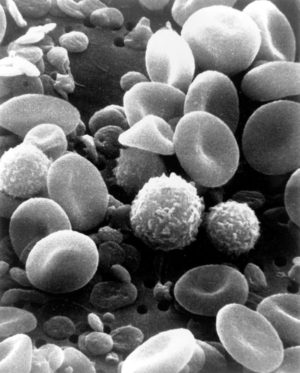
c. STUDY: “Higher white blood cell count tied to genetic depression risk.” [PHOTO above]

d. You know the saying that prisons are the new mental health institutions? Another study confirms how prevalent mental health problems are in prisons.

e. Lindsey Vonn (you know, the Olympic skier who won everything) talks about her struggle with depression (and gives tips).

f. Another STUDY further establishes the relationship between poor sleep and mental illness. The conclusion isn’t unique. There have been lots of studies suggesting this. But the study design, here, was particularly sophisticated.

Here are 8 tips for getting a good sleep from Harvard Health. 1) exercise 2) reserve your bed for sleep and sex 3) make your bedroom quiet, dark, and cool 4) start a sleep ritual 5) eat a small healthy snack if you’re hungry 6) avoid alcohol and caffeine 7) de-stress 8) get checked out for things like sleep apnea or reflux.

BIPOLAR DISORDER:

a. STUDY: We still don’t know exactly why lithium seems to work so well, but “now researchers have developed a method for imaging lithium in living cells, allowing them to discover that neurons from BD patients accumulate higher levels of lithium than healthy controls.”

b. If you have a mood disorder, you are now eligible for a Covid vaccine booster shot, as these conditions raise the risk for mortality.

ANXIETY:

a. Schitt’s Creek actor Dan Levy tells People Magazine that he experienced so much tension and anxiety during filming that he actually needed a neck brace. Wow.

Neck tension is incredibly common in people with anxiety, and here are some tips on how to relieve it. And some more.

b. The Guardian: It’s called “Text Anxiety.” Not a clinical disorder! But too many texts, emails, notifications are overwhelming a lot of people. Some good advice on how to deal with it, if you have it.

c. Beekeeping Therapy for veterans, struggling with anxiety and PTSD. This follows another recent story on equine therapy for those struggling with PTSD.

d. Live Science: “7 anxiety tips to help you everyday.” There’s nothing in there you probably don’t already know (sleep, exercise, etc). But the research studies backing up their tips are pretty interesting.

e. Covid numbers are finally falling. So is stress and anxiety among students.

PTSD:

a. STUDY: A new study of Syrian refugees suggests that the children of moms who experience PTSD may struggle with emotional processing abilities.

“Remarkably, as a mother’s PTS symptoms dropped by one point on the scale, a child’s emotional processing scores increased by the equivalent of one year of development. By contrast, fathers’ PTS symptoms were not significantly related to children’s emotional processing scores.”

Treatment is vital for both mother and children.

EATING DISORDERS:

a. Japan has seen a 60% jump in eating disorders since the start of the Covid Crisis.

b. Eating disorders are common among veterans — attributed to trauma, sustaining military weight requirements, and the notion that going without food is a sign of strength.

SCHIZOPHRENIA:

a. STUDY: “Digital Medicine System may reduce schizophrenia symptoms beyond the effects of oral pharmacotherapy alone.”

OBSESSIVE-COMPULSIVE DISORDER:

a. STUDY: Need of Approval Predicts OCD Diagnosis. “Results showed lower levels of confidence and higher levels of attachment anxiety among patients with OCD….. higher need of approval most strongly predicted OCD diagnosis compared with other attachment factors.”

b. Rates of OCD among adults and children have surged during the Covid Crisis.

*****************************************************************************************************************************

VERSE: “They encouraged them to continue in the faith, reminding them that we must suffer many hardships to enter the kingdom of God,” — Acts 14:42

MUSIC: From Ennio Morricone, one of the most sublime pieces of music you will ever hear. In the best western you will ever see.

November 5, 2021
0 Facebook Twitter Google + Pinterest
Rosamond Herklots’ call to reject bitterness

Rosamond Herklots’ call to reject bitterness

written by Christian Heinze

Although written in 1966, it sounds and reads like something from many centuries past.

Which isn’t a good or bad thing, it just means you have to think longer about each line (and spending a bit longer on anything is a good thing).

Rosamond Herklots’ song: (Why, oh, why, isn’t there more about this amazing woman and poet, online)?

*****************************************************************************************************************************

“Forgive our sins as we forgive”

‘Forgive our sins as we forgive,’
you taught us, Lord, to pray,
but you alone can grant us grace
to live the words we say.

How can your pardon reach and bless
the unforgiving heart,
that broods on wrongs and will not let
old bitterness depart?

In blazing light your cross reveals
the truth we dimly knew:
what trivial debts are owed to us,
how great our debt to you!

Lord, cleanse the depths within our souls,
and bid resentment cease;
then, bound to all in bonds of love,
our lives will spread your peace.

*****************************************************************************************************************************

Think of those lines: “What trivial debts are owed to us, how great our debt to you.”

And: “How can your pardon reach and bless the unforgiving heart that broods on wrongs and will not let old bitterness depart?”

I’m going to try (and fail) to read that last line every day.

There’s a lot of bitterness in the world, at large, right now, and perhaps in your personal life.

Mine too.

But harboring that sin is perhaps the easiest and most pernicious, because it comes from a place of being wronged and so we’re likely to hold onto it more tightly than other sins, as we mistake it for “righteousness” when really it’s the prelude to self-righteousness and the big, horrible opera, as well.

God knows I’ve indulged, and still indulge the bitter, and it’s only when I look at Christ that I realize how wrong and ridiculous it is.

He died, willingly, for a world that wronged him, and did so saying, “Father, forgive them.”

How can I make myself higher than Jesus, which is what I do when I’m bitter?

I don’t talk much about sin here because Christians with mental health challenges are particularly prone to self-loathing.

And when we fixate on sin, a lot of us talk ourselves out of Christ’s love for us. Which I’m pretty sure he doesn’t want us to do.

But it’s good to think about our sin of bitterness — not to condemn ourselves — but because it stops us from condemning others. Whether it’s condemning our spouses, our families, or our neighbors with the yard signs we don’t like.

And it’s because we’ve forgotten the theology of our fallibility, our personal sin, God’s mercy towards us, and the practice that should come from those three things — humility.

We will never let go of our self-righteousness until we see your own unrighteousness. (When we meet Jesus, I don’t think he’ll do a slow clap and say, “Wow. You were right on a lot.”).

Yet we slow clap our rightness all the time, don’t we? In our marriage, our friendships, our politics.

That’s what leads to our bitterness. Over marriage, friendship, and politics.

This is a terrible time of bitterness in America, and unfortunately, the evangelical church is feasting on it and actually promoting it. It’s like a virus that replicates and spreads, and it’s infected the entire church.

But it’s killing us, both spiritually, and as a group of people that are supposed to represent God’s love.

If there’s one fight Christians should actually be a part of in this world, it’s the fight against bitterness, the fight against our lack of humility and our self-righteousness.

(And I write this to remind myself of my own bitterness, not to put myself above it. Ask my wife about how well I deal with bitterness).

Professor Michael Hawn has written a great history of the song, and includes this beautiful anecdote.

I was in South Africa in 1998 during the presidency of Nelson Mandela. Arch Bishop Desmond Tutu presented President Mandela with the bound volumes containing the results of the Truth and Reconciliation Commission. I was sitting among a group of black and white Methodist ministers watching this historic occasion on television as Tutu referenced one of the many important revelations that took place during the process that the Commission hoped would lead to healing and hope for South Africa. At one point, Tutu recalled a black woman who asked him, “Who murdered my husband?” Tutu responded, “We do not know.” She was insistent, however, and continued, “I must know who killed my husband.” Again, the patient Tutu responded, “I’m sorry, but we may never know who killed your husband.” Still her question persisted. Finally, Tutu asked, “My dear lady, why must you know who killed your husband?” She responded simply and quietly, “So I can forgive him.”

I’ve included, at the bottom, Koine’s version of the song, which sounds a bit like it’s from a Sergio Leone film.

November 3, 2021
0 Facebook Twitter Google + Pinterest
An excellent article on OCD

An excellent article on OCD

written by Christian Heinze

Adelaide Miller has a terrific read, with first-hand testimonials, on living with Obsessive-Compulsive Disorder.

There are some gripping examples, but the piece brings up a couple, really important points.

a) OCD isn’t always just about Howard Hughes-ian handwashing, organizing things perfectly, arranging, contamination, and all the other popular representations.

You can have OCD about anything.

b) Often, OCD resides entirely in your head without the attendant rituals.

It’s unwanted and intrusive mental thoughts that refuse to give your mind a break.

Consequently, you can live quite a normal life, on the outside, while you’re absolutely tortured, inside.

No one sees you engage in all the physical rituals that accompany some forms of OCD, and so you can live a long time as a “normal person” without a proper diagnosis.

All forms of OCD are brutal, but this a particularly difficult kind because, as the article notes, the longer we go undiagnosed, the harder it is to eventually treat.

I started having obsessive thoughts about going to hell at 4 years old, but there were no external rituals to ease that thought, and so no one recognized my OCD the way they would if I were obsessive about hand-washing.

Eventually, that mental obsession ceased, but there were always replacements, lined up on the bench, ready for their starring role.

Now I want to say something that the article doesn’t address.

What role does Christianity (if any) play in this?

Well, some Christians would counter: “Well, if you’re having an unwanted, intrusive thought, just think about Scripture.”

There’s a problem with that.

You can fixate on any number of Scriptural issues to the point where it becomes severely intrusive, unwanted, and debilitating.

God’s sovereignty and man’s free will? It’s almost a cliché to bring that one up, but of all the books and countless perspectives I’ve read, none has come close to resolving the mystery.

“Examine yourself, to see whether you are in the faith. Test yourselves”. 2 Corinthians 13:5. Thanks, Paul. That’s been the bane of Christians with OCD for thousands of years.

Jesus, in Matthew 5: “If you are sued in court and your shirt is taken from you, give your coat too.”

Yes, he’s laying out a principle, but how do we live out that principle? A lot of Christians are willing to sweep that under the rug as a conscience-issue, but people with OCD don’t sweep anything under the rug.

There is no rug.

The point is that if you direct Christians with OCD towards Scripture, they’ll just apply their mental (or pure-O) OCD in that direction.

The problem isn’t Scripture, the problem is OCD, and you can’t treat OCD with Scripture, because there are 66 books in the Bible, with innumerable puzzling stories and verses that have inspired fierce theological debates, countless denominations, and actual catapult-and-sword, nation-state wars over interpretation.

I love my Bible.

Therein lie the words, the being, the salvation of Christ, my Lord and Savior, and the one who makes this whole mess of life worth it because there’s a resurrection where our minds and bodies will finally be free and perfect and at rest.

But as someone with OCD, it’s also inspired sometimes-debilitating “religious scrupulosity,” which Jesus never intended. He said his burden is light.

It’s not Christ’s fault, it’s the fact we all live with challenges from a fallen world.

So if you “treat OCD with Scripture,” you’ll have OCD over your Christianity just like some people have it over contamination or literally anything, because you can have OCD about anything.

c) If any ritual, if any thought, if anything is causing you severe distress, talk to a doctor. Just get checked out.

In Miller’s article, she interviews Dr. David Cooper, who says that early treatment is vital:

“Biologically, brain imaging studies have found that brain changes related to OCD, structure and circuitry, increase with age,” Mr Cooper said.

“The longer someone lives with OCD, the more their brains might change to support its processes.

“Socially, the longer someone lives with OCD the more likely they are to organise their lives to accommodate it.

“Family members often end up participating in compulsions. People will choose careers, friends or activities that allow them to avoid triggers or perform compulsions.

“The way their lives are organised around OCD serves to maintain the disorder.

Finally, Miller points out some forms of treatment for therapy, which include Exposure and Response Prevention, Acceptance Commitment Therapy, and/or medication.

I’d like to add one more thing — last year, researchers discovered a potentially fascinating and wonderful new way of treating OCD by treating our immune system. It’s still far too early to be practiced, clinically, but the science is promising and, I hope, offers some comfort that, yet again, we can trace these mental challenges to our bodies and the way they malfunction.

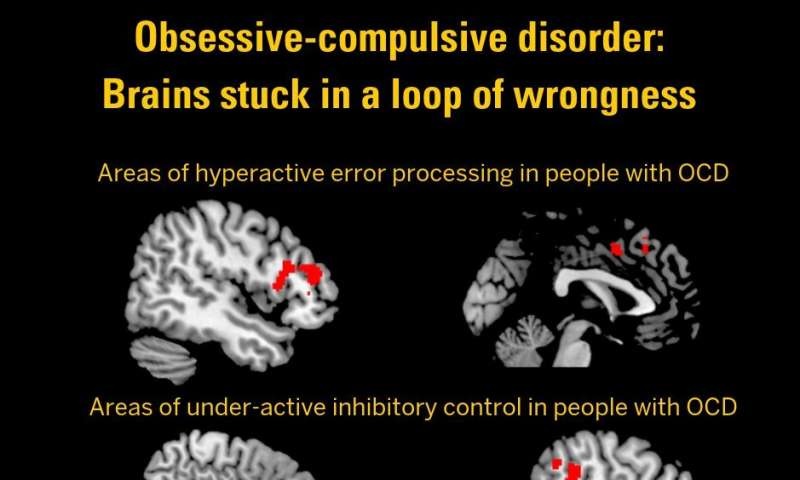
For example, this is a brain with OCD, courtesy of this study.

It’s not your fault. And there are far more people with this out there than you think (and you – and I — think a lot).

[Photo: Pexels, free stock photographs]

November 2, 2021
1 Facebook Twitter Google + Pinterest
Amy Simpson with a good reminder on antidepressants

Amy Simpson with a good reminder on antidepressants

written by Christian Heinze

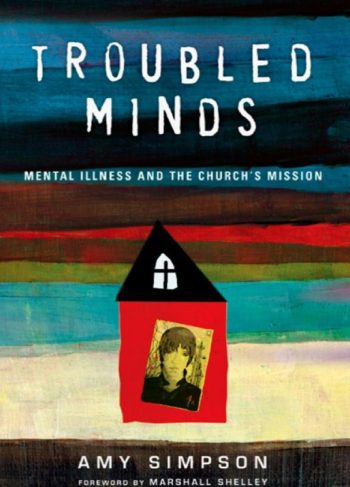
Author Amy Simpson, who wrote the award-winning book, Troubled Minds, with a very good reminder for Christians who are leery of antidepressants.

Simpson writes (emphasis added).

*****************************************************************************************************************************

“I recently read an article by a Christian writer questioning whether Christians should take antidepressants, because emotional pain can cause us to lean more heavily on Christ.

Physical pain can have the same effect, but when I had back surgery, no one questioned whether I should all ow the surgeon to use general anesthesia.

…..Yes, severe emotional pain and other symptoms of mental illness can drive us closer to our savior.

They can also drive us to cause serious harm to the people around us, reject our faith, believe lies and commit suicide.”

*****************************************************************************************************************************

End quote (You can read my interview with Amy here).

That last part is so good.

If you feel that clinical depression and anxiety are drawing you closer to Christ, okay, but if you have the symptoms, then by definition, they’re probably pushing you farther away from those around you.

When I’m depressed or anxious, it’s much harder to be a loving, engaged dad and husband. That’s not just me. It’s a symptom of the disease.

Will I pray more? Perhaps. Sometimes.

But will I be kinder, more involved as a parent, husband, and overall person? Probably not.

And that’s what God wants from me. How I treat others, not how much I pray.

Depression isolates us (there goes the engaging part), anxiety makes us irritable (there goes the loving part) and depression and anxiety immobilize us (there goes our life).

So if there’s treatment (talk to a doctor first), getting it seems the most loving, Christian thing to do.

I’ve known so many who began flourishing again after total immobilization.

Pastor Kirby Smith is a particularly good example of this.

In our interview last year, he talks candidly, in gripping detail, about being utterly paralyzed in his church office, praying for death, waking up with panic attacks so severe he didn’t know he could survive them. Losing his church, nearly his mind. All that.

And then he got treatment (ECT and medicine), and now he’s pastoring again, doing great things, and not living in misery.

Treatment doesn’t just save the victim. It helps everyone around the victim.

It’s also important to note that there’s a difference between grief and depression. Every human grieves. And in that, we often do see the Father closer.

But depression is another devil entirely because it lies to you about everything. Your brain works against you.

It’s nearly impossible to see anything good about The Good News, because it’s impossible to see good in anything, and even if there is something good, it’s not for you.

In her book Companions in the Darkness, author Diana Gruver notes that the deeply depressed, Christian poet William Cowper told others the Good News of Christ was for everyone but himself.

That was his depression preaching a lie.

It certainly wasn’t Christ, who told all to come.

The only good I’ve seen from my own depression, anxiety, and OCD isn’t a closer walk with God, it’s the fact that I can now say “I know” and really know when I talk with people who have those conditions.

And if you have it, that’s probably the same for you.

When you talk with others, there’s an instant connection, a shared misery that can actually promote a smile — like two soldiers who talk lovingly of home and how they’ll get there, while they’re at battle, freezing and a second from death.

Pastor Scott Sauls says that sharing his battle with depression/anxiety brought him closer to his congregation. They now recognized him as someone who truly understood, and that’s one of the beautiful things about Christ. His time in the Garden is far more compelling to humans than his Transfiguration. We understand the first, the second feels almost fantastical because we’ve never seen or known it.

So I’m not saying that good can’t come from depression or anxiety in a weird, roundabout way. Hopefully, something good — at some point — will come from it.

But as Simpson noted, it’s also quite possible it will lead to suicide, the dissolution of marriage, the complete withering of spiritual growth, and total heartbreak for everyone involved in the situation.

If taking a pill makes that less likely, well, I’m going to.

And here are two things that can be true at the same time: Medicine can save your life, but only Christ can save your soul.

We wouldn’t bat an eyelash if someone said that about heart surgery, but for some reason, Christian resistance to the medical component of mental health remains astonishingly strong and truly damaging to both the victim and those around them.

If you’re currently struggling, and want to know more…..

Here’s a psychiatrist near you.

And a therapist.

October 30, 2021
0 Facebook Twitter Google + Pinterest
STUDY: How PTSD and sexual abuse can change brain function

STUDY: How PTSD and sexual abuse can change brain function

written by Christian Heinze

A brand new study from researchers at Medical University of South Carolina explains at least one way the brain changes in adults who have experienced PTSD or sexual abuse.

In this particular cohort, researchers found “reduced brain connectivity in the attention systems known as the ventral and dorsal attention network.”

If you’re into the neuroscience of it, you can read more about the circuitry here, but this explains why victims in this group have such difficulty with focus, and how severely their trauma can impact their lives.

Lead author, Dr. Kathleen Crum, explains:

“Individuals with PTSD have difficulty disengaging attention from threat-related cues, including cues that remind them of their traumatic experiences,” explained Crum. “Individuals with PTSD may also tend to interpret neutral cues as threat-related. Collectively, these problems affect their ability to direct their attention to the task at hand in their everyday lives.”

One of my favorite books is by the acclaimed neuroscientist and Christian, Dr. Matthew Stanford, Grace for the Afflicted.

Protestant Work Ethic American Christians are, unfortunately, very prone to the mentality of, “Oh, shake it off, work it off, stop playing the victim, and just move on with your life.”

But for those who’ve experienced abuse, those with PTSD, those with other mental health challenges — it’s not a matter of “willpower.”

Our brains are different.

We would never tell someone in a wheelchair, “Oh, just get up off that thing!”

So why would we tell that to someone who’s experienced terrible abuse, or who has PTSD? Or any other mental health challenge?

That would be just cruel.

And unfortunately, countless Christians have gotten that treatment from churches.

A Lifeway Study found that 25% of Christians with mental health challenges have switched churches because they felt so unwelcome in their current one.

In his book, Grace for the Afflicted, Dr. Stanford (read our interview here) goes through major mental health conditions, explains what’s going on in the brain, and gently prods the Christian community to show the kindness and empathy we often lack.

Now, back to the study and the hopeful news.

The researchers found that the hormone, oxytocin, increases brain connectivity in those systems damaged by the abuse and thus may be a way of helping treat survivors of abuse and those with PTSD.

More research is needed, but this is yet another invitation for all of us to show what Christians should really be — advocates for the hurting, graceful towards the struggling, and always mindful that what right do we have to boast about anything?

What right do we have to tell someone to “shake it off” when every “good thing” we’ve ever experienced or “done” is not from us? If someone has, in the context of this study, a brain with “normal” brain connectivity in these regions, did they create it? If someone had a spectacular childhood, did they pick their home?

Every good thing is a gift, and we should be the most humble and kind of all people, because our theology rests on it.

[Photo: Pexels]

October 29, 2021
0 Facebook Twitter Google + Pinterest
Johnny Cash: “Why me, Lord?”

Johnny Cash: “Why me, Lord?”

written by Christian Heinze

We ask that question from both sorrow and happiness, don’t we?

Sorrow: “Why this darkness, Lord, over me?”

Happiness: “Why me, Lord? Why your mercy, salvation, and everything else for me? It’s preposterous, this mercy, but I’ll take it and praise you.”

The answer in sorrow and happiness is the same: Jesus loves us, is for us beyond our wildest imagination, and “all is grace.”

When we’re sad, those words often fail to move us, but it doesn’t change the fact that Jesus is always moving for us.

Now for those of us who battle mental health challenges, this particular lyric from Kris Kristofferson is something to remember:

“Maybe, Lord, I can show someone else

What I’ve been through myself

On my way back to you.”

Tell someone struggling with the dark that you struggle with it, too, and in that shared moment, something light might be born.

October 28, 2021
0 Facebook Twitter Google + Pinterest
Load More Posts

Social Media

Twitter

Get in touch with me

Contact here. 

The Weary Christian mission:

First off:


In the United States, find a psychiatrist here.

In the United States, find a therapist here.

If you’re in the United States and having thoughts of harming yourself or others, please call the National Suicide Lifeline at 1-800-273-8255.

If you’re in the UK, get urgent help here.

Canada, here.

Australia, here.

New Zealand, here.

South Africa, here.

France, here.

Germany, here.

Portugal, here.

Mexico, here.

India, here.

The Philippines, here.

Singapore, here.

South Korea, here.


The Weary Christian goal…


a) reduce the stigma surrounding depression, anxiety, OCD, and other conditions in the Christian community.


b) have uncomfortable but honest conversations.


c) Reduce the stigma surrounding antidepressants, antipsychotics, and other meds God has given us as gifts.


And…


d) Sometimes (tons of times), we all feel really, really depressed in our journey. Hopefully, this site makes you feel less alone.

Categories


@2017 - PenciDesign. All Right Reserved. Designed and Developed by PenciDesign