
The Weary Christian
  • Depression
    • Depression

      Latest Medical Studies on Depression

      Depression

      James Bryan Smith: Unmet expectations and fear

      Depression

      STUDY: Criticizing older adults make them more vulnerable…

      Depression

      STUDY: Awe can reduce depressive symptoms

      Depression

      STUDY: How music-mindfulness can help depression, anxiety

  • Anxiety
    • Anxiety

      Calling out the brain on catastrophizing

      Anxiety

      James Bryan Smith: Unmet expectations and fear

      Anxiety

      STUDY: Awe can reduce depressive symptoms

      Anxiety

      STUDY: How music-mindfulness can help depression, anxiety

      Anxiety

      STUDY: Chronic pain associated with higher rates of…

  • Book quotes/Video
    • Book quotes/Video

      John Mark Comer: “Wherever Jesus went, the kingdom…

      Book quotes/Video

      Ann Voskamp: “Jesus saves you for Himself”

      Book quotes/Video

      Philippe: “Refusing to suffer means refusing to live”

      Book quotes/Video

      “In darkest night, you were there like no…

      Book quotes/Video

      Thanksgiving for his brokenness

  • Health News
    • Health News

      Latest Medical Studies on Depression

      Health News

      Calling out the brain on catastrophizing

      Health News

      STUDY: Mental health conditions share deep genetic patterns

      Health News

      STUDY: Four Supplements that MIGHT help depression

      Health News

      STUDY: Gut changes raise risk of eating disorders…

  • Interviews
    • Interviews

      INTERVIEW: Dr. Terry Powell’s gripping account of depression

      Interviews

      INTERVIEW: Therapist Michael Schiferl explains religious scrupulosity and…

      Interviews

      INTERVIEW: Rocker Matt Sassano shares battles, urges transparency…

      Interviews

      INTERVIEW: Dr. Brian Briscoe tells Christians that antidepressants…

      Interviews

      INTERVIEW: Pastor Scott Sauls on anxiety, depression, and…

  • Devotionals
    • Devotionals

      Think you’re a “failure?” Jesus sees you unlike…

      Devotionals

      “Grace has got to be drunk straight”

      Devotionals

      Defeated by God

      Devotionals

      Am I a faithless Christian?

      Devotionals

      “I killed Jesus of Nazareth”

  • About
  • Depression
    • Depression

      Latest Medical Studies on Depression

      Depression

      James Bryan Smith: Unmet expectations and fear

      Depression

      STUDY: Criticizing older adults make them more vulnerable…

      Depression

      STUDY: Awe can reduce depressive symptoms

      Depression

      STUDY: How music-mindfulness can help depression, anxiety

  • Anxiety
    • Anxiety

      Calling out the brain on catastrophizing

      Anxiety

      James Bryan Smith: Unmet expectations and fear

      Anxiety

      STUDY: Awe can reduce depressive symptoms

      Anxiety

      STUDY: How music-mindfulness can help depression, anxiety

      Anxiety

      STUDY: Chronic pain associated with higher rates of…

  • Book quotes/Video
    • Book quotes/Video

      John Mark Comer: “Wherever Jesus went, the kingdom…

      Book quotes/Video

      Ann Voskamp: “Jesus saves you for Himself”

      Book quotes/Video

      Philippe: “Refusing to suffer means refusing to live”

      Book quotes/Video

      “In darkest night, you were there like no…

      Book quotes/Video

      Thanksgiving for his brokenness

  • Health News
    • Health News

      Latest Medical Studies on Depression

      Health News

      Calling out the brain on catastrophizing

      Health News

      STUDY: Mental health conditions share deep genetic patterns

      Health News

      STUDY: Four Supplements that MIGHT help depression

      Health News

      STUDY: Gut changes raise risk of eating disorders…

  • Interviews
    • Interviews

      INTERVIEW: Dr. Terry Powell’s gripping account of depression

      Interviews

      INTERVIEW: Therapist Michael Schiferl explains religious scrupulosity and…

      Interviews

      INTERVIEW: Rocker Matt Sassano shares battles, urges transparency…

      Interviews

      INTERVIEW: Dr. Brian Briscoe tells Christians that antidepressants…

      Interviews

      INTERVIEW: Pastor Scott Sauls on anxiety, depression, and…

  • Devotionals
    • Devotionals

      Think you’re a “failure?” Jesus sees you unlike…

      Devotionals

      “Grace has got to be drunk straight”

      Devotionals

      Defeated by God

      Devotionals

      Am I a faithless Christian?

      Devotionals

      “I killed Jesus of Nazareth”

  • About

The Weary Christian

THE WEARY CHRISTIAN

LIVING WITH FAITH AND DEPRESSION

  • Depression
    • Depression

      Latest Medical Studies on Depression

      Depression

      James Bryan Smith: Unmet expectations and fear

      Depression

      STUDY: Criticizing older adults make them more vulnerable…

      Depression

      STUDY: Awe can reduce depressive symptoms

      Depression

      STUDY: How music-mindfulness can help depression, anxiety

  • Anxiety
    • Anxiety

      Calling out the brain on catastrophizing

      Anxiety

      James Bryan Smith: Unmet expectations and fear

      Anxiety

      STUDY: Awe can reduce depressive symptoms

      Anxiety

      STUDY: How music-mindfulness can help depression, anxiety

      Anxiety

      STUDY: Chronic pain associated with higher rates of…

  • Book quotes/Video
    • Book quotes/Video

      John Mark Comer: “Wherever Jesus went, the kingdom…

      Book quotes/Video

      Ann Voskamp: “Jesus saves you for Himself”

      Book quotes/Video

      Philippe: “Refusing to suffer means refusing to live”

      Book quotes/Video

      “In darkest night, you were there like no…

      Book quotes/Video

      Thanksgiving for his brokenness

  • Health News
    • Health News

      Latest Medical Studies on Depression

      Health News

      Calling out the brain on catastrophizing

      Health News

      STUDY: Mental health conditions share deep genetic patterns

      Health News

      STUDY: Four Supplements that MIGHT help depression

      Health News

      STUDY: Gut changes raise risk of eating disorders…

  • Interviews
    • Interviews

      INTERVIEW: Dr. Terry Powell’s gripping account of depression

      Interviews

      INTERVIEW: Therapist Michael Schiferl explains religious scrupulosity and…

      Interviews

      INTERVIEW: Rocker Matt Sassano shares battles, urges transparency…

      Interviews

      INTERVIEW: Dr. Brian Briscoe tells Christians that antidepressants…

      Interviews

      INTERVIEW: Pastor Scott Sauls on anxiety, depression, and…

  • Devotionals
    • Devotionals

      Think you’re a “failure?” Jesus sees you unlike…

      Devotionals

      “Grace has got to be drunk straight”

      Devotionals

      Defeated by God

      Devotionals

      Am I a faithless Christian?

      Devotionals

      “I killed Jesus of Nazareth”

  • About
DepressionHealth News

Latest Medical Studies on Depression

STUDY: Mental health conditions share deep genetic patterns

James Bryan Smith: Unmet expectations and fear

STUDY: Four Supplements that MIGHT help depression

STUDY: Criticizing older adults make them more vulnerable to developing depression

Daily Blog

Nouwen: What trust is

Nouwen: What trust is

written by Christian Heinze

“The deep inner conviction that The Father wants me home.”

So writes Henri Nouwen in Return of the Prodigal Son.

From this passage:

****************************************************************************************************************************

“Without trust, I cannot let myself be found. Trust is that deep inner conviction that the Father wants me home.

As long as I doubt that I am worth finding and put myself down as less loved than my younger brothers and sisters, I cannot be found.

I have to keep saying to myself, ‘God is looking for you. He will go anywhere to find you. He loves you, he wants you home, he cannot rest unless he has you with him.’

There is a very strong, dark voice in me that says the opposite: ‘God isn’t really interested in me.’           

…..By telling myself that I am not important enough to be found, I amplify my self-complaint until I have become totally deaf to the voice calling for me.

At some point, I must totally disown my self-rejecting voice and claim the truth that God does indeed want to embrace me.”

*****************************************************************************************************************************

December 7, 2021
0 Facebook Twitter Google + Pinterest
STUDY: People with social anxiety disorder are happier being with others

STUDY: People with social anxiety disorder are happier being with others

written by Christian Heinze

Social Anxiety Disorder (SAD) is “an intense, persistent fear of being watched and judged by others,” and according to the National Institutes of Mental Health affects approximately 7% of the population.

Naturally, the more severe the SAD, the more debilitating it is.

If you feel intense fear of being watched and judged by others, you’re going to avoid those situations, which means you’ll be spending a lot of time alone.

But if you know someone with SAD, you probably know how deeply conflicted many with SAD are, because they often want to be with others.

Introversion doesn’t keep them home.

Fear does.

And as you isolate, it can have debilitating effects and raise your risk for developing other mood disorders and health problems.

Now a new study in the Journal of Anxiety Disorders confirms what you’ve probably found, anecdotally, to be true — most people with SAD are happier when they’re around people than when they’re alone.

You can read the study details here, but Mark Travers has a good breakdown here.

And the gist is this.

Researchers followed individuals with SAD and a placebo group over a two week period, and folks with SAD reported they were happier when they were with others than when they were alone (so did the placebo group).

In other words, the study suggests that people with social anxiety disorder are actually happier when they’re in social situations than when alone.

Now I can already guess your next question.

How did they define “social situation?”

Well, that’s the important part.

People with SAD reported the most happiness when they were with romantic partners and close friends than when they were with coworkers, neighbors, or superiors. Or alone.

In other words, social situations where they’d be less likely to fear judgment and more likely to feel accepted.

So that part isn’t a surprise.

But it’s important to remember that, as the authors concluded, “even those with a mental illness defined by interpersonal distress can and do derive positive emotions from social interactions.”

And this is the most important finding:

“Feeling anxious or concerned about socializing does not preclude experiencing pleasure while socializing.”

As an introvert, I kind of loathe when extroverts push, “Go out tonight! You’ll enjoy it!” There’s a good chance I will because I like being with people, but an even better chance I’ll enjoy time with a book, somewhere deserted and lonely but the good kind of lonely.

So I worry extroverts will use this study, irresponsibly, to bash introverts over the head. But this isn’t about introversion.

In reality, it’s a hopeful reminder to those with social anxiety disorder to a) recognize that they can experience greater happiness in social situations than they think and b) therefore, get help.

Presumably, with help, they’d fear those situations less, participate in them more, and be happier for it.

And speaking of help, here are some tips for living with social anxiety disorder.

Also…

Here’s a psychiatrist near you.

And a therapist.

[Photo: Midnight in Paris]

December 7, 2021
0 Facebook Twitter Google + Pinterest
Some things you know (but others don’t) about your depression

Some things you know (but others don’t) about your depression

written by Christian Heinze

If you have depression, everything Parmita Uniyal writes about in this piece will ring true.

It’s about how well we hide our depression, and actually live, even though we just want to sleep.

And also, about how we make plans and cancel them at the last minute 🙁

I’m glad she included that one, because we usually don’t read about that symptom and throughout my life, it’s been a source of deep frustration and shame.

Frustration, because at one point, you really, really wanted to do that thing, and shame because canceling at the last minute lets other people down.

But we DO have to cancel to protect ourselves, because better to cancel the event than cancel ourselves, and that’s what severely depressed people are at risk of.

Over time, I’ve learned to be much more careful about committing to things, and have also learned to give myself more grace for canceling on the things I’ve committed to.

“Well, aren’t you selfish,” we can hear Alpha Optimist Do-Everything say.

And we wonder: are we?

No, the best thing we can do for everyone around us is be mentally healthy. Not set up chairs at that event.

Cancelling isn’t selfish, even though others might shame you.

It protects you, and in doing so, loves your loved ones, because they want to live with a healthier you.

They might not understand how it’s impossible for you to make it tonight their way, but you have to make it tonight your way.

You’re the one with major depressive disorder.

Of course, this isn’t an invitation to isolate.

It’s a reminder to protect, and talking with our therapists is an excellent way for us to discern which is which.

And that’s absolutely crucial, because isolation can be either damaging or protective and we need professional help with figuring that out.

But anyway, give Uniyal’s piece a read.

Oh, and of course, here’s my pitch.

Here’s a psychiatrist near you.

And a therapist.

[Sculpture: Yannoulis Chalepas, Sleeping Female Figure.

Chalepas struggled with mental health, tried committing suicide, destroyed some of his own work, and was eventually committed to a sanitorium. His mother believed sculpting made it worse, and after being released from the mental hospital, he stopped sculpting until her death. After which, he resumed. And thank God for that, because he was a master. You can read more about his life here].

December 6, 2021
0 Facebook Twitter Google + Pinterest
Buechner: “Live out your pain”

Buechner: “Live out your pain”

written by Christian Heinze

In A Crazy, Holy, Grace, Frederick Buechner writes:

*****************************************************************************************************************************

Pain is treasure. Pain is horror. Pain is that which tempts you like Christ on the cross to say, “My God, my God, why did you abandon me?’

Pain is negation of everything that seems precious.

But pain also is treasure.

And it seems to me so significant that we can come together in places where there is a sense of safety.

And, as we come together and try to give each other the most precious thing we have to give because in some sense or another we love each other, what we give each other again and again is our pain.

The most precious thing I have to tell you about is the sadness. You don’t have to talk about pain, but you have to live out your pain. Speak out of your depths.”

*****************************************************************************************************************************

If talking about your pain with others is too raw and daunting, I particularly like Buechner’s suggestion that if we choose to stay quiet about our pain, we still “have to live out your pain.”

And by that, he means that when we look at the world, when we engage with others, we always do it, remembering our own pain.

At first, that sounds like self-pity, but actually, if we remember our pain, we are more likely to remember that everyone has their own pain, and as T.S. Eliot wrote of suffering in the Cocktail Party, “All cases are unique, and very similar to others.”

And so whatever pain I feel, my neighbor has.

Whoever I feel has “wronged me,’ they have been wronged too.

And when I grasp that, I will be much more tender, forgiving, and understanding. In short, more like a Christian.

Pain, without Christ’s mercy, will often turn to hatred. But through Christ’s mercy, pain will turn to tenderness. The exact opposite of hatred.

So when we look at the hatred of others through the prism of our pain, then we will be tender.

In The Power and The Glory, Graham Greene said something to the effect of, “Hatred is a failure of the imagination.”

Yes. And it doesn’t take much imagination to realize, “Oh, that hateful person is going through deep pain.” Because every human has gone through it.

And if we saw the pain in others, both from their circumstances and their own genetic makeup, then we’d fall to our knees and beg God’s forgiveness for judging them so harshly, for treating them as anyone other than someone made in God’s image, who Jesus loves.

December 2, 2021
0 Facebook Twitter Google + Pinterest
Could estrogen levels explain late-onset schizophrenia in women?

Could estrogen levels explain late-onset schizophrenia in women?

written by Christian Heinze

Discover Magazine considers the possibility surrounding one of the more challenging disorders to diagnose — late onset schizophrenia in women.

It’s well-known that schizophrenia tends to manifest for men in their late teens-early 20s, and for women, a bit later than that.

But in some cases, it begins even later — in the 40s to 60s — and women are much more vulnerable to this kind of late-onset schizophrenia.

Unfortunately, diagnosis is difficult.

The first symptoms tend to look similar to those of other mood disorders, and so women are often treated as if they have a depressive disorder.

Complicating things further, some doctors even diagnose this cohort with early-onset dementia.

Obviously, that’s bad for a number of reasons, first and foremost, being treatment.

So scientists say that a) more doctors need to be on the look out for late-onset schizophrenia and b) we need to understand why women are so much more vulnerable.

Researchers tells Discover Magazine that it might be due to declining estrogen levels.

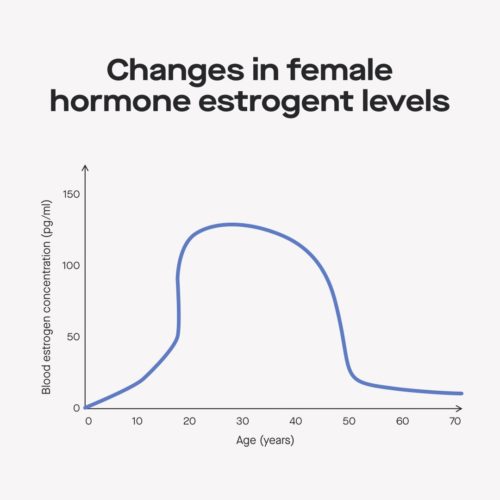
Late-onset schizophrenia occurs at age 45. Scientists think it might be timed with a woman’s decreasing estrogen as she enters perimenopause.  

“The idea is that estrogen exerts protective effects so during the time when women have a lot of estrogen in their bodies, they are protected in ways from developing schizophrenia,” [Massachusetts General Hospital Associate Psychiatrist Abigail] Donovan says.  

The estrogen theory would also suggest that women with lower levels of estrogen are more vulnerable to the disease, including women who have naturally lower levels of estrogen as well as postpartum women experiencing hormonal fluctuations.  

The estrogen theory is still being explored, and although Donovan says many scientists support it, they want to study it more and “prove it beyond a shadow of a doubt.”

However, women with late-onset schizophrenia tend to have milder symptoms, which is good in that — well, the symptoms are milder — but it makes things more difficult because diagnosis gets much tougher.

Ultimately, researchers say doctors need more awareness so they can treat the disorder more effectively.

(And by the way, if you want to read more about estrogen levels and mood disorders, here’s a really good study from Advances in Nursing Science, concluding).

Results indicate that sudden estrogen withdrawal, fluctuating estrogen, and sustained estrogen deficit are correlated with significant mood disturbance. 

For more reading, Current Psychiatry Review published a study on the neurobiological underpinnings of the estrogen-mood relationship, noting that the menopausal transition is a particularly vulnerable time for women in experiencing both new onset and recurrent depression.

That, of course, fits with Discover Magazine’s discussion of late-onset schizophrenia, and is another good reminder that if you’re going through menopausal transition, it’s good to be aware that mood disorders often come with the territory, and this is another example of why mood disorders have nothing to do with spirituality.

If you’re going through menopausal transition, and suddenly don’t feel the joy of the Lord, don’t let the “pray more” crowd distort the clear medical evidence that it is much more likely an issue of estrogen (or another medical factor) than anything else.

[Graph, via Modern Fertility]

December 2, 2021
0 Facebook Twitter Google + Pinterest

Mental Health Links

written by Christian Heinze

DEPRESSION:

a. Titans’ star WR A.J. Brown shares experience with depression. Powerful. And continues the encouraging trend of athletes opening up.

b. Good news! While still higher than it should be, first year medical residents report less depression now than 13 years ago.

c. Postnatal depression is common in new fathers. And undertreated.

d. WIRED: “Why you gravitate to puzzles when you’re depressed.” One person says, “it’s a little holiday from yourself.” 🙂

e. STUDY: Air pollution can cause changes to brain circuits that are involved with depression.

EATING DISORDERS:

a. A new book argues that treating anorexia should start with smart supplementation, not forcing a big plate of food down.

b. Some facts about eating disorders that might surprise you. One such: Men account for 25% of patients battling anorexia. Another: anorexia is the psychological disorder with the highest mortality rate. Over the course of a ten year period, 5.5% of patients with anorexia will pass away. Tragic.

c. “Orthorexia“. We’ll be hearing more and more about this. It’s taking “healthy” eating to such an extreme where it becomes an eating disorder that robs you of valuable essential nutrients. Certain personalities seem more predisposed to it, such as perfectionists and those with anxiety or OCD. Also, certain professions, such as athletes and dancers.

d. Hospitalizations for eating disorders doubled last year.

e. “Seven Ways To Cope with an Eating Disorder on Thanksgiving.”

ANXIETY:

a. Simone Biles talks battling anxiety and the tools she’s used to help.

b. STUDY: Children whose moms used cannabis during pregnancy were more likely to be anxious and hyperactive.

c. Helpful! Six Tips to Reduce Tension in neck and shoulders from anxiety. a) yoga b) neck stretches (they offer good examples) c) shoulder rolls d) warm compresses e) take a warm shower f) change position g) massages.

SCHIZOPHRENIA:

a. STUDY: “Color paintings useful in diagnosing and prognosticating schizophrenia.”

b. The relationship between dopamine and schizophrenia. It’s complicated and connected.

c. Signs of Schizophrenia in Teens. And it usually starts in the late teens for men, and late 20s to early 30s in women.

Verse: “Then God made you alive with Christ, for he forgave all our sins. He canceled the record of the charges against us and took it away by nailing it to the cross.” — Colossians 2:13-14

“These days my life, it feels it has no purpose. But late at night the feelings swim to the surface. ‘Cause on the surface, the city lights shine. They’re calling at me, ‘Come and find your kind’.”

Still a terrific terrific record.

November 20, 2021
0 Facebook Twitter Google + Pinterest
Anne Lamott on Dread

Anne Lamott on Dread

written by Christian Heinze

In her new book, Dusk Night Dawn, Anne Lamott writes of dread.

*****************************************************************************************************************************

“My parents did not hire her to keep me small and obedient, to keep me separate from all of you and all of life and most of me.

I hired her.

I was three or four.

She was my most reliable companion, always there for me, like God in a bad mood.

She looked like a tall, thin Greek goddess you wouldn’t want to tangle with.

Dread taught me how to succeed and why it mattered, how to survive the caffeineted neglect of my home life, the bullying on the blacktop, the equally fraught states of isolation and intimacy.

She kept me in line, helped me to be someone everyone would like. She got me to where I am today.

It has always been hard for her to let go of me and for me to let go of her, because I might die or disappoint my parents, now long dead. It does seems she has loosened her grip somewhat in the third third.

She is still my default in fearful times like these, when I am stunned by the powers that be, by the UN climate report and the pandemic, by dying friends who are younger than I, sometimes much younger.

Even though I know from God, from precious community, and from various calming spiritual practices that heal and hold during catastrophic weirdness, she refuses to cede control.

Even though I know the extreme hardships Dread and I have already come through — I know that somehow, against all odds, we somehow always seem to — she steps in to offer her cranky thoughts on just how utterly fucked and inadequate things are…. beginning with me.”

*****************************************************************************************************************************

So good.

Some Christians might respond to this dread stuff, “But PAUL SANG IN PRISON!”

They would also say, “Don’t you know about the glorious inheritance? What is there to dread?”

Yes, we know that, but Jesus also fell to his knees in utter dread, and begged the Father to take his cup of suffering away.

Jesus knew better than we ever could the glorious inheritance that awaited the end of his journey, he knew that it was just a few days away, and yet he still felt horrific dread over the few days that remained.

In light of that, we shouldn’t let the “PAUL SANG IN PRISON!” chorus shame us for our dread.

And if prison came for any of us, we’d probably sing sometimes too. And despair. And laugh too. Because we’d be human there, just like we are, outside of prison.

And so just because we have a snapshot in time where Paul sang in prison in Philippi doesn’t mean he spent his other times in jail like a Rodgers and Hammerstein musical.

Dread is a symptom, by the way, of generalized anxiety disorder.

In my mind, it’s the worst of all, because so often, we just don’t know where it comes from.

The 19th century Baptist preacher Charles Spurgeon put it this way.

“There is a kind of mental darkness, in which you are disturbed, perplexed, worried, troubled – not, perhaps, about anything tangible.”

Sometimes I wake up dreading nothing, and that scares me more than dreading something.

It’s a disturbing mist that never settles, one that you know won’t turn into anything, but you’re sure it will, but know it won’t.

Ever seen a film where the hero looks every which way for the encroaching villains, but it’s just quiet and he’s in a panic until suddenly the director sics every CGI monster on him. Then he’s okay because he’s got the skillz and man-bun, updo, whatever those guys have to take care of the situation in a few minutes.

But living with dread and an enemy that never comes is like a horror movie with no monster. You’re constantly circling, waiting, and dreading, and then it’s time to die from natural causes when you’re old.

There’s no better euphemism for death than, “rest in peace,” and no more thrilling description in the Bible than “eternal rest” for those of us with dread and anxiety.

Until then, we talk to our doctor about medicine, we talk to counselors about our lives, we cry to God, “Son of David have mercy on me,” we do whatever we can to help, and remind ourselves that to dread is part of the human condition and there is no sin in it, or else Jesus would have been a sinner, as well.

November 20, 2021
0 Facebook Twitter Google + Pinterest
Kevin Love: Tell others and they’ll tell you

Kevin Love: Tell others and they’ll tell you

written by Christian Heinze

Kevin Love is a championship-winning, 5-time All-Star basketball player, who famously opened up about his battles with depression and anxiety in a 2018 essay.

At the time, I remember one of the knocks on his game was that he was a “little soft.”

In basketball terms, that usually means you don’t knock the other guy down going for the rebound. But if you watched him, it was a ridiculous charge because he actually would go hard for every rebound and loose ball.

But the label stuck because he occasionally seemed to be struggling with something that wasn’t basketball. There wasn’t a joy to his game.

And his essay, finally opening up about his struggle was an instant classic:

Growing up, you figure out really quickly how a boy is supposed to act. You learn what it takes to “be a man.” It’s like a playbook: Be strong. Don’t talk about your feelings. Get through it on your own. So for 29 years of my life, I followed that playbook. And look, I’m probably not telling you anything new here. These values about men and toughness are so ordinary that they’re everywhere … and invisible at the same time, surrounding us like air or water. They’re a lot like depression or anxiety in that way.

So for 29 years, I thought about mental health as someone else’s problem. Sure, I knew on some level that some people benefited from asking for help or opening up. I just never thought it was for me. To me, it was form of weakness that could derail my success in sports or make me seem weird or different.

Read more…

Once his essay dropped in 2018, some his critics said: “I knew it! He is soft!”

And then, those folks were quickly drowned out by applause from the sports community and world-at-large, who said, “Wow, opening up about that is the hardest thing anyone could do.”

And you know what, more players are talking about mental health than ever before.

Love was groundbreaking.

Simone Biles, Michael Phelps, Dak Prescott, Naomi Osaka and the list goes on.

Now here’s what’s important for you and me.

In a new interview with CNBC, Love said that ever since he penned the essay, he’s been approached by other athletes who struggle with their challenges.

He tells CNBC:

“If I didn’t have the tools or had not worked with a therapist the last four years, I don’t know if I would have been able to deal with people sharing their stories.”

When we get help for our struggles, we can help others.

And when we talk about our struggles, the struggling ones will talk with us.

It will help them, and it will help you.

There’s also a bond between depressed or anxious folks that breaks down our false faces, almost instantly.

Ever seen two recovering addicts meet? They’re lifelong friends in the first, few moments, and there’s no peacock preening.

Like C.S. Lewis said, friendship begins when someone says, “Oh, you, too?”

And the deeper the, “Oh, you, too?” the deeper the connection.

If someone tells me, “Oh, you like pizza?!” that’s not much to go on.

But if they say, “I have panic attacks for no reason, and yet sometimes, for every reason,” well, that starts things off on a much deeper level.

Of course, there’s always risk.

Some people will look at you, and you can see a quick mental rearrangement happening, a recalculation, and now you’re something smaller — you’re a little sad and pathetic.

Meh. That’s on them.

At first, I cared a lot. Now I don’t care much, and there’s a little book by Tim Keller called The Freedom of Self-Forgetfulness that’s among the things that’s helped.

And more often than not, you’ll find a new, fast friend who struggles with something similar.

Or, even if they don’t battle mental health, they’ll be attracted by your honesty, and friendship will form.

Kevin Love has won championships, Simone Biles is the greatest gymnast who’s ever lived, Michael Phelps has won more gold medals than any human being, but all of them have opened up about their depression and anxiety, and I think if you’d ask them, at the end of all this, what’s been most meaningful thing in their lives. they’d answer: “The difference I’ve made in the lives of the hurting.”

Sounds a bit like Jesus, doesn’t it.

Henri Nouwen writes, “This is exactly the announcement of the wounded healer. ‘The Master is coming — not tomorrow, but today, not next year, but this year. Not after all our misery has passed, but in the middle of it. Not in another place, but right here, where we are standing’.”

If you’re still too squeamish to open up to your friends, I understand. It’s really hard, at first.

So try a discussion board. They’re anonymous and a fantastic means of support, and here are some good ones.

A discussion board. Of sorts.

Anyway, bravo, Kevin Love. The world owes you.

[Photo of Kevin Love, by Keith Allison]

November 19, 2021
0 Facebook Twitter Google + Pinterest
STUDY: 38% of pastors are thinking about leaving ministry

STUDY: 38% of pastors are thinking about leaving ministry

written by Christian Heinze

A new Barna Group study shows a remarkable rise this year in the number of pastors, considering quitting ministry, and relatedly, a decline in their sense of well-being.

The graphs, via the Barna Group, tell the story.

That’s a nearly 10% rise in just 10 months.

Here’s another graph showing the mental toll pastors are facing.

That 24% “unhealthy” number is high.

And I would think it’s actually higher.

Consider this — over 80% of American pastors are male.

Further, most health care experts think men are much less likely to acknowledge their struggles with mental health.

Stigma is a huge issue. Men don’t want to say they have anxiety. It sounds weak.

And yet, there are clues that men experience anxiety at similar levels as women.

Men are more likely to commit suicide (which is heavily tied to anxiety), they’re more likely to abuse substances (again, often an escape from anxiety), and the Wall Street Journal has written that there are other ways men express their anxiety which we mistake for other things, and thus, anxiety’s true prevalence among men is probably underreported.

Now consider the fact most pastors are men (which might make them less likely to report mental health struggles), and Christian (which adds a further stigma — who wants to say they’re emotionally struggling shepherds), and that 24% “unhealthy” number could actually be higher.

Which is even more alarming.

But not surprising.

Barna notes the pandemic has made things considerable worse, citing “congregational divisions and financial strain.”

And you don’t have to play much of a guessing game there. Fewer people are returning to church, post-lockdown, worsening finances.

Churches have also become thinly-veiled war zones over masks and vaccines.

Many evangelical churches almost bask in the fact they’re mask-free, “freedom zones,” and for people with pre-existing health conditions, it’s a dangerous place.

And yet, there’s an aggressive political spirit of “I’m going to give you a mask-free, bear hug because I’m a Christian and we’re not playing by the world’s fear-based rules. Oh, and after the hug, let’s talk about how the vaccines are XYZ.”

If I have a pre-existing condition and need to protect my health, church is often the worst place to be. And Jesus cared about people’s health.

When John the Baptist began to doubt whether Christ was really the Messiah, Jesus pointed to all the healing he was doing.

He cares about physical suffering — not just spiritual suffering.

Then you have a miasma of conspiracy theories, infecting evangelical churches.

And while the gospel of Christ is preached, the Gospel of Trump seems a far more animating force in congregants’ conversations and lives.

Here’s where things get particularly interesting.

Barna notes that signs of pastoral burnout began, pre-pandemic, in its 2017 study. That’s shortly after the election of Donald Trump in 2016.

I don’t get into politics here, but politics has gotten into the church, and there was a hurricane bringing it in, unlike any I’ve ever witnessed, in 2016 during the presidential election.

I’ve followed politics my whole life, and even wrote about it for a living with The Hill.

I’ve never seen any person or movement permeate the white evangelical church as deeply as Trumpism.

Of course right-wing politics and evangelicalism have been tied, in pretty tight fashion, for decades, but not to one person.

There were causes, but no political Messiah. Even Ronald Reagan “had his issues.”

In fact, George W. Bush was a self-proclaimed evangelical and by every account from those around him — even political foes — Bush actually walked the walk of a Christian in the way he personally treated others, and yet (quite rightly) was never idolized by the evangelical church. The church shouldn’t worship anyone other than Christ.

White evangelicals voted for Bush, but that was about it.

But something happened to the white evangelical church with Donald Trump in 2016, and suddenly it seemed he had his own set of famous apostles who spread his word through the churches and attested to his testimony and evangelized for him.

In 2016, it felt like a new religion was born. The Book of Acts was happening all over again, but not for the risen Jesus Christ.

And for evangelicals who denied (and still deny) Trump, it is as though they have denied Christ himself.

I’ve seen it happen, and Peter Wehner recently wrote about this phenomenon, “The Evangelical Church is breaking apart.“

In many churches, he’s become more influential than the pastor and even Christ himself, because his message (one of conspiracies and relentless cultural pounding) has set the tone for congregations.

Christ’s “love your enemies” certainly hasn’t set the tone.

His call to rejoice in tribulation is forgotten.

Peter’s incessant pleas to live in peace with everyone certainly isn’t the driving force.

And the church has, quite proudly, become the self-proclaimed bastion of “freedom and my rights,” despite Hebrews 10:34’s reminder.

“You suffered along with those who were thrown into jail, and when all you owned was taken from you, you accepted it with joy. You knew there were better things waiting for you that will last forever.”

Now…

If you’re a pastor and you’re actually expected to preach the Bible, your material is pretty much about loving your enemies, forgiveness, gentleness, kindness, and the wonderful reality that we are citizens of heaven.

That’s not what sells in the evangelical church right now.

You can imagine how discouraging it must be to preach one thing, and then hear another thing, over-and-over-and-over, from the congregation.

I would hate to be a pastor right now.

You’re judged by the yardstick of Tucker Carlson and Donald Trump (on the right) and Rachel Maddow and Christian Blue Check Mark Progressives on the Left. They’ve got control of the pulpit, they’ve got control of the Scriptures, they’ve got control of the congregation, and you’re accountable to God, but will your congregation let you be accountable to God and not Newsmax?

There’s something else…

Right now, the church is struggling from years of ignoring, dismissing, and covering up severe and rampant abuse.

A lot of people don’t feel safe putting their children in Sunday School. A lot of people are disillusioned by how the church has handled all of this.

When the Ravi Zacharias story broke, when the James MacDonald story broke, when the Bob Coy scandal broke, when the Carl Lentz scandal broke, when the Sovereign Grace Ministries scandal broke, when the Bill Hybels scandal broke, when the Mars Hill podcast shone a light on Mark Driscoll’s ministry and so many of these forces in the American evangelical church, it broke a lot of trust.

And yes, these stories showed the sin and abuse of these spiritual leaders — but even more than that, it was about a culture that covered up and tolerated and, in some ways, even enabled the abuse to continue.

Church suddenly didn’t feel safe. It felt downright scary.

And yet the vast, vast majority of pastors are wonderful people, working their hardest — in a thankless job where they’re subjected to weekly criticism — to advance God’s kingdom.

But they’re suffering from a domino effect of distrust by the abusive behavior of some mega church pastors.

It’s not fair, and there must be a tremendous emotional toll when you see the culture at-large start to write you off, at best, or accuse you of being one of the abusive ones, at worst.

So my guess is that these three things: a) The Pandemic, navigating the politics + financial strain surrounding it b) The Rise of Donald Trump and Conspiracy Theories as the animating force in many churches and c) Struggling to Fight Disillusion are behind the growing weariness and sense of burnout among pastors.

And 2024 is just around the corner. God help us. Please.

P.S. Kate Shellnut at Christianity Today has a good read on the Barna Study as well.

[Graphs via the Barna Group, Photo via Pexels]

November 17, 2021
0 Facebook Twitter Google + Pinterest
STUDY: Social Anxiety Disorder affects educational attainment

STUDY: Social Anxiety Disorder affects educational attainment

written by Christian Heinze

A new Swedish study, published in the journal Psychological Medicine, offers yet another example of the toll Social Anxiety Disorder (SAD) can take on people’s lives.

Here’s the short version:

Individuals with SAD were 81% less likely to finish upper secondary education, 53% less likely to start university, and 65% less likely to finish university.

Of course, the researchers controlled for loads of factors, and importantly, found that family factors didn’t play an important role in the outcomes, which of course is the first thing everyone might wonder.

PsyPost:

The researchers identified a subgroup of families that included two or more full siblings where one child had a diagnosis of SAD and another did not. Comparing these siblings allowed researchers to control for family factors like genetics and educational attainment of the parents.

While taking family factors into account did lessen the effects of SAD on educational outcomes, the effects remained significant. “SAD-affected individuals were still substantially impaired across all educational levels compared to their unaffected siblings,” the authors report.

Of course, this isn’t to say that educational-attainment is the end-all, be-all.

It’s just to highlight yet another challenge for those who suffer from Social Anxiety Disorder.

If you’re curious about what SAD is, here’s a good explainer from WebMd, which includes some symptoms: fear of talking to strangers, public speaking, fear of dating, making eye contact, entering rooms, going to parties and more.

WebMd notes that the underlying reason for these fears is usually the fear of being embarrassed, being judged, offending someone, or being the center of attention.

With that, you can understand how SAD can wreak havoc on one’s relational and professional life.

It’s generally treated with one or a multitude of these things: medication, behavioral therapy, relaxation therapy, or beta blockers.

Healthline further offers these tips in dealing with it: “talk with a therapist,” “explore situations that trigger anxiety”, “challenge negative thoughts”, “take small steps”, “role-play with people you trust”, “try relaxation techniques,” “practice acts of kindness”, “limit alcohol”, and “watch out for subtler types of avoidance.”

While we’re at it, you might wonder what causes SAD.

VeryWell notes that research suggests it’s a complicated mix of genetic, environmental, societal, and biological factors (structured around the brain).

In other words, it’s complicated, it’s also very common, and can be extremely debilitating. Former NFL running back Ricky Williams tells his story of it here and how it nearly robbed him of his career. As is the case with many anxiety disorders, he found it difficult to even leave his house. And yet every Sunday he had to play, as the star running back, in front of thousands of fans.

So if you feel you struggle with it…

Here’s a psychiatrist near you.

And a therapist.

[Photo: Pexels]

November 13, 2021
0 Facebook Twitter Google + Pinterest
Load More Posts

Social Media

Twitter

Get in touch with me

Contact here. 

The Weary Christian mission:

First off:


In the United States, find a psychiatrist here.

In the United States, find a therapist here.

If you’re in the United States and having thoughts of harming yourself or others, please call the National Suicide Lifeline at 1-800-273-8255.

If you’re in the UK, get urgent help here.

Canada, here.

Australia, here.

New Zealand, here.

South Africa, here.

France, here.

Germany, here.

Portugal, here.

Mexico, here.

India, here.

The Philippines, here.

Singapore, here.

South Korea, here.


The Weary Christian goal…


a) reduce the stigma surrounding depression, anxiety, OCD, and other conditions in the Christian community.


b) have uncomfortable but honest conversations.


c) Reduce the stigma surrounding antidepressants, antipsychotics, and other meds God has given us as gifts.


And…


d) Sometimes (tons of times), we all feel really, really depressed in our journey. Hopefully, this site makes you feel less alone.

Categories


@2017 - PenciDesign. All Right Reserved. Designed and Developed by PenciDesign