
The Weary Christian
  • Depression
    • Depression

      Latest Medical Studies on Depression

      Depression

      James Bryan Smith: Unmet expectations and fear

      Depression

      STUDY: Criticizing older adults make them more vulnerable…

      Depression

      STUDY: Awe can reduce depressive symptoms

      Depression

      STUDY: How music-mindfulness can help depression, anxiety

  • Anxiety
    • Anxiety

      Calling out the brain on catastrophizing

      Anxiety

      James Bryan Smith: Unmet expectations and fear

      Anxiety

      STUDY: Awe can reduce depressive symptoms

      Anxiety

      STUDY: How music-mindfulness can help depression, anxiety

      Anxiety

      STUDY: Chronic pain associated with higher rates of…

  • Book quotes/Video
    • Book quotes/Video

      John Mark Comer: “Wherever Jesus went, the kingdom…

      Book quotes/Video

      Ann Voskamp: “Jesus saves you for Himself”

      Book quotes/Video

      Philippe: “Refusing to suffer means refusing to live”

      Book quotes/Video

      “In darkest night, you were there like no…

      Book quotes/Video

      Thanksgiving for his brokenness

  • Health News
    • Health News

      Latest Medical Studies on Depression

      Health News

      Calling out the brain on catastrophizing

      Health News

      STUDY: Mental health conditions share deep genetic patterns

      Health News

      STUDY: Four Supplements that MIGHT help depression

      Health News

      STUDY: Gut changes raise risk of eating disorders…

  • Interviews
    • Interviews

      INTERVIEW: Dr. Terry Powell’s gripping account of depression

      Interviews

      INTERVIEW: Therapist Michael Schiferl explains religious scrupulosity and…

      Interviews

      INTERVIEW: Rocker Matt Sassano shares battles, urges transparency…

      Interviews

      INTERVIEW: Dr. Brian Briscoe tells Christians that antidepressants…

      Interviews

      INTERVIEW: Pastor Scott Sauls on anxiety, depression, and…

  • Devotionals
    • Devotionals

      Think you’re a “failure?” Jesus sees you unlike…

      Devotionals

      “Grace has got to be drunk straight”

      Devotionals

      Defeated by God

      Devotionals

      Am I a faithless Christian?

      Devotionals

      “I killed Jesus of Nazareth”

  • About
  • Depression
    • Depression

      Latest Medical Studies on Depression

      Depression

      James Bryan Smith: Unmet expectations and fear

      Depression

      STUDY: Criticizing older adults make them more vulnerable…

      Depression

      STUDY: Awe can reduce depressive symptoms

      Depression

      STUDY: How music-mindfulness can help depression, anxiety

  • Anxiety
    • Anxiety

      Calling out the brain on catastrophizing

      Anxiety

      James Bryan Smith: Unmet expectations and fear

      Anxiety

      STUDY: Awe can reduce depressive symptoms

      Anxiety

      STUDY: How music-mindfulness can help depression, anxiety

      Anxiety

      STUDY: Chronic pain associated with higher rates of…

  • Book quotes/Video
    • Book quotes/Video

      John Mark Comer: “Wherever Jesus went, the kingdom…

      Book quotes/Video

      Ann Voskamp: “Jesus saves you for Himself”

      Book quotes/Video

      Philippe: “Refusing to suffer means refusing to live”

      Book quotes/Video

      “In darkest night, you were there like no…

      Book quotes/Video

      Thanksgiving for his brokenness

  • Health News
    • Health News

      Latest Medical Studies on Depression

      Health News

      Calling out the brain on catastrophizing

      Health News

      STUDY: Mental health conditions share deep genetic patterns

      Health News

      STUDY: Four Supplements that MIGHT help depression

      Health News

      STUDY: Gut changes raise risk of eating disorders…

  • Interviews
    • Interviews

      INTERVIEW: Dr. Terry Powell’s gripping account of depression

      Interviews

      INTERVIEW: Therapist Michael Schiferl explains religious scrupulosity and…

      Interviews

      INTERVIEW: Rocker Matt Sassano shares battles, urges transparency…

      Interviews

      INTERVIEW: Dr. Brian Briscoe tells Christians that antidepressants…

      Interviews

      INTERVIEW: Pastor Scott Sauls on anxiety, depression, and…

  • Devotionals
    • Devotionals

      Think you’re a “failure?” Jesus sees you unlike…

      Devotionals

      “Grace has got to be drunk straight”

      Devotionals

      Defeated by God

      Devotionals

      Am I a faithless Christian?

      Devotionals

      “I killed Jesus of Nazareth”

  • About

The Weary Christian

THE WEARY CHRISTIAN

LIVING WITH FAITH AND DEPRESSION

  • Depression
    • Depression

      Latest Medical Studies on Depression

      Depression

      James Bryan Smith: Unmet expectations and fear

      Depression

      STUDY: Criticizing older adults make them more vulnerable…

      Depression

      STUDY: Awe can reduce depressive symptoms

      Depression

      STUDY: How music-mindfulness can help depression, anxiety

  • Anxiety
    • Anxiety

      Calling out the brain on catastrophizing

      Anxiety

      James Bryan Smith: Unmet expectations and fear

      Anxiety

      STUDY: Awe can reduce depressive symptoms

      Anxiety

      STUDY: How music-mindfulness can help depression, anxiety

      Anxiety

      STUDY: Chronic pain associated with higher rates of…

  • Book quotes/Video
    • Book quotes/Video

      John Mark Comer: “Wherever Jesus went, the kingdom…

      Book quotes/Video

      Ann Voskamp: “Jesus saves you for Himself”

      Book quotes/Video

      Philippe: “Refusing to suffer means refusing to live”

      Book quotes/Video

      “In darkest night, you were there like no…

      Book quotes/Video

      Thanksgiving for his brokenness

  • Health News
    • Health News

      Latest Medical Studies on Depression

      Health News

      Calling out the brain on catastrophizing

      Health News

      STUDY: Mental health conditions share deep genetic patterns

      Health News

      STUDY: Four Supplements that MIGHT help depression

      Health News

      STUDY: Gut changes raise risk of eating disorders…

  • Interviews
    • Interviews

      INTERVIEW: Dr. Terry Powell’s gripping account of depression

      Interviews

      INTERVIEW: Therapist Michael Schiferl explains religious scrupulosity and…

      Interviews

      INTERVIEW: Rocker Matt Sassano shares battles, urges transparency…

      Interviews

      INTERVIEW: Dr. Brian Briscoe tells Christians that antidepressants…

      Interviews

      INTERVIEW: Pastor Scott Sauls on anxiety, depression, and…

  • Devotionals
    • Devotionals

      Think you’re a “failure?” Jesus sees you unlike…

      Devotionals

      “Grace has got to be drunk straight”

      Devotionals

      Defeated by God

      Devotionals

      Am I a faithless Christian?

      Devotionals

      “I killed Jesus of Nazareth”

  • About
DepressionHealth News

Latest Medical Studies on Depression

STUDY: Mental health conditions share deep genetic patterns

James Bryan Smith: Unmet expectations and fear

STUDY: Four Supplements that MIGHT help depression

STUDY: Criticizing older adults make them more vulnerable to developing depression

Daily Blog

Staton: On being a witness

Staton: On being a witness

written by Christian Heinze

So often, we conflate the idea of witness with evangelizing. And while there’s some conceptual overlap, there’s also a key difference that’s important because some are uniquely gifted at sharing the Gospel through words, and praise the Lord for that, while others struggle to articulate. And there’s no shame in that.

This is where “witness” comes into play and why it’s important to say a) it’s separate from our limited conceptualization of evangelism but, interestingly, b) is also its own form of it.

Tyler Staton puts this together in his chapter on witness from his book, The Familiar Stranger:


“Witness literally means ‘someone who sees or experiences something important for others to know about. Somewhere along the way in recent church history, ‘witness’ became a synonym for evangelism.

…. Witness is: to live in this world like Jesus is King.

….. There is just one simply requirement for being a witness: your eyes have to be open. If you were present at a crime scene but you were asleep when it went down, you’re not a witness. Here is where you start in supernatural ministry: Every day, ask God to open your eyes to his invisible but invading Kingdom.

‘Open my eyes today at the office, at school, at book club tonight, at daycare pickup this afternoon, at the dog park with my neighbors this morning.’ Show up to your ordinary life supernaturally, by which I mean living by the laws that govern the Kingdom of heaven.”


Amen.

In this conceptualization, we aren’t simply mouthpieces of a message – we are living representatives of Christ, and that’s not just a word thing.

After all, Jesus didn’t only minister in words, did he?

And we don’t just live in words.

This distinction between witness and evangelizing isn’t just theologically accurate, but it’s also probably liberating if you struggle with words and don’t have a certain type of personality. I know some people who live to preach. Just comes easily, they’re called to do it, and praise the Lord for that.

And I know others who preach equally as powerfully through what they do.

But I think (again, I use the word “I think” because God doesn’t explicitly tell us) the most powerful synthesis of witness and evangelizing might come from the following passage of Staton’s, which I see as a sort of fusion.

Staton:


“To speak about the love of Jesus is not, first and foremost, to try to convince your coworkers of exclusive truth claims at the Friday evening happy hours.

It’s just being completely honest about your relationship to God in an environment where you’re probably used to compartmentalizing your spirituality….. to live not manipulatively but honestly before all people, regardless of the setting. That’s it.”


Amen again.

If we’re following Jesus and sharing our lives, it will just come out, and the best thing we can do is treat our Christianity as just part of our lives. It’s not some separate topic to dance around.

So many times, Christians feel pressure: Oh, when do I bring it up? How do I bring it up? How should I phrase it?

Well, if we’re just ourselves, in every arena, including spiritually, that’s witness.

If you’re having a long talk with someone about something, and just being honest about your life, your faith is probably going to pop up.

Who knows how others will react? Are we worried about telling people what cake we like or dish? Maybe they’ll like it too, maybe they’ll hate it. They won’t hold your taste for chocolate against you (pretty rare, so maybe a a bad example), but they also wouldn’t hold your distaste for it against you.

Of course, spirituality is a trickier thing, but I’ve found that most people just don’t care, and in fact, they appreciate that you’re being honest and vulnerable, because friendship is born and grows from honesty and vulnerability.

So being a witness is actually much more simple than evangelizing and more natural. It’s just about being naturally who are are.

If we can be honest about our lives, we can be honest about that.

Now, being honest about our lives… well, that’s a different and tricky subject, and very difficult for humans to do for all kinds of reasons (including pride), but again, a different topic, and VERY difficult for people afflicted with the disease of social anxiety disorder which can be a devastating and debilitating condition and deserves treatment and care, as with other medical conditions.

If you struggle with social anxiety disorder, depression, anxiety, or any other such medical conditions — for readers in the United States…

Find a psychiatrist here.

Find a therapist here.

For readers, internationally, seek help from a local resource.

For salvation, Christ and Christ alone.

July 21, 2025
0 Facebook Twitter Google + Pinterest
Great grace

Great grace

written by Christian Heinze

In his book, Waking from The American Dream, Donald McCullough puts our remarkable salvation from Christ this way:


“Grace means that in the middle of our struggle the referee blows the whistle and announces the end of the game.

We are declared winners and sent to the showers. It’s over for all huffing, puffing piety to earn God’s favor; it’s finished for all sweat-soaked straining to secure self-worth; it’s the end of all competitive scrambling to get ahead in the game.

Grace means that God is on our side and thus we are victors regardless of how well we’ve played the game.”


If we doubt this, why Jesus’ death?

If we don’t agree with what McCullough says, how can Paul slam the idea of boasting about our salvation? All is mercy, all is grace, and we can do nothing to earn it. Only Christ could and only he did.

Here’s the Presbyterian minister and former Senate chaplain Lloyd Ogilvie who puts our response to redemption in the context of Peter’s denial of Christ and subsequent encounter with Jesus after the Resurrection.


“Peter had built his whole relationship on his assumed capacity to be adequate.

That’s why he took his denial of the Lord so hard. His strength, loyalty, and faithfulness were his self-generated assets of discipleship.

The fallacy in Peter’s mind was this: He believed his relationship was dependent on his consistency in producing the qualities he thought earned him the Lord’s approval.

Many of us face the same problem. We project into the Lord our own measured standard of acceptance. Our whole understanding of him is based on a quid pro quo of bartered love. He will love us if we are good, moral, and diligent.

But we have turned the tables; we try to live so that he will love us, rather than living because he has already loved us.”


We have trouble believing this, don’t we? (I really, really do). Why?

Because it makes no sense, based on the world we see around us — where our worth is tied up in how good we are, how productive we are, whose “political team” we’re on, how successful in any sphere we are. We can’t get away from the human conception of personal worth – no matter how a culture defines it or how a political party defines it or how we define it for ourselves.

But Christ’s work on the cross smashes all that by saying it’s about His worth – not our own. It’s about his accomplishment, not our own.

No other religion, no human mind could have devised a redemption like this because it runs counter to the natural order of things. And thus, it can only come from a supernatural one and supernatural love.

You are loved because you are loved, you are accepted – not based on your worth or efforts – but based on his worth.

As Brennan Manning writes in his book The Ragamuffin Gospel (which contained the quotes I referenced and is the most beautiful tome on God’s redemption you can find), God expects more failure from us than we do.

Think of that. He expects less out of us than we do. What other God? Certainly not the gods of this world or the ones of American society.

And that’s why he sent Jesus.

This salvation calls himself “The Light of the World.” What else could light up the dark heaviness of the world and its value system and our own expectations?

And so he says, “Come to me, all you who are burdened, and I will give you rest. Take my yoke upon you and learn from me, for I am gentle and humble in heart, and you will find rest for your souls.“

This is the answer to the world’s accusations and constant bickering. Not “winning” or “owning the other side.” But living in the light of his love.

When we think of what Jesus did for us, it’s impossible for us to judge another.

If he could look down and forgive us, how can we look down on another?

But if we look up and see what he did for us on the cross, well, as Brandon Lake sings, “All that I have is a hallelujah, and I know it’s not much, but I’ve got nothing else fit for a king. Except for a heart singing hallelujah.”

[Painting: Christ and the Good Thief, Titian]
July 17, 2025
0 Facebook Twitter Google + Pinterest
STUDY: Gut changes raise risk of eating disorders in women

STUDY: Gut changes raise risk of eating disorders in women

written by Christian Heinze

A new study, published in Nutrients, looks at the profound effects of the gut-brain axis in both the formation and effects of eating disorders in women.

First off, the authors noted that, thanks to hormonal fluctuations, women are particularly biologically prone to developing eating disorders.

Second, the study looked at how changes to the microbacteria in the gut contribute to the formation of eating disorders, amplify their harmful consequences, and influence a bidirectional downward cycle of influence and outcome.

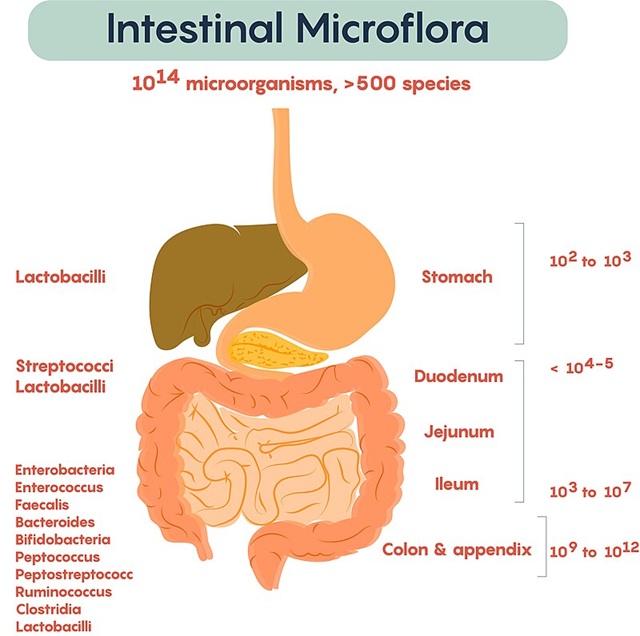
As in most other “mental” health issues, the composition of bacteria is absolutely profoundly important, and as I’ve mentioned ad nauseum, oh that more pastors would literally have a picture of the gut in their offices before going out an preaching sermons on mental health.

To the study:

Dr. Sanchari Sinha Dutta has a terrific read on it, so I’d urge you to go there if you want a fuller read on this, but essentially – we know that the human body, for many reasons, experiences alterations to its gut bacteria.

For women, the role of hormones is particularly powerful, which may explain why they’re more likely to develop eating disorders.

But viral illness, bacterial illness, parasitic infections, antibiotics – these all clearly affect our gut bacteria. As can other things – like sleep disturbances, stress (which often is amplified by altered gut bacteria itself!), diet, just life things that happen.

Those gut changes affect our brain. Brain stuff then affects the gut. So the relationship is bidrectional and it’s not always clear what comes first – the bacterial change or what’s going on in the brain. But it’s safe to say that our gut bacteria is always changing.

Now, it can change in such a way that it sets off a deleterious chain of events that lead to the formation of all kinds of sicknesses, including eating disorders.

Dr. Dutta writes more of how this happens:

Emerging evidence highlights a multifactorial crosstalk between immune–inflammatory pathways, disordered eating behaviors, and mood-related psychopathology. In patients with anorexia nervosa, a reduced abundance of short-chain fatty acid (SCFA)- producing bacteria has been observed. This disrupts intestinal permeability and facilitates the blood’s translocation of microbes and microbial metabolites. This cascade subsequently increases pro-inflammatory cytokine levels and impacts neuroimmune signaling and brain functioning.

Gut microbiota-derived SCFAs are crucial in regulating appetite and maintaining metabolic homeostasis by increasing satiety hormones leptin, glucagon-like peptide-1 (GLP-1), and peptide YY. 

SCFAs primarily influence brain activities by altering neuroinflammation, promoting microglial maturation, and regulating the synthesis of neurotransmitters and neurotrophic factors. Inflammatory activity in the brain has been found to increase anorexia nervosa risk by suppressing the appetite-stimulating hormone ghrelin, leading to early satiety and reduced food intake. However, evidence also suggests that SCFAs may have context-dependent effects on appetite and behavior, influenced by dietary composition, microbial taxa, and host physiology.

Now… if you read all that, it’s impossible to cast stones at folks for developing eating disorders — just as it is for any other “mental” illness, which science has shown are clearly physical illnesses.

Again, we don’t blame someone’s spirituality for their cancer, and just as emphatically, we should reject spirituality as cause for “mental” illness. In fact, to do so, is taking something sacred (pain) and desecrating it. Jesus never did that to anyone in any kind of pain and neither should the church.

Back to the study…

The potentially good news arising from this study is that much better help for those with eating disorders may be on the way, thanks to discoveries like these.

Scientists are now working on developing microbiota-targeted interventions for helping restore a normal gut microbiota in victims of the disease.

This includes specific probiotics, prebiotics, targeted dietary shifts (everyone has different deficiencies and needs in their diets), and fecal microbiota transplantation (FMT).

Each of those may be more effective than current treatment by really getting to, well, the gut of the problem.

Finally, I want to say this.

Without minimizing other “mental” illnesses that get a lot of attention (depression, anxiety, PTSD, OCD), eating disorders are empirically the most physically dangerous, and absolutely wreak havoc on an individual’s mind and body. In fact, they’re often associated with developing those other diseases, as well.

The interesting thing is that a common Christian answer to the problem of eating disorders is “clean eating.” In fact, if you look at the culture right now, “clean eating” is all the rage for an answer to everything.

It’s good to eat healthy, but my concern is the way “clean eating” is currently often being linked to our bodies being temples of the Holy Spirit, and an overemphasis on clean eating is proven to be a risk factor for “orthorexia,” which is the gateway condition for a whole multitude of eating disorders.

I wrote an extensive piece on this and why the Christian community might be particularly prone to advancing this.

One of the way is just how tragically the sin of “gluttony” has been reframed as “eating a lot of junk food” when gluttony had absolutely nothing to do with “eating a lot” in the Bible.

You can read that piece here.

Finally, some resources.

To start with — some resources.

The National Institute of Mental Health on eating disorders, including signs, symptoms, risk factors, treatments and help.

A 24/7 hotline for those struggling with eating disorders or any other mental health disorder.

Six Common Types of Eating Disorders.

Signs of an Eating Disorder.

And find an eating disorder therapist near you.

[Photo: Composition and distribution of intestinal microflora by Dr. William Ju, University of Toronto, via Wikipedia]

July 17, 2025
0 Facebook Twitter Google + Pinterest
Hope in Times of Fear: Tim Keller on sowing our tears

Hope in Times of Fear: Tim Keller on sowing our tears

written by Christian Heinze

In his wonderful book on the Resurrection, Hope in Times of Fear, Tim Keller doesn’t glorify our suffering and tears (the Bible makes it clear these are unnatural to his original plan for the world), but also tries to comfort us by telling us our tears are the water of our restoration.

The basis for this is Psalm 126:5-6 which should be underlined and, to me, really, is an astonishing joy that we have to hold onto into suffering:

“Those who sow with tears will reap with songs of joy. Those who go out weeping, carrying seed to sow, will return with songs of joy, carrying sheaves with them.”

Thank you, Lord.

There are similar passages, of course, particularly in Paul’s writings, but I love what Keller says about this particular Psalm.

Keller:


“The imagery is striking. The seed being sewn consists of tears and weeping. They are planting their tears and receiving a harvest of joy.

This suggests that there is a way to weep and there is sorrow that bears fruit, fruit that includes deeper happiness.

It is inevitable in this world that we should weep — but do we sow our tears?

…. If a sower were to simply dump all his seed in one spot, there would be no harvest. So simple venting of grief may not produce fruit in our lives and those around us.”


Now a quick note to this — I believe we need to vent our grief.

We can’t just pretend it away, smile it away, dismiss it, or church it away with songs where we smile but feel absolutely stricken, because grief is a natural response to an unnatural event, and Jesus himself was called a man of sorrows.

And I believe that venting our grief is vital to renewal, and that doing so to God, and also to a loved, safe person or therapist is integral to healing.

But Keller reminds us that grief can either go bad or produce something good – as impossible as the latter might seem while we’re in the middle of it.

Keller again:


“The Psalter gives us numerous examples of people taking their pain and suffering to God, praying through it in his presence, and thereby avoiding anger, self-pity, and despair that can poison hearts and make us bitter and harder rather than wiser and better.”


Now another qualification I want to make, and then what I think Keller is getting at.

We cannot help but feel anger. The Bible itself tells us that. “Be angry and do not sin.”

Again, it’s a natural response. Job was certainly angry, but God never judges or accuses him for it. And we can despair. The Bible is full of of men and women of great faith, including Paul, who despaired to the point of death.

So the feeling isn’t the issue. Feelings never are.

Here’s what is: Do we let those feelings, as Keller asks, “poison” our hearts and “make us bitter and harder?”

That’s where the rubber meets the road for the Christian. For me.

Suffering is inevitable. Anger and despair and self-pity are natural responses.

Don’t be ashamed if you feel those things because God doesn’t rebuke his people as they pour out their anger in prayer, their despair in prayer, or sorrow for their suffering.

But where do all those intense emotions, all that suffering lead us, and who does that make us, and how does it affect those around us?

That’s the key.

And that is the enormously hard part, and as I go through my dark times, oh wow, it’s incredibly easy to descend from doubt to despair to bitter to hardened and poisoned. Like a ladder going down to the pit. Or Sheol, if you’re an Old Testament writer.

I have to watch my heart so closely these days. Suffering has a way of absolutely testing you that I often tritely compare to being a load of laundry that’s being spun around for hours in burning heat and you see the machine rumbling and shaking and it’s as though you’re in there, locked, and being hurled around, and when is the machine of chaos going to stop?

Will those socks make it through?

Again, a trite example 🙂

But if you’re reading this blog, there’s a pretty good sense you know exactly what I’m talking about.

You know exactly the feelings, you know exactly the temptations. Jesus did too.

The only thing we can do — in addition to talking to a therapist and doctors about medication or the mercies of counseling — is just keep praying and remember that, if — by God’s infinite grace — we keep in our mind this thought that he sees and numbers are tears and we are sowing them, that they are not empty, that they are the watering ground for restoration — then we can see something other than pointless suffering.

I don’t do affiliate links, so this is completely from my heart, and one of the cheapest and best and most helpful books I’ve read on this is Jacques Philippe’s Trusting God in the Present. You can read my post on the book here, but the thing I’ve had to remind this hard, easily bitter and brittle heart of mine is that, in suffering, instead of asking why, instead of despairing each day, ask myself this.

In the words of Philippe: “What does God want of me here? What is the right way to live through this? Which part of the Gospel am I called by this situation to put into practice now? What acts of faith and hope, what progress in love, am I being asked to make today.”

SO HARD. (That’s caps-lock, btw).

This week, I’ve been slowly, then suddenly turning from sorrow and grief to, the past few days, straight up bitterness about various things (“letting the sun go down on your anger” is a real bad idea). Bitterness that’s kept me from prayer, that’s kept me from wanting to pray. Bitterness that produces more. Quite the fruitful tree.

And then I did the thing this morning of opening, for some reason through that bitterness, Keller’s book and it landed on that particular passage, and it was as though the sun had broken out even though no clouds have objectively left.

If you’re a Christian you’ll understand that. You’ll know those feelings, that struggle, and that hope.

And if we sow our seeds — with faith that God will use the tears, the grief — for a greater weight of glory and restoration — both in our lives and for those around us and for eternal life, then with God’s grace, we’ll get through whatever we’re going through and, again, by God’s grace and to his glory, find ourselves one day sharing his inheritance and hopefully being an example for those around us. A witness to his Gospel.

May the Lord bless you — one who struggles. Maybe you’ve got this figured out better than I. But if you don’t, may the Lord bless you, and even if you do, may he bless you too. Our cups run dry and run over and who can say how the Lord pours and when he does.

Only that, one day, we will never have to wonder again. We can only wander in wonder in Immanuel’s land. We’ll see his smiling face! And, at last, we’ll know the last of pain.

If you struggle with depression, anxiety, or any other such disorders — for readers in the United States…

Find a psychiatrist here.

Find a therapist here.

For readers, internationally, seek help from a local resource.

For salvation, Christ and Christ alone.

July 12, 2025
0 Facebook Twitter Google + Pinterest
Staton: Listening to God’s whisper

Staton: Listening to God’s whisper

written by Christian Heinze

In his new book The Familiar Stranger, Tyler Staton reminds us to walk through life as the two on Emmaus should have — actively looking for Jesus presence in places and times we’d least expect.

Staton:


“We tend to miss God in our midst, not because he’s too extraordinary but because he’s too ordinary. We tend to look for God in the wind, earthquake, and fire rather than the whisper….. what if you know him not just as the table in the evening but all the way along the road to Emmaus?”


To dovetail off his point on looking for God only in dramatic moments (whether the natural or spiritual fires and winds we endure), think about this: If you look at the most primitive, pagan religions, you see this nearly universal phenomenon of seeing gods in storms, fire, creation, destruction. All these dramatic things.

And in a way, you could say our experiential Christianity is not much more advanced.

Although we might not have a god of the storm, fire, or fertility, we retain this primitive, restrained capacity for only experiencing and finding him in those moments.

That’s not bad, of course, because he’s in all that too.

But that tendency is almost just a monotheistic advance on what the ancient pagans were doing. Instead of making many gods from the dramatic, we now try to make sense of our God in the dramatic.

But there’s also a recurring theme throughout both the Old and New Testament of finding God in ordinary moments, in whispers, and — in fact — not finding him at all, which is the dark breeding ground for Psalms.

Which is much truer to the human experience. A God we notice only in the dramas of our life isn’t a God who’s relational, but one who’s sensational — it’s an IMAX god.

But you and I crave for the God of the everyday, and what’s associated with the every day? Our family. So we want the Father who holds us, the brother who listens to us, the Spirit who prays for us and fills us when we run dry, the lover of our soul who’ll listen to us for hours and hours and loves us because he loves us.

In short, a God we talk to, and who talks to us.

Staton gets at that this way:


“Maybe God whispers because it’s the only way he can get what he wants most, what was lost in Eden: to walk with you and me in familiar intimacy that we might know God as he truly is and discover ourselves as we truly are in his presence.”


At first, it’s hard to look for God everywhere, but over time, you’ll find him anywhere. Usually.

That’s why Jesus told us to keep knocking and looking and we’ll find.

The truth is that most of us familiar with the darkness of our disease have also heard God’s whisper break through it in a way we can’t describe, but the truth is also that many, many times, we won’t hear that whisper.

Those are the toughest times. When we keep knocking and no one seems to be home. So how do we get inside to the home we long for?

But it’s in those times outside, that we have to keep, keep knocking and praying and begging, and whether you can hear God’s answer or not, he has already spoken and if you simply look at a cross for a few minutes, it will say: “This is is how much I love you.”

Of course, I’d be disingenuous to say that will always rouse us. The conditions we have are physical diseases of the brain and part of the “wonderfully made” is also the “fearfully made” and it’s hard to a get a handle on ourselves.

So the best we can do is the best we can do — keep looking for God, and also if we can’t hear or find him, maybe it’s because we’re lost in a disease of our mind, and it’s time to talk to a doctor about whether we need medical help.

But we can never stop the spiritual component, we can never stop knocking, because sometimes, when we least expect, he’ll open the door, whisper back, and you’ll walk into his presence and experience a sacred joy. We lost the easy conversation and full communion in Eden, but we’ll occasionally find something beautiful of it here, and once we’re home, well then, that’s what home is.

If you struggle with depression, anxiety, or any other such disorders — for readers in the United States…

Find a psychiatrist here.

Find a therapist here.

For readers, internationally, seek help from a local resource.

For salvation, Christ and Christ alone.

July 6, 2025
0 Facebook Twitter Google + Pinterest
Luther: The false “Theology of Glory”

Luther: The false “Theology of Glory”

written by Christian Heinze

Martin Luther once wrote about a false “theology of glory,” which offers an incomplete picture of the Christian life, salvation itself, and — crucially, for the purposes of this website — also a flawed perspective of how we’re to look at suffering.

In response to the erroneous “theology of glory,” Luther instead proposed a “theology of the cross.”

Now, as the distinction relates to this website’s purpose, let’s get right to it.

A theology of the cross focuses on Christ’s injunction that we die to self and that, on this earth, troubles will inevitably accompany the Christian life and therefore we can’t expect that Christ will exempt us from any of the diseases (including brain disorders like depression, anxiety, PTSD, OCD, etc) that are part of the human experience.

Basically, it’s an ancient rebuke to the health and happiness gospel that has somehow sneaked into even evangelical circles, particularly in the way the community often dismisses things like depression and anxiety.

Theocast notes:

A theology of the cross understands that we live in a sin-sick world, full of pain, full of suffering, full of anxiety and that it is the grace of God that will get us through. A theology of glory is basically the idea that the more you do, the more faith you have, then the more relief God will provide. And that’s just not what scripture tells us.

So hopefully this is helpful for you to understand that it is not your fault if you get cancer, or if a calamity happens, or if there’s suffering- that is part of living in a sinful world. We rely on the grace of God to get us through, and one day we will be in the new heavens and the new earth, where all sin will be done away with, where God will wipe away our tears. So, for now, we live the theology of the cross. We look to Christ, we understand there’s suffering and pain, but one day it’ll all be removed. Hopefully, this is encouraging.

The great site Mockingbird pits it against one of most discouraging mindsets that’s utterly pervasive in the church today.

A window into understanding this is to look at the ways people talk about painful experiences. If someone has just undergone a difficult and unwanted break-up, for example, they often say things like ‘well, it wasn’t a good relationship for me anyway’, or ‘but I’ve really learned a lot from this whole experience’. This kind of thinking is rationalization – it basically tries to make something sound like a good thing that is in fact a bad thing. It is a strategy for avoiding having to look pain and grief directly in the face, and for not having to acknowledge that we wish life were different but are powerless to change it. This is what a ‘theology of glory’ looks like. A theology of the cross, by contrast, accepts the difficult thing rather than immediately trying to change it or transmute it. It looks directly into pain, and ‘calls a thing what it is’ instead of calling evil good and good evil. It identifies God as ‘hidden in [the] suffering’.

I’ve often called the “Theology of Glory” something like “Victorious Christian Living,” which tries to talk people out of their suffering by beating them over the heads with selectively picked passages like Paul singing in prison, while ignoring that Paul spoke of his personal experiences in much bleaker terms, for example in 2 Corinthians 1 (“We do not want you to be uninformed, brothers and sisters, about the troubles we experienced in the province of Asia. We were under great pressure, far beyond our ability to endure, so that we despaired of life itself.” ) and the fact that Scripture is full of laments (over 33% of the Psalms) and cries of despair and suffering from God’s followers.

This Victorious Christian Living mindset (or, as Luther calls it, “Theology of Glory,”) is everywhere – your local evangelical church might say it doesn’t preach a prosperity gospel, but what happens when something deeply painful happens and that pain persists and you’re in a long spell of despair?

Well, in an attempt to “encourage” you, Christians will try to talk you out of that despair by continually reminding you that, “ahem, by the way, remember – you’re a Christian and you’re supposed to be joyful and we have a hope and we’re to be a light.”

What they don’t get is — all that “encouraging” actually discourages us. It makes us feel guilty.

We think: “If that’s what Christianity’s about, and I’m still locked in the pain of depression, intense anxiety, PTSD” etc, then how can I even be a Christian?”

It’s a terrible and lonely place for a Christian.

In his enormously helpful book cataloguing Charles Spurgeon’s depression and his own, Zack Eswine writes: “Suffering one form of depression makes the addition of others harder to bear….if someone struggles already with biological or circumstantial depression, they are more vulnerable to spiritual sorrows. It is hard enough to get thru the day without adding the displeasure of God to the trauma that already trounces us.”

So your pastor or Christian friend or Generic Christian Worship Song will leave you with a “Hooray, positive, snap out of it, Resurrection” message that seems entirely disconnected from your life, your suffering, and urges you to get out of it by thinking you’re way out of it.

There’s no empirical data on this (Harvard doesn’t really research this phenomenon), but I really don’t think that works.

The wisest man in the world said so in Proverbs 25:20:

“Singing cheerful songs to a person with a heavy heart is like taking someone’s coat in cold weather or pouring vinegar in a wound.”

So this type of “encouraging” is like ripping off a freezing man’s warmth in the middle of a blizzard.

Not exactly helpful. In fact, downright cruel.

And yet the “encouragers” do it, unwittingly and with good intentions, all the time.

Now…

Of course, Christianity is about the hope of the Resurrection through salvation in Christ, and that is the utterly beautiful thing that sustains and helps us through this mess.

We should celebrate that. But we shouldn’t ignore that while salvation is here, Resurrection isn’t, that while glory is ahead, the cross of this earth remains.

Songs of joy and sadness are equally true.

In his book on the resurrection, Hope in Times of Fear, Tim Keller strikes a nice balance between the reality of the Resurrection and the Cross.

“Cross alone as an isolated paradigm could lead to an attitude of asceticism or even masochism and pessimism, while resurrection alone could lead to triumphalism, what Luther called ‘a theology of the cross’.”

In other words, focusing solely on the tribulations we’re promised on earth denies the hope of the Resurrection, but focusing entirely on the hope of the Resurrection denies the inevitable tribulations and pain of the earth.

Christianity is far more realistic than it’s usually preached, far more honest about our experiences than you’ll find on an Instagram meme, and far more connected than many “encouragers” who say they want to connect and encourage, but instead, unwittingly, discourage.

We have to look both at this world honestly and the hope of the next one, as promised in the Bible on both scores. At chronic pain, as well as the relief we’re absolutely promised when we’re “raised in glory” after being “buried in brokenness.” (1 Corinthians 15:43).

Yes, chemo might be a little easier if you know it’s going to end in four years, but that doesn’t make it easy to go through.

And, in the same way, anxiety and depression and all these other conditions are still utterly brutal and punishing even though we know that, one day, we’ll have restored brains — free from disease.

I want to finish by saying something that I’m a total broken record on: You’re not alone in your battle with both the pain of “mental disorders” (which are really brain diseases). Tons of Christians (including church leaders and pastors themselves) experience this totally human and physical disease, but perhaps you feel alone because Christians hide it from each other because of fear that we’ll be judged and “Hey, everyone else at church looks so happy, something must be wrong with my Christianity.”

Sure, we do have a peace that passes all understanding (absolutely on that — it’s impossible to explain), but we also have depression and anxiety and PTSD that passes all understanding, as well.

Unless you correctly understand that those “mental conditions” are physical diseases.

Thankfully, ones you can get help for.

And to that, I always end by directing you to these links — only you and your doctor will know what’s best for you, but medication has been a life-saver for me, therapy utterly crucial, and of course, I know without God’s grace, I wouldn’t get through any of it. It’s no different from any other disease!

So be wary of a theology of glory that talks about the cross only as means to an end, and denies the reality of your disease and the cross that we bear while on earth.

And here are the links.

If you struggle with depression, anxiety, or any other such disorders — for readers in the United States…

Find a psychiatrist here.

Find a therapist here.

For readers, internationally, seek help from a local resource.

For salvation, Christ and Christ alone.

July 1, 2025
0 Facebook Twitter Google + Pinterest
Manning: “It is only now that we are in the presence of God”

Manning: “It is only now that we are in the presence of God”

written by Christian Heinze

Brennan Manning, in The Ragamuffin Gospel.


“Whatever we have done in the past, be it good or evil, great or small, is irrelevant to our stance before God today.

It is only now that we are the in the presence of God.”


You’re reading this somewhere, and you are in the presence of God now.

June 8, 2025
0 Facebook Twitter Google + Pinterest
“Grace has got to be drunk straight”

“Grace has got to be drunk straight”

written by Christian Heinze

Robert Capon, in his book Between Noon and Three, urges us to embrace one of the strangely hardest things for us to even accept — the fact we’re loved by God regardless of our sin, that we’re children of God regardless of our disobedience, that we’re forgiven both now and forever, through nothing we’ve done and in spite of everything we’ve done and will do.

In the context of the onset of the Reformation’s fundamental truth – justification by faith alone, Capon writes (italics added).


“The word of the Gospel — after all those centuries of trying to lift yourself into heaven by worrying about the perfection of your bootstraps — suddenly turned out to be a flat announcement that the saved were home before they started.

…. Grace has to be drunk straight: no water, no ice, and certainly no ginger ale; neither goodness, nor badness,, nor the flowers that bloom in the spring of super spirituality could be allowed to enter into the case.”


Two lines in there best sum up what Capon is saying.

First, “Grace has got to be drunk straight.”

We have so much trouble drinking grace straight, because it seems easy, almost childish, it defies the way grownup world works, and seems wild fantasy to our condemning hearts.

From the moment we’re born, we quickly learn that in order to please our parents, we have to be obey and “be good kids.”

In order to please our teachers, we have to get good grades and sit still and listen.

In order to please our peers, we have to perform a certain way – dress like this, talk like that, do all these things.

In order to please our bosses, we have to meet or exceed their expectations.

In order to please society, we have to be pleasing ourselves, in whatever the situation demands, and I’m not saying that’s a bad or good thing, it’s just a thing, and can be crushing. And if it’s not yet, it will be for everyone, at some point in their lives.

In short – becoming a “good person,” as defined by parents, family, teachers, peers, bosses, spouses – is used to define our value.

In that case, what are we?

Are we human?

No, fundamentally, we’ve been turned into a product that, at best, has passed vigorous testing and is finally deemed fit for the shelves.

But at our core, we know we’re full of defects, contradictions, lies, sin (sometimes all the seven deadly ones and you can add a few hundred to that), and we’re left living in a state of constant “impostor syndrome” where, after all our efforts, after all the validation, we still feel the weight of the fact that we’re not enough.

And we know that, at some point, someone or society itself will say “Hey, this is a defective product,” and we’ll be returned or whipped into goodness.

We can never meet anyone’s standards of virtue, forever, so of course, that’s bound to fail, and the worst thing of all is when we accept that Satanic lie that God views us as a product, that his love depends on our virtue.

Satan twists virtue into value, which is very Satany. He always takes something good and turns it into something bad.

So if God tells us something that’s meant for our good because it will help us flourish, Satan says, “Sure, be virtuous and God will be happy with you. But if you don’t, he’ll be angry, his love will disappear into hatred, and he’ll damn you.”

We listen to the Great Accuser far more than The Good Shepherd.

Jesus knows more than we do how hard it is for sinful people to…. not be sinful, and hence, Jesus’ death for us.

That should crucify our attempts at saving ourselves. Jesus did it so we didn’t have to.

So forget about holding yourself to the standard the world, your heart, and Satan holds you to. It’s been held to. By Jesus.

Christ’s burden is light and his yoke easy.

That’s why someone could just say “God forgive me” and it was done in an instant, and Jesus didn’t say, as they were running away in joy, “Wait, wait, wait, come back here, I have a lot of caveats, you’re taking this the wrong way.”

Or when the thief said “Remember me,” Jesus didn’t say, “Let me think about it” or give him a life review.

No, Jesus responded instantly and he came preaching mercy everywhere he went.

In fact, in Luke 4:22, the masses were “amazed at the gracious words that came from his lips.”

Note that word:”Gracious.” It comes from the Greek word “charis,” and HELPS Word Studies notes the Biblical Greek is “xaris” or “leaning forward,” which most accurately conveys the Lord’s “freely extending to give himself away to people (because He is always leaning toward them).”

So think about that — God is always leaning towards you!

He’s not recoiling in disgust.

If ever there were a moment to recoil in disgust it was after Peter denied Christ, abandoning his savior and friend at the neediest hour. And yet what did Jesus do? Lean toward him. Longingly.

If Peter had denied Christ a fourth time, do you think he’d say “Okay, that’s the cutoff. Four.”

We accept that story for Peter, but not for ourselves.

But there are no limits on God’s love for us — even the ones we impose on ourselves.

The rest of the world, yeah. And sadly, our own hearts, yeah. Mine, all the time.

And many “Christian” movements preach constant accusation and condemnation and legalism under the guise of “exhortation” and it simply perpetuates the problem.

Their doctrinal statements talk about salvation through faith alone, but their message is salvation through works always.

It’s tragic heresy.

Like Capon said, “Grace has to be drunk straight.”

Just drink it like a shot. A shot of grace alone. Nothing we put in or take out.

It’s just grace.

The second thing about Capon’s passage that I’ve loved since I first read it almost a decade ago is “the saved were home before they started.“

We don’t have to make a long pilgrimage into God’s good favor and grace. Before we knew he loved us, he loved us. “We love him because he first loved us.”

So while the world might judge you as a product, while your heart might say, “I have a long way to reach God’s salvation and after decades of trying, I’m still at the starting point,” remember this — you are already home, and God sees you the way the world doesn’t — as his own son or daughter, precious, no matter what.

And even though you’re not in paradise yet, we are, in a way.

Our presence in the world might block us from clear view of the next, the condemnation of others and ourselves might persuade us that God’s promises are not meant for us.

But Christianity is a Jesus-to-you relationship, and even if the promises of everyone else fail, Christ’s wont. He is the father who is there and loving, the friend who is there, unfailing, the God of a life we sometimes don’t even feel worth saving.

I have to tell this to myself every time my heart condemns me (lots and lots, ugh), despairs (plenty there too) and, also, when the world and my own perfectionism impose their crushing and perverse definition of “success” as “achievement.” (continuously, ubiquitously, shamelessly, that’s the Gospel of the United States).

As Alistair Begg famously preached of the thief entering the gates of heaven, “The man on the middle cross said I could come.”

No one else would have the thief, but Christ. And he has you and me.

So.. when you raise a glass tonight, drink your grace straight. Nothing else. Just grace. Let’s toast on that.

If you struggle with depression, anxiety, or any other such disorders — for readers in the United States…

Find a psychiatrist here.

Find a therapist here.

For readers, internationally, seek help from a local resource.

For salvation, Christ and Christ alone.

[Photo: Free, Pexels].

May 30, 2025
0 Facebook Twitter Google + Pinterest
STUDY: Awe can reduce depressive symptoms

STUDY: Awe can reduce depressive symptoms

written by Christian Heinze

A brand new study in Scientific Reports finds that experiencing awe can reduce depressive symptoms and increase a sense of well-being.

The study particularly focused on individuals experiencing depression and stress from long COVID, but its authors suggest that it may be helpful for the psychological health of others dealing with chronic illness.

Okay, so first, how did the authors define awe?

They called it “an emotion elicited by stimuli that are vast, or beyond one’s current conceptual frame of reference” — you know awe if you’re human. When I stepped inside the Strasbourg Cathedral for the first time and felt the transcendence of the Almighty and everything else, yeah.

It’s powerful, isn’t it?

Now… It’s not hard to see why experiencing awe would lessen depressive symptoms, but what’s difficult is this — you and I aren’t in a world where it’s easy to experience awe every day.

Our day-to-day life is often pedestrian, at best (which precludes the idea of awe’s presence) or honestly unbearably hard and overwhelming and bleak and depressing, at worst.

So my question was — how did the researchers stage an “awe intervention?”

You can’t really do a study where you take everyone to Paris every evening and see the lights across the Seine, can you?

No.

So here’s what they did – it was a simple intervention you and I can do wherever we are.

Their AWE intervention consisted of this acronym and definition.

A = Attention. Tell folks to pay “full and undivided attention on things you appreciate, value, or find amazing.“

W = Wait. “Slow down, pause.”

E = Exhale and Expand. “Amplify whatever sensations you are experiencing.”

They asked one group (study group) to do this at least 3x/day for as briefly as 30 seconds a session, while the other group (control group) refrained from the practice.

So what did they find?

The group who practiced awe daily had a 17% decrease in symptoms of depression, 16% increase in well being, and12% decrease in symptoms of stress.

The results exceeded the control group in a statistically significant fashion.

In other words, it mattered.

The authors concluded:

Our work contributes to a burgeoning science suggesting that positive emotions, such as awe, can be leveraged in interventions to improve physical and psychological health outcomes in clinical and non-clinical populations

This is a fantastic area of study and even though the idea seems really intuitive, it’s something that’s a relatively new addition to the research field.

I think a lot of therapists get at the idea of “awe,” but I’m not sure if I’ve ever seen the word and the intervention incorporated into many of the popular writings.

Now, if you’re depressed – it’s awfully hard to find awe in anything. Even the things that once moved you.

I get that, and I’ve been there.

Everything, including the Lord’s salvation – the most awe-inducing reality imaginable – feels like “meh.” I can’t pretend otherwise. That’s the idea behind one of depression’s most well-known manifestations, “anhedonia,” where things that normally move you emotionally fall utterly flat. I’ve written about my own experience here.

There’s a strong underlying message in the church that Christians should never experience flatness over Christ’s salvation, over our future hope, over the fact that we will share in his glories. “Just think about that enough and voila, you’ll be moved!”

If you’re depressed, your brain might be mentally unable to get there, and we tend to beat ourselves up about that, but ask yourself – does anything in life get you there when you’re like that? Usually, no. It’s part of the disease.

That’s easy to understand.

But there are times, strangely, where the awesomeness of Christianity seems flat compared with the transcendent feelings of listening to music, for example, or other such ostensibly non-spiritual things. But as CS Lewis famously points out, all of the glories we see around us are reflections of the source of it, and it’s not a badge of shame that these things move us.

If they do move us, they should move us in the direction of thanking the Lord and realizing how incomprehensibly beautiful he is, particularly if you strip out the human, broken, sinful component.

But in moments of deep depression, yeah, it’s tough for anything to move you.

Nevertheless, I’m going to start trying to use this little acronym AWE in my daily life.

I think we all do, to some extent, but we let’s intentionally set out to do it, whether we feel it or not, and maybe it helps and maybe it doesn’t.

You might find it hard to even find the space in your mind or world to experience awe, and I get that. I struggle with that right now too. I’m confined to bed and the bathroom the vast majority of the time, and I won’t get into all the emotions with that, but awe can be difficult to access. Especially when we feel hopeless.

But let’s try the intervention. It’s so simple. If it doesn’t help, then no harm. If it does, well that’s fantastic.

(In my younger days, I had a restless pursuit of awe and could access stimuli for it more easily, but now it’s much harder, and I suspect it’s the same for many of you. Much of the beauty of youth, I think, lies in your ability to easily access stimuli for awe).

[PHOTO: Lauterbrunnen Valley, Switzerland. Creator OGPhoto. Credit: Getty Images]

Re: the photo: I couldn’t come up with the place that’s produced the most feelings of awe, indeed, the moments, because, really, a place is a common conduit to producing a moment, and you can’t do that reliably with a photo, and moments are such unique constellations of weather systems that I can only borrow the phrase of Bono to describe what I think awe gets at and it’s…….. “that other place.”

“That other place.”

To me, that’s awe.

I remember a U2 interview somewhere where Bono said that when he and The Edge were deciding on a sound for the band early on (punk), they were keen on infusing it with a sense of transcendence that was missing both from punk and rock and roll, in general. At least in my mind – even as a lifelong fan of punk and rock.

But here’s that “other place” line in “Beautiful Day.”

“Touch me, take me, to that other place. You gotta teach me, Lord, I’m not a hopeless case”.

If you struggle with depression, anxiety, or any other such disorders — for readers in the United States…

Find a psychiatrist here.

Find a therapist here.

For readers, internationally, seek help from a local resource.

For salvation, Christ and Christ alone.

May 15, 2025
0 Facebook Twitter Google + Pinterest
Your verse for today

Your verse for today

written by Christian Heinze

If you’re going through it right now, James 1:12:


“Blessed is the one who perseveres under trial because, having stood the test, that person will receive the crown of life that the Lord has promised to those who love him.”


Read that again and KEEP GOING. God’s crown of life for you in heaven won’t be “meh.”

If you struggle with depression, anxiety, or any other such disorders — for readers in the United States…

Find a psychiatrist here.

Find a therapist here.

For readers, internationally, seek help from a local resource.

For salvation, Christ and Christ alone.

May 15, 2025
0 Facebook Twitter Google + Pinterest
Load More Posts

Social Media

Twitter

Get in touch with me

Contact here. 

The Weary Christian mission:

First off:


In the United States, find a psychiatrist here.

In the United States, find a therapist here.

If you’re in the United States and having thoughts of harming yourself or others, please call the National Suicide Lifeline at 1-800-273-8255.

If you’re in the UK, get urgent help here.

Canada, here.

Australia, here.

New Zealand, here.

South Africa, here.

France, here.

Germany, here.

Portugal, here.

Mexico, here.

India, here.

The Philippines, here.

Singapore, here.

South Korea, here.


The Weary Christian goal…


a) reduce the stigma surrounding depression, anxiety, OCD, and other conditions in the Christian community.


b) have uncomfortable but honest conversations.


c) Reduce the stigma surrounding antidepressants, antipsychotics, and other meds God has given us as gifts.


And…


d) Sometimes (tons of times), we all feel really, really depressed in our journey. Hopefully, this site makes you feel less alone.

Categories


@2017 - PenciDesign. All Right Reserved. Designed and Developed by PenciDesign