
The Weary Christian
  • Depression
    • Depression

      Latest Medical Studies on Depression

      Depression

      James Bryan Smith: Unmet expectations and fear

      Depression

      STUDY: Criticizing older adults make them more vulnerable…

      Depression

      STUDY: Awe can reduce depressive symptoms

      Depression

      STUDY: How music-mindfulness can help depression, anxiety

  • Anxiety
    • Anxiety

      Calling out the brain on catastrophizing

      Anxiety

      James Bryan Smith: Unmet expectations and fear

      Anxiety

      STUDY: Awe can reduce depressive symptoms

      Anxiety

      STUDY: How music-mindfulness can help depression, anxiety

      Anxiety

      STUDY: Chronic pain associated with higher rates of…

  • Book quotes/Video
    • Book quotes/Video

      John Mark Comer: “Wherever Jesus went, the kingdom…

      Book quotes/Video

      Ann Voskamp: “Jesus saves you for Himself”

      Book quotes/Video

      Philippe: “Refusing to suffer means refusing to live”

      Book quotes/Video

      “In darkest night, you were there like no…

      Book quotes/Video

      Thanksgiving for his brokenness

  • Health News
    • Health News

      Latest Medical Studies on Depression

      Health News

      Calling out the brain on catastrophizing

      Health News

      STUDY: Mental health conditions share deep genetic patterns

      Health News

      STUDY: Four Supplements that MIGHT help depression

      Health News

      STUDY: Gut changes raise risk of eating disorders…

  • Interviews
    • Interviews

      INTERVIEW: Dr. Terry Powell’s gripping account of depression

      Interviews

      INTERVIEW: Therapist Michael Schiferl explains religious scrupulosity and…

      Interviews

      INTERVIEW: Rocker Matt Sassano shares battles, urges transparency…

      Interviews

      INTERVIEW: Dr. Brian Briscoe tells Christians that antidepressants…

      Interviews

      INTERVIEW: Pastor Scott Sauls on anxiety, depression, and…

  • Devotionals
    • Devotionals

      Think you’re a “failure?” Jesus sees you unlike…

      Devotionals

      “Grace has got to be drunk straight”

      Devotionals

      Defeated by God

      Devotionals

      Am I a faithless Christian?

      Devotionals

      “I killed Jesus of Nazareth”

  • About
  • Depression
    • Depression

      Latest Medical Studies on Depression

      Depression

      James Bryan Smith: Unmet expectations and fear

      Depression

      STUDY: Criticizing older adults make them more vulnerable…

      Depression

      STUDY: Awe can reduce depressive symptoms

      Depression

      STUDY: How music-mindfulness can help depression, anxiety

  • Anxiety
    • Anxiety

      Calling out the brain on catastrophizing

      Anxiety

      James Bryan Smith: Unmet expectations and fear

      Anxiety

      STUDY: Awe can reduce depressive symptoms

      Anxiety

      STUDY: How music-mindfulness can help depression, anxiety

      Anxiety

      STUDY: Chronic pain associated with higher rates of…

  • Book quotes/Video
    • Book quotes/Video

      John Mark Comer: “Wherever Jesus went, the kingdom…

      Book quotes/Video

      Ann Voskamp: “Jesus saves you for Himself”

      Book quotes/Video

      Philippe: “Refusing to suffer means refusing to live”

      Book quotes/Video

      “In darkest night, you were there like no…

      Book quotes/Video

      Thanksgiving for his brokenness

  • Health News
    • Health News

      Latest Medical Studies on Depression

      Health News

      Calling out the brain on catastrophizing

      Health News

      STUDY: Mental health conditions share deep genetic patterns

      Health News

      STUDY: Four Supplements that MIGHT help depression

      Health News

      STUDY: Gut changes raise risk of eating disorders…

  • Interviews
    • Interviews

      INTERVIEW: Dr. Terry Powell’s gripping account of depression

      Interviews

      INTERVIEW: Therapist Michael Schiferl explains religious scrupulosity and…

      Interviews

      INTERVIEW: Rocker Matt Sassano shares battles, urges transparency…

      Interviews

      INTERVIEW: Dr. Brian Briscoe tells Christians that antidepressants…

      Interviews

      INTERVIEW: Pastor Scott Sauls on anxiety, depression, and…

  • Devotionals
    • Devotionals

      Think you’re a “failure?” Jesus sees you unlike…

      Devotionals

      “Grace has got to be drunk straight”

      Devotionals

      Defeated by God

      Devotionals

      Am I a faithless Christian?

      Devotionals

      “I killed Jesus of Nazareth”

  • About

The Weary Christian

THE WEARY CHRISTIAN

LIVING WITH FAITH AND DEPRESSION

  • Depression
    • Depression

      Latest Medical Studies on Depression

      Depression

      James Bryan Smith: Unmet expectations and fear

      Depression

      STUDY: Criticizing older adults make them more vulnerable…

      Depression

      STUDY: Awe can reduce depressive symptoms

      Depression

      STUDY: How music-mindfulness can help depression, anxiety

  • Anxiety
    • Anxiety

      Calling out the brain on catastrophizing

      Anxiety

      James Bryan Smith: Unmet expectations and fear

      Anxiety

      STUDY: Awe can reduce depressive symptoms

      Anxiety

      STUDY: How music-mindfulness can help depression, anxiety

      Anxiety

      STUDY: Chronic pain associated with higher rates of…

  • Book quotes/Video
    • Book quotes/Video

      John Mark Comer: “Wherever Jesus went, the kingdom…

      Book quotes/Video

      Ann Voskamp: “Jesus saves you for Himself”

      Book quotes/Video

      Philippe: “Refusing to suffer means refusing to live”

      Book quotes/Video

      “In darkest night, you were there like no…

      Book quotes/Video

      Thanksgiving for his brokenness

  • Health News
    • Health News

      Latest Medical Studies on Depression

      Health News

      Calling out the brain on catastrophizing

      Health News

      STUDY: Mental health conditions share deep genetic patterns

      Health News

      STUDY: Four Supplements that MIGHT help depression

      Health News

      STUDY: Gut changes raise risk of eating disorders…

  • Interviews
    • Interviews

      INTERVIEW: Dr. Terry Powell’s gripping account of depression

      Interviews

      INTERVIEW: Therapist Michael Schiferl explains religious scrupulosity and…

      Interviews

      INTERVIEW: Rocker Matt Sassano shares battles, urges transparency…

      Interviews

      INTERVIEW: Dr. Brian Briscoe tells Christians that antidepressants…

      Interviews

      INTERVIEW: Pastor Scott Sauls on anxiety, depression, and…

  • Devotionals
    • Devotionals

      Think you’re a “failure?” Jesus sees you unlike…

      Devotionals

      “Grace has got to be drunk straight”

      Devotionals

      Defeated by God

      Devotionals

      Am I a faithless Christian?

      Devotionals

      “I killed Jesus of Nazareth”

  • About
DepressionHealth News

Latest Medical Studies on Depression

STUDY: Mental health conditions share deep genetic patterns

James Bryan Smith: Unmet expectations and fear

STUDY: Four Supplements that MIGHT help depression

STUDY: Criticizing older adults make them more vulnerable to developing depression

Daily Blog

Mental Health Links

Mental Health Links

written by Christian Heinze

DEPRESSION:

a. Scientists find a new biomarker that can help identify and lead to better treatment for depression. A doctor from Johns Hopkins, who was not part of the study, marvels: “that’s the holy grail: to find some biological mechanism for depression.” It’s a technical read, but pretty compelling. The great thing is that, with this particular biomarker, doctors will be able to see whether a patient will respond to a particular antidepressant within the 7 day life cycle of the platelet. Currently, it can take a few months on a medicine to know if it’s working. Awesome.

b. And on the subject of blood biomarkers, researchers have identified a set of 15 biomarkers that can predict with 83% accuracy if a pregnant woman will experience significant depressive symptoms.

c. And on that subject, a new study suggests digital CBT (dCBT) may help prevent postpartum depression in women up to 6 months after giving birth

d. STUDY: Teens addicted to TikTok show working memory deficit, likely fueled by increased depression and anxiety from the app.

e. WSJ: “Is Looking at Art a Path to Mental Well-Being?” (That’s one of my favorite pieces up there).

f. STUDY: Depressed people are more likely to believe vaccine conspiracy theories. Negativity bias could help explain the distrust.

ANXIETY:

a. STUDY: Using brain imaging, scientists are now understanding why the children of critical mothers are more likely to demonstrate psychopathology later in life. Of course, critical fathers probably play a role, too, but the study was limited to mothers.

b. Have Covid right now? Have anxiety about it? Have trouble sleeping? There’s an academic study for that. Progressive relaxation exercises reduced anxiety in patients with Covid, and also improved quality of sleep. Here’s a really helpful guide on Progressive Muscle Relaxation from the University of Michigan. Included: all the muscle groups, and instructions.

c. STUDY: Anxious, middle-aged men are at a greater risk for developing heart disease, stroke, and type 2 diabetes as they get older. All the more reason to find treatment.

d. “How to Calm Anxiety: 8 Tips from Medical Experts.”

e. “Paranoia vs. Anxiety: What you need to know.” The main difference is the belief in persecution, conspiracy, or threat against oneself (paranoia). Of course, those with paranoia are often anxious, and sometimes the anxious have paranoia, but they’re separate conditions and accurate diagnosis is important.

EATING DISORDERS:

a. “Pharmacological Management of Treatment-Resistant Anorexia Nervosa.” There are still no FDA-approved medications to treat AN, but there’s widespread off-label treatment of it. Good article examining those treatments.

b. You might be hearing the term “Food Freedom” these days. Here’s a good read on what it is, and how it can help prevent and recover from eating disorders. The scientific evidence is overwhelming. Dieting doesn’t work. It also promotes an unhealthy relationship with food that can lead to eating disorders. And again, it doesn’t work. Maybe for a few months, but it’s not a long-term solution to a relationship with food.

c. Something increasingly visible. ARFID (Avoidant-Restrictive-Food-Intake-Disorder). Some skeptics might scoff, “Oh, that kids just only wants to eat candy. Shove the veggies down.” No, this isn’t about just wanting candy. It’s a real disorder and I’ve seen it. And it’s never about candy.

d. WSJ: Social Media is leading to more eating disorders among boys and men.

Verse: “From his abundance, we have all received one gracious blessing after another. For the law was given through Moses, but God’s unfailing love and faithfulness came through Christ Jesus.” – John 1:16

I know it sometimes doesn’t feel as if we’ve received one gracious blessing after another. Especially when we feel so horrible. God knows I know that. But we do have Christ’s unfailing love, and though we might not understand it, he understands us.

“Our bodies are buried in brokenness, but they will be raised in glory. They are buried in weakness, but they will be raised in strength.” – I Corinthians 1:15:43.

Keep going.

Find a psychiatrist here.

Find a therapist here.

If you’re having thoughts of harming yourself or others, please call the National Suicide Lifeline at 1-800-273-8255.

January 28, 2022
0 Facebook Twitter Google + Pinterest
Do you over-apologize? (OCD and a thought about John the Baptist, who didn’t have it, but I’ll explain why it’s pertinent)

Do you over-apologize? (OCD and a thought about John the Baptist, who didn’t have it, but I’ll explain why it’s pertinent)

written by Christian Heinze

If you over-apologize, you might have OCD.

I recently came across an article that talked about the relationship between Obsessive-Compulsive Disorder and over-apologizing, and wow, it nailed me.

Psych Central has a good read on it, as well, and here’s how it manifests.

You might have an obsession with keeping a relationship intact, or keeping someone else happy, or a deep fear that you’ve done something wrong.

That’s the obsession.

That turns into the second part of OCD — compulsion.

In this case, you turn to the other person and start saying “sorry.” And continue saying “sorry” until there aren’t any other ways of saying you’re sorry.

And when there aren’t any other ways of saying you’re sorry, you’ll invent new ones, or go back to the old ones – kind of like a band that’s run out of ideas for songs.

That is the compulsion.

For the moment, it feels good. You get the reassurance you crave.

You’ve said you’re sorry, and you’ve either heard them say a) “you’re forgiven” or b) “it’s honestly no big deal!”

But that only helps for a few minutes, and you go to bed, and obsess, “Is it really okay? Maybe I need to apologize again one more time tomorrow.”

Then the next day, you check on them to make sure they’re okay and apologize again (the compulsive behavior) and so it goes.

People with OCD have difficulty with uncertainty, and so we’re trying to reduce that uncertainty, but the more we apologize, the more we feed into this unhealthy pattern.

We don’t ever really feel better the 6th time we apologize, do we?

So our tendency to over-apologize can be reflective of OCD.

It doesn’t necessarily mean we have it. Experts say it could just be a reflection of childhood trauma (where you were desperate to please a critical parent, for example).

But it can be a warning sign that you need to be evaluated for OCD.

Personally, I over-apologize, all the time, and I over-apologize to God, all the time, as well.

There’s actually a term for this called “scrupulosity,” and it’s law-based, it’s rules-based, and it assumes that the God who forgave the thief in a brief moment won’t forgive you after a lifetime of sorry’s.

There’s a passage in the Bible that makes me think of this basic fact — we argue with God over his forgiveness.

And it’s when Jesus comes to John the Baptist for baptism (Matthew 3).

John has spent his entire ministry, telling his disciples that he’s nothing — absolutely nothing — compared to the coming, perfect Lamb of God.

In fact, every time, people fall down before John, he tells them, “STOP. I’M NOTHING.”

Now what happens when Jesus comes and asks John to baptize him?

John refuses.

And not just refuses. He “tried to prevent him.” He “tried to talk him out of it.” (ESV, NLT).

How strange.

In their first recorded interaction, John, in effect, tells Jesus he’s wrong about something.

John thought he knew better than Jesus. John wasn’t worthy. Even though Jesus clearly counted him worthy.

We do this all the time, in our religious OCD.

Just like John, we try to talk our way out of Jesus’ words, and in our case, it’s his words of forgiveness.

In effect, we try to talk God out of his love for us.

Just like John, we say stand there at the Jordan and tell Jesus he can’t possibly be right about us.

Brennan Manning wrote, “It is simply not possible to know the Christ of the Gospels unless we alter our attitude toward ourselves and take sides with Him, against our own self-evaluation.”

That’s what John the Baptist had to do.

He had to take sides with Jesus, instead of his own self-evaluation that said he wasn’t worthy to baptize Jesus.

John finally obeyed, but I can imagine that if Jesus and I were to meet on the banks of the Jordan, and Jesus were to say, “You’re forgiven,” I’d spend the next week telling him, “Are you sure? Really? Don’t you know…”

I’d talk his ears off about why he was wrong about forgiving me.

In a way, you could call it humility, but in another way, you can see that it’s actually telling Christ he’s wrong about something.

The fact is that Jesus has forgiven us, once and always, and the great battle for Christians with OCD is to, as Paul Tillich says, “accept that we’re accepted.”

There are some churches that claim they’re about grace alone, but in sermon-after-sermon, they provoke fear that we might just still be sinners in the hands of an angry God.

No, we’re sinners in the hands of a loving God.

I don’t know if someone with OCD can truly ever accept that we’re accepted, which is why treating our medical OCD will always help our spiritual OCD.

And so, I end, as always…

Find a psychiatrist here.

Find a therapist here.

[Painting: Saint John the Baptist Sees Jesus from Afar, Tissot]

January 27, 2022
0 Facebook Twitter Google + Pinterest
“Don’t drift away from the assurance”

“Don’t drift away from the assurance”

written by Christian Heinze

Neuroticism tends to correlate and even predict the development of anxiety and depressive disorders, so it’s easy for us to apply that to our Christianity.

I do, all the time.

But I read this beautiful passage from Paul today, in Colossians 1 (emphasis added).

***************************************************************************************************************

“Now he has reconciled you to himself through the death of Christ in his physical body.

As a result, he has brought you into his own presence, and you are holy and blameless as you stand before him without a single fault.

But you must continue to believe this truth and stand firmly in it. Don’t drift away from the assurance you received when you heard the Good News.”

***************************************************************************************************************

There are two key phrases that could stumble a neurotic Christian: “you must” and “don’t drift.”

Scary.

But what’s the “you must”?

You must continue to believe that you’re holy before Christ because of him, not you. Oh, and if you didn’t get the message with “holy,” he adds “blameless” and “without a single fault.”

So the “you must” is beautiful.

It’s not “you must” continue to obey perfectly. It’s not “you must” do anything. It’s only “you must” believe, which is The Good News.

Now what about the “don’t drift.”

He doesn’t say, “Don’t drift from perfect obedience.”

He doesn’t say, “Don’t drift from examining your faith, every hour.”

He says, Don’t drift from the assurance that, in Christ, you’re holy, blameless, and without a single fault.

In other words, Christ did everything for you, and is everything for you, and you can relax.

It’s hard for me to believe in the Good News, but God wouldn’t call something “Good News” for humanity unless it were.

The wonder of the Good News is that we don’t have to wonder if we’re good enough.

We’re still neurotics, but Jesus is still Jesus. That’s what matters.

[Screencap: The Passion]

January 26, 2022
0 Facebook Twitter Google + Pinterest
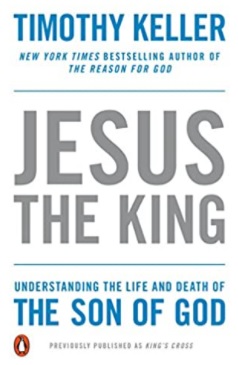
Keller: Jesus as Example or Jesus as Lamb?

Keller: Jesus as Example or Jesus as Lamb?

written by Christian Heinze

The world thinks of Jesus as Just a Good Example, which is a much more rational, palatable image than Jesus as Lamb, Lord and Savior.

In his book, Jesus the King, Tim Keller reminds us that there’s a reason we know otherwise (emphasis added).

*****************************************************************************************************************************

“When you see Jesus caring for the poor, forgiving his enemies without bitterness, sacrificing his life for others, living a perfectly loving and perfectly sinless life, you say, ‘I can’t do that’.

You’re right – you can’t.

Jesus Christ as only an example will crush you; you will never be able to live up to it. But Jesus Christ as the Lamb will save you.”

*****************************************************************************************************************************

For those of us (and anyone) prone to self-loathing, neuroticism, how wonderful.

Keller’s words again: “Jesus Christ as only example will crush you; you will never be able to live up to it. But Jesus Christ as the Lamb will save you.”

In your own personal life and mine, if you’re feeling crushed by the weight of your failures (as I often am), and you’re thinking all the “God, how’s?” and by that I mean, “God, how can you put up with me?” “God, how can you forgive me again?” “God, how can you still love me?”

The answer will always be — because he came as a lamb for us. As Good News for us. As the ones to rescue us from ourselves.

It’s only when we grasp this grace that we’ll then extend it. And Christ the Lamb is that grace.

When you and I focus solely on Christ as Lamb, then we’ll become more like him, but not until then.

Which is why the Lamb is always greater than The Example.

January 21, 2022
0 Facebook Twitter Google + Pinterest
STUDY: Commonalities in genetic mutations found in OCD patients

STUDY: Commonalities in genetic mutations found in OCD patients

written by Christian Heinze

The new year starts with a bang in research on Obsessive-Compulsive Disorder, as Science Advances publishes a new paper showing genetic commonalities in patients with OCD.

The study recruited 53 families in whom the parents weren’t diagnosed with OCD, but had at least one child who was.

Researchers then conducted whole-genome tissue sampling on the parents and children, and the genetic evidence confirmed the diagnoses.

The parents didn’t show genetic evidence of OCD, but their children did.

Every child diagnosed with OCD in the study showed the same four de novo mutations (‘genetic alterations that are present for the first time in one family member as a result of a variant (or mutation) in a germ cell (egg or sperm) of one of the patients, or a variant that arises in the fertilized egg itself during early embryogenesis”).

Co-author Dr. Weichen Song says, “These mutations are highly relevant to OCD pathology,” and all are related to chromatin loops.

How might this lead to Obsessive Compulsive Disorder?

Elana Spivack explains:

These are all protein-coding genes, so if there’s an anomaly with chromatin binding, then this gene can’t properly transcribe proteins. While it’s important to note how mutations can alter how proteins are transcribed, this study also underscores the importance of chromatin modification as a potential cause of OCD.

This buttresses what’s been called the “de novo paradigm hypothesis” as a risk factor for OCD development.

In other words, the theory that rare genetic mutations might tip someone towards OCD.

Now here’s something else interesting.

Those genes are also associated with depression, anorexia, and anxiety.

Of course, that doesn’t mean someone with those genes will develop all those disorders, only that it can leave them more susceptible to them.

If you want to read more, I’d recommend Spivack’s more complete rundown, along with Bob Yirka’s over at Medical Express, and a really excellent one from Genetic Engineering and Biotechnology News.

Of course, these de novo mutations are only part of the picture, and there are numerous environmental factors that have also been linked to OCD.

But there are a few reasons to be excited about this study.

First, it advances our knowledge of the condition, and can lead to even more breakthroughs.

Second, potentially, scientists could help develop new drugs that target these genes. God bless whoever comes up with a drug to help us.

Third, it underscores to the Christian church (once again) that OCD isn’t in any way, shape, or form a spiritual defect or failure to trust God.

God made and knows us more intimately than we do.

When he sees Uber “Trusting” Christian #1 and Obsessively Ruminating Christian #2, he probably knows about genetic mutations, no? Along with all the other risk factors for developing OCD — none of which has a spiritual basis.

Here’s another thought.

In this particular study, none of the parents had OCD, but the children did.

Would one of the parents look at the study results, then blame the child for their OCD and tell them to just get over ruminating?

Not at all!

Similarly, we shouldn’t and can’t cast any judgment on someone with OCD.

It’s not a faith or trust issue.

And going down a path of judgment is an exercise in the self-righteous sin that Jesus warned about.

I know pastors and spiritual leaders have the best intentions when they apply scripture to those prone to obsessive rumination, but the most loving possible thing is to first refer someone with OCD to a psychiatrist and therapist.

Of course, spirituality and scripture can always be integrated in any treatment, but medical conditions tend to respond to medical treatment.

And if you have OCD (like myself), I hope studies like this give you some comfort. We are unusually hard on ourselves, aren’t we.

But it’s simply not our fault. Someone with OCD can no more be blamed for his condition than someone born with a genetic abnormality that leads to blindness.

But there’s always help for anyone with OCD.

And the best places to start…

Find a psychiatrist here.

Find a therapist here.

[Photo: Pexels, free stock photography, Rodnae Productions]

January 19, 2022
0 Facebook Twitter Google + Pinterest
Capon: Christ’s grace isn’t a bait-and-switch

Capon: Christ’s grace isn’t a bait-and-switch

written by Christian Heinze

Robert Farrar Capon, in Kingdom, Grace, Judgment: Paradox, Outrage, and Vindication in the Parables of Jesus.

*********************************************************************************************************************

“The Gospel of grace must not be turned into a bait-and-switch offer…. Jesus must not be read as having baited us with grace only to clobber us in the end with law.”

*********************************************************************************************************************

Amen.

Salvation and then sanctification. That’s scriptural, of course.

Yet Christians are often tempted (as am I) to twist that into this — salvation, and then salvation by law. Even though we call it “sanctification.”

We accept grace, but as time goes on, we find ourselves increasingly confusing sanctification with salvation.

Unwittingly, we begin depending on our works, and that mindset has been encouraged by a lot of spiritual leaders who claim, “Salvation by grace alone” but preaching something else.

No wonder so many feel heavy going to these churches.

“Okay, now that you’re Christians, let’s get to sanctification.”

And then we get so hung up on our sanctification that we become unwitting legalists, in the process.

Jesus had pretty stern words for those who, in Capon’s words, “clobber us in the end with law.”

And if we’ve already got the medical condition of depression, getting a sanctification beatdown will only make us feel more bleak.

So let’s end on Capon’s quote again: “The Gospel of grace must not be turned into a bait-and-switch offer…. Jesus must not be read as having baited us with grace only to clobber us in the end with law.”

January 18, 2022
0 Facebook Twitter Google + Pinterest
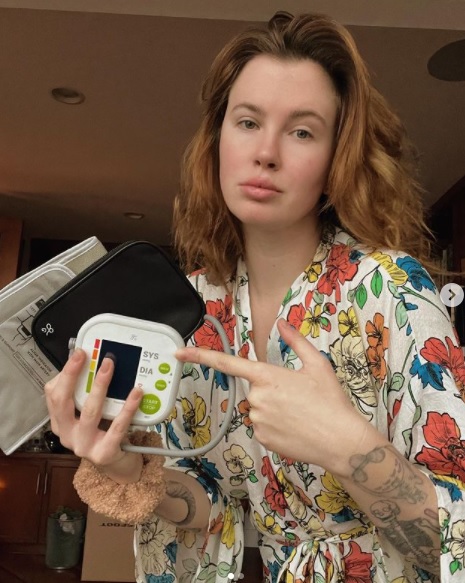
Ireland Baldwin opens up about “cardiophobia,” health anxiety

Ireland Baldwin opens up about “cardiophobia,” health anxiety

written by Christian Heinze

Thankfully, a lot of prominent folks — men and women — have been sharing their struggles lately, and I was particularly moved by model Ireland Baldwin’s recent discussion of her health anxiety.

In a post on Instagram, she gave a brief rundown of her battle with “cardiophobia,” which is an obsessive fear of dying by heart attack despite good health (see ways of treating cardiophobia here), and as you might expect, is usually accompanied by OCD and/or generalized anxiety disorder.

First, Baldwin’s moving post.

*********************************************************************************************************************

“….. I am posting this for whoever suffers with anxiety and anxiety disorders like I do.

I ordered a blood pressure monitor to accurately read my heart rate and blood pressure because I live in a constant fear that I’m dying from a heart attack… also known as cardiophobia.

The heart palpitations and chest pain brought on by your typical anxiety attack convinces me that I am a 26 year old with an underlying heart condition that I don’t have.

I do not take medication.

I don’t believe in it but I understand some people need their medications.

I have worked with anxiety specialists and I have gotten into breath work… but nothing brings me more comfort than an EKG.

To answer your question, yes… my anxiety has gotten SO BAD in the past that I have called ambulances and have had hospital visits where paramedics and doctors assure me my heart is ok.

I know it may seem silly to you, but this little [blood pressure] machine has brought me the utmost comfort.

I just want anyone who suffers from their own anxieties to know that I am here and you are not alone. It can be so embarrassing and isolating at times.

My anxiety has made me miss out on a lot in this life and my true 2022 goal is not let it get in my way.

I have anxiety that is caused by food, my digestive system, my heart, big crowds, talking about anxiety, airplanes, you name it. You’re not alone.

Hold on to your comfort item right.

Don’t let people make you feel guilty for having to take a walk or take some space or stay home because you’re not feeling good. Surround yourself with people who understand or at least try to. And if you’re feeling anxious right now… deep breaths.

You’re going to be ok. 🙂 “

*********************************************************************************************************************

Oof. If you have OCD or health anxiety, you know what she’s talking about viscerally, and that’s a devastating way to have to live, mentally.

So a few things…

According to the American Psychiatry Association, illness anxiety disorder (more commonly known as “health anxiety”) is characterized by an overwhelming, irrational and obsessive fear that you’re sick with some disease or condition, even when you’re not.

You might feel a tingle in your hand, spend hours on Google researching, and conclude you have multiple sclerosis.

So you head to the doctor for lots of tests.

And even when the doctors say you’re fine, you don’t believe them, and you head back to your computer, and nothing can stop your brain because this is a disorder of the brain, and brain disorders don’t just magically get better on their own.

Then you wake up the next day with a sore throat and think it might be throat cancer, and you go down that path.

You visit an ENT, get a clean bill of health, but you still don’t believe it.

And let’s say someday you wake up, and the sore throat is gone. Guess what you’ll feel again. That tingle in your hand.

So if you do have a break from worrying about throat cancer, it’s not because you’ve moved onto something beautiful and life-affirming, it’s because you “have” Multiple Sclerosis, again.

It can eventually become so disruptive that you spend hours, researching, thinking, visiting clinics, obsessed that you’re on the cusp of either death or suffering.

And it’s very difficult to live life, when you feel threatened daily, by death (as Baldwin’s post notes).

Now, as Harvard Health notes, you do need to distinguish between rational health anxiety (the kind that keeps you alive) and illness anxiety disorder.

So if you have symptoms, first and foremost, get checked out by a doctor.

But as Baldwin says, the obsession doesn’t end with the clean bill of health.

Instead, you go to Google and type, “What’s the percentage of false positives.” Etc.

As with all things OCD, it’s a prison. Except you feel as though it’s a hospital and prison at once, and sometimes you wonder: would I just be happier at the hospital, where they could check on me every five minutes to relieve my fear?

Harvard Health points to a few signs that you might have health anxiety: First, you don’t have symptoms, but think you’re sick. Second, if a doctor reassures you that you’re okay, it doesn’t really help your anxiety. Third, you constantly browse the web for info on your health. Fourth, you read about a new disease, and somehow find it in yourself. Fifth and most importantly, those worries interfere and disrupt your daily life.

If you have health anxiety, you’re not alone and you’re not to blame — any more than you are for developing cancer.

Back in April 2020, Harvard Health noted that, although the official numbers say 4-5% of Americans have health anxiety, the true prevalence is probably closer to 12%. And possibly, double that.

That’s a lot.

And if a skeptical person says, “But I don’t know that many people with it,” it’s because we’re unusually good at hiding our anxieties because we’re so embarrassed by the irrationality of our obsession. I’ve got it too.

And here’s an interesting wrinkle to it.

Men are just as likely to have health anxiety as women, despite reports of lower prevalence of generalized anxiety disorder in men.

So why is it so common?

Covid, of course, has probably made things worse.

Then there’s the internet.

Researchers have noted that the web itself doesn’t provoke illness anxiety disorder, but it can certainly exacerbate it for many.

A 2019 article in the International Journal of Social Psychiatry looked at health anxiety among those visiting medical clinics for appointments.

They found a significant rise in the prevalence of health anxiety over a two year period, which they postulated was fomented by “cyberchondria,” which is using the internet to diagnose your medical condition, which only makes your symptoms and anxiety worse.

There’s something else to note.

If you have health anxiety, you probably don’t think you do.

The University of Vermont notes that one of its hallmarks is that it often takes a family member or health care provider to bring it to your attention.

You think you’re being totally rational.

After all, you’re you.

And you know your body best, and you wouldn’t let all this googling disrupt your life if you didn’t think it was a big deal.

Further, you often do experience symptoms that then grow worse as your anxiety gets worse.

Over at Healthline, Em Burfitt has a tremendous read on her battle with health anxiety and the science behind how health anxiety can produce true physical symptoms (in other words, it’s not all in your head).

That’s because worry stimulates the adrenal glands, which produces cortisol, which affects the brain, which regulates the fight-or-flight response, and that produces real symptoms. And those symptoms then make you worry even more and you go through the cycle again.

There’s really no end to what anxiety can do to our bodies (I recently wrote about studies showing anxiety can actually cause… fevers!).

One of my favorite quotes from Burfitt’s piece is here:

When you have health anxiety, you’re forced to walk hand-in-hand with your deepest fears — after all, they all reside within your body which you can’t exactly step away from. You obsessively monitor, looking for signs: Signs that appear when you wake, bathe, sleep, eat, and walk.

Over at the National Alliance on Mental Illness, Laila Resende details her own struggle with it.

My health anxiety gives me the sensation of being held hostage by my own body. As though my cells, tissues and organs do not belong to me. Instead, I must do as they please, whether it is through exercising, eating or absorbing a precise amount of sunlight. Protection of my physical body is not so much a healthy choice, as it is an uncontrollable, addictive survival mechanism. 


Realistically speaking, nothing would happen to me health-wise if I set my worries aside and stopped my daily inspections. My rational side occasionally reminds me of that. However, worrying has become habitual. The hardest part is deconstructing this pattern—a skill I have yet to perfect.

So if you have it, what are some things you can do?

Well, the Anxiety & Depression Association of America says, first, do get yourself checked out — just to make sure you are okay.

Don’t ignore those first heart palpitations. Get that EKG.

But if you’re okay, physically, then accept the problem isn’t best treated by a cardiologist, but a psychologist.

So, find a therapist.

A large meta-study showed Cognitive Behavioral Therapy is an effective form of treatment. So is Exposure and Response Prevention.

And psychiatrists are gifts from God, as well. Medicine has helped me a lot, and talking to a doctor is the best thing to do.

Now this is a Christian website, so I should add something spiritual here right?

Something like, “They can kill the body, but they can’t kill the soul.”

Something about having faith that God loves us and will always look out for us, and just trust that even if that tingle is MS, it’s for your best, because all things work together for good.

Something about “for our present troubles are small and won’t last very long. Yet they produce for us a glory that vastly outweighs them and will last forever.”

All of those things are true, the ultimate reality, and for some Christians who think they have health anxiety, perhaps it is helpful.

But there are two reasons I’m not doing that.

First, when Jesus was confronted with people who were suffering, he usually healed them. He didn’t try to talk them into being okay with being lame, or blind, or deaf.

So if health anxiety is a medical condition, and there’s healing for it, why not suggest counsel from someone who can offer relief?

Let’s say you’ve broken your foot, and I know a pastor and an orthopedic surgeon.

It would be cruel of me to say, “Hey, go talk to the pastor about how to live to the glory of God with your broken foot” when I could instead say, “Hey, go talk to a doctor getting surgery for that foot, and you can be running again.”

A lot of Christians might worry about their health, but they don’t have a disorder over it, and I think verses and such can help.

When my OCD isn’t going nuts on me, verses do help quite a bit.

But for OCD, get medical help!

Second, when Jesus was thinking of his coming physical and mental suffering, he said in John 12:27 that his soul was “troubled”, which means his heart was experiencing extreme tension and distress over the approaching agony.

Would we ever try to tell Jesus, “Look, you’re gonna be through this in three days. Your affliction will be over. So don’t be stressed about the suffering. You’re gonna be at the right hand of the Father, and you’ll have just redeemed humankind! And you’re seriously distressed over just three days?!”

It would be blasphemous to tell that to Jesus.

And it is similarly an affront to God when we mock or dismiss or try to halleluiah away the hurt of those struggling with anything. Jesus lives in them and is intensely concerned for their suffering. He knows what it’s like.

If you have a medical condition (and health anxiety, coupled with OCD, is one), the most loving thing any Christian can do is suggest medical treatment for medical disorders.

So….. as always…

Find a psychiatrist here.

Find a therapist here.

And I’ve mentioned this before, but in my own battle with health anxiety (which began after our first son was born and I suddenly thought, “What if I die and leave him without a dad?!” Then my OCD kindly took that thought from there), this discussion board — No More Panic — has also been really helpful.

January 15, 2022
0 Facebook Twitter Google + Pinterest
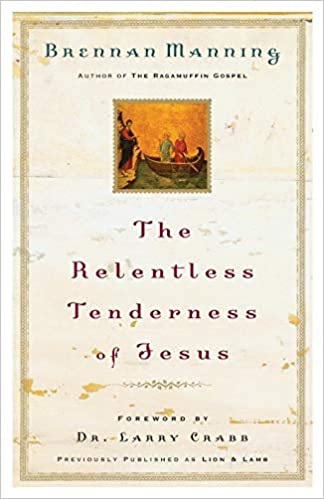
Manning: Do you see yourself as Jesus does?

Manning: Do you see yourself as Jesus does?

written by Christian Heinze

Brennan Manning, in The Relentless Tenderness of Jesus (emphasis added).

*****************************************************************************************************************************

“It is simply not possible to know the Christ of the Gospels unless we alter our attitude toward ourselves and take sides with Him, against our own self-evaluation.”

*****************************************************************************************************************************

Do we do that?

“Take sides with Him, against our own self-evaluation?”

It’s hard, but that’s the beauty of Christianity. It’s not about us, it’s about what he’s done for us.

In The Furious Longing of God, Manning quotes Basil Hume, who claimed that Christians find it easier to believe that God exists than that he loves them. That’s been my lifelong battle, as well.

Paul Tillich, in this famous passage, gets it exactly right. Because of Christ’s grace, “simply accept the face that you are accepted.”

Legalists want to make it harder. It isn’t. Jesus did everything.

*****************************************************************************************************************************

“Grace strikes us when we are in great pain and restlessness. It strikes us when we walk through the dark valley of a meaningless and empty life.

It strikes us when we feel that our separation is deeper than usual, because we have violated another life, a life which we loved, or from which we were estranged.

It strikes us when our disgust for our own being, our indifference, our weakness, our hostility, and our lack of direction and composure have become intolerable to us.

It strikes us when, year after year, the longed-for perfection of life does not appear, when the old compulsions reign within us as they have for decades, when despair destroys all joy and courage.

Sometimes at that moment a wave of light breaks into our darkness, and it is as though a voice were saying: “You are accepted. You are accepted, accepted by that which is greater than you…… Do not try to do anything now; perhaps later you will do much. Do not seek for anything; do not perform anything; do not intend anything. Simply accept the fact that you are accepted!” 

*****************************************************************************************************************************

For some of us, that’s too great to believe. Simply accepting that Christ accepts us.

Accepting his evaluation of ourselves, and not our own.

It’s terribly hard for me. And it’s especially hard when we have mood disorders that take us down paths of self-loathing and self-criticism.

But in the moments where we do grasp that God loves us, adores us, treasures us as much as he does his own son, Christ (John 17:23), then there isn’t anything more beautiful than that.

And it’s then that we can barely contain ourselves from telling others about this Good News. And that’s what the Good News and Great Commission are all about.

January 11, 2022
0 Facebook Twitter Google + Pinterest
STUDY: Skateboarding and “the freedom of youth”

STUDY: Skateboarding and “the freedom of youth”

written by Christian Heinze

Dr. Paul O’Connor, of the University of Exeter, recently interviewed 30 middle-aged skatedboarders to get a sense of why, despite the increased risk of injury, these people still do it, or even take it up for the first time.

The answer?

It helped them cope with the depression that often hits us, midlife.

The New York Post:

*****************************************************************************************************************************

A longtime skateboarder himself, O’Connor told The Post he was “confronted with grown men fighting back tears, literally lost for words in grasping to communicate the importance and gravitas of their pastime,” during his research.

And, for some women, who tend to feel “invisible” as they age, according to one of O’Connor’s interviews, it’s a chance for them “to do something … that is empowering in a truly novel way.”

*****************************************************************************************************************************

Some boarders also said skateboarding helped them reconnect with “the freedom of youth.”

I like that point, and it’s why I imagine it would be more emotionally meaningful than running in a straight line.

Now that I’ve hit my 40s, with a young family, the “freedom of youth” moments are increasingly rare.

Of course you can channel it by doing young, fun things with your kids, but it’s paired with the heaviness that this fun thing you’re doing isn’t what it was because……….. you’re responsible for everyone.

Remember when you were only responsible for yourself?

A few years after we had our first child, I took a solo plane flight to see my mom. There I was, strolling through the airport — just my backpack, my irresponsible flip-flops, a complete unknown. I felt like I was 20 again. And if I wanted the $12 Big Mac at the airport I could pick that, or if I wanted to just ignore my hunger, I could do that.

I never knew the freedom of youth I could feel, just by walking alone through an airport, wearing flip-flops, with a backpack.

It’s nice to revisit the old you.

My midlife crisis came at 37, when my dad passed away. I then read this book by Nick Page, which is a pretty good one.

He noted that the German term for mid-life crisis is “Torschlusspanik” which means literally “door-shut panic.”

The doors to your youth are closing quickly, and you didn’t even know it and you know you can’t stop it, try as you might (And many do try. In vain).

Suddenly, we remember the freedom of youth and anything that can reconnect us like skateboarding — well, it can bring people to tears for good reason.

That’s not to say everything that’s good is in the past, and therefore has passed.

We do, after all, have a different set of things to look forward to, and there’s the, ahem, Resurrection.

And there’s a reason why Solomon warned us about nostalgia (which I’m particularly prone to), and I’ve written about that here.

But it is, nevertheless, true that we have the most life when we’re least aware of it.

That is, after all, what youth is.

[Photo: Pexels]

January 9, 2022
0 Facebook Twitter Google + Pinterest
STUDY: PTSD, Anxiety linked to increased myelin

STUDY: PTSD, Anxiety linked to increased myelin

written by Christian Heinze

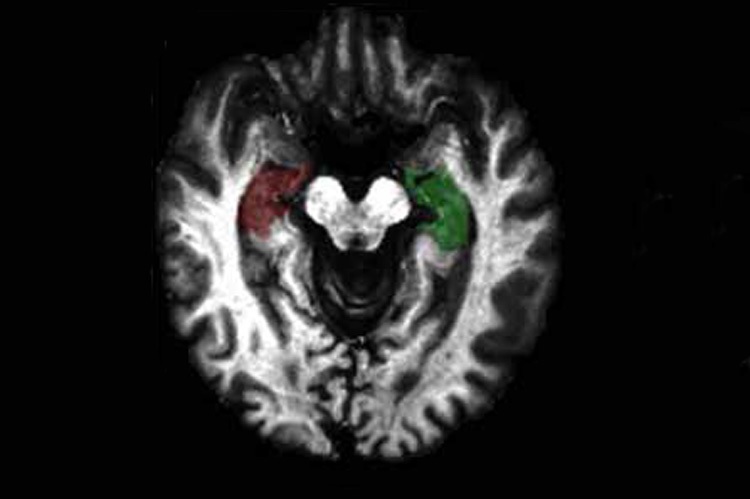
A brand new study, reported by scientists at Berkeley and UCSF, adds significantly to our understanding of the effects of acute trauma on the brain.

Particularly, increased myelin in the gray matter of veterans with PTSD.

Here’s the gist:

Scientists took MRI brain scans of 38 veterans. Half had PTSD, half didn’t.

The brain scans (see above) showed increased myelination in the gray matter in those with PTSD, compared to those without PTSD (Click here for more on myelin and myelination).

In fact, the worse the symptoms of PTSD, the more myelination in the gray matter.

Why does that matter?

Well, from studies of rats, the researchers have found that increased myelin in the gray matter has very real effects on behavior, depending on the specific region of gray matter where its found.

The same was true for the group of veterans.

This helps explains why some people with PTSD are hyper-avoidant and others, hyperreactive, for example.

The trauma might be the same, increased myelination is happening, but those elevated levels are happening in a different region in the gray matter.

Thus, one’s particular set of symptoms seems to depend on where their gray matter is seeing increased myelination.

If I’m hyper-avoidant and you’re hyperreactive, then there’s probably increased myelination in different parts of our gray matter.

That’s what both the study of vets with PTSD and rats, subjected to acute trauma, found.

Senior author, Dr. Thomas Neylan, explained in a news release:

*****************************************************************************************************************************

“If experience leads you to start to lay down myelin to strengthen certain connections, let’s say your ability to respond quickly to a fearful stimulus, you can speed up that circuit, but you lose the kind of broader adaptive flexibility that you normally would have with mostly unmyelinated axons and dendrites.

People with PTSD become almost like a one-note musician — they really know how to respond to fear. But that enhanced, quick response to fear may diminish their adaptive flexibility for non-fear-type behavior.”

*****************************************************************************************************************************

It’s absolutely crucial for the Christian church to be aware of studies like these, to look at actual MRI scans, to recognize the pain, and the source of that pain.

If you’re experiencing symptoms of PTSD and the church is stigmatizing you for being “fearful,” here’s a great idea (though not particularly realistic).

Make a church date for everyone to get MRI scans!

Have a neuroscientist point out those with increased myelination in the gray matter, and those without, and then have a group discussion.

Why do we laud some Christians as having superior boldness and confidence?

Why do we judge some Christians as weak and timid?

Why do we judge anyone when their brains are so different from ours?

Why do we judge anyone for any mood disorder?

And finally and most compellingly…

Why do we judge anyone when our Lord and Savior tells us not to.

If you’ve been judged by other Christians as “fearful,” “not living in faith,” and all that other stuff — my heart goes out to you. I’ve been judged for the same.

But studies like this show we’re battling medical conditions others aren’t, and the Lord knows what the others don’t, and he is close to you.

Charles Spurgeon, in an 1890 sermon called “The Tenderness of Jesus” said, “Jesus is touched, not with a feeling of your strength, but of your infirmity….as the mother feels with the weakness of her babe, so does Jesus feel with the poorest, saddest, and weakest.”

Spurgeon is right on everything, except this. You’re not weak if you struggle with a mood disorder (Would we ever call a paraplegic weak?). You might feel weak, others might call you that, but the strongest people on earth are those who keep living on earth, despite their despair.

Find a psychiatrist here.

Find a therapist here.

[Photo: Via UCSF, that’s the fMRI scan of a military veteran with PTSD. The red and green represent the gray matter regions with increased myelin].

January 9, 2022
0 Facebook Twitter Google + Pinterest
Load More Posts

Social Media

Twitter

Get in touch with me

Contact here. 

The Weary Christian mission:

First off:


In the United States, find a psychiatrist here.

In the United States, find a therapist here.

If you’re in the United States and having thoughts of harming yourself or others, please call the National Suicide Lifeline at 1-800-273-8255.

If you’re in the UK, get urgent help here.

Canada, here.

Australia, here.

New Zealand, here.

South Africa, here.

France, here.

Germany, here.

Portugal, here.

Mexico, here.

India, here.

The Philippines, here.

Singapore, here.

South Korea, here.


The Weary Christian goal…


a) reduce the stigma surrounding depression, anxiety, OCD, and other conditions in the Christian community.


b) have uncomfortable but honest conversations.


c) Reduce the stigma surrounding antidepressants, antipsychotics, and other meds God has given us as gifts.


And…


d) Sometimes (tons of times), we all feel really, really depressed in our journey. Hopefully, this site makes you feel less alone.

Categories


@2017 - PenciDesign. All Right Reserved. Designed and Developed by PenciDesign