
The Weary Christian
  • Depression
    • Depression

      Latest Medical Studies on Depression

      Depression

      James Bryan Smith: Unmet expectations and fear

      Depression

      STUDY: Criticizing older adults make them more vulnerable…

      Depression

      STUDY: Awe can reduce depressive symptoms

      Depression

      STUDY: How music-mindfulness can help depression, anxiety

  • Anxiety
    • Anxiety

      Calling out the brain on catastrophizing

      Anxiety

      James Bryan Smith: Unmet expectations and fear

      Anxiety

      STUDY: Awe can reduce depressive symptoms

      Anxiety

      STUDY: How music-mindfulness can help depression, anxiety

      Anxiety

      STUDY: Chronic pain associated with higher rates of…

  • Book quotes/Video
    • Book quotes/Video

      John Mark Comer: “Wherever Jesus went, the kingdom…

      Book quotes/Video

      Ann Voskamp: “Jesus saves you for Himself”

      Book quotes/Video

      Philippe: “Refusing to suffer means refusing to live”

      Book quotes/Video

      “In darkest night, you were there like no…

      Book quotes/Video

      Thanksgiving for his brokenness

  • Health News
    • Health News

      Latest Medical Studies on Depression

      Health News

      Calling out the brain on catastrophizing

      Health News

      STUDY: Mental health conditions share deep genetic patterns

      Health News

      STUDY: Four Supplements that MIGHT help depression

      Health News

      STUDY: Gut changes raise risk of eating disorders…

  • Interviews
    • Interviews

      INTERVIEW: Dr. Terry Powell’s gripping account of depression

      Interviews

      INTERVIEW: Therapist Michael Schiferl explains religious scrupulosity and…

      Interviews

      INTERVIEW: Rocker Matt Sassano shares battles, urges transparency…

      Interviews

      INTERVIEW: Dr. Brian Briscoe tells Christians that antidepressants…

      Interviews

      INTERVIEW: Pastor Scott Sauls on anxiety, depression, and…

  • Devotionals
    • Devotionals

      Think you’re a “failure?” Jesus sees you unlike…

      Devotionals

      “Grace has got to be drunk straight”

      Devotionals

      Defeated by God

      Devotionals

      Am I a faithless Christian?

      Devotionals

      “I killed Jesus of Nazareth”

  • About
  • Depression
    • Depression

      Latest Medical Studies on Depression

      Depression

      James Bryan Smith: Unmet expectations and fear

      Depression

      STUDY: Criticizing older adults make them more vulnerable…

      Depression

      STUDY: Awe can reduce depressive symptoms

      Depression

      STUDY: How music-mindfulness can help depression, anxiety

  • Anxiety
    • Anxiety

      Calling out the brain on catastrophizing

      Anxiety

      James Bryan Smith: Unmet expectations and fear

      Anxiety

      STUDY: Awe can reduce depressive symptoms

      Anxiety

      STUDY: How music-mindfulness can help depression, anxiety

      Anxiety

      STUDY: Chronic pain associated with higher rates of…

  • Book quotes/Video
    • Book quotes/Video

      John Mark Comer: “Wherever Jesus went, the kingdom…

      Book quotes/Video

      Ann Voskamp: “Jesus saves you for Himself”

      Book quotes/Video

      Philippe: “Refusing to suffer means refusing to live”

      Book quotes/Video

      “In darkest night, you were there like no…

      Book quotes/Video

      Thanksgiving for his brokenness

  • Health News
    • Health News

      Latest Medical Studies on Depression

      Health News

      Calling out the brain on catastrophizing

      Health News

      STUDY: Mental health conditions share deep genetic patterns

      Health News

      STUDY: Four Supplements that MIGHT help depression

      Health News

      STUDY: Gut changes raise risk of eating disorders…

  • Interviews
    • Interviews

      INTERVIEW: Dr. Terry Powell’s gripping account of depression

      Interviews

      INTERVIEW: Therapist Michael Schiferl explains religious scrupulosity and…

      Interviews

      INTERVIEW: Rocker Matt Sassano shares battles, urges transparency…

      Interviews

      INTERVIEW: Dr. Brian Briscoe tells Christians that antidepressants…

      Interviews

      INTERVIEW: Pastor Scott Sauls on anxiety, depression, and…

  • Devotionals
    • Devotionals

      Think you’re a “failure?” Jesus sees you unlike…

      Devotionals

      “Grace has got to be drunk straight”

      Devotionals

      Defeated by God

      Devotionals

      Am I a faithless Christian?

      Devotionals

      “I killed Jesus of Nazareth”

  • About

The Weary Christian

THE WEARY CHRISTIAN

LIVING WITH FAITH AND DEPRESSION

  • Depression
    • Depression

      Latest Medical Studies on Depression

      Depression

      James Bryan Smith: Unmet expectations and fear

      Depression

      STUDY: Criticizing older adults make them more vulnerable…

      Depression

      STUDY: Awe can reduce depressive symptoms

      Depression

      STUDY: How music-mindfulness can help depression, anxiety

  • Anxiety
    • Anxiety

      Calling out the brain on catastrophizing

      Anxiety

      James Bryan Smith: Unmet expectations and fear

      Anxiety

      STUDY: Awe can reduce depressive symptoms

      Anxiety

      STUDY: How music-mindfulness can help depression, anxiety

      Anxiety

      STUDY: Chronic pain associated with higher rates of…

  • Book quotes/Video
    • Book quotes/Video

      John Mark Comer: “Wherever Jesus went, the kingdom…

      Book quotes/Video

      Ann Voskamp: “Jesus saves you for Himself”

      Book quotes/Video

      Philippe: “Refusing to suffer means refusing to live”

      Book quotes/Video

      “In darkest night, you were there like no…

      Book quotes/Video

      Thanksgiving for his brokenness

  • Health News
    • Health News

      Latest Medical Studies on Depression

      Health News

      Calling out the brain on catastrophizing

      Health News

      STUDY: Mental health conditions share deep genetic patterns

      Health News

      STUDY: Four Supplements that MIGHT help depression

      Health News

      STUDY: Gut changes raise risk of eating disorders…

  • Interviews
    • Interviews

      INTERVIEW: Dr. Terry Powell’s gripping account of depression

      Interviews

      INTERVIEW: Therapist Michael Schiferl explains religious scrupulosity and…

      Interviews

      INTERVIEW: Rocker Matt Sassano shares battles, urges transparency…

      Interviews

      INTERVIEW: Dr. Brian Briscoe tells Christians that antidepressants…

      Interviews

      INTERVIEW: Pastor Scott Sauls on anxiety, depression, and…

  • Devotionals
    • Devotionals

      Think you’re a “failure?” Jesus sees you unlike…

      Devotionals

      “Grace has got to be drunk straight”

      Devotionals

      Defeated by God

      Devotionals

      Am I a faithless Christian?

      Devotionals

      “I killed Jesus of Nazareth”

  • About
DepressionHealth News

Latest Medical Studies on Depression

STUDY: Mental health conditions share deep genetic patterns

James Bryan Smith: Unmet expectations and fear

STUDY: Four Supplements that MIGHT help depression

STUDY: Criticizing older adults make them more vulnerable to developing depression

Daily Blog

Graham Greene on Christ’s death

Graham Greene on Christ’s death

written by Christian Heinze

Graham Greene, that brilliant 20th century writer, in his famous novel, The Power and the Glory, with one of my favorite lines about the oldness of our sin: “Man was so limited he hadn’t even the ingenuity to invent a new vice.”

And thus….. “it was too easy to die for what was good….it needed a God to die for the half-hearted and corrupt.”

Full passage:

***************************************************************************************************************

“How often the priest had heard the same confession – Man was so limited he hadn’t even the ingenuity to invent a new vice: the animals knew as much.

It was for this world that Christ had died; the more evil you saw and heard about you, the greater glory lay around the death.

It was too easy to die for what was good or beautiful, for him or children or a civilization – it needed a God to die for the half-hearted and the corrupt.”

***************************************************************************************************************

I don’t know about you, but I’m awfully half-hearted.

And if I’m anything full, I’d say full-sinned.

But I need (and got) a God who died for the half-hearted and full-sinned.

As Thomas Merton said,

“Quit keeping score altogether and surrender ourselves with all our sinfulness to God who sees neither the score nor the scorekeeper, but only his child redeemed by Christ.”

Christians with OCD, depression, anxiety etc are particularly prone to self-loathing and score-keeping, but remember what Brennan Mannning once wrote: God loves us with “magnificent monotony.”

And that magnificent monotony? He won’t be talked out of it. Even if we try to.

February 9, 2022
0 Facebook Twitter Google + Pinterest
STUDY: Depression could be reason socially anxious have less satisfying romantic relationships

STUDY: Depression could be reason socially anxious have less satisfying romantic relationships

written by Christian Heinze

Social Anxiety Disorder (SAD) is “an intense, persistent fear of being watched and judged by others,” and according to the National Institutes of Mental Health affects approximately 7% of the population.

Naturally, the more severe the SAD, the more debilitating it is.

Well, a new study published in Behaviour Change indicates that individuals with SAD struggle with romantic relationships for two reasons — one you might expect, and the other, not so much.

First, people with SAD are less likely to be in romantic relationships, at all.

Considering SAD’s symptoms, that’s not surprising.

If you have SAD, you’re less likely to date and show the vulnerability necessary for a relationship if you’re terrified by the judgment by others. Particularly, someone you like.

So that’s the first difficulty — forming romantic relationships.

Now here’s another hard part.

Researchers found that once individuals with SAD are in romantic relationships, they judge them as less satisfying than people in romantic relationships without SAD.

The surprising part is why.

The study indicated, through regression analysis, that the lack of satisfaction seems to be most associated with the depression that frequently co-occurs with SAD, and not social anxiety disorder itself.

That’s hugely clinically important.

Why?

Because, as the authors note, it suggests that treating the depression is likely to be more effective for producing a satisfying relationship than treating the social anxiety disorder itself.

So SAD does seem to inhibit the formation of romantic relationships, in the first place, but once those relationships are formed, it’s less likely to play a role in how satisfying it is.

That’s when depression produces the major challenge to the relationship, and social anxiety doesn’t seem to play a significant role in how satisfying that relationship is.

Yes, there’s a chance someone with SAD might be less vulnerable or open to communication within that relationship, but according to the authors, that didn’t seem to be nearly as important as the depression that is often co-morbid with SAD.

So for practitioners, this is an important study.

However, if you have SAD, or depression, it doesn’t change the fact that the best way to treat it is to…..

Find a psychiatrist near you.

And a therapist.

One final note.

There are obviously good Christian books on relationships and marriage.

Yet curiously, I haven’t read a single chapter from any Christian book on the role depression or anxiety or any kind of mental health disorder (I prefer calling it “brain disorder” because these are medical conditions) plays in a relationship.

Meanwhile, the secular world is light years ahead of the church on the massive role mental health challenges can play in a relationship’s health.

Every Christian book on relationships should have some kind of chapter on mental health. Or many chapters.

I’ve seen so many struggling relationships flourish once that component is addressed. Relationships that, until then, had only gotten worse, even with all the well-intentioned “biblical counseling” that had been provided.

Sometimes it really is as simple (and difficult!) as one or both partners addressing their mental health challenges.

[Painting: Room in New York, Hopper]
February 8, 2022
0 Facebook Twitter Google + Pinterest
Psalm 116:15: “The Lord cares deeply when his loved ones die”

Psalm 116:15: “The Lord cares deeply when his loved ones die”

written by Christian Heinze

Psalm 116 is the most visceral in the entire book.

Anxiety, despair, God’s mercy, salvation. It’s all there.

A Psalm couldn’t get more Psalmy than Psalm 116.

These days, verse 15 is one of its most neglected, but comforting: “The Lord cares deeply when his loved ones die.” (NLT).

Christian culture often adopts Paul’s “Oh death, where is your sting?” mindset when a loved one dies, and that is, indeed, the logical end of Christianity — the beginning, the resurrection and glory.

We’re also prone to say, “To die is gain” (again, Paul), and then of course, there’s my favorite extra-Biblical exposition, C.S. Lewis’ “The Weight of Glory.”

(If that thing were read at every funeral, the mourning Christians would start whispering to each other, “Hey, can you run to Home Depot and quickly grab a shovel or two,” and they’d all start digging their own graves. Mass burial event. Lewis really makes you want to be done with this world — and not from a feeling of despair, but excitement).

So there are many reasons why Christians can approach dying as if it were just being reborn into something better, somewhere better.

I get that.

But it’s important that we remember this verse, “The Lord cares deeply when his loved ones die.”

Most translations rightly say “precious in the sight of the Lord is the death of his saints,” but “precious” sends the wrong signal because we now think of something like a Huggies ad when we hear that word and not what’s intended in Hebrew which is closer to, “weighty” or “costly.”

In other words, The Lord recognizes what a weighty, costly thing it is when someone passes away.

It’s important to remember that for two reasons.

First, it’s the truth.

And second, in our Christian victory mindset, we’re prone to running roughshod over the sorrow of those who’ve seen their loved ones pass away.

We’re prone to cheer them up with promises of a better world, and I don’t think Jesus himself would do that.

He doesn’t see their death as something to celebrate (and, really, Christian culture sometimes borderline celebrates it or at least dismisses it to the point of callousness — see much of the evangelical church’s response to Covid), but God sees death as a weighty thing.

He never intended it for humans, and it’s something that brings him — God Almighty — immense sorrow. And Jesus, famously, tears.

If God — who knows exactly the glory in store for the one who passed away — still views death with such sacred sorrow, then how much more should we?

So if, right now, you’re mourning someone and the rest of your Christian friends are pushing you to move on, remember that the Lord isn’t.

The poet Eugene Gloria wrote, “Memory is another name for ghosts and their awful hunger.”

And if your spouse, your parent, your child dies, only you know the memory, its endurance, its ghost and that ghost’s awful hunger.

And while others move on, many days you will scarcely be able to move.

While other Christians try to nudge you from grief to the glory for the one you mourn, remember that it’s not the Lord nudging you.

He cares about their death and all the ways it haunts us. He never wanted this.

Yes, you can bank on what he’s got for them, right now and forever. And that’s wonderful.

But you can also count on what he’s got for you, here on earth, living in that ghost’s shadow — Christ’s shared sorrow and the simple phrase, “I know.”

When everyone else has moved on and you’re the only one left, sitting at the graveside, you’re actually not the only one left. Jesus is sitting with you.

Sure, he was there when they all were, for the formal affair with the typical verses, but he never left when the others did, when they moved on to their Sunday morning praise songs and coffee, leaving you alone.

He will remember everything with you, for as long as you do, and will never dishonor their memory or your pain.

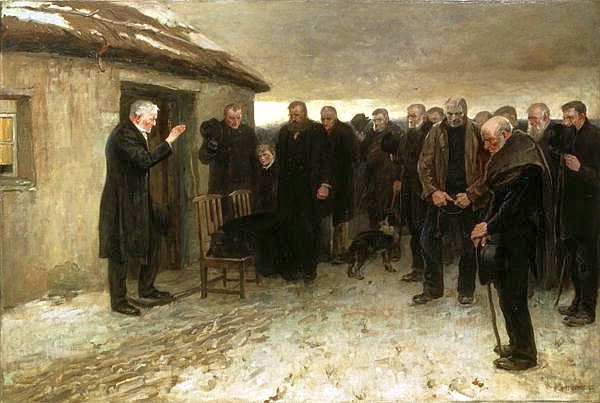
[Painting: A Highland Funeral, James Guthrie]

February 6, 2022
2 Facebook Twitter Google + Pinterest
STUDY: A bacteria that plays a major role in depression

STUDY: A bacteria that plays a major role in depression

written by Christian Heinze

“Gut-brain axis. Gut-brain axis. Gut-brain axis.”

A phrase every pastor should learn, followed by:

“Please see a doctor.”

The gut-brain axis is, to simplify, a bidirectional pathway where the brain communicates issues to the gut and the gut to the brain.

As for the gut to the brain part, there’s tons of academic literature on how acutely the bacteria in our gut can affect mood disorders.

Now a brand new study, published in Nature Genetics, further confirms a unique link between the bacteria, Morganella, and depression.

The gist, as explained on Science.org.

Méric’s team also explored which genetic variants might affect the abundance of certain microbes—and which of those variants were linked to 46 common diseases. When it came to depression, two bacteria that cause infections in hospitalized patients, Morganella and Kiebdiella, seemed to play a causal role, the researchers say. One of them, Morganella, was significantly increased in a microbial survey of the 181 people in the study who later developed depression.

And this isn’t the first time Morganella’s been flagged.

As far back as 2008, researchers investigating a possible link between depression and inflammation found depressed people had stronger immune responses to chemicals produced by Morganella and other gram-negative bacteria in the gut. Thus, the newest study seems to be “further proof” that inflammation caused by gut microbes can influence mood, Gilbert says.

That being said, researchers still don’t know how to eliminate Morganella.

If they could figure that out, perhaps a supplement would be in order.

Finally, it’s important to note that the study suggests that diet and genetics significantly affect the microbiome.

This is why nutritionists, who often claim that you can eat your way out of the darkness (I’m being hyperbolic, but you know), don’t offer the whole picture, at all.

For some, diet seems to really help.

Me? I’ve tried nearly every one out there, and while my body responds positively, my mood doesn’t really seem to budge whether I’ve had two months of Big Macs or two months of DEEP, WILD-CAUGHT, FRESH, NORDIC, SALMON OF THE VIKINGS.

But everyone is different, science suggests I’m an anomaly, and eating well is certainly tremendous and something to shoot for, for many reasons.

And so, here, via WebMD, is a good list of food that science seems to suggest fights depression.

Along with the proviso, that researchers still aren’t entirely sure whether depression leads you to eat poorly (and therefore develop nutrient deficiencies) or whether the deficiencies themselves lead to the depression. Or perhaps something of both.

[Painting: La Melancolie, Lagrenee]

February 5, 2022
0 Facebook Twitter Google + Pinterest
Villodas: What to do with boredom in silent prayer

Villodas: What to do with boredom in silent prayer

written by Christian Heinze

Rich Villodas with a fresh perspective on what will inevitably arise as we incorporate this practice:

***************************************************************************************************************

“Think of boredom during silent prayer as an act of purification.

In this uneventful moment, God purifies us of the false god of good feelings. While good feelings are gifts, they can easily become ends in themselves.

We can move from worshipping the living God to worshipping our spiritual experience.”

***************************************************************************************************************

I love that.

If you resolve to sit silently in a dark room for ten minutes, not praying to God, but just knowing that you’re with him, you’ll quickly be bored.

But as Villodas says, that can help purify us of the notion that every interaction with God must.result.in.a.powerful.worship.experience.

Do we expect that in our personal relationships?

No.

Villodas notes that shared silence is often a mark of close friendship.

And when you say, “God, I’m sitting here with you, nothing to say, just to be here,” it’s a sign that you believe that friendship.

And if you soon grow bored, think of it as God purifying you of the idea that every encounter must be moving.

It won’t be. But you’ll still be moving closer to God.

February 5, 2022
0 Facebook Twitter Google + Pinterest
Do you have Relationship OCD?

Do you have Relationship OCD?

written by Christian Heinze

Dr. Aliza Goldstein has an interesting piece at Psychology Today on a rarely discussed form of OCD.

It’s called “Relationship Obsessive-Compulsive Disorder” (ROCD), and is characterized by a person obsessively “questioning if they are in the ‘right’ relationship” and focusing “on their partner’s flaws and/or perceived incompatibilities.”

This isn’t just the standard, “Is this my eternal love?” kind of question that we all have, which usually answers itself “yes!” or “meh, nope” through time (read this piece on the difference).

It’s obsessive rumination and constant gauging to figure out if you are “sufficiently in love” with your partner.

Dr. Jonathan Abramowitz explains it this way to Healthline, “The senseless thoughts and doubts about the relationship don’t make sense to the person and they get upset that they’re thinking them. They might say, ‘if I love my partner, why would I have these thoughts? Maybe I don’t love them’.”

And then of course, people with ROCD start to look for “a guarantee that they are really in love.”

And, as with all other forms of OCD, it causes intense distress and disruption of their lives.

The International OCD Foundation notes that ROCD has been linked with mood, anxiety, or other OCD symptoms.

However, you can have OCD without having ROCD.

Dr. Jenna Feldman tells Bustle Magazine, “People with ROCD often have a catastrophic fear of regret” and that “perfectionism” and “intolerance of uncertainty” are common characteristics.

Interestingly, the International OCD Foundation notes that you can have “partner-focused” ROCD or “relationship-focused” OCD or both.

“Partner-focused” ROCD tends to obsess over whether the other person is the right one for a myriad of reasons.

“Relationship-focused” ROCD tends to obsess over whether the relationship itself is the right one.

Not only can these obsessions rob people of joy or satisfaction in a relationship, they can also cause considerable mental harm.

The International OCD Foundation notes:

Extreme beliefs about love may also make people with ROCD more vulnerable to negative relationship thoughts or emotions. Examples of such beliefs about love may include “If the relationship is not completely perfect, it is unlikely to be ‘true love’”, “If you doubt your love for your partner, it is likely it is not the ‘right’ relationship” and “If you don’t think about your partner all the time, s/he is probably not THE ONE.”  Similar to other forms of OCD, beliefs about the importance of thoughts (e.g., “If I think about it, it must mean something”), difficulty with uncertainty, and an inflated sense of responsibility (e.g., failing to prevent disaster is as bad as causing it) may also increase sensitivity to ROCD.

And, people who have ROCD are often single for a very long time.

(Note: There’s nothing wrong, at all, with staying single. Single means freedom – every married person remembers that and sighs, at some point. But C.S. Lewis famously said that the “price of freedom is loneliness” and married folk often forget that).

But most people with ROCD don’t want to single, and so they feel intense distress both without a relationship and within one.

Dr. Owen Kelly notes that many of the thoughts surrounding ROCD are common in romantic relationships, but it only becomes ROCD when the obsessions and compulsions disrupt your life in a significant way.

If you feel you might have it (or better yet, if a friend suggests something, because friends often can see our OCD before we can), call a therapist for further evaluation.

Dr. Kelly says some potential causes of ROCD are changes in the brain, the loss of a loved one, trauma, difficulties in close relationships and more, and that treatment usually involves psychotherapy, medication, or both.

But as with most forms of OCD, Exposure and Response Prevention seems to work best, according to Dr. Abramowtiz.

Finally, the OCD Center of Los Angeles has a tremendously practical guide as you consider whether you have ROCD.

Included: Some of the most common, specific obsessions of those with ROCD — the “What if?” questions, the “Do I?” questions.

Also included: The common compulsions, which include avoidance and reassurance-seeking.

Also included: Its impact.

And of course: Treatment.

I have OCD but have never experienced ROCD.

When I’ve been in love, I’ve never wondered, “Is she the right person?” Doubts could never appear where she danced in my head.

But as I was reading about this kind of OCD, I started wondering about my relationship… with God.

Of course, ROCD usually centers on a romantic partner, and God isn’t that.

But I do sort of obsess over my relationship with God and ask many of these same questions.

“Is this the right God?” (The Angel of the Lord killed all the firstborn in Egypt. C’mon. That’s terribly hard to accept. Pastors duly note it’s in the context of the redemption of Israel. But still, c’mon, that’s brutally hard to accept. Couldn’t there have been another way?).

“Do I really love Christ? Or do I just love the idea of salvation?”

“Does Christ really love me? Let me run through all those verses again. Yes, he loves humans. But I wonder if it’s just others. Does he really love me?”

The poet William Cowper, who wrote many great hymns, famously believed that God’s love was for everyone….but him.

And we sometimes wonder that, too.

In fact, “sometimes” is too generous. “Often” is too easy. “Nearly always” is more like it.

Could it be that Christians with OCD might apply some kind of ROCD onto our relationship with Christ?

Of course, there’s no academic literature on that. Imagine trying to get a research grant for that.

But religious scrupulosity has some overlap here, and that’s been studied extensively.

I don’t want to venture too far out on this tree, particularly because I don’t want to confuse ROCD with scrupulosity.

And I don’t want to end a post on ROCD with something else.

But it’s something I’m going to consider in my own life.

Am I obsessed with doubts about my relationship with Christ to the point where it disrupts that relationship? Where it disrupts my life, robs me of my joy?

If so, it might be from my OCD.

SOME RESOURCES ON RELATIONSHIP OCD:

Psych Central.

International OCD Foundation.

Very Well Mind.

Healthline.

WebMD.

OCD Center of Los Angeles.

Psychology Today: “7 Ways to Stop Relationship OCD from Ruining Your Love Life”.

[Painting: So common it’s a cliche; so good it can never lose its wonder. The Kiss by Klimt].

And because I love this film and score so much, and Genevieve and Guy didn’t (at first) seem to have ROCD, I might as well use this post as a chance.

February 4, 2022
1 Facebook Twitter Google + Pinterest
Some benefits of meditation

Some benefits of meditation

written by Christian Heinze

Healthline has a tremendous read on 12 science-based benefits of meditation.

No matter what some Christians think of that word (more on that later), the science is indisputable.

Meditation (and there are many, many types) is good for every part of ourselves.

Check out Healthline’s piece, with all the attendant studies cited, but here are a few highlights.

  1. Stress Reduction. Studies have shown that in can reduce the bodily inflammation response caused by stress, and also might alleviate symptoms of PTSD, IBS, and fibromyalgia.
  2. Anxiety Reduction. Scores of studies have shown mindfulness meditation reduces anxiety levels, particularly in those with high anxiety.
  3. Depression. A massive study of studies found it demonstrated “moderate to large reductions” in depression. One of the mechanisms might be through its effect on inflammatory chemicals involved in the depressive process.
  4. Lengthens attention span. Studies have shown that regular meditation seems to improve attention, focus, and clarity when performing a task.
  5. Dementia. It might reduce certain symptoms associated with dementia, including memory, attention and mental quickness.
  6. Can make you kinder. Metta meditation, in particular, can lead to more positive emotions, understanding of others, and warmer personal interactions.
  7. Addiction fighter. A study of transcendental meditation in alcoholics found that it was associated with lower levels of alcohol cravings, stress, and psychological distress.
  8. Improved sleep. Studies have suggested mindfulness-meditation can improve sleep quality and quantity.
  9. Pain control. In a massive study of studies, meditators were able to cope with pain better and even experienced a reduction in pain.
  10. Blood pressure. A meta-analysis found it helped reduce bp, most likely by calming the fight or flight instinct.

Healthline discusses even more, and read them here.

But the point is that meditation (and there are many types), has enormous physical and mental health benefits.

Now of course, Christians have a long history of skepticism with that word and are quick to add, “Yes, meditate like David on the Word of God.”

Well, yes, I do that.

But that is entirely different from, for example, mindfulness meditation.

It’s using the word “meditation” in two different ways.

When I “meditate” on Christ and what he’s done for me, I have this pastiche of thoughts of my sinfulness, his mercy, and all these other things having to do with Christianity.

It’s hardly mindfulness, which is “a state of active, open attention to the present.”

It’s entirely different from meditating on Christ, which by definition, is a connection to the past, present, and future.

I’ve tried mindfulness meditation in the past, and just never quite committed to it.

But I recently downloaded an app, decided to really commit, and so far, I’ve been surprised at how relaxing it is.

How regenerating.

Just breathing and focusing on breathing and each thing you’re feeling. Turns out the hype is kind of right (ugh, sorry to report that, in a way, because I’ve never wanted to join the meditation crowd).

So now I do it for 2 minutes when I wake up, 5 minutes at lunch, and then before bed.

And after just a few minutes, I do feel different.

But you have to commit to the process.

I’m a cynic by nature (massively), but you have to let go of that if it’s going to help.

There’s nothing remotely unChristian about doing any of this.

It’s entirely theologically compatible to believe “Jesus Christ is the way, truth, and life,” and take deep breaths and focus on the sensations around you.

Just like it’s entirely theologically compatible to believe “Jesus Christ is the way, truth, and life” and eat Cheerios for breakfast.

There is no heresy in deep breaths. Or focusing on the present.

Paul wasn’t angry at false teachers because they were teaching mindfulness meditation. Etc etc.,

In fact, there’s great spiritual benefit!

This post, however, is primarily about some of the physical and mental benefits.

(But by next week, I’ll probably have stopped meditating).

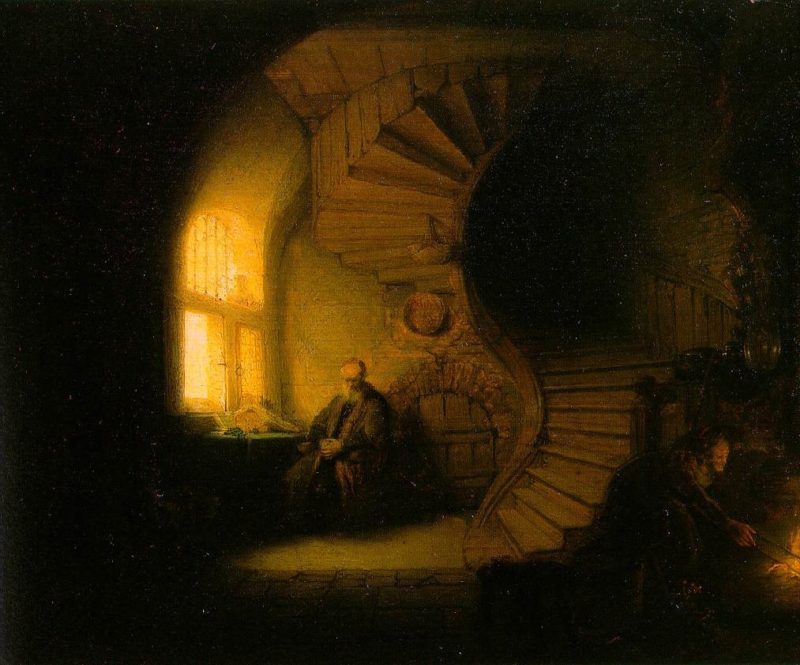
[Painting: Philosopher in Meditation, Rembrandt]

February 3, 2022
0 Facebook Twitter Google + Pinterest
Simpson: The “whitewashed tombs” churches

Simpson: The “whitewashed tombs” churches

written by Christian Heinze

Amy Simpson, in her classic book, Troubled Minds: Mental Illness and the Church’s Mission (read our interview here).

***************************************************************************************************************

“Any church that demands health, attractiveness and high performance from its members will succeed in filling itself with people who are good at pretending to be healthy, attractive high performers at all times, regardless of the true story unfolding in the places only God can see.

Jesus’ term for such people was ‘whitewashed tombs.’

***************************************************************************************************************

Indeed.

When hurting is seen as a sign of spiritual failure, it’s no wonder the hurting struggle feeling at home in church.

The church is excellent at saying, “If you’re hurting, come here, and we will welcome you.”

But there’s often a catch.

If you’ve been there five years and still struggle, the message becomes, “What’s wrong with you? You’ve been here five years? Aren’t you growing in Christ?”

Well, if you come to church with a broken back, you’ll have a broken back, five years later, unless you get medical help.

And the same goes for depression, anxiety, and these other medical conditions.

“Growing in Christ” won’t grow you out of your depression or anxiety any more than it will grow you out of a brain tumor.

And yet, Bob Smietana highlights a 2018 Lifeway Research study that shows just how backwards the church has it.

One of the complications for Christians with mental illness is that they feel pressure to still grow spiritually.

Lifeway Research found that most pastors (76 percent) and family members (74 percent) felt a Christian with acute mental illness could thrive spiritually, even if their condition was not stable.

Nearly two-thirds (63 percent) of people with mental illness also believe that someone could thrive spiritually even if their condition wasn’t stable.

The experts in the Lifeway study, however, cautioned that stabilizing a person’s mental health should come first.

Christians can feel God’s presence and comfort in the midst of their struggles with mental illness.

But it’s difficult to thrive spiritually if someone’s mental illness is not stable.

Absolutely.

Christian psychiatrist Dr. Brian Briscoe puts it this way in our recent interview.

“If you’re clinically depressed and you’re not functioning well, the medication can make it so you can go about life, functioning. And of course, you’re going to feel better at engaging in life.

There’s also an aspect of depression that involves “anhedonia,” which is an inability or diminished ability to experience joy or pleasure.

That’s a biological process.

Let’s say you’d normally enjoy going to a movie or throwing your grandchild in the air.

If you’re clinically depressed, that joy or pleasure is diminished.

Likewise, in your relationships, when you see someone you love, your ability to experience that joy or pleasure is diminished.

That happens in your horizontal relationships.

It also happens in your vertical relationship.

When you’re clinically depressed, your ability to experience joy and pleasure towards God is affected.

God is still with you, but your internal experience of that is diminished.

And when people are depressed, they will often feel that God is distant.

Many times — assuming the medication is right and improves the underlying anhedonia — your spiritual experience improves, your connection in your horizontal relationships improves, your joy and sense of pleasure is restored.”

February 2, 2022
0 Facebook Twitter Google + Pinterest
Study highlights geographic challenges for rural patients

Study highlights geographic challenges for rural patients

written by Christian Heinze

A brand new study in The Journal of Rural Health highlights significant disparities in access for mental health treatment, based on geography.

The results aren’t surprising:

Urban dwellers with private insurance were far likelier to receive mental health care than rural dwellers with private insurance.

Is that because urban people are more depressed? Or simply because they have better access to mental health care?

Well, studies have shown similar prevalence in mental health disorders between those living in the city and rural areas.

The authors suggest access plays a big role.

There are fewer mental health specialists in rural areas. That might be why folks living in rural areas had to pay higher co-pays for their treatment, mostly due to out-of-network costs.

Obviously, higher copays place a financial burden on rural-dwellers who are probably even less likely to be able to afford those copays than urban dwellers.

Both higher copays and lack of specialists (i.e. psychiatrist and psychologists) probably contributed to more rural patients seeking care from their primary care physician.

PCP’s are great, but they’re not specialists.

Now… the authors merely speculate that those could be issues behind rural dwellers lagging urban dwellers in accessing mental health treatment.

Another fascinating study of studies from last year in The Journal of Clinical and Translational Science noted that there seem to be other factors at play, as well, including a greater stigma towards these conditions in rural areas (the rugged individualism thing) and less literacy on mental health issues.

Access, finances, stigma — all of these and more seem to be an issue.

So what can be done?

Well, for access, the authors of the Journal of Rural Health study suggest programs that incentivize specialists to move to rural areas.

And second, they argue for an expansion of teletherapy services.

Teletherapy is effective, but the pandemic provided fertile ground for studies on its effectiveness. And, not surprisingly, it turned out that teletherapy was less effective than in-person therapy, unfortunately.

That being said, teletherapy does have advantages.

For example, it’s more convenient (no commute) and thus breaks down one significant barrier to entry, especially for rural folks. The New York Times gives a largely positive view of it in this piece, while acknowledging some of its key deficiencies.

If you’re looking for a provider in your area, Psychology Today has a great little zipcode screener, and you can even sort based on whether a provider offers teletherapy.

So…

Find a psychiatrist here.

Find a therapist here.

[Screencap: The wonderful 1940 movie version (and even more wonderful theme by Aaron Copeland) of Thornton’s Wilder’s famous play “Our Town”].

February 2, 2022
0 Facebook Twitter Google + Pinterest
A different worship

A different worship

written by Christian Heinze

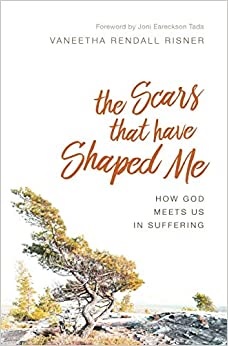
Vaneetha Rendall Risner, in her book The Scars that Have Shaped Me:

***************************************************************************************************************

“Giving up my right to have something exactly as I want it can be an act of worship.”

***************************************************************************************************************

January 30, 2022
0 Facebook Twitter Google + Pinterest
Load More Posts

Social Media

Twitter

Get in touch with me

Contact here. 

The Weary Christian mission:

First off:


In the United States, find a psychiatrist here.

In the United States, find a therapist here.

If you’re in the United States and having thoughts of harming yourself or others, please call the National Suicide Lifeline at 1-800-273-8255.

If you’re in the UK, get urgent help here.

Canada, here.

Australia, here.

New Zealand, here.

South Africa, here.

France, here.

Germany, here.

Portugal, here.

Mexico, here.

India, here.

The Philippines, here.

Singapore, here.

South Korea, here.


The Weary Christian goal…


a) reduce the stigma surrounding depression, anxiety, OCD, and other conditions in the Christian community.


b) have uncomfortable but honest conversations.


c) Reduce the stigma surrounding antidepressants, antipsychotics, and other meds God has given us as gifts.


And…


d) Sometimes (tons of times), we all feel really, really depressed in our journey. Hopefully, this site makes you feel less alone.

Categories


@2017 - PenciDesign. All Right Reserved. Designed and Developed by PenciDesign