
The Weary Christian
  • Depression
    • Depression

      James Bryan Smith: Unmet expectations and fear

      Depression

      STUDY: Criticizing older adults make them more vulnerable…

      Depression

      STUDY: Awe can reduce depressive symptoms

      Depression

      STUDY: How music-mindfulness can help depression, anxiety

      Depression

      STUDY: Chronic pain associated with higher rates of…

  • Anxiety
    • Anxiety

      Calling out the brain on catastrophizing

      Anxiety

      James Bryan Smith: Unmet expectations and fear

      Anxiety

      STUDY: Awe can reduce depressive symptoms

      Anxiety

      STUDY: How music-mindfulness can help depression, anxiety

      Anxiety

      STUDY: Chronic pain associated with higher rates of…

  • Book quotes/Video
    • Book quotes/Video

      “In darkest night, you were there like no…

      Book quotes/Video

      Thanksgiving for his brokenness

      Book quotes/Video

      Esther Smith: “All he wants is you”

      Book quotes/Video

      James Bryan Smith: Unmet expectations and fear

      Book quotes/Video

      Staton: On being a witness

  • Health News
    • Health News

      Calling out the brain on catastrophizing

      Health News

      STUDY: Mental health conditions share deep genetic patterns

      Health News

      STUDY: Four Supplements that MIGHT help depression

      Health News

      STUDY: Gut changes raise risk of eating disorders…

      Health News

      STUDY: Criticizing older adults make them more vulnerable…

  • Interviews
    • Interviews

      INTERVIEW: Dr. Terry Powell’s gripping account of depression

      Interviews

      INTERVIEW: Therapist Michael Schiferl explains religious scrupulosity and…

      Interviews

      INTERVIEW: Rocker Matt Sassano shares battles, urges transparency…

      Interviews

      INTERVIEW: Dr. Brian Briscoe tells Christians that antidepressants…

      Interviews

      INTERVIEW: Pastor Scott Sauls on anxiety, depression, and…

  • Devotionals
    • Devotionals

      “Grace has got to be drunk straight”

      Devotionals

      Defeated by God

      Devotionals

      Am I a faithless Christian?

      Devotionals

      Think you’re a “failure?” Jesus sees you unlike…

      Devotionals

      “I killed Jesus of Nazareth”

  • About
  • Depression
    • Depression

      James Bryan Smith: Unmet expectations and fear

      Depression

      STUDY: Criticizing older adults make them more vulnerable…

      Depression

      STUDY: Awe can reduce depressive symptoms

      Depression

      STUDY: How music-mindfulness can help depression, anxiety

      Depression

      STUDY: Chronic pain associated with higher rates of…

  • Anxiety
    • Anxiety

      Calling out the brain on catastrophizing

      Anxiety

      James Bryan Smith: Unmet expectations and fear

      Anxiety

      STUDY: Awe can reduce depressive symptoms

      Anxiety

      STUDY: How music-mindfulness can help depression, anxiety

      Anxiety

      STUDY: Chronic pain associated with higher rates of…

  • Book quotes/Video
    • Book quotes/Video

      “In darkest night, you were there like no…

      Book quotes/Video

      Thanksgiving for his brokenness

      Book quotes/Video

      Esther Smith: “All he wants is you”

      Book quotes/Video

      James Bryan Smith: Unmet expectations and fear

      Book quotes/Video

      Staton: On being a witness

  • Health News
    • Health News

      Calling out the brain on catastrophizing

      Health News

      STUDY: Mental health conditions share deep genetic patterns

      Health News

      STUDY: Four Supplements that MIGHT help depression

      Health News

      STUDY: Gut changes raise risk of eating disorders…

      Health News

      STUDY: Criticizing older adults make them more vulnerable…

  • Interviews
    • Interviews

      INTERVIEW: Dr. Terry Powell’s gripping account of depression

      Interviews

      INTERVIEW: Therapist Michael Schiferl explains religious scrupulosity and…

      Interviews

      INTERVIEW: Rocker Matt Sassano shares battles, urges transparency…

      Interviews

      INTERVIEW: Dr. Brian Briscoe tells Christians that antidepressants…

      Interviews

      INTERVIEW: Pastor Scott Sauls on anxiety, depression, and…

  • Devotionals
    • Devotionals

      “Grace has got to be drunk straight”

      Devotionals

      Defeated by God

      Devotionals

      Am I a faithless Christian?

      Devotionals

      Think you’re a “failure?” Jesus sees you unlike…

      Devotionals

      “I killed Jesus of Nazareth”

  • About

The Weary Christian

THE WEARY CHRISTIAN

LIVING WITH FAITH AND DEPRESSION

  • Depression
    • Depression

      James Bryan Smith: Unmet expectations and fear

      Depression

      STUDY: Criticizing older adults make them more vulnerable…

      Depression

      STUDY: Awe can reduce depressive symptoms

      Depression

      STUDY: How music-mindfulness can help depression, anxiety

      Depression

      STUDY: Chronic pain associated with higher rates of…

  • Anxiety
    • Anxiety

      Calling out the brain on catastrophizing

      Anxiety

      James Bryan Smith: Unmet expectations and fear

      Anxiety

      STUDY: Awe can reduce depressive symptoms

      Anxiety

      STUDY: How music-mindfulness can help depression, anxiety

      Anxiety

      STUDY: Chronic pain associated with higher rates of…

  • Book quotes/Video
    • Book quotes/Video

      “In darkest night, you were there like no…

      Book quotes/Video

      Thanksgiving for his brokenness

      Book quotes/Video

      Esther Smith: “All he wants is you”

      Book quotes/Video

      James Bryan Smith: Unmet expectations and fear

      Book quotes/Video

      Staton: On being a witness

  • Health News
    • Health News

      Calling out the brain on catastrophizing

      Health News

      STUDY: Mental health conditions share deep genetic patterns

      Health News

      STUDY: Four Supplements that MIGHT help depression

      Health News

      STUDY: Gut changes raise risk of eating disorders…

      Health News

      STUDY: Criticizing older adults make them more vulnerable…

  • Interviews
    • Interviews

      INTERVIEW: Dr. Terry Powell’s gripping account of depression

      Interviews

      INTERVIEW: Therapist Michael Schiferl explains religious scrupulosity and…

      Interviews

      INTERVIEW: Rocker Matt Sassano shares battles, urges transparency…

      Interviews

      INTERVIEW: Dr. Brian Briscoe tells Christians that antidepressants…

      Interviews

      INTERVIEW: Pastor Scott Sauls on anxiety, depression, and…

  • Devotionals
    • Devotionals

      “Grace has got to be drunk straight”

      Devotionals

      Defeated by God

      Devotionals

      Am I a faithless Christian?

      Devotionals

      Think you’re a “failure?” Jesus sees you unlike…

      Devotionals

      “I killed Jesus of Nazareth”

  • About
Health News

STUDY: Mental health conditions share deep genetic patterns

James Bryan Smith: Unmet expectations and fear

STUDY: Four Supplements that MIGHT help depression

STUDY: Criticizing older adults make them more vulnerable to developing depression

Study offers great context on kids, screen time, and emotional problems

Daily Blog

Ortlund: Christ’s “perfect, unfiltered compassion”

Ortlund: Christ’s “perfect, unfiltered compassion”

written by Christian Heinze

From his book, Gentle and Lowly, Dane Ortlund notes that our capacity for compassion — no matter how great — is still limited by our sinfulness.

What if, he asks, it wasn’t?

That was Jesus.

Ortlund writes:

—-

“What then must it mean for a sinless man with fully functioning emotions to lay eyes on that leper?

Sin restrained my emotions of compassion: what would unrestrained emotions of compassion be like?

That is what Jesus felt. Perfect, unfiltered compassion.

What must that have been like, rising up within him?

What would perfect pity look like, mediated not through a prophetic oracle as in the Old Testament but through an actual, real human?

And what if that human were still a human, though now in heaven, and looked at each of us spiritual lepers with unfiltered compassion.”

February 25, 2022
0 Facebook Twitter Google + Pinterest
STUDY: Oxygen therapy shows promise for PTSD

STUDY: Oxygen therapy shows promise for PTSD

written by Christian Heinze

This is a pretty amazing, and potentially, game-changing study for both the diagnosis and treatment of PTSD, as reported by Israeli paper Ynet.

A team of Israeli researchers studied thirty five combat veterans with treatment-resistant PTSD.

One of the groups received hyperbaric oxygen therapy (HBOT), which is already used in a number of medical conditions.

Research has found that HBOT can help generate new blood vessels and neurons by improving the supply of oxygen to the brain.

With that existing research in mind, the researchers theorized that they could activate mechanisms to repair wounded brain tissue from PTSD.

Professor Shai Efrati explains to Israeli paper, Ynet, “The treatment induces reactivation and proliferation of stem cells, as well as generation of new blood vessels and increased brain activity, ultimately restoring the functionality of the wounded tissues. Our study paves the way to a better understanding of the connection between mind and body.”

That seems to be exactly what happened to the participants in the trial.

In fact, every participant reported “significant” improvement in PTSD symptoms such as avoidance, hyper-arousal, and depression.

And that improvement was confirmed by brain scans that showed structural and functional improvement in the brain wounds.

In other words, participants reported it helped, and their brain scans agreed.

Further, there were no adverse side effects reported (although adverse side effects have been reported with HBOT used in other contexts).

Professor Efrati says he expects the treatment will be effective for years.

The significance extends.

Efri adds that they may have arrived at the most effective diagnostic method for PTSD — one that goes beyond self-reports, and that they’re working on identifying the biological fingerprint of it.

Obviously, this is enormously exciting.

First, imagine the healing to patients afflicted with this often lifetime disease.

PTSD is something the Alpha Christian Optimists often dismiss, but I’ve written before how dangerously naïve the “shake it off” crowd is to science, victimes, and that dismissing PTSD is an affront to God.

While I always paid lip service to the notion of PTSD and believed in it, intellectually, I never really knew until I developed it, and unfortunately now I can never forget. My body won’t let me. If you have PTSD, you know the avoidance, hyper-arousal, the depression that comes from it. I don’t have to explain it to you.

You just know. It kills many before it kills some.

And yet look at this study.

Every single participant with treatment-resistant PTSD reported significant improvement, and the scans suggested this wasn’t a placebo effect.

Second, if indeed, scientists are closer (and they appear to be) to finding the biological blueprint for PTSD, it’s yet another scientific data point for a skeptical Christian church.

The American evangelical church, in particular, is historically poor at acknowledging PTSD.

I would guess it has something to do with the “rugged individualism” and conservative politics that somehow associates PTSD with “the snowflake generation.”

And yet.

Behind the curtains, you will find Christians of every single generation, who — if you get to really know them — point back to some trauma that their bodies and minds still can’t forget, that live with them and keep them from living, and bring them to the brink of despair.

PTSD is all over the American evangelical church.

It’s just too shy to say so.

But the more academic research on this topic, the more difficult it will be for the “more prayer!” voices to dismiss the medical nature of this condition.

If you struggle with PTSD, the Anxiety & Depression Association of America has some good resources on facts and treatment.

Here’s a good resource from the National Institutes of Health.

And you can…

Find a psychiatrist here in your area who can help treat PTSD.

Find a therapist here in your area who can help treat PTSD.

Hopefully, we’ll learn more about HBOT and, perhaps, one day, it will provide relief to millions.

[Photo: Pexels, free stock photography]

February 25, 2022
0 Facebook Twitter Google + Pinterest
“He was a stranger in this land”

“He was a stranger in this land”

written by Christian Heinze

There are two lines (well, every line) in Rich Mullins’ classic, “Step by Step,” that particularly resonate with depressed, melancholy Christians.

Of Abraham, he writes, “He was a stranger in this land.”

I think every melancholy, depressed Christian feels this.

Even if that land is our home. We still feel a stranger to every place we go. We still feel a stranger among friends. We still feel a stranger to everything familiar.

As Matt Bellamy sings, “Free me from this world…. I don’t belong here.”

That’s the way it’s felt my entire life.

And we’re not alone in feeling that. We have good company in our loneliness.

There was no one stranger to this world, nor more attached to it than Jesus, and thank God because he saved us from this one into a different one.

Mullins follows the feeling of strangeness with the only thing keeping the stranger from estrangement.

“O God, You are my God.”

I have never felt closer to home nor my calling in this world than when close with Christ.

“O God, you are my God.”

And because of that, we keep going, knowing he’s going with us.

Here are the lyrics, and Mullins, live, below.

“Step by Step,” Rich Mullins

Sometimes the night was beautiful
Sometimes the sky was so far away
Sometimes it seemed to stoop so close
You could touch it but your heart would break
Sometimes the morning came too soon
Sometimes the day could be so hot
There was so much work left to do
But so much You’d already done

O God, You are my God
And I will ever praise You
O God, You are my God
And I will ever praise You
And I will seek You in the morning
And I will learn to walk in Your ways
And step by step You’ll lead me
And I will follow You all of my days

Sometimes I think of Abraham
How one star he saw had been lit for me
He was a stranger in this land
And I am that, no less than he
And on this road to righteousness
Sometimes the climb can be so steep
I may falter in my steps
But never beyond Your reach

O God, You are my God
And I will ever praise You
O God, You are my God
And I will ever praise You
I will seek You in the morning
And I will learn to walk in Your ways
And step-by-step You’ll lead me
And I will follow You all of my days

[Picture: Uzak]

February 20, 2022
0 Facebook Twitter Google + Pinterest
NY Times looks at the cold water-plunge mental health trend

NY Times looks at the cold water-plunge mental health trend

written by Christian Heinze

You might have heard of the Wim Hof Method for mental and physical health that’s all the rage these days.

You can go to Hof’s website for a better explanation (and, of course, glowing testimonials), but the gist is that taking plunges in cold water, coupled with certain breathing techniques, is really good for your physical and mental health.

Chloe Williams at The New York Times has a fantastic read on the pros, cons, possible benefits, and risks of it, and I’d recommend you read that for a fuller picture.

But this is a blog, so I’ll just mention a few, quick things she points out, and a few other articles, as well.

First, its reportedly positive effects on mental health are mainly anecdotal and theoretical.

Anecdotal, because a lot of people swear by it.

But a lot of people have sworn by a lot of things that have ultimately proven to be nothing but the placebo effect.

And to that point, Williams makes a great point.

It’s really, really hard to run a clinical trial on the cold water plunge thing because the concept of a placebo group is tricky.

For example, one study that showed mental benefits to the Method merely compared the plungers to the people who watched on shore.

That’s not much of a blind control group.

Further, how do we know it’s the cold water that’s stimulating the mental benefits and not the fact that it’s exercise, which is one of the most powerful things you can do for your mental health?

It would be interesting to see a study comparing the plungers to, let’s say, some other group involved in vigorous physical exercise.

So studies are scarce, the limitations to those studies are significant, and researchers duly note that.

It’s impossible to say, with any empiric confidence, that the cold is the thing that helps with mental health.

Now, Williams notes that there are theoretical reasons, backed by science, of why it could be effective for mental health.

Immersing yourself in icy water triggers the release of stress hormones, such as noradrenaline and cortisol. This is likely why people say that a dip in cold water wakes them up, [Doctor Mike] Dr. Tipton said.

Some studies have also reported increases in brain chemicals that regulate mood, such dopamine, following a cold soak, which may explain the post-swim “high” people feel. In addition, putting your face in cold water can activate the parasympathetic branch of the nervous system, which prompts the body to relax after a stressful event. This may help people feel calm and tamp down inflammation. Several conditions, including depression, are tied to chronic inflammation, said Mark Harper, an anesthesiology consultant at Royal Sussex County Hospital, who is studying cold water swimming as a treatment for depression.

Some researchers also hypothesize that adapting to the shock of cold water may improve a person’s ability to cope with other stresses. A small 2010 study showed that people who were habituated to cold water had a reduced stress response when they were subjected to another strain — in this case, working out in a low oxygen environment. But enduring hypoxic exercise is not the same as enduring psychological stresses, however, and more work is needed.

So we can’t throw cold water entirely on the cold water thing.

It could be that it’s extremely helpful, it could be helpful for the other things noted (placebo effect, exercise, breathing etc).

But it’s important to also note that it could be harmful.

Williams notes that scientists say that initial cold water shock plunge could lead to arrhythmias and heart attacks.

And shallow water blackout has been suggested as another dangerous (fatal) side effect, with four people drowning of the suspected practice a few years ago.

That’s why it’s absolutely vital to talk to a doctor before doing this kind of thing.

Now a quick additional note:

The internet is awash with Wim Hof enthusiasts, skeptics, and “meh, it’s possible-ists.”

For the enthusiasts, you need go no further than his website and its testimonials.

For the skeptics, you can read “Wim Hof’s Cold Trickery.”

For the “meh, it’s possible-ists,” you can read the Cinemaholic’s take.

Some middle-ground voices (my favorite piece) say the positive effects are almost entirely explainable by solid scientifically-backed research, suggesting that breathing exercises are good for you, and The Cleveland Clinic notes that cold showers can be good for aspects of your immune system and circulation (though taxing on your heart and potentially dangerous for those with heart disease).

In that case, while the Wim Hof Method might be “new,” it sounds a lot like other trends that have some element of the truth, some element of the highly speculative, and some element of “Oh, I’m doing Wim Hof, bro” trendiness that will dissipate over time.

And some real risk.

In short, there’s not enough to say it works (and if so, by what means), or that it doesn’t.

But for those for whom the Hof Method has helped (either via true scientific or placebo effect), that’s awesome!

But remember that it comes with risks, as well.

[Painting: Sea of Ice, Caspar David Friedrich]

February 20, 2022
0 Facebook Twitter Google + Pinterest
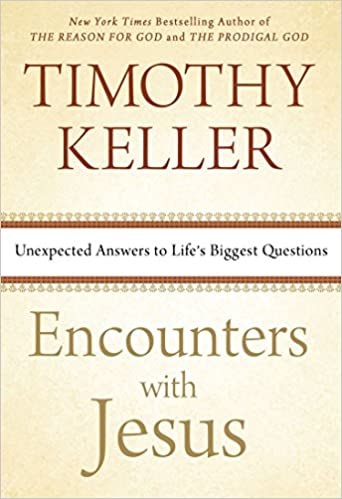
Keller: Jesus as Advocate

Keller: Jesus as Advocate

written by Christian Heinze

In his book , Encounters with Jesus, Tim Keller makes this wonderful observation:

***************************************************************************************************************

“I John 1:9 says that ‘if we confess our sins, he is faithful and just to forgive us our sins.’

Notice it does not say that if Christians confess their sins God forgives because he mercifully gives them another chance.

No, it says he forgives because he is faithful and just.

To not forgive us would be unjust.”

***************************************************************************************************************

Doesn’t that sound strange?

God would be unjust to forgive us?

But as Keller notes, that’s exactly what I John says, and exactly what Jesus as advocate means.

Keller explains:

***************************************************************************************************************

“Jesus Christ can say, in effect, ‘Father, my people have sinned, and the law demands that the wages of sin be death.

But I have paid for those sins.

See, here is my blood, the token of my death!

On the cross, I have paid the penalty for these sins completely.

Now, if anyone were to exact two payments for the same sin, it would be unjust.

And so — I am not asking mercy for them; I’m asking for justice’.

….This is why John could say that when Christians confess their sins they are forgiven because the justice of God now demands it!

….When you say from the heart, ‘Father, accept me because of what Jesus did,’ then Jesus’ work on the cross is transferred to your account.

Now the law of God demands your acquittal.”

February 13, 2022
0 Facebook Twitter Google + Pinterest
Stephen Colbert on faith, comedy, and sadness

Stephen Colbert on faith, comedy, and sadness

written by Christian Heinze

Stephen Colbert, when asked by singer Dua Lipa on “The Late Show,” about the role of his Christianity in comedy.

**********************************************************************************************************************

“We’re always connected to the idea of love and sacrifice being somehow related and giving yourself to other people, and that death is not defeat.

….. I really liked the movie Belfast, which is Kenneth Branagh’s story of his childhood, and one of the reasons I love it is because…. it’s funny and it’s sad, and it’s funny about being sad.

In the same way that sadness is like a little bit of an emotional death, but not a defeat, if you can find a way to laugh about it.

Because that laughter keeps you from having fear of it.

And fear is the thing that keeps you from turning to evil devices to save you from sadness.

As Robert Hayden said, ‘We must not be frightened or cajoled into accepting evil as our deliverance from evil. We must keep struggling to maintain our humanity, though monsters of abstraction threaten and police us.”

So if there’s some relationship between my faith and my comedy, it’s that no matter what happens, you are never defeated.

You must understand and see this, in light of eternity, and find some way to love and laugh with each other.”

**********************************************************************************************************************

Amen.

Some outsiders wonder how we can joke about our condition (which we often do). We wonder how we can’t.

You laugh to get through it, you pray to get through it, you take medication to get through it, and whatever your doctor says to get through it — you do to get through it, and all because we think of that phrase “get through it.”

To get through something presumes hope about getting somewhere, and we know where that somewhere, ultimately, is.

Some day, Jesus will tell us as he told the thief, “Today you will be with me in Paradise.”

Only by looking to Christ. As salvation was then, so it is now.

February 12, 2022
0 Facebook Twitter Google + Pinterest
Graham Greene on Christ’s death

Graham Greene on Christ’s death

written by Christian Heinze

Graham Greene, that brilliant 20th century writer, in his famous novel, The Power and the Glory, with one of my favorite lines about the oldness of our sin: “Man was so limited he hadn’t even the ingenuity to invent a new vice.”

And thus….. “it was too easy to die for what was good….it needed a God to die for the half-hearted and corrupt.”

Full passage:

***************************************************************************************************************

“How often the priest had heard the same confession – Man was so limited he hadn’t even the ingenuity to invent a new vice: the animals knew as much.

It was for this world that Christ had died; the more evil you saw and heard about you, the greater glory lay around the death.

It was too easy to die for what was good or beautiful, for him or children or a civilization – it needed a God to die for the half-hearted and the corrupt.”

***************************************************************************************************************

I don’t know about you, but I’m awfully half-hearted.

And if I’m anything full, I’d say full-sinned.

But I need (and got) a God who died for the half-hearted and full-sinned.

As Thomas Merton said,

“Quit keeping score altogether and surrender ourselves with all our sinfulness to God who sees neither the score nor the scorekeeper, but only his child redeemed by Christ.”

Christians with OCD, depression, anxiety etc are particularly prone to self-loathing and score-keeping, but remember what Brennan Mannning once wrote: God loves us with “magnificent monotony.”

And that magnificent monotony? He won’t be talked out of it. Even if we try to.

February 9, 2022
0 Facebook Twitter Google + Pinterest
STUDY: Depression could be reason socially anxious have less satisfying romantic relationships

STUDY: Depression could be reason socially anxious have less satisfying romantic relationships

written by Christian Heinze

Social Anxiety Disorder (SAD) is “an intense, persistent fear of being watched and judged by others,” and according to the National Institutes of Mental Health affects approximately 7% of the population.

Naturally, the more severe the SAD, the more debilitating it is.

Well, a new study published in Behaviour Change indicates that individuals with SAD struggle with romantic relationships for two reasons — one you might expect, and the other, not so much.

First, people with SAD are less likely to be in romantic relationships, at all.

Considering SAD’s symptoms, that’s not surprising.

If you have SAD, you’re less likely to date and show the vulnerability necessary for a relationship if you’re terrified by the judgment by others. Particularly, someone you like.

So that’s the first difficulty — forming romantic relationships.

Now here’s another hard part.

Researchers found that once individuals with SAD are in romantic relationships, they judge them as less satisfying than people in romantic relationships without SAD.

The surprising part is why.

The study indicated, through regression analysis, that the lack of satisfaction seems to be most associated with the depression that frequently co-occurs with SAD, and not social anxiety disorder itself.

That’s hugely clinically important.

Why?

Because, as the authors note, it suggests that treating the depression is likely to be more effective for producing a satisfying relationship than treating the social anxiety disorder itself.

So SAD does seem to inhibit the formation of romantic relationships, in the first place, but once those relationships are formed, it’s less likely to play a role in how satisfying it is.

That’s when depression produces the major challenge to the relationship, and social anxiety doesn’t seem to play a significant role in how satisfying that relationship is.

Yes, there’s a chance someone with SAD might be less vulnerable or open to communication within that relationship, but according to the authors, that didn’t seem to be nearly as important as the depression that is often co-morbid with SAD.

So for practitioners, this is an important study.

However, if you have SAD, or depression, it doesn’t change the fact that the best way to treat it is to…..

Find a psychiatrist near you.

And a therapist.

One final note.

There are obviously good Christian books on relationships and marriage.

Yet curiously, I haven’t read a single chapter from any Christian book on the role depression or anxiety or any kind of mental health disorder (I prefer calling it “brain disorder” because these are medical conditions) plays in a relationship.

Meanwhile, the secular world is light years ahead of the church on the massive role mental health challenges can play in a relationship’s health.

Every Christian book on relationships should have some kind of chapter on mental health. Or many chapters.

I’ve seen so many struggling relationships flourish once that component is addressed. Relationships that, until then, had only gotten worse, even with all the well-intentioned “biblical counseling” that had been provided.

Sometimes it really is as simple (and difficult!) as one or both partners addressing their mental health challenges.

[Painting: Room in New York, Hopper]

February 8, 2022
0 Facebook Twitter Google + Pinterest
Psalm 116:15: “The Lord cares deeply when his loved ones die”

Psalm 116:15: “The Lord cares deeply when his loved ones die”

written by Christian Heinze

Psalm 116 is the most visceral in the entire book.

Anxiety, despair, God’s mercy, salvation. It’s all there.

A Psalm couldn’t get more Psalmy than Psalm 116.

These days, verse 15 is one of its most neglected, but comforting: “The Lord cares deeply when his loved ones die.” (NLT).

Christian culture often adopts Paul’s “Oh death, where is your sting?” mindset when a loved one dies, and that is, indeed, the logical end of Christianity — the beginning, the resurrection and glory.

We’re also prone to say, “To die is gain” (again, Paul), and then of course, there’s my favorite extra-Biblical exposition, C.S. Lewis’ “The Weight of Glory.”

(If that thing were read at every funeral, the mourning Christians would start whispering to each other, “Hey, can you run to Home Depot and quickly grab a shovel or two,” and they’d all start digging their own graves. Mass burial event. Lewis really makes you want to be done with this world — and not from a feeling of despair, but excitement).

So there are many reasons why Christians can approach dying as if it were just being reborn into something better, somewhere better.

I get that.

But it’s important that we remember this verse, “The Lord cares deeply when his loved ones die.”

Most translations rightly say “precious in the sight of the Lord is the death of his saints,” but “precious” sends the wrong signal because we now think of something like a Huggies ad when we hear that word and not what’s intended in Hebrew which is closer to, “weighty” or “costly.”

In other words, The Lord recognizes what a weighty, costly thing it is when someone passes away.

It’s important to remember that for two reasons.

First, it’s the truth.

And second, in our Christian victory mindset, we’re prone to running roughshod over the sorrow of those who’ve seen their loved ones pass away.

We’re prone to cheer them up with promises of a better world, and I don’t think Jesus himself would do that.

He doesn’t see their death as something to celebrate (and, really, Christian culture sometimes borderline celebrates it or at least dismisses it to the point of callousness — see much of the evangelical church’s response to Covid), but God sees death as a weighty thing.

He never intended it for humans, and it’s something that brings him — God Almighty — immense sorrow. And Jesus, famously, tears.

If God — who knows exactly the glory in store for the one who passed away — still views death with such sacred sorrow, then how much more should we?

So if, right now, you’re mourning someone and the rest of your Christian friends are pushing you to move on, remember that the Lord isn’t.

The poet Eugene Gloria wrote, “Memory is another name for ghosts and their awful hunger.”

And if your spouse, your parent, your child dies, only you know the memory, its endurance, its ghost and that ghost’s awful hunger.

And while others move on, many days you will scarcely be able to move.

While other Christians try to nudge you from grief to the glory for the one you mourn, remember that it’s not the Lord nudging you.

He cares about their death and all the ways it haunts us. He never wanted this.

Yes, you can bank on what he’s got for them, right now and forever. And that’s wonderful.

But you can also count on what he’s got for you, here on earth, living in that ghost’s shadow — Christ’s shared sorrow and the simple phrase, “I know.”

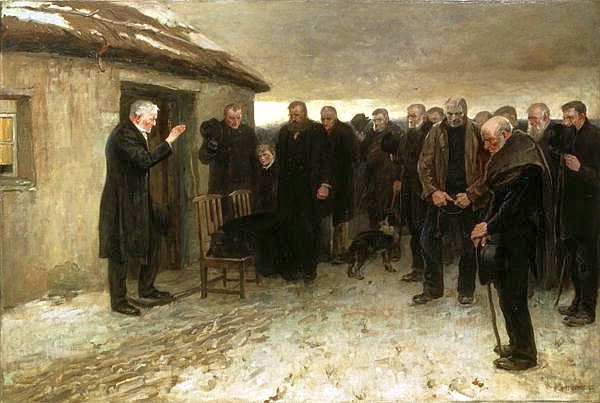
When everyone else has moved on and you’re the only one left, sitting at the graveside, you’re actually not the only one left. Jesus is sitting with you.

Sure, he was there when they all were, for the formal affair with the typical verses, but he never left when the others did, when they moved on to their Sunday morning praise songs and coffee, leaving you alone.

He will remember everything with you, for as long as you do, and will never dishonor their memory or your pain.

[Painting: A Highland Funeral, James Guthrie]

February 6, 2022
2 Facebook Twitter Google + Pinterest
STUDY: A bacteria that plays a major role in depression

STUDY: A bacteria that plays a major role in depression

written by Christian Heinze

“Gut-brain axis. Gut-brain axis. Gut-brain axis.”

A phrase every pastor should learn, followed by:

“Please see a doctor.”

The gut-brain axis is, to simplify, a bidirectional pathway where the brain communicates issues to the gut and the gut to the brain.

As for the gut to the brain part, there’s tons of academic literature on how acutely the bacteria in our gut can affect mood disorders.

Now a brand new study, published in Nature Genetics, further confirms a unique link between the bacteria, Morganella, and depression.

The gist, as explained on Science.org.

Méric’s team also explored which genetic variants might affect the abundance of certain microbes—and which of those variants were linked to 46 common diseases. When it came to depression, two bacteria that cause infections in hospitalized patients, Morganella and Kiebdiella, seemed to play a causal role, the researchers say. One of them, Morganella, was significantly increased in a microbial survey of the 181 people in the study who later developed depression.

And this isn’t the first time Morganella’s been flagged.

As far back as 2008, researchers investigating a possible link between depression and inflammation found depressed people had stronger immune responses to chemicals produced by Morganella and other gram-negative bacteria in the gut. Thus, the newest study seems to be “further proof” that inflammation caused by gut microbes can influence mood, Gilbert says.

That being said, researchers still don’t know how to eliminate Morganella.

If they could figure that out, perhaps a supplement would be in order.

Finally, it’s important to note that the study suggests that diet and genetics significantly affect the microbiome.

This is why nutritionists, who often claim that you can eat your way out of the darkness (I’m being hyperbolic, but you know), don’t offer the whole picture, at all.

For some, diet seems to really help.

Me? I’ve tried nearly every one out there, and while my body responds positively, my mood doesn’t really seem to budge whether I’ve had two months of Big Macs or two months of DEEP, WILD-CAUGHT, FRESH, NORDIC, SALMON OF THE VIKINGS.

But everyone is different, science suggests I’m an anomaly, and eating well is certainly tremendous and something to shoot for, for many reasons.

And so, here, via WebMD, is a good list of food that science seems to suggest fights depression.

Along with the proviso, that researchers still aren’t entirely sure whether depression leads you to eat poorly (and therefore develop nutrient deficiencies) or whether the deficiencies themselves lead to the depression. Or perhaps something of both.

[Painting: La Melancolie, Lagrenee]

February 5, 2022
0 Facebook Twitter Google + Pinterest
Load More Posts

Social Media

Twitter

Get in touch with me

Contact here. 

The Weary Christian mission:

First off:


In the United States, find a psychiatrist here.

In the United States, find a therapist here.

If you’re in the United States and having thoughts of harming yourself or others, please call the National Suicide Lifeline at 1-800-273-8255.

If you’re in the UK, get urgent help here.

Canada, here.

Australia, here.

New Zealand, here.

South Africa, here.

France, here.

Germany, here.

Portugal, here.

Mexico, here.

India, here.

The Philippines, here.

Singapore, here.

South Korea, here.


The Weary Christian goal…


a) reduce the stigma surrounding depression, anxiety, OCD, and other conditions in the Christian community.


b) have uncomfortable but honest conversations.


c) Reduce the stigma surrounding antidepressants, antipsychotics, and other meds God has given us as gifts.


And…


d) Sometimes (tons of times), we all feel really, really depressed in our journey. Hopefully, this site makes you feel less alone.

Categories


@2017 - PenciDesign. All Right Reserved. Designed and Developed by PenciDesign