
The Weary Christian
  • Depression
    • Depression

      James Bryan Smith: Unmet expectations and fear

      Depression

      STUDY: Criticizing older adults make them more vulnerable…

      Depression

      STUDY: Awe can reduce depressive symptoms

      Depression

      STUDY: How music-mindfulness can help depression, anxiety

      Depression

      STUDY: Chronic pain associated with higher rates of…

  • Anxiety
    • Anxiety

      Calling out the brain on catastrophizing

      Anxiety

      James Bryan Smith: Unmet expectations and fear

      Anxiety

      STUDY: Awe can reduce depressive symptoms

      Anxiety

      STUDY: How music-mindfulness can help depression, anxiety

      Anxiety

      STUDY: Chronic pain associated with higher rates of…

  • Book quotes/Video
    • Book quotes/Video

      “In darkest night, you were there like no…

      Book quotes/Video

      Thanksgiving for his brokenness

      Book quotes/Video

      Esther Smith: “All he wants is you”

      Book quotes/Video

      James Bryan Smith: Unmet expectations and fear

      Book quotes/Video

      Staton: On being a witness

  • Health News
    • Health News

      Calling out the brain on catastrophizing

      Health News

      STUDY: Mental health conditions share deep genetic patterns

      Health News

      STUDY: Four Supplements that MIGHT help depression

      Health News

      STUDY: Gut changes raise risk of eating disorders…

      Health News

      STUDY: Criticizing older adults make them more vulnerable…

  • Interviews
    • Interviews

      INTERVIEW: Dr. Terry Powell’s gripping account of depression

      Interviews

      INTERVIEW: Therapist Michael Schiferl explains religious scrupulosity and…

      Interviews

      INTERVIEW: Rocker Matt Sassano shares battles, urges transparency…

      Interviews

      INTERVIEW: Dr. Brian Briscoe tells Christians that antidepressants…

      Interviews

      INTERVIEW: Pastor Scott Sauls on anxiety, depression, and…

  • Devotionals
    • Devotionals

      “Grace has got to be drunk straight”

      Devotionals

      Defeated by God

      Devotionals

      Am I a faithless Christian?

      Devotionals

      Think you’re a “failure?” Jesus sees you unlike…

      Devotionals

      “I killed Jesus of Nazareth”

  • About
  • Depression
    • Depression

      James Bryan Smith: Unmet expectations and fear

      Depression

      STUDY: Criticizing older adults make them more vulnerable…

      Depression

      STUDY: Awe can reduce depressive symptoms

      Depression

      STUDY: How music-mindfulness can help depression, anxiety

      Depression

      STUDY: Chronic pain associated with higher rates of…

  • Anxiety
    • Anxiety

      Calling out the brain on catastrophizing

      Anxiety

      James Bryan Smith: Unmet expectations and fear

      Anxiety

      STUDY: Awe can reduce depressive symptoms

      Anxiety

      STUDY: How music-mindfulness can help depression, anxiety

      Anxiety

      STUDY: Chronic pain associated with higher rates of…

  • Book quotes/Video
    • Book quotes/Video

      “In darkest night, you were there like no…

      Book quotes/Video

      Thanksgiving for his brokenness

      Book quotes/Video

      Esther Smith: “All he wants is you”

      Book quotes/Video

      James Bryan Smith: Unmet expectations and fear

      Book quotes/Video

      Staton: On being a witness

  • Health News
    • Health News

      Calling out the brain on catastrophizing

      Health News

      STUDY: Mental health conditions share deep genetic patterns

      Health News

      STUDY: Four Supplements that MIGHT help depression

      Health News

      STUDY: Gut changes raise risk of eating disorders…

      Health News

      STUDY: Criticizing older adults make them more vulnerable…

  • Interviews
    • Interviews

      INTERVIEW: Dr. Terry Powell’s gripping account of depression

      Interviews

      INTERVIEW: Therapist Michael Schiferl explains religious scrupulosity and…

      Interviews

      INTERVIEW: Rocker Matt Sassano shares battles, urges transparency…

      Interviews

      INTERVIEW: Dr. Brian Briscoe tells Christians that antidepressants…

      Interviews

      INTERVIEW: Pastor Scott Sauls on anxiety, depression, and…

  • Devotionals
    • Devotionals

      “Grace has got to be drunk straight”

      Devotionals

      Defeated by God

      Devotionals

      Am I a faithless Christian?

      Devotionals

      Think you’re a “failure?” Jesus sees you unlike…

      Devotionals

      “I killed Jesus of Nazareth”

  • About

The Weary Christian

THE WEARY CHRISTIAN

LIVING WITH FAITH AND DEPRESSION

  • Depression
    • Depression

      James Bryan Smith: Unmet expectations and fear

      Depression

      STUDY: Criticizing older adults make them more vulnerable…

      Depression

      STUDY: Awe can reduce depressive symptoms

      Depression

      STUDY: How music-mindfulness can help depression, anxiety

      Depression

      STUDY: Chronic pain associated with higher rates of…

  • Anxiety
    • Anxiety

      Calling out the brain on catastrophizing

      Anxiety

      James Bryan Smith: Unmet expectations and fear

      Anxiety

      STUDY: Awe can reduce depressive symptoms

      Anxiety

      STUDY: How music-mindfulness can help depression, anxiety

      Anxiety

      STUDY: Chronic pain associated with higher rates of…

  • Book quotes/Video
    • Book quotes/Video

      “In darkest night, you were there like no…

      Book quotes/Video

      Thanksgiving for his brokenness

      Book quotes/Video

      Esther Smith: “All he wants is you”

      Book quotes/Video

      James Bryan Smith: Unmet expectations and fear

      Book quotes/Video

      Staton: On being a witness

  • Health News
    • Health News

      Calling out the brain on catastrophizing

      Health News

      STUDY: Mental health conditions share deep genetic patterns

      Health News

      STUDY: Four Supplements that MIGHT help depression

      Health News

      STUDY: Gut changes raise risk of eating disorders…

      Health News

      STUDY: Criticizing older adults make them more vulnerable…

  • Interviews
    • Interviews

      INTERVIEW: Dr. Terry Powell’s gripping account of depression

      Interviews

      INTERVIEW: Therapist Michael Schiferl explains religious scrupulosity and…

      Interviews

      INTERVIEW: Rocker Matt Sassano shares battles, urges transparency…

      Interviews

      INTERVIEW: Dr. Brian Briscoe tells Christians that antidepressants…

      Interviews

      INTERVIEW: Pastor Scott Sauls on anxiety, depression, and…

  • Devotionals
    • Devotionals

      “Grace has got to be drunk straight”

      Devotionals

      Defeated by God

      Devotionals

      Am I a faithless Christian?

      Devotionals

      Think you’re a “failure?” Jesus sees you unlike…

      Devotionals

      “I killed Jesus of Nazareth”

  • About
Health News

STUDY: Mental health conditions share deep genetic patterns

James Bryan Smith: Unmet expectations and fear

STUDY: Four Supplements that MIGHT help depression

STUDY: Criticizing older adults make them more vulnerable to developing depression

Study offers great context on kids, screen time, and emotional problems

Daily Blog

“Lighten our darkness”

“Lighten our darkness”

written by Christian Heinze

N.T. Wright, in his book Surprised by Hope, quotes this Anglican prayer, which is for all humans, and maybe people like you and me need to say it more than the others.

Lighten our darkness, we beseech thee, O Lord;

and by thy great mercy

defend us from all perils and dangers of this night;

for the love of thy only Son,

our Savior Jesus Christ. Amen.


Yes.

I especially like:

“Defends us from the perils and dangers of this night.”

You and I have faced many nights where the dangers are entirely in our minds, and yet they are as real as though a marauder were at our doorstep, ready to rob us of everything, including our lives.

This isn’t the insomnia of “How can I face work tomorrow?”

It’s the insomnia of “How can I face a sun tomorrow that so many are thrilled to see, yet for me, it’s just another day to remember a night is coming? What is wrong with me? God, why won’t you just make this a little easier? It would be better for everyone. Not just me. But everyone. Why don’t you want this? Everyone does.”

And you can’t sleep, but a dream is all you want, because at least a dream is elsewhere.

For us, these are the dangers and the perils of the night.

“Pray like David on these nights,” someone might tell us.

Well, which prayers of David?

Because he found both refuge in God, at night, and sometimes, complete bewilderment and agony while talking to him.

For the dispositionally positive Christian, it’s awfully easy to forget that the Bible is full of lament from the saints, questions that aren’t resolved.

Cherry-picking the encouraging verses and forgetting the inexplicable “why’s” might make us feel better for a moment, but they don’t truly satisfy, because we always come back to the “why’s,’ because we are human.

And the Bible is aware of our humanity, and that’s why it’s not a Hallmark movie (ugh), but a book filled with desperation, love, death, stuff we can’t explain because it’s so depressing, and stuff we can’t explain because it’s so beautiful — in short, everything we know that is true about human life.

If the Scriptures promised total peace, the answer to every question, and unmarred joy on earth, why would we need a heaven?

So until then, we pray, “Defends us from all perils and dangers of this night.”

And until then, we also look for professional help with our condition, as well.

So…

Find a psychiatrist here.

Find a therapist here.

If you’re having thoughts of harming yourself or others, please call the National Suicide Lifeline at 1-800-273-8255.

[Painting: Virgil’s Tomb by Moonlight, Joseph Wright of Derby]

April 18, 2022
0 Facebook Twitter Google + Pinterest
The tragedy of calorie counts on restaurant menus

The tragedy of calorie counts on restaurant menus

written by Christian Heinze

Amy Jones has a terrific read on the UK’s new policy to require that restaurants and cafes with more than 250 employees put calorie counts on their menus.

The plan, of course, is to fight obesity, which is associated with a plethora of medical problems.

The question is — will this initiative accomplish its intended goal?

The clearest evidence, Jones notes, that this policy is ineffective comes from a large, longitudinal study in the United States, which suggested that most people don’t change what they eat, or the portions they consume, based on calorie counts in restaurants.

In other words, it doesn’t seem to help with the obesity problem.

In fact, Jones suggests that it’s more likely that it will exacerbate eating disorders.

A BEAT survey of individuals with experience of eating disorders found that 93% thought that calorie labelling on menus would have a ‘negative’ or ‘very negative’ effect, with some respondents arguing that, even for those without diagnosed disorders, such labelling risked encouraging obsession over calories and anxiety around eating.

This belief is borne out by the data. A recent study found that 1 in 10 dieters who calorie counted became bulimic, with participants admitting to behaviours such as skipping eating for days after a ‘binge’, eating ice and misusing laxatives. Such negative effects aren’t just limited to anorexia and bulimia — for those with binge eating disorder, the inclusion of calorie counts on menus has actually been found to increase calories consumed.

So there’s the theoretical and empiric case against mandating calorie counts on menus.

For the anecdotal perspective, you can read this account from a school teacher whose anorexia has been made worse by the new policy.

She tells The Mirror:

“I think everybody in recovery struggles to go out as it is, and I think they push themselves to go out and gain that love of food back.

“But if the topic of conversation is now going to be calories and comparing what people are eating, it’s just going to set so many back Now I’m scared to go out for meals.”

The long story short — calorie counts will probably affect only one portion of the population: the ones who need to stop counting calories.

Eating disorders are the most dangerous psychiatric conditions.

Physically, they can be acutely dangerous, leading to numerous health problems, including ultimately organ failure.

And their affect on mental health is similarly tragic.

According to one study, an individual with anorexia nervosa is 18x more likely to die by suicide than other individuals in their cohort.

And roughly 20% of anorexia victims take their own life, in response to their disease.

Those numbers are staggering (and other eating disorders can be nearly as deadly).

Unfortunately, calorie counting is so deeply embedded in the population’s consciousness that measures promoting it are still ubiquitous.

And, now, the UK is upping the ante.

This, despite the fact that calorie-counting has been proven to be both ineffective and dangerous in battling obesity.

In 2020, Harvard Health put forth an urgent plea to “stop counting calories.”

I worry that the growing medical consensus (and evidence) that counting calories is dangerous will be branded “woke,” and ignored my massive swaths of the population.

Swaths that are oblivious to the tragic consequences of eating disorders.

However, I am encouraged that a growing number of nutritionists are pointing out the dangers of calorie counting.

If you or anyone else you know struggles with an eating disorder, The National Eating Disorders organization has a tremendous team that can help support you in both acute crisis and set you on the path to healing.

April 13, 2022
0 Facebook Twitter Google + Pinterest
Raymond Carver’s tombstone

Raymond Carver’s tombstone

written by Christian Heinze

If you walk by the great poet and short story writer’s tombstone in Port Angeles, Washington (or, more easily, see it on Google images), you’ll find inscribed his poem, “Late Fragment.”

“Late Fragment“, Raymond Carver

And did you get what
you wanted from this life, even so?
I did.
And what did you want?
To call myself beloved, to feel myself
beloved on the earth.


Some are so fortunate, others not.

And when you or I fall into our funks, it’s easy to question everything good, and certainly, to feel “beloved” is the greatest good there is.

A few things on that.

First, I’d recommend this read by Janna Lim on the relationship between pessimism and depression.

They’re not the same thing, but certainly associated with one another, and very often, our pessimism — the thing that keeps us from allowing us to feel beloved — stems from childhood.

A “pessimistic attributional style” develops where we expect that “the happy moments won’t last long and negative events will return.”

My favorite “pessimistic attributional style” song is “Miserabilism” by the Pet Shop Boys.

It seems to me
There’s something serious beginning
A new approach found
To the meaning of life
Deny that happiness
Is open as an option
And disappointment
Disappears overnight
Say that love
Is an impossible dream
Face the facts
That’s what it’s always been
Relax
What you see is what you see
And what you get
Is a new philosophy


Fun song, huh?

Sometimes I quote the lyrics to a friend and they say, “Well, that’s miserable,” as if they’ve never thought of it, and it’s somewhat astonishing to me because I feel I’ve known those words since before they were written.

Psychology Today has a very interesting read on pessimism, and it’s a complex topic that tends to run with depression, but there’s something called “depressive realism,” and I think that’s what “Miserabalism” is getting at.

In my circle of depressed friends, we often use our “depressed realism” as a coping mechanism for the fact we do live in a world where happiness and pain seem to come and go with brutal indifference.

Acknowledging that is okay for me, fixating on it is not.

Because “depressed realism” can quickly become “deep depression,” and that’s when we don’t even recognize the moments of happiness and if we, by odd chance do, we don’t trust it.

We almost run from it, because we see the end of it before the end of it comes.

And this all comes back to the point of feeling “beloved” and the remarkable armor it provides.

To feel “beloved on earth,” as Carver wrote, is beyond anything you will find on earth, and to feel truly beloved must come from an unconditional love, and time itself is often the only proof of it you’ll find.

When Jesus says to forgive one another, 70×7, he’s urging us to a) offer unconditional love, but only because b) we’re his disciples, and that’s what he gives us.

Jesus would never call us to love in a way he doesn’t.

And so when I find my wife forgiving me, over and over, for the same sins that exhaust us both, but never seem to exhaust her love, that’s when I can somehow believe that kind of love is possible from God.

And that’s the kind of disciples Jesus wants us to be. The ones that prove his love is possible.

And that’s why I always go back to quoting authors like Brennan Manning and Henri Nouwen, who are merely quoting Christ and the Scriptures when they relentlessly note that we are eternally, unconditionally, forever “beloved” by Christ.

John Eagan writes: “The basis of my personal worth is not my possessions, my talents, not esteem of others, reputations, not kudos of appreciation from parents and kids……I stand anchored now in God before whom I stand naked, this God who tells me ‘You are my son, my beloved one’.”

God would not have sent his son to die for you, if he did not love you as deeply as his own son.

That’s the Good News and it seems so good that we often find it the “Too Good To Be True News.”

It is so hard for depressed people to accept they are beloved by anyone or anything — let alone the God of the universe.

I sometimes pray to God, “You know I don’t really believe you love me, but please love me nonetheless.”

And he does.

Imagine your child, for a second.

Let’s say he’s depressed and doubts you and everyone else’s love. Does that affect how you feel about him?

No, in fact, if anything it makes your heart break and long for your child’s happiness more than anything, because you love them so much.

You can see their pessimism and depression getting in the way of that, and it doesn’t make you say, “Fine, if you don’t believe it, then guess what, I DON’T love you!”

No! That’s not how it works in a parent-child relationship.

A good parent loves their child no matter the child’s misconceptions, brought on by their depression or pessimism.

If we don’t see ourselves as beloved by God, we are still as beloved as Christ himself.

I don’t know if I’ll ever be able to believe that here on earth.

But I’m guessing that once this earth is over, Christ himself will stand with me, overlooking paradise and say simply with a smile, “See?”

And I’ll finally see Revelation 21:4, not as a collection of words or a painting that’s impossible to reach, but I’ll be in the painting myself.

“There will be no more death or mourning or crying or pain, for the old order of things has passed away.”

And then I’ll see just how beloved I was all along.

You will, too.

God will prove the pessimist in us wrong, just as he did at every turn while on earth.

April 11, 2022
0 Facebook Twitter Google + Pinterest
Genetically similar children more likely to have anxiety, depression

Genetically similar children more likely to have anxiety, depression

written by Christian Heinze

University of Queensland researchers have finished studying the genetics of 64,641 children, ages 3-18.

And yes, that’s the largest such study in the world.

What did they find?

Well, you can read Neuroscience News’ rundown, but here’s their money sentence:

“Children who had similar levels of anxiety and depression were also alike, genetically.”

Further, the researchers noted that these genetics often overlapped with adults who had depression and anxiety in previous studies.

In other words, this supports the multitude of research that seems to be continually finding specific genes associated with depression and anxiety.

In fact, as far back as 2013, researchers had pegged at least 11 genes that put individuals at an increased risk of developing anxiety disorders.

A 2016 review suggested that panic disorder, social anxiety disorder, and generalized anxiety disorder were all linked to specific genes.

And a 2019 study found that PDE4B variants were associated with stress-related and anxiety disorders.

I could go on, and on, and on….. because every year, multiple studies find new genes associated with the etiology of psychiatric disorders.

In keeping with the caps-lock nature of genes, I will say this…

None of these genes are named the YOU ARE DEPRESSED BECAUSE OF A LACK OF FAITH gene.

Or, the YOU ARE ANXIOUS BECAUSE YOU DON’T JUST ‘GIVE IT TO GOD’ ENOUGH gene.

You’re not responsible for your genetics, and yet your genetics are roughly 40% responsible for your anxiety disorder (that’s the current estimate, although some studies suggest it’s as high as 67%).

The point is — if a Christian shames you for your anxiety or depression, remind yourself: You’re not responsible for your condition.

We are, however, responsible for how we react to that shaming from Random Happy Exhorting Christian.

They are obliviously cruel in pinning your condition on something else. But that’s on them.

We don’t get to choose our genetics, but we can choose how we react.

I will often tell people about these studies, but if they dismiss it as “fake, secular science,” then it’s time to remember that the Proverbs has a lot to say about shutting up when it’s clear someone doesn’t want to hear the truth.

And so we move on, and an estimated 25% of Christians with mental health conditions will move on to a different church because they feel so misunderstood at their own.

It’s no longer a place of worship. It’s a place where they feel worthless.

But God knows the truth.

And think of that phrase, again, “God knows.”

He knows all about the genes the scientists do, and the million more they haven’t found, and he knows how hard it is for you to do the “easy” things, because you just weren’t wired the way your Exhorting Christian Neighbor was.

One more thing.

I often think of the shared suffering of the thief on the cross and Christ.

Only they understood the agony of the afternoon, and in that shared suffering, they talked of paradise together — the way two soldiers often talk of home during the worst of times.

Jesus knows, and you know the agony.

And sometimes, that’s all I need to know to keep going.

Find a psychiatrist here, via Psychology Today.

Find a therapist here, via Psychology Today.

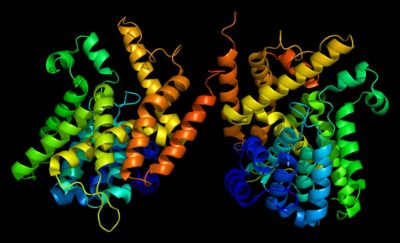
[Photo: The PDE4B gene, via EMW, Wikipedia]

April 10, 2022
0 Facebook Twitter Google + Pinterest
Holistic psychiatrist talks about blood sugar spikes and anxiety (and more)

Holistic psychiatrist talks about blood sugar spikes and anxiety (and more)

written by Christian Heinze

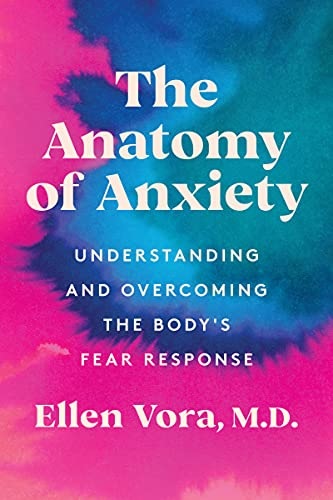
Dr. Ellen Vora has a new book out, The Anatomy of Anxiety: Understanding and Overcoming the Body’s Fear Response,” and CNN has a great new interview with her.

I’d highly recommend reading the whole interview, but here’s an interesting take from Vora on the relationship between our anxiety and blood sugar.

And note: she’s got major academic cred, with a B.A. from Yale and M.D. from Columbia.

Vora:

Oftentimes, I like to start with stabilizing blood sugar because it has such a quick impact on our day-to-day anxious feelings.

The modern American diet is built on a foundation of refined carbs and milkshakes disguised as coffee drinks.

We end up on this roller coaster of blood sugar spikes chased by insulin, followed by blood sugar crashes that can feel identical to anxiety.

Stabilizing blood sugar offers powerful relief from both anxiety and the sense of doom and unease that many people carry in the pit of their stomach.

The definitive solution, to eat a blood sugar-stabilizing diet with fewer refined carbohydrates and more protein and healthy fats, is a lovely strategy.

But if that’s 180 degrees from how you’re eating now, here’s a short-term fix: Every few hours, eat a spoonful of sunflower, almond or other nut butter, ghee or coconut oil.

This creates a safety net that can blunt any blood sugar crash. Many patients have told me this intervention alone stopped their panic attacks.

There’s all sorts of other interesting stuff in the interview (And I should note that her book is #1 on Amazon right now for depression).

For example, we’ve all heard about how animals go into fight-or-flight in response to anxiety, and so do we.

But she also notes that animals have certain rituals once the stressful event has subsided — to help them ease back into their, um, animal-routine.

For example, she says an antelope shakes after it’s chased, and a goose flaps its wings in a certain way after its trauma.

We’ve all seen that in those nature documentaries.

Yet after a panic attack, what do we do?

Wouldn’t it make sense to find something equivalent to the goose flapping its wing?

I’ve probably lost cynical folks with that. But it makes, sense, no?

Every person is different, so every one might have their own flap, and I love that sentence.

Anyhow, again, it’s a great interview.

Now… if you’re a regular reader, you know that I’m completely and utterly grateful and dependent on medication for treatment.

But I also know exercise has helped me, mindfulness meditation is helping, and many other things that come from the holistic wing of the medical world.

Also, every person is different, so talk to your doctor for help, first and foremost.

Oh, speaking of which.

Find a psychiatrist here, via Psychology Today.

Find a therapist here, via Psychology Today.

And find spiritual salvation here, via the words of Christ: Jesus: “I am the way, the truth, and the life. No one comes to the Father except by me.”

If you’re having thoughts of harming yourself or others, please call the National Suicide Lifeline at 1-800-273-8255.

April 8, 2022
0 Facebook Twitter Google + Pinterest

Things have been really busy

written by Christian Heinze

Hi all, I haven’t posted in a few weeks.

Family sickness, and starting the process of moving into a new place — on top of all the familiar demands.

When things get extra busy or demanding, I have to pare down other stuff as much as possible lest I enter a depressive or anxious funk, so that’s what I’ve been doing. Paring. Which includes posting.

Prophylactic-posting-paring. There, there’s a new phrase for you.

Call it a blogger’s mental health thing.

Thanks for understanding!

Hopefully, things have quieted for a bit, and posting will get regular.

April 8, 2022
0 Facebook Twitter Google + Pinterest

Tiffany Dawn talks about seeing God slowly work through counseling

written by Christian Heinze

Christian Youtuber, Tiffany Dawn, talks about the slow process of realizing (through a doctor’s help) that many of her physical problems stemmed from her anxiety, and that it took many years of work with a professional counselor for her depression and anxiety to finally ebb.

I’d recommend the quick, six minute video — what I particularly appreciate it is that she highlights how important counseling is, and how God works through it.

Find a psychiatrist here.

Find a therapist here.

March 23, 2022
0 Facebook Twitter Google + Pinterest

Camp: “He’ll be faithful to you”

written by Christian Heinze

A classic from the 1980s.

Steve Camp’s, “He’s all you need.”

Note: Christ is all you need for salvation.

For depression, you might need medication and/or therapy. Both of which can be wonderful means of grace, and have saved my life. Not my soul, but my life.

Find a psychiatrist here.

Find a therapist here.

Steve Camp, “He’s all you need”

When you’re alone, and your heart is torn, he is all you need.
When you’re confused, and your soul is bruised, he is all you need.
He’s the rock of your soul, he’s the anchor that holds
Through your desperate time.
When your way is unsure, his love will endure, and peace you will find
Through all your years, the joy, the tears, he is all you need

When you give in to that familiar sin, he is all you need
Guilt has you paralyzed, it slowly it eats you alive, he is all you need
He’ll be faithful to you, though your heart is untrue
And your love’s grown cold
His forgiveness is real, it’ll comfort and heal your sin-weary soul

Well, God loves you so, he’ll never let you go
He is all you need.

He’ll be faithful to you, though your heart is untrue
And your love’s grown cold
His forgiveness is real, to comfort and heal your sin-weary soul
Through all your years, the joy, the tears, he is all you need.

March 15, 2022
0 Facebook Twitter Google + Pinterest
STUDY: People vulnerable to depression are more likely to blame themselves for things

STUDY: People vulnerable to depression are more likely to blame themselves for things

written by Christian Heinze

A brand new study, published in the Journal of Psychiatric Research, titled “Maladaptive blame-related action tendencies are associated with Vulnerability to Major Depressive Disorder,” well, that pretty much says it.

If you’ve ever had depression, you’re going to say “yup” about a lot of these findings.

But first, what makes this study particularly interesting is that it looked at people with a history of depression who now felt their symptoms had resolved.

They called it “remitted depression.”

I’d recommend reading Eric Dolan’s write-up on the study at PsyPost, but here’s the gist:

-Researchers compared a group of patients with a history of depression, who were now symptom free vs. those who had never had depression.

-The two groups were asked to rate how they’d feel during a hypothetical conflict with their best friend.

-Then, the two groups were asked to pick an action they’d most strongly feel like doing.

The remitted depression group was more likely to feel like hiding, creating distance from themselves, and apologizing even when their friend had been guilty of the wrongdoing in the hypothetical conflict.

In other words, even though their depressive symptoms had remitted, they displayed a different set of blame-related actions than the group who had never experienced depression.

As the study author’s note, these maladaptive tendencies were independent of the type of emotion, thus “unveiling novel cognitive markers and neurocognitive treatments.”

Now veering only slightly from the topic.

Scientists have already established that people with depression are more likely to experience moral emotions related to self-blame — which includes guilt and shame.

And in turn, you can feel guilty about your depression. Which makes things even harder.

This is why Christians with depression have to be careful about churches and ministries (of which there are many) that obsess over guilt.

“You can only preach the Good News if you tell the Bad News that we’re all sinners and guilty before God.”

True.

But once we’re forgiven, we’re forgiven.

God forgets our sin, forgives every future sin, and we’re now his children.

Remember, “if we are faithless, he remains faithful.”

Nothing can separate us from God’s love, and that includes any sin — past, present, or future.

The Bible is absolutely clear about this, and yet many ministries want you to dwell on your guilt.

I suppose their thinking is, “The more horrible you think you are, the more wonderful you’ll think Christ.”

But the more horrible you think you are, the less likely you’ll be able to believe in and trust Christ’s grace…..And the more likely you’ll think you’re beyond repair.

Again, because of our medical condition of depression, Christians with depression are particularly likely to wallow in the guilt and self-blame that keeps us from trusting God’s love.

It’s still a battle for me. Big-time.

That’s why it’s important for us to avoid Christian preachers and teachers who almost seem to glory in the inglorious, who seem to think it’s righteous to continually dwell on how unrighteous we are, who keep Christians permanently guessing whether they’re really Christians or not.

But as Brennan Manning writes, God probably sees you and says, “I expect more failure from you than you expect from yourself!”

In other words: our sins don’t surprise God, he expects them. Hence, Christ.

Manning continues: “Are you moody and melancholy because you are still striving for the perfection that comes from your own efforts and not from faith in Jesus Christ? Are you shocked and horrified when you fail? Are you really aware that you don’t have to change, grow, or be good to be loved?”

We sin all the time, and will continue doing so, and that’s why God’s mercies are new every morning.

I often think of my own kids (and we’re God’s kids, of course). When they do something wrong, do I want them to wallow in guilt?

No, that’s a tragic thought!

That’s the last thing I want. I want, more than anything, for them to understand that they’re loved, no matter what.

Satan can’t take away our salvation, but he certainly tries to take away our assurance of that salvation when we sin. He certainly tries to convince us we’ve passed the point of no return.

And unfortunately, far too many ministers preach guilt and not grace.

I’ll finish with this, from Manning’s book, The Wisdom of Tenderness.

“I’ve listened to people with low self-esteem say something like ‘I simply can’t accept that Jesus’ feelings toward me are different than my own’.

In other words, the person is saying, ‘I won’t allow Jesus to be Jesus in my life.’

Such intransigence not only preempts the possibility of living each day in the wisdom of tenderness; it also consigns the speaker to a lonely and loveless existence that disallows Jesus from being the Savior who sets us free from fear of the Father and from dislike of ourselves.”

[Photo: Pexels, free stock photography]

March 15, 2022
0 Facebook Twitter Google + Pinterest
Virtual reality game may help anorexia sufferers

Virtual reality game may help anorexia sufferers

written by Christian Heinze

Psychologists at the Maudsley Hospital in South-East London have developed an absolutely fascinating, potential treatment for those who suffer from anorexia.

You can read about it here, but this is the gist.

-You put on a virtual reality headset, and then set off into a virtual kitchen, which is filled with all kinds of food that victims of anorexia would normally avoid.

-The individuals can pick up the food, virtually, they can interact with it, virtually, but of course, they can’t eat it, virtually.

-That makes them feel more comfortable being around the food, and as such represents the Exposure and Response Therapy portion of the program.

-The cool thing is that this can be a transition step to actually coming, literally, face-to-face with the food, because they’re interacting with it in the virtual environment. And while it can be triggering, it’s less threatening than if they were to see it, in person.

Dr. Valentina Cardi, a clinical psychologist who specializes in eating disorders at King’s College, said that, so far, 178 of 180 patients enrolled in the trial say they feel less anxious around those foods.

One patient told The Daily Mail that he was formerly so scared of real-world pasta that he couldn’t even look at it.

But once he started interacting with it virtually, he began, over time, to lose his fear.

One month later, after treatment, he ate an actual plate of pasta.

What a great idea, and let’s pray the trials continue and can offer relief.

Anorexia is the most deadly psychiatric disorder, according to WebMd.

Those with anorexia are 4x more likely to die from their condition than those with major depression.

And those diagnosed in their 20s are 18x more likely to die earlier than healthy people of their age.

Further, 20% of deaths from anorexia are due to suicide.

It is just a deadly, deadly and tragic condition.

The Mayo Clinic has a really important guide on spotting symptoms of anorexia.

You can start the process of finding professional treatment here.

[Photo: Pexels, free stock photography]

March 13, 2022
0 Facebook Twitter Google + Pinterest
Load More Posts

Social Media

Twitter

Get in touch with me

Contact here. 

The Weary Christian mission:

First off:


In the United States, find a psychiatrist here.

In the United States, find a therapist here.

If you’re in the United States and having thoughts of harming yourself or others, please call the National Suicide Lifeline at 1-800-273-8255.

If you’re in the UK, get urgent help here.

Canada, here.

Australia, here.

New Zealand, here.

South Africa, here.

France, here.

Germany, here.

Portugal, here.

Mexico, here.

India, here.

The Philippines, here.

Singapore, here.

South Korea, here.


The Weary Christian goal…


a) reduce the stigma surrounding depression, anxiety, OCD, and other conditions in the Christian community.


b) have uncomfortable but honest conversations.


c) Reduce the stigma surrounding antidepressants, antipsychotics, and other meds God has given us as gifts.


And…


d) Sometimes (tons of times), we all feel really, really depressed in our journey. Hopefully, this site makes you feel less alone.

Categories


@2017 - PenciDesign. All Right Reserved. Designed and Developed by PenciDesign