
The Weary Christian
  • Depression
    • Depression

      Latest Medical Studies on Depression

      Depression

      James Bryan Smith: Unmet expectations and fear

      Depression

      STUDY: Criticizing older adults make them more vulnerable…

      Depression

      STUDY: Awe can reduce depressive symptoms

      Depression

      STUDY: How music-mindfulness can help depression, anxiety

  • Anxiety
    • Anxiety

      Calling out the brain on catastrophizing

      Anxiety

      James Bryan Smith: Unmet expectations and fear

      Anxiety

      STUDY: Awe can reduce depressive symptoms

      Anxiety

      STUDY: How music-mindfulness can help depression, anxiety

      Anxiety

      STUDY: Chronic pain associated with higher rates of…

  • Book quotes/Video
    • Book quotes/Video

      John Mark Comer: “Wherever Jesus went, the kingdom…

      Book quotes/Video

      Ann Voskamp: “Jesus saves you for Himself”

      Book quotes/Video

      Philippe: “Refusing to suffer means refusing to live”

      Book quotes/Video

      “In darkest night, you were there like no…

      Book quotes/Video

      Thanksgiving for his brokenness

  • Health News
    • Health News

      Latest Medical Studies on Depression

      Health News

      Calling out the brain on catastrophizing

      Health News

      STUDY: Mental health conditions share deep genetic patterns

      Health News

      STUDY: Four Supplements that MIGHT help depression

      Health News

      STUDY: Gut changes raise risk of eating disorders…

  • Interviews
    • Interviews

      INTERVIEW: Dr. Terry Powell’s gripping account of depression

      Interviews

      INTERVIEW: Therapist Michael Schiferl explains religious scrupulosity and…

      Interviews

      INTERVIEW: Rocker Matt Sassano shares battles, urges transparency…

      Interviews

      INTERVIEW: Dr. Brian Briscoe tells Christians that antidepressants…

      Interviews

      INTERVIEW: Pastor Scott Sauls on anxiety, depression, and…

  • Devotionals
    • Devotionals

      Think you’re a “failure?” Jesus sees you unlike…

      Devotionals

      “Grace has got to be drunk straight”

      Devotionals

      Defeated by God

      Devotionals

      Am I a faithless Christian?

      Devotionals

      “I killed Jesus of Nazareth”

  • About
  • Depression
    • Depression

      Latest Medical Studies on Depression

      Depression

      James Bryan Smith: Unmet expectations and fear

      Depression

      STUDY: Criticizing older adults make them more vulnerable…

      Depression

      STUDY: Awe can reduce depressive symptoms

      Depression

      STUDY: How music-mindfulness can help depression, anxiety

  • Anxiety
    • Anxiety

      Calling out the brain on catastrophizing

      Anxiety

      James Bryan Smith: Unmet expectations and fear

      Anxiety

      STUDY: Awe can reduce depressive symptoms

      Anxiety

      STUDY: How music-mindfulness can help depression, anxiety

      Anxiety

      STUDY: Chronic pain associated with higher rates of…

  • Book quotes/Video
    • Book quotes/Video

      John Mark Comer: “Wherever Jesus went, the kingdom…

      Book quotes/Video

      Ann Voskamp: “Jesus saves you for Himself”

      Book quotes/Video

      Philippe: “Refusing to suffer means refusing to live”

      Book quotes/Video

      “In darkest night, you were there like no…

      Book quotes/Video

      Thanksgiving for his brokenness

  • Health News
    • Health News

      Latest Medical Studies on Depression

      Health News

      Calling out the brain on catastrophizing

      Health News

      STUDY: Mental health conditions share deep genetic patterns

      Health News

      STUDY: Four Supplements that MIGHT help depression

      Health News

      STUDY: Gut changes raise risk of eating disorders…

  • Interviews
    • Interviews

      INTERVIEW: Dr. Terry Powell’s gripping account of depression

      Interviews

      INTERVIEW: Therapist Michael Schiferl explains religious scrupulosity and…

      Interviews

      INTERVIEW: Rocker Matt Sassano shares battles, urges transparency…

      Interviews

      INTERVIEW: Dr. Brian Briscoe tells Christians that antidepressants…

      Interviews

      INTERVIEW: Pastor Scott Sauls on anxiety, depression, and…

  • Devotionals
    • Devotionals

      Think you’re a “failure?” Jesus sees you unlike…

      Devotionals

      “Grace has got to be drunk straight”

      Devotionals

      Defeated by God

      Devotionals

      Am I a faithless Christian?

      Devotionals

      “I killed Jesus of Nazareth”

  • About

The Weary Christian

THE WEARY CHRISTIAN

LIVING WITH FAITH AND DEPRESSION

  • Depression
    • Depression

      Latest Medical Studies on Depression

      Depression

      James Bryan Smith: Unmet expectations and fear

      Depression

      STUDY: Criticizing older adults make them more vulnerable…

      Depression

      STUDY: Awe can reduce depressive symptoms

      Depression

      STUDY: How music-mindfulness can help depression, anxiety

  • Anxiety
    • Anxiety

      Calling out the brain on catastrophizing

      Anxiety

      James Bryan Smith: Unmet expectations and fear

      Anxiety

      STUDY: Awe can reduce depressive symptoms

      Anxiety

      STUDY: How music-mindfulness can help depression, anxiety

      Anxiety

      STUDY: Chronic pain associated with higher rates of…

  • Book quotes/Video
    • Book quotes/Video

      John Mark Comer: “Wherever Jesus went, the kingdom…

      Book quotes/Video

      Ann Voskamp: “Jesus saves you for Himself”

      Book quotes/Video

      Philippe: “Refusing to suffer means refusing to live”

      Book quotes/Video

      “In darkest night, you were there like no…

      Book quotes/Video

      Thanksgiving for his brokenness

  • Health News
    • Health News

      Latest Medical Studies on Depression

      Health News

      Calling out the brain on catastrophizing

      Health News

      STUDY: Mental health conditions share deep genetic patterns

      Health News

      STUDY: Four Supplements that MIGHT help depression

      Health News

      STUDY: Gut changes raise risk of eating disorders…

  • Interviews
    • Interviews

      INTERVIEW: Dr. Terry Powell’s gripping account of depression

      Interviews

      INTERVIEW: Therapist Michael Schiferl explains religious scrupulosity and…

      Interviews

      INTERVIEW: Rocker Matt Sassano shares battles, urges transparency…

      Interviews

      INTERVIEW: Dr. Brian Briscoe tells Christians that antidepressants…

      Interviews

      INTERVIEW: Pastor Scott Sauls on anxiety, depression, and…

  • Devotionals
    • Devotionals

      Think you’re a “failure?” Jesus sees you unlike…

      Devotionals

      “Grace has got to be drunk straight”

      Devotionals

      Defeated by God

      Devotionals

      Am I a faithless Christian?

      Devotionals

      “I killed Jesus of Nazareth”

  • About
DepressionHealth News

Latest Medical Studies on Depression

STUDY: Mental health conditions share deep genetic patterns

James Bryan Smith: Unmet expectations and fear

STUDY: Four Supplements that MIGHT help depression

STUDY: Criticizing older adults make them more vulnerable to developing depression

Daily Blog

Some cool, new advances in TMS for depression

Some cool, new advances in TMS for depression

written by Christian Heinze

Over at The Daily Beast, Hannah Thomasy has a great write-up of both the history and the promise of TMS (Transcranial Magnetic Stimulation).

You’re likely aware of that acronym, and while I’d definitely recommend reading her whole piece, here are some highlights:

a. TMS is built on a discovery from NIH research that the left prefrontal cortex seems to be underactive in people with depression.

The thinking is that if you can stimulate that region back into activity, that might help alleviate depression.

b. As such, TMS makes some assumptions of depression that differ from more standard explanations relating to brain biochemistry (e.g. neurotransmitters like serotonin and norepinephrine).

These changes can take awhile to filter down to general psychiatry, and it’s often a heavy lift to convince practitioners to consider more innovative approaches.

c. The problem of bias. This has been significant.

In clinical studies, TMS has generated significant improvements in a decent percentage of treatment-resistant cases.

However, the placebo effect seems to be unusually high.

For example, one study showed that people getting zapped with the placebo saw just as much improvement as people getting zapped with the real deal.

Of course, there have been more hopeful studies, but until recently, the placebo effect was a real concern in promoting TMS as a game-changing tool.

Further, there is no standardized TMS treatment in trials.

For example, some trials employ magnetic pulses that differ in location, strength, frequency etc.,

So scientists can’t yet say, “This is the way to do it to achieve best results.”

d. The traditional means is, frankly, a time-intensive — sometimes prohibitive — ask of patients.

Traditional TMS asks you to come in multiple times a week for up to 2 months.

That’s tough for a lot of people (pretty much everyone).

HOWEVER.

I’ve written before about some amazing new advances in TMS technology.

And Thomasy goes through some of these.

One such is iTBS, which was only approved in 2018.

The great thing about this form of TMS is that it cuts treatment time from 37 minutes per session to 3 minutes… and studies show it’s as effective as traditional TMS.

Hooray.

But the most exciting new development is Stanford Neuromodulation Therapy (SNT).

It uses iTBS along with a few other tweaks, based on brain imaging, and so far, seems to be truly effective at reducing symptoms.

And by that I mean — a small clinical trial showed far superior results than the traditional form.

After one month of treatment, 70% of patients experienced a reduction in symptoms, and incredibly importantly, only 7% of those in the placebo group had any kind of reduction.

That’s significant.

Because as I said earlier, one of the knocks on TMS is the placebo effect.

But the gap in the SNT method (70% reduction in treatment group vs. 7% in placebo) is just astonishingly good and seems to indicate that SNT is really onto something.

I would read this article from Stanford on it, and man, it’s just amazingly hopeful.

So as Dr. Nolan Williams writes, “It could be a game changer,” and let’s pray that researchers are onto something.

Finally, here’s a note I want to add.

For a lot of Christians who look at all this with a skeptical eye, any kind of mixed study (for example, small differences between treatment or placebo group), or abandoned theory, is proof (to them) that we can’t treat this condition medically.

That’s tragic.

Has anyone solved Alzheimer’s yet?

No.

For decades and decades, scientists have been trying to isolate the cause and (to be blunt) the cure (or at least the help) of this disease, and yet its complexities continue to elude us.

The brain is just enormously complex.

But I don’t think there are many Christians out there who would deny Alzheimer’s is a medical condition.

Christians aren’t saying, “Let’s abandon Alzheimer’s research because it hasn’t been solved and only memorizing Bible verses can cure it.”

No, we accept that something is going on in the body that needs fixing.

It’s not about something that’s going on with our spirituality that needs fixing.

We see Christians with dementia, ravaged by a disease — not because of faulty spirituality, but a body that’s breaking down.

With mood disorders, obviously, many of the symptoms are different but just because we don’t recognize the shifts as easily, these changes in the brain or the body are no less real.

They require professional, medical help.

And with that…

Find a psychiatrist here.

Find a therapist here.

August 18, 2022
0 Facebook Twitter Google + Pinterest
Fighting eating disorders: California pushes to ban sale of diet pills to adolescents

Fighting eating disorders: California pushes to ban sale of diet pills to adolescents

written by Christian Heinze

A new push from the California state legislature would ban the sale of diet pills and weight-loss supplements to children under 18 years old.

This is hugely important.

As The Stanford Daily notes, compelling research has linked weight-loss supplements and diet pills with the development of anorexia (the most dangerous mental health condition).

Further, these supplements are often unsafe, period.

Stanford Doctor Neville Golden says many of them are associated with “elevated heart rate, high blood pressure, and increased nervousness.”

Additionally, 25% of ER visits for supplemental toxicity are related to diet pills.

I hear a lot of Christians these days complaining about the “woke body positivity” movement, and it’s deeply saddening to hear the scorning coming from the church, because this kind of shaming is a significant cause of the most dangerous and disturbing disorders of all — those related to eating.

Let’s hope this bill passes, and spurs other states (and countries) to follow.

Meanwhile, if you struggle with an eating disorder…

Find a psychiatrist here.

Find a therapist here.

[Painting: Carmel by the Sea, Keith]

August 16, 2022
0 Facebook Twitter Google + Pinterest

Begg: “The Man on the Middle Cross said I can come”

written by Christian Heinze

Alistair Begg, in his sermon “The Power and Message of the Cross,” on one of the most moving stories in history.

This clip is only three minutes, but infinitely beautiful.

Begg imagines a scenario whereby the thief on the cross is grilled by an angel upon entry into paradise.

The gist:

Angel: Did you believe in this particular doctrine, or that one, or that one, or that one?

The Thief: (Clueless) What?

Angel: Well, on what basis are you here?

The Thief: The Man on the Middle Cross said I can come.

Begg continues: “That is the only answer, and if I don’t preach the Gospel to myself all day and every day, then I will find myself beginning to trust myself, trust my experience.

… If I take my eyes off the cross, I can then give only lip service to its efficacy, while at the same time living as if my salvation depends on me.

And as soon as you go there, it will lead you either to abject despair or a horrible kind of arrogance.

And it is only the cross of Christ that deals with the depths of despair and the pretentious arrogance of the pride of man that says, ‘I can figure this out’.”

Beautiful.

Now please note.

When Begg speaks of the “depths of despair,” that’s a spiritual kind of despair over our salvation.

It’s quite different from the despair that originates from clinical depression, anxiety, and other mood disorders.

So I will add the postscript that I always add because too many churches out there want to make any despair you experience all about your spirituality.

When, in fact, it most often originates outside of it.

So…

Find a psychiatrist here.

Find a therapist here.

But yes, you can only find salvation through the man on the middle cross.

August 16, 2022
0 Facebook Twitter Google + Pinterest
Thanatophobia? Christians, DON’T feel guilty if you fear death

Thanatophobia? Christians, DON’T feel guilty if you fear death

written by Christian Heinze

A new paper in the journal Emergency Nurse discusses how ER nurses are particularly prone to experience “thanatophobia” — which author Mike Brady describes as “a state in which people experience negative emotional reactions in recognition of their own mortality.”

Healthline puts it more bluntly: “a fear of death or the dying process.”

Mental health professionals divide phobias into “specific phobias,” “social phobias,” and “agoraphobia,” and thanatophobia is a “specific phobia.”

The Cleveland Clinic compares it to claustrophobia (which Christians would never condemn) or aerophobia (fear of flying, which is often based on a fear of heights — which Christians would never condemn).

According to Healthline, some physical symptoms are: Panic attacks, nausea, stomach pain, heart palpitations.

Some emotional symptoms: agitation, sadness, persistent worry, and even avoidance of friends and family.

Additionally, you might develop health anxiety, where you research any possible disease you might have that could lead to death.

And, as in any avenue of mental health, eventually, it can be so paralyzing that it becomes disabling.

There are a number of risk factors, including being diagnosed with other phobias, witnessing close family members who have either recently died or have a terminal illness, other traumatic life events, physical illness, and according to the National Institute of Mental Health, even being particularly shy as a child.

Further, if you’re a healthcare worker (the paper I mentioned is specifically about emergency room nurses), you’re at particular risk.

Death anxiety is also linked with numerous mental disorders, including anxiety, depressive and panic disorders and is associated with more severe symptoms in each of those conditions.

That’s an enormously important point (more on that later).

Interestingly, studies show that younger people are more afraid of death, but older people are more afraid of the dying process.

Now, there are quite a few things to say about this.

First, the American Psychiatric Association doesn’t recognize it as a disorder, but it’s widely accepted to be associated with Generalized Anxiety Disorder (GAD).

So if you go to the doctor and talk about your persistent, distressing fear of death, the dying process, or your fear over your loved ones’ passing — Healthline notes that your doctor is more likely to view your thanatophobia as part of an anxiety disorder.

This has important implications for treatment, because if it’s a manifestation of GAD, it’s treated in similar fashion.

Cognitive Behavioral Therapy, Talk Therapy, Relaxation Techniques, and/or medication are just some of the means.

And it has important implications for how Christians address it, as well.

As a symptom of a disease, we should never impute spiritual deficiencies or faulty faith to its development or manifestation.

We don’t do that for people with cancer, and we should never do the same for someone with a phobia.

And yet, this is one particular phobia that Christians swarm over like a pack of hungry wolves.

I’ve frequently discussed how Christians frequently shame and stigmatize health anxiety.

The “Who Cares?” Christians claim we’re not supposed to care about our health because our time on earth is so short, Christ conquered death, we know we’re going to have resurrected bodies etc.,

And yet.

We can still find ourselves fixated on our health, on the notion of dying, on the fear of our loved ones dying.

We wonder how our fears over our health, the process of dying, and death itself can be compatible with the message we’re constantly bombarded with at church — which is: your body is just a broken vessel and life is all about your soul, and if God’s got that taken care of, what’s the big deal about losing your health, or dying?

Again, you will find a lot of “Who Cares?” Christians roaming about at church, and even preaching from the pulpit.

Consequently, if you go and talk about your phobia over death, you’ll probably get a sermon that boils down to this implicit message: “Your faith is deficient, your fears are a sin, and get over it.”

Well, a few things.

Why do Christians accept some phobias and not others?

Why does the church say, “It’s okay to have claustrophobia and not thanatophobia?”

Both are phobias, both provoke similar feelings of anxiety, dread, and distress.

But one is treated as a spiritual condition, the other isn’t.

If you told someone at church you were getting an MRI and said, “I have claustrophobia and just hate that feeling of being constricted in a tight place. I panic, I sweat, I get palpitations etc”, you’d never be spiritually shamed.

And yet — if you said the same thing about death, that’s when the Shame Brigade would swoop in.

But there’s absolutely nothing in Christianity that suggests fears over our health and death should be shamed.

In fact, God knows what a big deal sickness and death are.

When Jesus came to earth, he seemed to spend the bulk of his time doing what?

Healing people.

He didn’t meet up with lepers, the blind, the crippled, and say, “Hey guys, I know things suck for you right now, but just forget about how sick you are. I’ve got some Good News for you to focus on, instead. Here’s some literature. Bye-bye now!”

No, when John wondered whether Jesus was really the Messiah, Christ pointed primarily to what?

The fact he was healing the suffering.

“Sure, sure,” the “Who Cares?” Christians might glumly acknowledge, “But that’s no excuse for emotional suffering. Christians have the good theology to put that to bed.”

Yeah, we have good theology but we might not have a good gut, which plays an incredibly important role in our emotional health.

So, as this blog and medical research has proven, the line between physical and emotional suffering is blurred to an almost inconsequential point.

Depression, anxiety, any mood disorder are diseases.

And we know that Christ never shamed people for their diseases.

Instead, he was “filled with compassion” innumerable times, and there’s a reason why he was called “The Great Physician” and it didn’t just have to do with spiritual healing.

Historically, Christians have understood this.

That’s why Christians have always been deeply involved in the medical field, in ministries for those with diseases.

It sucks to be sick.

It really does.

I broke three bones in my foot a few years ago. It hurt just as terribly for me as an athiest.

Physical suffering just sucks.

My hunch is that the Christians who preach the “who cares” message are pretty healthy or have never been around someone chronically sick, or in an environment where they see constant physical suffering.

There’s another important point.

The “Who Cares?” Christians often cherry pick verses to build a theology.

They constantly cite Jesus’ famous words to not “not let your heart be troubled,” but ignore that Jesus’ own heart was frequently “greatly troubled,” and yes, about his own suffering.

The “Who Cares?” Christians will cite Paul’s exaltation “Death, where is your sting?” while ignoring that Jesus wept when Lazarus experienced that sting.

The “Who Cares?” Christians will lean on Paul’s observation that “to live is Christ, to die is gain,” while ignoring the fact that, when ill, one of God’s most faithful servants — Hezekiah — “cried with a bitter cry” for God to extend his life.

God answered, “I have heard your prayer. I have seen your tears. See, I will all add fifteen years to your life.”

The Bible, thankfully, is infinitely more reflective of the human experience than what’s preached at church, which often looks more like a propaganda film than the real story of our lives.

And of course that’s what most churches have become.

They want to sell Sunday Morning as the solution to every problem because you’re more likely to come back on Sunday Morning.

Just like any organization, it’s a battle for existential survival.

That’s not to impute bad motives to every church, it’s just to say, “Be wary of churches that won’t talk about the tougher stuff, be wary of churches that shame, that sell Christ as the solution to your physical problems, your mood disorders, your financial problems.”

The Prosperity Gospel is everywhere — even in churches that condemn the Prosperity Gospel.

Because any church that shames people who are afflicted with thanatophobia or any other fear are essentially preaching a form of the Prosperity Gospel.

“Come to Jesus and he’ll heal all your diseases, including depression, anxiety, and any phobia you might have.”

That is a form of the Prosperity Gospel.

Death is tragic. God never intended it.

The process of dying is tragic. God never dismisses that.

The pain of seeing a loved one die is almost insurmountable. Jesus wept when he saw it.

All of this pain is sacred, and to diminish it, to shame it — that is defiling the sacred.

Jesus understands your fears, he doesn’t condemn you for them — instead, he will hold your hand through them, even if you can’t feel it, and he will never judge you because he begged his own Father to, if possible, take away his upcoming cup of suffering.

If Jesus dreaded physical and emotional suffering, it’s quite okay for you, too.

Don’t let the “Who Cares” Christians get to you. Jesus is on your side. He knows how hard it is.

And in the mean time, if you struggle with thanatophobia, I’d urge you to look for professional help.

So…

Find a psychiatrist here.

Find a therapist here.

And I like the Cleveland Clinic’s brief overview here.

[Painting: Hopper, Automat]

August 10, 2022
1 Facebook Twitter Google + Pinterest
The scourge of “black-and-white” OCD thinking

The scourge of “black-and-white” OCD thinking

written by Christian Heinze

If you struggle with OCD, I’d highly recommend Psych Central’s quick explanation on the “black-and-white” thinking that’s common in people with OCD.

It goes hand-in-hand with our struggle to accept uncertainty and tendency to catastrophize and then, essentially, give up, after we’ve drawn dreadful conclusions about ourselves.

Psych Central gives the example of someone with OCD who feels guilty about getting sick and passing it onto their family.

That person says: “I risked getting my family sick, so I’m a terrible person.”

You can see how that thought can send someone into a spiral.

For Christians, you can see how this can get even worse.

If I’m a terrible person, then that means I’m not demonstrating fruit of the Spirit, which means – uh oh – Christ might not have redeemed me.

You think your salvation might have been just a false flash in the pan, and since you’re a “terrible person” and everyone at church says you have to “show fruit” to be a Christian, you’re doomed.

The 18th century poet William Cowper is the most famous example of a Christian with OCD who applied that thinking to his Christianity.

He extolled the virtues, the salvation of Christ, but he got so down on himself that he told his close friends that Christ had died for everyone but himself. That he was unredeemable.

That is catastrophic thinking stemming from a “black-and-white” view of his battle with sin and what that meant for his Christianity.

In fact, his despair was so great that he tried committing suicide at least three times.

Now I’m not saying everyone’s battle with OCD will lead them to that.

But when you come to the conclusion that you can’t possibly be a Christian, you can’t possibly be loved by God because you sinned again — that’s black-and-white thinking and catastrophic conclusions that destroy your spiritual peace.

What makes all this worse?

There are loads of churches out there, urging you to continually “examine yourselves,” prompted by that terribly wearisome urge by Paul in 2 Corinthians.

Those of us with OCD are constantly examining ourselves, and if indeed, we’re still sinners (as Paul recognizes, we are and always will be), we will almost always use that as an example to condemn ourselves, worry that Christ’s death wasn’t enough, and disappear into our worst fears about ourselves and death and all that.

There are two things we have to do:

First, we have to recognize that the root of our problem isn’t our sin, it’s our medical disease of OCD.

Do you have OCD about other things in life?

Ask yourself that and then draw the natural conclusion that your OCD will probably extend to your spiritual life.

My hunch is that when you get professional help for your OCD, you’ll find that you’re not obsessing about work or your spiritual salvation.

In other words, you’ve stopped black-and-white thinking about yourself in every arena of your life.

Treat the root of the problem. That comes first.

Second, remember. Everybody sins. And the ones who pretend they don’t are just pretending.

Mr. and Mrs. Good Church live a life that’s more about staying in the church’s good graces than proclaiming that God’s good graces are enough for anyone and everyone.

You know the perfect Christian family? The ones with ten kids and the happy Instagram photos?

They don’t exist except in photos.

We’re all sinners, but for all of us and all our sin, there’s Jesus.

He doesn’t want you to obsess over your sin, he wants you to experience his easy yoke, and be the happy recipient of his Good News.

So once again, if you see “black-and-white thinking” infecting your Christian life (or any sphere), look first and foremost for professional help for OCD.

And for that, I include this, as always…

Find a psychiatrist here.

Find a therapist here.

[Photo: Pexels, free stock photography].

August 4, 2022
0 Facebook Twitter Google + Pinterest
“A language of sorrows”

“A language of sorrows”

written by Christian Heinze

Christian author, Zack Eswine, wrote one of my favorite books on depression, Spurgeon’s Sorrows, which discusses both Eswine’s own battle with depression and the great 19th century preacher’s.

Eswine writes of the Bible:

“A larger story about God exists that possesses within it a language of sorrows so that the gloomy, the anguished, the dark-pathed, and the inhabitants of deep night are given voice.

Such a God-story is neither cruel nor trite. Such a story begins to reveal the sympathy of God.”

Amen.

I’m so grateful for the Bible’s realistic view of life, the way lament and joy, sorrow and pain all exist — the very things that many Christian churches call fundamentally incompatible with the Christian life.

Our Savior himself was a “man of sorrows.”

And therefore, a man of compassion for both your sorrows and mine. For those with depression, with anxiety, with any kind of pain.

I don’t know how welcome the man of sorrows would be in many churches, because I know many men and women who feel unwelcome in theirs (nearly 20% say they’ve left their churches because of the stigmatization of mental health).

But within the Bible, within Christ, we do indeed find, as Eswine writes, “a language of sorrows so that the gloomy, the anguished, the dark-pathed, and the inhabitants of deep night are given voice.”

[Photo: The Gutenberg Bible, via NYC Wanderer (Kevin Eng)]

July 31, 2022
0 Facebook Twitter Google + Pinterest

As I feared…

written by Christian Heinze

… The recent study, essentially trashing prescribing SSRI’s for depression, has indeed gone viral in right wing media.

Right wing figures from Matt Walsh to Tucker Carlson have cited it in their crusade against Big Pharma.

But as EJ Dickson notes in a very good article, the author of the paper has a long history bashing SSRI’s and the categorization of mental health, in general, as medical condition that needs psychiatric treatment.

In fact, her work has been heavily promoted by an organization established by the Church of Scientology.

Not only that, scientists have also noted that her study offers nothing new, beyond another study of studies.

It’s been quite awhile since the “chemical balance theory” was in favor.

As I noted in my longer reply, medical researchers have found compelling data favoring far more complex mechanisms by which mood disorders develop.

Further, it’s been years since anyone has said that SSRI’s help by restoring chemical imbalances.

They seem to help by reducing systemic inflammation and working in other neurological ways.

Her conclusion — that SSRI’s shouldn’t be prescribed because depression isn’t the result of chemical imbalances– is very odd, considering that’s not the way scientists think they work.

Antidepressants, indisputably, work for many.

And there’s another very odd phenomenon, at work.

If you can’t trust anything from an academic journal (as many critics of antidepressants argue), then why tout the article, published in an academic journal, as evidence in favor of your position?

In other words if, by definition, the establishment is “lying to you,” why rely on something coming from the establishment as your evidence?

It’s a deep hypocrisy from the anti-pharma crowd.

When I first read the paper, I was deeply saddened because it was so narrow in its focus, and so erroneously dramatic in its conclusion, and I suspected that its splashy anti-pharma focus would have far reaching consequences for a church that is already skeptical of medical intervention for mental health.

Pastors these days frequently muse that they feel Tucker Carlson is the real pastor of their church — that what he says drives the church’s conversations. Not what Christ says, not what the Bible says, certainly not what the pastor himself says.

And now that Carlson has latched onto this paper, you can bet skeptical churches and Christians will be even more intransigent on the issue.

The tragic thing is that intransigence is killing people. Literally.

Church should be a place of comfort, not a place of shame, not a place that turns people from life-saving medical care.

Sadly, a lot of evangelical churches in the United States don’t look like that anymore — particularly, as they turn increasingly conspiratorial about anything related to pharmaceutical companies.

And remember, those “natural” alternatives people are talking about at church?

The profit margins on those unproven treatments are often much, much larger than any antidepressant out there (Goop’s story is the most obvious in this saga) .

Folks are getting rich off the backs of complaining, “Big Pharma just wants to make money.”

The “all-natural” proponents are plying unsupported means of treatment, and making a lot of money off victims of this disease, to boot.

That doesn’t mean SSRI’s are right for everybody.

But it’s best to talk with a medical professional, because they’re the ones who’ve devoted their lives to understanding disease, and so…

Find a psychiatrist here.

Find a therapist here.

July 31, 2022
0 Facebook Twitter Google + Pinterest
Christian singer talks candidly about his battle with depression in new book

Christian singer talks candidly about his battle with depression in new book

written by Christian Heinze

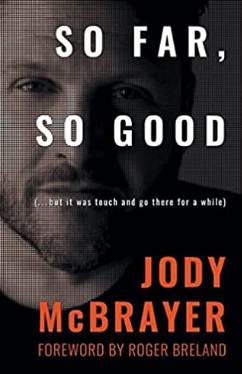
In an interview with The Tennessean, Avalon’s Jody McBrayer discusses his battle with depression and urges the church to wake up on mental health.

“Shame is killing people in church…. there’s a lack of compassion and acceptance and understanding in a place that should stand for all those things and more.”

McBrayer has a new book out, So Far, So Good (…But It Was Touch and Go There For Awhile).

And here’s a key excerpt from his interview with The Tennessean:

McBrayer never discussed his depression with church members, but he often heard from them that God should be enough, and those who were anxious or sad just didn’t trust God.

Hearing that just made McBrayer feel worse, he said. 

Indeed.

How familiar is that to you, to me?

How many times have we heard the message of “just trust more,” both explicitly and implicitly, at church and from our Christian friends?

And a very quick rejoinder to folks who scold the anxious or depressed Christian: Would these alpha Christian optimists tell Jesus in the Garden any of what they tell us?

If they didn’t know he was Jesus, they sure would.

They’d be telling him to get up off the ground and rejoice because of his inheritance in heaven, to not be so gloomy about his suffering.

But if they knew it was Jesus, I get the feeling they wouldn’t “exhort and encourage” the way they do us for going through emotional turmoil.

God bless McBrayer for being honest about depression in a church where it’s so often dismissed or shamed.

Find a psychiatrist here.

Find a therapist here.

July 29, 2022
0 Facebook Twitter Google + Pinterest
Yes, this heat wave might be provoking your anxiety

Yes, this heat wave might be provoking your anxiety

written by Christian Heinze

We all know we’re in a heat wave right now. And if you’re experiencing extra anxiety, you’re not alone.

Sally Hernandez points out this fascinating study from JAMA Psychiatry that found a significant association between ambient heat and risk of Emergency Department visits for mental health.

In other words, unusually hot periods seems to, for whatever reason, drive more people to the ER for mental health treatment.

The increased visits were particularly pronounced among those struggling with anxiety, stress-related disorders, somatoform disorders, mood disorders, self-harm, and other disorders.

Now you might have my same question when I read this study.

“Were those visits from people with anxiety disorders for heat stroke or other health risks from exposure to extreme heat?”

No, those visits were specifically related to mental health.

So, for example, someone with anxiety felt so edgy, so worried, so unnerved that they visited the emergency department, and after a battery of tests, nothing unusual came up and they were sent home with a diagnosis of anxiety or agitation.

As Dr. Chris Hansen explains to Sally Hernandez: “People with anxiety are very susceptible to physical symptoms, so any change in their physical symptoms, if they feel overheated for example, that will very likely kick off increased anxiety.”

I know the feeling.

I developed an anxiety disorder in my late 30’s, and suddenly found myself much more sensitive to the heat — which I had previously loved.

My hunch is that it was hyper-vigilance to physical symptoms, in general, and once you think something is awry, it’s possible you’ll start to hyperventilate and then flight-or-fight will kick in and, as anyone with anxiety knows, you’re on the spiral.

So if you’re feeling this way right now — you’re not alone. This is a global phenomenon.

Kind of.

The other fascinating finding is that this effect was most pronounced in places that normally don’t deal with intense heat.

In other words, most European countries, as well as generally colder regions of the United States.

Right now, it’s July in Florida and honestly, the difference in “normal heat” vs. “a heat wave” is “it feels like death out here” vs. “it feels like slightly more death out here” even when there’s a pronounced spike in heat.

But if you live in another part of the country, pronounced spikes are more likely to exacerbate your mental health symptoms.

Beyond what I’ve already mentioned, the JAMA study has this to say about why heatwaves might exacerbate mental health problems.

Exogenous stressors are well known to exacerbate existing mental health conditions. Our finding that heat was associated with a similar increase in the rate of ED visits for a variety of different mental health conditions is consistent with the hypothesis that heat is an external stressor that is not specific to any given mental health condition. One etiological mechanism may be disrupted sleep during periods of high ambient temperature, which may be associated with adverse mental health outcomes.39 Daytime discomfort or irritation owing to elevated temperature may be a stressor that exacerbates preexisting conditions. Another biological pathway may be the increase in hopelessness, maladaptive anxiety, and stress attributable to the anticipation of climate change and associated extreme events.40–43 In addition, on warmer days, patients may visit the ED to seek relief from high temperatures. Heat could also affect opening hours of other health care facilities, which could be associated with an increase in ED visits. These and other social and health care system factors might explain elevated ED visits on days of extreme temperature.

Find a psychiatrist here.

Find a therapist here.

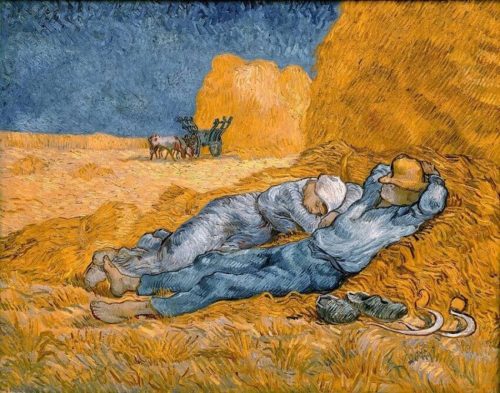
[Painting: Noon – Rest from Work (after Millet), Van Gogh]

July 28, 2022
0 Facebook Twitter Google + Pinterest

About that splashy study making the rounds on serotonin and depression…

written by Christian Heinze

I’m sad that Christians are going to abuse a new study that’s going around on serotonin levels and depression.

Simply put, the study suggests that serotonin levels have nothing to do with depression.

Simply replied to, that’s nothing new.

Please read this piece at Psychology Today, noting that researchers have been throwing cold water on the “serotonin-depression” connection for awhile now, and that many more compelling medical explanations for depression have been found.

Also, I wrote a bit about this here and note just how narrow a view of SSRI’s the authors take, and how casually (and I believe, harmfully) they suggest there’s no reason to take them.

It’s a study that’s making a splash in the media because it has awfully click-baity potential, but does absolutely nothing to dismiss the increasingly well-supported fact that depression is a medical condition.

As I note on the homepage, it’s already going around in Christian circles, and I’m afraid it will take the church ten steps backward on its understanding of mood disorders as medical conditions.

It’s so terribly sad, because Christians would never say, “Oh, that theory on cancer wasn’t right? Well, that means cancer isn’t a medical condition!”

Of course it’s a medical condition, and no Christian would deny that.

So the fact that this is being abused by Christians is utterly tragic, dangerous, and makes no sense, to boot.

That’s why it’s so important to address, and why I’ll go ahead and link once again to Psychology Today’s quick summary of all the other medical explanations and their much more well-supported studies.

If you struggle with depression…

First off:

Find a psychiatrist here.

Find a therapist here.

And if you want to go off your SSRI because of a study that is remarkably narrow (many would call “naïve”) in its take on them, please talk to your doctor first.

July 25, 2022
0 Facebook Twitter Google + Pinterest
Load More Posts

Social Media

Twitter

Get in touch with me

Contact here. 

The Weary Christian mission:

First off:


In the United States, find a psychiatrist here.

In the United States, find a therapist here.

If you’re in the United States and having thoughts of harming yourself or others, please call the National Suicide Lifeline at 1-800-273-8255.

If you’re in the UK, get urgent help here.

Canada, here.

Australia, here.

New Zealand, here.

South Africa, here.

France, here.

Germany, here.

Portugal, here.

Mexico, here.

India, here.

The Philippines, here.

Singapore, here.

South Korea, here.


The Weary Christian goal…


a) reduce the stigma surrounding depression, anxiety, OCD, and other conditions in the Christian community.


b) have uncomfortable but honest conversations.


c) Reduce the stigma surrounding antidepressants, antipsychotics, and other meds God has given us as gifts.


And…


d) Sometimes (tons of times), we all feel really, really depressed in our journey. Hopefully, this site makes you feel less alone.

Categories


@2017 - PenciDesign. All Right Reserved. Designed and Developed by PenciDesign