
The Weary Christian
  • Depression
    • Depression

      James Bryan Smith: Unmet expectations and fear

      Depression

      STUDY: Criticizing older adults make them more vulnerable…

      Depression

      STUDY: Awe can reduce depressive symptoms

      Depression

      STUDY: How music-mindfulness can help depression, anxiety

      Depression

      STUDY: Chronic pain associated with higher rates of…

  • Anxiety
    • Anxiety

      Calling out the brain on catastrophizing

      Anxiety

      James Bryan Smith: Unmet expectations and fear

      Anxiety

      STUDY: Awe can reduce depressive symptoms

      Anxiety

      STUDY: How music-mindfulness can help depression, anxiety

      Anxiety

      STUDY: Chronic pain associated with higher rates of…

  • Book quotes/Video
    • Book quotes/Video

      “In darkest night, you were there like no…

      Book quotes/Video

      Thanksgiving for his brokenness

      Book quotes/Video

      Esther Smith: “All he wants is you”

      Book quotes/Video

      James Bryan Smith: Unmet expectations and fear

      Book quotes/Video

      Staton: On being a witness

  • Health News
    • Health News

      Calling out the brain on catastrophizing

      Health News

      STUDY: Mental health conditions share deep genetic patterns

      Health News

      STUDY: Four Supplements that MIGHT help depression

      Health News

      STUDY: Gut changes raise risk of eating disorders…

      Health News

      STUDY: Criticizing older adults make them more vulnerable…

  • Interviews
    • Interviews

      INTERVIEW: Dr. Terry Powell’s gripping account of depression

      Interviews

      INTERVIEW: Therapist Michael Schiferl explains religious scrupulosity and…

      Interviews

      INTERVIEW: Rocker Matt Sassano shares battles, urges transparency…

      Interviews

      INTERVIEW: Dr. Brian Briscoe tells Christians that antidepressants…

      Interviews

      INTERVIEW: Pastor Scott Sauls on anxiety, depression, and…

  • Devotionals
    • Devotionals

      “Grace has got to be drunk straight”

      Devotionals

      Defeated by God

      Devotionals

      Am I a faithless Christian?

      Devotionals

      Think you’re a “failure?” Jesus sees you unlike…

      Devotionals

      “I killed Jesus of Nazareth”

  • About
  • Depression
    • Depression

      James Bryan Smith: Unmet expectations and fear

      Depression

      STUDY: Criticizing older adults make them more vulnerable…

      Depression

      STUDY: Awe can reduce depressive symptoms

      Depression

      STUDY: How music-mindfulness can help depression, anxiety

      Depression

      STUDY: Chronic pain associated with higher rates of…

  • Anxiety
    • Anxiety

      Calling out the brain on catastrophizing

      Anxiety

      James Bryan Smith: Unmet expectations and fear

      Anxiety

      STUDY: Awe can reduce depressive symptoms

      Anxiety

      STUDY: How music-mindfulness can help depression, anxiety

      Anxiety

      STUDY: Chronic pain associated with higher rates of…

  • Book quotes/Video
    • Book quotes/Video

      “In darkest night, you were there like no…

      Book quotes/Video

      Thanksgiving for his brokenness

      Book quotes/Video

      Esther Smith: “All he wants is you”

      Book quotes/Video

      James Bryan Smith: Unmet expectations and fear

      Book quotes/Video

      Staton: On being a witness

  • Health News
    • Health News

      Calling out the brain on catastrophizing

      Health News

      STUDY: Mental health conditions share deep genetic patterns

      Health News

      STUDY: Four Supplements that MIGHT help depression

      Health News

      STUDY: Gut changes raise risk of eating disorders…

      Health News

      STUDY: Criticizing older adults make them more vulnerable…

  • Interviews
    • Interviews

      INTERVIEW: Dr. Terry Powell’s gripping account of depression

      Interviews

      INTERVIEW: Therapist Michael Schiferl explains religious scrupulosity and…

      Interviews

      INTERVIEW: Rocker Matt Sassano shares battles, urges transparency…

      Interviews

      INTERVIEW: Dr. Brian Briscoe tells Christians that antidepressants…

      Interviews

      INTERVIEW: Pastor Scott Sauls on anxiety, depression, and…

  • Devotionals
    • Devotionals

      “Grace has got to be drunk straight”

      Devotionals

      Defeated by God

      Devotionals

      Am I a faithless Christian?

      Devotionals

      Think you’re a “failure?” Jesus sees you unlike…

      Devotionals

      “I killed Jesus of Nazareth”

  • About

The Weary Christian

THE WEARY CHRISTIAN

LIVING WITH FAITH AND DEPRESSION

  • Depression
    • Depression

      James Bryan Smith: Unmet expectations and fear

      Depression

      STUDY: Criticizing older adults make them more vulnerable…

      Depression

      STUDY: Awe can reduce depressive symptoms

      Depression

      STUDY: How music-mindfulness can help depression, anxiety

      Depression

      STUDY: Chronic pain associated with higher rates of…

  • Anxiety
    • Anxiety

      Calling out the brain on catastrophizing

      Anxiety

      James Bryan Smith: Unmet expectations and fear

      Anxiety

      STUDY: Awe can reduce depressive symptoms

      Anxiety

      STUDY: How music-mindfulness can help depression, anxiety

      Anxiety

      STUDY: Chronic pain associated with higher rates of…

  • Book quotes/Video
    • Book quotes/Video

      “In darkest night, you were there like no…

      Book quotes/Video

      Thanksgiving for his brokenness

      Book quotes/Video

      Esther Smith: “All he wants is you”

      Book quotes/Video

      James Bryan Smith: Unmet expectations and fear

      Book quotes/Video

      Staton: On being a witness

  • Health News
    • Health News

      Calling out the brain on catastrophizing

      Health News

      STUDY: Mental health conditions share deep genetic patterns

      Health News

      STUDY: Four Supplements that MIGHT help depression

      Health News

      STUDY: Gut changes raise risk of eating disorders…

      Health News

      STUDY: Criticizing older adults make them more vulnerable…

  • Interviews
    • Interviews

      INTERVIEW: Dr. Terry Powell’s gripping account of depression

      Interviews

      INTERVIEW: Therapist Michael Schiferl explains religious scrupulosity and…

      Interviews

      INTERVIEW: Rocker Matt Sassano shares battles, urges transparency…

      Interviews

      INTERVIEW: Dr. Brian Briscoe tells Christians that antidepressants…

      Interviews

      INTERVIEW: Pastor Scott Sauls on anxiety, depression, and…

  • Devotionals
    • Devotionals

      “Grace has got to be drunk straight”

      Devotionals

      Defeated by God

      Devotionals

      Am I a faithless Christian?

      Devotionals

      Think you’re a “failure?” Jesus sees you unlike…

      Devotionals

      “I killed Jesus of Nazareth”

  • About
Health News

STUDY: Mental health conditions share deep genetic patterns

James Bryan Smith: Unmet expectations and fear

STUDY: Four Supplements that MIGHT help depression

STUDY: Criticizing older adults make them more vulnerable to developing depression

Study offers great context on kids, screen time, and emotional problems

Daily Blog

The scourge of “black-and-white” OCD thinking

The scourge of “black-and-white” OCD thinking

written by Christian Heinze

If you struggle with OCD, I’d highly recommend Psych Central’s quick explanation on the “black-and-white” thinking that’s common in people with OCD.

It goes hand-in-hand with our struggle to accept uncertainty and tendency to catastrophize and then, essentially, give up, after we’ve drawn dreadful conclusions about ourselves.

Psych Central gives the example of someone with OCD who feels guilty about getting sick and passing it onto their family.

That person says: “I risked getting my family sick, so I’m a terrible person.”

You can see how that thought can send someone into a spiral.

For Christians, you can see how this can get even worse.

If I’m a terrible person, then that means I’m not demonstrating fruit of the Spirit, which means – uh oh – Christ might not have redeemed me.

You think your salvation might have been just a false flash in the pan, and since you’re a “terrible person” and everyone at church says you have to “show fruit” to be a Christian, you’re doomed.

The 18th century poet William Cowper is the most famous example of a Christian with OCD who applied that thinking to his Christianity.

He extolled the virtues, the salvation of Christ, but he got so down on himself that he told his close friends that Christ had died for everyone but himself. That he was unredeemable.

That is catastrophic thinking stemming from a “black-and-white” view of his battle with sin and what that meant for his Christianity.

In fact, his despair was so great that he tried committing suicide at least three times.

Now I’m not saying everyone’s battle with OCD will lead them to that.

But when you come to the conclusion that you can’t possibly be a Christian, you can’t possibly be loved by God because you sinned again — that’s black-and-white thinking and catastrophic conclusions that destroy your spiritual peace.

What makes all this worse?

There are loads of churches out there, urging you to continually “examine yourselves,” prompted by that terribly wearisome urge by Paul in 2 Corinthians.

Those of us with OCD are constantly examining ourselves, and if indeed, we’re still sinners (as Paul recognizes, we are and always will be), we will almost always use that as an example to condemn ourselves, worry that Christ’s death wasn’t enough, and disappear into our worst fears about ourselves and death and all that.

There are two things we have to do:

First, we have to recognize that the root of our problem isn’t our sin, it’s our medical disease of OCD.

Do you have OCD about other things in life?

Ask yourself that and then draw the natural conclusion that your OCD will probably extend to your spiritual life.

My hunch is that when you get professional help for your OCD, you’ll find that you’re not obsessing about work or your spiritual salvation.

In other words, you’ve stopped black-and-white thinking about yourself in every arena of your life.

Treat the root of the problem. That comes first.

Second, remember. Everybody sins. And the ones who pretend they don’t are just pretending.

Mr. and Mrs. Good Church live a life that’s more about staying in the church’s good graces than proclaiming that God’s good graces are enough for anyone and everyone.

You know the perfect Christian family? The ones with ten kids and the happy Instagram photos?

They don’t exist except in photos.

We’re all sinners, but for all of us and all our sin, there’s Jesus.

He doesn’t want you to obsess over your sin, he wants you to experience his easy yoke, and be the happy recipient of his Good News.

So once again, if you see “black-and-white thinking” infecting your Christian life (or any sphere), look first and foremost for professional help for OCD.

And for that, I include this, as always…

Find a psychiatrist here.

Find a therapist here.

[Photo: Pexels, free stock photography].

August 4, 2022
0 Facebook Twitter Google + Pinterest
“A language of sorrows”

“A language of sorrows”

written by Christian Heinze

Christian author, Zack Eswine, wrote one of my favorite books on depression, Spurgeon’s Sorrows, which discusses both Eswine’s own battle with depression and the great 19th century preacher’s.

Eswine writes of the Bible:

“A larger story about God exists that possesses within it a language of sorrows so that the gloomy, the anguished, the dark-pathed, and the inhabitants of deep night are given voice.

Such a God-story is neither cruel nor trite. Such a story begins to reveal the sympathy of God.”

Amen.

I’m so grateful for the Bible’s realistic view of life, the way lament and joy, sorrow and pain all exist — the very things that many Christian churches call fundamentally incompatible with the Christian life.

Our Savior himself was a “man of sorrows.”

And therefore, a man of compassion for both your sorrows and mine. For those with depression, with anxiety, with any kind of pain.

I don’t know how welcome the man of sorrows would be in many churches, because I know many men and women who feel unwelcome in theirs (nearly 20% say they’ve left their churches because of the stigmatization of mental health).

But within the Bible, within Christ, we do indeed find, as Eswine writes, “a language of sorrows so that the gloomy, the anguished, the dark-pathed, and the inhabitants of deep night are given voice.”

[Photo: The Gutenberg Bible, via NYC Wanderer (Kevin Eng)]

July 31, 2022
0 Facebook Twitter Google + Pinterest

As I feared…

written by Christian Heinze

… The recent study, essentially trashing prescribing SSRI’s for depression, has indeed gone viral in right wing media.

Right wing figures from Matt Walsh to Tucker Carlson have cited it in their crusade against Big Pharma.

But as EJ Dickson notes in a very good article, the author of the paper has a long history bashing SSRI’s and the categorization of mental health, in general, as medical condition that needs psychiatric treatment.

In fact, her work has been heavily promoted by an organization established by the Church of Scientology.

Not only that, scientists have also noted that her study offers nothing new, beyond another study of studies.

It’s been quite awhile since the “chemical balance theory” was in favor.

As I noted in my longer reply, medical researchers have found compelling data favoring far more complex mechanisms by which mood disorders develop.

Further, it’s been years since anyone has said that SSRI’s help by restoring chemical imbalances.

They seem to help by reducing systemic inflammation and working in other neurological ways.

Her conclusion — that SSRI’s shouldn’t be prescribed because depression isn’t the result of chemical imbalances– is very odd, considering that’s not the way scientists think they work.

Antidepressants, indisputably, work for many.

And there’s another very odd phenomenon, at work.

If you can’t trust anything from an academic journal (as many critics of antidepressants argue), then why tout the article, published in an academic journal, as evidence in favor of your position?

In other words if, by definition, the establishment is “lying to you,” why rely on something coming from the establishment as your evidence?

It’s a deep hypocrisy from the anti-pharma crowd.

When I first read the paper, I was deeply saddened because it was so narrow in its focus, and so erroneously dramatic in its conclusion, and I suspected that its splashy anti-pharma focus would have far reaching consequences for a church that is already skeptical of medical intervention for mental health.

Pastors these days frequently muse that they feel Tucker Carlson is the real pastor of their church — that what he says drives the church’s conversations. Not what Christ says, not what the Bible says, certainly not what the pastor himself says.

And now that Carlson has latched onto this paper, you can bet skeptical churches and Christians will be even more intransigent on the issue.

The tragic thing is that intransigence is killing people. Literally.

Church should be a place of comfort, not a place of shame, not a place that turns people from life-saving medical care.

Sadly, a lot of evangelical churches in the United States don’t look like that anymore — particularly, as they turn increasingly conspiratorial about anything related to pharmaceutical companies.

And remember, those “natural” alternatives people are talking about at church?

The profit margins on those unproven treatments are often much, much larger than any antidepressant out there (Goop’s story is the most obvious in this saga) .

Folks are getting rich off the backs of complaining, “Big Pharma just wants to make money.”

The “all-natural” proponents are plying unsupported means of treatment, and making a lot of money off victims of this disease, to boot.

That doesn’t mean SSRI’s are right for everybody.

But it’s best to talk with a medical professional, because they’re the ones who’ve devoted their lives to understanding disease, and so…

Find a psychiatrist here.

Find a therapist here.

July 31, 2022
0 Facebook Twitter Google + Pinterest
Christian singer talks candidly about his battle with depression in new book

Christian singer talks candidly about his battle with depression in new book

written by Christian Heinze

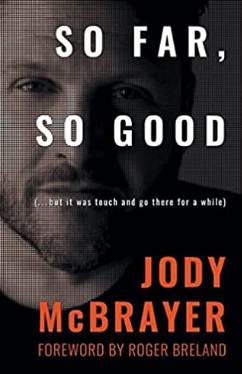
In an interview with The Tennessean, Avalon’s Jody McBrayer discusses his battle with depression and urges the church to wake up on mental health.

“Shame is killing people in church…. there’s a lack of compassion and acceptance and understanding in a place that should stand for all those things and more.”

McBrayer has a new book out, So Far, So Good (…But It Was Touch and Go There For Awhile).

And here’s a key excerpt from his interview with The Tennessean:

McBrayer never discussed his depression with church members, but he often heard from them that God should be enough, and those who were anxious or sad just didn’t trust God.

Hearing that just made McBrayer feel worse, he said. 

Indeed.

How familiar is that to you, to me?

How many times have we heard the message of “just trust more,” both explicitly and implicitly, at church and from our Christian friends?

And a very quick rejoinder to folks who scold the anxious or depressed Christian: Would these alpha Christian optimists tell Jesus in the Garden any of what they tell us?

If they didn’t know he was Jesus, they sure would.

They’d be telling him to get up off the ground and rejoice because of his inheritance in heaven, to not be so gloomy about his suffering.

But if they knew it was Jesus, I get the feeling they wouldn’t “exhort and encourage” the way they do us for going through emotional turmoil.

God bless McBrayer for being honest about depression in a church where it’s so often dismissed or shamed.

Find a psychiatrist here.

Find a therapist here.

July 29, 2022
0 Facebook Twitter Google + Pinterest
Yes, this heat wave might be provoking your anxiety

Yes, this heat wave might be provoking your anxiety

written by Christian Heinze

We all know we’re in a heat wave right now. And if you’re experiencing extra anxiety, you’re not alone.

Sally Hernandez points out this fascinating study from JAMA Psychiatry that found a significant association between ambient heat and risk of Emergency Department visits for mental health.

In other words, unusually hot periods seems to, for whatever reason, drive more people to the ER for mental health treatment.

The increased visits were particularly pronounced among those struggling with anxiety, stress-related disorders, somatoform disorders, mood disorders, self-harm, and other disorders.

Now you might have my same question when I read this study.

“Were those visits from people with anxiety disorders for heat stroke or other health risks from exposure to extreme heat?”

No, those visits were specifically related to mental health.

So, for example, someone with anxiety felt so edgy, so worried, so unnerved that they visited the emergency department, and after a battery of tests, nothing unusual came up and they were sent home with a diagnosis of anxiety or agitation.

As Dr. Chris Hansen explains to Sally Hernandez: “People with anxiety are very susceptible to physical symptoms, so any change in their physical symptoms, if they feel overheated for example, that will very likely kick off increased anxiety.”

I know the feeling.

I developed an anxiety disorder in my late 30’s, and suddenly found myself much more sensitive to the heat — which I had previously loved.

My hunch is that it was hyper-vigilance to physical symptoms, in general, and once you think something is awry, it’s possible you’ll start to hyperventilate and then flight-or-fight will kick in and, as anyone with anxiety knows, you’re on the spiral.

So if you’re feeling this way right now — you’re not alone. This is a global phenomenon.

Kind of.

The other fascinating finding is that this effect was most pronounced in places that normally don’t deal with intense heat.

In other words, most European countries, as well as generally colder regions of the United States.

Right now, it’s July in Florida and honestly, the difference in “normal heat” vs. “a heat wave” is “it feels like death out here” vs. “it feels like slightly more death out here” even when there’s a pronounced spike in heat.

But if you live in another part of the country, pronounced spikes are more likely to exacerbate your mental health symptoms.

Beyond what I’ve already mentioned, the JAMA study has this to say about why heatwaves might exacerbate mental health problems.

Exogenous stressors are well known to exacerbate existing mental health conditions. Our finding that heat was associated with a similar increase in the rate of ED visits for a variety of different mental health conditions is consistent with the hypothesis that heat is an external stressor that is not specific to any given mental health condition. One etiological mechanism may be disrupted sleep during periods of high ambient temperature, which may be associated with adverse mental health outcomes.39 Daytime discomfort or irritation owing to elevated temperature may be a stressor that exacerbates preexisting conditions. Another biological pathway may be the increase in hopelessness, maladaptive anxiety, and stress attributable to the anticipation of climate change and associated extreme events.40–43 In addition, on warmer days, patients may visit the ED to seek relief from high temperatures. Heat could also affect opening hours of other health care facilities, which could be associated with an increase in ED visits. These and other social and health care system factors might explain elevated ED visits on days of extreme temperature.

Find a psychiatrist here.

Find a therapist here.

[Painting: Noon – Rest from Work (after Millet), Van Gogh]

July 28, 2022
0 Facebook Twitter Google + Pinterest

About that splashy study making the rounds on serotonin and depression…

written by Christian Heinze

I’m sad that Christians are going to abuse a new study that’s going around on serotonin levels and depression.

Simply put, the study suggests that serotonin levels have nothing to do with depression.

Simply replied to, that’s nothing new.

Please read this piece at Psychology Today, noting that researchers have been throwing cold water on the “serotonin-depression” connection for awhile now, and that many more compelling medical explanations for depression have been found.

Also, I wrote a bit about this here and note just how narrow a view of SSRI’s the authors take, and how casually (and I believe, harmfully) they suggest there’s no reason to take them.

It’s a study that’s making a splash in the media because it has awfully click-baity potential, but does absolutely nothing to dismiss the increasingly well-supported fact that depression is a medical condition.

As I note on the homepage, it’s already going around in Christian circles, and I’m afraid it will take the church ten steps backward on its understanding of mood disorders as medical conditions.

It’s so terribly sad, because Christians would never say, “Oh, that theory on cancer wasn’t right? Well, that means cancer isn’t a medical condition!”

Of course it’s a medical condition, and no Christian would deny that.

So the fact that this is being abused by Christians is utterly tragic, dangerous, and makes no sense, to boot.

That’s why it’s so important to address, and why I’ll go ahead and link once again to Psychology Today’s quick summary of all the other medical explanations and their much more well-supported studies.

If you struggle with depression…

First off:

Find a psychiatrist here.

Find a therapist here.

And if you want to go off your SSRI because of a study that is remarkably narrow (many would call “naïve”) in its take on them, please talk to your doctor first.

July 25, 2022
0 Facebook Twitter Google + Pinterest

Blog back on Monday

written by Christian Heinze

Hi friends, it’s been just over a month since I last posted, and I had no idea it would be this long.

We just finished an unexpectedly difficult move that was pretty all-consuming, and I haven’t had a spare second.

But thankfully, we’re in our new place, we’ve (I pray) gotten the things fixed that needed to be fixed, and I can start posting again.

Sorry about the unexpected break. I aim to resume posting (I pray) on Monday, July 25.

July 22, 2022
0 Facebook Twitter Google + Pinterest
J.I. Packer: Pray naturally, as a child

J.I. Packer: Pray naturally, as a child

written by Christian Heinze

The late theologian J.I. Packer, in his book, Praying the Lord’s Prayer.

“We should certainly not content ourselves with parroting other people’s prayers, nor would God be content if we did (for what parent could be happy if his child only ever spoke to him in quotations, thus limiting his conversation to the reciting of other people’s sentiments?)”


Amen.

When our kids ask us for stuff, talk with us about things — their lives, life itself, what goes on — I’d hate for them to do so as guarded, halting, hesitant, formal.

Do I want them to come to me as someone approaches a king in what can, at best, be described as hopeful fear?

We see a lot of that in the Old Testament, but Christ changed everything.

Jesus the King chatted with kids, everyone, about everything and in their language.

And that’s how we’re to receive him, that’s how we’re to have a relationship with him. As children. Not scared or afraid of a parent’s capricious anger.

But, fully confident, that he wants to chat with us about everything and anything – just like we do our children.

June 12, 2022
0 Facebook Twitter Google + Pinterest
When Christians bash “self-esteem,” it feeds anxiety disorders

When Christians bash “self-esteem,” it feeds anxiety disorders

written by Christian Heinze

There’s a brand new study of college students in Psychology Research and Behavior Management that adds to the growing body of literature, suggesting a significant relationship between anxiety disorders and self-esteem.

And that body of literature suggests the following:

Low self-esteem? You’re much more likely to suffer from anxiety.

Low self-esteem? You’re much more likely to suffer from depression.

Low self-esteem? Well, that’s associated with inflammation, with infertility, with marital conflict.

So what exactly is “self-esteem” in the academic literature?

It is, according to this particular study, “how individuals evaluate and perceive themselves.”

That can rise or fall, over time, depending on various factors. More on that later.

But I’m sharing a passage of background literature from this particular study — one that suggests just how dangerous (yes, dangerous) low self-esteem is.

The researchers:

“High self-esteem can protect individuals from harmful consequences of negative experiences such as failure.25–27 

Individuals with high self-esteem strive to overcome difficulties, while those with low self-esteem tend to avoid challenging tasks.28 

In particular, college students with low self-esteem were empirically evidenced to have higher stress hormone levels in response to difficult missions and were more likely to suffer from negative emotions and mental health problems.29 

Low self-esteem also exerted negative effects on the academic engagement and performance as well as the happiness of students.28,30–32“

End quote.

Of course, the authors included the necessary citations for each one of those statements.

And that’s not the only literature on the subject.

You can read more here.

Now…

A lot of Christians blame “self-esteem culture” for students’ and young people’s problems, and yet the academic literature suggests exact opposite.

That a low opinion of yourself, a negative opinion of yourself is harmful, impedes success, hurts relationships, and your own body.

And that it is also associated with anxiety and depression.

Empirically, that’s been established.

Anecdotally, have you found that true in your life?

Think of the broken marriages and broken kids who suddenly view themselves as unlovable and go out desperately searching for love in the worst places.

When we’ve felt worst about ourselves, how have things gone?

Feeling poorly about yourself is a crisis of every kind, and it’s exactly what Satan wants. He is the great destroyer, and that sort of goes hand-in-hand with thinking we’re no good and worthy of destruction.

Now, to be sure, the evangelical church is changing on this. There are fewer and fewer sermons about what worms we are.

Yet there are large swaths of churches that still preach a gospel that is hardly the Good News.

And the Good News is entirely compatible with self-esteem, because self-esteem is entirely compatible with God-esteem.

In fact, you kind of have to believe you’re lovable to believe Christ can love you.

Some Christians dispute that. But it’s both theologically and practically true.

The Anglican theologian N.T. Wright recently explained on his podcast how important it is that we internalize that John 3:16 says, “For God so loved the world.”

It didn’t say he hated the world.

He loves the world, he loves people.

He loves us so much he died for us and lives in heaven, praying for us.

As Christian philosopher J.P. Moreland says, God wouldn’t send his beloved son to suffer and die for a cockroach.

Look at Jesus’ ministry.

He searched for, befriended, elevated those who undoubtedly had the lowest self-esteem.

He told a prostitute she had worth. Who else would do that?

He told the “dregs” of society that he cared so much about them he was going to be their friend, and yes, die for them because he thought they were valuable and lovely.

Read the Gospels and they’re a tale of Jesus going to those with, presumably, the lowest self-esteem and saying, “I love you so much. Can I spend time with you?”

In fact, here’s a thought experiment.

When the (presumable) prostitute famously met Jesus in Luke 7, how do you think she left that encounter?

Do you think she felt both a) better about herself as a person and b) immensely grateful for Christ’s love?

I would think so.

Christ-esteem and self-esteem co-existed and, in fact, worked in synergy.

And yet that’s not the message delivered in so many churches and in a Christian culture that bashes “self-esteem.”

But Jesus loves us. He has a place of glory reserved for us.

I don’t think he wants us to argue with that. To tell him we belong in the dirt.

Remember the verse: “We love him because he first loved us.”

He decided that you and I were intrinsically beautiful and valuable enough to die for us. Sinners, yes, but valuable and beautiful ones.

That makes me feel wonderful about both Christ and myself.

Don’t let either Satan or certain Christian groups tell you otherwise.

I heard the message of “you’re a sinning worm” my whole life, and (to this day), it’s something that’s haunted and sent me to the ground.

Because, after all, the dirt is where worms belong.

I’ve known scores of other Christians who have the same story of being told, so relentlessly, that they’re unlovable sinners that they can’t possibly believe that either Christ or anyone else can love them.

The truth is that both self-esteem and Christ-esteem are entirely compatible.

In fact, they are connected in a beautiful way.

The more we adore Christ, the more we — to paraphrase Brennan Manning — take Christ’s view of us against our own negative self-esteem, and therefore, the closer to joy in every area of our lives.

Christ loves us. And if he does, it’s quite okay for us to, as well.

[Lithograph: Self-Portrait in Spherical Mirror, M.C. Escher]

June 12, 2022
0 Facebook Twitter Google + Pinterest
My four months of mindfulness meditation

My four months of mindfulness meditation

written by Christian Heinze

Four months ago, I posted about some of the scientifically-proven, health benefits of meditation, via Healthline.

Mindfulness meditation can reduce stress, depression, can help ward off dementia, help with insomnia, improve diabetes control. Basically, you name it.

Mayo Clinic describes it thusly: “Mindfulness is a type of meditation in which you focus on being intensely aware of what you’re sensing and feeling in the moment, without interpretation or judgment. Practicing mindfulness involves breathing methods, guided imagery, and other practices to relax the body and mind and help reduce stress. Spending too much time planning, problem-solving, daydreaming, or thinking negative or random thoughts can be draining. It can also make you more likely to experience stress, anxiety and symptoms of depression. Practicing mindfulness exercises can help you direct your attention away from this kind of thinking and engage with the world around you.”

End quote.

It is just an unbelievable source of physical and mental health, in much the same way exercise is.

Christians are often really hesitant about any kind of meditation that isn’t “Christian meditation,” but that’s odd to me.

Do Christians scold, “You have to do Christian exercise!”

No.

So it’s strange we will only tolerate “Christian meditation,” but not demand “Christian bike riding.”

Or what about diet?

A lot of the same Christians will say, “Fight depression, naturally, with a good diet.”

They don’t say, “Eat a Christian diet.”

So this resistance to breathing techniques, clearing the mind, taking a moment of silence etc is just sad.

I could go on, but put it this way — I downloaded a popular meditation app four months ago, and decided to really commit to it.

I also promised to report back on the results, in case you were curious.

Two observations.

First, there is absolutely nothing incompatible with being a Jesus-follower and mindfulness meditation.

In fact, that leads me to my second point.

It has, in many ways, improved my relationship with Christ and my love towards others by reducing stress, anxiety, and overall, making me feel much emotionally healthier. (My heart rate has dipped too).

In fact, my wife will often say, “You haven’t meditated today, have you?” And yup, she’s on the money. I’m a much more calm, kinder person when I’ve meditated.

So for me, mindfulness meditation has been the biggest game-changer for my mental health since I started taking antidepressants.

I’d say it’s a lot like physical exercise, except there’s a more useful component, because you can practice it just about anywhere.

I was at the dentist last month and a bit squeamish about some of the hygienic measures, but as I sat there, I remembered mindfulness exercises and just shut my eyes and thought about the sounds I was hearing, the sensations etc.,

It was enormously useful.

Some more personal benefits:

-my breathing has improved. That has profound effects on my entire body.

-I’m learning to stop overthinking.

And this is where Christians miss the boat on “Christian meditation.”

To them, any kind of meditation has to be on our spirituality or a verse or something, but in people with OCD or anxiety, that can promote overthinking.

One of the most blessed, deepest wonders has been learning how to just stop thinking for a bit. It’s incredibly important for our health. After all, sleep. Right?

-My “internal monologue” OCD has improved.

Primarily, through something called “noting.”

It’s a process where we simply think, “I’m getting up from the chair” when we get up or “I’m walking on this pavement” when we walk.

It’s difficult to do, but if we’re stuck in internal, distracting monologues all day, it’s a profound relief to just think “Look at that tree” and nothing more.

Now the Christian skeptic would say, “Why can’t you say, ‘Look at God’s beautiful tree’.”

Sure, you could and sometimes I do.

But people with OCD or anxiety need to think less sometimes, and just observe without thinking. At least for me.

So, to sum up, I still read my Bible, I still pray, but I also practice mindfulness meditation, and it’s been a powerfully useful thing for me.

[Painting: Philosopher in Meditation, Rembrandt]

June 11, 2022
0 Facebook Twitter Google + Pinterest
Load More Posts

Social Media

Twitter

Get in touch with me

Contact here. 

The Weary Christian mission:

First off:


In the United States, find a psychiatrist here.

In the United States, find a therapist here.

If you’re in the United States and having thoughts of harming yourself or others, please call the National Suicide Lifeline at 1-800-273-8255.

If you’re in the UK, get urgent help here.

Canada, here.

Australia, here.

New Zealand, here.

South Africa, here.

France, here.

Germany, here.

Portugal, here.

Mexico, here.

India, here.

The Philippines, here.

Singapore, here.

South Korea, here.


The Weary Christian goal…


a) reduce the stigma surrounding depression, anxiety, OCD, and other conditions in the Christian community.


b) have uncomfortable but honest conversations.


c) Reduce the stigma surrounding antidepressants, antipsychotics, and other meds God has given us as gifts.


And…


d) Sometimes (tons of times), we all feel really, really depressed in our journey. Hopefully, this site makes you feel less alone.

Categories


@2017 - PenciDesign. All Right Reserved. Designed and Developed by PenciDesign