The Weary Christian
  • Depression
    • Depression

      Latest Medical Studies on Depression

      Depression

      James Bryan Smith: Unmet expectations and fear

      Depression

      STUDY: Criticizing older adults make them more vulnerable…

      Depression

      STUDY: Awe can reduce depressive symptoms

      Depression

      STUDY: How music-mindfulness can help depression, anxiety

  • Anxiety
    • Anxiety

      Calling out the brain on catastrophizing

      Anxiety

      James Bryan Smith: Unmet expectations and fear

      Anxiety

      STUDY: Awe can reduce depressive symptoms

      Anxiety

      STUDY: How music-mindfulness can help depression, anxiety

      Anxiety

      STUDY: Chronic pain associated with higher rates of…

  • Book quotes/Video
    • Book quotes/Video

      John Mark Comer: “Wherever Jesus went, the kingdom…

      Book quotes/Video

      Ann Voskamp: “Jesus saves you for Himself”

      Book quotes/Video

      Philippe: “Refusing to suffer means refusing to live”

      Book quotes/Video

      “In darkest night, you were there like no…

      Book quotes/Video

      Thanksgiving for his brokenness

  • Health News
    • Health News

      Latest Medical Studies on Depression

      Health News

      Calling out the brain on catastrophizing

      Health News

      STUDY: Mental health conditions share deep genetic patterns

      Health News

      STUDY: Four Supplements that MIGHT help depression

      Health News

      STUDY: Gut changes raise risk of eating disorders…

  • Interviews
    • Interviews

      INTERVIEW: Dr. Terry Powell’s gripping account of depression

      Interviews

      INTERVIEW: Therapist Michael Schiferl explains religious scrupulosity and…

      Interviews

      INTERVIEW: Rocker Matt Sassano shares battles, urges transparency…

      Interviews

      INTERVIEW: Dr. Brian Briscoe tells Christians that antidepressants…

      Interviews

      INTERVIEW: Pastor Scott Sauls on anxiety, depression, and…

  • Devotionals
    • Devotionals

      Think you’re a “failure?” Jesus sees you unlike…

      Devotionals

      “Grace has got to be drunk straight”

      Devotionals

      Defeated by God

      Devotionals

      Am I a faithless Christian?

      Devotionals

      “I killed Jesus of Nazareth”

  • About
  • Depression
    • Depression

      Latest Medical Studies on Depression

      Depression

      James Bryan Smith: Unmet expectations and fear

      Depression

      STUDY: Criticizing older adults make them more vulnerable…

      Depression

      STUDY: Awe can reduce depressive symptoms

      Depression

      STUDY: How music-mindfulness can help depression, anxiety

  • Anxiety
    • Anxiety

      Calling out the brain on catastrophizing

      Anxiety

      James Bryan Smith: Unmet expectations and fear

      Anxiety

      STUDY: Awe can reduce depressive symptoms

      Anxiety

      STUDY: How music-mindfulness can help depression, anxiety

      Anxiety

      STUDY: Chronic pain associated with higher rates of…

  • Book quotes/Video
    • Book quotes/Video

      John Mark Comer: “Wherever Jesus went, the kingdom…

      Book quotes/Video

      Ann Voskamp: “Jesus saves you for Himself”

      Book quotes/Video

      Philippe: “Refusing to suffer means refusing to live”

      Book quotes/Video

      “In darkest night, you were there like no…

      Book quotes/Video

      Thanksgiving for his brokenness

  • Health News
    • Health News

      Latest Medical Studies on Depression

      Health News

      Calling out the brain on catastrophizing

      Health News

      STUDY: Mental health conditions share deep genetic patterns

      Health News

      STUDY: Four Supplements that MIGHT help depression

      Health News

      STUDY: Gut changes raise risk of eating disorders…

  • Interviews
    • Interviews

      INTERVIEW: Dr. Terry Powell’s gripping account of depression

      Interviews

      INTERVIEW: Therapist Michael Schiferl explains religious scrupulosity and…

      Interviews

      INTERVIEW: Rocker Matt Sassano shares battles, urges transparency…

      Interviews

      INTERVIEW: Dr. Brian Briscoe tells Christians that antidepressants…

      Interviews

      INTERVIEW: Pastor Scott Sauls on anxiety, depression, and…

  • Devotionals
    • Devotionals

      Think you’re a “failure?” Jesus sees you unlike…

      Devotionals

      “Grace has got to be drunk straight”

      Devotionals

      Defeated by God

      Devotionals

      Am I a faithless Christian?

      Devotionals

      “I killed Jesus of Nazareth”

  • About

The Weary Christian

THE WEARY CHRISTIAN

LIVING WITH FAITH AND DEPRESSION

  • Depression
    • Depression

      Latest Medical Studies on Depression

      Depression

      James Bryan Smith: Unmet expectations and fear

      Depression

      STUDY: Criticizing older adults make them more vulnerable…

      Depression

      STUDY: Awe can reduce depressive symptoms

      Depression

      STUDY: How music-mindfulness can help depression, anxiety

  • Anxiety
    • Anxiety

      Calling out the brain on catastrophizing

      Anxiety

      James Bryan Smith: Unmet expectations and fear

      Anxiety

      STUDY: Awe can reduce depressive symptoms

      Anxiety

      STUDY: How music-mindfulness can help depression, anxiety

      Anxiety

      STUDY: Chronic pain associated with higher rates of…

  • Book quotes/Video
    • Book quotes/Video

      John Mark Comer: “Wherever Jesus went, the kingdom…

      Book quotes/Video

      Ann Voskamp: “Jesus saves you for Himself”

      Book quotes/Video

      Philippe: “Refusing to suffer means refusing to live”

      Book quotes/Video

      “In darkest night, you were there like no…

      Book quotes/Video

      Thanksgiving for his brokenness

  • Health News
    • Health News

      Latest Medical Studies on Depression

      Health News

      Calling out the brain on catastrophizing

      Health News

      STUDY: Mental health conditions share deep genetic patterns

      Health News

      STUDY: Four Supplements that MIGHT help depression

      Health News

      STUDY: Gut changes raise risk of eating disorders…

  • Interviews
    • Interviews

      INTERVIEW: Dr. Terry Powell’s gripping account of depression

      Interviews

      INTERVIEW: Therapist Michael Schiferl explains religious scrupulosity and…

      Interviews

      INTERVIEW: Rocker Matt Sassano shares battles, urges transparency…

      Interviews

      INTERVIEW: Dr. Brian Briscoe tells Christians that antidepressants…

      Interviews

      INTERVIEW: Pastor Scott Sauls on anxiety, depression, and…

  • Devotionals
    • Devotionals

      Think you’re a “failure?” Jesus sees you unlike…

      Devotionals

      “Grace has got to be drunk straight”

      Devotionals

      Defeated by God

      Devotionals

      Am I a faithless Christian?

      Devotionals

      “I killed Jesus of Nazareth”

  • About
DepressionHealth News

Latest Medical Studies on Depression

STUDY: Mental health conditions share deep genetic patterns

James Bryan Smith: Unmet expectations and fear

STUDY: Four Supplements that MIGHT help depression

STUDY: Criticizing older adults make them more vulnerable to developing depression

Daily Blog

Update

written by Christian Heinze

Hi all, it’s been a long time since I’ve posted, and so many have sent such kind “are you okay’s,” and I deeply appreciate your care and readership.

So this is long overdue.

This year has been very challenging. I’ve had a number of health problems associated with my Crohn’s disease. So, in my free time, I’ve been spending all my time with our kids, working on a book, all while my wonderful wife mercifully takes care of the $ side of things.

I’m hoping that I can get back to posting very soon.

Again, thanks so much for your encouragement, readership, and I hope to get posting soon.

I’ll leave you with one of my favorite verses I came across recently.

From who else, but King David: “Listen to my cry for help, my King and my God, for I pray to no one but you.” Psalm 4:2.

So often, we — for good reason! — look for healing from various sources. God bless everyone involved in healthcare. From the top down. You are angels.

But who do we pray to? Who do I pray to? That’s a substantially different question from, “What medication do I take? What does the doctor say.”

And of course, it’s only Jesus. It’s only our Father in heaven. With only the help of the Spirit.

So take that verse with you in your dark times: “For I pray to no one but you,” even as you seek medical help because that’s enormously important.

Look forward to posting again soon!

Also…

Find a psychiatrist here.

Find a therapist here.

April 12, 2023
0 Facebook Twitter Google + Pinterest
Keller: Don’t trust fig leaves

Keller: Don’t trust fig leaves

written by Christian Heinze

Depressed and/or anxious Christians often feel, as Brennan Manning calls it, “the inner voice of shame,” despite what Christ’s done for us.

We’re plagued with feelings of inadequacy, low self-esteem, and continually wonder, “How could God really love me?”

We know the answers, but we don’t feel them.

So we work to self-justify, and we’re particularly prone to the dark path of perfectionism and legalism — often promoted by evangelical churches who’d never fess up to their message.

But as we find that path increasingly oppressive (because it truly is a demonic message), we tend to spiral.

“It’s clear I’ll never be good enough for God,” we resolve, and then we despair of salvation, of life, we just despair.

Self-justifying. It’s something we all do, even when we don’t know it.

I’ve really been enjoying Tim Keller’s new book Forgive, and this passage on fig leaves struck me as a nice reminder.

Legalism, any attempt to self-justify, any heavy yoke the church imposes are just oppressive and inadequate fig leaves, masquerading as your route to salvation — they are fig leaves like those Adam and Eve relied on.

Keller writes:


“Your perfectionism is a fig leaf. Your work is a fig leaf. Your holding onto your youth is a fig leaf. Your desperate need for approval is a fig leaf. We are like Lady Macbeth running around saying, ‘Out, damned spot! All the perfumes of Arabia will not sweeten this little hand.’

…. But fig leaves don’t work. Imagine for a moment trying to make do with an actual garment of fig leaves for clothing. Such a garment would be always falling apart.”


The answer, of course, to the fig leaf problem is always Christ’s loving and total forgiveness of everything past, present, and future that you will do.

Everything.

As Brennan Manning says, take God’s evaluation of yourself instead of your own, and God expects even more failure from you than you do!

No need to self-justify when you have Christ doing the justifying. He’s a lot better at it.

It’s one of the biggest Christian cliches, but you truly are clothed in Christ’s righteousness. Now and always.

You are his child.

And we forgive our children of anything, at any time, and forever and always, because we love them and they are our children.


February 15, 2023
0 Facebook Twitter Google + Pinterest
Some foods for less-anxious-thought?

Some foods for less-anxious-thought?

written by Christian Heinze

Over at CNET, Taylor Leamey offers up a nice read on eight foods that have been linked with a reduction in symptoms of anxiety.

Click here to read, but I’ll give you the really short version.

Yogurt: It’s all about the prebiotics and probiotics. Vast research has talked about the gut-brain connection. So much so that it’s almost canon that your gut bacteria affects your mood.

Almonds: He notes that almonds have 20% of your daily recommended value of magnesium. Magnesium can help with mild symptoms of anxiety. As can Vitamin C, which almonds also have.

Blueberries: The antioxidants and Vitamin C. Research has shown both can help with anxiety.

Salmon: Here’s something I didn’t know. Research shows regularly eating salmon can help regulate your cortisol and adrenaline levels. The flight-or-fight thing. That’s not only important for anxiety, but also really important for overall health. Moreover, the fatty acids can regulate dopamine and serotonin levels.

Turkey: This took me by surprise. It’s about the tryptophan. Tryptophan is an essential amino acid, and eating foods with a lot of tryptophan can help decrease anxiety.

Dark Chocolate: This has been in the news a lot lately, with the high levels of lead found in some brands. So I’d recommend checking Consumer Labs or Consumer Reports on the right type. But dark chocolate has a lot of flavonols that can both reduce cortisol and increase blood flow to the brain.

Turmeric: Studies have shown this spice is linked to lower levels of anxiety and depression. Plus, it’s famously anti-inflammatory.

Avocados: They’ve got a lot of B vitamins, which can play an important role in mental health. Plus, they’ve got tryptophan, too.

The great thing about these foods is that they’re all really good for your body, too — depending on allergies and how you tolerate them.

Now the caveat that I always mention is this — I am definitely not one of those Christians who’s “Go all natural, bro.”

I’m a huge believer in talking to your doctor about medication, and I’m on medication myself that has saved my life.

I’ve tried diet, exercise etc in place of medication, and for me, I need medication, as well.

But everyone’s experience with this disease is different.

The best thing is to talk with a doctor.

Also…

Find a psychiatrist here.

Find a therapist here.

[Painting: Apples and Oranges, Cezanne]

February 15, 2023
0 Facebook Twitter Google + Pinterest
STUDY: “Cyclic sighing” can offer quick anxiety relief

STUDY: “Cyclic sighing” can offer quick anxiety relief

written by Christian Heinze

A brand new study from Stanford University’s David Spiegel and Andrew Huberman, published in Cell Reports Medicine, suggests that just five minutes of a particular controlled breathing can help ease symptoms of anxiety by activating the parasympathetic nervous system.

Not only that, the study showed the “cyclic sighers” reported greater increases in positive affect — energy, joy, peacefulness — than control groups.

The benefits didn’t stop there.

The “cyclic sighers” significantly lowered their resting breathing rate throughout the day, compared to control groups.

For more on the study, I’d suggest reading Hadley Leggett’s review, because it gets into a lot more that’s really great, but there’s one last thing…

… What is “cyclic sighing?”

Leggett:

The instructions are simple: Breathe in through your nose. When you’ve comfortably filled your lungs, take a second, deeper sip of air to expand your lungs as much as possible. Then, very slowly, exhale through your mouth until all the air is gone.

After one or two of these deep sighs, you may already feel calmer, but to get the full effect, Spiegel recommends repeating these deep sighs for about five minutes.

So, there you have it.

The interesting thing is that one of the control groups practiced mindfulness meditation (which I’m also a big fan of), and “cyclic sighing” offered quicker, stronger benefits on the measured criteria.

Oh, one more thing.

The more consistent you are in practicing “cyclic sighing,” the stronger the benefits with each passing day.

[Photo: Pexels, free stock photography]

February 12, 2023
0 Facebook Twitter Google + Pinterest

“Far be it from me to not believe/Even when my eyes can’t see”

written by Christian Heinze

Find a psychiatrist here.

Find a therapist here.

January 19, 2023
0 Facebook Twitter Google + Pinterest
Experts give parents 8 ways to help kids cope with anxiety

Experts give parents 8 ways to help kids cope with anxiety

written by Christian Heinze

If you’re a parent with anxiety, you probably have anxiety about passing on that anxiety to your kids. Depressing, huh.

I’m speaking for myself here, and probably a lot of others.

Of course, anxiety often has a genetic basis, and there’s only so much we can do to help our kids out with something they’re genetically susceptible to.

But we can do something.

Or at least we can follow eight really good recommendations, according to experts in child development.

Caroline Bologna has a tremendous read on those 8 things.

I’d recommend reading her whole write-up, but I’ll briefly list and make some comments.

a) Don’t encourage avoidance. Sometimes we think we’re helping our kids by delivering them from a stressful situation. But instead we’re promoting avoidant behavior.

The goal is to build resilience. Resilience is one of the best possible skills, btw, for your child to develop. It ain’t reading, writing, and arithmetic because at some point – no matter how good your child gets at those – they’ll reach a point of resistance. At which resilience comes in.

b) Treat your own anxiety. Our kids are frighteningly good at picking up on the slightest changes in our anxiety levels, and since they model everything we do (at least until they’re teenagers), they’re going to believe that airplanes are dangerous if you have a panic attack every time you get on one.

As a parent who struggles with generalized anxiety disorder, this is one of my greatest challenges and might be yours — how can I remain the model of calm and strength when I feel anything but?

It’s a tricky one that I’m still trying to figure out.

Note, however, that experts say you can use your anxiety as a teachable moment.

For example, if your child is anxious, you can talk to them about your own anxiety (while avoiding specifics that might scare your child like “Billy, I might lose my job which will leave us destitute, so see I have anxieties, too”).

If your child knows you get anxious, and you pass along your coping mechanisms, they might feel a) less lonely and b) more likely to believe they can get through it.

So one of the primary reasons I work on my anxiety is for my kids.

They’ve got enough of my genes without my adding nurture to the mix, too.

We shouldn’t be afraid of reaching out for professional help.

It’s, quite literally, for the kids (and good for us, too).

c) Talk about feelings. A lot of Christians of a certain type reel at that word “feelings.” In fact, an entire swath of Americans scoff at “snowflakes” and the “feelings” culture (while, ironically, also taking extreme offense over anything that violates their own political feelings).

But read the Gospels.

Jesus was constantly being “filled with” a feeling.

Compassion, mostly. But also, righteous anger (humans are incapable of righteous anger without it leading to anger-anger, so the whole “I just have righteous anger” thing is the saddest phenomenon dominating politics right now).

Jesus was a super feeling person, and there’s not a single case where he diminishes anyone’s feelings.

We should never, ever minimize our kids’ feelings, tell them to just get over it, or make them feel ashamed for them.

The only thing we’re doing is forcing them to suppress those feelings, and they will come out, one way or another.

Either now, through acting out, or later, through growing bitter and angry at the way they were raised.

So embrace exploring feelings.

And as the experts tell Bologna, validate your child’s feelings as best you can, but don’t just leave it there.

Talk about how you can cope with the feelings.

Use personal examples. Come up with a solution together.

d) Be careful about saying “CAREFUL!”. Admittedly, caution is in the eye of the beholder.

But as the article notes, here’s a quick example. If you’re at the playground and you feel your child is doing something unsafe, instead of just saying “CAREFUL,” explain why they need to be careful.

Don’t issue blanket warnings without explaining why caution is warranted.

And to plug Christianity into all this.

Don’t give into the Christian culture of fear.

I was recently listening to a podcast conversation with David French, where he noted just how terribly afraid Christians are about today’s culture.

Christians tend to imbue “the world” with far more power than Christ himself, the Spirit himself.

It’s a theological inversion that leads to an isolated life of useless fear.

Instead of sheltering kids in a protective bubble (that’s destructive to their long-term health), Christians need to say, “What’s ‘the world’ against Christ?”

e) Don’t praise results. Instead, praise effort. I can’t emphasize this enough. American culture says the win is in the win, when it’s actually in the try.

Depressed people are often victims of this success-aholic mentality.

The “strong” are the ones the world says are strong.

In reality, the strongest people I’ve met are those who experience severe mental or physical disabilities and still get up every day to do this thing.

That takes a strength that neither the world nor, sadly, the church recognizes.

America’s achievement-driven culture has seeped (and in many cases, been fueled by) the church, and that’s creating a culture where “greatness” is being conflated with “goodness.”

When our kids see us wowed by the success of others, the results of others, it puts insane pressure on them to produce their own wow, their own success.

This is one of the sharpest disconnects I’ve noticed in American Christianity — sermons might emphasize spiritual growth, but conversations after church and during the week emphasize school performance, work achievements, and just generally, a mindset completely opposite from the “be careful of building barns” message that Jesus taught.

And again, for kids prone to anxiety, this emphasis on achievement is going to put the kind of pressure that will eventually lead to implosion.

“Celebrating success, celebrating excellence” — what could be wrong with that?

Nothing, except it might be doing your child deep harm, while also undermining Christ’s message that the world’s success and excellence is not that of the kingdom of heaven’s.

f) Don’t ask leading questions. This is a little less obvious, but here’s an example.

My son is worried about riding the bus.

Let’s say I want to know why. I shouldn’t ask leading questions like: “Are you worried that the driver will lose control of the bus and be part of a 12 car pile-up?” Or “Are you worried that kids will be cruel?”

There’s a chance my son is, in fact, worried about that, but if that’s not his primary concern, I’ve just added to the list.

So we need to be careful that, in our efforts to understand our childrens’ anxieties, we don’t fuel additional fears.

g) Don’t be authoritarian. Without a doubt, the most toxic kind of Christian parenting I’ve seen is the kind that’s been taught in many churches, for many years — the authoritarian model.

It’s one that literally uses fear to produce a desired result.

It might “work” in the short term, but it always destroys in the long run.

This is when a parent is so authoritarian about certain behaviors that the child grows up, living in 24/7 fear of staying on the good side of their parents’ graces.

Now, to be fair, this isn’t a phenomenon solely unique to the Christian church, but it’s definitely one the Christian church struggles with.

Growing up in an environment where nearly every family employed the authoritarian model (the “Godly” model), I can tell you that nearly ever kid either turned away from Christ or, if they held on, were so scarred that they had to undergo years of therapy to make things right.

Authoritarian is not “Godly.” It is the opposite. It is destructive.

Jesus’ yoke was easy and his burden light. God forbid we impose it on our children, or else they’ll become the children of fear, not of freedom or peace.

h) Don’t send mixed messages. I brought up a bit on this earlier, but Bologna gives a good example.

“I get this a lot from parents who say to their children, ‘I want you to really enjoy taking this time being a kid,’” Yip explained. “Then they follow up by saying, ‘Have you studied for your SAT yet? That’s really important to do. You really need to get on studying with your SAT because the deadline is approaching, and if you don’t get on it, this is your last opportunity.’”

She urged parents to mean what they say and stay true to their intentions when delivering a message. It doesn’t have to be all or nothing, with 24/7 academics or 24/7 enjoying being a kid.

“Say something like, ‘Your SATs are coming up, and that needs to be a priority. I want you to be able to find some way to balance your time and prioritize what is most important to focus your attention on,’” Yip suggested. 

[Photo: Pexels, free stock photography]

January 19, 2023
0 Facebook Twitter Google + Pinterest
“Surely, goodness and mercy”

“Surely, goodness and mercy”

written by Christian Heinze

Phillip Keller, in his classic book on Psalm 23, writes:


“How many of us are truly convinced that no matter what occurs in our lives we are being followed by goodness and mercy?

….When my little world is falling apart and the dream castles of my ambitions and hopes crumble into ruins, can I honestly declare, ‘Surely – yes – surely – goodness and love will follow me all the days of my life’?”


Oof. That’s a tough question to answer, especially for depressed Christians, who are particularly prone to seeing sadness, melancholy and despair following us all the days of our lives.

But no matter our answer to that question, God’s is always the same: “Yes, my goodness and love are following you all the days of your life.”

If you’re struggling to hear that answer, it might very well be that your depression, anxiety, ocd, (or any of the other innumerable medical disorders that can affect our brains) is lying to you about God — just as it does about so many things in life.

It’s very difficult to believe in a good, loving God when we’re severely depressed or anxious, no?

But as Zack Eswine writes in his wonderful book, Spurgeon’s Sorrows: “Our sense of God’s absence does not mean that he is so…. our feelings of him do not save us. He does.”

And often, the thing informing our sense of God’s absence is our medical disorder.

So…

Find a psychiatrist here.

Find a therapist here.

December 9, 2022
0 Facebook Twitter Google + Pinterest
Bush: Love yourself (P.S. God does)

Bush: Love yourself (P.S. God does)

written by Christian Heinze

Bernard Bush, in his essay, Coping with God (quoted here), sends a message to many a depressed Christian.

“We may find that we punish ourselves mercilessly for real or imagined sins, and even then we will not forgive ourselves.

… fortunately, Christ has revealed the real God to us in unmistakably human form, exposed projection for the idolatry that it is, and given us the way to to become free from it.

It takes a profound conversion to accept the belief that God is tender and loves us just as we are, not in spite of our sins and faults, but with them.

God does not condone or sanction evil, but he does not withhold his love because there is evil in us.

The key to understanding is the way we feel about ourselves.

We cannot even stand or accept love from another human being when we do not love ourselves, much less believe or accept that God could possibly love us.”


Amen.

That’s both biblical, and yet also heretical in most evangelical churches and circles.

This idea that we should love ourselves.

Oh, we’ll hear sermon after sermon about how God loves us, but how many times will be told that we should feel about ourselves the way God does?

That kind of message is “the domain of the Joel Osteen, squishy” kind of church.

It’s simply not acceptable in “true, Bible-believing churches.”

But all those “true, Bible-believing churches” would say “God loves you,” and yet deny that luxury to someone’s own feelings towards themselves.

It is not biblical. Far from it.

It is a lie — one meant to steal the joy of our salvation; in fact, if you were to categorize it, you should place it in the realm of the demonic because if Satan can’t steal our salvation, he’ll certainly try to steal the joy from our salvation.

And this is the way to do it — tell people it’s a ghastly lie that you should love yourself (even though God does).

But it’s okay to love yourself. It really is. And again, how do we know? Because God does.

If it’s okay for God to do it, it can’t be a sin, right?

Again, if God loves you today, love yourself today.

It’s not easy to take that attitude towards ourselves when we’ve been told that kind of thinking is a modern sickness in the church.

If so, it’s an ancient sickness in God himself, because he’s loved you since before you were born.

So, as Brennan Manning says, take sides with God, against your own self-evaluation.

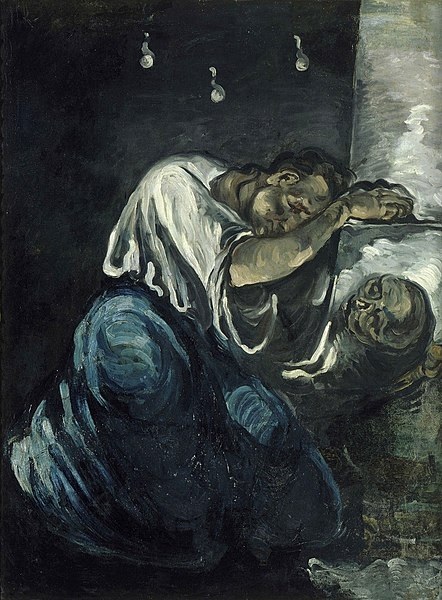
[Painting: La Douleur, Cezanne]

December 7, 2022
0 Facebook Twitter Google + Pinterest
Christians and Uncertainty

Christians and Uncertainty

written by Christian Heinze

I’ve been sick a lot lately. Like, a lot. I’m sick of it.

More than anything, I’m sick of the uncertainty it brings to the delicate equilibrium of a family with young kids.

If a family has two parents and one goes out of commission, it’s like flying with one jet. Everything is worse for everyone.

And the worst thing of all is the uncertainty it brings.

Physical uncertainty, economic uncertainty, and all the small things like, “Am I going to be well enough to drive and pick up the kids today, or does my wife need to come home early, or do I need to ask a friend?” and everything that comes from that.

I hate it.

Now, I’m a Christian and you are, too.

Theoretically, uncertainty is our chance to show the world that we’re cool with uncertainty because we know God’s in control.

He’s sovereign. He loves us. If he’s for us, who can be against us, and there’s a reason for this, and it’s to bring us closer to him and you know the drill.

In fact, that’s what it’s become — a drill.

It’s been drilled into us in every sermon, verse, Bible study group, our own prayers.

All that theology is true.

But I’m also certain of this, and it’s what I want to tell you.

The person at church, sitting next to you — she hates uncertainty just as much as you.

The Bible study group leader who’s taken on the “shepherd role” — he hates uncertainty as much as you.

They struggle with it, just like you and me, and even though the Christian world might put on a face that lies, the statistics don’t.

We experience as much clinical anxiety as non-Christians. And a deep, abiding hatred for uncertainty is one such symptom.

Now this phenomenon — a Christian’s fear of uncertainty — is completely understandable if you believe in clinical anxiety.

In fact, it goes hand-in-hand with our disease.

If you have anxiety and don’t hate uncertainty, then it’s as medically bonkers as breaking a bone and not feeling pain.

But of course, Christians like to distinguish ourselves from the world in all kinds of ways (many of which are based on pride — just like the religious folk did in Jesus’ days).

And for us, aping a relative indifference to anxiety and uncertainty is one of those ways.

And I have no doubt some are relatively indifferent to it, but I suspect it’s because they’re just not the anxious type to begin with, and even if they weren’t Christians, they’d still be writing songs like “What a wonderful world” and talking about how the journey of life — with all its “exciting twists and turns”, even the bad ones — is what it’s all about.

I’m an extrovert and open about my struggles with mental health, and have therefore interacted with a lot of Christians you’d never expect to be wracked by fear and uncertainty who, nevertheless, go to bed at night and can’t find sleep, and wake up, desperate to go to sleep again, because they can’t face another day of uncertainty.

Nevertheless, the stigma surrounding our fear of uncertainty is so deep in the Christian church that, in order to fit in, we have to bow — not to God — but to the general consensus of Deep Faith.

But Deep Faith, in this context, is rarely about faith in Christ.

It is about a million other things that have nothing to do with Christianity but have nevertheless become American Christianity.

And perhaps, standing above it all (although politics is vying for first place) is the notion that Deep Faith is about showing our Deep Difference in how the world affects us.

Thus, we’re supposedly immune to the things that trouble others — like uncertainty.

Yes, we are, in fact, loved deeply by a Father who cares for us, deeply.

But we are also, in fact, humans who develop medical conditions that are no less painful than the ones experienced by others.

Last year, I was hospitalized for a stomach thing and had a 20 minute or so bout with a heavy potassium injection into my veins.

I didn’t know that pain existed.

Those 20 minutes didn’t make me doubt God’s love for me.

But they did make me think, “I never want to go through this again,” and to this day, when I’m battling electrolyte imbalances, I tremble at the thought of another potassium injection.

Uncertainty. See, it sucks. That’s a small example. But it says nothing about Deep Faith.

It just sucks to wonder whether you’ll have to feel the pain of a potassium injection.

Then there are far worse pains, emotional ones, that we’ve been through and fear going through again.

I don’t want to. I don’t like to. I’d rather not.

I hate the idea.

And here’s the discouraging thing.

If I said that series of sentences to a group of Christians — “I don’t want to,” “I don’t like to,” “I hate the idea” — most the time I’d be met with “But that’s how God grows you.”

Perhaps. But I’d rather not grow that way.

And then there’s this. I’ve seen deep emotional pains shrink people. Not grow them. They crumble.

Nothing except an overwhelming fear and terror emerges. We call that PTSD.

“In hindsight, it was for the best,” many of us say. Some never get to say it, because this side of heaven, we’ll never really understand.

I don’t pretend to know how God works. Or what’s the reason for things.

And that’s the point. None of us does. Not you, not me, not the church.

The church, on one hand, talks about how God moves in “mysterious ways” (true), but then tries to explain those ways, and it doesn’t take Kurt Godel to find just how hopelessly tied up in confused logic they get at trying to explain those mysterious ways.

God’s ways are mysterious. Let’s leave it at that.

Except for this.

I don’t know the reason for your pain or mine (beyond original sin).

But I do know that there’s nothing mysterious to the fact that if you have a medical condition, you are going to feel its pain.

And anxiety is a medical condition.

And you can’t expect to look at an MRI, showing anxiety, inflammatory markers suggesting that, and then say, “Oh, but that person isn’t going to experience dread, fear, an overwhelming terror over the uncertainties of life.”

That isn’t mysterious. That’s medical.

Why God’s allowed some of us to go through that — there’s the mystery.

So yes, I’m a Christian and I hate uncertainty and have since a child, and it continues and will until I find myself safely and securely in the arms of Christ, in heaven.

And I also know this.

I’m certain that if you feel this way, you know scores of other Christians who also feel this way, but are too shy to say so, because the church worships a Deep Faith that is often more about how different, how above it all, how tremendously certain we are about life, unlike all those “faithless heathens.”

We think it’s our badge of honor, and yet it is really our mark of pride.

So please, don’t think you’re a bad Christian because you hate uncertainty, because you experience dread, because this world is so this world.

Of course, we have a Savior who’s adopted us as his children, but what child — even a deeply loved child — doesn’t battle fear?

What kind of father or mother would hold that fear against them?

My young son hates the uncertainty of first grade.

I try to comfort him, but I don’t hold his dread against him. I’d be a loveless parent if I did.

So, capping it off, there are three things I’m certain of.

First, that it’s okay to hate uncertainty.

Second, I’m certain your church is filled with people who hate uncertainty, too, and are sadly struggling with having their medical condition, spiritualized.

Third, that Christ is the Good Shepherd, and the Good Shepherd doesn’t demand his sheep become lions. He knows we’re scared little things or else we wouldn’t need a Shepherd.

He lays down his life for us, because frankly, we’re not very good at life, and if we think we are, we’re deluded little sheep.

So if you have a medical condition that goes hand-in-hand with a dread over uncertainty…

Find a psychiatrist here.

Find a therapist here.

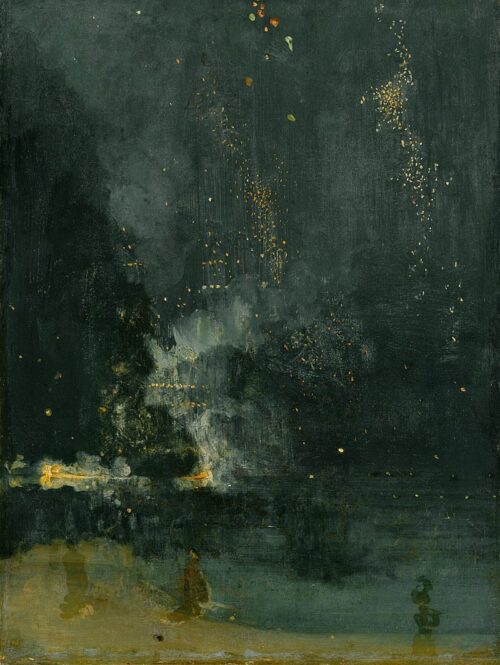
[Painting: Nocturne in Black and Gold — The Falling Rocket (Whistler)]

November 30, 2022
0 Facebook Twitter Google + Pinterest
“I do not forsake them”

“I do not forsake them”

written by Christian Heinze

Isaiah 42:16 (ESV):

“I will lead the blind in a way that they do not know, in paths that they have not known I will guide them.

I will turn the darkness before them into light, the rough places into level ground.

These are the things I do, and I do not forsake them.”


That’s a beautiful verse, and an even more beautiful truth.

It’s helpful to read, but at times, can be hard, because it is so puzzling to our experience.

There can be such a discord between these beautiful verses and our own lives.

Because God promises to “turn the darkness…. into light” and many of us move (well, barely move) in this difficult shroud of weight our entire lives.

I once talked to someone who nearly lost his faith because verses like this seemed so hollow to the reality of not only what he experienced, but what he also saw other Christians experience.

I know.

Of course, once the trial is gone, it’s easy to get into the spirit of, “Woohoo I learned important things from it! God had a purpose!”

But what if they never leave?

What if we never learn anything from the trial that persists (after all, we’re taught by other Christians that trials only exist in “seasons”) except to further doubt words that seem empty?

That’s the case for many Christians who hear these verses.

We’re expected to be “blessed” by them (and often are), but let’s be honest — they can often feel like empty promises.

But the key word there is “feel.”

How we feel doesn’t reflect how it is.

And in that particular passage from Isaiah, the thing I hold onto is the truth, at the end, that persists now how matter how we feel.

God says: “I do not forsake them.”

Maybe you and I feel we aren’t on the “level ground” or “light place” of this verse.

But no matter how we feel, or what things look like, there’s this thing we know: God does not forsake us.

How do we know that?

Because a perfect Father never forsakes his children.

Never.

Even an imperfect one. The thought of forsaking my children is the most jaw-droppingly terrible one I can fathom.

Elsewhere in Isaiah, God says: “See, I have written your name on the palms of my hands.”

He’s got a tattoo of your name and mine.

And in Isaiah, he also compares himself to a breastfeeding mother: “Can a mother forget the baby at her breast?”

A Father, inked up in devotion with our name, a Mother who’s breastfeeding her baby that has become her entire life.

So yes, when God says he won’t forsake us, he won’t.

Or else he’s a liar.

And it seems one of the most basic tenants of faith rests on the premise that God doesn’t lie.

But if he doesn’t lie, he’s with you right now, and will never forsake you.

If you feel forsaken in your condition of depression, anxiety, mood disorders, the place to go is the root of the problem, and that is best addressed by…

Find a psychiatrist here.

Find a therapist here.

I know that sounds terribly unspiritual to say, but medication, therapy — those are things God gives us to help our medical problems.

And depression that persists, anxiety that disorients, ocd that plagues us. Medical.

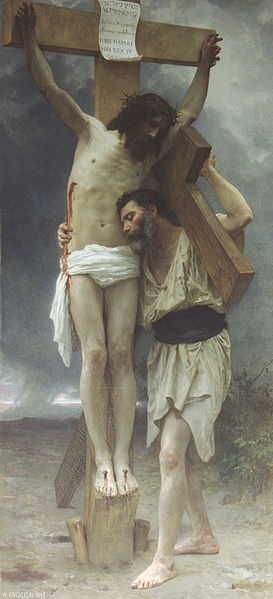
[Painting: Compassion, William-Adolphe Bouguereau]

August 18, 2022
0 Facebook Twitter Google + Pinterest
Load More Posts

Social Media

Twitter

Get in touch with me

Contact here. 

The Weary Christian mission:

First off:


In the United States, find a psychiatrist here.

In the United States, find a therapist here.

If you’re in the United States and having thoughts of harming yourself or others, please call the National Suicide Lifeline at 1-800-273-8255.

If you’re in the UK, get urgent help here.

Canada, here.

Australia, here.

New Zealand, here.

South Africa, here.

France, here.

Germany, here.

Portugal, here.

Mexico, here.

India, here.

The Philippines, here.

Singapore, here.

South Korea, here.


The Weary Christian goal…


a) reduce the stigma surrounding depression, anxiety, OCD, and other conditions in the Christian community.


b) have uncomfortable but honest conversations.


c) Reduce the stigma surrounding antidepressants, antipsychotics, and other meds God has given us as gifts.


And…


d) Sometimes (tons of times), we all feel really, really depressed in our journey. Hopefully, this site makes you feel less alone.

Categories


@2017 - PenciDesign. All Right Reserved. Designed and Developed by PenciDesign