The Weary Christian
  • Depression
    • Depression

      Latest Medical Studies on Depression

      Depression

      James Bryan Smith: Unmet expectations and fear

      Depression

      STUDY: Criticizing older adults make them more vulnerable…

      Depression

      STUDY: Awe can reduce depressive symptoms

      Depression

      STUDY: How music-mindfulness can help depression, anxiety

  • Anxiety
    • Anxiety

      Calling out the brain on catastrophizing

      Anxiety

      James Bryan Smith: Unmet expectations and fear

      Anxiety

      STUDY: Awe can reduce depressive symptoms

      Anxiety

      STUDY: How music-mindfulness can help depression, anxiety

      Anxiety

      STUDY: Chronic pain associated with higher rates of…

  • Book quotes/Video
    • Book quotes/Video

      John Mark Comer: “Wherever Jesus went, the kingdom…

      Book quotes/Video

      Ann Voskamp: “Jesus saves you for Himself”

      Book quotes/Video

      Philippe: “Refusing to suffer means refusing to live”

      Book quotes/Video

      “In darkest night, you were there like no…

      Book quotes/Video

      Thanksgiving for his brokenness

  • Health News
    • Health News

      Latest Medical Studies on Depression

      Health News

      Calling out the brain on catastrophizing

      Health News

      STUDY: Mental health conditions share deep genetic patterns

      Health News

      STUDY: Four Supplements that MIGHT help depression

      Health News

      STUDY: Gut changes raise risk of eating disorders…

  • Interviews
    • Interviews

      INTERVIEW: Dr. Terry Powell’s gripping account of depression

      Interviews

      INTERVIEW: Therapist Michael Schiferl explains religious scrupulosity and…

      Interviews

      INTERVIEW: Rocker Matt Sassano shares battles, urges transparency…

      Interviews

      INTERVIEW: Dr. Brian Briscoe tells Christians that antidepressants…

      Interviews

      INTERVIEW: Pastor Scott Sauls on anxiety, depression, and…

  • Devotionals
    • Devotionals

      Think you’re a “failure?” Jesus sees you unlike…

      Devotionals

      “Grace has got to be drunk straight”

      Devotionals

      Defeated by God

      Devotionals

      Am I a faithless Christian?

      Devotionals

      “I killed Jesus of Nazareth”

  • About
  • Depression
    • Depression

      Latest Medical Studies on Depression

      Depression

      James Bryan Smith: Unmet expectations and fear

      Depression

      STUDY: Criticizing older adults make them more vulnerable…

      Depression

      STUDY: Awe can reduce depressive symptoms

      Depression

      STUDY: How music-mindfulness can help depression, anxiety

  • Anxiety
    • Anxiety

      Calling out the brain on catastrophizing

      Anxiety

      James Bryan Smith: Unmet expectations and fear

      Anxiety

      STUDY: Awe can reduce depressive symptoms

      Anxiety

      STUDY: How music-mindfulness can help depression, anxiety

      Anxiety

      STUDY: Chronic pain associated with higher rates of…

  • Book quotes/Video
    • Book quotes/Video

      John Mark Comer: “Wherever Jesus went, the kingdom…

      Book quotes/Video

      Ann Voskamp: “Jesus saves you for Himself”

      Book quotes/Video

      Philippe: “Refusing to suffer means refusing to live”

      Book quotes/Video

      “In darkest night, you were there like no…

      Book quotes/Video

      Thanksgiving for his brokenness

  • Health News
    • Health News

      Latest Medical Studies on Depression

      Health News

      Calling out the brain on catastrophizing

      Health News

      STUDY: Mental health conditions share deep genetic patterns

      Health News

      STUDY: Four Supplements that MIGHT help depression

      Health News

      STUDY: Gut changes raise risk of eating disorders…

  • Interviews
    • Interviews

      INTERVIEW: Dr. Terry Powell’s gripping account of depression

      Interviews

      INTERVIEW: Therapist Michael Schiferl explains religious scrupulosity and…

      Interviews

      INTERVIEW: Rocker Matt Sassano shares battles, urges transparency…

      Interviews

      INTERVIEW: Dr. Brian Briscoe tells Christians that antidepressants…

      Interviews

      INTERVIEW: Pastor Scott Sauls on anxiety, depression, and…

  • Devotionals
    • Devotionals

      Think you’re a “failure?” Jesus sees you unlike…

      Devotionals

      “Grace has got to be drunk straight”

      Devotionals

      Defeated by God

      Devotionals

      Am I a faithless Christian?

      Devotionals

      “I killed Jesus of Nazareth”

  • About

The Weary Christian

THE WEARY CHRISTIAN

LIVING WITH FAITH AND DEPRESSION

  • Depression
    • Depression

      Latest Medical Studies on Depression

      Depression

      James Bryan Smith: Unmet expectations and fear

      Depression

      STUDY: Criticizing older adults make them more vulnerable…

      Depression

      STUDY: Awe can reduce depressive symptoms

      Depression

      STUDY: How music-mindfulness can help depression, anxiety

  • Anxiety
    • Anxiety

      Calling out the brain on catastrophizing

      Anxiety

      James Bryan Smith: Unmet expectations and fear

      Anxiety

      STUDY: Awe can reduce depressive symptoms

      Anxiety

      STUDY: How music-mindfulness can help depression, anxiety

      Anxiety

      STUDY: Chronic pain associated with higher rates of…

  • Book quotes/Video
    • Book quotes/Video

      John Mark Comer: “Wherever Jesus went, the kingdom…

      Book quotes/Video

      Ann Voskamp: “Jesus saves you for Himself”

      Book quotes/Video

      Philippe: “Refusing to suffer means refusing to live”

      Book quotes/Video

      “In darkest night, you were there like no…

      Book quotes/Video

      Thanksgiving for his brokenness

  • Health News
    • Health News

      Latest Medical Studies on Depression

      Health News

      Calling out the brain on catastrophizing

      Health News

      STUDY: Mental health conditions share deep genetic patterns

      Health News

      STUDY: Four Supplements that MIGHT help depression

      Health News

      STUDY: Gut changes raise risk of eating disorders…

  • Interviews
    • Interviews

      INTERVIEW: Dr. Terry Powell’s gripping account of depression

      Interviews

      INTERVIEW: Therapist Michael Schiferl explains religious scrupulosity and…

      Interviews

      INTERVIEW: Rocker Matt Sassano shares battles, urges transparency…

      Interviews

      INTERVIEW: Dr. Brian Briscoe tells Christians that antidepressants…

      Interviews

      INTERVIEW: Pastor Scott Sauls on anxiety, depression, and…

  • Devotionals
    • Devotionals

      Think you’re a “failure?” Jesus sees you unlike…

      Devotionals

      “Grace has got to be drunk straight”

      Devotionals

      Defeated by God

      Devotionals

      Am I a faithless Christian?

      Devotionals

      “I killed Jesus of Nazareth”

  • About
DepressionHealth News

Latest Medical Studies on Depression

STUDY: Mental health conditions share deep genetic patterns

James Bryan Smith: Unmet expectations and fear

STUDY: Four Supplements that MIGHT help depression

STUDY: Criticizing older adults make them more vulnerable to developing depression

Daily Blog

FDA approves generic version of ADHD drug

FDA approves generic version of ADHD drug

written by Christian Heinze

The Hill reports that the FDA has approved generic versions of the ADHD drug, Vyvanse, thanks to a nearly year-long shortage of the most popular medications for the condition.

(The generic versions offer similar efficacy, benefits and side effect profiles).

This is huge news for those suffering with ADHD.

I don’t personally struggle with it, but know many who do, and the last year has been a nightmare for them as pharmacies have run out of treatment options, thanks to supply chain issues and a huge spike in demand for the medication.

I know a lot of Christians of a certain ilk will look side-eyed at the idea that the spike is based on a real (and not Tik-Tok fueled) need for medication, but the explosion of diagnoses of ADHD is largely based on increasing awareness of the disease; not some fad.

That’s always the case with disease. The more we learn about aches and pains, the more we can differentiate between them, name the condition, and treat it appropriately.

For example, I don’t think there’s anything in the Old Testament about peripheral arterial disease or anemia or thyroid issues, but that doesn’t mean that King David didn’t get really cold near the end of his life.

He had something. They just didn’t know what to call it.

And that’s probably the case with a lot of the explosion in ADHD diagnoses.

The expanding list of diseases and conditions is an outcome of growing scientific discovery and awareness — not fake diagnoses.

For those I know with ADHD, it seems almost impossible to do certain things without the help of medicine. They absolutely need it. (This brand new New York Times piece does a good job explaining how severely it affects a neglected cohort).

So today’s news from the FDA is really good.

[Photo: Pexels, free photography. Tara Winstead].

Find a psychiatrist here.

Find a therapist here.

August 30, 2023
0 Facebook Twitter Google + Pinterest
Tish Warren: The dreadful night that will be no more

Tish Warren: The dreadful night that will be no more

written by Christian Heinze

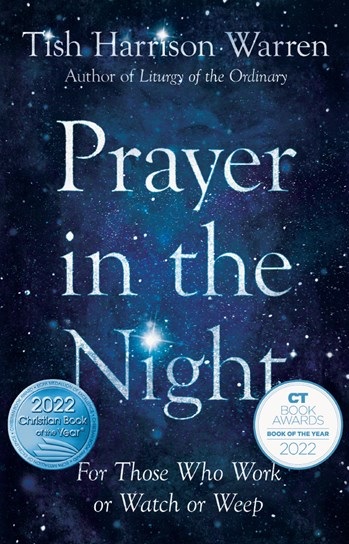
In her book Prayer in the Night, Tish Harrison Warren notes that since the dawn of time, humans have feared the night.

Even today (or tonight), with lights and smart devices, we still confront our darkest fears in, well, the dark.

As she writes:


“Our very bodies confront darkness each night. So each night we practice facing our truest state: we are exposed, we cannot control our lives, we will die.

In the daylight, I’m distracted. At moments, maybe even productive.

At night I feel alone, even in a house full of sleeping bodies, I feel small and mortal.

The darkness of nighttime amplifies grief and anxiety…. we are all so very, very vulnerable.”


Accurate, no?

Yet she makes this important point: God made the night and called it “good.”

Of course, before the fall, the night wasn’t terrifying, and yet God knew there would be a fall, and created the night anyway.

Warren notes that “In wisdom, God made things such that every day we face a time of darkness,” and yet at the same time, Revelation tells us that night will be “no more,” the day will finally overcome, much as Christ overcame death.

In other words, the fear that comes with night, the time of wrestling Jacob experienced at night, will be crushed.

As such, the night is a distinctly temporal phenomenon, and it seems true that it’s always night (it seems) when we either doubt or trust God the deepest, the truest.

When I was recently hospitalized for many nights, I came to fear the end of visiting hours, the change of shifts, the way the hospital turned quiet – not for rest, but because it was so understaffed that you’d go long periods without seeing or hearing anyone except the strange white noise of a pumping IV line.

I never knew which night I was getting — one where I’d find God, or one where I felt he’d left at 8 PM, along with the other visitors.

But whatever the case, I needed to confront my faith in God every night, and I think that as both Christians and people prone to depression, anxiety, chronic pain, or anything else troubling, the nights, oh the nights — they can be awful.

In the day, we can at least try to do something about our problems, right?

At night, our problems just sit there, and we’re too tired to work on them, and too anxious to sleep on them.

And in those moments, we look for God and hope to find him with a raw passion that’s difficult to muster in the day.

Well, just remember, that in those times, God has already found us, and many times, before dawn, by God’s grace, we will realize that he is holding us, and has been the whole time.

Find a psychiatrist here.

Find a therapist here.

August 30, 2023
0 Facebook Twitter Google + Pinterest

Update

written by Christian Heinze

Hi all, it’s been a) over a month since I’ve posted and b) I’ve barely posted at all, since March.

I’m so sorry and thanks for the kind messages. I’ve had a number of medical events that have required hospitalizations and lots of draining outpatient treatments.

It turns out a perforated bowel can be serious business, a difficult recovery, and there’s still plenty ahead and lots of unknowns that a) make you grateful for every day and b) can be kind of terrifying c) keep you on your knees and d) continually remind you of how utterly dependent we are on Christ for both body and the salvation of our soul.

Sickness isn’t a place I’d ever choose to be, but going to the Father daily, acutely aware of my fragility is a place I need to be.

But I wanted to let you know that I’m feeling better than I was, and I aim to get back to posting and conducting interviews imminently. Like, today.

Thanks again! Your readership means so much to me.

August 29, 2023
0 Facebook Twitter Google + Pinterest
Elisabeth Elliot: “The One who knows”

Elisabeth Elliot: “The One who knows”

written by Christian Heinze

In her book, Suffering Is Never for Nothing, Elisabeth Elliot writes:


“There have been hard things in my life, of course, as there have been in yours, and I cannot say to you, I know exactly what you’re going through.

But I can say that I know the One who knows.”


By the way, this has always seemed to me the simplest and best answer to the suffering question – “I don’t know why, but I do know that God is good.”

Some Christians try to call suffering a way for God to grow us.

Sometimes, maybe. But certainly not always.

Job’s suffering was part of a cosmic dispute. He was probably the most “grown” Christian in the world at the time.

Further, we live in a fallen world where people suffer. That’s baked into the cake and every single experience we have with that cake.

If someone says God is bringing suffering to “grow you,” that’s not only cruel or theologically dubious. It’s outright blasphemy because you are speaking for God.

Now, of course, we can grow during our suffering, but it’s blasphemous to attribute our suffering to God’s plan for our growth when we have no idea why he did it.

Job’s friends tried that route, and God rebuked them severely for trying to divine his divine message.

Other Christians will say suffering is a way for God to discipline us.

Sometimes, but it seems extremely rare.

Why?

A few reasons.

First, how often did Jesus correct his disciples through making them suffer?

He rebukes those guys left and right for their daily sins, and yet he never inflicts sudden, painful suffering on them for it.

And if anyone needed to grow spiritually, it was the ones who’d soon be carrying his message to the rest of the world.

Yet there’s not a single record of Jesus inflicting suffering on his disciples as a way of “growing them.”

Second, if God used suffering as his primary means of our growth and discipline, we’d be suffered right out of existence by the week’s end.

He’s just not that kind of Father. He’s a good one. Not an abusive one, who makes us suffer every time we sin. Again, our lives would be relentless suffering if that were the case, because we sin every day.

Of course, there are loads of other, common reasons Christians give for suffering, but none really answers the question adequately which is why there are new books written constantly on the issue.

We can appreciate reading them, but deep in our hearts, we still don’t quite understand suffering, do we?

And we have to accept that’s okay.

There are a million things we don’t understand about the universe and human life itself, that we can’t explain, that we admit are beyond our scope.

Why would the enormous complexity of suffering be any different?

That’s why I like that quote from Elliot so much.

Even though she unfortunately looks for reasons in the rest of her book, I think it’s dangerous to look for reasons in our own lives.

Why God brings suffering, in each particular case? That’s unknowable.

Jesus himself says God makes his rain to fall on the just and unjust, which speaks to the mystery of suffering and the fact the answer is reserved for God.

But note that — the answer is reserved for God.

If we believe that God is loving, our Father, then the answer is safe in his hands.

Having said all that, if you’re suffering from depression, there’s help for that suffering!

Depression and other mental health conditions are medical, and a type of suffering that is, thus, best treated medically. However that looks.

And for some good ideas…

Find a psychiatrist here.

Find a therapist here.

July 2, 2023
0 Facebook Twitter Google + Pinterest
Thanks, Tim Keller

Thanks, Tim Keller

written by Christian Heinze

Tim Keller passed away this week, and I just wanted to say a few things about it.

First, his words and writings influenced so many, including me. It would take too long to recount how deeply he nourished my soul, comforted others, encouraged the entire church — but it’s all there.

Second, what impressed me more than his writing, sermons, or all that was his example.

In an age of increasingly confrontational pastors who insert politics into everything, who fight on Twitter, who call each other wolves, who claim you can’t vote for one party or another without abandoning Christ — Keller stood out by staying out.

He was attacked relentlessly by both conservative and progressive Christians who simply couldn’t tolerate the fact he preached Christ and Christ, alone.

And when he was attacked — he never defended himself or responded, in kind.

His humility was remarkable, and that inspired me more than anything.

That’s what the church needs so desperately — both humility within itself and towards the world itself.

Calm but not confrontational.

Truth but never forgetting that the minute we think we’re more righteous than another, we’ve lost it. God hates the self-righteous pride of Christians more than the any other sin.

Judgment begins in our house. And we’ve collectively lost the way.

Keller always pointed to Christ. He was rarely distracted. And we’re always to point to Christ.

Jesus himself was constantly baited by the religious and political types to enter disputes that held “great importance.”

Instead, he demurred and focused on the individual’s heart.

And that is what each of us is to do — work on our hearts, and forget about judging someone else’s.

I fall short so often.

The church falls short so often.

Tim Keller’s grace towards his critics, his refusal to punch back, and his unswerving devotion to living out the love that he saw in Christ — that’s his legacy.

Now he’s with the Lord.

There’s always something so simultaneously jarring about seeing a Christian alive, on this earth, on one day, and then pass to the next world, on the following, where you know they are also alive. More alive than ever. And with Christ.

We will all go through this, and when it’s tough to get through this life, it’s a reminder that an incomprehensibly glorious one lies ahead.

In his classic novel, Diary of a Country Priest, George Bernanos wrote:

“I feel such distress that has forgotten even its name, that has ceased to reason or to hope, that lays its tortured head at random, will awaken one day on the shoulder of Jesus Christ.”

And every individual with a depressive or anxiety disorder, in physical pain or mental pain, and who has struggled to say “Amen” in this life — will then say Amen and see the why for everything.

Thanks, Tim Keller, for your life and pointing us in the direction of Christ and Christ alone for our salvation, and the glories of the next one.

May 21, 2023
0 Facebook Twitter Google + Pinterest
Chan: God is a creator, not a duplicator

Chan: God is a creator, not a duplicator

written by Christian Heinze

I sometimes run into Christians who are exhausted, intimidated, and a little scared by the “spiritual achievements” of fellow Christians who seem to be superior at this whole business of being a Christian thing.

Of course, the “superior thing” is a lie. Jesus said so himself. In many places.

We all know God has given us unique gifts, and that just because So-And-So is tremendous at hospitality doesn’t mean you can’t be just so-so at it.

And one of the most beguiling and tragic phenomenons endemic to many churches is the lionization of those with the most recognizable spiritual gifts.

It’s not those folks’ faults, of course.

They’re just really, really good at pedestal things.

And that’s great. Every single person serves their role in the body.

But it breaks my heart when Christians who haven’t been gifted that way somehow think they’re inferior, that God can’t use them, that visible good works are the only ones that matter.

And, to make matters worse, the Pedestal Christians often add to the needless shame.

“How involved are you in the body?” They ask.

And we know that’s not a question, it’s a judgment, it’s because you might sit in the back row (on the weeks you go), and maybe you’re not in a Bible study, and maybe you don’t show up for city ministry day, and so therefore, you are a wishy-washer neo-pagan who needs to — heaven help me with this phrase — “get involved.”

But for many people with depression, anxiety, or any other mood disorder, “getting involved” in things they haven’t been called to do by the Lord — well, that can kind of wreck them.

And I’ve seen it happen.

They will inevitably self-implode, or grow so discouraged and frustrated that they leave the church altogether, feeling hopeless that they’ll ever be any good. Sometimes they even leave the faith.

To Pedestal Christians and Pedestal Churches, “Good Works” are determined by the “good people,” and the good people are the people doing the most (themselves), and they speak for God, instead of letting God to speak to you.

But the greatest good you can do is literally the good that anyone can do — and that is pray.

And the way to pray, as Jesus says, is to enter your prayer closet, shut the door, be alone with God, and he can use that prayer to do mightier things than all the busy bees of church.

So I will say this — if you’re struggling to even go to church, much less do stuff there, remember that you can pray.

And since God doesn’t want us to blab about how much we pray, we will suffer from the judgment of others, but God sees, he knows, and he is greatly pleased by your prayer.

Now, I want to share this passage with you from Francis Chan’s book, Crazy Love.

Chan:


“Oswald Chambers writes, ‘Never make a principle out of your experience; let God be as original with other people as He is with you.’

To that I would add, ‘Be careful not to turn others’ lives into the mold for your own’.

Allow God to be as creative with you as He is with each of us.

….Do you believe that you were crafted for specific good works, things that god knew before you even existed?

Or do you compare your life to others and lament what you have been given.

We have a God who is a Creator, not a duplicator.”


So please, don’t let the religious “do good works” gadflies at church bring you down.

They were in Jesus’ face, too, and they had all kinds of ideas about how he should serve.

Jesus had a very much different idea.

And he spoke with his Father every day, and his Father told him what to do, and God will tell you, as well.

He created you. And his plan for you is best. Not theirs.

And if you listen to him, you will hear the things the deaf can’t. And if you are persecuted at church for it, well, blessed are those who are persecuted for righteousness sake.

Lean on the Lord, not the ones who want to push you down.

Find a psychiatrist here.

Find a therapist here.

May 9, 2023
0 Facebook Twitter Google + Pinterest
Keller: Don’t let bitterness turn you into a wraith

Keller: Don’t let bitterness turn you into a wraith

written by Christian Heinze

Tim Keller, in his new book, Forgive, with this wonderful insight on how bitterness can destroy us by, essentially, turning us into a ghost who can’t move from the space he’s confined to.

Keller:

“Unless you forgive deliberately, thoroughly, and with all the help Christ offers, your anger will ‘defile’ you, as Hebrews says.

Our English word wrath comes from the same Anglo-Saxon root as our word wreath.

Wrath means to be twisted out of your normal shape by your anger.

And the same Anglo-Saxon word also gives us the now somewhat archaic word wraith. We don’t use it much anymore (unless you read The Lord of the Rings), but it’s an old word for a ghost, a spirit that can’t rest.

Ghosts, according to legend, stay in the place where something was done to them, and they can’t get over it or stop reliving it.

If you don’t deal with your wrath through forgiveness, wrath can make you a wraith, turning you slowly but surely into a restless spirit, into someone who’s controlled by the past, someone who’s haunted.”

April 15, 2023
0 Facebook Twitter Google + Pinterest

“Here’s to the ones who dream”

written by Christian Heinze

If you’re a born romantic, and if you’re prone to melancholy, and if you love music.

April 15, 2023
0 Facebook Twitter Google + Pinterest
STUDY: Air pollution linked to late-onset depression

STUDY: Air pollution linked to late-onset depression

written by Christian Heinze

A new paper in JAMA shows a remarkable link between long-term exposure to common levels of air pollution and late-onset depression diagnosis (defined as 64 years old).

The authors, of course, controlled for all relevant variables and found the link was statistically significant, and that the three offending pollutants were PM2.5, O3, and NO2 (not Star Wars character names).

Dr. Samoon Ahmad does a wonderful job, explaining why common air pollutants can contribute to a vast array of neurological issues, including depression.

And if you guessed chronic inflammation leading to neuroinflammation, you’d be right.

Here’s some of the science, courtesy of Dr. Ahmad.

For many years, chronic inflammation was believed to be something that spared the brain because it was assumed that it was protected by the blood-brain barrier (BBB), a semipermeable membrane that separates the central nervous system (CNS) from the rest of the body. Recent studies have found that this is not entirely accurate, and that the CNS is constantly communicating with the peripheral immune system via neurotransmitters, hormones, and pro- and anti-inflammatory proteins released by immune cells known as cytokines.

These interactions can influence glial cells, which carry out neuronal support functions and regulate the brain’s specialized immune system, and astrocytes, which contribute to the immune system of the CNS and regulate the permeability of the BBB. Both astrocytes and microglia can produce pro- and anti-inflammatory cytokines. They can also initiate stress responses and inflammation—i.e. neuroinflammation.

There are a few obvious takeaways.

First, air pollution matters.

Oh, I know the majority of American evangelical Christians will poo-poo the air pollution thing (not entirely sure that’s how you spell poo-poo), but researchers are finding more and more links between air pollution and health.

And have you ever noticed how, even pre-Covid, China’s major cities — awash in pollution — were awash in mask-wearers? This is before Covid. Everyone knew pollution was awful for you.

Pollution seems to affect our entire bodies.

So the Christian church needs to take very seriously God’s command to take care of his creation. Not to treat it as some plaything for our, well, things.

Second, if you’re elderly and if you’ve been living in a polluted environment and you’re scratching your head about why you’ve been feeling so depressed — and if you’ve been wondering whether this is some faith issue — or whether you’re at-fault, or just basically why? This could be the answer.

There are all kinds of reasons elderly folks develop depression later in life, and this could be yet another.

I point out this study to tell you that, if you’ve made it into your 60s and are suddenly experiencing new depression, don’t beat yourself up and ask yourself dark existential questions about why (although that goes with the territory). It very well could be that you’ve been exposed to terrible air pollution your whole life.

I think that a lot of elderly people assume they’ll have the whole life thing figured out by that age, and that as they approach heaven, heaven will approach them, and with most of life over, they won’t feel so crushed by the weight of it.

But elderly people do experience late-onset depression, despite a lack of symptoms earlier in life, and there can be a horrible stigma, telling others about it.

After all, which wise grandmother or grandfather wants to tell their child or grandchildren about their brand new depression? Their Bible study group?

It’s lonely for anyone with depression, but among elderly Christians, I think the stigma is probably the worst.

But don’t despair.

There are loads of reasons why you might be feeling this way, and I highly doubt any of them has to do with any spiritual issue.

So if you’re struggling, please, it’s never too late to get help.

Find a psychiatrist here.

Find a therapist here.

[Photo: Pexels, free stock photgraphy].

April 15, 2023
0 Facebook Twitter Google + Pinterest
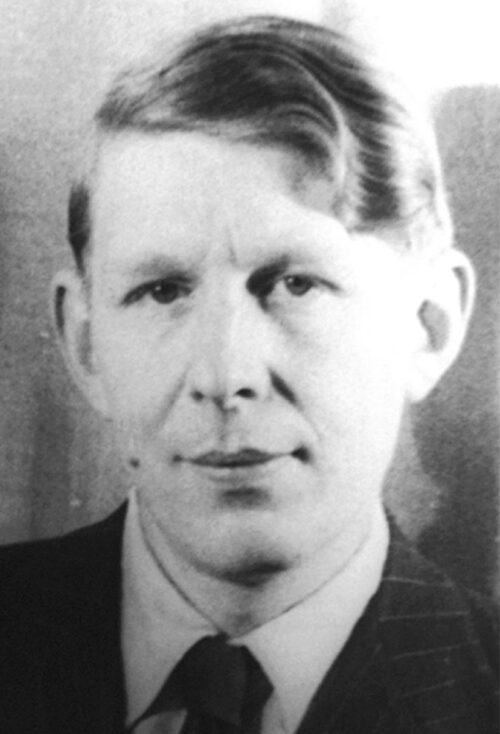
W. H. Auden on dread

W. H. Auden on dread

written by Christian Heinze

W.H. Auden in “The Age of Anxiety,” on that terrible thing:


“We would rather die in dread/Than climb the cross of the moment/And let our illusions die.”


There’s a lot there. But I want to focus on dread. And maybe the rest for another post.

Dread is something nearly every Christian experiences, and if one doesn’t, I applaud them because even Jesus experienced dread.

So if folks use dread as a measure of spiritual maturity, well, they’ve got one-up on Christ.

If Jesus dreaded something, it’s quite ok for us, too.

Except the church doesn’t like to admit it, because we’ve fashioned an American Christianity that looks so unlike the life of our Lord’s.

But he was God and human, and we are human.

And dread is a normal emotion – divorced from spirituality. If you want to distend dread from the Christian’s experience, you’ll have to get rid of joy, happiness, all that other stuff too.

Even if Christians don’t call it dread, listen, every single Christian experiences dread.

And dread is nearly a daily symptom of Generalized Anxiety Disorder, and I know it too well.

It’s the sense that something is wrong, even if we can’t find something immediately wrong. It’s the sense that tomorrow the sun doesn’t rise, but instead death does from a grave.

It’s impossible to explain to others, because it’s almost impossible to explain to ourselves.

I’ll end with this quote by the great 19th century Baptist preacher, C.H. Spurgeon, who even the most old-school Christian wouldn’t accuse of watering down Christianity.

““There is a kind of mental darkness, in which you are disturbed, perplexed, worried, troubled – not, perhaps, about anything tangible.”

Spurgeon, famously, suffered with overwhelming dread, as well. And he was quite open about it.

And then, as I mentioned, there’s Jesus, as well. He sweated drops of blood. That’s dread.

So if you dread, remember. You are human. That’s part of the human experience. It’s nothing to be ashamed of, even though they will make you ashamed of it at church, in Bible study group, wherever you meet.

But I promise you — every single Christian has experienced dread, and for the nearly 20% who have an anxiety disorder, it’s a part of our daily life.

Now, I know this is a dark post. But I’m not going to offer a bunch of tips on dread right now.

Instead, I’m going to point you in the direction of help.

So if you struggle with dread, as I do… (I actually dread, dread).

As always…

Find a psychiatrist here.

Find a therapist here.

April 15, 2023
0 Facebook Twitter Google + Pinterest
Load More Posts

Social Media

Twitter

Get in touch with me

Contact here. 

The Weary Christian mission:

First off:


In the United States, find a psychiatrist here.

In the United States, find a therapist here.

If you’re in the United States and having thoughts of harming yourself or others, please call the National Suicide Lifeline at 1-800-273-8255.

If you’re in the UK, get urgent help here.

Canada, here.

Australia, here.

New Zealand, here.

South Africa, here.

France, here.

Germany, here.

Portugal, here.

Mexico, here.

India, here.

The Philippines, here.

Singapore, here.

South Korea, here.


The Weary Christian goal…


a) reduce the stigma surrounding depression, anxiety, OCD, and other conditions in the Christian community.


b) have uncomfortable but honest conversations.


c) Reduce the stigma surrounding antidepressants, antipsychotics, and other meds God has given us as gifts.


And…


d) Sometimes (tons of times), we all feel really, really depressed in our journey. Hopefully, this site makes you feel less alone.

Categories


@2017 - PenciDesign. All Right Reserved. Designed and Developed by PenciDesign